- Product Description Description
- Table of Contents TOC
- List of Table & Figure LOT
- Get Free Sample PDF Sample PDF
Market Size, 2025
$15.63 BnMarket Estimate, 2026
$15.63 BnMarket Forecast, 2034
$20.87 BnCAGR, 2026–2034
3.68%Executive Summary: Global Antifungal Drugs Market
- Market Scope: Comprehensive global antifungal drugs market analysis covering drug types, therapeutic indications, application formats, regional landscapes, and clinical adoption metrics.
- Market Valuation: Valued at USD 15.08 billion (2025), estimated at USD 15.63 billion (2026), and projected to reach USD 20.87 billion by 2034, registering a steady compound annual growth rate (CAGR) of 3.68% from 2026 to 2034.
- Primary Growth Drivers: Escalating global prevalence of fungal and nosocomial infections, rising numbers of immunocompromised patient populations, targeted government/private initiatives, and ongoing clinical trials for advanced formulations. Key market restraints include alternative substitute options, adverse side effects from long-term medication use, strict regulatory frameworks for new drug approvals, and emerging drug-resistant fungal strains.
Key Market Segment Metrics (2026–2034)
| Category | Leading Segment (2025 Position) | Fastest-Growing Segment |
|---|---|---|
| By Drug Type | Azoles (held a significant market share backed by broad-spectrum efficacy, high absorption, and diverse delivery forms) | Echinocandins (projected to experience a healthy growth rate for systemic treatments) |
| By Therapeutic Indication | Candidiasis (leading systemic fungal indication driven by a rising vulnerable and sensitive patient base) | Candidiasis / Aspergillosis (expanding dynamically alongside intensive care admissions) |
| By Application Form | Ointments / Topical Formulations (emerged as the market leader for superficial and dermal skin infections) | Specialized Powders & Oral Drug Formulations (growing steadily through retail and hospital channels) |
| By Region | North America (held the largest global market share supported by superior healthcare infrastructure and early tech adoption) | Asia-Pacific (fastest-growing regional market propelled by unhygienic rural environments and rising infectious cases) |
Major Market Players & Market Structure
Market Structure: Highly competitive pharmaceutical landscape featuring major international giants focusing on generic drug rollouts, high-impact clinical trials, and portfolio expansions via strategic acquisitions.
Key Companies: Gilead Sciences, Inc., Pfizer Inc., Sanofi S.A., Merck & Co., Inc., Novartis International AG, Abbott Laboratories, Bayer AG, Scynexis Inc., Enzon Pharmaceuticals, Inc., and GlaxoSmithKline Plc.
Global Antifungal Drugs Market Size
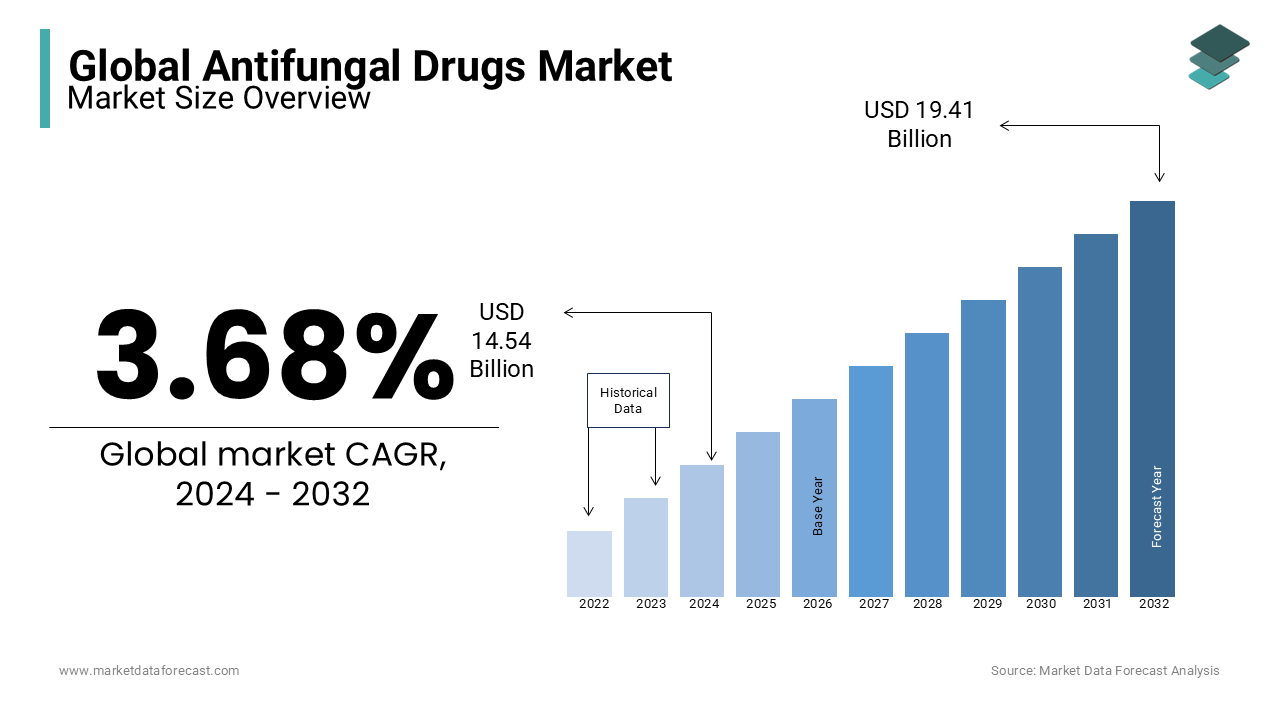
As per our report, the global antifungal drugs market size was valued at USD 15.08 billion in 2025. The antifungal drugs market size was worth USD 15.63 billion in 2026. It is estimated to grow at a CAGR of 3.68% and reach USD 20.87 billion by 2034.
Antifungal drugs are mainly used to treat infections like athlete's foot, ringworm, candidiasis, etc. These drugs can be easily obtained through a doctor's prescription, whereas some are available as over-the-counter drugs. The drugs are manufactured with different formulas for various infections accordingly. Fungal infections occur because organisms feed by breaking down the living tissue, also known as dermatophytes. They can utilize keratin and cause skin, hair, and nail infections. The only aim of these drugs is to prevent the fungal cell from growing by causing the cell's contents to break out. Unhygienic environments may lead to severe conditions causing an infection on the skin.
MARKET DRIVERS
The growing prevalence of fungal and nosocomial diseases propels the worldwide antifungal drugs market.
In addition, the growing adoption of the latest technologies in producing various drugs and offering effective treatment procedures for infectious diseases worldwide is anticipated to offer lucrative opportunities to the antifungal drugs market.
In addition, a rise in the demand to improve safety levels is driving the antifungal drugs market growth. Furthermore, increasing investments in research and development institutes and increasing awareness of the availability of products through digital advertisements and campaigns drive the global antifungal drugs market's growth. Furthermore, the antifungal drugs market is predicted to grow due to increased governmental and private sector initiatives to raise awareness about various fungal illnesses. Clinical trials for the development of antifungal drugs are being conducted by market players, which is projected to boost the global antifungal drugs market's growth throughout the forecast period. The market's growth pace will be accelerated by increasing medication approvals and launches and focusing on releasing generic drugs to treat fungal infections.
MARKET RESTRAINTS
The availability of alternative substitutes silently hinders the growth of the global antifungal drugs market. In addition, the rise in side effects of long-term use of these drugs has been a challenging market growth factor. Also, fluctuations in the drug's production rate and the lack of skilled persons in manufacturing the drugs impede the market's growth rate. In addition, stringent rules and regulations by the government in approving new drugs also limit the market growth. In addition, the high cost of antifungal drugs is expected to slow the market's growth rate. Furthermore, the market for antifungal drugs is also predicted to be challenged by the growing number of people resistant to antifungal drugs and a lack of healthcare infrastructure in underdeveloped countries.
REPORT COVERAGE
| REPORT METRIC | DETAILS |
| Market Size Available | 2025 to 2034 |
| Base Year | 2025 |
| Forecast Period | 2026 to 2034 |
| Segments Covered | By Drug Type, Therapeutic Indications, Application, and Region |
| Various Analyses Covered | Global, Regional & Country Level Analysis, Segment-Level Analysis; DROC, PESTLE Analysis, Porter's Five Forces Analysis, Competitive Landscape, Analyst Overview of Investment Opportunities |
| Regions Covered | North America, Europe, APAC, Latin America, Middle East & Africa |
| Market Leader Profiled | Gilead Sciences, Inc., Pfizer Inc., Sanofi S.A., Merck & Co., Inc., Novartis International AG, Abbott Laboratories, Bayer AG, Scynexis Inc., Enzon Pharmaceuticals, Inc., and GlaxoSmithKline Plc. |
SEGMENTAL ANALYSIS
By Drug Type Insights
The azoles segment held a significant share of the antifungal drugs market in 2025 and is expected to rise significantly during the forecast period. Azoles treat various ailments, such as yeast infection, tinea versicolor, and athlete's foot, and come in various forms, including capsules, lotions, and sterile IV solutions. These medications have better absorption and distribution qualities and fewer adverse effects and drug interactions.
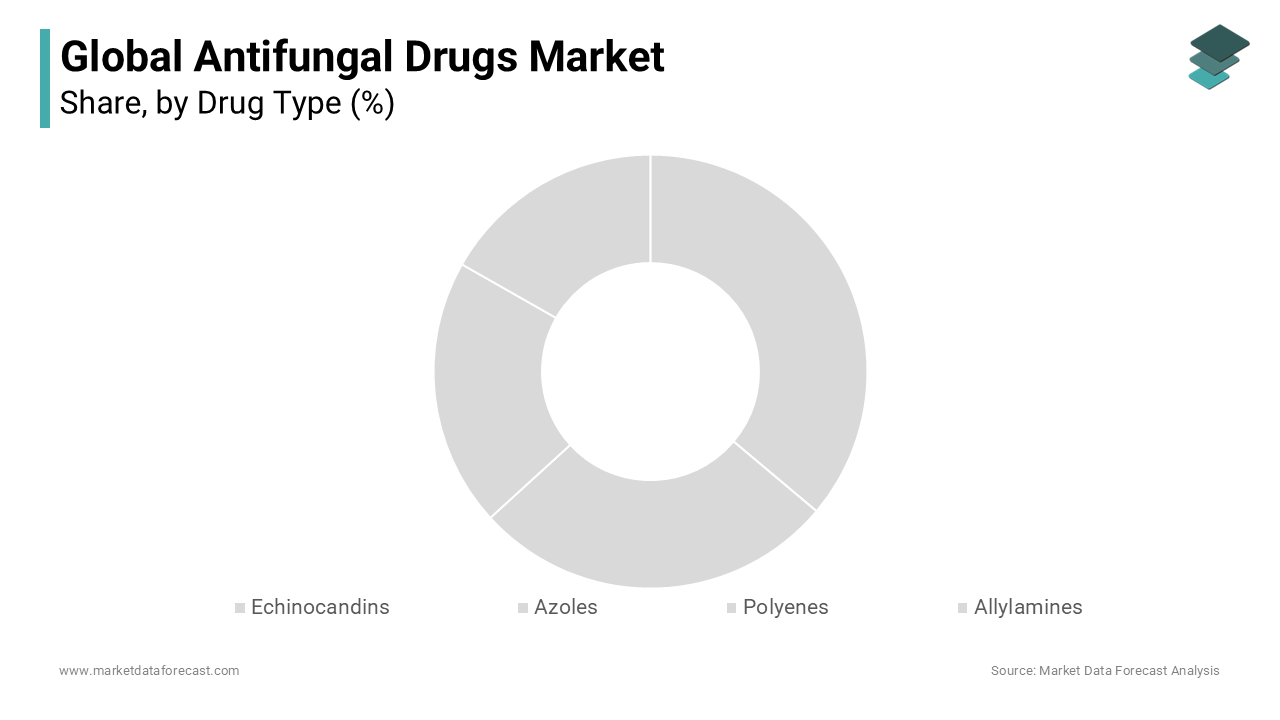
On the other hand, the echinocandins segment is predicted to grow at a healthy rate during the forecast period.
By Therapeutic Indications Insights
The most prevalent systemic fungal infection, candidiasis, is anticipated to grow at a healthy CAGR during the forecast period in the global antifungal drugs market. Candida infection is a type of yeast infection caused by the genus Candida. The way it's been treated has changed over time. The judicious use of echinocandins and broad-spectrum azoles for the treatment of Candidemia, mucosal candidiasis, and invasive candidiasis is among the changes. A primary driver for the segment is the rising number of patients more sensitive to fungal infections. Furthermore, rising patient and healthcare professional awareness is expected to propel the antifungal drugs market forward.
By Application Insights
The ointment segment emerged as the worldwide antifungal drugs market leader. Over the forecast period, the market is expected to rise due to the increasing usage of topical antifungals in treating skin-related fungal diseases.
REGIONAL ANALYSIS
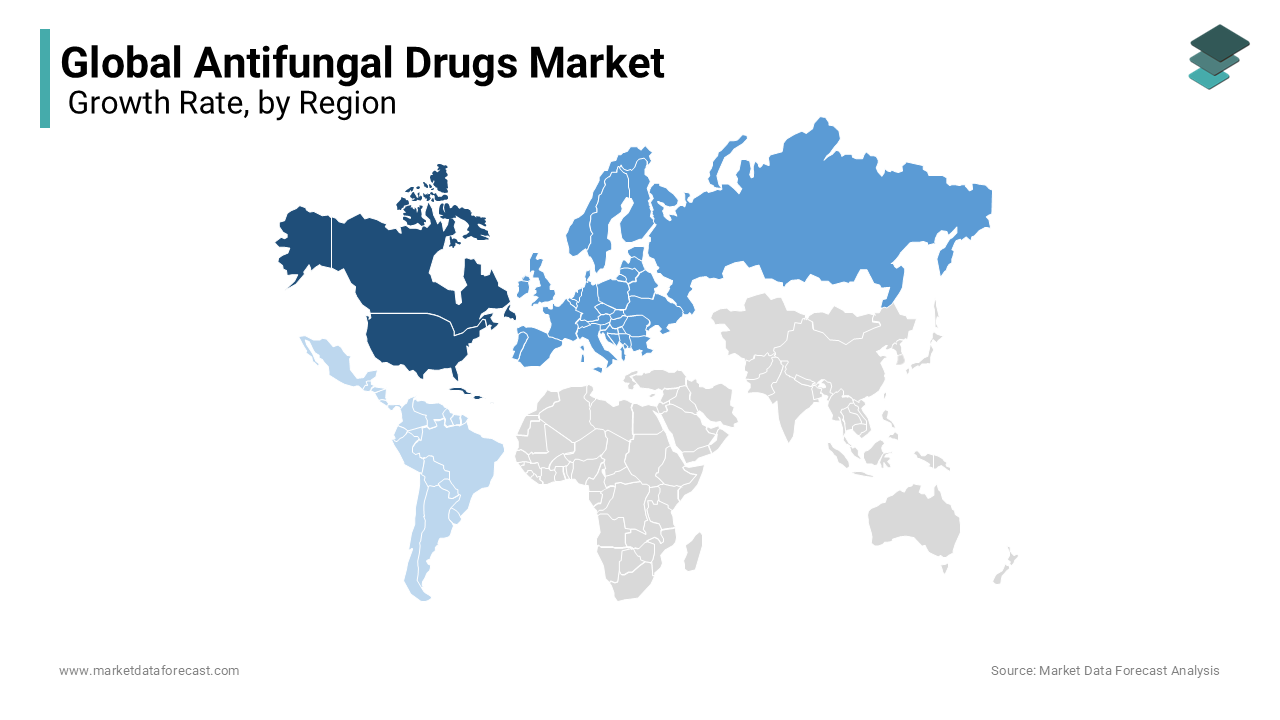
North America had the most significant global market share in 2024, owing to the rapid adoption of the latest technologies. In addition, introducing high-quality and low-cost drugs is prompting the market's growth rate in this region. Due to the priority review status for antifungal medications to treat antifungal infections, North America is likely to see considerable growth in the global antifungal drugs market during the forecast period. Due to improved healthcare infrastructure, an increase in echinocandin resistance, and an increase in the number of fungal infections in the region, North America also holds a significant share of the global antifungal drugs market. The United States is one of the world's most economically developed nations. Therefore, it currently controls a substantial portion of the market. In addition, infections caused by fungi have posed a problem for health officials in the United States. This ongoing fungal proliferation will allow national pharmacists to produce compelling antifungal novels, resulting in market growth.
During the forecast period, Europe is expected to be the second-largest regional market globally. Increasing funds from private and public organizations to evaluate quality treatment procedures is surging the growth of the European antifungal drugs market.
However, APAC is forecasted to be the fastest-growing region globally during the forecast period. It is estimated to register a tremendous growth rate in the foreseeable years. An increasing number of infectious disease cases due to unhygienic environments in rural areas is a significant factor that magnifies the market's growth.
Latin America is predicted to hold a considerable share of the worldwide market and MEA is anticipated to have substantial growth opportunities in the coming years.
KEY MARKET PLAYERS
A few of the companies playing a noteworthy role in the global antifungal drugs market include
- Gilead Sciences, Inc.
- Pfizer Inc.
- Sanofi S.A.
- Merck & Co., Inc.
- Novartis International AG
- Abbott Laboratories
- Bayer AG
- Scynexis Inc.
- Enzon Pharmaceuticals, Inc.
- GlaxoSmithKline Plc.
RECENT MARKET HAPPENINGS
- In January 2020, the FDA approved its supplement New Drug Application (sNDA) for MYCAMINE to support the treatment of Candidemia.
- In December 2019, Astellas Pharma Inc. and Xyphos Biosciences, Inc. announced that Astellas had acquired Xyphos. With the acquisition, Astellas will gain Xyphos' novel and proprietary ACCEL technology platform and industry-leading immune-oncology talent.
- In October 2019, Astellas committed nearly $ 13 million to fund Boston-area – start-up Innovation in Cell and Gene Therapy.
- In October 2019, Pandion Therapeutics and Astellas Pharma Inc. announced a License and Collaboration Agreement directed toward the research, development, and commercialization of locally acting immune modulators for autoimmune diseases in the pancreas.
- In December 2019, Astellas Pharma Inc., a Tokyo-based company, ALPMY, announced that it had acquired privately held development-stage biotechnology company Xyphos Biosciences, Inc. to boost its immune-oncology pipeline.
- In November 2019, Astellas Pharma Inc. announced that the China National Medical Products Administration (NMPA) approved a new drug application for XTANDI to treat adult men with metastatic castration-resistant prostate cancer that is asymptomatic or mildly symptomatic.
MARKET SEGMENTATION
This market research report on the global antifungal drugs market has been segmented and sub-segmented based on drug type, therapeutic indications, application, and region.
By Drug Type
- Echinocandins
- Azoles
- Polyenes
- Allylamines
- Others
By Therapeutic Indications
- Aspergillosis
- Dermatophytosis
- Candidiasis
- Others
By Application
- Powders
- Ointments
- Drugs
- Pastes
By Region
- North America
- Europe
- Asia Pacific
- Latin America
- Middle East and Africa