- Product Description Description
- Table of Contents TOC
- List of Table & Figure LOT
- Get Free Sample PDF Sample PDF
Market Size, 2025
$12.9 BnMarket Estimate, 2026
$13.7 BnMarket Forecast, 2034
$22.17 BnCAGR, 2026–2034
6.2%Global IV Equipment Market Report: Size, Share, Trends & Forecast (2026–2034)
- Market Scope: Comprehensive global industry evaluation covering IV product variations (catheters, administration sets, securement devices, etc.), hospital and home-care end users, and regional distributions across North America, Europe, Asia-Pacific, Latin America, and MEA.
- Market Valuation: Valued at USD 12.90 billion in 2025, estimated at USD 13.70 billion in 2026, and projected to reach USD 22.17 billion by 2034, registering a compound annual growth rate (CAGR) of 6.2% from 2026 to 2034.
- Primary Growth Drivers: Rising chronic disease patient populations worldwide, an expanding global geriatric demographic, and increased adoption of ambulatory infusion pumps and home healthcare delivery models.
Global IV Equipment Market Segment Metrics (2026–2034)
| Category | Leading Segment / Position | Fastest-Growing Segment |
|---|---|---|
| By Product | IV Catheters (holds a major share driven by frequent deployment in surgeries and chronic treatments) | Securement Devices (growing prominently due to high efficiency, safety demands, and CVC/PIVC adoptions) |
| By End User | Hospitals & Clinics (commands the largest market share backed by dense patient flow and advanced infrastructure) | Home Care (expected to register the highest CAGR driven by patient comfort and reduced infection risks) |
| By Region | North America (led global market share supported by sophisticated healthcare systems and high chronic disease incidence) | Asia-Pacific (projected to showcase the fastest CAGR driven by rising disposable incomes, aging populations, and infrastructure upgrades) |
Major Global IV Equipment Market Players & Industry Structure
Market Structure: A competitive medical device market featuring major global players emphasizing advanced infusion safety technologies, strategic acquisitions, and manufacturing facility investments to secure supply chain reliability.
Key Companies: ICU Medical, Inc., Smiths Medical, Moog, Inc., Becton, Dickinson, and Company, B. Braun Melsungen AG, Baxter International Inc., Fresenius SE & Co. KGaA, Terumo Corporation, and C. R. Bard, Inc.
 Download Free Sample Report
Global IV Equipment Market Size
The global IV equipment market size was valued at USD 12.90 billion in 2025 and is anticipated to be worth USD 13.70 billion in 2026 and USD 22.17 billion by 2034, registering a CAGR of 6.2% during the forecast period from 2026 to 2034.

The global IV equipment market is fundamental to modern healthcare, supporting treatments ranging from routine hydration to complex chemotherapy and emergency resuscitation. According to the Centers for Disease Control and Prevention, approximately 1 billion intravenous therapies are administered annually in the United States alone, underscoring the immense volume of procedures requiring reliable infusion systems. This high procedural frequency directly drives the demand for durable pumps, smart connectors, and disposable administration sets. According to the Infusion Nurses Society, up to 70% of hospitalized patients receive some form of intravenous therapy during their stay, highlighting the ubiquitous nature of these devices in acute care settings. These statistics emphasize the indispensable role of IV equipment in maintaining patient stability and ensuring therapeutic efficacy. As healthcare facilities prioritize patient safety and workflow efficiency, the adoption of advanced smart infusion pumps with dose error reduction software continues to rise. The market also encompasses vascular access devices, such as catheters and ports, which are essential for long-term treatment plans. Technological advancements aimed at reducing complications like phlebitis and bloodstream infections further propel innovation within this vital segment of the medical device industry.
MARKET DRIVERS
Rising Prevalence of Chronic Diseases Requiring Long-Term Therapy
The increasing burden of chronic conditions, such as cancer, diabetes, and cardiovascular diseases, significantly propels the expansion of the IV equipment market. According to the World Health Organization, noncommunicable diseases account for 74% of all deaths globally, creating a vast population requiring regular and often intensive medical interventions. Many of these treatments, including chemotherapy for cancer and biologics for autoimmune disorders, necessitate precise and continuous intravenous delivery over extended periods. According to the American Cancer Society, there will be more than 1.9 million new cancer cases diagnosed in the United States this year, each likely requiring multiple cycles of IV-administered therapy. This surge in patient volume drives hospitals and outpatient clinics to invest in high-capacity infusion pumps and durable vascular access devices. The complexity of managing multiple medications simultaneously increases the need for smart IV systems that can handle multi-channel infusions safely. Healthcare providers are prioritizing equipment that supports home-based care models, allowing patients to receive treatment outside hospital walls. This shift reduces hospital congestion while maintaining therapeutic continuity. The direct correlation between chronic disease prevalence and the frequency of IV administrations ensures sustained demand for both disposable and reusable IV components. Manufacturers are responding by developing user-friendly devices that empower patients and caregivers to manage therapy safely at home.
Technological Advancements in Smart Infusion Systems
Continuous innovation in smart infusion technology significantly drives the global IV equipment market expansion. According to the Institute for Safe Medication Practices, medication errors associated with intravenous therapy are among the most common and potentially harmful adverse events in healthcare settings. According to the Institute for Safe Medication Practices, smart infusion pumps equipped with dose error reduction software have been shown to reduce these errors by up to 50%, making them an essential investment for risk-averse healthcare institutions. Furthermore, as per the Journal of Infusion Nursing, the integration of wireless connectivity allows for real-time monitoring of infusion status and automatic documentation in electronic health records. This interoperability reduces the administrative burden on nurses, allowing them to dedicate more time to direct patient care. Hospitals are increasingly adopting closed-loop medication administration systems that link smart pumps with barcode scanning technology to ensure the right drug reaches the right patient at the right dose. These technological upgrades improve compliance with regulatory standards and accreditation requirements. The ability to remotely manage infusion parameters also supports telehealth initiatives and centralized nursing stations. As healthcare systems focus on value-based care, the adoption of smart IV equipment becomes a strategic priority to minimize liability and improve clinical outcomes. This technological evolution drives replacement cycles and upgrades across existing infrastructure.
MARKET RESTRAINTS
High Risk of Catheter-Related Bloodstream Infections
The persistent threat of catheter-related bloodstream infections is a notable restraint on the IV equipment market due to stringent regulatory scrutiny and increased operational costs. According to the Centers for Disease Control and Prevention, central line-associated bloodstream infections result in approximately 30,000 deaths annually in the United States, leading to rigorous infection control protocols. These strict guidelines require healthcare facilities to implement expensive preventive measures, including the use of antimicrobial-coated catheters and specialized dressing kits, which increase the overall cost of IV therapy. According to the Society for Healthcare Epidemiology of America, treating a single case of bloodstream infection can cost upwards of 45,000 dollars, prompting hospitals to limit unnecessary IV placements. This financial pressure encourages the exploration of alternative delivery methods, such as oral or subcutaneous routes, when clinically feasible. The fear of litigation and penalties for high infection rates makes healthcare providers cautious about expanding IV services without robust safety infrastructure. Smaller clinics may lack the resources to maintain the sterile environments required for safe IV insertion, limiting market penetration in rural areas. Regulatory bodies frequently update sterilization and maintenance standards, forcing manufacturers to constantly adapt their designs. These compliance burdens slow down the adoption of new IV technologies and restrict market growth in resource-constrained settings.
Shortage of Skilled Healthcare Professionals
The acute shortage of trained nurses and clinical staff is further hampering the global IV equipment market expansion. According to the American Nurses Association, the nursing workforce faces a significant deficit, with projections indicating a shortage of over 200,000 registered nurses by 2030. This staffing crisis limits the capacity of hospitals to manage complex IV therapies that require frequent monitoring and troubleshooting. Furthermore, the Journal of Clinical Nursing highlights that inadequate staffing levels are associated with higher rates of IV complications, such as infiltration and phlebitis, due to delayed intervention. The scarcity of skilled professionals means that less experienced staff may struggle with sophisticated smart infusion pumps, leading to usage errors or underutilization of advanced features. Training new employees on complex IV systems requires time and resources that strained healthcare systems often lack. High turnover rates further exacerbate the problem, as institutional knowledge regarding specific equipment protocols is lost. This limitation affects patient safety and satisfaction, potentially leading to longer hospital stays and increased readmission rates. Healthcare facilities may delay the procurement of new IV technologies if they cannot guarantee adequate staffing to operate them safely. Consequently, market growth is constrained by human resource limitations rather than just technological availability. Addressing this workforce gap is critical for the full realization of IV equipment potential.
MARKET OPPORTUNITIES
Expansion of Home Healthcare and Ambulatory Infusion Services
The rapid growth of home healthcare and ambulatory infusion centers presents a substantial opportunity for the IV equipment market. According to the National Association for Home Care and Hospice, the number of patients receiving home infusion therapy has increased by 15% annually, driven by the desire to reduce hospital stays and lower healthcare costs. This trend creates a demand for portable, lightweight, and easy-to-use IV pumps that patients or caregivers can operate safely in domestic settings. Additionally, the Ambulatory Surgery Center Association notes that freestanding infusion centers are expanding their service offerings to include complex biologic therapies, requiring robust and reliable IV infrastructure. These facilities prioritize equipment that offers high throughput and minimal downtime to maximize patient volume. Manufacturers are developing compact infusion devices with long battery life and intuitive interfaces to meet the needs of non-clinical users. The shift toward value-based care models encourages payers to reimburse for home-based treatments, further stimulating market demand. Partnerships between device makers and home health agencies facilitate the distribution of specialized IV kits tailored for remote use. This decentralization of care opens new revenue streams beyond traditional hospital contracts. As technology enables safer home administration, the market for consumer-friendly IV equipment continues to expand rapidly.
Integration of IoT and Data Analytics in Infusion Therapy
The incorporation of Internet of Things capabilities and data analytics into IV equipment offers a promising opportunity in the global IV equipment market. As per the Healthcare Information and Management Systems Society, connected infusion devices generate vast amounts of data that can be analyzed to optimize workflow and predict maintenance needs. This data-driven approach allows hospital administrators to identify usage patterns, reduce equipment idle time, and improve inventory management. Furthermore, the Journal of Medical Systems notes that predictive analytics can alert clinicians to potential occlusions or air bubbles before they become critical issues, enhancing patient safety. These smart features appeal to healthcare systems aiming to achieve higher levels of operational efficiency and regulatory compliance. Manufacturers are investing in cloud-based platforms that aggregate data from multiple devices to provide comprehensive insights into infusion practices. This connectivity supports remote proctoring and real-time technical support, reducing the need for on-site service visits. The ability to integrate IV data with broader hospital information systems facilitates seamless care coordination. As healthcare providers seek to leverage digital transformation, the demand for intelligent IV equipment with robust analytics capabilities grows. This technological convergence creates new business models based on service and data subscription rather than just hardware sales.
MARKET CHALLENGES
Complexity of Regulatory Compliance and Standardization
Navigating the complex landscape of regulatory requirements and the lack of global standardization is a major challenge to the IV equipment market. The Food and Drug Administration mandates rigorous premarket approval processes for new IV devices, particularly those with software components, which can delay product launches by several years. The Association for the Advancement of Medical Instrumentation states that varying international standards for connector compatibility and safety testing create significant hurdles for manufacturers seeking global market access. These discrepancies force companies to design multiple versions of the same product to meet regional specifications, increasing development costs and complexity. Additionally, the European Union Medical Device Regulation imposes stricter post-market surveillance requirements, necessitating continuous data collection and reporting. Compliance with these evolving regulations requires dedicated legal and quality assurance teams, straining resources especially for smaller innovators. The lack of universal standards for smart pump communication protocols hinders interoperability between different brands and hospital systems. This fragmentation limits the ability of healthcare providers to create unified infusion management networks. Regulatory uncertainties can discourage investment in novel technologies due to the risk of prolonged approval timelines. Companies must remain agile to adapt to changing regulatory landscapes, which diverts focus from core research and development activities.
High Cost of Advanced IV Systems and Maintenance
The substantial financial investment required for acquiring and maintaining advanced IV systems acts as a significant barrier to market expansion. According to the Health Affairs journal, the total cost of ownership for smart infusion pumps, including software licenses, updates, and repairs, can exceed the initial purchase price by 40% over five years. This high expense poses a challenge for budget-constrained healthcare facilities, particularly in rural or underserved areas. Additionally, the Biomedical Instrumentation and Technology journal reports that maintenance contracts for complex IV equipment are costly and often mandatory to ensure warranty validity. These ongoing expenses strain hospital operating budgets, leading some institutions to defer upgrades or rely on refurbished equipment. The rapid pace of technological obsolescence means that devices may become outdated before their useful life ends, resulting in stranded assets. Insurance reimbursement rates for infusion services do not always cover the full cost of using premium IV technologies, affecting profitability. Smaller clinics may find it economically unviable to invest in state-of-the-art systems, limiting their competitive edge. Price sensitivity among buyers forces manufacturers to balance innovation with affordability, potentially compromising feature sets. The economic pressure to contain healthcare costs restricts the widespread adoption of the latest IV innovations, slowing market momentum.
REPORT COVERAGE
| REPORT METRIC | DETAILS |
| Market Size Available | 2025 to 2034 |
| Base Year | 2025 |
| Forecast Period | 2026 to 2034 |
| Segments Analysed | By Product, End User, and Region |
| Various Analyses Covered | Global, Regional & Country Level Analysis, Segment-Level Analysis, Drivers, Restraints, Opportunities, Challenges, PESTLE Analysis, Porter’s Five Forces Analysis, Competitive Landscape, Analyst Overview on Investment Opportunities |
| Regions Analysed | North America, Europe, Asia Pacific, Latin America, Middle East, and Africa |
SEGMENTAL ANALYSIS
By Product Insights
The IV catheters segment dominated the market by capturing the largest share of the global IV equipment market in 2025 due to their fundamental role as the primary entry point for all intravenous therapies. According to the Centers for Disease Control and Prevention, peripheral intravenous catheters are inserted in approximately 30 million hospitalized patients annually in the United States alone, establishing them as the most frequently used medical device in acute care settings. This ubiquitous usage drives consistent and high-volume demand across all healthcare facilities. According to the Infusion Nurses Society, over 90% of hospitalized patients require vascular access at some point during their stay, ensuring that IV catheters remain a staple inventory item. The short lifespan of these devices, which typically require replacement every 72 to 96 hours to prevent infection, creates a recurring revenue stream for manufacturers. Hospitals prioritize high-quality catheters with safety features such as retractable needles to comply with occupational safety standards. The rise in chronic diseases requiring long-term venous access has also increased the adoption of midline and peripherally inserted central catheters. Manufacturers are innovating with materials that reduce thrombogenicity and improve patient comfort. The critical nature of secure vascular access makes IV catheters indispensable, solidifying their leading position in the market regardless of technological advancements in other segments.
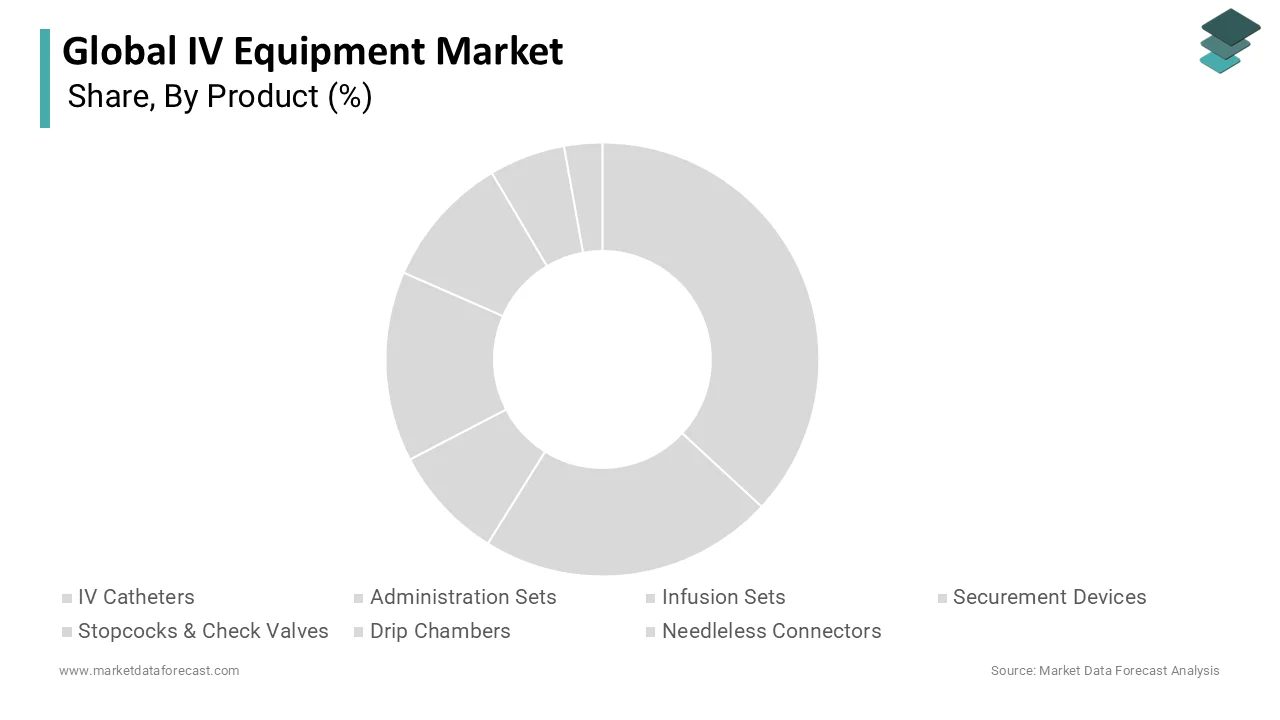
On the other end, the needleless connectors segment is anticipated to register a prominent CAGR of 9.08% over the forecast period in the global market owing to the stringent safety regulations and infection control mandates. The Occupational Safety and Health Administration mandates the use of safety-engineered devices to protect healthcare workers from needlestick injuries, driving the rapid replacement of traditional luer-lock connectors. Additionally, the Centers for Disease Control and Prevention highlights that needleless systems can reduce the risk of catheter-related bloodstream infections by minimizing direct contact with blood and fluids. This clinical benefit encourages hospitals to adopt advanced connector designs with antimicrobial properties. The Joint Commission includes infection prevention metrics in its accreditation standards, pushing facilities to upgrade their IV infrastructure. Manufacturers are developing split-septum and mechanical valve connectors that offer better flow dynamics and easier cleaning. The increasing prevalence of multidrug-resistant organisms further accelerates the shift toward closed system connectors. Healthcare providers recognize that investing in high-quality needleless connectors reduces long-term costs associated with treating hospital-acquired infections. As awareness of occupational hazards grows, the demand for these safety-focused components continues to outpace other product categories.
By End User Insights
The hospitals and clinics segment accounted for 68.5% of the global market share in 2025. The dominance of the hospitals and clinics segment in the global market is attributed to the high volume of acute care procedures and surgical interventions. According to the American Hospital Association, there are over 6,000 registered hospitals in the United States, performing millions of surgeries and emergency treatments annually that require immediate intravenous access. This massive procedural volume ensures consistent and large-scale procurement of IV pumps, catheters, and administration sets. Furthermore, the Society of Critical Care Medicine indicates that intensive care units utilize complex multi-channel infusion systems for hemodynamic support, driving demand for high-end smart pumps. Hospitals have the financial capacity to invest in advanced integrated IV ecosystems that link with electronic health records. The need for 24/7 availability of life-saving medications necessitates robust and reliable IV infrastructure. Academic medical centers often serve as early adopters of new technologies, influencing purchasing trends across smaller facilities. The concentration of specialized services such as oncology and cardiology within hospitals further amplifies the need for diverse IV equipment. Regulatory requirements for sterile processing and medication safety are strictly enforced in hospital settings, ensuring high standards for equipment quality. This centralized model of care sustains the dominance of hospitals as the primary end users.
However, the home care segment represents the fastest-growing end-user segment in the global market and is estimated to witness a CAGR of 10.2% over the forecast period due to the shift toward decentralized healthcare delivery. The National Association for Home Care and Hospice reports that the number of patients receiving home infusion therapy has grown significantly as payers seek to reduce costly hospital readmissions. This trend drives demand for portable and user-friendly IV pumps that patients or caregivers can operate safely. Additionally, the Centers for Medicare and Medicaid Services have expanded reimbursement policies for home-based infusion services, making it a financially viable option for chronic disease management. The aging population prefers receiving treatment in the comfort of their homes, reducing exposure to hospital-acquired infections. Manufacturers are responding by designing compact devices with long battery life and intuitive interfaces. Telehealth integration allows remote monitoring of infusion progress, enhancing safety and compliance. The rise of specialty pharmacies that deliver IV medications directly to patients further supports this growth. As technology improves reliability and ease of use, more complex therapies are being administered outside clinical settings. This decentralization opens new markets for consumer-oriented IV equipment and accessories.
COUNTRY LEVEL ANALYSIS
North America IV Equipment Market Analysis
North America held the highest share of the global market in 2025 and is likely to register strong market dominance and maintain its technological leadership over the next few years due to its advanced healthcare infrastructure and high adoption of smart technologies. According to the Centers for Disease Control and Prevention, the region accounts for a significant portion of global medical device consumption, driven by strict safety regulations and high healthcare spending. This environment fosters rapid uptake of smart infusion pumps and needleless connectors. Furthermore, the Food and Drug Administration enforces rigorous standards for device approval, ensuring high quality and innovation in the market. The presence of major medical device manufacturers in the United States facilitates quick commercialization of new products. High prevalence of chronic diseases such as cancer and diabetes drives consistent demand for long-term IV therapy solutions. Insurance coverage for home infusion services is well established, supporting the growth of the home care segment. The region leads in integrating IV equipment with hospital information systems for data analytics. Strong regulatory frameworks and high awareness of infection control practices sustain market leadership. North America remains the primary hub for technological advancement and clinical research in IV therapy.
Europe IV Equipment Market Analysis
Europe is poised to experience steady market growth over the coming years, characterized by strong regulatory oversight and universal healthcare coverage. The European Medicines Agency reports that the implementation of the Medical Device Regulation has standardized safety and performance requirements across member states, driving consolidation and quality improvements. This regulatory harmonization encourages investment in compliant and innovative IV solutions. Additionally, the National Health Service in the United Kingdom emphasizes cost-effectiveness, promoting the use of reusable components and efficient infusion protocols. Countries like Germany and France have well-developed hospital networks with high utilization rates of advanced IV technologies. The aging population in Europe increases the demand for chronic disease management and home care services. The European Union focuses on reducing hospital-acquired infections, driving the adoption of safety-engineered devices. Collaborative research initiatives among European institutions foster innovation in biocompatible materials. While budget constraints exist in some countries, the overall commitment to patient safety ensures steady market growth. Europe continues to be a key player in setting global standards for IV equipment quality and safety.
Asia-Pacific IV Equipment Market Analysis
The Asia-Pacific region is anticipated to expand rapidly over the next few years, driven by improving healthcare infrastructure and rising medical tourism. According to the World Health Organization, healthcare expenditure in countries like China and India has grown by over 10% annually, enabling greater investment in modern medical devices. This financial growth allows hospitals to upgrade from basic gravity drips to electronic infusion pumps. Additionally, the Ministry of Health in Japan reports that the aging population is driving demand for home infusion services and portable IV devices. The large patient base with increasing prevalence of chronic diseases creates significant untapped demand. Governments are prioritizing universal health coverage, leading to expanded access to IV therapies in rural areas. Local manufacturers are emerging to provide cost-effective alternatives to imported devices. The rise of private hospitals in Southeast Asia drives demand for premium IV equipment. Medical tourism hubs like Thailand and Singapore adopt global best practices in infusion therapy. As insurance coverage expands and awareness improves, the Asia-Pacific market is poised for substantial expansion and integration into global supply chains.
Latin America IV Equipment Market Analysis
Latin America is projected to achieve steady market expansion over the coming years, characterized by gradual improvements in healthcare access and regulatory alignment. The Pan American Health Organization reports that several countries in the region are updating their medical device regulations to facilitate the import and registration of advanced IV technologies. This regulatory progress encourages international manufacturers to enter the market. Additionally, the Brazilian Ministry of Health has initiated programs to strengthen public hospital infrastructure, fostering demand for basic and advanced IV equipment. While private healthcare sectors in countries like Mexico and Colombia lead in adopting smart pumps, public sector adoption is slowly increasing. The high burden of infectious diseases and trauma cases creates a need for reliable IV access solutions. Economic challenges remain a barrier to rapid growth, but increasing foreign investment in healthcare is mitigating these issues. Regional partnerships with global device companies help bridge technology gaps. The focus on improving maternal and emergency care outcomes drives government interest in modernizing IV infrastructure. Latin America is gradually integrating into the global IV equipment market with potential for future acceleration.
Middle East and Africa IV Equipment Market Analysis
The Middle East and Africa region is expected to witness gradual market development over the coming years with potential for future growth driven by strategic healthcare investments. The Gulf Cooperation Council states that countries like Saudi Arabia and the United Arab Emirates are investing billions in healthcare transformation projects that include modernizing hospital equipment. These initiatives lay the groundwork for increased adoption of smart IV pumps and safety devices. Additionally, the African Union has launched initiatives to strengthen health security, which may eventually encompass advanced infusion technologies. Currently, the region relies heavily on imports for IV equipment due to limited local manufacturing capacity. However, growing awareness of patient safety and increasing collaboration with international medical institutions are raising interest in the field. The high prevalence of infectious diseases in certain populations creates a targeted demand for sterile IV solutions. Regulatory bodies are beginning to develop guidelines for medical devices, although implementation varies by country. As economic diversification efforts continue, the region may see increased investment in specialized healthcare infrastructure. The market remains in early stages but shows signs of long-term potential as healthcare systems mature.
COMPETITIVE LANDSCAPE
The competition in the IV Equipment Market is characterized by intense rivalry among established medical device manufacturers and emerging specialized firms. Major players compete on the basis of technological superiority, product durability, and comprehensive service offerings. The market features a mix of large multinational corporations and niche manufacturers focusing on specific instrument types such as smart pumps or safety catheters. Continuous innovation drives competitive dynamics as companies strive to launch devices with improved connectivity and ease of use. Regulatory hurdles create barriers to entry but also encourage high standards of quality and performance. Price competition remains moderate due to the critical nature of the devices and the preference for proven reliability. Collaborative efforts between manufacturers and healthcare providers shape product development priorities and adoption patterns. Intellectual property disputes occasionally arise as firms protect their proprietary designs and manufacturing processes. The landscape is further influenced by consolidation activities where larger entities acquire smaller firms to broaden their portfolios. This dynamic environment pushes companies to differentiate through unique value propositions and strong clinical support networks, ensuring sustained growth and market relevance.
KEY MARKET PLAYERS
Some of the companies that are playing a dominating role in the Global IV Equipment Market include:
- ICU Medical, Inc.
- Smiths Medical
- Moog, Inc.
- Becton, Dickinson and Company
- B. Braun Melsungen AG
- Baxter International Inc.
- Fresenius SE & Co. KGaA
- Terumo Corporation
- C. R. Bard, Inc.
TOP LEADING PLAYERS IN THE MARKET
- Becton Dickinson and Company maintains a leading position in the IV Equipment Market through its comprehensive portfolio of vascular access and infusion management solutions. The company is renowned for its safety-engineered IV catheters and smart infusion pumps that enhance patient care. Becton Dickinson recently expanded its manufacturing capabilities to meet the growing global demand for single-use IV devices. This expansion ensures consistent supply and supports healthcare systems in maintaining high standards of infection control. The company actively collaborates with clinical experts to develop innovative products that reduce needlestick injuries and bloodstream infections. By integrating digital health technologies into its infusion platforms, Becton Dickinson improves workflow efficiency and data accuracy. Its strong distribution network provides reliable access to essential IV equipment worldwide. The company continues to invest in research to advance vascular access technologies. This commitment to innovation and safety reinforces its reputation as a trusted partner for healthcare providers seeking reliable IV solutions.
- Baxter International Inc. contributes significantly to the market by offering advanced infusion therapy systems and intravenous fluids. The company leverages its extensive expertise in hospital care to deliver integrated solutions that improve patient outcomes. Baxter recently launched new smart pump models with enhanced connectivity features for seamless electronic health record integration. These innovations support real-time monitoring and reduce medication errors in critical care settings. The company engages in strategic partnerships with healthcare institutions to optimize infusion protocols and training programs. Baxter focuses on developing compact and portable infusion devices suitable for home care environments. Its commitment to quality assurance ensures consistent performance across all product lines. The company supports clinicians with comprehensive educational resources and technical assistance. This customer-centric approach strengthens its position as a key provider of infusion therapies. Baxter continues to expand its global footprint to address the rising demand for safe and efficient IV delivery systems.
- Fresenius Kabi AG plays a vital role in the market by providing specialized infusion therapies and medical devices for critical care. The company utilizes robust engineering to create durable and user-friendly IV pumps and administration sets. Fresenius Kabi recently introduced new safety connectors designed to prevent disconnections and reduce infection risks during long term therapy. These advancements help surgeons and nurses achieve better hemostasis and patient comfort. The company participates in international conferences to showcase its latest technological innovations and clinical data. Fresenius Kabi also focuses on expanding its production facilities to meet global demand for high-precision infusion equipment. By prioritizing modularity and compatibility with existing hospital infrastructure, the company offers flexible solutions for diverse clinical needs. Its strong emphasis on quality builds trust among medical professionals. This dedication to reliability and innovation continues to influence standards of care in infusion therapy worldwide.
TOP STRATEGIES USED BY KEY MARKET PARTICIPANTS
Key players in the IV Equipment Market primarily focus on product innovation and strategic expansion to maintain competitive advantage. Companies invest heavily in research and development to create devices with enhanced safety features and digital connectivity. Launching smart infusion pumps allows firms to address medication error concerns and capture the growing hospital segment. Strategic partnerships with healthcare providers facilitate training and promote adoption of advanced technologies. Mergers and acquisitions serve as another critical strategy enabling companies to broaden their product portfolios and enter new geographic markets. By acquiring specialized technology firms, established players integrate novel features such as wireless monitoring and data analytics. Regulatory compliance is pursued through rigorous testing and adherence to global standards. Companies also prioritize customer support and service networks to build brand loyalty. These combined efforts help manufacturers strengthen their market presence and respond effectively to evolving clinical demands in the healthcare sector.
RECENT HAPPENINGS IN THIS MARKET
-
In May 2019, B.Braun Medical Inc. announced its plans to invest in developing advanced IV therapy manufacturing facilities to improve the reliability and productivity of vital IV fluids, which professionals in healthcare regularly adopt.
-
ICU Medical Inc. acquiredPfizer’ss Hospira infusion system in October 2017. ICU Medical has expanded its product portfolio regarding IV therapy by collaborating with Pfizer.
- In 2019, Smiths Medical announced that it would be separated from the Smiths Group by 2020, intensify its operations and distinctive strategies, and focus mainly on product launches to cope with the ever-increasing opportunities of a rapidly growing market.
- Sihuan Pharmaceutical Company received approval from China for its sodium chloride, a highly advanced technological formulation for IV. This is a comfortable and protective infusion product.
MARKET SEGMENTATION
This research report on the global IV equipment market has been segmented and sub-segmented based on the product, end-user, and region.
By Product
- IV Catheters
- Administration Sets
- Infusion Sets
- Securement Devices
- Stopcocks & Check Valves
- Drip Chambers
- Needleless Connectors
- Others
By End User
- Hospitals & Clinics
- Home Care
- Ambulatory Care Centers
By Region
- North America
- Europe
- Asia-Pacific
- Latin America
- Middle East & Africa