- Product Description Description
- Table of Contents TOC
- List of Table & Figure LOT
- Get Free Sample PDF Sample PDF
Market Size, 2025
$13.79 BnMarket Estimate, 2026
$15.51 BnMarket Forecast, 2034
$39.8 BnCAGR, 2026–2034
12.5%Global Refurbished Medical Devices Market Report Summary
The global refurbished medical devices market was valued at USD 13.79 billion in 2025 and is anticipated to reach USD 15.51 billion in 2026 from USD 39.80 billion by 2034, growing at a CAGR of 12.5% during the forecast period from 2026 to 2034. The growth of the global refurbished medical devices market is driven by rising healthcare expenditure, increasing budget constraints across healthcare facilities, and growing demand for cost-effective medical equipment. Expanding sustainability initiatives, increasing adoption of circular economy practices, and rising demand for affordable healthcare infrastructure in emerging economies are further accelerating market growth. Moreover, advancements in certified refurbishment processes, expansion of telemedicine and remote patient monitoring infrastructure, and increasing acceptance of warranty-backed refurbished medical devices are supporting the expansion of the global refurbished medical devices market.
Key Market Trends
-
Rising adoption of certified refurbished medical equipment as a cost-effective alternative to new devices.
-
Increasing implementation of sustainability and circular economy initiatives across healthcare systems.
-
Growing demand for refurbished medical devices in emerging economies with limited healthcare budgets.
-
Rising expansion of telemedicine and remote patient monitoring programs utilizing refurbished equipment.
-
Increasing investments in certified refurbishment programs offering warranty-backed and quality-assured medical devices.
Segmental Insights
- Based on product type, the operating room devices and surgical devices segment dominated the global refurbished medical devices market and accounted for 43.2% of the market share in 2025. The dominance of the segment is attributed to the exceptionally high acquisition cost of new surgical equipment, long operational lifespan of surgical systems, increasing demand for minimally invasive surgical technologies, and growing preference among hospitals for certified refurbished equipment that offers substantial cost savings without compromising clinical performance.
- The patient monitors segment is projected to witness the fastest CAGR of 8.2% during the forecast period owing to increasing emphasis on continuous patient monitoring, expanding intensive care capacity, growing adoption of remote patient monitoring programs, rising prevalence of chronic diseases, and increasing deployment of refurbished wireless monitoring systems across hospitals and home healthcare settings.
Regional Insights
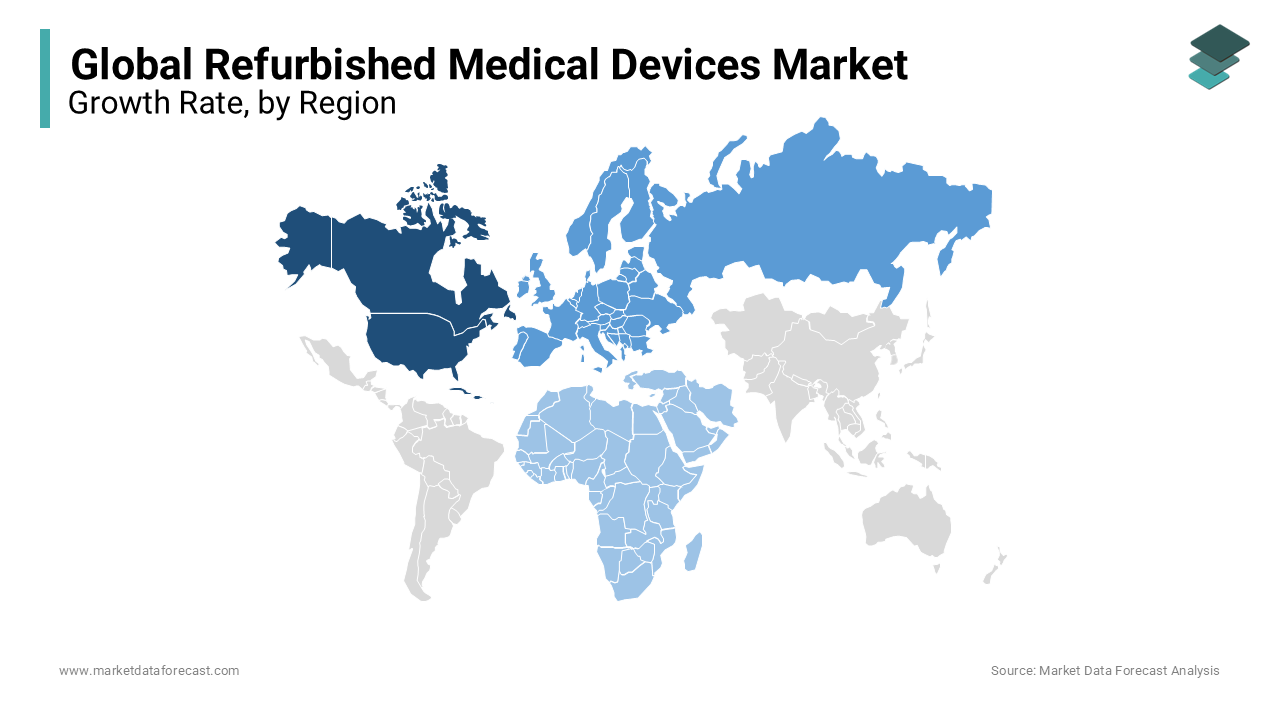
- North America dominated the global refurbished medical devices market and accounted for 45.3% of the global market share in 2025. The region's leadership is driven by advanced healthcare infrastructure, strong regulatory oversight, well-established certified refurbishment programs, increasing focus on healthcare cost optimization, and widespread adoption of refurbished imaging and surgical equipment across hospitals and outpatient centers.
- Europe held 33.2% of the global refurbished medical devices market share in 2025 owing to stringent environmental regulations, growing implementation of circular economy initiatives, increasing public healthcare expenditure optimization, strong regulatory frameworks governing refurbished medical equipment, and rising demand for sustainable healthcare procurement.
- Asia Pacific is projected to witness the fastest growth during the forecast period due to rapid healthcare infrastructure expansion, increasing medical tourism, growing government investments in affordable healthcare, rising prevalence of chronic diseases, expanding hospital modernization programs, and increasing demand for cost-effective diagnostic and monitoring equipment across developing countries.
- Latin America continues to maintain steady growth owing to increasing budget constraints across public healthcare systems, growing demand for affordable diagnostic equipment, expanding healthcare infrastructure, rising adoption of refurbished imaging systems, and increasing investments in public hospital modernization.
- The Middle East & Africa is expected to experience notable growth during the forecast period due to significant shortages of functional medical equipment, increasing government and NGO investments in healthcare infrastructure, growing demand for affordable healthcare technologies, expanding rural healthcare services, and increasing adoption of certified refurbished medical devices across developing healthcare systems.
Competitive Landscape
The global refurbished medical devices market is highly competitive and characterized by the presence of original equipment manufacturers, specialized refurbishment companies, and independent service providers competing through quality assurance, certified refurbishment programs, extended warranty services, and sustainable healthcare solutions. Leading companies are focusing on expanding certified refurbishment facilities, strengthening digital procurement platforms, offering flexible financing solutions, enhancing after-sales service capabilities, and promoting environmentally sustainable healthcare practices. Strategic partnerships with hospitals, group purchasing organizations, and healthcare providers continue to strengthen competitive positioning across the global refurbished medical devices market. The prominent players operating in the global refurbished medical devices market include Siemens Healthcare Systems, First Source Inc., DMS Topline, Radio Oncology Systems Inc., Johnson & Johnson, GE Healthcare, DRE Inc., Block Imaging International Inc., Integrity Medical Systems Inc., Everx Pvt Ltd., Philips Healthcare, Agito Medical A/S, and Soma Technology.
Global Refurbished Medical Devices Market Size
The global refurbished medical devices market size was valued at USD 13.79 billion in 2025. The refurbished medical devices market is predicted to be worth USD 39.80 billion by 2034 from USD 15.51 billion in 2026, growing at a CAGR of 12.5% from 2026 to 2034.
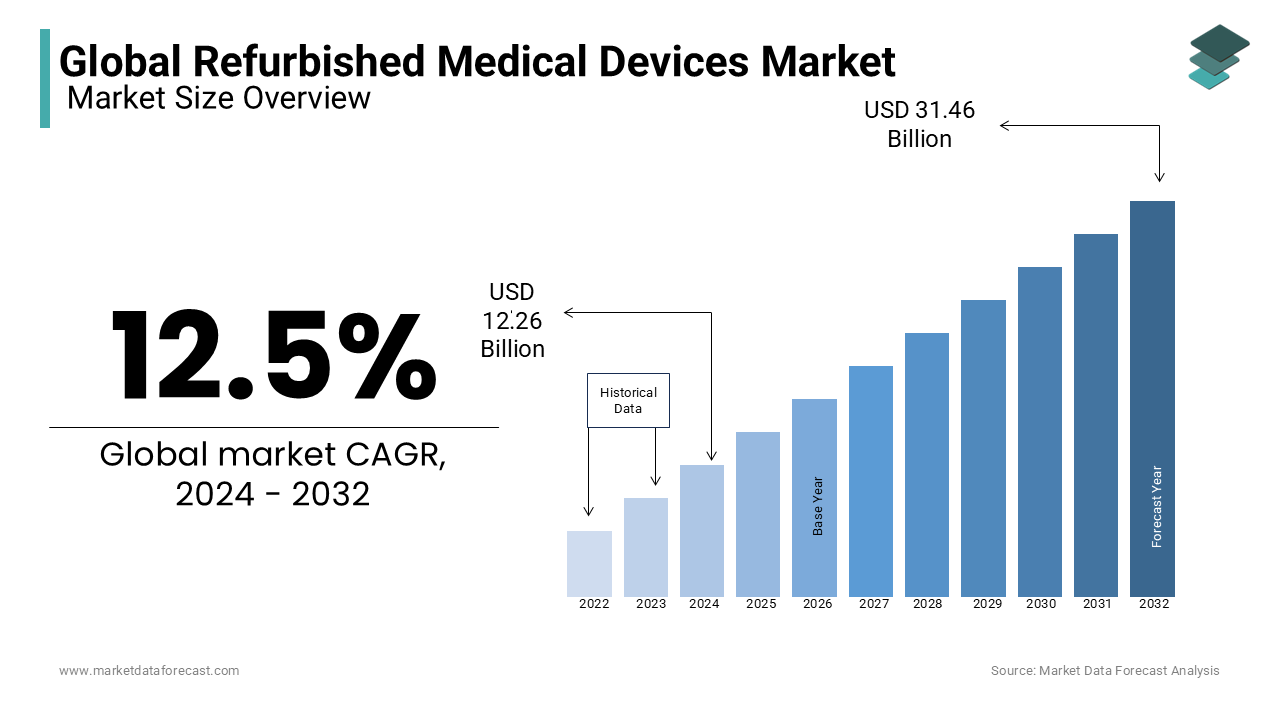
The refurbished mdical devices are high quality pre-owned medical equipment that has been restored to original manufacturer specifications through rigorous testing, repair, and certification processes. The gap between technological advancement and financial constraints within global healthcare systems. According to the World Health Organization, nearly 50% of medical equipment in low- and middle-income countries is non-functional due to lack of maintenance or spare parts, highlighting the urgent need for reliable refurbished solutions that come with service support. In developed nations, the focus shifts toward sustainability and circular economy principles, as per the European Commission which states that the healthcare sector contributes significantly to electronic waste, necessitating robust reuse frameworks. The aging infrastructure in many community hospitals and rural clinics further amplifies demand, as these facilities often operate on tight budgets while facing increasing patient volumes. Data from the Centers for Medicare and Medicaid Services indicates that hospital operating margins have tightened considerably, forcing administrators to seek value based procurement strategies. Refurbished devices offer a viable path to maintain clinical standards while managing fiscal pressures. The integration of certified third party service providers ensures that these devices meet strict safety and performance criteria, fostering trust among clinicians.
MARKET DRIVERS
Escalating Healthcare Expenditures And Budgetary Constraints Drive Cost Effective Procurement
The relentless rise in healthcare expenditures coupled with stringent budgetary by compelling healthcare providers to seek financially viable alternatives to new equipment is fuelling the growth of the refurbished medical devices market. Hospitals and clinics face increasing pressure to reduce operational costs while maintaining high standards of patient care by making refurbished devices an attractive option due to their significant cost savings. According to the American Hospital Association, the average cost of new medical imaging equipment can range from 100000 dollars to over 3 million dollars, whereas refurbished units offer similar functionality at 40% to 60% lower prices. This substantial reduction in capital outlay allows healthcare facilities to allocate resources to other critical areas such as staff recruitment, patient services, and facility upgrades. Data from the Healthcare Financial Management Association reveals that nearly 60% of hospital CFOs prioritize cost containment strategies, with equipment refurbishment emerging as a key tactic to manage capital budgets effectively. In public healthcare systems, where funding is often limited and subject to political fluctuations, the ability to extend the lifecycle of expensive assets is crucial. The economic uncertainty following global health crises has further intensified the focus on fiscal prudence, prompting even wealthy institutions to consider refurbished options for non-emergency departments. This financial imperative ensures a steady and growing demand for high quality pre owned medical devices across diverse healthcare settings.
Stringent Environmental Regulations And Sustainability Initiatives Promote Circular Economy
The strict environmental regulations and growing corporate sustainability initiatives, as part of the broader circular economy movement is additional factor fostering the growth of the refurbished medical devices market. The healthcare industry is a significant contributor to electronic waste and carbon emissions, prompting regulatory bodies and institutional leaders to prioritize eco-friendly practices. According to the European Union’s Circular Economy Action Plan, member states are required to reduce waste and promote the reuse of electrical and electronic equipment, including medical devices, to minimize environmental impact. By choosing refurbished devices, healthcare facilities can significantly reduce their carbon footprint, as the refurbishment process consumes far fewer resources than manufacturing new units. Hospitals that implement sustainable procurement policies report a 30% reduction in electronic waste generation, as per the study. Furthermore, investors and stakeholders are increasingly evaluating healthcare organizations based on their environmental, social, and governance performance by making sustainability a competitive advantage. The International Electrotechnical Commission has developed standards for the refurbishment of medical equipment, ensuring that reused devices meet safety and performance criteria while supporting environmental goals. This regulatory and social push toward sustainability not only aligns with global climate objectives but also enhances the reputation of healthcare providers, driving the preference for refurbished solutions over new purchases in environmentally conscious areas.
MARKET RESTRAINTS
Perceived Risks Regarding Quality And Reliability Hinder Market Acceptance
Despite the cost benefits, perceived risks regarding the quality and reliability is impeding the growth of the refurbished medical devices market. The fear that pre owned equipment may have hidden defects or shorter remaining lifespans compared to new devices creates hesitation among buyers, particularly for critical care applications. The lack of standardized warranty terms across different third party refurbishers adds to this uncertainty, with some providers offering limited coverage that does not match the comprehensive support of original manufacturers. Data from the Joint Commission indicates that patient safety incidents related to equipment malfunction, though rare, can have severe legal and reputational consequences for healthcare facilities by making risk aversion a dominant factor in procurement decisions. While refurbished devices must meet the same safety standards as new ones, the variability in refurbishment processes among smaller vendors can lead to inconsistencies in quality control. This perception of higher risk often outweighs the financial savings for many hospital executives, who prefer the predictability and peace of mind associated with new equipment purchases. Until the industry achieves greater uniformity in quality assurance and warranty offerings, these perceived risks will continue to limit the widespread adoption of refurbished medical devices in sensitive clinical environments.
Complex Regulatory Frameworks And Lack Of Global Standardization
The complex and fragmented regulatory frameworks governing the refurbishment of medical devices, creating barriers to trade and increasing compliance costs for service providers. The complex regulatory frameworks and lack of global standardization is another factor impeding the growth of the refurbished medical devices market. Unlike new device manufacturing, which has well established international standards, the refurbishment sector faces varying definitions and requirements across different jurisdictions, leading to confusion and inefficiency. According to the International Medical Device Regulators Forum, there is no unified global standard for what constitutes a refurbished device, with some countries treating them as used goods and others as newly manufactured products, requiring full re certification. In the United States, the Food and Drug Administration distinguishes between reprocessing and remanufacturing, with the latter subject to stricter premarket approval processes, while in Europe, the Medical Device Regulation imposes rigorous clinical evaluation requirements that can be challenging for refurbished items to meet. As per the World Health Organization, many low and middle income countries lack clear regulatory guidelines for imported refurbished equipment, leading to inconsistent enforcement and potential safety gaps. The resulting fragmentation increases costs and delays market entry, ultimately restricting the availability of high quality refurbished devices to healthcare facilities that need them most.
MARKET OPPORTUNITIES
Expansion Of Telemedicine And Remote Patient Monitoring Infrastructure
The rapid expansion of telemedicine and remote patient monitoring infrastructure is solely to promote new opportunities for the growth of the refurbished medical devices market. The shift toward decentralized care models requires a vast array of monitoring devices, such as blood pressure monitors, pulse oximeters, and portable ultrasound units, which can be sourced affordably through refurbishment channels. According to the American Telemedicine Association, the number of telehealth visits in the United States increased by 3800% during the pandemic, creating a sustained demand for home based and clinic based monitoring equipment. Refurbished devices offer a scalable solution for health systems looking to deploy large volumes of hardware without incurring prohibitive costs. Data from the Commonwealth Fund indicates that rural and underserved communities are benefiting greatly from telemedicine initiatives, but often lack the budget for new equipment, making refurbished options ideal for bridging this digital divide. Refurbished manufacturers are increasingly focusing on connectivity enabled devices that integrate seamlessly with electronic health records by enhancing their appeal for modern care delivery.
Growing Demand In Emerging Markets With Limited Healthcare Budgets
The growing demand for affordable healthcare solutions in emerging countries, as these regions struggle to balance rising healthcare needs with limited financial resources is also to escalate new opportunities for the expansion of the refurbished medical devices market. Countries in Asia, Africa, and Latin America are experiencing rapid population growth and an increasing burden of noncommunicable diseases, yet their healthcare budgets remain constrained. Refurbished devices provide a viable pathway for these nations to upgrade their diagnostic and therapeutic capabilities without exceeding their fiscal limits. Data from the African Union shows that several member states have launched initiatives to import certified refurbished equipment to improve primary care services in rural areas. Latin American countries are increasingly partnering with international refurbishers to equip district hospitals with essential imaging and laboratory tools. The ability to provide warranty backed, high quality pre owned devices allows these markets to achieve better health outcomes while managing costs effectively. Furthermore, international aid organizations and non-governmental organizations frequently utilize refurbished equipment in their humanitarian missions, creating a consistent demand channel.
MARKET CHALLENGES
Supply Chain Disruptions And Availability Of Core Components
The supply chain disruptions and the scarcity of core components that relies heavily on the availability of specific parts that may no longer be produced is to act as a major barrier for the growth of the refurbished medical devices market. Original equipment manufacturers often discontinue support for older models by making it difficult for refurbishers to source genuine replacement parts such as circuit boards, sensors, and proprietary software licenses. The global supply chain hurdles have increased lead times for electronic components by up to 50%, directly impacting the turnaround time for refurbished devices. As per the Semiconductor Industry Association, the ongoing shortage of chips affects not only new device production but also the repair of existing equipment, exacerbating the problem. This dependency on obsolete or scarce components increases operational costs and reduces the profitability of refurbishment activities. Additionally, the lack of transparency in the secondary market for parts can lead to the use of counterfeit or substandard components, compromising device safety. These supply chain vulnerabilities create instability by making it difficult for refurbishers to guarantee consistent delivery schedules and maintain high quality standards, thereby challenging their competitiveness against new device manufacturers with more robust supply networks.
Intellectual Property Rights And Legal Ambiguities
The intellectual property rights and legal ambiguities surrounding the refurbishment of medical devices is also to decline the growth of the refurbished medical devices market in next coming years. This protective stance limits the ability of independent refurbishers to fully restore devices to original specifications, leading to potential legal disputes and operational hurdles. The original equipment manufacturers frequently use digital locks and encryption to prevent unauthorized access to device firmware, arguing that this protects patient safety and brand integrity. The right to repair legislation is gaining momentum, but the medical device sector remains largely exempt or poorly defined, leaving refurbishers in a legal gray area. As per the European Commission, recent proposals aim to clarify the rights of independent service providers, but implementation remains uneven across member states. This lack of clear legal framework creates uncertainty for investors and operators in the refurbishment market, who fear litigation or injunctions from major manufacturers. The inability to access critical software updates can also render refurbished devices obsolete faster than their hardware lifespan would suggest, reducing their value proposition.
REPORT COVERAGE
| REPORT METRIC | DETAILS |
| Market Size Available | 2025 to 2034 |
| Base Year | 2025 |
| Forecast Period | 2026 to 2034 |
| Segments Covered | By Product Type and Region |
| Various Analyses Covered | Global, Regional & Country Level Analysis, Segment-Level Analysis; DROC, PESTLE Analysis, Porter's Five Forces Analysis, Competitive Landscape, Analyst Overview of Investment Opportunities |
| Regions Covered | North America, Europe, APAC, Latin America, Middle East & Africa |
| Market Leader Profiled | Siemens Healthcare Systems, First Source Inc., DMS Topline, Radio Oncology Systems Inc., Johnson & Johnson, GE Healthcare, DRE Inc., Block Imaging International Inc., Integrity Medical Systems Inc., Everx Pvt Ltd., Philips Healthcare, Agito Medical A/S and Soma Technology. |
SEGMENTAL ANALYSIS
By Product Type Insights
The operating room devices and surgical devices segment was the largest by holding 43.2% of the refurbished medical devices market share in 2025 due to their exceptionally high initial purchase costs and the rapid pace of technological innovation that renders older models obsolete quickly. Hospitals and ambulatory surgery centers face immense financial pressure to upgrade their surgical suites with advanced robotic systems, imaging guided navigation tools, and minimally invasive instrumentation, yet the capital expenditure required for brand new equipment is often prohibitive. According to the American Hospital Association, the average cost of equipping a single operating room with new state of the art technology can exceed 1 million dollars, prompting many facilities to seek certified pre owned alternatives that offer significant savings. The durability of high quality surgical equipment means that these devices often have long operational lifespans by making them ideal candidates for refurbishment and resale. As per the Association of Medical Device Reprocessors, the success rate of refurbished surgical instruments meets or exceeds original manufacturer specifications in over 95% of cases by ensuring clinical safety and efficacy. Furthermore, the increasing volume of elective surgeries globally drives demand for additional operating rooms, which refurbished equipment helps fulfill without the long lead times associated with new manufacturing.
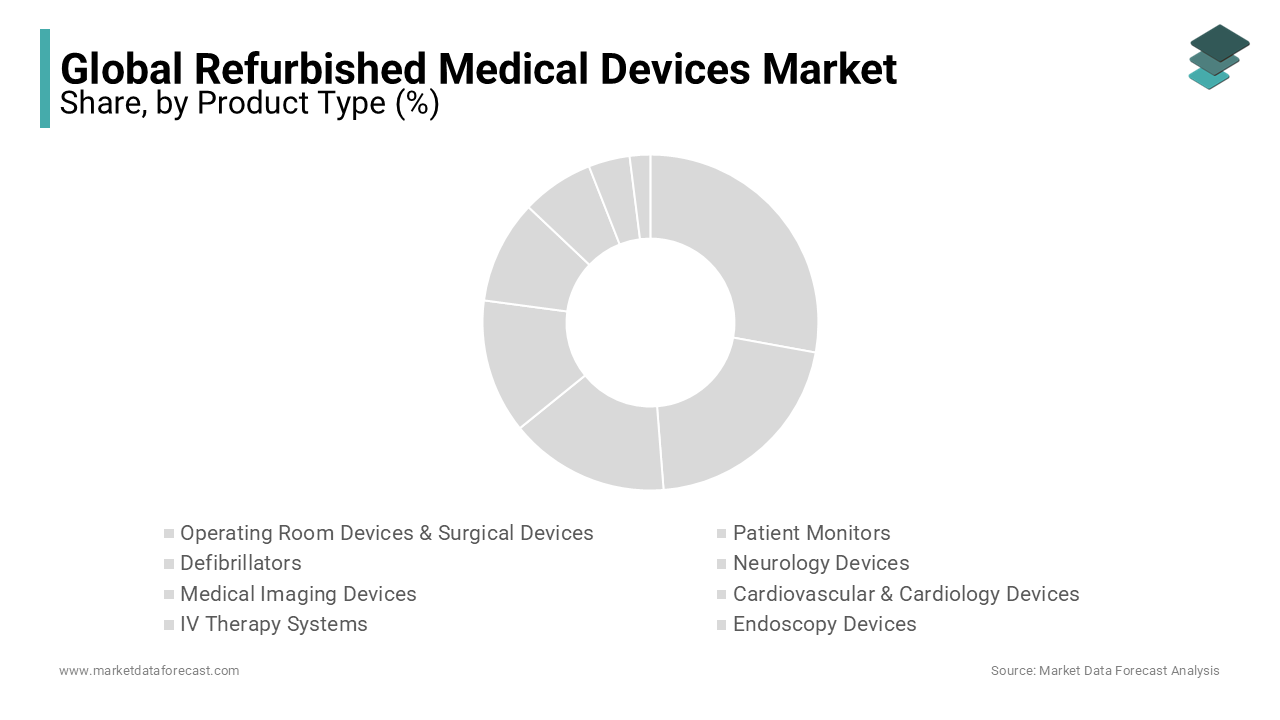
The patient monitors segment is expected to grow at a fastest CAGR of 8.2% during the forecast period with the increasing emphasis on continuous patient monitoring in both hospital settings and home care environments, coupled with the need for cost effective solutions to expand monitoring capacity. According to the research, the global burden of chronic diseases, such as hypertension and heart failure requires regular vital sign tracking, creating a surge in demand for reliable monitoring equipment. Refurbished patient monitors offer a viable solution for healthcare facilities looking to equip additional beds or expand intensive care units without incurring the full cost of new devices. Data from the Centers for Medicare and Medicaid Services indicates that hospital readmission penalties have incentivized providers to invest in better monitoring technologies to prevent complications, with refurbished units allowing for broader deployment across general wards. The integration of wireless connectivity and electronic health record compatibility in newer refurbished models enhances their appeal, as these features are critical for modern care coordination. As per the Journal of Clinical Monitoring, studies show that refurbished monitors perform with comparable accuracy to new units when properly calibrated and maintained, building trust among clinicians. The rise of telemedicine and remote patient monitoring programs further accelerates adoption, as clinics require multiple devices for loaner programs or home use. Additionally, the shorter replacement cycle of electronic components compared to mechanical surgical tools ensures a steady supply of used monitors entering the refurbishment pipeline.
REGIONAL ANALYSIS
North America Refurbished Medical Devices Market Analysis
North America was the top performer in the refurbished medical devices market by capturing 45.3% of the share in 2025 due to a mature healthcare infrastructure, stringent regulatory frameworks, and high awareness of cost containment strategies. The United States refurbished medical devices market growth is likely to grow with the large network of independent service organizations and certified reprocessors that ensure high quality standards. According to the research, the United States has over 100 accredited facilities dedicated to the refurbishment and remanufacturing of medical equipment, reflecting a well established industry ecosystem. The presence of major healthcare systems facing budget constraints drives consistent demand for cost effective alternatives to new equipment. Canada refurbished medical devices market growth is driven by the strong provincial healthcare programs that prioritize value based procurement. The region benefits from clear regulatory guidelines provided by the Food and Drug Administration, which distinguish between reprocessing and remanufacturing by fostering consumer confidence. As per study, the adoption of refurbished imaging and surgical equipment is highest in community hospitals and outpatient centers that lack the capital for new purchases. The strong legal framework protecting buyers from liability further encourages uptake.
Europe Refurbished Medical Devices Market Analysis
Europe refurbished medical devices market was ranked second by holding 33.2% of the share in 2025 with the universal healthcare systems, environmental sustainability initiatives, and increasing pressure to optimize public healthcare spending. The circular economy action plan has encouraged the reuse and refurbishment of medical equipment to reduce waste and carbon footprints, aligning with broader green healthcare goals. Germany serves as a hub for high quality engineering and refurbishment services, hosting several specialized companies that export refurbished equipment globally. The United Kingdom has seen growth in the sector following National Health Service efficiency reviews that recommend the use of certified pre owned equipment for various departments. The demand for refurbished imaging systems is particularly strong due to the high cost of new MRI and CT scanners. Regulatory harmonization under the Medical Device Regulation provides a framework for safety, although interpretation varies by member state.
Asia Pacific Refurbished Medical Devices Market Analysis
The Asia Pacific refurbished medical devices market is esteemed to witness a fastest CAGR during the forecast period with the expanding healthcare infrastructure, rising medical tourism, and the need to provide affordable care to large populations. Countries such as India, China, and Southeast Asian nations lead this transformation, where the gap between demand for advanced medical technology and available funding is significant. Data from the Indian Ministry of Health indicates that the government has launched initiatives to upgrade district hospitals with refurbished diagnostic and monitoring equipment to improve access to quality care. China’s massive healthcare expansion program includes provisions for cost effective technology adoption, driving demand for refurbished imaging and laboratory devices. Medical tourism hubs in Thailand and Singapore utilize refurbished equipment in auxiliary facilities to maintain competitive pricing. The prevalence of noncommunicable diseases in the region is rising, necessitating more monitoring and diagnostic capabilities that refurbished devices can provide affordably. The lack of strict regulatory barriers in some countries facilitates easier entry for refurbished products.
Latin America Refurbished Medical Devices Market Analysis
Latin America refurbished medical devices market growth is likely to grow with the economic volatility, fragmented healthcare systems, and a strong demand for affordable medical technology in both public and private sectors. Brazil and Mexico are the largest contributors in the region, driven by the need to equip public hospitals with functional diagnostic and surgical equipment despite budget constraints. Many public healthcare facilities in Latin America operate with outdated or broken equipment by creating a significant opportunity for refurbished devices to fill the gap. Data from the Brazilian Ministry of Health indicates that procurement processes for new equipment are often delayed by bureaucratic hurdles and funding shortages by making refurbished options an attractive alternative for immediate needs. The investment in healthcare infrastructure is increasing, but focuses heavily on cost efficiency due to fiscal limitations. Economic fluctuations in countries like Argentina and Venezuela further drive demand for lower cost alternatives. The private hospitals in urban centers are also adopting refurbished imaging and monitoring systems to expand services without heavy capital expenditure. The lack of local manufacturing capabilities for high end devices ensures a steady reliance on imported refurbished goods.
The Middle East And Africa Refurbished Medical Devices Market Analysis
The Middle East and Africa refurbished medical devices market growth is likely to be driven by the significant disparities between wealthy Gulf nations and developing African economies. Countries such as South Africa, Kenya, and Nigeria lead in Africa, while the United Arab Emirates and Saudi Arabia drive demand in the Middle East, though the latter primarily focuses on new technology. According to the World Health Organization, many African countries face severe shortages of functional medical equipment, with up to 50% of devices in public hospitals being non-operational due to lack of maintenance or spare parts. The refurbished devices are increasingly viewed as a sustainable solution to bridge the equipment gap, with NGOs and government programs importing certified pre owned equipment for rural clinics. In the Middle East, smaller private clinics and secondary hospitals are beginning to adopt refurbished imaging and monitoring systems to manage costs. The Saudi Ministry of Health has explored partnerships for equipment lifecycle management that include refurbishment components. The international donors and aid organizations frequently supply refurbished devices to conflict affected or resource poor regions by creating a steady flow of goods. Local technical capacity for maintenance is improving in major cities like Johannesburg and Nairobi, supporting the longevity of refurbished units.
COMPETITIVE LANDSCAPE
The competitive landscape of the refurbished medical devices market is characterized by a mix of original equipment manufacturers, specialized third party refurbishers, and independent service providers vying for market share through quality assurance and pricing strategies. Large manufacturers leverage their brand reputation and access to proprietary parts to offer certified pre owned programs with comprehensive warranties. Competition intensifies as providers strive to differentiate themselves through superior customer service extended warranty periods and integration of latest software updates. Regulatory compliance and adherence to international standards serve as key differentiators that influence hospital procurement decisions. New entrants face barriers due to high capital requirements for testing equipment and need for skilled technical staff. However, growing emphasis on sustainability and cost containment creates opportunities for innovative business models.
KEY MARKET PLAYERS
Some of the promising companies that are playing a dominating role in the global refurbished medical devices market include
- Siemens Healthcare Systems
- First Source Inc.
- DMS Topline
- Radio Oncology Systems Inc.
- Johnson & Johnson
- GE Healthcare
- DRE Inc.
- Block Imaging International Inc.
- Integrity Medical Systems Inc
- Everx Pvt Ltd.
- Philips Healthcare
- Agito Medical A/S
- Soma Technology
Top Players In The Global Market
Siemens Healthineers
The Siemens Healthineers is a global leader in the refurbished medical devices market through its dedicated Siemens Financial Services and certified pre owned programs. The company offers a wide range of refurbished imaging systems including magnetic resonance imaging, computed tomography, and ultrasound devices that meet strict quality standards. Siemens recently expanded its refurbishment facilities in Europe and North America to increase capacity and reduce turnaround times for customers. The organization actively promotes sustainability by highlighting the environmental benefits of choosing certified pre owned equipment over new purchases. These strategic initiatives reinforce its commitment to providing cost effective solutions while maintaining high clinical standards and strengthening its position as a trusted partner in healthcare technology lifecycle management.
GE HealthCare
GE HealthCare plays a pivotal role in the refurbished medical devices sector with its Gold Seal Certified Pre Owned program which restores equipment to original specifications. The company provides a comprehensive portfolio of refurbished diagnostic imaging and patient monitoring solutions that are widely used in hospitals and clinics globally. GE HealthCare recently launched enhanced service contracts for refurbished units that include remote monitoring and predictive maintenance capabilities. The firm collaborates with healthcare providers to offer flexible financing options that make high end technology more accessible to budget constrained facilities. Through continuous investment in refurbishment technologies and quality control processes, GE HealthCare ensures that its pre owned devices deliver consistent performance. This focus on reliability and customer support helps the company maintain a strong reputation and expand its reach in both developed and emerging markets.
Philips
Philips is a major contributor to the refurbished medical devices market with its Select Certified Pre Owned program offering a variety of imaging and patient care solutions. The company specializes in refurbishing magnetic resonance imaging, computed tomography, and ultrasound systems to meet rigorous safety and performance criteria. Philips recently introduced digital tools that allow customers to configure and purchase refurbished equipment online, streamlining the procurement process. The organization emphasizes circular economy principles by designing devices that are easier to refurbish and recycle at the end of their life cycle. These efforts demonstrate its dedication to sustainable healthcare practices and enable broader access to advanced medical technologies for healthcare institutions worldwide.
Top Strategies Used By Key Market Participants
Key players in the refurbished medical devices market primarily focus on quality certification and warranty expansion to build trust among healthcare providers. Companies invest heavily in standardized refurbishment processes that ensure devices meet original manufacturer specifications for safety and performance. Strategic partnerships with hospitals and group purchasing organizations help secure a steady supply of used equipment and create reliable distribution channels. Digital platforms are increasingly used to showcase inventory and facilitate transparent transactions with detailed condition reports. Sustainability marketing is another major strategy where firms highlight the environmental benefits of reuse to appeal to eco conscious buyers. Offering flexible financing and leasing options makes refurbished devices more accessible to smaller clinics and rural hospitals. Continuous training for biomedical engineers ensures proper maintenance and longevity of refurbished units.
RECENT MARKET HAPPENINGS
- In June 2023, Global MedTech Solutions partnered with a leading pharmaceutical company to develop refurbished infusion pumps integrated with innovative monitoring systems. The intelligent pumps can automatically adjust medication dosage based on real-time patient data, improving treatment accuracy and patient safety.
- In March 2023, Apex Medical Equipment introduced a line of refurbished surgical robots with state-of-the-art artificial intelligence algorithms. These advanced robots offer precise and minimally invasive surgical procedures, reducing recovery times and improving patient outcomes.
- In January 2023, MediTech Solutions launched its revolutionary refurbished MRI machines with enhanced imaging capabilities and advanced diagnostic features. The new technology promises higher accuracy and faster scan times, revolutionizing the field of medical imaging.
- In January 2023, GE HealthCare acquired IMACTIS, a pioneer in the quickly expanding field of Computed Tomography (CT) interventional guidance across a variety of care areas.
- In April 2022, Blue Star's wholly-owned subsidiary, Blue Star Engineering & Electronics, inaugurated a medical diagnostic equipment refurbishment facility in India.
MARKET SEGMENTATION
This research report on the global refurbished medical devices market has been segmented and sub-segmented based on product type and region.
By Product Type
- Operating Room Devices & Surgical Devices
- Patient Monitors
- Defibrillators
- Neurology Devices
- Medical Imaging Devices
- Cardiovascular & Cardiology Devices
- IV Therapy Systems
- Endoscopy Devices
- Intensive Care Systems
- Neonatal Intensive-Care Devices
- Other Medical Devices
By Region
- North America
- Latin America
- Europe
- Asia-Pacific
- Middle East & Africa