- Product Description Description
- Table of Contents TOC
- List of Table & Figure LOT
- Get Free Sample PDF Sample PDF
Market Size, 2025
$12.6 BnMarket Estimate, 2026
$13.25 BnMarket Forecast, 2034
$19.75 BnCAGR, 2026–2034
5.12%Global Angiography Equipment Market Report Summary
The global angiography equipment market was valued at USD 12.6 billion in 2025 and is projected to grow from USD 13.25 billion in 2026 to USD 19.75 billion by 2034, registering a CAGR of 5.12% from 2026 to 2034. Market growth is driven by the rising prevalence of cardiovascular diseases, increasing demand for minimally invasive diagnostic and interventional procedures, and continuous advancements in medical imaging technologies. Angiography equipment plays a vital role in the diagnosis and treatment of vascular disorders by providing high-resolution visualization of blood vessels. Growing investments in healthcare infrastructure, hybrid operating rooms, and image-guided interventions are further supporting market expansion.
Key Market Trends
- Increasing adoption of minimally invasive cardiovascular and vascular procedures.
- Growing demand for advanced digital angiography imaging systems.
- Rising investments in hybrid operating rooms and catheterization laboratories.
- Continuous advancements in AI-assisted image processing and low-dose X-ray technologies.
- Expansion of interventional cardiology and neurovascular treatment capabilities worldwide.
Segmental Insights
- Based on product, the angiography systems segment dominated the global angiography equipment market in 2025 and is expected to maintain its leading position during the forecast period, driven by its critical role as core infrastructure for diagnostic and interventional vascular procedures.
- Based on technology, the X-ray angiography segment held the largest share of the market in 2025, supported by its widespread use in coronary, peripheral, and neurovascular imaging due to its high image quality and real-time visualization capabilities.
- Based on procedure, the coronary angiography segment accounted for the largest market share in 2025, driven by the increasing global burden of coronary artery disease and growing volumes of diagnostic and therapeutic cardiac interventions.
Regional Insights
The global angiography equipment market continues to witness steady growth across major regions, supported by expanding healthcare infrastructure, technological innovation, and increasing cardiovascular disease prevalence.
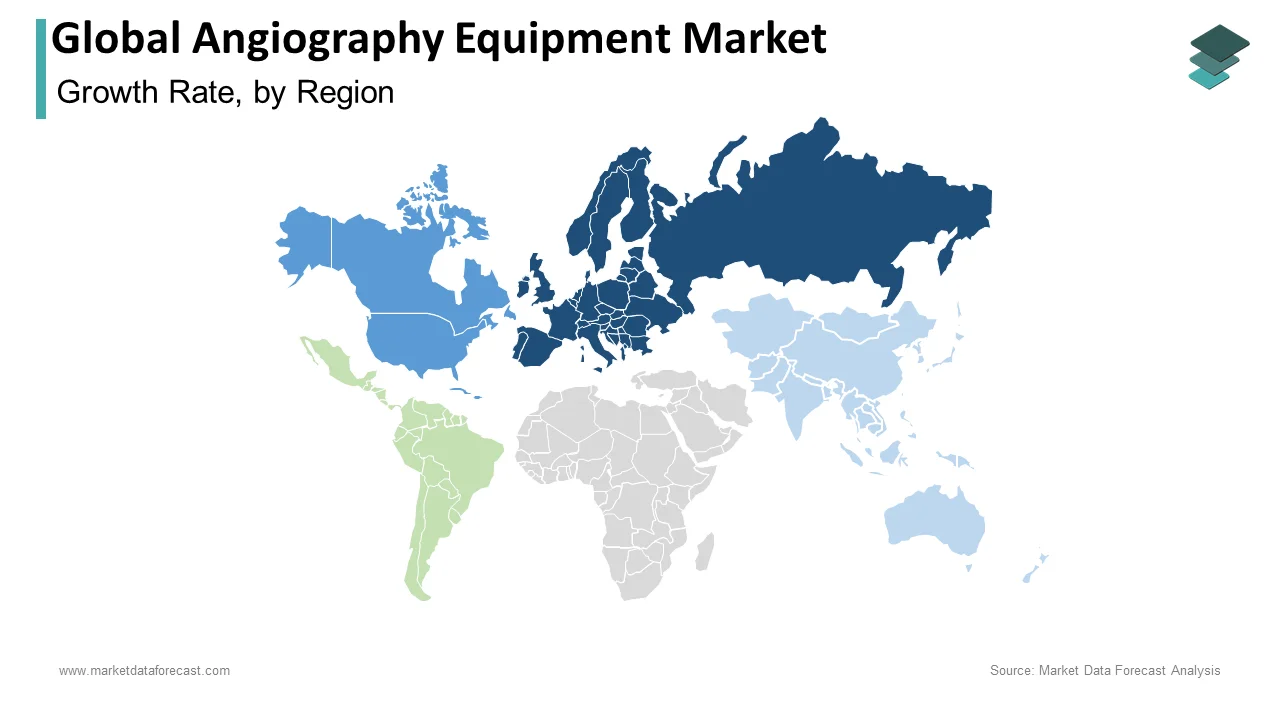
- North America dominated the global market in 2025, driven by advanced healthcare infrastructure, high adoption of image-guided interventions, substantial healthcare expenditure, and the presence of leading medical device manufacturers.
- Europe remained a major regional market, supported by its aging population, well-established healthcare systems, and strong clinical standards for cardiovascular diagnosis and treatment.
- Asia-Pacific is projected to register the fastest growth during the forecast period, driven by rapid economic development, expanding healthcare infrastructure, increasing investments in advanced medical imaging technologies, and growing access to specialized cardiovascular care.
Competitive Landscape
The global angiography equipment market is highly competitive, with leading medical imaging and cardiovascular device manufacturers focusing on technological innovation, product development, and expansion of minimally invasive treatment solutions. Market participants are investing in advanced imaging platforms, AI-enabled diagnostic systems, and integrated interventional solutions to strengthen their market position. Strategic collaborations, acquisitions, and continuous innovation continue to shape the competitive landscape.
Prominent companies operating in the global angiography equipment market include Koninklijke Philips NV, B. Braun Melsungen AG, GE Healthcare, Shimadzu Corporation, Canon Medical Systems, Boston Scientific Corporation, Medtronic, Inc., Cordis Corporation, AngioDynamics, Inc., Abbott Laboratories, and Siemens Healthineers.
Global Angiography Equipment Market Size
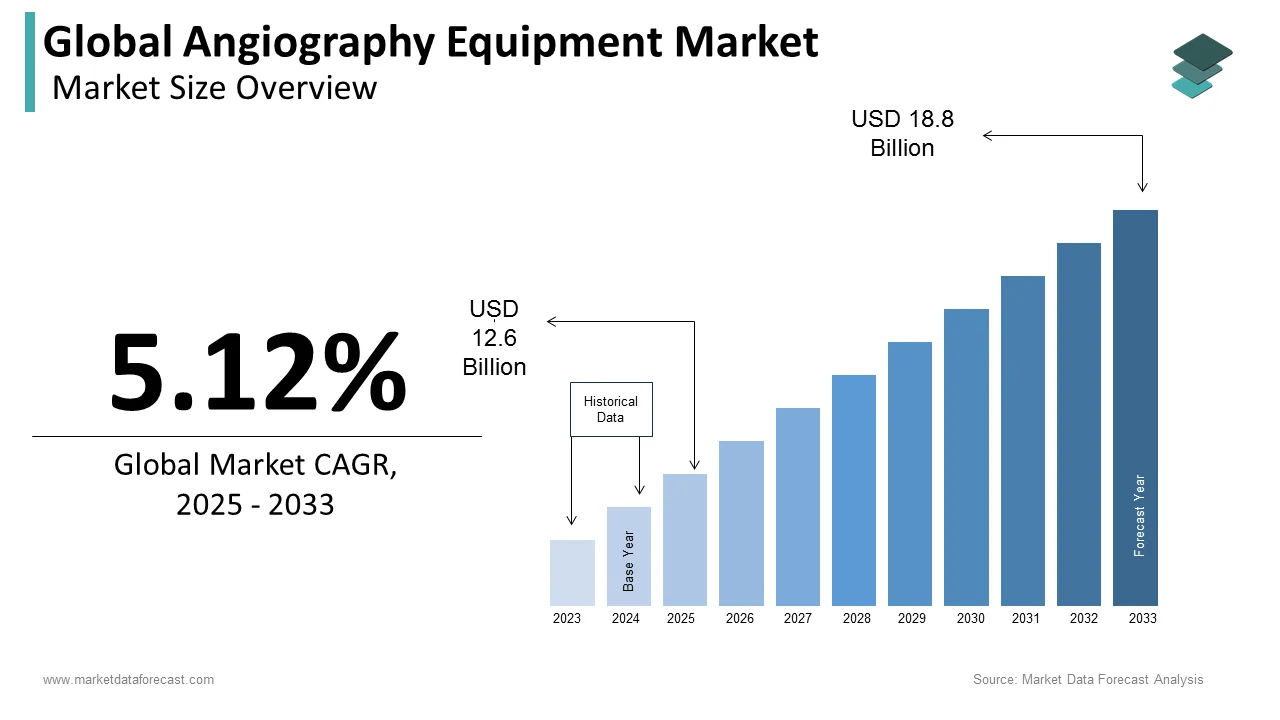
The global angiography equipment market was worth US$ 12.6 billion in 2025 and is anticipated to reach a valuation of US$ 19.75 billion by 2034 from US$ 13.25 billion in 2026, and it is predicted to register a CAGR of 5.12% during the forecast period 2026 to 2034.
Angiography equipment encompasses advanced medical imaging systems designed to visualize the interior of blood vessels and organs, particularly those that are difficult to see with standard X-ray techniques. These systems utilize catheter-based interventions combined with real-time fluoroscopy and digital subtraction angiography to diagnose and treat vascular conditions such as blockages, aneurysms, and malformations. The technology serves as a cornerstone for minimally invasive procedures in cardiology, neurology, and oncology, enabling precise navigation through complex vascular networks. According to the World Health Organization, cardiovascular diseases remain the leading cause of death globally, claiming an estimated 17.9 million lives annually, which necessitates robust diagnostic infrastructure for early detection and intervention. As per the American Heart Association, over 800,000 people in the United States suffer from a heart attack each year, requiring immediate angiographic evaluation to determine eligibility for revascularization therapies. The European Society of Cardiology reports that coronary artery disease is a major global health challenge, driving the need for high-resolution imaging capabilities in catheterization laboratories. This clinical dependency underscores a market defined by technological precision where image quality, radiation dose management, and procedural efficiency dictate equipment selection across tertiary care centers and specialized heart institutes globally.
MARKET DRIVERS
Rising Prevalence of Cardiovascular and Cerebrovascular Diseases
The increasing incidence of cardiovascular and cerebrovascular disorders is expected to drive sustained demand for angiography systems, which is one of the key factors propelling the global market growth as healthcare systems prioritize early diagnosis and minimally invasive treatment options over the next few years. According to the Global Burden of Disease Study, the number of individuals living with ischemic heart disease increased significantly between 2010 and 2021, reflecting aging populations and lifestyle-related risk factors such as hypertension and diabetes. The Centers for Disease Control and Prevention states that one person dies every 34 seconds in the United States from cardiovascular disease, creating an urgent demand for rapid diagnostic tools like angiography systems that can guide lifesaving interventions. As per the World Health Organization, stroke remains the second leading cause of death globally, with mechanical thrombectomy becoming the standard of care for large vessel occlusions requiring advanced angiographic suites equipped with biplane imaging capabilities. As per the estimations of the World Heart Federation, the global cost of cardiovascular disease is substantial, prompting governments to invest in preventive and interventional infrastructure to reduce long-term economic burdens. This epidemiological trend ensures sustained demand for angiography equipment as hospitals expand their catheterization labs to handle growing patient volumes and improve survival rates through timely revascularization procedures.
Technological Advancements in Minimally Invasive Procedures
The adoption of hybrid operating rooms is expected to accelerate as healthcare providers seek to improve procedural versatility and patient safety over the next few years, which is further boosting the angiography equipment market expansion. According to the Society of Thoracic Surgeons, hybrid rooms allow for seamless transition between open surgery and endovascular techniques, reducing operative time and improving outcomes for patients with complex aortic pathologies. Medical literature indicates that facilities equipped with hybrid angiography systems have seen improved outcomes in complex endovascular aortic repair procedures due to enhanced visualization and instrument navigation. For instance, the adoption of 3D rotational angiography has contributed to optimized contrast media usage while enhancing vessel wall delineation, making procedures safer for patients with renal impairment. The American College of Radiology highlights that modern angiography systems now feature artificial intelligence-driven image enhancement, which lowers radiation exposure, addressing safety concerns for both patients and staff. This technological synergy creates a compelling value proposition for healthcare providers seeking to consolidate services and offer comprehensive vascular care under one roof, thereby stimulating procurement of state-of-the-art imaging platforms.
MARKET RESTRAINTS
High Capital Expenditure and Maintenance Costs
Financial barriers are likely to continue influencing procurement strategies in resource-constrained settings over the next few years as hospitals balance high costs with the need for modern technology. According to industry analysis, the average cost of a new fixed catheterization lab angiography system can range from 1.5 million to 3 million dollars, excluding installation and facility modification costs. The World Bank indicates that healthcare expenditure per capita in low-income countries remains limited, making such high-ticket items often unaffordable without external funding or public-private partnerships. As per the Association for the Advancement of Medical Instrumentation, annual service contracts for angiography systems typically cost 10% to 15% of the purchase price, creating a recurring financial burden for hospital administrators. Organizations such as the International Society of Pharmacoeconomics and Outcomes Research note that reimbursement rates for angiographic procedures have stagnated in many markets, forcing providers to extend the lifecycle of older equipment rather than upgrading to newer technologies. This economic constraint limits market penetration for premium systems and encourages the use of refurbished units or lower specification models that may lack advanced features such as dose reduction algorithms or high frame rate acquisition capabilities.
Stringent Regulatory Requirements for Radiation Safety
Regulatory compliance is expected to remain a critical focus for manufacturers and healthcare providers as safety standards continue to evolve over the next few years, which is further hindering the angiography equipment market expansion. According to the International Atomic Energy Agency, global safety standards require angiography systems to incorporate advanced dose monitoring and automatic exposure control mechanisms to minimize patient and staff radiation risks. The United States Food and Drug Administration mandates extensive pre-market approval processes for novel angiography technologies, including clinical trials demonstrating safety compared to existing devices. As per the European Commission Medical Device Regulation, manufacturers must provide comprehensive post-market surveillance data and risk management files, increasing the administrative burden and cost of maintaining market authorization. The National Council on Radiation Protection and Measurements reports that facilities must undergo regular audits and staff training to ensure compliance with dose limits, adding to operational overhead. These regulatory hurdles create barriers to entry for smaller innovators and delay the availability of cutting-edge technologies in clinical settings where they could improve diagnostic accuracy and patient outcomes.
MARKET OPPORTUNITIES
Expansion into Emerging Markets with Growing Healthcare Infrastructure
Healthcare infrastructure investment is projected to drive significant expansion in emerging markets as nations modernize their medical facilities, which is a prominent opportunity for the angiography equipment market. According to the Asian Development Bank, major regional economies are prioritizing investments in healthcare infrastructure, including the development of hospitals equipped with modern diagnostic capabilities. Government initiatives in countries like Brazil have supported the expansion of cardiac catheterization labs, aiming to reduce wait times for cardiovascular procedures. As per the Indian Ministry of Health and Family Welfare, the Ayushman Bharat scheme has expanded insurance coverage for heart diseases, enabling millions of previously uninsured patients to access angiographic diagnostics and interventions. The Middle East Health Council indicates that Gulf Cooperation Council countries are establishing regional centers of excellence for cardiovascular care, attracting international patients and driving demand for high-end angiography systems. This surge in infrastructure development creates a vast untapped market for manufacturers offering scalable solutions tailored to the specific needs and budget constraints of emerging economies.
Integration of Artificial Intelligence and Cloud-Based Analytics
The integration of smart imaging solutions is expected to gain momentum as facilities seek to optimize workflows and enhance diagnostic precision, which is another prominent opportunity for the global market. According to research published in the Journal of Digital Imaging, AI algorithms integrated into angiography platforms can assist in detecting vessel characteristics, potentially reducing interpretation time and minimizing observer variability. The Healthcare Information and Management Systems Society reports that cloud-based storage of angiographic images facilitates telemedicine consultations, allowing experts in urban centers to guide procedures in remote locations, improving access to specialized care. As per the Radiological Society of North America, machine learning models trained on large datasets can help predict procedural complications and optimize contrast injection protocols, enhancing patient safety and resource utilization. The European Society of Radiology highlights that digital twins created from angiographic data enable virtual planning of complex interventions, reducing procedure time and radiation exposure. These technological advancements allow manufacturers to differentiate their offerings through value-added software services, creating recurring revenue streams and strengthening customer loyalty in an increasingly competitive market.
MARKET CHALLENGES
Shortage of Skilled Interventional Radiologists and Cardiologists
Workforce development is expected to be a primary area of concern for the healthcare industry as it addresses the scarcity of specialized personnel, which is primarily challenging the angiography equipment market expansion. According to the World Health Organization, there is a global deficit of health workers, with specialists in vascular interventions being particularly scarce in rural and underserved areas. Professional societies project that the demand for interventional cardiologists will continue to outpace supply due to an aging workforce and competitive fellowship training slots. As per the European Society of Radiology, many healthcare facilities in developing regions lack the personnel to operate advanced angiography systems, leading to underutilization of expensive assets and delayed patient care. International health reports indicate that training programs for interventional specialties require years of specialized education, creating a bottleneck in workforce expansion. This human capital constraint forces manufacturers to invest heavily in user-friendly interfaces and automated features to reduce the skill threshold required for operation while also supporting educational initiatives to build local capacity.
Managing Cybersecurity Risks in Connected Imaging Devices
Cybersecurity management is anticipated to become a foundational requirement for connected medical devices as digital health ecosystems continue to grow, which is further challenging the global market growth. According to the Department of Health and Human Services, healthcare cyberattacks have seen a notable increase, with medical imaging devices often serving as potential entry points due to outdated software and weak authentication protocols. The International Electrotechnical Commission reports that legacy angiography systems may require more robust encryption and patch management capabilities to protect against ransomware attacks that can halt critical procedures. As per the Healthcare Cybersecurity Industry Alliance, the average cost of a data breach in healthcare is significant, prompting stricter security requirements for device manufacturers. The Food and Drug Administration has issued guidance requiring manufacturers to implement secure-by-design principles and provide timely security updates throughout the product lifecycle. These security challenges require significant investment in software development and continuous monitoring, increasing the total cost of ownership and complicating the integration of angiography systems into modern digital health ecosystems.
REPORT COVERAGE
| REPORT METRIC | DETAILS |
| Market Size Available | 2025 to 2034 |
| Base Year | 2025 |
| Forecast Period | 2026 to 2034 |
| Segments Covered | By Product, Technology, Procedure, Application, End-user, and Region |
| Various Analyses Covered | Global, Regional & Country Level Analysis, Segment-Level Analysis; DROC; PESTLE Analysis; Porter’s Five Forces Analysis, Competitive Landscape, Analyst Overview of Investment Opportunities |
| Regions Covered | North America, Europe, Asia Pacific, Latin America, Middle East & Africa |
| Market Leaders Profiled | Koninklijke Philips NV, B. Braels Melsungen AG, GE Healthcare, Shimadzu Corporation |
SEGMENTAL ANALYSIS
By Product Insights
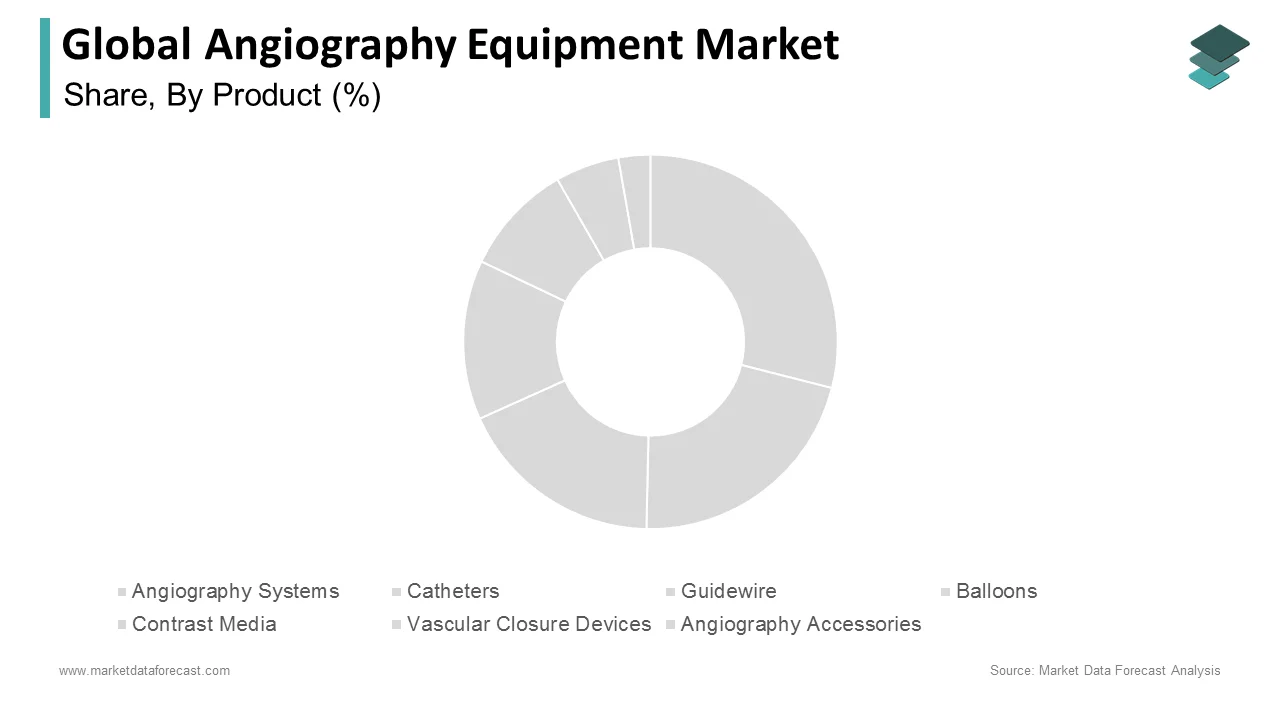
The angiography systems segment dominated the market in 2025 and is expected to maintain its dominant market position as essential infrastructure for interventional procedures over the next few years. According to the American College of Cardiology, thousands of new cardiac catheterization laboratories are established globally, with each lab requiring at least one fixed or mobile angiography system. The European Society of Cardiology reports that the replacement cycle for angiography systems typically averages 7 to 10 years, driven by technological obsolescence and updates regarding radiation safety standards. As per data provided by healthcare regulatory bodies, thousands of angiography systems are currently operational in major markets, generating consistent revenue through service contracts and software upgrades. Industry reports note that the shift toward hybrid operating rooms has increased demand for high-end biplane systems capable of supporting complex surgical interventions alongside diagnostic imaging. This foundational requirement ensures that angiography systems remain the largest revenue generator in the market as they enable all downstream consumable usage, including catheters, guidewires, and contrast media, creating a captive ecosystem for manufacturers.
By Technology Insights
The X-ray angiography technology segment held the leading share of the angiography equipment market in 2025 and is likely to remain the standard for interventional guidance due to its unmatched real-time imaging capabilities over the next few years. According to the American College of Radiology, the vast majority of endovascular interventions, including stent placements and embolizations, rely on fluoroscopic guidance provided by X-ray-based angiography systems. The International Atomic Energy Agency states that modern digital subtraction angiography techniques have significantly reduced radiation doses while maintaining image quality, addressing safety concerns and extending the utility of X-ray technology. As per the Society of Interventional Radiology, X-ray systems offer superior temporal resolution compared to magnetic resonance or computed tomography, allowing physicians to visualize blood flow dynamics and instrument movement instantaneously. The European Society of Cardiology highlights that the integration of three-dimensional rotational angiography with standard X-ray platforms has enhanced procedural accuracy for complex anatomical structures such as cerebral aneurysms. This irreplaceable role in live intervention ensures that X-ray technology continues to dominate despite the emergence of alternative non-ionizing modalities.
By Procedure Insights
The coronary angiography segment had the major share of the global angiography equipment market in 2025 and is expected to sustain its market leadership due to the high global prevalence of heart disease over the next few years. According to the World Health Organization, ischemic heart disease accounts for a significant percentage of total deaths globally, necessitating millions of diagnostic and interventional coronary procedures annually. The American Heart Association reports that approximately 1 million percutaneous coronary interventions are performed in the United States each year, with coronary angiography serving as the gold standard for identifying blockages and planning revascularization. As per the European Society of Cardiology, registry data indicates that millions of coronary angiograms are conducted in Europe annually, supported by well-established reimbursement pathways and clinical guidelines. The National Institute for Health and Care Excellence mandates timely angiographic assessment for patients presenting with acute coronary syndromes, ensuring consistent procedural volume in emergency departments. This entrenched clinical pathway and high disease prevalence secure the dominant position of coronary angiography in the market, driving continuous demand for specialized catheters and imaging systems.
REGIONAL ANALYSIS
North America Angiography Equipment Market Analysis
North America accounted for the largest share of the global market in 2025 and is expected to remain a primary driver of market innovation and revenue due to its advanced healthcare infrastructure over the next few years. According to the Centers for Disease Control and Prevention, heart disease remains the leading cause of death in the United States, driving consistent demand for diagnostic and interventional angiography. The American College of Cardiology reports that there are over 2,500 accredited cardiac catheterization labs in the US, ensuring widespread access to advanced angiographic technologies. As per the Canadian Institute for Health Information, Canada performs over 100,000 angiographic procedures annually, supported by universal healthcare coverage that facilitates early diagnosis and treatment. The United States Food and Drug Administration continues to approve innovative angiography systems with artificial intelligence capabilities, fostering a competitive environment that encourages technological leadership. This combination of high disease burden and robust reimbursement mechanisms ensures that North America remains the primary driver of market innovation and revenue.
Europe Angiography Equipment Market Analysis
Europe is projected to maintain its position as a major market for angiography equipment due to its aging demographic and established clinical standards over the next few years. According to Eurostat, the proportion of people aged 65 and older in the European Union is substantial, creating a large patient pool for age-related vascular conditions requiring angiographic evaluation. As per the European Society of Cardiology, member countries perform over 3 million coronary angiograms annually, with Germany, France, and the United Kingdom leading in volume due to well-funded national health systems. As per the European Commission Medical Device Regulation, manufacturers must adhere to rigorous clinical evidence requirements, influencing product launch strategies and favoring established players with robust data. The National Institute for Health and Care Excellence in the United Kingdom provides clear guidelines on the appropriate use of angiography, promoting cost-effective care. This regulated environment ensures high standards of patient safety while managing healthcare expenditures through centralized procurement.
Asia Pacific Angiography Equipment Market Analysis
Asia Pacific is expected to be the fastest-growing market due to rapid economic development and significant healthcare investments over the next few years. According to health authorities, cardiovascular disease mortality in countries like China has prompted massive government investment in hospital infrastructure and catheterization labs. For instance, the number of interventional cardiology centers in India has grown significantly since 2020, supported by private sector expansion and medical tourism. As per the Japanese Circulation Society, Japan faces a super-aged society with high rates of stroke and coronary artery disease, driving demand for advanced neurovascular and coronary angiography systems. According to the Australian Institute of Health and Welfare, Australia maintains high standards of care with increasing adoption of hybrid operating rooms. This dynamic growth environment creates significant opportunities for manufacturers to expand their footprint in emerging economies.
Latin America Angiography Equipment Market Analysis
Latin America is likely to see gradual growth in its angiography market as healthcare access and infrastructure continue to improve over the next few years. According to the Pan American Health Organization, Brazil accounts for nearly half of the regional market volume, with increasing numbers of public and private hospitals investing in angiography equipment to reduce wait times. For instance, coverage for cardiovascular procedures has expanded in major economies, reducing out-of-pocket costs for patients and increasing utilization rates in major urban centers. As per government health ministry data, private healthcare spending on diagnostic imaging has seen consistent growth, driven by corporate insurance plans covering elective and emergency surgeries. The Colombian National Health Institute indicates that importation of medical devices has stabilized, allowing for a more consistent supply of high-quality angiography systems. While economic volatility remains a challenge, the rising burden of chronic diseases is driving steady demand for affordable and reliable imaging solutions.
Middle East and Africa Angiography Equipment Market Analysis
Middle East and Africa are projected to experience accelerating growth as regional governments prioritize healthcare modernization and medical tourism over the next few years. According to regional health ministries, national vision initiatives include significant funding for hospital upgrades and specialization in cardiovascular care, leading to increased adoption of advanced angiography technologies. According to sources, hubs like Dubai and Abu Dhabi have become regional centers for medical tourism, attracting patients seeking high-quality interventional cardiology and neurovascular services. As per research councils, public sector hospitals are expanding their capacity to treat stroke and heart disease with improved access to diagnostic imaging and interventional procedures. Local health authorities indicate that distribution networks for medical devices are strengthening, improving availability in remote areas. This transition toward specialized care creates emerging opportunities for manufacturers to introduce innovative products to a developing market.
COMPETITIVE LANDSCAPE
The competitive landscape of the angiography equipment market is characterized by intense rivalry among established multinational corporations that compete on technological superiority, clinical evidence, and service quality. Leading companies differentiate themselves through proprietary imaging algorithms and detector technologies that offer superior resolution and lower radiation doses, which are critical factors for physician preference. Intellectual property protection around hardware designs and software innovations creates significant barriers to entry for new competitors while fostering continuous advancement in image processing capabilities. Price competition remains relevant in tender-based procurement systems, particularly in public healthcare sectors, prompting manufacturers to demonstrate cost-effectiveness through improved procedural efficiency and reduced complication rates. Consolidation through strategic acquisitions allows larger firms to broaden their product portfolios and achieve economies of scale in manufacturing and distribution. Regulatory compliance with stringent safety standards further shapes competitive dynamics, requiring substantial investment in clinical trials and post-market surveillance. Collaboration with key opinion leaders helps validate new technologies and accelerate market adoption, ensuring that only proven solutions gain widespread traction in clinical practice.
KEY MARKET PLAYERS
Some of the key market players dominating the global angiography equipment market profiled in this report are
- Koninklijke Philips NV
- Braun Melsungen AG
- GE Healthcare
- Shimadzu Corporation
- Canon Medical Systems
- Boston Scientific Corporation
- Medtronic, Inc.
- Cordis Corporation
- AngioDynamics, Inc.
- Abbott Laboratories
- Siemens Healthineers
TOP PLAYERS IN THE MARKET
- Siemens Healthineers is a global leader in medical imaging, providing advanced angiography systems such as the Artis Q and Artis Pheno platforms. The company focuses on integrating artificial intelligence into its imaging workflows to enhance procedural efficiency and reduce radiation exposure for patients and staff. Recently, Siemens Healthineers launched new software updates that enable automated vessel analysis and real-time guidance during complex interventions. This technological innovation strengthens their market position by offering superior diagnostic clarity and operational speed. By expanding their service network and collaborating with key opinion leaders, Siemens ensures widespread adoption of their high-end systems while maintaining a strong reputation for reliability and clinical excellence in interventional radiology and cardiology departments worldwide.
- GE HealthCare offers a comprehensive portfolio of angiography solutions, including the Innova IGS series designed for versatile vascular and neurovascular procedures. The company emphasizes precision imaging and dose management technologies to support safe and effective minimally invasive treatments. GE HealthCare recently introduced enhanced visualization tools that improve contrast resolution, allowing physicians to detect smaller vessels and subtle pathologies with greater accuracy. Their strategic focus on digital health integration enables seamless data sharing across hospital systems, improving workflow coordination. By investing in research and development and strengthening partnerships with healthcare providers, GE HealthCare reinforces its leadership in the angiography market through continuous product improvement and customer-centric service offerings.
- Canon Medical Systems provides innovative angiography equipment known for its high image quality and low radiation dose capabilities, such as the Alphenix series. The company leverages its expertise in detector technology to deliver sharp images even at reduced exposure levels, protecting patient safety. Canon Medical Systems recently expanded its hybrid operating room solutions integrating advanced imaging with surgical robotics for complex cardiovascular procedures. This holistic approach addresses the growing demand for multifunctional intervention spaces. By focusing on user-friendly interfaces and robust engineering, Canon strengthens its competitive stance and appeals to institutions seeking reliable and efficient imaging platforms for diverse clinical applications in cardiology and neurology.
TOP STRATEGIES USED BY KEY MARKET PARTICIPANTS
Key players in the angiography equipment market primarily focus on technological innovation through the integration of artificial intelligence and machine learning to enhance image quality and streamline clinical workflows. Companies invest heavily in research and development to create systems with lower radiation doses and higher resolution detectors, addressing safety concerns and diagnostic precision. Strategic partnerships with hospitals and academic institutions facilitate clinical validation and training programs that promote best practices for using advanced angiography features. Manufacturers are also expanding into emerging markets by offering scalable solutions tailored to local infrastructure needs and budget constraints. Additionally, firms emphasize after-sales service and software upgrades to generate recurring revenue and maintain long-term customer relationships in a competitive landscape.
MARKET SEGMENTATION
This research report on the global angiography equipment market has been segmented and sub-segmented based on the product, technology, procedure, application, end-user, and region.
By Product
- Angiography Systems
- Catheters
- Guidewires
- Balloons
- Contrast Media
- Vascular Closure Devices
- Angiography Accessories
By Technology
- X-Ray
- Magnetic Resonance Angiography (MRA)
- Computed Tomography (CT)
- Other Technologies
By Procedure
- Coronary Angiography
- Endovascular Angiography
- Neurovascular Angiography
- Onco-Angiography
- Other Procedures
By Application
- Diagnostic
- Therapeutic
By End User
- Hospitals and Clinics
- Diagnostic and Imaging Centers
- Research Institutes
By Region
- North America
- The U.S.
- Canada
- Rest of North America
- Europe
- UK
- Germany
- France
- Italy
- Spain
- Rest of EU
- Asia-Pacific
- India
- China
- Japan
- Australia
- South Korea
- Rest of Asia-Pacific
- Latin America
- Brazil
- Mexico
- Argentina
- Chile
- Rest of Latin America
- Middle East
- Africa