- Product Description Description
- Table of Contents TOC
- List of Table & Figure LOT
- Get Free Sample PDF Sample PDF
Market Size, 2025
$378.9 MnMarket Estimate, 2026
$411.2 MnMarket Forecast, 2034
$791.6 MnCAGR, 2026–2034
8.53%Executive Summary: Asia Pacific Shea Butter Market
- Market Scope: Comprehensive Asia-Pacific shea butter market analysis covering product types, application sectors, country-level insights, and natural cosmetics and food industry demand trends.
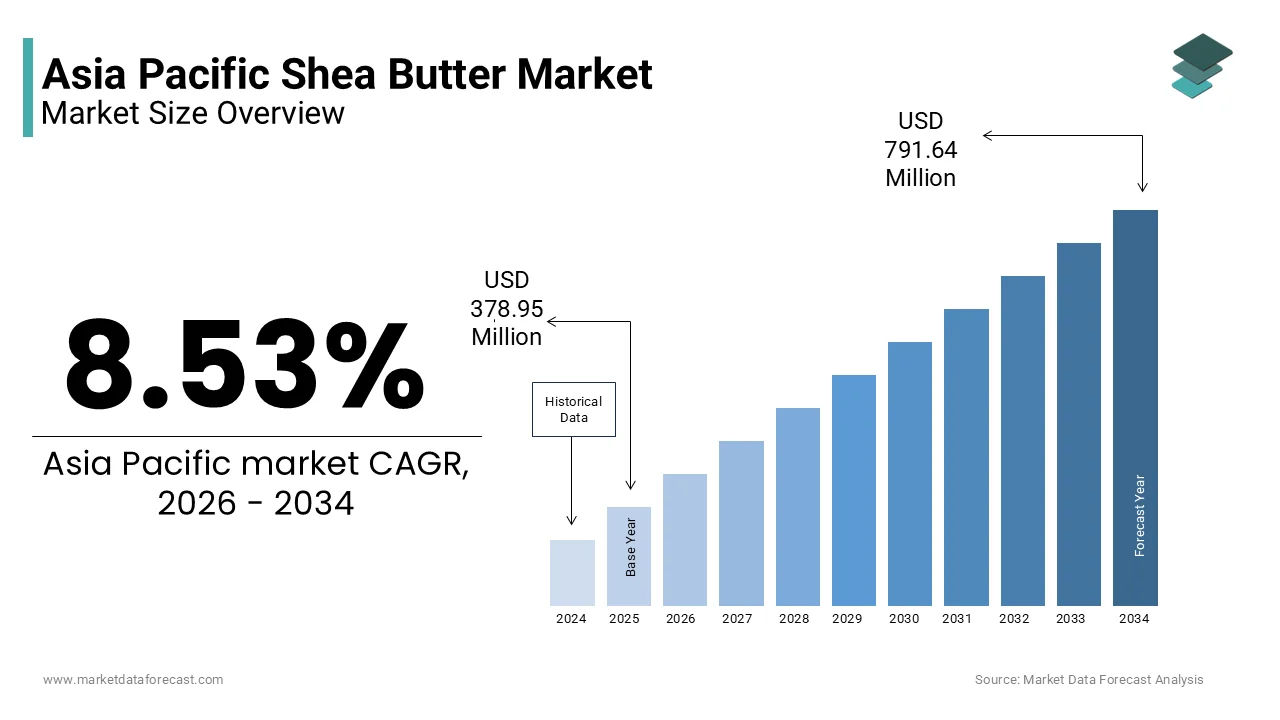
- Market Valuation: Valued at USD 378.95 million (2025), estimated at USD 411.27 million (2026), and projected to reach USD 791.64 million by 2034, registering a robust CAGR of 8.53% (2026–2034).
- Primary Growth Drivers: Increasing population and rising disposable incomes across Asia-Pacific, rising demand for cocoa equivalent products and chocolate consumption, increasing consumer preference for natural cosmetics, and growing health awareness regarding hydrogenated oils and trans fats.
Key Market Segment Metrics (2026–2034)
| Category | Leading Segment (2025 Position) | Fastest-Growing Segment |
|---|---|---|
| By Type | Unrefined Shea Butter (accounts for a major share of the market due to its natural healing and therapeutic properties) | Refined Shea Butter (driven by commercial cosmetic and personal care manufacturing demands) |
| By Application | Cosmetics & Personal Care (leading application sector supported by rising demand for anti-inflammatory, skin care, and moisturizing properties) | Food & Confectionery (expanding through cocoa butter substitute and chocolate consumption growth) |
| By Country | China & India (dominating the regional market share due to increasing population and rising disposable income) | Japan, South Korea & Australia (expanding rapidly due to high demand for advanced natural personal care products) |
Major Market Players & Market Structure
Market Structure: Competitive specialty fats and natural cosmetic ingredients landscape featuring specialized international suppliers and local distributors competing on product purity, unrefined quality, and application versatility across food and skincare sectors.
Key Companies: Star Shea Ltd., Bread For Life, All Pure Nature Ltd., Shea Radiance, Vink Chemicals GmbH & Co. KG, Jedwards International, Inc., Lovinah Naturals, Maison Karite Sociedad Limitada, Shebu Industries, Shea Therapy Ltd, and The Pure Company.
 Download Free Sample Report
Asia Pacific Shea Butter Market Size
The Asia Pacific shea butter market size was valued at USD 378.95 million in 2025 and is projected to reach USD 791.64 million by 2034 from USD 411.27 million in 2026, growing at a CAGR of 8.53%.
Shea butter derived from the nuts of the shea tree serves as a critical emollient and moisturiser in skincare formulations across countries such as China, Japan, South Korea and India. As per studies, global shea nut equivalent exports from West Africa have reached approximately 200,000 to 500,000 metric tons annually, with Asia-Pacific emerging as a fast-growing market for processed shea derivatives. According to the Food and Agriculture Organisation, approximately 3 million women in West Africa are employed in the shea sector and depend on it for their livelihoods, which helps feed the expanding global and Asian supply chains. This economic linkage ensures a steady flow of raw materials despite geographical distances. The preference for organic and sustainably sourced beauty products has accelerated demand in urban centres where disposable incomes are rising. Manufacturers in the Asia Pacific region are increasingly integrating shea butter into premium hair care and skin protection lines due to its high concentration of vitamins A and E. As regulatory frameworks in countries like Australia and New Zealand tighten around synthetic additives, the shift toward botanical alternatives strengthens the market position of shea-based formulations. This transition reflects a broader consumer trend toward transparency and ingredient purity in personal care routines.
MARKET DRIVERS
Rising Disposable Income and Premiumization of Personal Care Products Drive Demand
Increasing disposable income across the region propels the Asia Pacific shea butter market. This directly fuels the consumption of premium personal care products containing shea butter. As per sources, rising household wealth is driving continuous growth in out-of-pocket health and wellness expenditures, accelerating consumer demand for higher-quality medical and personal care products. Consumers in emerging economies such as Vietnam, Indonesia, and Thailand are prioritising skincare solutions that offer tangible benefits such as hydration and anti-ageing properties. Shea butter fits this demand profile perfectly due to its proven efficacy and natural origin. According to the Organisation for Economic Co-operation and Development (OECD), the expanding middle-class population in the Asia-Pacific region is projected to reach 3.5 billion people by 2030, capturing a dominant share of global consumer spending. This demographic shift encourages brands to formulate luxury creams, lotions, and hair masks with shea butter as a key component. According to studies, dermocosmetics, skin-barrier repair lines, and clean botanical segments registered strong consumer interest and resilient expansion despite broader economic headwinds and a general retail market cooling in 2022. Retailers are responding by stocking diverse shea-based products ranging from body butters to facial serums. The correlation between income growth and product premiumization ensures sustained market momentum. Brands leverage this trend by emphasising the rarity and artisanal nature of shea harvesting, which resonates with affluent consumers seeking authenticity. This economic driver underpins the long-term viability of the shea butter market in the region.
Growing Awareness Of Natural And Organic Ingredients Boosts Market Penetration
Consumer awareness regarding the harmful effects of synthetic chemicals in cosmetics significantly fuels the growth of the Asia Pacific shea butter market. According to research, a significant majority of shoppers across premium East Asian markets actively prioritise skincare formulations that emphasise clean, natural, or organic certification labels. The behavioural change stems from increased access to information through digital platforms and social media, where influencers highlight the benefits of plant-based ingredients. Shea butter is perceived as a safe and effective alternative to petroleum-derived emollients. As per sources, the Global Organic Textile Standard (GOTS) defines rigid processing, manufacturing, and supply chain labelling benchmarks exclusively for personal care products composed of textile components, such as cotton pads, bandages, and hygiene wipes. The trend compels manufacturers to reformulate existing products and launch new lines featuring shea butter. Regulatory bodies in Australia and New Zealand have also introduced stricter labelling requirements that favour transparent ingredient lists, further validating consumer preferences. Educational campaigns by non-governmental organisations have raised awareness about the sustainable harvesting practices associated with shea production, enhancing its appeal among environmentally conscious buyers. The alignment of health consciousness with environmental responsibility creates a powerful dual driver for market growth. Companies that communicate these values effectively gain competitive advantage. This awareness-driven demand ensures that shea butter remains a staple ingredient in modern cosmetic formulations across the region.
MARKET RESTRAINTS
Supply Chain Volatility And Raw Material Sourcing Constraints Restrain Growth
Supply chain volatility is a significant restraint to the Asia Pacific shea butter market. This is due to the geographical concentration of shea nut production in West Africa. According to research, widespread container imbalances and operational disruptions at major ports during the 2022 supply chain crisis triggered unprecedented increases in maritime freight rates, which severely inflated transit costs for agricultural commodities moving to international markets. Since shea trees grow wild and cannot be cultivated commercially, the supply is inherently unpredictable and subject to climatic variations. As per sources, erratic rainfall patterns and rising temperatures in the Sahel region have drastically reduced shea nut yields by up to 50% in the most severely affected local areas. This scarcity directly impacts the availability and price stability of raw materials for Asian processors. Dependence on long-distance transportation exposes the supply chain to geopolitical tensions and trade policy changes. For instance, tariffs imposed on certain agricultural imports can erode profit margins for manufacturers. The lack of localised production means that any disruption in West Africa reverberates through the entire value chain, reaching end consumers in the form of higher prices. Inventory management becomes challenging for companies that rely on just-in-time delivery models. These structural vulnerabilities limit the ability of market players to scale operations rapidly. Mitigating these risks requires significant investment in strategic stockpiling and diversified sourcing strategies, which many small and medium enterprises cannot afford. This constraint hampers consistent market expansion.
High Production Costs And Price Sensitivity Limit Market Expansion
High production costs associated with extracting and refining shea butter hinder its widespread adoption in price-sensitive segments of the Asia Pacific market. As per the International Labour Organisation, the labour-intensive nature of shea nut processing involves manual cracking, boiling, and churning, which keeps production expenses elevated compared to synthetic alternatives. In countries like India and the Philippines, where cost consciousness drives purchasing decisions, consumers often opt for cheaper mineral oil-based products. According to sources, unrefined and refined shea butter products face varying import tariff brackets across diverse Asian markets depending on bilateral trade agreements and local customs classifications. This price disparity limits market penetration among lower-income demographics who constitute a substantial portion of the population. Additionally, the energy required for heating and processing shea nuts adds to the operational costs for manufacturers. Fluctuations in global energy prices exacerbate this burden, making it difficult to maintain competitive pricing. Small-scale producers struggle to achieve economies of scale, which prevents them from lowering prices effectively. The perception of shea butter as a luxury item rather than a daily essential hinders mass market adoption. Brands face the challenge of educating consumers about the long-term benefits of shea butter to justify the higher initial cost. Without significant reductions in production expenses or subsidies, the market will remain confined to premium niches. This financial barrier slows down the overall growth trajectory of the industry.
MARKET OPPORTUNITIES
Expansion Into Pharmaceutical and Nutraceutical Applications Presents Opportunities
The integration of shea butter into pharmaceutical and nutraceutical applications offers substantial growth opportunities for the Asia Pacific market. According to the World Health Organisation, traditional medicine practices in countries such as China, India, and Japan continue to influence modern healthcare formulations, creating demand for natural excipients and active ingredients. Shea butter possesses anti-inflammatory and wound-healing properties that make it suitable for topical medical preparations. As per sources, topical applications of shea butter demonstrate significant anti-inflammatory and barrier-repair efficacy in treating skin irritation and nasal congestion. The scientific validation opens doors for partnerships between cosmetic companies and pharmaceutical firms. The growing prevalence of chronic skin conditions such as eczema and psoriasis in urban populations drives the need for therapeutic skincare solutions. Regulatory approvals for natural ingredients in medical devices are becoming more streamlined in regions like Singapore and South Korea. Companies can leverage this trend to develop specialised products targeting specific dermatological needs. The nutraceutical sector is also exploring shea butter for its potential antioxidant benefits when consumed in controlled amounts. Diversification into these high-value sectors reduces reliance on the saturated cosmetics market. Strategic collaborations with research institutions can accelerate product development and commercialisation. This opportunity allows market players to command higher margins and establish stronger brand loyalty. The convergence of traditional knowledge and modern science creates a fertile ground for innovation.
Development Of Sustainable And Ethical Sourcing Initiatives Enhances Brand Value
The development of sustainable and ethical sourcing initiatives paves the way for companies operating in the Asia Pacific shea butter market. According to the Rainforest Alliance, international supply chain certification standards support sustainable agricultural production for specified global commodities such as cocoa, coffee, tea, palm oil, and nuts, assisting tropical smallholders in connecting with expanding global markets. Consumers are increasingly demanding transparency in supply chains and are willing to support brands that contribute to social welfare in producing communities. Shea butter production supports millions of women in West Africa, providing them with economic independence and improved living standards. As per research, fair trade premiums earned by African agricultural cooperatives are directly allocated to community-selected projects, funding clean water, education, and healthcare infrastructure in vulnerable rural sourcing regions. Asian brands that align themselves with these ethical standards can differentiate themselves in a crowded marketplace. Corporate social responsibility initiatives resonate strongly with millennial and Gen Z consumers who prioritise purpose-driven purchases. Partnerships with non-governmental organisations can help verify claims and build trust with stakeholders. Marketing campaigns highlighting the positive impact of shea butter purchases can strengthen emotional connections with customers. This approach not only enhances brand reputation but also fosters long-term customer loyalty. Sustainable sourcing also mitigates risks related to resource depletion, ensuring long-term viability. By investing in community development, companies secure a stable supply of high-quality raw materials. This opportunity transforms a commodity transaction into a value-driven partnership.
MARKET CHALLENGES
Climate Change Impact on Shea Tree Yield Poses Significant Challenges
Climate change is a serious impediment to the Asia Pacific shea butter market. This issue threatens the stability of raw material supplies from West Africa. According to the United Nations Environment Programme, rising temperatures and erratic rainfall patterns have altered the ecological balance in the Sahel region where shea trees thrive. These environmental shifts reduce the flowering and fruiting cycles of shea trees, leading to inconsistent harvests. As per studies, structural shifts in climate patterns and a lack of modernised agricultural land preservation threaten long-term crop reliability for wild-harvested trees across West Africa. This potential shortage creates uncertainty for Asian manufacturers who depend on steady imports. Extreme weather events such as droughts and floods further disrupt harvesting schedules and damage existing stocks. The lack of irrigation infrastructure in remote harvesting areas exacerbates the vulnerability of shea crops to climate variability. Companies face the challenge of securing long-term contracts with suppliers who may struggle to meet volume commitments. Investment in climate-resilient farming techniques is necessary but requires substantial capital and technical expertise. The geographical distance between production and consumption zones limits the ability of Asian buyers to directly influence farming practices. This disconnect hinders effective collaboration on sustainability initiatives. The resulting supply instability affects pricing and product availability, causing friction in the market. Addressing this challenge requires coordinated efforts among governments, NGOs and private sector actors to develop resilient supply chains.
Lack of Standardisation and Quality Control Issues Hinder Market Consistency
The lack of standardisation and quality control issues in its production hold back the expansion of the Asia Pacific shea butter market. This hinders market consistency and consumer trust in the region. According to research, variations in traditional and mechanical extraction methods result in significant differences in the chemical composition and purity of unrefined shea butter batches. Unrefined shea butter often contains impurities such as dirt and shell fragments, which affect its texture and shelf life. As per sources, inconsistent raw ingredient quality presents regular formulation challenges for commercial cosmetic manufacturers who rely heavily on uniform specifications for automated, large-scale industrial output. Small-scale processors in source countries may lack access to advanced refining technologies, resulting in products that do not meet international safety standards. This variability forces Asian importers to conduct rigorous testing, which increases operational costs and delays time to market. Consumer complaints regarding product performance due to poor-quality ingredients can damage brand reputation. The absence of a unified grading system makes it difficult for buyers to compare products from different suppliers. Regulatory discrepancies across Asian countries further complicate compliance efforts for multinational companies. Some nations have strict limits on microbial counts, while others focus on heavy metal content, creating a fragmented regulatory landscape. Harmonising these standards would facilitate smoother trade and enhance product reliability. Until then, market players must navigate complex quality assurance protocols. This challenge impedes the seamless integration of shea butter into mainstream cosmetic and personal care lines.
REPORT COVERAGE
| REPORT METRIC | DETAILS |
| Market Size Available | 2025 to 2034 |
| Base Year | 2025 |
| Forecast Period | 2026 to 2034 |
| CAGR | 8.53% |
| Segments Covered | By Type, Application, and Region |
| Various Analyses Covered | Regional & Country Level Analysis, Segment-Level Analysis, DROC, PESTLE Analysis, Porter’s Five Forces Analysis, Competitive Landscape, Analyst Overview on Investment Opportunities |
| Regions Covered | India, China, Japan, South Korea, Australia, New Zealand, Thailand, Malaysia, Vietnam, Philippines, Indonesia, Singapore, and the Rest of Asia-Pacific |
| Market Leaders Profiled | Star Shea Ltd., Cargill Incorporated, Bread For Life, All Pure Nature Ltd., Shea Radiance, AAK AB, VINK CHEMICALS GMBH & CO. KG, Jedwards International, Inc., Lovinah Naturals, Maison Karite Sociedad Limitada, Shebu Industries, Shea Therapy Ltd. (formerly trading as AGC Ltd.), Bunge Limited, and The Pure Company |
SEGMENTAL ANALYSIS
By Type Insights
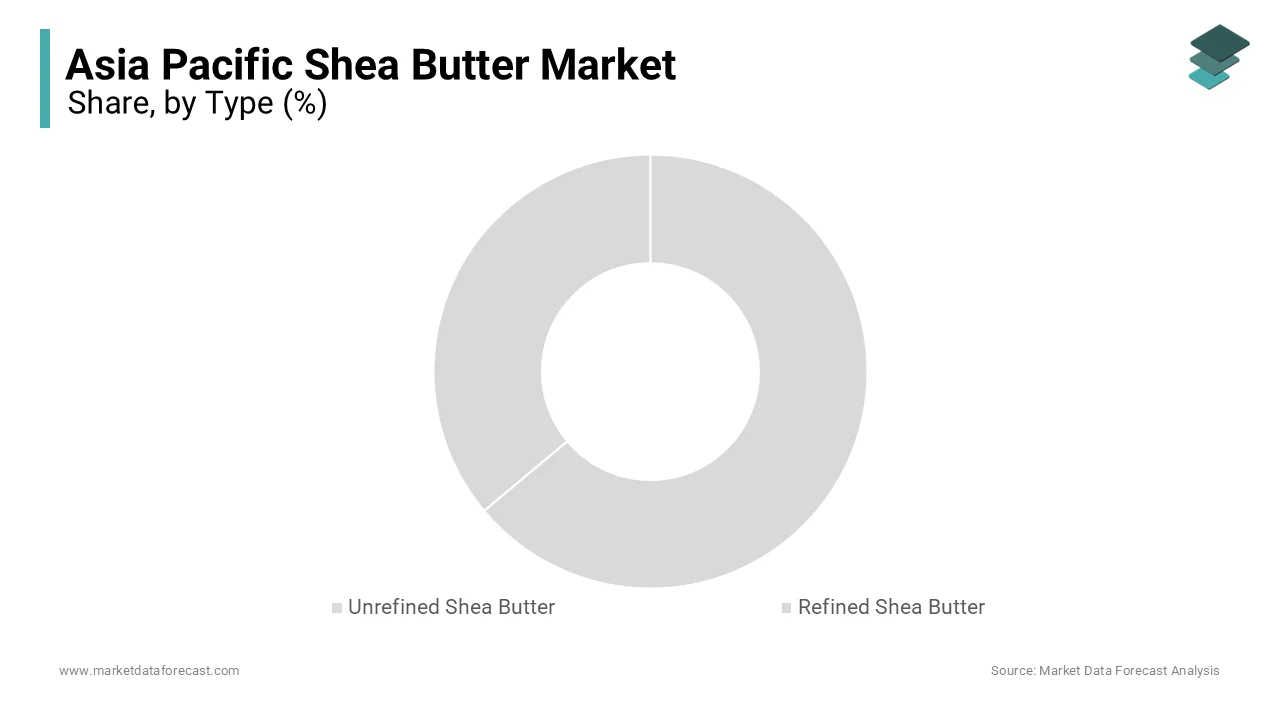
In 2025, the refined shea butter segment held the majority share in the Asia Pacific market because of its neutral odour and consistent texture, which are critical for large-scale cosmetic manufacturing. According to sources, refined shea butter represents a dominant share of bulk manufacturing applications due to its neutralised scent and stable physical compatibility across standard personal care formulations. Manufacturers in countries like South Korea and Japan prefer refined variants for high-end skincare products where sensory experience is paramount. The absence of impurities ensures longer shelf life and stability under varying storage conditions. As per research, the industrial refining process yields a stabilised lipid profile with significantly reduced free fatty acids, ensuring enhanced resistance to early rancidity and oxidation. This reliability minimises waste and enhances profit margins for producers. The standardisation of refined shea butter allows for precise dosing in automated production lines, which is essential for maintaining quality control in mass market products. Brands leverage this consistency to create uniform product lines that meet consumer expectations across different batches. The ability to modify the melting point through fractionation further expands its application in lip balms and hair conditioners. This technical adaptability makes refined shea butter the preferred choice for formulators seeking predictable performance. The dominance of this segment is reinforced by the growing sophistication of Asian cosmetic manufacturing facilities that prioritise precision and efficiency.
Strict regulatory frameworks in developed Asia Pacific markets such as Australia and New Zealand favour the use of refined shea butter due to its higher purity levels. According to the Therapeutic Goods Administration of Australia, imported botanical ingredients must meet stringent microbial and heavy metal limits, which refined shea butter consistently achieves through rigorous processing. Unrefined shea butter often contains residual contaminants from traditional harvesting methods that may fail these safety checks. As per research, standard manufacturing safety paradigms require consumer cosmetic inputs to undergo thorough purification protocols to eliminate microbial contamination and ensure general consumer safety. Refined shea butter undergoes bleaching and deodorising processes that eliminate these risks, ensuring compliance with international safety standards. According to sources, product safety recall notices are issued for consumer goods that fail mandatory safety standards or contain prohibited hazardous contaminants like asbestos. The trend encourages manufacturers to source refined variants to avoid legal liabilities and reputational damage. Consumers in these markets are increasingly aware of safety certifications and prefer products that adhere to recognised quality benchmarks. The trust associated with refined shea butter drives its adoption in pharmaceutical and medical-grade skincare applications. Regulatory alignment facilitates smoother cross-border trade within the region. This compliance advantage solidifies the leading position of refined shea butter in the market.
The unrefined shea butter segment is estimated to register the fastest CAGR during the forecast period, owing to consumer preference for authentic and minimally processed ingredients. According to studies, consumer demand for unrefined raw materials is expanding steadily across regional beauty markets due to growing public interest in minimally processed ingredients that preserve their original nutritional profiles. Unrefined shea butter preserves higher levels of vitamins A and E along with natural antioxidants that are often reduced during refining. This nutrient density appeals to health-conscious buyers who prioritise holistic wellness in their skincare routines. As per research, the expanding demand for cold-pressed and raw botanicals in regional consumer markets reflects a structural preference for traditional, artisanal ingredients in clean beauty lines. Social media influencers in countries like Indonesia and Thailand promote the use of raw shea butter for its healing properties, enhancing its visibility among younger demographics. Small-scale brands leverage the unique aroma and colour of unrefined shea butter to differentiate their products in a crowded marketplace. The perception of unrefined shea butter as a premium and pure ingredient justifies higher price points. Consumers associate the natural scent with authenticity and effectiveness. This emotional connection drives repeat purchases and brand loyalty. The growth of this segment is supported by the expanding niche market for organic and eco-friendly beauty products.
The narrative of sustainability and ethical sourcing significantly boosts the appeal of unrefined shea butter in the Asia Pacific region. According to the Fair Trade International network, unrefined shea butter production supports traditional women's cooperatives in West Africa, providing direct economic benefits to rural communities. Asian consumers are increasingly concerned about the social impact of their purchases and prefer products that contribute to fair labour practices. As per sources, a significant portion of conscious shoppers in highly developed urban Asian markets indicate a willingness to accept higher price premiums for verified ethically sourced commodities. Unrefined shea butter is often linked to fair trade certifications, which validate these claims and build consumer trust. Brands highlight the story behind the product, emphasising the empowerment of women farmers and the preservation of traditional harvesting methods. This storytelling approach resonates with millennial and Gen Z consumers who value transparency and social responsibility. The United Nations Sustainable Development Goals framework encourages businesses to support inclusive economic growth, which aligns with the sourcing model of unrefined shea butter. Marketing campaigns focusing on these ethical dimensions create a strong emotional bond with customers. The growth of this segment is further fueled by the rise of conscious consumerism in urban centres. Companies that champion these values gain a competitive edge in the premium market.
By Application Insights
The cosmetics segment was the largest in 2025 and occupied a commanding share of the Asia Pacific shea butter market. This prominence of the segment was supported by its extensive use in high-value skincare products such as anti-ageing creams and luxury lotions. According to studies, the premium skincare sector across the Asia-Pacific region has captured a dominant multi-billion-dollar share of the luxury consumer market, with natural lipids like shea butter acting as standard functional emollients in specialised hydrating lines. Its rich emollient properties provide deep hydration and improve skin elasticity, which are highly sought-after benefits in ageing populations across Japan and China. Cosmetic formulators value shea butter for its ability to enhance the texture and spreadability of creams without leaving a greasy residue. As per research, shea butter naturally contains triterpene cinnamic acid esters that possess mild ultraviolet (UV) absorption properties, allowing it to function as a supportive, photostabilizing emollient in topical skin barrier formulations. The multifunctionality reduces the need for additional synthetic additives, appealing to clean beauty trends. Major cosmetic brands in South Korea integrate shea butter into their K-beauty routines, promoting it as a secret ingredient for glass skin. The high profit margins associated with premium cosmetic products allow manufacturers to absorb the higher costs of quality shea butter. Consumer loyalty to established cosmetic brands ensures steady demand for shea-based formulations. The segment is further strengthened by continuous innovation in product delivery systems such as serums and masks. This dominance is sustained by the cultural emphasis on skincare in many Asian societies.
Strong brand marketing and established consumer trust are propelling the expansion of this market segment. According to sources, branded personal care products incorporating traditional plant-based emollients maintain a highly visible presence across major e-commerce platforms and brick-and-mortar cosmetic counters in Asia. Well-known international and local brands invest heavily in educating consumers about the advantages of shea butter through digital platforms and in-store demonstrations. This education builds confidence in the efficacy of shea-based products, encouraging trial and repeat purchases. As per studies, established brand equity, trust, and perceived corporate reputation function as critical drivers that heavily steer consumer purchasing behaviour within the competitive Asian beauty sector. Shea butter is often positioned as a heritage ingredient with a long history of use in African traditional medicine, adding to its allure. Collaborations with dermatologists and skincare experts further validate these claims, enhancing credibility. Retail partnerships with major department stores and online marketplaces ensure wide availability and visibility. Promotional events and seasonal launches keep the product relevant and exciting for consumers. The segment benefits from the overall growth of the beauty industry in the region driven by rising disposable incomes. Brand equity plays a crucial role in maintaining market share against generic alternatives. This strategic positioning secures the leading status of the cosmetics application.
The food segment is the fastest-growing in the Asia Pacific shea butter market due to its use as a cocoa butter equivalent in confectionery products. According to research, dramatic climate shocks and historic crop shortfalls in West African growing regions triggered extreme cocoa bean price volatility and record supply deficits, prompting chocolate and confectionery manufacturers to accelerate their adoption of cost-effective fats like shea-derived stearin. Shea butter shares similar physical properties with cocoa butter, including melting point and crystallisation behaviour, making it an ideal substitute in chocolate and candy production. As per sources, expanding commercial demand for speciality vegetable oils, cocoa butter equivalents (CBEs), and functional plant fats positions the Asia-Pacific region as a premier consumption hub for industrial confectionery manufacturing. Confectionery companies in China and India are increasingly incorporating shea fractions into their formulations to reduce costs while maintaining product quality. Regulatory approvals from food safety authorities in countries like Japan and Australia have facilitated this transition by recognising shea butter as a safe food additive. The versatility of shea butter allows it to be used in bakery items and dairy alternatives, expanding its application scope. Consumer acceptance of plant-based fats in food products is rising due to health awareness. This trend supports the integration of shea butter into everyday food items. The growth of this segment is accelerated by the expansion of the processed food industry in emerging economies.
Health consciousness and the trend toward plant-based fats are boosting the adoption of shea butter in the food sector across the Asia Pacific region. According to research, rising regional rates of obesity and non-communicable chronic conditions have prompted international health organisations to advise a structural reduction in total saturated fat intake to limit cardiovascular disease risks. Shea butter is rich in stearic acid, which is considered neutral in terms of cholesterol impact compared to trans fats. This nutritional profile appeals to health-aware consumers looking for better dietary options. As per sources, commercial product developers are increasingly reformulating consumer recipes with natural, plant-based fats and structured lipids to align with clean-label transparency trends and evolving wellness preferences. Shea butter is used in spreads and cooking oils as a stable and nutritious alternative to hydrogenated vegetable oils. Its high smoke point makes it suitable for various cooking methods popular in Asian cuisines. Nutritionists recommend shea butter for its vitamin content and antioxidant properties, which support overall wellness. The rise of vegan and vegetarian diets in urban areas further drives demand for plant-based ingredients. Food manufacturers leverage these health benefits to market premium products. This shift in consumer preferences positions shea butter as a key ingredient in the future of healthy eating.
REGIONAL ANALYSIS
India Market Analysis
India is rapidly expanding in the Asia Pacific shea butter market because of its large cosmetics and personal-care industry. According to studies, domestic imports of raw and refined speciality plant fats have experienced sustained growth due to the rapid scaling of the consumer cosmetics manufacturing ecosystem. The growing middle class and rising awareness of organic beauty solutions fuel demand in urban centres like Mumbai and Delhi. As per research, the natural and organic personal care market segment in India is expanding at a growth rate exceeding 12% per year, accelerating localised formulation demand for plant-based lipids. Local brands are increasingly incorporating shea butter into Ayurvedic formulations, blending traditional knowledge with modern ingredients. This hybrid approach resonates with consumers who value both heritage and efficacy. The government initiatives supporting small and medium enterprises in the beauty sector further stimulate market activity. Distribution networks are expanding into tier two and tier three cities, increasing accessibility. The presence of major international cosmetic companies in India also contributes to steady demand. Regulatory support for natural ingredients enhances the ease of doing business for shea butter importers. The cultural affinity for natural remedies provides a strong foundation for market growth. India remains a key hub for shea butter consumption in South Asia.
China Market Analysis
China was the top performer in the Asia Pacific shea butter market and held the largest share in 2025. This prominence of the Chinese market was propelled by its massive population and booming beauty industry. According to sources, the domestic consumer cosmetics and personal care market represents a massive multi-billion-dollar framework, with premium skincare lines maintaining a dominant share of total market value. Chinese consumers are increasingly sophisticated and seek high-quality ingredients like shea butter for anti-ageing and moisturising benefits. The State Administration for Market Regulation has streamlined approval processes for imported cosmetic ingredients, facilitating faster market entry for shea butter suppliers. E-commerce platforms such as Tmall and JD.com play a crucial role in distributing shea-based products to a wide audience. Digital marketing campaigns by international brands educate consumers about the benefits of shea butter, driving adoption. The rising disposable income in second- and third-tier cities expands the customer base beyond metropolitan areas. Local manufacturers are also investing in research and development to create innovative shea butter formulations tailored to Asian skin types. The government's focus on improving living standards supports the growth of the personal care sector. China continues to lead the regional market in terms of volume and value.
Japan Market Analysis
Japan occupies a significant position in the Asia Pacific shea butter market due to a high demand for premium and functional skincare products. According to sources, consumer demand for clean-label, natural, and organic cosmetics continues to rise steadily, fueled by a consumer demographic seeking gentle formulations for sensitive skin. Japanese consumers prioritise product safety and efficacy, making refined shea butter a preferred choice for high-end brands. The Ministry of Health, Labour and Welfare enforces strict quality standards, which ensure that only high-purity shea butter enters the market. This regulatory environment builds consumer trust and encourages brand loyalty. Japanese companies are known for their advanced formulation technologies, which maximise the benefits of shea butter in serums and essences. The culture of meticulous skincare routines supports consistent consumption of moisturising products. Retail channels such as drugstores and department stores offer a wide variety of shea-based options. Innovation in packaging and product delivery enhances user experience and convenience. The emphasis on minimalism and natural beauty aligns well with the properties of shea butter. Japan remains a key market for premium shea butter applications.
South Korea Market Analysis
South Korea is steadily growing in the Asia Pacific shea butter market owing to the global influence of K-beauty and innovation in skincare. According to studies, global K-beauty exports have achieved historic multi-billion-dollar highs across major international markets, driven heavily by increasing global demand for advanced skincare and functional moisturising lines. Korean consumers are early adopters of new trends and value ingredients that offer multiple benefits such as hydration and barrier repair. The Ministry of Food and Drug Safety supports the use of safe and effective natural ingredients in cosmetic formulations. Local brands frequently launch new products featuring shea butter in unique formats such as sleeping masks and cushion compacts. Social media and celebrity endorsements play a significant role in driving demand and awareness. The competitive landscape encourages continuous innovation and improvement in product quality. Online shopping platforms facilitate easy access to a wide range of shea-based products. The emphasis on glass skin and dewy finishes aligns with the moisturising properties of shea butter. South Korea continues to set trends that influence the broader Asia Pacific market.
Australia Market Analysis
Australia expands moderately in the Asia Pacific shea butter market. Its market expansion relies heavily on a dedicated focus toward organic and sustainable product offerings. According to research, the domestic beauty and personal care market has registered steady consumer growth, fueled by a rising demographic preference for clean, sustainable, and botanical-based skincare products. Australian consumers are highly informed and prioritise ethically sourced and environmentally friendly products. The Therapeutic Goods Administration regulates cosmetic ingredients strictly, ensuring high safety standards for shea butter products. Local brands emphasise transparency in sourcing and production processes, building trust with customers. The popularity of outdoor lifestyles increases demand for protective skincare products containing shea butter. Retailers such as pharmacies and health food stores offer a wide selection of shea-based items. The government support for sustainable agriculture and fair trade practices aligns with the values of shea butter producers. Consumer awareness campaigns by non-governmental organisations further drive demand for ethical products. Australia remains a key market for premium and certified shea butter.
Indonesia Market Analysis
Indonesia is an emerging player in the Asia Pacific shea butter market. This expansion is fuelled by its large population and rising middle class. According to studies, the domestic manufacturing and chemical sectors, including the traditional medicine and personal care categories, have achieved steady annual expansion in Indonesia, driven heavily by expanding consumer interest in halal-certified and natural formulations. Indonesian consumers are increasingly aware of the benefits of natural ingredients for skincare and hair care. The National Agency of Drug and Food Control regulates cosmetic imports, ensuring safety and quality for shea butter. Local manufacturers are developing products that cater to the diverse needs of the archipelago. E-commerce platforms facilitate access to shea-based products across islands. Social media campaigns by influencers drive awareness and trial among young consumers. Government support for local industries encourages the use of imported raw materials in local production. Indonesia continues to show strong potential for shea butter market growth.
COMPETITIVE LANDSCAPE
Competition in the Asia Pacific shea butter market is characterized by intense rivalry among multinational ingredient suppliers and specialized regional distributors. Established global firms leverage extensive supply chains and technical expertise to serve large cosmetic and food manufacturers across developed markets like Japan and Australia. Meanwhile local players compete through agile distribution networks and deep understanding of cultural preferences in emerging Southeast Asian nations. Differentiation increasingly hinges on sustainability credentials and traceability capabilities rather than price alone as consumers demand ethical assurance. Innovation in fractionation technology allows companies to offer customized lipid solutions for specific industrial applications creating barriers to entry for generic suppliers. Regulatory complexity across diverse national jurisdictions necessitates significant compliance investments favoring well capitalized participants. Strategic alliances with local partners enable foreign firms to navigate market nuances while domestic companies seek international certifications to access premium segments. The competitive landscape continues evolving as new entrants focus on niche organic or fair trade categories challenging traditional volume based models. Success requires balancing operational efficiency with authentic storytelling and technical support to build lasting stakeholder trust in this dynamic regional marketplace.
KEY MARKET PLAYERS
- Star Shea Ltd.
- Cargill Incorporated
- Bread For Life
- All Pure Nature Ltd.
- Shea Radiance
- AAK AB
- VINK CHEMICALS GMBH & CO. KG
- Jedwards International, Inc.
- Lovinah Naturals
- Maison Karite Sociedad Limitada
- Shebu Industries
- Shea Therapy Ltd (formerly trading as AGC Ltd)
- Bunge Limited
- The Pure Company etc
Top Players in the Market
- Cargill Incorporated actively supplies high quality shea butter ingredients to Asia Pacific cosmetic manufacturers through specialized distribution networks. The company focuses on sustainable sourcing partnerships with West African cooperatives to ensure consistent raw material flow for regional clients. Recently Cargill expanded its technical service team in Singapore to support local formulators with application specific guidance for skincare products. This initiative strengthens relationships with Asian beauty brands seeking reliable natural emollients. The firm also invested in refining capacity upgrades to meet stringent purity standards demanded by Japanese and Australian regulators. These actions demonstrate commitment to serving the diverse needs of the Asia Pacific personal care sector while maintaining supply chain resilience against global disruptions.
- AAK AB provides advanced shea butter fractions tailored for confectionery and cosmetic applications across the Asia Pacific region. The company collaborates with food manufacturers in China and India to develop cocoa butter equivalents using proprietary processing technologies. AAK recently launched a digital platform enabling Asian customers to access real time sustainability data and traceability information for shea shipments. This transparency tool addresses growing consumer demand for ethical sourcing verification in premium markets like South Korea and Japan. Furthermore the firm established a new innovation center in Shanghai to co create customized lipid solutions with local partners. These strategic moves enhance product differentiation and deepen market integration within the dynamic Asia Pacific landscape.
- Bunge Limited serves as a key supplier of refined shea butter to the Asia Pacific food and personal care industries through extensive logistics infrastructure. The company leverages its global agricultural network to secure stable shea nut supplies for Asian processors despite climatic challenges. Bunge recently partnered with an Indonesian distributor to expand reach into Southeast Asian emerging markets where demand for natural ingredients is rising. This collaboration facilitates faster delivery and localized customer support for small and medium enterprises. Additionally the firm implemented enhanced quality testing protocols at its Singapore hub to comply with evolving regional safety regulations. These efforts reinforce operational reliability and trust among Asia Pacific stakeholders.
Top Strategies Used by Key Market Participants
Key players in the Asia Pacific shea butter market prioritize vertical integration to secure raw material access and ensure quality consistency. Companies establish direct partnerships with West African women cooperatives to bypass intermediaries and guarantee fair compensation while stabilizing supply chains. Strategic investments in regional refining facilities enable firms to meet specific purity standards required by Japanese and Australian regulators without relying solely on imports. Digital traceability platforms are increasingly adopted to provide transparency regarding ethical sourcing which appeals to conscious consumers in South Korea and Singapore. Product innovation focuses on developing specialized fractions for niche applications such as pharmaceutical excipients or vegan confectionery fats to capture higher value segments. Collaborative research initiatives with Asian universities help validate functional benefits and support regulatory approvals for novel uses. Distribution expansion through local partnerships enhances market penetration in emerging economies like Vietnam and Indonesia where infrastructure remains developing. These multifaceted strategies collectively strengthen competitive positioning by addressing supply security regulatory compliance, consumer preferences and technological advancement simultaneously within the complex Asia Pacific business environment.
MARKET SEGMENTATION
This research report on the Asia Pacific shea butter market has been segmented and sub-segmented into the following categories.
By Type
- Unrefined Shea Butter
- Refined Shea Butter
By Application
- Cosmetics
- Personal Care
- food
By Country
- India
- China
- Japan
- South Korea
- Australia
- New Zealand
- Thailand
- Malaysia
- Vietnam
- Philippines
- Indonesia
- Singapore
- Rest of Asia Pacific