- Product Description Description
- Table of Contents TOC
- List of Table & Figure LOT
- Get Free Sample PDF Sample PDF
Market Size, 2025
$11.25 BnMarket Estimate, 2026
$11.78 BnMarket Forecast, 2034
$17.08 BnCAGR, 2026–2034
4.75%Asia Pacific Flavored Syrups Market Size
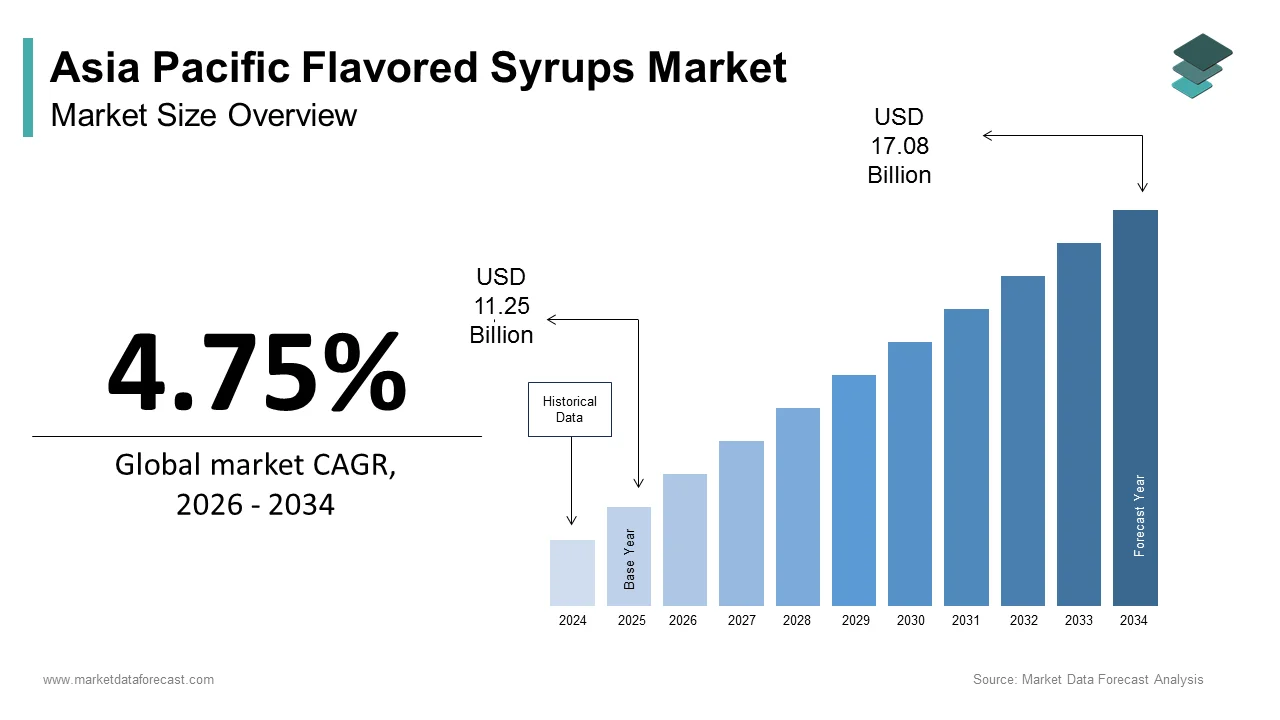
The Asia Pacific Flavored Syrups Market size was calculated to be USD 11.25 billion in 2025 and is anticipated to be worth USD 17.08 billion by 2034, from USD 11.78 billion in 2026, growing at a CAGR of 4.75% during the forecast period.
Flavoured syrups are concentrated, sweet liquids made by dissolving sugar in water and infusing it with natural or artificial flavorings. They are versatile ingredients used to add instant sweetness, aroma, and flavor to both hot and cold beverages, desserts, and culinary dishes. This market serves as a critical component in the food and beverage industry catering to both commercial establishments such as cafes restaurants and bars as well as household consumers seeking customization in their dietary experiences. The region is characterized by a rapidly expanding coffee culture and a burgeoning demand for premium non alcoholic beverages which significantly drives the consumption of flavored syrups. According to data from the International Coffee Organization (ICO), global coffee consumption has grown at about 2% annually, but consumption in emerging South and East Asian markets has surged at a much faster average rate of 6% annually, driven by major growth in countries like China and India. Furthermore, the proliferation of quick service restaurants and specialty dessert shops has amplified the requirement for versatile flavoring agents that offer consistency and ease of use. According to the United Nations Department of Economic and Social Affairs (UN DESA), Asia is home to 54% of the world's total urban population. However, the actual level of urbanization within Asia itself is currently hovering around 50%. The market is also influenced by the growing middle class with higher disposable incomes who are willing to experiment with international flavors and premium ingredients. Manufacturers are increasingly focusing on clean label products and natural extracts to align with health conscious trends while maintaining the sensory appeal that defines the category. This dynamic interplay of cultural adoption economic growth and evolving consumer preferences shapes the current landscape of the flavored syrups industry in the Asia Pacific region.
MARKET DRIVERS
Proliferation Of Café Culture And Specialty Coffee Chains Drives Commercial Demand
The rapid expansion of café culture and the increasing presence of specialty coffee chains across the region are key drivers for the Asia Pacific flavored syrups market. Consumers in countries such as China India Indonesia and Australia are increasingly adopting coffee consumption as a social and lifestyle activity leading to a surge in the number of coffee shops and independent cafés. Data from Starbucks financial reports confirm that Starbucks exceeded 6,800 stores in mainland China by the end of 2023, firmly cementing China as its second-largest market globally. These establishments rely heavily on flavored syrups to create signature drinks such as vanilla lattes caramel macchiatos and hazelnut cappuccinos which differentiate their offerings and attract diverse customer segments. The ability to customize beverages with various flavors allows cafes to cater to individual preferences thereby enhancing customer loyalty and repeat visits. Moreover the rise of local coffee chains and boutique roasters has further diversified the demand for unique and exotic syrup flavors such as matcha lychee and pandan which resonate with regional tastes. The standardization of recipes in large chains ensures consistent usage volumes of syrups across thousands of outlets. Additionally the trend of home brewing has gained momentum post pandemic with consumers purchasing professional grade syrups to replicate café style drinks at home. This dual demand from commercial and retail sectors creates a robust growth trajectory for the market. The continuous innovation in menu items by major players keeps the category dynamic and encourages ongoing experimentation with new flavor profiles.
Rising Disposable Incomes And Urbanization Fuel Premium Beverage Consumption
Rising disposable incomes and rapid urbanization in the region are significant factors fueling the demand for premium beverages and consequently these syrups, which accelerates the expansion of the Asia Pacific flavored syrups market. As economies in countries like Vietnam Thailand and the Philippines continue to grow the middle class is expanding leading to increased spending on leisure and dining experiences. The Asian Development Bank (ADB) emphasize that rapid urbanization and economic growth across developing Asia are driving a massive expansion of the consumer middle class, which is the core engine behind rising regional purchasing power. Urban consumers are more exposed to global food trends and are willing to pay a premium for high quality and aesthetically pleasing beverages. Flavored syrups enable the creation of visually appealing and tasty drinks that align with the aspirational lifestyles of urban dwellers. The growth of modern retail formats such as supermarkets and hypermarkets in urban centers facilitates easier access to a wide variety of syrup brands for household use. Furthermore the influence of social media platforms where visually attractive drinks are widely shared encourages consumers to try new flavors and combinations. This digital influence drives trial and adoption of novel syrup variants such as salted caramel rose and coconut. The convenience of using syrups to enhance simple beverages like milk soda or tea appeals to busy urban professionals who seek quick yet indulgent treats. The combination of economic prosperity and urban lifestyle changes thus creates a fertile environment for the sustained growth of the flavored syrups market.
MARKET RESTRAINTS
Health Consciousness and Regulatory Scrutiny On Sugar Content Limit Product Adoption
Growing health consciousness and stringent regulatory scrutiny regarding sugar content are major restraints on the Asia Pacific flavored syrups market. Consumers are increasingly aware of the health risks associated with excessive sugar intake including obesity diabetes and cardiovascular diseases leading to a shift away from high sugar products. The International Diabetes Federation (IDF) Atlas shows the Western Pacific region has the highest number of adults living with diabetes globally, reaching over 200 million cases. To combat this public health crisis, regional governments like Thailand and Malaysia have enacted sweetened beverage excise taxes to curb sugar consumption. Many governments in the region have implemented sugar taxes or mandatory labeling requirements to discourage the consumption of sugary beverages. For instance, Thailand and Malaysia have introduced excise taxes on sweetened drinks which directly impacts the cost and appeal of traditional sugar based syrups. This regulatory pressure forces manufacturers to reformulate their products with alternative sweeteners which can alter taste profiles and increase production costs. Consumers often perceive artificial sweeteners as less healthy or inferior in taste compared to natural sugar creating a barrier to acceptance. The demand for clean label and low calorie options requires significant investment in research and development to maintain flavor quality without compromising health standards. Additionally negative media coverage linking sugary drinks to health issues has heightened consumer skepticism. As a result, the market faces challenges in maintaining growth rates for conventional syrup products while transitioning to healthier alternatives that may have lower margins or limited consumer acceptance.
Volatility In Raw Material Prices and Supply Chain Disruptions Impact Profitability
Volatility in raw material prices and supply chain disruptions are major barriers to the Asia Pacific flavored syrups market. This impact production costs and profitability. The production of flavored syrups relies heavily on key ingredients such as sugar fruits vanilla and other natural extracts which are subject to price fluctuations due to weather conditions geopolitical tensions and trade policies. According to the Food and Agriculture Organization (FAO) Food Price Index, international sugar prices exhibit severe annual volatility, frequently swinging by more than 20% due to shifting harvest yields, weather abnormalities, and export policies in top-producing nations like Brazil and India. These fluctuations increase the cost of goods sold for manufacturers who may struggle to pass these costs on to price sensitive consumers. Additionally, the region s reliance on imported flavors and packaging materials exposes companies to currency exchange risks and logistical bottlenecks. The aftermath of the pandemic and ongoing geopolitical conflicts have disrupted shipping routes and increased freight costs leading to delays and inventory shortages. Small and medium sized enterprises are particularly vulnerable to these shocks as they lack the financial resilience to absorb sudden cost increases. The inconsistency in raw material availability can also affect product quality and consistency which is crucial for brand reputation. Manufacturers must invest in hedging strategies and diversified sourcing to mitigate these risks which adds to operational complexity. These economic and logistical challenges constrain market growth and force companies to optimize efficiency while maintaining competitive pricing.
MARKET OPPORTUNITIES
Innovation In Natural And Organic Flavor Profiles Appeals To Health Conscious Consumers
Innovation in natural and organic flavor profiles offers a significant opportunity for the Asia Pacific flavored syrups market. This helps to align with the growing demand for health-conscious and clean-label products. Consumers are increasingly seeking beverages made with natural ingredients free from artificial colors preservatives and synthetic flavors. Manufacturers can capitalize on this trend by developing syrups using real fruit extracts herbal infusions and natural sweeteners such as stevia monk fruit and agave. Flavors derived from local botanicals such as ginger turmeric lemongrass and jasmine resonate well with regional preferences and offer unique selling propositions. The use of organic certification and transparent labeling builds trust and loyalty among discerning shoppers who prioritize wellness. Retailers are expanding their shelves to include premium natural syrup brands creating visibility and accessibility for these products. Collaborations with health influencers and nutritionists can further validate the benefits of natural syrups and educate consumers on their usage. The premium positioning of organic syrups allows for higher profit margins and differentiation in a crowded market. As health awareness continues to rise, the demand for natural flavoring solutions is expected to outpace conventional products. This offers substantial growth potential for innovative manufacturers.
Expansion Into Emerging Markets And Rural Areas Offers Untapped Potential
Expansion into emerging landscapes and rural areas within the region provides substantial prospects for the Asia Pacific flavored syrups market. This paves the way to reach untapped consumer bases. While urban centers are saturated with competition rural and semi urban areas present growing demand driven by improving infrastructure and increasing connectivity. Reports from the World Bank confirm that internet penetration across South Asia and Southeast Asia has risen significantly over the past decade, bridging digital infrastructure gaps and expanding access to communication, information, and digital financial networks for millions of rural citizens. The rise of e commerce platforms and digital payment systems facilitates the distribution of branded syrups to remote locations where physical retail presence is limited. Local manufacturers can leverage regional distribution networks to introduce affordable syrup variants tailored to local tastes and purchasing power. The growing popularity of tea and coffee in rural households provides a ready market for flavor enhancement products. Educational campaigns and sampling initiatives can drive awareness and trial among first time users. Additionally the expansion of quick service restaurant chains into tier two and tier three cities creates commercial demand for standardized flavoring solutions. By focusing on affordability and accessibility companies can capture volume growth in these underserved segments. The diversification of geographic reach reduces dependency on mature urban markets and ensures long term sustainability. This strategic expansion allows manufacturers to build brand loyalty early in developing consumer markets.
MARKET CHALLENGES
Intense Competition from Private Label and Local Artisanal Brands Erodes Market Share
Intense competition from private label brands and local artisanal producers is a significant challenge to the Asia Pacific flavored syrups market. This erodes market share and pressures profit margins. Major retail chains and supermarket groups have launched their own private label syrups which are priced significantly lower than established national and international brands. The private labels often mimic popular flavors and packaging designs offering similar quality at a fraction of the cost. Additionally the rise of local artisanal brands that emphasize handcrafted small batch production appeals to consumers seeking authenticity and uniqueness. These niche players often use high quality natural ingredients and unique flavor combinations that differentiate them from mass market products. The fragmentation of the market with numerous small entrants intensifies price competition and reduces brand loyalty. Established brands must invest heavily in marketing and innovation to justify premium pricing and maintain relevance. However constant promotional discounts and price wars can diminish brand equity and profitability. The ability of private labels and artisanal brands to quickly adapt to local trends allows them to capture market share rapidly. This competitive pressure forces incumbent players to continuously innovate while managing costs creating a challenging operational environment.
Counterfeit Products And Quality Control Issues Damage Brand Reputation
The prevalence of counterfeit products and quality control issues is a major hurdle for the Asia Pacific flavored syrups market. This damages brand reputation and consumer trust. The region s fragmented regulatory landscape and varying enforcement standards make it difficult to monitor and control the proliferation of fake or substandard syrup products. According to global trade research by the OECD and EUIPO, Asian economies remain central hubs for the production and transit of counterfeit goods, with illicit food and beverage items representing a growing segment that poses direct, severe health and safety risks to consumers. Counterfeit syrups often contain inferior ingredients artificial colors and unsafe additives that pose health risks to consumers. When consumers associate these negative experiences with established brands it leads to loss of trust and declining sales. Quality control inconsistencies among local manufacturers can also result in variations in flavor intensity color and viscosity affecting the final beverage quality. Retailers and consumers may become hesitant to purchase from certain brands if quality reliability is not guaranteed. The cost of implementing rigorous quality assurance measures and anti counterfeiting technologies adds to operational expenses. Legal actions against counterfeiters are often time consuming and expensive with limited effectiveness in some jurisdictions. Maintaining consistent quality and protecting brand integrity requires continuous vigilance and investment in supply chain security. This ongoing threat undermines consumer confidence and hampers the growth of legitimate market players.
REPORT COVERAGE
| REPORT METRIC | DETAILS |
| Market Size Available | 2025 to 2034 |
| Base Year | 2025 |
| Forecast Period | 2026 to 2034 |
| CAGR | 4.75% |
| Segments Covered | By Flavor, Flavor Type, Application, And Region |
| Various Analyses Covered | Global, Regional & Country Level Analysis; Segment-Level Analysis; DROC, PESTLE Analysis; Porter’s Five Forces Analysis; Competitive Landscape; Analyst Overview of Investment Opportunities |
| Regions Covered | India, China, Japan, South Korea, Australia, New Zealand, Thailand, Malaysia, Vietnam, the Philippines, Indonesia, Singapore, and the rest of APAC. |
| Market Leaders Profiled | Hershey, Tate & Lyle, Kraft Heinz Company, Monin Inc., Kerry Group Plc., Sonoma Syrup, Cedarvale Maple Syrup, and VSBO |
SEGMENTAL ANALYSIS
By Flavor Insights
The fruit flavors segment led the Asia Pacific flavored syrups market and captured a 32.5% share in 2025. This leading position of the segment was attributed to its widespread appeal and versatility across various beverage and dessert applications. The region boasts a rich diversity of tropical fruits such as mango lychee passion fruit and coconut which are deeply ingrained in local culinary traditions. Also, the Food and Agriculture Organization (FAO) confirm that Asia is the leading global producer region for tropical fruits, accounting for roughly 60% of total world production, with India ranking as the world's single largest producer of mangoes and papayas. Consumers in the Asia Pacific region have a strong preference for fruity and refreshing tastes particularly in hot and humid climates where fruit based beverages provide hydration and cooling effects. The popularity of bubble tea fruit teas and smoothies has further amplified the demand for fruit flavored syrups in both commercial and household settings. Major coffee chains and beverage outlets frequently introduce seasonal fruit based drinks driving consistent demand from the food service sector. Additionally fruit syrups are perceived as healthier alternatives to chocolate or caramel variants aligning with the growing health consciousness among consumers. The ability of fruit flavors to complement dairy products baked goods and confectionery items broadens their application scope. Manufacturers leverage local fruit varieties to create unique and authentic flavor profiles that resonate with regional palates. This combination of cultural relevance climatic suitability and diverse application opportunities ensures that fruit flavors maintain their dominant position in the market.
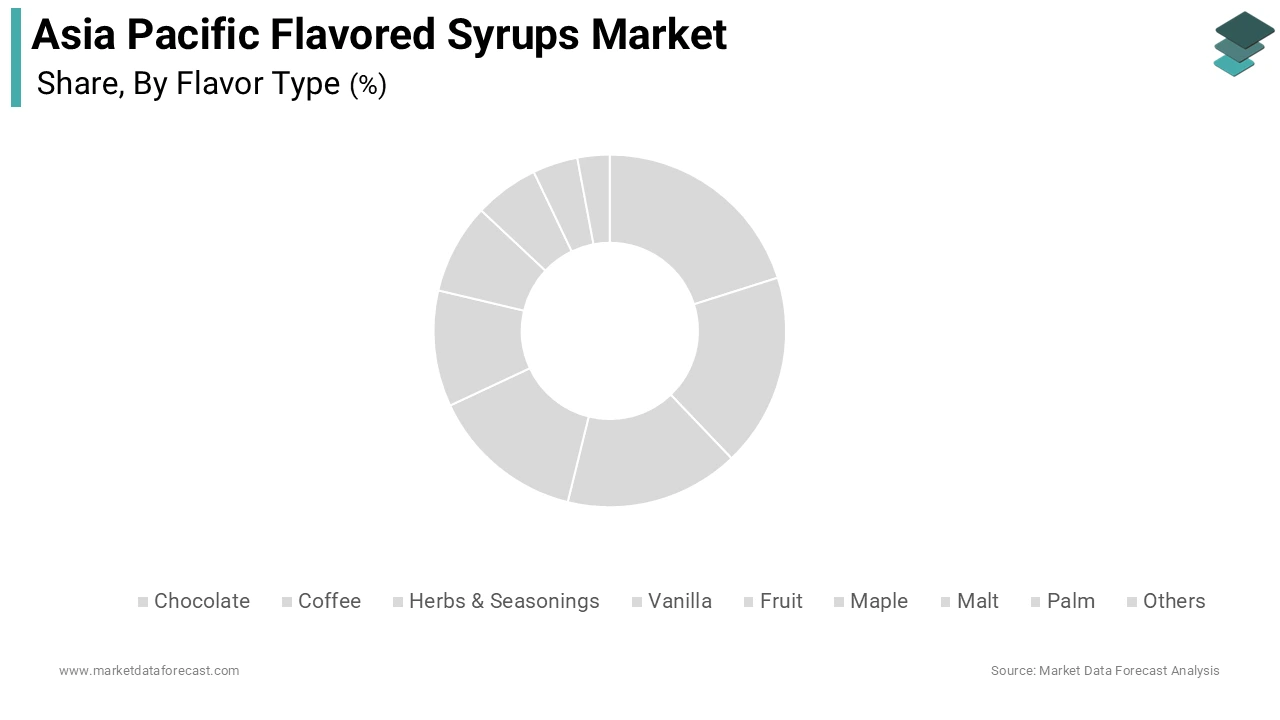
On the other hand, the coffee flavor segment is estimated to register the fastest CAGR of 7.5% from 2026 to 2034. This rapid growth of the segment is propelled by the exploding café culture and the increasing consumption of specialty coffee beverages across the region. Data from the International Coffee Organization (ICO) and USDA reports show that coffee consumption in Asia is expanding rapidly, with Vietnam maintaining its status as the world’s second-largest coffee producer and China experiencing massive domestic retail demand. The proliferation of international and local coffee chains has introduced consumers to a wide variety of flavored coffee drinks such as vanilla latte hazelnut cappuccino and caramel macchiato. Flavored syrups are essential in creating these signature drinks allowing cafes to differentiate their menus and attract diverse customer segments. The trend toward premiumization in the coffee sector encourages the use of high quality and artisanal coffee flavored syrups that enhance the sensory experience. Young urban professionals and students frequent cafes as social hubs driving demand for customized and visually appealing beverages. Social media platforms play a crucial role in popularizing new coffee trends influencing consumer choices and driving trial of novel flavors. The rise of home brewing during and after the pandemic has also contributed to the growth as consumers seek to replicate café style drinks at home. Coffee consumption is becoming increasingly embedded in daily routines. As a result, the demand for coffee-flavored syrups is expected to continue its upward trajectory.
By Flavor Type Insights
In 2025, the sweet flavors segment held the majority share in the Asia Pacific flavored syrups market because of the region’s strong traditional preference for sweetness in beverages and desserts. Sugar and sweeteners have long been integral to Asian cuisines particularly in treats like bubble tea shaved ice and traditional sweets. The World Health Organization (WHO) strongly advocates for regional sugar-reduction policies and sugar taxes across the Western Pacific to combat rising non-communicable diseases, advising that free sugars should account for less than 10% of total daily energy intake. The widespread popularity of sweetened teas coffees and milk based drinks drives substantial demand for sweet flavored syrups. Commercial establishments rely on these syrups to standardize sweetness levels and enhance the appeal of their offerings. The dessert industry including bakeries and ice cream parlors heavily utilizes sweet syrups to create indulgent products that attract consumers seeking comfort and enjoyment. While health consciousness is rising the immediate gratification provided by sweet flavors ensures their continued dominance. Manufacturers offer a range of sweeteners including cane sugar honey and agave to cater to different preferences. The affordability and accessibility of sweet flavored syrups make them a staple in both households and businesses. The emotional connection between sweetness and happiness further reinforces consumer loyalty. Cultural affinity for sweet treats continues to grow. Therefore, this segment will remain the cornerstone of the flavored syrups market in Asia Pacific.
However, the sour flavors segment is anticipated to witness the fastest CAGR of 6.2% during the forecast period due to innovation in beverage trends and the desire for unique taste experiences. Consumers particularly younger demographics are increasingly seeking bold and complex flavors that challenge traditional palates. The rise of craft cocktails and mocktails has introduced sour elements as key components in balancing sweetness and adding depth to drinks. Bars and restaurants are experimenting with sour syrups made from yuzu calamansi and green apple to create distinctive signatures. The refreshment factor of sour flavors appeals to consumers in tropical climates where acidic drinks are perceived as thirst quenching. Social media influencers often showcase vibrant and zesty drinks driving curiosity and trial among followers. Manufacturers are responding by developing natural sour extracts that provide authentic tartness without artificial aftertastes. The versatility of sour syrups in mixing with spirits sodas and teas expands their usage occasions. The demand for sour-flavored syrups is poised for significant growth as consumers seek out more adventurous food and beverage choices. Consequently, this provides new opportunities for market expansion.
By Application Insights
The beverage segment was the largest in the Asia Pacific market and occupied a 39.4% share in 2025. This prominence of the segment was supported by the massive proliferation of cafes tea shops and juice bars. Beverages are the primary medium through which consumers experience flavored syrups whether in hot coffees cold teas or blended smoothies. The bubble tea phenomenon alone has created a immense demand for syrups that add flavor and sweetness to tea bases. Coffee chains utilize syrups to create standardized menu items that ensure consistency across thousands of outlets. The convenience of using syrups allows beverage makers to quickly customize drinks according to customer preferences enhancing service efficiency. Home consumers also contribute to this segment by purchasing syrups for DIY beverage preparation. The visual appeal of layered and colored drinks made with syrups drives sales through social media exposure. The versatility of syrups in enhancing both alcoholic and non alcoholic beverages broadens the market scope. As the out of home consumption of beverages continues to grow the beverage application segment will maintain its leadership position. The constant introduction of new drink concepts keeps the demand for diverse syrup flavors robust and dynamic.
But the dairy and frozen desserts segment is likely to experience the fastest CAGR of 6.5% between 2026 and 2034 owing to rising indulgence trends and the expansion of the ice cream and yogurt industry. Consumers are increasingly treating themselves to premium desserts as a form of affordable luxury. According to Asia-Pacific dairy and retail landscape study, the regional ice cream and frozen dessert sector is projected to reach nearly USD 59 billion by 2030, driven heavily by rapid urbanisation, rising consumer disposable income, and a growing demand for premium dairy products. Flavored syrups are used extensively as toppings swirls and mix ins for ice creams gelatos and frozen yogurts adding variety and visual appeal. The trend toward artisanal and gourmet desserts encourages the use of high quality and unique syrup flavors such as salted caramel matcha and rose. Yogurt bars and smoothie bowls also utilize syrups to enhance flavor profiles and attract health conscious consumers who seek nutritious yet tasty options. The ability of syrups to transform simple dairy products into exciting treats drives their adoption in both commercial and retail sectors. Manufacturers are collaborating with dessert brands to create exclusive flavor combinations that drive foot traffic and sales. The emotional satisfaction derived from indulgent desserts ensures sustained demand. The dairy and frozen desserts segment is set to outpace other categories in growth rate. This is largely driven by an evolving and diversifying dessert culture.
REGIONAL ANALYSIS
China Flavored Syrups Market Analysis
China was the top performer in the Asia Pacific flavored syrups market and accounted for a 32.5% share in 2025. This dominance of the Chinese market was driven by rapid urbanization and the explosive growth of the coffee and tea industries. The country has become a major consumer of flavored beverages driven by a young and affluent population eager to adopt international lifestyle trends. According to the National Bureau of Statistics of China, catering industry revenue reached 1,888.3 billion yuan from January to April 2026, representing a 3.8% year-on-year growth. The presence of thousands of coffee shops and tea chains creates a massive commercial demand for flavored syrups. Local brands are increasingly competing with international players by offering innovative flavors that cater to Chinese tastes such as osmanthus and red bean. The e commerce sector facilitates widespread distribution of retail syrup packs to households. Government initiatives promoting domestic consumption further support market growth. The sheer scale of the Chinese market makes it a critical driver for regional expansion. Manufacturers focus on localization and digital marketing to capture share in this competitive landscape. The continuous evolution of consumer preferences ensures dynamic growth opportunities.
India Flavored Syrups Market Analysis
India is a rapidly growing market for flavored syrups in the Asia Pacific region due to a burgeoning middle class and changing dietary habits. The country s large youth population is increasingly influenced by global food trends leading to higher consumption of cafes and quick service restaurants. According to data from the Ministry of Statistics and Programme Implementation and the Economic Survey, India’s service sector contributes over 50% to the nation’s Gross Value Added (GVA), acting as the primary driver of economic growth. The popularity of milkshakes smoothies and flavored teas in urban centers drives demand for syrups. Local manufacturers are leveraging traditional flavors like cardamom and mango to appeal to domestic consumers. The expansion of modern retail and online grocery platforms enhances accessibility. Rising disposable incomes allow consumers to experiment with premium products. The hospitality industry’s growth further boosts commercial demand. India s diverse culinary landscape offers opportunities for niche and specialized syrup variants. The market is poised for sustained growth as urbanization accelerates.
Japan Flavored Syrups Market Analysis
Japan followed closely behind in the Asia Pacific flavored syrups market and captured a 20.1% share in 2025. The demand for these syrups was supported by a demand for high quality and innovative products. Japanese consumers prioritize precision and aesthetics in their beverages and desserts driving the need for premium syrups. According to the Ministry of Internal Affairs and Communications (the parent agency of the Statistics Bureau of Japan), Japan's household spending on food fell by 2.9% year-on-year in March 2026 due to ongoing inflationary pressures. The well established café culture and tradition of parfait and ice cream consumption support steady demand. Manufacturers focus on natural ingredients and unique flavors such as sakura and yuzu to meet local preferences. The aging population influences demand for lower sugar options. Japan serves as a trendsetter for product innovation in the region. Strict food safety standards ensure high quality offerings. The market values craftsmanship and brand reputation. Continuous innovation keeps the market dynamic despite its maturity.
South Korea Flavored Syrups Market Analysis
South Korea is moving ahead steadfastly in the Asia Pacific market owing to the strong café culture and the influence of social media trends. The country has one of the highest densities of cafes per capita globally creating substantial commercial demand. According to official USDA and foodservice market reports, South Korea's foodservice sector grew by 8.3% to reach approximately USD 146.7 billion, with dining out now accounting for nearly 15% of total household spending. Korean consumers are quick to adopt new trends such as dalgona coffee and fruit ades which rely heavily on flavored syrups. The emphasis on visual appeal drives the use of colorful and layered syrups. Local brands innovate with flavors like green tea and black sesame. The retail sector benefits from the home café trend. High internet penetration facilitates digital marketing and sales. The market is characterized by rapid trend cycles and high consumer engagement. Innovation and aesthetics are key success factors.
Australia Flavored Syrups Market Analysis
Australia holds a significant position in the Asia Pacific flavored syrups market. It is known for its specialty coffee culture and high quality standards. Australian consumers are discerning and prefer natural and artisanal products. Data from the Australian Bureau of Statistics (ABS) tracks household spending on cafes, restaurants, and takeaway food services as a major component of monthly domestic retail trade and turnover. The prevalence of independent cafes drives demand for unique and premium syrups. Health consciousness leads to preference for low sugar and organic options. The barista community influences trends and product adoption. Retail sales benefit from the home brewing trend. Sustainability is a key consideration for consumers and manufacturers. The market values authenticity and ethical sourcing. Innovation focuses on native Australian flavors. The mature market offers steady growth opportunities
COMPETITION OVERVIEW
The competitive landscape of the Asia Pacific flavored syrups market is characterized by a mix of established international brands and emerging local players. Multinational companies leverage their global brand recognition extensive distribution networks and substantial marketing budgets to maintain dominance in urban centers and premium segments. These companies often lead in product innovation introducing natural and health conscious variants that align with wellness trends. Local and artisanal brands compete effectively by offering unique flavors and high quality ingredients that appeal to niche markets and traditional tastes. They benefit from agility and local connections which allow quick responses to changing consumer preferences. The market sees intense competition in pricing particularly in value driven segments where private label brands from major retailers exert pressure. Differentiation through packaging sustainability and ethical sourcing becomes crucial for brands seeking to stand out. Regulatory compliance regarding sugar content and labeling acts as a barrier for smaller players requiring investment in reformulation. The rise of e commerce has intensified competition by enabling direct to consumer sales and greater price transparency. Overall the market remains dynamic with continuous entry of new products and brands vying for consumer attention amidst evolving dietary habits and economic conditions.
KEY MARKET PLAYERS
A few major players in the Asia Pacific flavored syrups market include
- Hershey
- Tate & Lyle
- Kraft Heinz Company
- Monin Inc
- Kerry Group Plc
- Sonoma Syrup
- Cedarvale Maple Syrup
- VSBO
Top Strategies Used By Key Market Participants
Key players in the Asia Pacific flavored syrups market employ several strategic initiatives to maintain competitiveness and drive growth. Product innovation remains a central strategy with companies launching natural organic and low sugar variants to meet rising health demands. Brands are increasingly focusing on localized flavor profiles such as matcha lychee and pandan to resonate with regional consumer preferences. Expansion of distribution networks through partnerships with local distributors and e commerce platforms enhances market accessibility and reach. Companies are investing in digital marketing and social media engagement to build brand awareness and connect with younger audiences. Sponsorship of barista competitions and culinary events helps reinforce brand identity and loyalty. Sustainable packaging and responsible sourcing initiatives address environmental concerns and appeal to eco conscious consumers. These combined approaches enable manufacturers to navigate regulatory challenges and capitalize on evolving consumer preferences in the dynamic Asia Pacific landscape.
Leading Players In The Asia Pacific Flavored Syrups Market
- Monin Premium is a leading global brand with a strong presence in the Asia Pacific flavored syrups market known for its extensive portfolio of high quality flavors. The company serves both commercial clients such as cafes and bars and retail consumers seeking premium beverage solutions. Monin recently expanded its manufacturing capabilities in Southeast Asia to improve supply chain efficiency and reduce lead times for regional customers. The company focuses on innovation by introducing unique flavors inspired by local tastes such as lychee pandan and matcha. Monin also emphasizes sustainability through eco friendly packaging initiatives and responsible sourcing practices. Their commitment to quality and consistency has built strong relationships with hospitality partners across the region. Monin leverages digital marketing to engage with barista communities. By doing so, they strengthen brand loyalty and drive growth in the competitive Asia Pacific market.
- DaVinci Gourmet is a key player in the Asia Pacific flavored syrups market recognized for its versatile product range and strong focus on the food service sector. The company provides syrups sauces and powders that cater to coffee shops restaurants and hotels throughout the region. DaVinci Gourmet recently launched new sugar free and natural ingredient lines to address growing health consciousness among Asian consumers. The company invests in training programs for baristas and chefs to promote creative usage of their products. Strategic partnerships with local distributors have enhanced market penetration in emerging economies like India and Vietnam. DaVinci Gourmet also utilizes social media campaigns to showcase innovative recipes and drink ideas. Their emphasis on customer support and product education helps maintain a competitive edge and fosters long term relationships with commercial clients in the dynamic Asia Pacific landscape.
- Giffard is a prominent French manufacturer with a growing influence in the Asia Pacific flavored syrups market driven by its reputation for premium quality and artisanal craftsmanship. The company offers a wide variety of fruit based syrups and liqueurs that appeal to high end bars and specialty cafes. Giffard recently strengthened its distribution network in China and Japan to capitalize on the rising demand for premium mixers and cocktail ingredients. The company focuses on using natural fruit juices and purees to create authentic flavors that differentiate its products from synthetic alternatives. Giffard participates in international bartending competitions and events to build brand visibility and credibility among industry professionals. Their commitment to innovation and quality ensures that they remain a preferred choice for discerning consumers and businesses in the Asia Pacific region.
MARKET SEGMENTATION
This research report on the Asia Pacific flavored syrups market has been segmented and sub-segmented based on flavor, flavor type, application & region.
By Flavor
- Chocolate
- Coffee
- Herbs & Seasonings
- Vanilla
- Fruit
- Maple
- Malt
- Palm
- Others
By Flavor Type
- Salty
- Sour
- Mint
- Savory
- Sweet
By Application
- Dairy & Frozen Desserts
- Bakery
- Confectionery
- Beverage
- Others
By Country
- India
- China
- Japan
- South Korea
- Australia
- New Zealand
- Thailand
- Malaysia
- Vietnam
- Philippines
- Indonesia
- Singapore
- Rest of APAC