- Product Description Description
- Table of Contents TOC
- List of Table & Figure LOT
- Get Free Sample PDF Sample PDF
Market Size, 2025
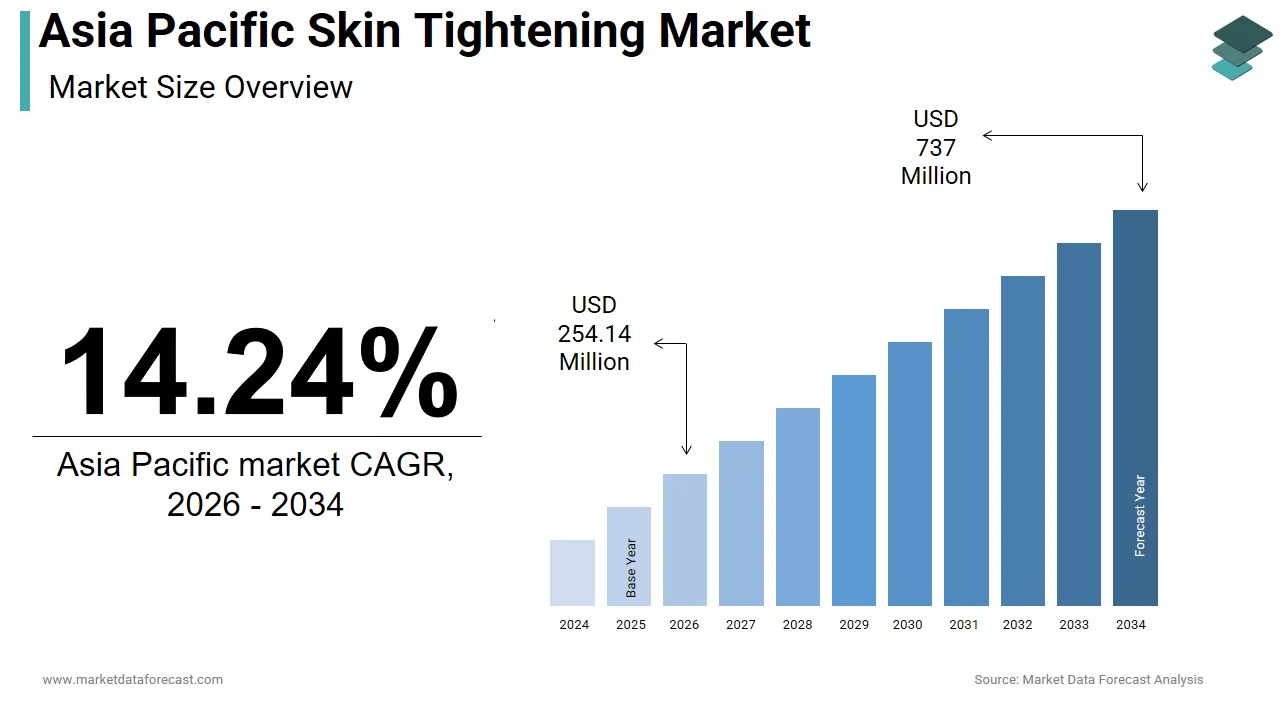
$222.46 MnMarket Estimate, 2026
$254.14 MnMarket Forecast, 2034
$737 MnCAGR, 2026–2034
14.24%Asia Pacific Skin Tightening Market Summary
The Asia Pacific skin tightening market was valued at USD 222.46 million in 2025, is estimated to reach USD 254.14 million in 2026, and is projected to reach USD 737 million by 2034, growing at a CAGR of 14.24% from 2026 to 2034. Skin tightening refers to non-invasive and minimally invasive aesthetic procedures that improve elasticity, reduce sagging, and counteract aging by stimulating collagen and elastin. Rising urbanization, disposable incomes, and cosmetic innovation are major market drivers across the region.
Key Market Trends & Insights
- China led the Asia Pacific skin tightening market in 2025.
- India is expected to showcase strong growth throughout the forecast period.
- Based on product type, the Radio Frequency (RF) was the leading segment in 2025.
- Based on treatment type, the non-invasive segment held the dominant market share in 2025.
- Based on end-user, dermatology clinics remained the top segment in 2025.
Market Size & Forecast
- 2025 Market Size: USD 222.46 Million
- 2026 Estimated Market Size: USD 254.14 Million
- 2034 Projected Market Size: USD 737 Million
- CAGR (2026–2034): 14.24%
- China: Largest market in 2025
- India: Strong growth region
Asia Pacific Skin Tightening Market Size
The size of the Asia Pacific skin tightening market was worth USD 222.46 million in 2025. The regional market is anticipated to grow at a CAGR of 14.24% from 2026 to 2034 and be worth USD 737 million by 2034 from USD 254.14 million in 2026.
Skin tightening refers to the non-invasive and minimally invasive aesthetic procedures designed to improve skin elasticity, reduce sagging, and counteract signs of aging by stimulating collagen and elastin production. These treatments employ technologies such as radiofrequency (RF), ultrasound, laser, and microfocused ultrasound (MFU), delivered through both clinical and at-home devices. With rising urbanization and increasing disposable income across countries like China, India, South Korea, and Australia, consumer interest in aesthetic wellness has intensified.
The integration of dermatological science with cosmetic innovation has led to the development of advanced modalities tailored to diverse Asian skin types, particularly addressing concerns like early-onset skin laxity due to environmental stressors. Moreover, regulatory frameworks in nations such as Japan and Singapore have evolved to accommodate medical aesthetics, fostering clinical standardization. The growing presence of dermatology clinics and medispas, especially in metropolitan hubs like Tokyo, Seoul, and Mumbai, reflects the region’s shift toward preventive aesthetic care. Unlike surgical facelifts, skin tightening procedures offer minimal downtime, making them increasingly compatible with fast-paced urban lifestyles.
MARKET DRIVERS
Rising Prevalence of Photoaging Due to Intense UV Exposure Across Tropical and Subtropical Regions
The Asia Pacific region experiences some of the highest levels of solar ultraviolet (UV) radiation due to its geographical span across tropical and subtropical zones, significantly accelerating extrinsic skin aging. According to the World Health Organization, countries such as Indonesia, the Philippines, and Thailand record annual UV index values exceeding 11 during peak months, classified as "extreme" exposure. Prolonged UV exposure degrades dermal collagen and elastin fibers, leading to premature skin laxity, a condition increasingly observed in individuals under 35. The biological imperative has driven demand for preventive and corrective skin tightening therapies. In response, clinics in high-sunbelt areas are adopting combination therapies, such as RF microneedling and fractional laser treatments. The urgency to combat environmental skin damage has positioned skin tightening not merely as a cosmetic enhancement but as a dermatological necessity, fueling market expansion across sun-intensive regions.
Expanding Middle-Class Population with Heightened Aesthetic Awareness
The swelling middle class across Asia Pacific, particularly in India, Indonesia, and Vietnam, is reshaping consumer behavior toward personal appearance and self-care. The demographic shift correlates strongly with increased spending on wellness and aesthetic services. Social influence, amplified by digital platforms and K-beauty trends, further accelerates adoption. This cultural shift is now permeating emerging economies. As aesthetic consciousness transitions from elite privilege to mainstream aspiration, demand for scientifically backed, low-downtime procedures continues to surge.
MARKET RESTRAINTS
High Treatment Costs Limiting Accessibility in Low- and Middle-Income Economies
The financial burden of professional skin tightening procedures remains a critical barrier across much of the Asia Pacific region. A single session of radiofrequency-based skin tightening in major urban centers. For populations where average monthly incomes remain low, such as in rural India, the Philippines, and parts of Vietnam, these costs are prohibitively high. Even in relatively affluent markets like Malaysia, out-of-pocket expenditure on non-essential dermatology is limited by the absence of insurance coverage. Consequently, many consumers either delay treatment or resort to unregulated, low-cost alternatives, which carry higher risks. These economic disparities continue to constrain market penetration in price-sensitive regions.
Lack of Standardized Regulatory Oversight in Emerging Markets
The absence of harmonized regulatory frameworks for aesthetic devices and procedures across Asia Pacific poses a significant impediment to market integrity and consumer trust. In countries like Indonesia, Vietnam, and Pakistan, enforcement of medical device standards remains inconsistent, enabling the proliferation of substandard or counterfeit skin-tightening equipment. The regulatory fragmentation allows unlicensed practitioners to administer treatments using non-certified devices, increasing the risk of adverse outcomes. Furthermore, professional training standards vary widely. The gap between service availability and clinical expertise undermines patient safety and discourages mainstream adoption. Without robust certification protocols and device traceability, the market risks reputational damage, deterring both consumers and legitimate providers from engaging in regulated channels.
MARKET OPPORTUNITIES
Integration of AI-Driven Personalization in Skin Tightening Devices
The convergence of artificial intelligence (AI) and aesthetic medicine is unlocking transformative potential in the Asia Pacific skin tightening market. AI-powered diagnostic tools can now analyze skin texture, elasticity, and collagen density through high-resolution imaging, enabling customized treatment protocols. South Korea’s L’Oréal-backed startup, SkinGraph, utilizes machine learning to predict skin aging trajectories, allowing for preemptive tightening interventions. The growing emphasis on precision aesthetics aligns with regional preferences for tailored healthcare solutions. Moreover, AI-enabled devices can reduce operator dependency, mitigating skill gaps in underserved areas. As cloud-based dermatology platforms expand across India and Indonesia, the scalability of AI-driven skin tightening solutions presents a significant growth avenue, particularly in hybrid tele-aesthetic models.
Expansion of At-Home Skin Tightening Devices with Clinical-Grade Efficacy
The demand for convenient, discreet, and repeatable skin tightening treatments has catalyzed innovation in at-home devices, now achieving performance levels closer to in-clinic systems. The technological leap is reshaping consumer behavior, especially among younger demographics. Japanese consumers, known for their preference for preventive care, are increasingly adopting devices with built-in biosensors that monitor skin impedance and adjust energy output in real time. Regulatory approvals for consumer devices are also improving. As technology miniaturization advances and pricing becomes more accessible, the at-home segment is poised to democratize skin tightening access, particularly in rural and semi-urban areas where clinical infrastructure remains limited.
MARKET CHALLENGES
Variability in Skin Response Across Diverse Asian Skin Types
The Asia Pacific region encompasses a wide spectrum of Fitzpatrick skin types III to VI, each exhibiting distinct responses to energy-based skin tightening modalities. Higher melanin content in darker skin increases the risk of post-inflammatory hyperpigmentation (PIH) and thermal injury when exposed to laser or intense RF energy. The biological variability necessitates precise parameter customization, which many standard devices fail to deliver. In India, where skin types V and VI are prevalent, many dermatologists report treatment hesitancy with conventional RF systems due to safety concerns. Moreover, structural differences in dermal thickness require lower energy penetration to avoid tissue damage. Japan’s National Institute of Aesthetic Medicine emphasizes that generic treatment protocols developed in Western markets often fail in Asian populations, leading to suboptimal outcomes. While newer devices with real-time impedance monitoring are emerging, their adoption remains limited. Bridging this gap requires region-specific clinical research and device calibration, a challenge compounded by fragmented regulatory landscapes and limited localized trials.
Escalating Competition from Unregulated Aesthetic Clinics and Black Market Devices
The rapid commercialization of skin tightening has led to an explosion of unlicensed clinics and counterfeit equipment, particularly in Southeast Asia and South Asia. The establishments frequently use black-market devices imported from unregulated manufacturers, often bypassing safety certifications. These devices pose serious risks, including uneven energy distribution and inadequate cooling mechanisms, leading to burns and scarring. Consumer trust is further eroded by aggressive marketing tactics that exaggerate results. The proliferation of such operators distorts pricing, undercuts legitimate clinics, and complicates regulatory enforcement. Without coordinated cross-border monitoring and stricter import controls, the shadow market will continue to undermine the credibility and long-term sustainability of the formal skin tightening industry.
REPORT COVERAGE
| REPORT METRIC | DETAILS |
| Market Size Available | 2025 to 2034 |
| Base Year | 2025 |
| Forecast Period | 2026 to 2034 |
| Segments Covered | By Product Type, Portability, Treatment Type, Application, End User, Distribution Channel, and Region. |
| Various Analyses Covered | Global, Regional and Country-Level Analysis, Segment-Level Analysis, Drivers, Restraints, Opportunities, Challenges; PESTLE Analysis; Porter’s Five Forces Analysis, Competitive Landscape, Analyst Overview of Investment Opportunities |
| Countries Covered | India, China, Japan, South Korea, Rest of Asia Pacific |
| Market Leaders Profiled | BTL, Merz Pharma, ALLERGAN, Lumenis, Candela Medical, BISON MEDICAL, Pollogen, BRERA MEDICAL TECHNOLOGIES S.R.L., Cutera, Opatra Ltd, Venus Concept, Alma Lasers, Beijing Winkonlaser Technology Limited, DEKA M.E.L.A. srl, Fotona, ThermiGen, LLC, Hologic, Inc., EINSMED Co., Ltd, Bausch Health Companies Inc,. and others. |
SEGMENTAL ANALYSIS
By Product Type Insights
The Radio Frequency (RF) skin tightening segment led the Asia Pacific market by accounting for 43.8% in 2024. This dominance is primarily anchored in RF’s proven safety profile across diverse Asian skin tones, particularly for individuals with Fitzpatrick types III to V, who are more prone to pigmentation complications from laser-based modalities. Furthermore, RF’s versatility in treating multiple facial and body zonessuch as the jawline, abdomen, and thighsenhances its clinical utility. Additionally, the commercialization of fractional and microneedling RF systems has expanded treatment depth and efficacy, enabling collagen remodeling at dermal layers up to 4.5 mm. The technology’s compatibility with combination therapies and minimal downtime further solidifies its position as the cornerstone of non-surgical skin rejuvenation in the region.
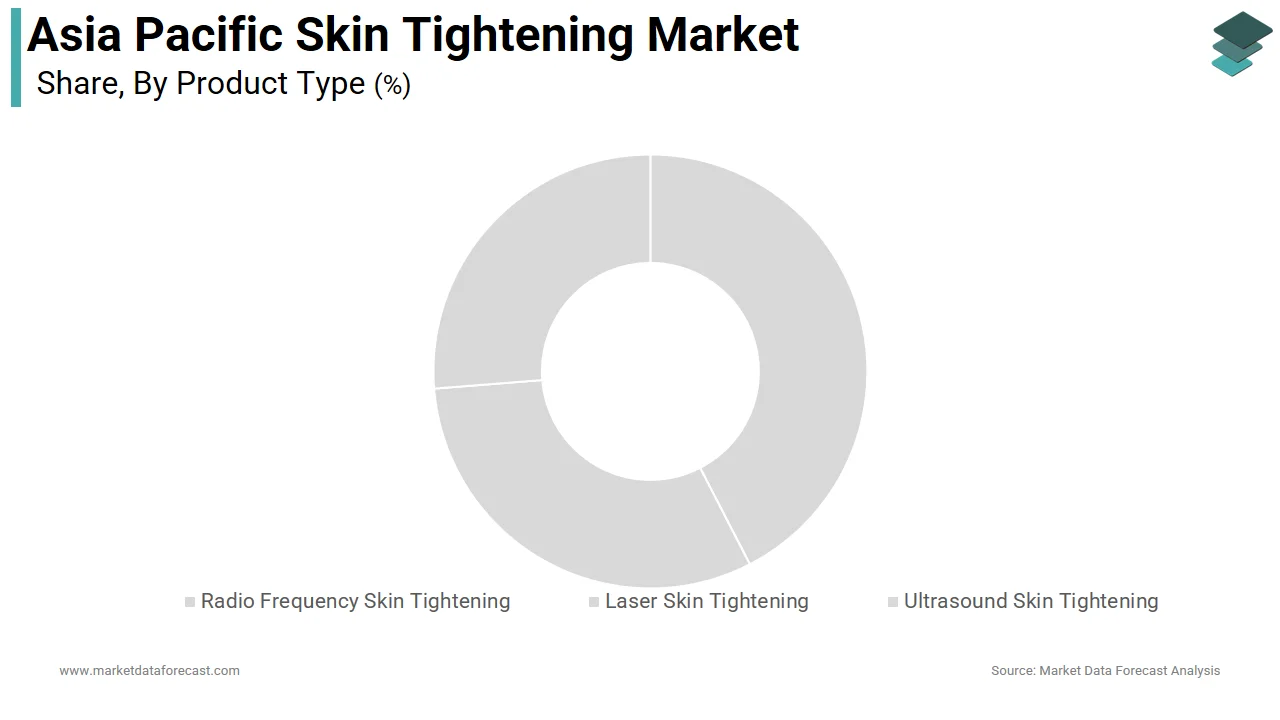
The ultrasound skin tightening segment is projected to grow at a CAGR of 12.8% from 2026 to 2034. This accelerated expansion is driven by its unique ability to deliver focused thermal energy to the superficial muscular aponeurotic system (SMAS), a layer traditionally targeted only through surgical facelifts. A further critical driver is the modality’s precision and real-time imaging capability, which allows practitioners to visualize treatment depth and avoid critical anatomical structures. This feature has enhanced patient confidence, especially in markets like South Korea and Singapore, where aesthetic consumers demand transparency and scientific validation. Device adoption is further supported by training initiatives from companies like Ulthera Systems. As ultrasound platforms become more compact and affordable, their penetration into tier-2 cities in China and India is expanding, unlocking new growth corridors.
By Treatment Type Insights
The non-invasive skin tightening segment dominated the market by constituted 65.2% of the Asia Pacific in 2024. This overwhelming dominance is due to its alignment with regional consumer preferences for zero-downtime, low-risk interventions that fit into fast-paced urban lifestyles. In countries like China and South Korea, where professional and social appearances are closely linked, the ability to undergo treatment during a lunch break and return to work immediately is a decisive factor. Non-invasive modalities such as radiofrequency and low-intensity ultrasound are particularly favored due to their painless application and absence of incisions or anesthesia. Moreover, the rise of preventive aesthetics among younger demographicsindividuals aged 25 to 35has fueled demand for maintenance regimens rather than corrective surgeries. The proliferation of medispas and dermatology chains like Yanhee in Thailand and Dr. GLAS in Japan has further normalized non-invasive treatments, offering standardized protocols and transparent pricing.
The minimally invasive skin tightening segment is experiencing the highest growth in the Asia Pacific market and is expanding at a CAGR of 14.3% from 2026 to 2034. This surge is fueled by advancements in thread lifting technologies and energy-assisted minimally invasive procedures that offer more dramatic and longer-lasting results than non-invasive options. These threads stimulate neocollagenesis while providing immediate mechanical lifting, addressing moderate to severe skin sagging with minimal scarring. An additional key driver is the rising acceptance of hybrid treatments among middle-aged consumers (40–55 years), who seek outcomes comparable to surgery but with reduced risk and cost. Additionally, regulatory bodies in Singapore and Japan have streamlined approval pathways for absorbable thread devices, accelerating market entry. As consumer expectations evolve from subtle enhancement to visible transformation, minimally invasive techniques are bridging the gap between non-invasive and surgical aesthetics, driving rapid adoption.
By End User Insights
The dermatology clinics segment commanded the Asia Pacific skin tightening market by securing 54.6% share in 2024. This lead position is due to the growing professionalization of aesthetic dermatology and the increasing preference for medically supervised treatments over cosmetic salon services. In countries like Japan and South Korea, dermatology clinics are recognized as the primary destination for evidence-based skin rejuvenation, combining clinical expertise with advanced technology. A further critical factor is the rising integration of skin tightening into broader dermatological care plans, such as acne scar revision, photodamage repair, and hormonal skin aging management. Clinics also benefit from stronger patient trust, particularly in markets where regulatory scrutiny is intensifying. Moreover, leading clinic chains such as Yanhee Hospital in Thailand and Amore Aesthetic Clinic in Malaysia have standardized treatment protocols, introduced loyalty programs, and partnered with device manufacturers for exclusive access, further consolidating their market position.
The homecare segment is emerging as the fastest-growing end-user channel in the Asia Pacific skin tightening market and is recording a CAGR of 16.7% from 2026 to 2034. This acceleration is driven by the convergence of technological miniaturization, rising e-commerce penetration, and shifting consumer behavior toward self-administered wellness. These devices, such as Huawei’s SmartLift and Xiaomi’s DermaCare series, are engineered with biosensors and AI-driven feedback systems that adjust energy output based on skin impedance, enhancing safety and efficacy. Regulatory approvals are also improving. Additionally, subscription-based models and bundled skincare regimens offered by brands like Foreo and CurrentBody are increasing accessibility. As urban populations prioritize convenience and privacy, and as device performance approaches clinical-grade outcomes, the homecare segment is poised to redefine the delivery model of skin tightening across the region.
COUNTRY-LEVEL ANALYSIS
China Skin Tightening Market Insights
China stood as the largest market for skin tightening in Asia Pacific by capturing 25.2% of regional revenue in 2024. The country’s dominance is underpinned by a rapidly expanding urban middle class, aggressive digital marketing, and the normalization of aesthetic procedures among younger demographics. The government’s 2021 “Healthy China 2030” initiative has also indirectly supported aesthetic dermatology by expanding dermatology training programs and upgrading clinic infrastructure. However, regulatory crackdowns on unlicensed providers have redirected consumers toward certified clinics, enhancing market legitimacy. Consumer preference for natural-looking results has favored non-invasive modalities. As regulatory clarity improves and domestic innovation rises, China’s market is transitioning from imitation to leadership in aesthetic technology.
Japan Skin Tightening Market Insights
Japan holds a significant share of the Asia Pacific skin tightening market. The country’s mature aesthetic landscape is characterized by a strong emphasis on preventive care, scientific validation, and long-term skin health. Japanese consumers exhibit high brand loyalty and demand for precision, favoring treatments with measurable outcomes. Japan leads in device innovation. The aging population further drives demand for non-surgical lifting solutions. Regulatory rigor ensures high safety standards. Moreover, the integration of skin tightening into corporate wellness programs, particularly in Tokyo and Osaka, reflects its normalization beyond cosmetic enhancement. With a shrinking birth rate and increasing life expectancy, Japan’s focus on aesthetic longevity positions it as a benchmark for sustainable market growth.
South Korea Skin Tightening Market Insights
South Korea commands a notable share of the Asia Pacific skin tightening market. The nation’s growth is because of its status as a global epicenter of aesthetic innovation and cultural influence, where appearance is deeply intertwined with social and professional success. Seoul alone hosts a notable number of specialized aesthetic clinics, many offering proprietary protocols developed in-house. The government supports the sector through the “K-Beauty Globalization Project,”. Consumer demand is further amplified by K-dramas and idol culture, which promote flawless skin as a standard. Clinics leverage AI diagnostics and 3D skin mapping to personalize treatments, enhancing perceived value. Regulatory efficiency, where new devices gain approval in under six months, enables rapid market entry. With high internet penetration and social media engagement, digital consultation platforms have expanded access beyond Seoul to secondary cities, ensuring sustained growth.
India Skin Tightening Market Insights
India is a lucrative region in the Asia Pacific skin tightening market. The country’s growth is driven by rising urban affluence, increasing exposure to global beauty standards, and a burgeoning dermatology infrastructure. Rising pollution levels have accelerated skin aging, prompting preventive treatments. Consumer preference leans toward radiofrequency due to its safety on darker skin tones. E-commerce platforms like Nykaa and Purplle have begun offering at-home RF devices. However, price sensitivity remains a challenge. Government initiatives to train dermatologists in aesthetic procedures and regulate device imports are expected to improve service quality and expand market reach in tier-2 and tier-3 cities.
Australia Skin Tightening Market Insights
Australia holds a small share share of the Asia Pacific skin tightening market. The country’s market is distinguished by high regulatory standards, advanced healthcare infrastructure, and strong consumer awareness. Australia’s high UV index leads to widespread photoaging. This environmental pressure drives demand for preventive and corrective treatments. Sydney and Melbourne host leading aesthetic research centers that collaborate with global manufacturers on clinical trials. Additionally, private health insurers are beginning to cover select procedures for medical indications like post-weight-loss skin redundancy. With one of the highest per capita incomes in the region, Australians are willing to invest in long-term skin health, positioning the market as a high-value, innovation-driven hub in the Asia Pacific landscape.
COMPETITIVE LANDSCAPE
The competitive landscape of the Asia Pacific skin tightening market is marked by a dynamic interplay between global medical technology leaders and emerging regional innovators. Established players such as Lumenis, Cutera, and Candela dominate through advanced energy-based platforms, clinical validation, and extensive training networks. Their strength lies in regulatory compliance, scientific credibility, and partnerships with premium dermatology clinics across Japan, South Korea, and Australia. However, local manufacturers from China and South Korea are gaining traction by offering cost-effective alternatives with comparable efficacy, particularly in price-sensitive markets like India and Indonesia. The rise of at-home devices has further intensified competition, with consumer electronics giants like Huawei and Xiaomi entering the space, blurring the lines between medical and wellness categories. Differentiation is increasingly driven by AI integration, real-time treatment monitoring, and personalized protocols tailored to Asian skin physiology. Intense rivalry is evident in marketing strategies, with companies investing heavily in digital campaigns, KOL collaborations, and participation in regional aesthetic expos. Service bundling, loyalty programs, and subscription models are being adopted to enhance patient retention. Moreover, the lack of uniform regulatory standards across countries creates both opportunities and challenges, enabling rapid market entry while risking quality inconsistencies. As consumer expectations evolve toward natural, long-lasting results with minimal downtime, competition is shifting from device performance alone to holistic care ecosystems encompassing diagnostics, treatment, and post-care monitoring, shaping a highly fragmented yet rapidly maturing market.
KEY MARKET PLAYERS
Some of the noteworthy companies in the Asia Pacific skin tightening market profiled in this report are
- BTL
- Merz Pharma
- ALLERGAN
- Lumenis
- Candela Medical
- BISON MEDICAL
- Pollogen
- BRERA MEDICAL TECHNOLOGIES S.R.L.
- Cutera
- Opatra Ltd
- Venus Concept
- Alma Lasers
- Beijing Winkonlaser Technology Limited
- DEKA M.E.L.A. srl
- Fotona
- ThermiGen, LLC
- Hologic, Inc.
- EINSMED Co., Ltd
- Bausch Health Companies Inc.
TOP LEADING PLAYERS IN THE MARKET
- Lumenis has established a dominant presence in the Asia Pacific skin tightening market through its advanced energy-based aesthetic platforms, particularly its radiofrequency and fractional laser systems. The company has strategically partnered with leading dermatology clinics in Japan, South Korea, and Australia to integrate its solutions into standardized treatment protocols. In 2023, Lumenis launched its next-generation RF device, Stellar M, in Shanghai and Seoul, featuring adaptive energy delivery for diverse Asian skin types. The company has also expanded its clinical training programs across India and Southeast Asia, certifying over 1,200 practitioners in safe and effective skin tightening techniques. By collaborating with local medical associations and sponsoring dermatology conferences, Lumenis has reinforced its reputation as a science-driven innovator. Its focus on regulatory compliance and real-world efficacy data collection has strengthened trust among medical professionals. Additionally, Lumenis has localized its marketing to align with regional beauty ideals, emphasizing natural-looking rejuvenation. These initiatives have enabled the company to deepen its penetration in both metropolitan and emerging urban centers, positioning it as a preferred technology provider in the region’s evolving aesthetic landscape.
- Cutera has significantly influenced the Asia Pacific skin tightening market through its non-invasive platforms like Titan and ProWave, which are widely adopted for facial and body contouring. The company has prioritized clinical validation, conducting multicenter studies in Australia and Singapore to demonstrate the safety and efficacy of its RF technology on Asian skin. In 2022, Cutera introduced its AI-assisted treatment planning module in Japan, enhancing precision and patient outcomes. It has forged strategic alliances with premium medispas in Thailand and Malaysia, offering bundled service packages to increase patient retention. Cutera also invested in a regional technical support hub in Hong Kong to ensure rapid service deployment and maintenance. By participating in key industry events such as Aesthetic & Anti-Aging Asia in Bangkok, the company has strengthened its visibility among practitioners. Furthermore, Cutera has localized its training curriculum to address regional anatomical variations and consumer expectations. Its emphasis on long-term device performance and minimal downtime aligns with the region’s preference for low-risk, high-reward treatments, solidifying its position as a trusted clinical partner across diverse markets.
- Candela Medical has made substantial contributions to the Asia Pacific skin tightening market through its Vbeam and CO2RE platforms, which are increasingly used in combination therapies for skin rejuvenation. The company has focused on expanding its footprint in high-growth markets like India and Indonesia by collaborating with dermatology academies to standardize treatment protocols. In 2023, Candela launched a mobile training unit in Mumbai and Jakarta, delivering hands-on workshops to over 800 clinicians on safe energy delivery for pigmented skin types. It also introduced a cloud-based treatment tracking system in South Korea, enabling real-time outcome monitoring and personalized follow-ups. Candela has strengthened its distribution network by partnering with regional medical distributors in Vietnam and the Philippines, ensuring faster device access. Its commitment to clinical research is evident through sponsored studies at institutions like the National Skin Centre in Singapore. By emphasizing evidence-based aesthetics and practitioner education, Candela has built strong credibility among medical professionals. Its integration of cooling technologies and customizable handpieces has enhanced patient comfort, addressing a critical concern in hot and humid climates across Southeast Asia.
TOP STRATEGIES USED BY KEY MARKET PARTICIPANTS
Key players in the Asia Pacific skin tightening market are deploying multifaceted strategies to consolidate their presence and drive innovation. A primary approach is strategic localization, where companies adapt device parameters, training programs, and marketing messages to align with regional skin types and beauty ideals. Firms like Lumenis and Cutera have established regional clinical advisory boards comprising local dermatologists to guide product development. Another widespread tactic is capacity building through extensive training initiatives, ensuring safe and effective device utilization across diverse healthcare settings. Companies are also forming alliances with dermatology associations and medispas to enhance credibility and expand reach. Product differentiation via technological integrations as AI-driven diagnostics, real-time imaging, and IoT-enabled monitoring, is a growing trend, enabling personalized treatments and improved outcomes. Market expansion into tier-2 and tier-3 cities is being achieved through mobile training units and regional service hubs. Additionally, firms are leveraging digital platforms for patient education and appointment booking, enhancing accessibility. Regulatory compliance is prioritized, with manufacturers seeking approvals from agencies like Japan’s PMDA and Australia’s TGA to build trust. Lastly, strategic collaborations with e-commerce platforms and beauty retailers are facilitating the growth of at-home device segments. These coordinated efforts reflect a shift from product-centric to ecosystem-driven strategies, emphasizing long-term engagement, clinical excellence, and consumer empowerment across the region’s dynamic aesthetic landscape.
RECENT MARKET DEVELOPMENTS
- In March 2023, Lumenis launched its adaptive radiofrequency platform, Stellar M, in Seoul and Shanghai, featuring real-time impedance monitoring for safer treatments on diverse Asian skin types, enhancing clinical precision and practitioner confidence across high-demand urban centers.
- In August 2022, Cutera introduced an AI-powered treatment planning module in Japan, integrated with its Titan RF system, enabling dermatologists to customize energy delivery based on individual skin elasticity and thickness, significantly improving treatment consistency and patient outcomes.
- In November 2023, Candela Medical deployed a mobile training unit across major cities in India and Indonesia, conducting over 120 hands-on workshops for dermatologists on safe laser and RF protocols, strengthening clinical adoption and standardizing best practices in emerging markets.
- In January 2024, Cutera expanded its regional support infrastructure by establishing a technical service hub in Hong Kong, reducing device maintenance turnaround time by 40% and improving uptime for clinics across Southeast Asia and Greater China.
- In September 2023, Lumenis partnered with the Japanese Society of Aesthetic Plastic Surgery to sponsor a multicenter clinical study on RF efficacy in aging Asian skin, generating region-specific data that bolstered regulatory acceptance and clinician trust in its technology.
MARKET SEGMENTATION
This Asia Pacific skin tightening market research report is segmented and sub-segmented into the following categories.
By Product Type
- Radio Frequency Skin Tightening
- Laser Skin Tightening
- Ultrasound Skin Tightening
By Portability
- Portable
- Standalone
By Treatment Type
- Non-Invasive
- Minimally Invasive
By Application
- Reduce Wrinkles
- Face Lifting
- Body Lifting
- Anti-Aging
- Others
By End User
- Dermatology Clinics
- Hospitals
- Beauty Salon and Cosmetic Centres
- Homecare
By Distribution Channel
- Direct
- Tenders
- Retail
By Country
- India
- China
- Japan
- South Korea
- Rest Of Asia Pacific