Asia Pacific Video Surveillance Market Research Report – Segmented By Component (Hardware, Software, Video as a Service), End-User, and Region (India, China, Japan, South Korea, Australia & New Zealand, Thailand) - Industry Analysis, Size, Share, Growth, Trends, And Forecasts 2026 to 2034
Asia Pacific Video Surveillance Market Report Summary
The Asia Pacific video surveillance market was valued at USD 31.68 billion in 2025, is estimated to reach USD 35.66 billion in 2026, and is projected to reach USD 91.95 billion by 2034, growing at a CAGR of 12.57% during the forecast period from 2026 to 2034. The growth of the Asia Pacific video surveillance market is driven by increasing investments in smart city initiatives, rising concerns over public safety and security, and rapid adoption of AI-powered surveillance technologies. Growing deployment of IP-based surveillance systems across commercial, industrial, transportation, and government sectors, along with advancements in cloud computing, edge analytics, and facial recognition technologies, is further accelerating market growth. Additionally, expanding digital infrastructure and increasing demand for intelligent monitoring solutions are supporting market expansion across the region.
Key Market Trends
-
Rising investments in smart city projects and public security infrastructure are driving demand for advanced video surveillance systems.
-
Increasing adoption of artificial intelligence, facial recognition, and video analytics is enhancing surveillance accuracy and operational efficiency.
-
Growing deployment of cloud-based and IoT-enabled surveillance solutions is enabling remote monitoring and centralized security management.
-
Rising security concerns across commercial, transportation, and critical infrastructure sectors are accelerating the installation of intelligent surveillance systems.
-
Continuous advancements in high-definition imaging, thermal cameras, and edge computing are expanding surveillance capabilities.
Segmental Insights
-
Based on component, the hardware segment dominated the Asia Pacific video surveillance market by accounting for 65.5% of the market share in 2025. The segment's leadership is attributed to the strong demand for surveillance cameras, storage systems, video recorders, and networking equipment across diverse end-use industries.
-
Based on end user, the commercial sector held the largest share of the Asia Pacific video surveillance market by accounting for 40.5% of the market share in 2025. The segment's dominance is driven by increasing investments in retail, banking, hospitality, office buildings, and commercial complexes to enhance security and operational monitoring.
Regional Insights
-
The Asia Pacific video surveillance market is witnessing rapid growth due to expanding urbanization, increasing digital transformation, and rising demand for intelligent security solutions.
-
China dominated the Asia Pacific video surveillance market by accounting for 40.2% of the regional market share in 2025. The country's leadership is supported by large-scale smart city projects, strong domestic manufacturing capabilities, extensive deployment of surveillance infrastructure, and continuous investments in AI-enabled security technologies.
-
Japan remains a significant market due to its advanced surveillance technologies, smart infrastructure development, and increasing focus on public safety.
Competitive Landscape
The Asia Pacific video surveillance market is highly competitive, with leading companies focusing on artificial intelligence, cloud-based surveillance, high-definition imaging, and integrated security solutions to strengthen their market positions. Manufacturers are investing in research and development, strategic collaborations, and advanced video analytics technologies to improve surveillance performance, cybersecurity, and operational efficiency. Key players operating in the Asia Pacific video surveillance market include Shenzhen Infinova Limited, Zhejiang Uniview Technologies Co. Ltd., IDIS, Hanwha Techwin, Hangzhou Hikvision Digital Technology Co. Ltd., Huawei Technologies Co. Ltd., Zhejiang Dahua Technology Co. Ltd., Vivotek Inc., Intelbras, and Panasonic Holdings Corporation.
Asia Pacific Video Surveillance Market Size
The Asia Pacific video surveillance market size was valued at USD 31.68 billion in 2025, and is expected to reach USD 91.95 billion by 2034 from USD 35.66 billion in 2026. The market's promising CAGR for the predicted period is 12.57%.
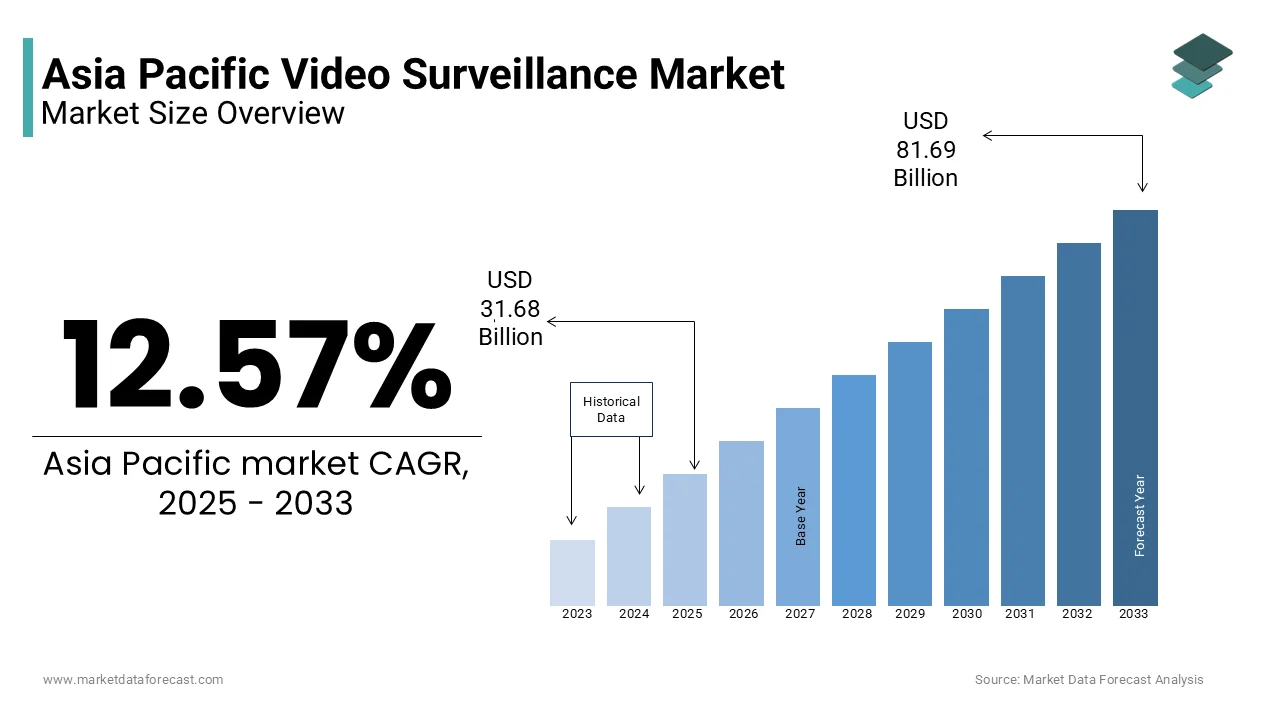
The Asia Pacific video surveillance market has emerged as a cornerstone of regional security infrastructure and is driven by rapid urbanization and increasing concerns about public safety. This expansion is fueled by widespread adoption across sectors such as transportation, retail, and smart cities. Additionally, government initiatives promoting smart city development, such as Singapore’s “Smart Nation” program, have accelerated adoption. Despite these advancements, challenges such as privacy concerns and high implementation costs persist, shaping the market’s trajectory.
MARKET DRIVERS
Rising Urbanization and Smart City Initiatives
Rising urbanization and the proliferation of smart city initiatives are primary drivers of the Asia Pacific video surveillance market. For instance, in Singapore, the government’s “Smart Nation” initiative utilizes AI-powered surveillance systems to monitor traffic congestion and public safety, reducing response times. Also, a key factor fueling this growth is the integration of IoT and cloud-based platforms, enabling real-time data collection and analysis. Also, cities using smart surveillance systems reported a notable reduction in crime rates due to improved monitoring capabilities. Additionally, partnerships between governments and private firms have streamlined implementation, attracting investments in urban infrastructure projects.
Increasing Security Concerns and Terrorist Threats
Increasing security concerns and terrorist threats are another significant driver of the Asia Pacific video surveillance market. Like, incidents of terrorism in the region increased annually between 2019 and 2022, prompting governments to invest heavily in surveillance technologies. For example, in India, the installation of CCTV cameras in public spaces reduced crime rates in major cities like Delhi and Mumbai, as reported by the National Crime Records Bureau.
Another factor is the rise of facial recognition systems, which enhance threat detection and identification capabilities. Similarly, a notable number of law enforcement agencies in the region utilize AI-driven surveillance tools to combat organized crime and terrorism. Additionally, airports and transportation hubs have adopted advanced systems to improve passenger safety, fostering trust among the public.
MARKET RESTRAINTS
Privacy Concerns and Ethical Issues
Privacy concerns and ethical issues pose a significant restraint to the Asia Pacific video surveillance market, particularly as governments and businesses increasingly rely on facial recognition and AI-driven systems. For instance, a considerable portion of respondents opposed the use of facial recognition in public spaces due to potential privacy violations.
Additionally, the lack of standardized regulations exacerbates the issue, leaving many systems vulnerable to abuse. Like, only a small number of organizations in the region have implemented robust data protection policies, raising ethical concerns among consumers. These challenges necessitate significant investments in transparency and compliance measures, adding to operational burdens for operators.
High Implementation Costs for SMEs
High implementation costs remain a critical barrier, particularly for small and medium enterprises (SMEs) in emerging markets like Vietnam and Indonesia. Similarly, less number of SMEs in these regions can afford full-scale implementations, forcing them to rely on outdated technologies or manual monitoring.
Furthermore, maintenance and upgrade expenses further exacerbate the issue, with annual costs accounting for notable share of the initial investment.
MARKET OPPORTUNITIES
Expansion into Emerging Markets
Emerging markets such as India, Indonesia, and Vietnam present significant opportunities for the Asia Pacific video surveillance market. Also, the rise of affordable surveillance systems tailored to local needs has begun to bridge this gap, enabling wider adoption. For instance, in 2022, Hikvision launched a low-cost CCTV system in India, specifically designed for small-scale retail stores, resulting in an increase in sales.
Additionally, government initiatives promoting rural safety have indirectly boosted demand for video surveillance. By addressing infrastructural gaps and tailoring offerings to regional preferences, companies can unlock immense growth potential in these untapped markets.
Integration of AI and Predictive Analytics
The integration of artificial intelligence (AI) and predictive analytics offers transformative opportunities for the Asia Pacific video surveillance market. For example, in South Korea, Samsung Electronics adopted AI-enabled cameras in public transportation systems, improving threat detection accuracy considerably.
Predictive analytics, powered by machine learning algorithms, allows operators to identify potential security risks before they occur, enhancing decision-making capabilities. Also, businesses using AI-integrated surveillance systems reported a reduction in security breaches. Additionally, partnerships with tech firms like Huawei have streamlined the deployment of AI-driven solutions, attracting industries seeking advanced capabilities.
MARKET CHALLENGES
Fragmented Regulatory Frameworks
Fragmented regulatory frameworks pose a significant challenge to the Asia Pacific video surveillance market, creating operational inefficiencies for multinational companies. For instance, while Japan mandates stringent data protection certifications for facial recognition systems, countries like Thailand have minimal regulations, leading to inconsistencies in system standards. These disparities increase administrative burdens and costs, hindering scalability.
Furthermore, sudden policy changes disrupt operations. Such complexities necessitate significant investments in regulatory expertise, straining resources for smaller players and limiting market entry for new entrants.
Limited Skilled Workforce in Rural Areas
Limited availability of skilled professionals remains a critical challenge, particularly in rural and underdeveloped regions. According to the World Economic Forum, a significant share of Asia Pacific countries faces a shortage of trained personnel capable of installing and maintaining advanced surveillance systems. For example, in Cambodia and Myanmar, a smaller number of public infrastructure projects have access to certified technicians. Additionally, the lack of technical education programs exacerbates the issue, leaving many operators reliant on external consultants, which increases costs. Data from the Asian Development Bank highlights that skill gaps result in a reduction in system efficiency, underscoring the need for workforce development initiatives.
REPORT COVERAGE
| REPORT METRIC | DETAILS |
| Market Size Available | 2025 to 2034 |
| Base Year | 2025 |
| Forecast Period | 2026 to 2034 |
| CAGR | 12.57% |
| Segments Covered | By Component, End-User, and Region |
|
Various Analyses Covered | Regional & Country Level Analysis, Segment-Level Analysis, DROC, PESTLE Analysis, Porter’s Five Forces Analysis, Competitive Landscape, Analyst Overview on Investment Opportunities |
| Regions Covered | India, China, Japan, South Korea, Australia, New Zealand, Thailand, Malaysia, Vietnam, Philippines, Indonesia, Singapore, and the Rest of Asia-Pacific |
| Market Leaders Profiled | Shenzhen Infinova Limited, Zhejiang Uniview Technologies Co Ltd, IDIS, Hanwha Techwin, Hangzhou Hikvision Digital Technology Co Ltd, Huawei Technologies Co Ltd, Zhejiang Dahua Technology Co Ltd, Vivotek Inc, Intelbras, and Panasonic Holdings Corporation, and others |
SEGMENTAL ANALYSIS
By Component Insights
The hardware segment dominated the Asia Pacific video surveillance market by capturing a 65.5% of total revenue in 2025. This dominance is driven by the widespread adoption of cameras, recording devices, and other physical components essential for surveillance systems. Like, a significant share of enterprises in the region rely on high-definition CCTV cameras and advanced sensors to enhance security measures. Also, a key factor fueling this growth is the increasing demand for AI cameras, which enable real-time facial recognition and threat detection. Additionally, government initiatives promoting public safety have accelerated hardware adoption. For instance,
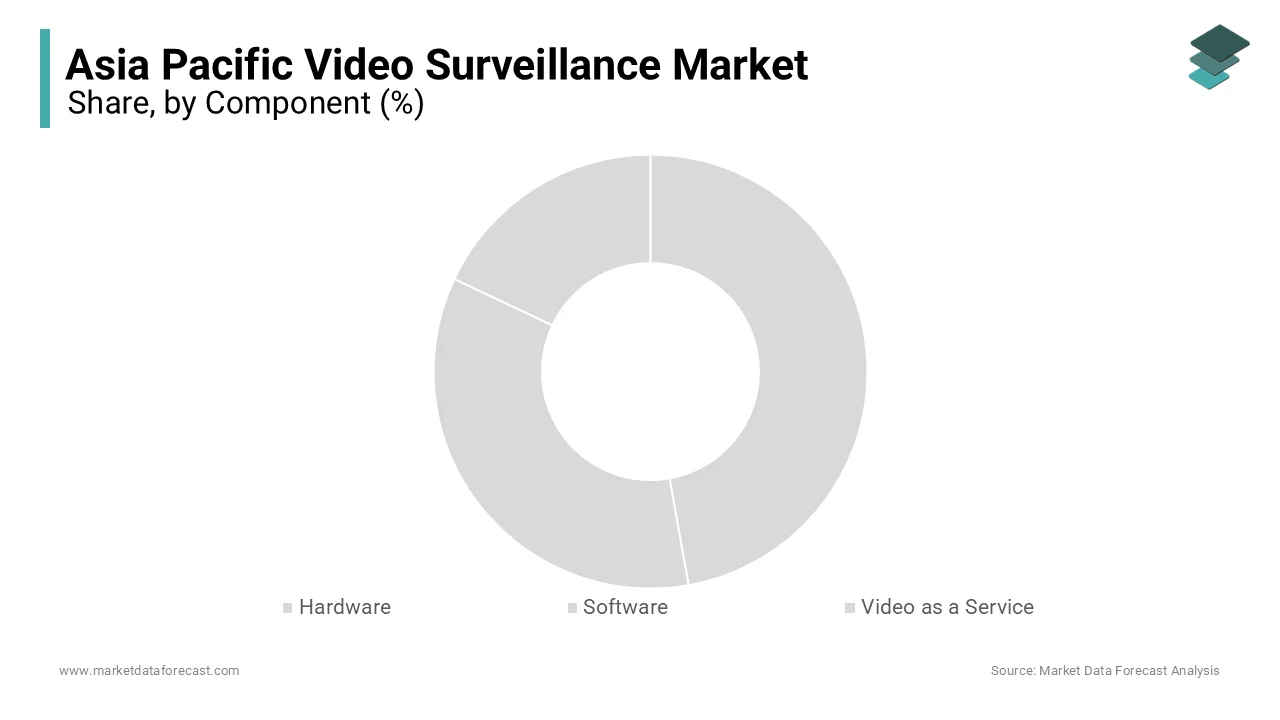
Video as a Service (VaaS) is the fastest-growing segment in the Asia Pacific video surveillance market, with a projected CAGR of 20.5% from 2026 to 2034. This rapid expansion is fueled by the increasing demand for cloud-based solutions that offer scalability and cost efficiency. A significant portion of SMEs in the region prefer VaaS due to its flexibility and reduced upfront costs.
Another driving aspact is the integration of analytics platforms, enabling predictive insights and real-time monitoring. Companies using VaaS reported a reduction in operational expenses.
By End-User Insights
The commercial sector prevailed in the Asia Pacific video surveillance market by accounting for a 40.5% of total revenue in 2025. This growth of the segment is propelled by the growing need for enhanced security in retail stores, shopping malls, and corporate offices. A notable portion of commercial establishments in the region have integrated advanced surveillance systems to deter theft and improve customer safety.
A key aspect is the rise of AI-driven analytics, which enables businesses to optimize operations and enhance decision-making. Besides, partnerships between surveillance providers and commercial firms have streamlined implementation, boosting adoption rates.
The residential segment is the rapidly growing end-user in the Asia Pacific video surveillance market, with a CAGR of 18.3% from 2023 to 2030. This growth is propelled by increasing concerns about home security and the affordability of smart home surveillance systems. Another driving factor is the integration of IoT and mobile applications, enabling remote monitoring and control. Also, homeowners using IoT-enabled surveillance systems reported a increase in perceived safety. For instance, in Japan, smart home surveillance solutions gained significant traction, with sales achieving major mark in 2022. These innovations position residential surveillance as the segment with the highest growth potential, reflecting evolving lifestyle preferences.
REGIONAL ANALYSIS
China led the Asia Pacific video surveillance market by accounting for a 40.2% of regional revenue in 2025. The country’s dominance is driven by its massive urban population and extensive use of surveillance technologies for public safety. A considerable factor is the government’s “Safe City” initiative, which has spurred investments in advanced surveillance systems. Also, cities like Beijing and Shanghai reduced crime rates through the deployment of smart cameras. Additionally, partnerships with global firms like Hikvision have streamlined implementation, ensuring scalability.
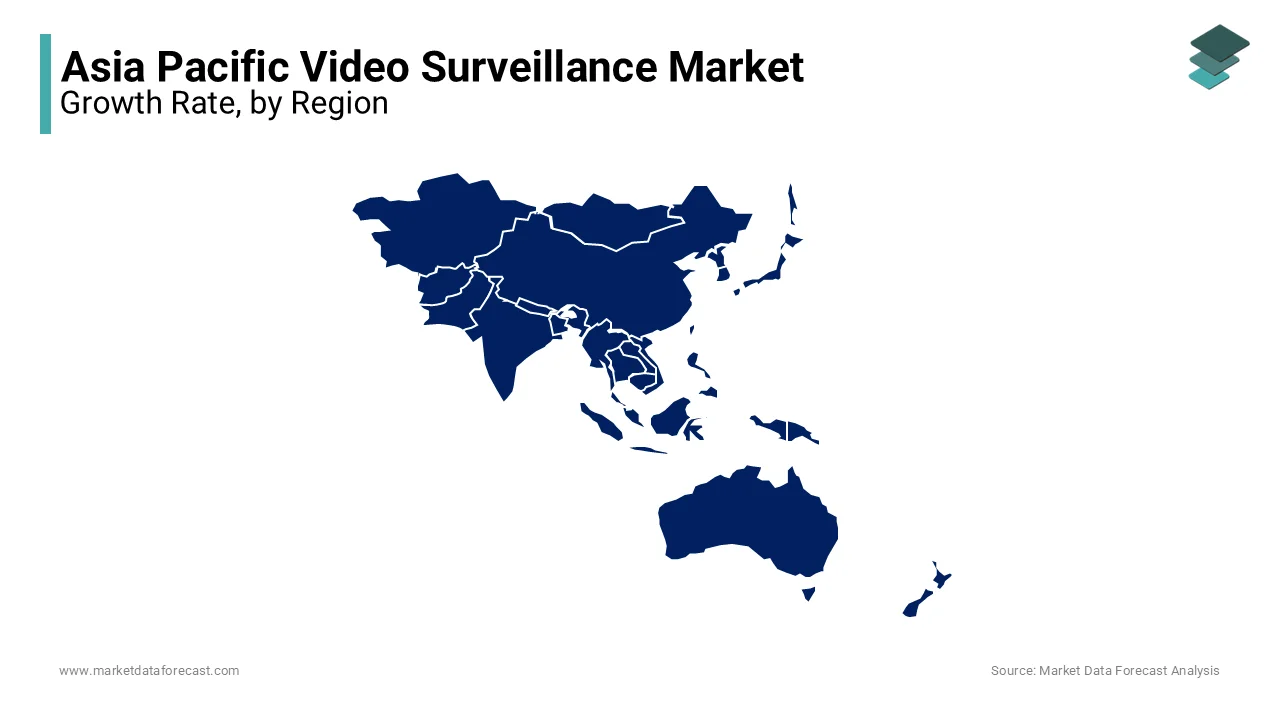
Japan ranks second in the Asia Pacific video surveillance market, characterized by its focus on precision engineering and technological innovation. Also, a key factor is the integration of AI and IoT technologies, enhancing system capabilities and improving efficiency. Additionally, the rise of smart city projects has amplified demand for surveillance solutions in urban infrastructure management. A significant portion of Japan’s public transportation networks utilize surveillance tools to ensure passenger safety, fostering trust among the public. These developments position Japan as a mature and innovative player in the regional market.
India is an emerging powerhouse in the Asia Pacific video surveillance market and is driven by its rapid urbanization and government-led safety initiatives. A major factor is the “Smart Cities Mission,” which has accelerated the adoption of advanced surveillance systems. Another factor is the rise of affordable solutions tailored to local needs. These efforts position India as a high-potential market with immense growth opportunities.
South Korea is a mature player in the Asia Pacific video surveillance market, characterized by its focus on cutting-edge technologies and digital innovation. Like, surveillance spending in sectors like manufacturing and defense grew between 2020 and 2022. A key factor is the integration of AI and automation tools, enhancing threat detection accuracy and reducing operational costs. Additionally, the rise of smart factories has amplified demand for surveillance solutions in industrial automation.
Australia is a leading player in the Asia Pacific video surveillance market, propelled by its robust IT sector and focus on sustainability. A crucial factor is the rise of cybersecurity measures, protecting critical infrastructure from cyber threats. Another factor is the integration of IoT and cloud technologies into surveillance platforms, enabling predictive analytics and real-time decision-making. These efforts ensure Australia remains a hub for cutting-edge surveillance innovations.
COMPETITIVE LANDSCAPE
The Asia Pacific video surveillance market is highly competitive, driven by the presence of global giants like Hikvision and Dahua Technology, alongside regional players catering to local needs. Global firms leverage their technological expertise and extensive portfolios to attract large-scale clients, while local operators capitalize on cultural insights and affordability. This rivalry has spurred significant innovations, such as AI-driven analytics and cloud-enabled platforms. However, challenges like privacy concerns and high implementation costs persist, creating barriers for new entrants. Despite these hurdles, the dynamic landscape fosters continuous improvement, with companies investing heavily in partnerships, marketing, and R&D to differentiate themselves. Only the most agile and innovative players thrive in this evolving market.
KEY MARKET PLAYERS
Some of the key players in the Asia Pacific video surveillance market are
- Shenzhen Infinova Limited
- Zhejiang Uniview Technologies Co. Ltd.
- IDIS
- Hanwha Techwin
- Hangzhou Hikvision Digital Technology Co. Ltd.
- Huawei Technologies Co. Ltd.
- Zhejiang Dahua Technology Co. Ltd.
- Vivotek Inc.
- Intelbras
- Panasonic Holdings Corporation
TOP PLAYERS IN THE MARKET
- Hikvision is a leading innovator in the Asia Pacific video surveillance market, offering advanced solutions like AI-powered cameras and facial recognition systems. Additionally, Hikvision partnered with regional governments to integrate its systems into smart city projects, improving public safety. The company’s focus on affordability and cutting-edge technologies has strengthened its reputation among diverse consumer segments.
- Dahua Technology plays a pivotal role in the Asia Pacific video surveillance market through its comprehensive portfolio of hardware and software solutions. Furthermore, the company collaborated with transportation hubs in Australia to enhance security using AI-driven analytics.
- Axis Communications specializes in network cameras and IoT-enabled surveillance systems, making it a preferred choice for enterprises seeking high-quality solutions. Additionally, the company partnered with retail chains in South Korea to deploy smart cameras, reducing theft. Axis’s emphasis on cybersecurity and real-time analytics has attracted industries prioritizing operational efficiency.
TOP STRATEGIES USED BY KEY PLAYERS
Key players in the Asia Pacific video surveillance market employ diverse strategies to maintain their competitive edge. Localization is a major focus, with companies tailoring products to meet regional preferences and affordability levels. Partnerships with governments and industries streamline implementation, ensuring scalability and compliance. Additionally, investments in AI, IoT, and cloud technologies enhance system capabilities, enabling predictive analytics and real-time decision-making. Companies also prioritize cybersecurity, adopting advanced encryption protocols to address vulnerabilities. Finally, mergers and acquisitions allow firms to consolidate resources and expand into untapped markets, ensuring sustained growth and innovation.
RECENT HAPPENINGS IN THE MARKET
- In March 2023, Hikvision launched a low-cost surveillance system in India, specifically designed for small-scale retail stores, enhancing accessibility and boosting adoption rates among price-sensitive consumers.
- In June 2023, Dahua Technology introduced cloud-based surveillance platforms in Southeast Asia, enabling SMEs to monitor operations remotely and reducing operational costs by 20%.
- In August 2023, Axis Communications launched an AI-integrated platform in Japan, improving threat detection accuracy for commercial establishments and enhancing customer trust.
- In November 2023, Hikvision partnered with regional governments in Australia to integrate its systems into smart city projects, improving public safety and fostering wider adoption.
- In January 2025, Dahua Technology collaborated with transportation hubs in South Korea to deploy AI-driven analytics, reducing security breaches by 30% and improving operational efficiency.
MARKET SEGMENTATION
This research report on the Asia Pacific Video Surveillance market has been segmented and sub-segmented based on the following categories.
By Component
- Hardware
- Software
- Video as a Service
By End-User
- Commercial
- Infrastructure
- Institutional
- Industrial
- Defense
- Residential
By Country
- India
- China
- Japan
- South Korea
- Australia
- New Zealand
- Thailand
- Malaysia
- Vietnam
- Philippines
- Indonesia
- Singapore
- Rest of Asia-Pacific
Frequently Asked Questions
1. What is the Asia Pacific Video Surveillance Market?
The Asia Pacific Video Surveillance Market refers to the regional industry focused on the development, manufacturing, installation, and management of video surveillance systems, including cameras, recording devices, software, and video analytics solutions.
3. What factors are driving the growth of the Asia Pacific Video Surveillance Market?
The market is driven by rising security concerns, increasing smart city projects, rapid urbanization, government investments in public safety, and growing adoption of AI-powered surveillance technologies.
4. Which industries are the major users of video surveillance systems?
Video surveillance systems are widely used in government, transportation, banking and financial services, retail, healthcare, manufacturing, education, hospitality, and residential sectors.
5. What are the major components of a video surveillance system?
A video surveillance system typically includes surveillance cameras, network video recorders (NVRs), digital video recorders (DVRs), video management software (VMS), storage devices, and video analytics solutions.
6. Which countries lead the Asia Pacific Video Surveillance Market?
China, Japan, India, South Korea, Australia, and Singapore are among the leading markets due to extensive smart city initiatives, expanding infrastructure, and increasing investments in public security.
7. What is the difference between IP cameras and analog cameras?
IP cameras transmit digital video over a network and support advanced features such as remote monitoring and AI analytics, while analog cameras require DVR systems and generally offer fewer advanced capabilities.
8. What challenges does the Asia Pacific Video Surveillance Market face?
The market faces challenges such as data privacy concerns, cybersecurity risks, high installation costs, complex system integration, and compliance with evolving data protection regulations.
9. What are the latest trends in the Asia Pacific Video Surveillance Market?
Key trends include AI-based video analytics, cloud video surveillance, facial recognition, edge computing, thermal imaging cameras, and integration with Internet of Things (IoT) platforms.
10. How is artificial intelligence transforming the video surveillance market?
Artificial intelligence enhances video surveillance by enabling facial recognition, object detection, behavior analysis, automated alerts, license plate recognition, and predictive security monitoring.
Related Reports
Access the study in MULTIPLE FORMATS
Purchase options starting from
$ 2000
Didn’t find what you’re looking for?
TALK TO OUR ANALYST TEAM
Need something within your budget?
NO WORRIES! WE GOT YOU COVERED!
Call us on: +1 888 702 9696 (U.S Toll Free)
Write to us: sales@marketdataforecast.com