- Product Description Description
- Table of Contents TOC
- List of Table & Figure LOT
- Get Free Sample PDF Sample PDF
Market Size, 2025
$1.58 BnMarket Estimate, 2026
$1.65 BnMarket Forecast, 2034
$2.31 BnCAGR, 2026–2034
4.30%Global Buckwheat Market Report Summary
The global buckwheat market was valued at USD 1.58 billion in 2025, is estimated to reach USD 1.65 billion in 2026, and is projected to reach USD 2.31 billion by 2034, growing at a CAGR of 4.30% during the forecast period. Market growth is driven by increasing demand for gluten free and nutrient rich grains, rising consumer awareness of healthy diets, and expanding use in food and beverage applications. Buckwheat is widely valued for its high protein content, fiber, and essential nutrients, making it popular in functional foods and health oriented diets. The growing trend toward plant based nutrition and clean label products is further supporting steady market expansion globally.
Key Market Trends
- Rising demand for gluten free and healthy grain alternatives is driving market growth.
- Increasing consumer awareness of nutritional benefits is boosting buckwheat consumption.
- Growing use in functional foods and health focused diets is supporting market expansion.
- Expansion of retail and e commerce channels is improving product availability.
- Rising preference for clean label and natural food products is influencing demand.
Segmental Insights
- Based on application, the food industry segment was the largest and held a dominant share of the global buckwheat market in 2025. This dominance is attributed to widespread use in bakery products, noodles, cereals, and other food applications.
- Based on form, the raw grains segment accounted for 32.1% of the global buckwheat market share in 2025. The segment’s growth is driven by increasing consumer preference for minimally processed and whole grain products.
- Based on distribution channel, the supermarkets and hypermarkets segment dominated with 43.2% of the global buckwheat market share in 2025, supported by strong retail presence, product variety, and consumer convenience.
Regional Insights
- The global buckwheat market is experiencing steady growth across regions, supported by rising health awareness and consumption trends.
- Asia Pacific was the largest contributor, accounting for 50.3% of the global buckwheat market share in 2025, driven by traditional consumption patterns, large scale production, and increasing demand in countries such as China and Japan.
Competitive Landscape
The global buckwheat market is moderately competitive, with key players focusing on product quality, organic offerings, and expansion of distribution networks to strengthen their market position. Companies are investing in processing technologies, sustainable sourcing, and branding strategies. Prominent players in the global buckwheat market include Birkett Mills, Krishna India, Homestead Organics, UA Global Inc, Galinta IR Partneriai, Ningxia Newfield Foods, Sichuan Huantai Industrial, Wels Ltd, and Jinan Jinnuoankang Biotech.
Global Buckwheat Market Size
The global buckwheat market size was valued at USD 1.58 billion in 2025, and the global market size is estimated to grow from USD 1.65 billion in 2026 to USD 2.31 billion in 2034, with a CAGR of 4.30% throughout the forecast period (2026 to 2034).
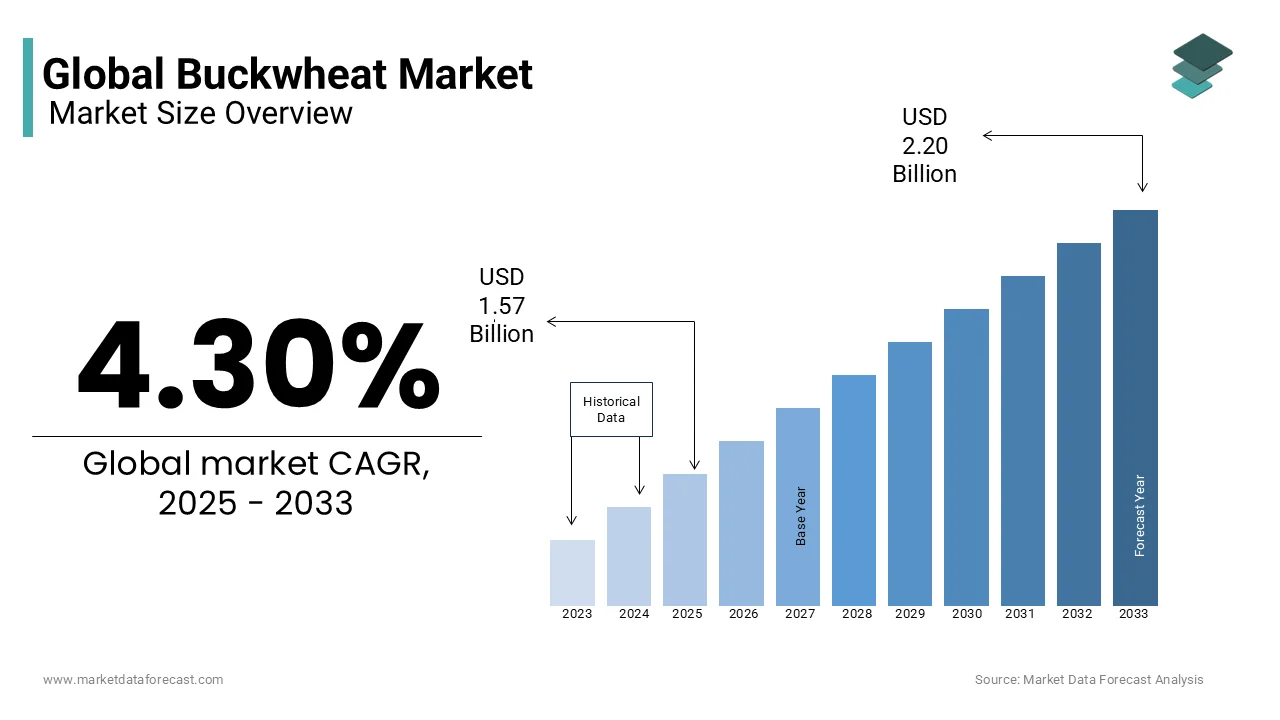
The buckwheat is the grains and derived products, positioning this pseudo cereal as a vital component of the gluten free and functional food sectors. This serves diverse applications ranging from traditional noodles like soba in Asia to pancakes and porridge in Europe and North America. The sector is increasingly defined by its role in sustainable agriculture due to buckwheat’s ability to grow in poor soil conditions and its short growing cycle. According to the Food and Agriculture Organization of the United Nations, global buckwheat production reached approximately 2.1 million metric tons in 2024, with China, Russia, and Ukraine accounting for over 60% of total output. As per the International Gluten Free Association, the prevalence of celiac disease affects roughly 1% of the global population, driving consistent demand for safe grain alternatives. Furthermore, the European Environment Agency notes that buckwheat cultivation supports biodiversity by providing nectar for pollinators, enhancing its appeal in eco conscious farming systems. These agricultural and nutritional attributes define the current market landscape, where buckwheat transitions from a niche crop to a mainstream ingredient in health focused diets.
MARKET DRIVERS
Surging Demand For Gluten Free And Allergen Free Dietary Solutions
The escalating demand for gluten free and allergen free dietary solutions, fundamentally reshaping consumer preferences globally is expanding the growth of buckwheat market. Buckwheat is naturally gluten free by making it an ideal substitute for wheat, barley, and rye in the diets of individuals with celiac disease or non-celiac gluten sensitivity. According to the World Gastroenterology Organisation, the global diagnosis rate of celiac disease has increased by 15% since 2020, expanding the target demographic for gluten free products. Consumers are increasingly seeking diverse grain options to avoid the monotony of rice and corn-based alternatives, leading to higher adoption of buckwheat flour in baking and pasta production. The nutritional superiority of buckwheat, including its high fiber and antioxidant content, further enhances its appeal among health conscious shoppers. Regulatory bodies, such as the European Food Safety Authority have strict guidelines for gluten free labeling, which buckwheat products easily meet, boosting consumer trust. Retailers are expanding their free from sections, providing greater visibility for buckwheat-based items.
Growing Recognition Of Functional Health Benefits And Nutritional Value
The growing recognition of functional health benefits and nutritional value driven by increasing consumer awareness of preventive nutrition is escalating the growth of buckwheat market. Buckwheat is rich in rutin, a flavonoid known for its anti-inflammatory and cardiovascular protective properties, which attracts consumers managing blood pressure and cholesterol levels. According to the American Heart Association, hypertension affects nearly half of the adult population in developed countries, prompting a search for dietary interventions. Buckwheat’s low glycemic index makes it suitable for diabetics, further broadening its consumer base. The presence of essential amino acids, particularly lysine that enhances its protein quality compared to other cereals. Food manufacturers are leveraging these benefits to position buckwheat products as superfoods in marketing campaigns. Government health initiatives promoting whole grain consumption also support market growth. The integration of buckwheat into sports nutrition products due to its sustained energy release appeals to athletic demographics. This scientific validation of health benefits creates a strong value proposition by encouraging repeated purchases and brand loyalty among health oriented consumers.
MARKET RESTRAINTS
Limited Consumer Awareness And Culinary Familiarity In Western Markets
The limited consumer awareness and culinary familiarity in Western countries is hindering widespread adoption, which is majorly degrading the growth of buckwheat market. While buckwheat is a staple in Eastern Europe and Asia, many consumers in North America and Western Europe lack knowledge about how to prepare and incorporate it into daily meals. According to a survey by the International Food Information Council, only 30% of consumers in the United States could identify buckwheat as a gluten free grain in 2024. This knowledge gap results in hesitation to purchase unfamiliar ingredients, limiting market penetration. The distinct earthy flavor of buckwheat can be polarizing for first time users who are accustomed to milder grains like rice or oats. The lack of ready to eat convenience options further restricts appeal to busy consumers who prioritize ease of preparation. Educational efforts by industry players are often insufficient to overcome deep seated dietary habits. Without clear usage instructions and recipe ideas, consumers may struggle to integrate buckwheat into their diets. This barrier requires substantial investment in marketing and consumer education to demystify the grain and demonstrate its versatility.
Supply Chain Volatility Due To Climatic Sensitivity And Yield Fluctuations
The supply chain volatility due to climatic sensitivity and yield fluctuations by affecting both pricing and availability is additionally hampering the growth of the buckwheat market. Buckwheat is highly sensitive to extreme weather conditions, particularly frost and drought, which can severely impact yields. According to the Joint Research Centre of the European Commission, buckwheat productivity in Eastern Europe declined by 10% in 2024 due to unseasonal temperatures during the flowering stage. This reduction in supply leads to price spikes, making buckwheat less competitive against more stable crops like wheat or corn. The concentrated production in specific regions such as Russia and China exacerbates supply risks, as geopolitical tensions or trade restrictions can disrupt exports. As per the International Grains Council, global buckwheat prices increased by 14% in early 2025 due to export limitations from key producing countries. Farmers are often reluctant to expand buckwheat cultivation due to these unpredictabilities, preferring crops with more reliable returns. The lack of advanced breeding programs for climate resilient buckwheat varieties further limits adaptability. Manufacturers face challenges in securing consistent raw material supplies, leading to production delays. These logistical and agricultural uncertainties hinder long term planning and investment in the sector.
MARKET OPPORTUNITIES
Innovation In Value Added Buckwheat Based Product Formulations
The development of value-added buckwheat based product formulations is certainly to create new opportunities for the growth of buckwheat market. Innovation in processing technologies enables the creation of buckwheat protein isolates, extruded snacks, and fortified beverages that appeal to modern consumers. These ingredients offer a plant based alternative to dairy and soy proteins, aligning with the rise of veganism. The use of buckwheat in gluten free pasta and bread improves texture and nutritional profile, addressing common complaints about quality in this category. Collaborations between researchers and manufacturers facilitate the development of novel flavors and textures, enhancing consumer appeal. Ready to cook buckwheat blends and instant porridge options cater to the demand for convenience without compromising health benefits. Retailers are eager to stock innovative items that differentiate their offerings, providing ample shelf space for new launches.
Expansion Into Sustainable And Regenerative Agriculture Practices
The expansion into sustainable and regenerative agriculture practices by aligning with corporate sustainability goals and consumer values is also elevating the growth of buckwheat market. Buckwheat is an excellent cover crop that suppresses weeds, prevents soil erosion, and enhances biodiversity, making it attractive to farmers adopting regenerative practices. Food companies are increasingly sourcing buckwheat from farms that prioritize environmental stewardship, appealing to eco conscious consumers. Government subsidies for cover cropping further incentivize farmers to include buckwheat in their rotations. This alignment with sustainability trends enhances brand reputation and loyalty. Partnerships with agricultural NGOs support the transition to organic and regenerative buckwheat farming. By emphasizing the ecological footprint of buckwheat, market participants can differentiate their products and capture value in the growing green economy. This approach fosters long term resilience and consumer trust.
MARKET CHALLENGES
Competition From Established Gluten Free Alternatives And Grains
The intense competition from established gluten free alternatives and grains is likely to pose as a major challenge for the growth of buckwheat market. Consumers have access to a wide array of gluten free options including rice, quinoa, almond flour, and cassava, each with established supply chains and consumer familiarity. Quinoa is often perceived as a complete protein, giving it a competitive edge in marketing narratives. Almond and coconut flours dominate the baking segment due to their mild flavors and widespread availability. As per the Gluten Free Certification Organization, the combined market share of non buckwheat gluten free grains increased by 8% in 2025. This saturation forces buckwheat manufacturers to invest heavily in differentiation and education to justify switching costs. Private label brands often prioritize cheaper alternatives like rice flour, putting pressure on buckwheat pricing. The perception of buckwheat as a niche or ethnic ingredient persists in many Western markets, limiting its mainstream appeal.
Processing Complexities And Technological Limitations In Milling
The processing complexities and technological limitations in milling by affecting product quality and efficiency is also to decline the growth of buckwheat market. Buckwheat grains have a hard outer hull that requires specialized dehulling equipment to prevent contamination of the kernel with bitter tannins. Many standard milling facilities are optimized for wheat or corn, requiring costly modifications to process buckwheat effectively. The fragility of buckwheat kernels leads to high breakage rates during processing, reducing the yield of whole groats and increasing the proportion of lower value flour. This inefficiency raises production costs and impacts profitability. The lack of standardized processing protocols across regions leads to variability in product consistency, affecting manufacturer confidence. Investment in advanced milling technologies is necessary but often prohibitive for smaller processors. These operational hurdles hinder the scalability of buckwheat production and limit the availability of high quality ingredients.
REPORT COVERAGE
| REPORT METRIC | DETAILS |
| Market Size Available | 2025 to 2034 |
| Base Year | 2025 |
| Forecast Period | 2026 to 2034 |
| CAGR | 4.30% |
| Segments Covered | By Application, Form, Distribution Channel, and Region |
| Various Analyses Covered | Global, Regional and Country Level Analysis; Segment-Level Analysis; DROC; PESTLE Analysis; Porter’s Five Forces Analysis; Competitive Landscape; Analyst Overview of Investment Opportunities |
| Regions Covered | North America, Europe, APAC, Latin America, Middle East & Africa |
| Market Leaders Profiled | Birkett Mills, Krishna India, Homestead Organics, UA Global Inc, Galinta IR Partneriai, Ningxia Newfield Foods, Sichuan Huantai Industrial, Wels Ltd, Jinan Jinnuoankang Biotech. |
SEGMENTAL ANALYSIS
By Application Insights
The food industry segment was the largest by holding a dominant share of the Buckwheat Market in 2025 with the widespread culinary integration of buckwheat across global diets. The versatility of buckwheat flour and groats in producing staple foods, such as noodles, pancakes, porridge, and baked goods is also leveraging the growth of the segment. In Asia, particularly Japan and South Korea, buckwheat is a traditional ingredient for soba noodles, which are consumed daily by millions. In Europe, buckwheat is increasingly used in gluten free breads and crackers, catering to the rising prevalence of celiac disease. The nutritional profile of buckwheat, including high fiber and protein content, aligns with consumer demand for functional foods. Retailers prioritize buckwheat based food items due to high turnover and consumer loyalty. The expansion of ready to eat buckwheat meals further stimulates demand in urban markets.
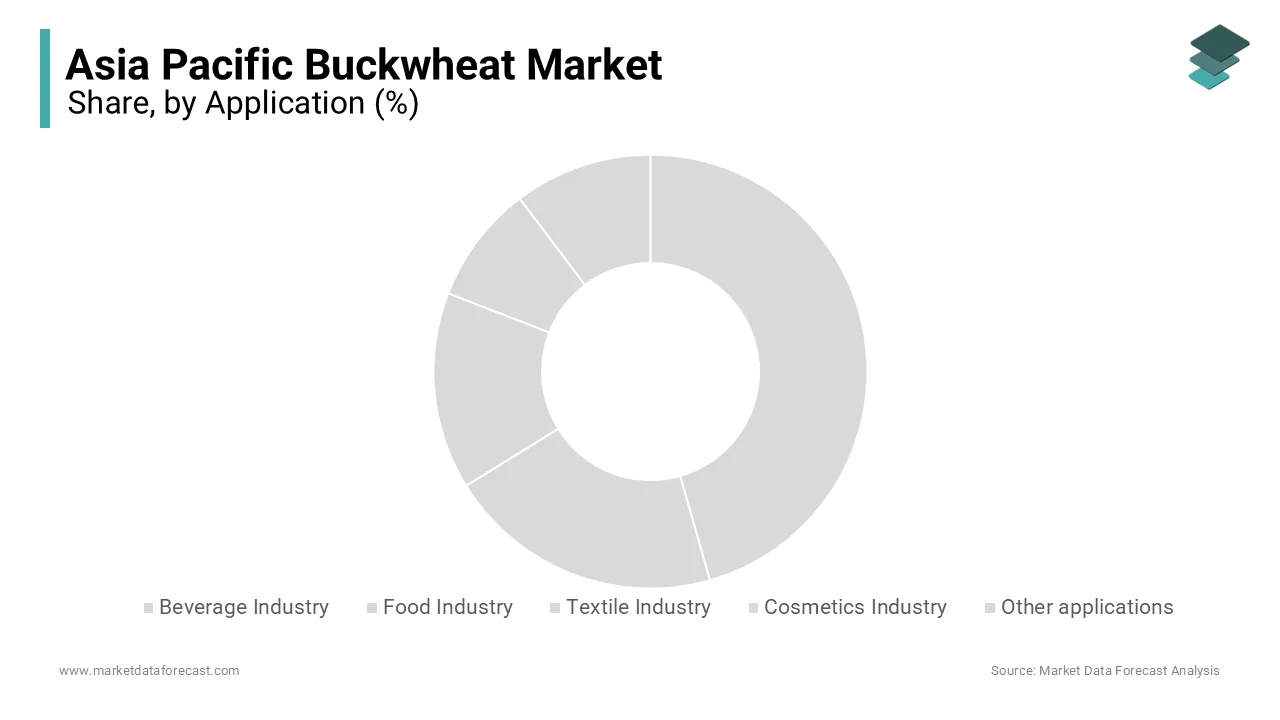
The cosmetics industry segment is swiftly emerging at a fastest CAGR of 8.5% from 2026 to 2034. The growth of the segment is majorly driven by the increasing utilization of buckwheat extracts in skincare formulations due to their antioxidant and anti-inflammatory properties. Buckwheat contains rutin and flavonoids that protect skin from oxidative stress and UV damage by making it a valuable ingredient in anti aging creams and serums. Consumers are seeking natural and plant based ingredients, prompting brands to incorporate buckwheat into clean beauty lines. As per the Global Wellness Institute, the natural skincare market grew by 12% in 2024, with functional botanicals gaining prominence. Buckwheat honey and oil are also used in moisturizers and masks for their hydrating effects. Regulatory support for natural cosmetics in Europe and North America further boosts adoption. Manufacturers are investing in research to optimize extraction methods for higher potency.
By Form Insights
The raw grains segment was accounted in holding 32.1% of the buckwheat market share in 2025 with its fundamental role as a primary ingredient for further processing and direct consumption. Raw buckwheat grains are preferred by manufacturers for producing flour, flakes, and other derived products due to their neutral flavor and extended shelf life. Health-conscious consumers also purchase raw grains for home preparation of porridge and salads, valuing the minimal processing involved. The versatility of raw grains allows for customization in cooking methods, appealing to diverse culinary traditions. Industrial buyers favor raw grains for their consistency in milling and extrusion processes. The availability of organic certified raw buckwheat further enhances its appeal in premium markets. Government initiatives promoting whole grain consumption support the demand for raw forms. Retailers stock various pack sizes of raw buckwheat to cater to both individual and bulk buyers.
The roasted grains segment is projected to register a fastest CAGR of 7.2% throughout the forecast period with the distinctive nutty flavor and aroma of roasted buckwheat, known as kasha, which appeals to consumers seeking gourmet and exotic taste experiences. Roasted buckwheat is a staple in Eastern European cuisine and is gaining popularity globally as a healthy side dish or salad base. According to Mintel, launches of ready to eat roasted buckwheat products in Western Europe grew by 18% in 2024. The convenience of pre roasted grains reduces preparation time, aligning with busy lifestyles. The roasting process enhances the bioavailability of certain nutrients, adding to its health appeal. Chefs and food bloggers promote roasted buckwheat recipes, driving consumer interest and trial. Manufacturers are introducing flavored varieties such as herb infused or spicy roasted buckwheat to differentiate products. The premium positioning of roasted grains allows for higher profit margins. Retailers dedicate shelf space to international grains, boosting visibility.
By Distribution Channel Insights
The supermarkets and hypermarkets segment was the largest by holding 43.2% of the Buckwheat Market share in 2025 with their extensive reach and ability to offer a wide variety of buckwheat products under one roof. These retail formats provide consumers with the convenience of comparing different brands and forms of buckwheat, from raw grains to processed flakes. The presence of dedicated health food aisles in large supermarket chains enhances the accessibility of organic and gluten free buckwheat products. Many consumers prefer purchasing staple grains from supermarkets due to competitive pricing and promotional offers. Private label buckwheat products offered by supermarket chains attract price sensitive shoppers, driving volume sales. The ability of supermarkets to maintain consistent stock levels builds consumer trust and loyalty. Strategic placements near complementary products like rice and quinoa encourage impulse purchases. Retailers invest in signage and displays to educate shoppers about the benefits of buckwheat. The integration of online grocery platforms with physical stores further extends their reach.
The online stores segment is swiftly growing at an anticipated CAGR of 9.5% from 2026 to 2034 owing to the increasing adoption of e-commerce for grocery shopping, particularly among younger demographics, who value convenience and variety. E-commerce platforms allow specialized brands to reach consumers directly, bypassing traditional retail barriers. Subscription models for regular delivery of buckwheat staples enhance customer retention and predictability. Digital marketing enables targeted advertising to health-conscious consumers, driving traffic to online stores. The ability to access detailed product information and reviews influences purchasing decisions. Cross border e commerce facilitates the availability of imported buckwheat varieties, expanding consumer choices. Logistics improvements ensure timely delivery of perishable and non perishable buckwheat items.
REGIONAL ANALYSIS
Asia Pacific Buckwheat Market Analysis
The Asia Pacific buckwheat market was the largest contributor by holding 50.3% of share in 2025 with the deep cultural integration of buckwheat in countries like China, Japan, and South Korea. According to the Food and Agriculture Organization of the United Nations, China produced 1.2 million metric tons of buckwheat in 2024, serving as the world’s largest producer. In Japan, buckwheat noodles are a dietary staple, with per capita consumption remaining high. South Korea also exhibits strong demand for buckwheat in traditional dishes and health supplements. The region’s favorable climatic conditions in mountainous areas support robust cultivation. Government initiatives in China promote buckwheat as a poverty alleviation crop, encouraging farmer participation. Urbanization in India and Southeast Asia is introducing buckwheat to new consumer segments through health food trends. The presence of established processing infrastructure ensures efficient supply to domestic and export markets.
Europe Buckwheat Market Analysis
Europe buckwheat market was ranked second with 21.2% of share in 2025 with the high demand for gluten free and organic buckwheat products. The rising prevalence of celiac disease and gluten sensitivity drives consumers towards buckwheat as a safe alternative. As per the European Society for Paediatric Gastroenterology Hepatology and Nutrition, diagnosis rates have increased, expanding the target market. Organic buckwheat is highly valued in Northern Europe, where sustainability concerns influence purchasing decisions. Retailers in Western Europe dedicate substantial shelf space to gluten free buckwheat pasta and flour. Consumer awareness of buckwheat’s nutritional benefits is high, supported by effective campaigns.
North America Buckwheat Market Analysis
North America buckwheat market growth is esteemed to have a significant growth opportunities throughout the forecast period with the increasing health consciousness and the popularity of ancient grains. The United States and Canada are seeing a rise in buckwheat consumption among flexitarians and gluten free dieters. The region benefits from a strong network of health food stores and online retailers that promote niche grains. As per the Celiac Disease Foundation, awareness campaigns have expanded the consumer base for gluten free options. Local farming initiatives in the United States are increasing domestic buckwheat production to reduce reliance on imports. The craft brewing industry also utilizes buckwheat in gluten free beer production, adding to demand. Consumer education through social media and culinary trends introduces buckwheat to wider audiences. The availability of convenient buckwheat snacks and breakfast cereals appeals to busy consumers. Regulatory support for gluten free labeling enhances market confidence.
Latin America Buckwheat Market Analysis
Latin America buckwheat market growth is propelled with the potential for expansion in sustainable agriculture and export oriented production. Countries like Brazil and Argentina are exploring buckwheat as a cover crop and alternative grain for domestic consumption. The region’s diverse climates allow for experimental farming in higher altitude areas. As per the Brazilian Agricultural Research Corporation, pilot projects demonstrate buckwheat’s viability in crop rotation systems. Export opportunities to Europe and North America encourage farmers to adopt organic practices. Domestic awareness of gluten free diets is rising in urban centers, creating local demand. Government support for agricultural diversification helps mitigate risks associated with monocultures. The lack of established supply chains remains a challenge, but investments are improving infrastructure.
Middle East and Africa Buckwheat Market Analysis
The Middle East and Africa buckwheat market growth is likely to grow with the low current consumption but growing awareness of its health benefits. Most countries in this region rely on imports to meet limited demand from expatriate communities and health conscious locals. The prevalence of diabetes in the Gulf Cooperation Council countries drives interest in low glycemic index foods like buckwheat. South Africa shows potential for local cultivation in cooler regions, though production remains minimal. Retail availability is limited to specialized health stores and online platforms. Consumer education is required to introduce buckwheat to traditional diets.
COMPETITIVE LANDSCAPE
The competition in the buckwheat market is characterized by a mix of large agricultural conglomerates and specialized niche brands vying for consumer attention. Major players leverage their extensive distribution networks and economies of scale to dominate commodity supplies and retail shelves. Meanwhile smaller artisanal producers differentiate themselves through organic certifications and unique regional varieties. Price volatility due to climatic factors influences competitive dynamics, prompting companies to secure long term supply contracts. Innovation in product formulation serves as a key differentiator, with brands launching gluten free and functional food options. Private label offerings from supermarkets intensify pressure on branded goods, requiring constant value addition. Digital marketing and educational content are increasingly used to build brand loyalty and awareness. Collaborative efforts between processors and farmers aim to improve yield stability and quality
KEY MARKET PLAYERS
Some of the prominent players in the global buckwheat market are
- Birkett Mills
- Krishna India
- Homestead Organics
- UA Global Inc
- Galinta IR Partneriai
- Ningxia Newfield Foods
- Sichuan Huantai Industrial
- Wels Ltd
- Jinan Jinnuoankang Biotech
Top Players in the Market
- The Hain Celestial Group Inc is a significant global player in the buckwheat market through its Arrowhead Mills and Erewhon brands. The company specializes in organic and natural foods, offering a wide range of buckwheat products including flour, groats, and pancakes. Its involvement focuses on sourcing high quality organic buckwheat from certified farmers to meet strict purity standards. Recent actions include expanding distribution channels in North America and Europe to increase product accessibility. The company has invested in sustainable packaging initiatives to align with consumer environmental values. Strategic partnerships with organic certifiers ensure supply chain transparency and trust.
- Bob s Red Mill Natural Foods is a prominent family owned company known for its extensive portfolio of whole grain products including buckwheat. The company plays a vital role in educating consumers about the benefits of ancient grains through detailed labeling and online resources. Its involvement in the buckwheat market includes offering various forms such as raw groats, roasted kasha, and gluten free flour. Recent actions include upgrading milling facilities to improve processing efficiency and product consistency. The company has expanded its e commerce platform to reach direct consumers globally. Bob s Red Mill emphasizes employee ownership and community engagement, strengthening brand loyalty.
- Arkady Group is a leading agricultural producer and exporter of buckwheat, particularly from Eastern Europe where cultivation is prevalent. The company contributes significantly to the global supply chain by providing high volume raw buckwheat to international markets. Its involvement includes managing large scale farming operations and advanced processing facilities for dehulling and sorting. Recent actions include investing in climate resilient farming techniques to stabilize yields against weather variability. Arkady Group has established strategic export partnerships with Asian and European distributors to secure long term contracts. The company focuses on maintaining rigorous quality control standards to meet international food safety requirements.
Top Strategies Used by Key Market Participants
Key players in the Buckwheat Market primarily employ vertical integration and sustainable sourcing to secure supply chains. Companies invest in organic certification programs to differentiate products and appeal to health conscious consumers. Product innovation focuses on developing convenient formats such as instant porridge and gluten free pasta. Expansion into e commerce platforms allows brands to reach niche demographics directly. Marketing campaigns emphasize the nutritional benefits of rutin and fiber to educate buyers. Partnerships with local farmers ensure consistent raw material quality and support rural communities. Diversification into value added segments like cosmetics and animal feed reduces reliance on food applications. Regulatory compliance with global food safety standards facilitates international trade.
MARKET SEGMENTATION
This research report on the global buckwheat market has been segmented and sub-segmented based on Application, Form, Distribution Channel, and region.
By Application
- Beverage Industry
- Food Industry
- Textile Industry
- Cosmetics Industry
- Other applications
By Form
- Raw Grains
- Unhulled Grains
- Roasted Grains
By Distribution Channel
- Retailers
- Supermarkets
- Convenience stores
- Online stores
- Other Channels
By Region
- North America
- Europe
- Asia Pacific
- Latin America
- Middle East, and Africa