- Product Description Description
- Table of Contents TOC
- List of Table & Figure LOT
- Get Free Sample PDF Sample PDF
Market Size, 2025
$2.82 BnMarket Estimate, 2026
$3.03 BnMarket Forecast, 2034
$5.34 BnCAGR, 2026–2034
7.35%Global Chromatography Resin Market Report Summary
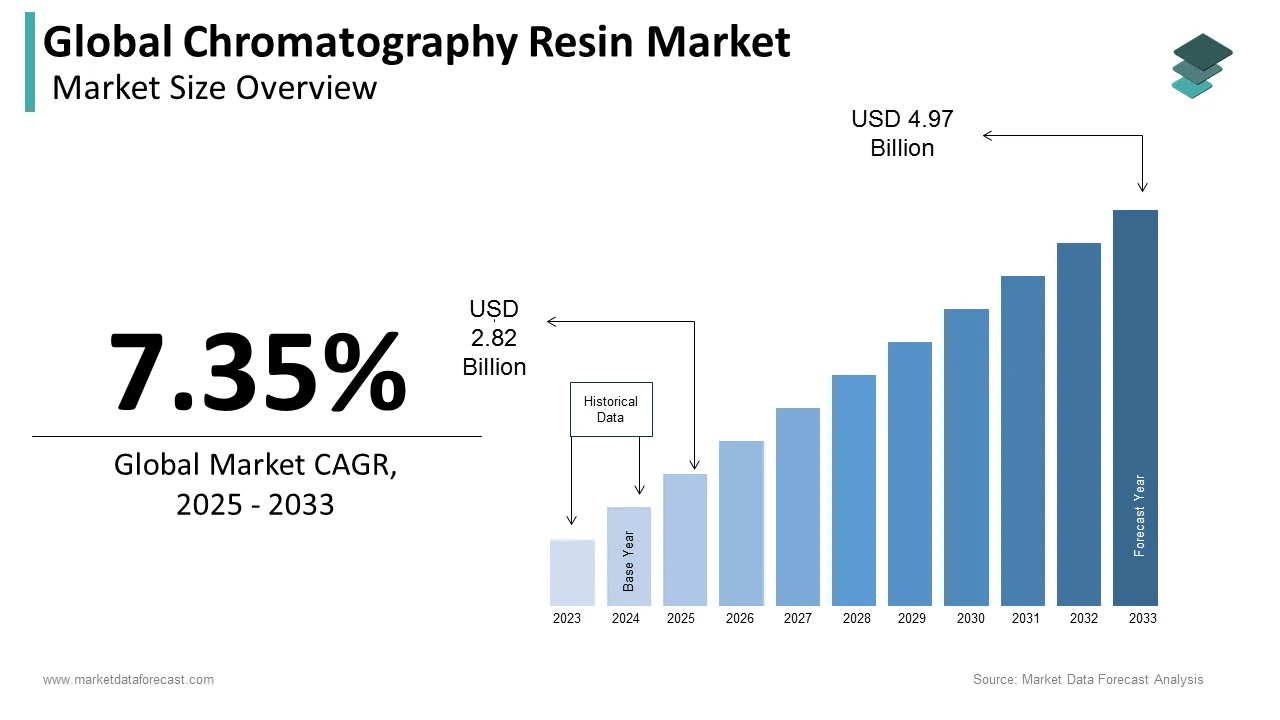
The global chromatography resin market was valued at USD 2.82 billion in 2025, is estimated to reach USD 3.03 billion in 2026, and is projected to reach USD 5.34 billion by 2034, growing at a CAGR of 7.35% from 2026 to 2034. Market growth is driven by the increasing demand for biopharmaceutical production, rising use of chromatography techniques in drug development, and expanding applications in biotechnology and life sciences. Chromatography resins play a critical role in the purification of biomolecules, including proteins, antibodies, and vaccines. The growth of monoclonal antibodies, biosimilars, and advanced biologics manufacturing is further fueling market expansion globally.
Key Market Trends
- Increasing demand for biopharmaceuticals and biologics manufacturing.
- Rising adoption of chromatography techniques in drug development and purification.
- Growth of monoclonal antibodies and biosimilars production.
- Expansion of biotechnology and life sciences research activities.
- Advancements in high-performance and specialized chromatography resins.
Segmental Insights
- Based on type, the natural polymer segment dominated the global chromatography resin market by capturing 52.6% share in 2025, driven by its wide usage in biomolecule purification.
- Based on technique, the affinity chromatography segment held the largest share of 45.7% in 2025, supported by its high specificity and efficiency in protein purification.
Regional Insights
The global chromatography resin market is witnessing steady growth across major regions due to increasing biopharmaceutical demand.
- North America led the market in 2025 with 38.9% share, supported by advanced biotechnology infrastructure and strong R&D activities.
- Europe followed with 29.7% share in 2025, driven by established pharmaceutical manufacturing and research capabilities.
- Asia-Pacific is expected to emerge as the fastest-growing region due to rapid expansion of biomanufacturing in countries like China, India, South Korea, and Japan.
Competitive Landscape
The global chromatography resin market is moderately competitive, with the presence of major life sciences and biotechnology companies. Market players are focusing on product innovation, improving purification efficiency, and expanding production capabilities. Strategic partnerships, acquisitions, and investments in bioprocessing technologies are shaping competitive dynamics across the market.
Prominent companies operating in the global chromatography resin market include Bio-Rad Laboratories Inc., GE Healthcare, Cytiva, Tosoh Corporation, Merck KGaA, Pall Corporation, Avantor Performance Materials Inc., Mitsubishi Chemical Corporation, Purolite Corporation, Repligen Corporation, and Thermo Fisher Scientific Inc.
Global Chromatography Resin Market Size
The size of the global chromatography resin market was worth USD 2.82 billion in 2025. The global market is anticipated to grow at a CAGR of 7.35% from 2026 to 2034 and be worth USD 5.34 billion by 2034 from USD 3.03 billion in 2026.
Chromatography resin (also called chromatography media) is a specialized material used as the stationary phase in liquid chromatography to separate, identify, and purify specific molecules within a complex mixture. These resins serve as the critical stationary phase in liquid chromatography systems, enabling the production of high-purity pharmaceuticals, vaccines, and research reagents essential for modern biotechnology. The definition encompasses various chemistries, including ion exchange, size exclusion, hydrophobic interaction, and affinity ligands coupled to base matrices like agarose, silica, or synthetic polymers. According to The Antibody Society and recent regulatory data (FDA/EMA), the global market for biologics continues to expand, with approximately 180 monoclonal antibodies currently approved for therapeutic use worldwide. Manufacturing these complex molecules requires advanced downstream processing, where multiple purification steps using distinct chromatography resins are essential to ensure purity and safety. As highlighted in bioprocess engineering literature, the development of novel vaccines relies heavily on rapid purification protocols. In these high-stakes production environments, chromatography resin efficiency is a critical factor that directly dictates production speed, yield, and the ability to meet global immunization timelines. The market operates under stringent regulatory frameworks established by the Food and Drug Administration and the European Medicines Agency to ensure product safety and consistency. Eurostat trade data confirms that the European Union is the world's leading exporter of medicinal and pharmaceutical products (exporting over €310 billion in 2024). This massive export volume drives a substantial regional demand for high-performance purification media and bioprocessing consumables to support its extensive pharmaceutical manufacturing base. Unlike generic chemical filters, these resins must withstand harsh cleaning conditions while maintaining structural integrity and binding capacity over hundreds of cycles. This market represents the backbone of downstream processing, bridging the gap between fermentation or cell culture and the final drug product, making it indispensable for ensuring the efficacy and safety of life-saving treatments.
MARKET DRIVERS
Escalating Global Production of Biologics and Biosimilars
The exponential increase in the manufacturing of biologics, such as monoclonal antibodies, recombinant proteins, and biosimilars, is the primary catalyst propelling the chromatography resin market. These biologics require sophisticated, multi-step purification processes to meet strict regulatory purity standards. Unlike small molecule drugs that can be synthesized chemically, biologics are produced in living cells and harvested from complex broths containing host cell proteins, DNA, and viruses, requiring highly selective resins to isolate the target molecule. According to industry analysis from the Pharmaceutical Research and Manufacturers of America, the volume of biologics in clinical development has expanded significantly in recent years. This expansion directly correlates with an increased need for specialized purification technologies and media. The Global Biosimilars Council reports that the entry of biosimilars into major markets has intensified competition, forcing manufacturers to optimize downstream processing yields and reduce costs, thereby driving demand for high-capacity and reusable resins. Furthermore, the approval of complex modalities like antibody-drug conjugates and bispecific antibodies introduces new purification challenges that require specialized affinity and ion exchange resins tailored to unique molecular characteristics. Research indicates that biologics now represent a substantial and growing portion of total prescription medicine spending across Europe. This trend emphasizes the extensive production infrastructure and large-scale manufacturing capacity now required to meet regional healthcare needs. The inherent fragility of these large molecules demands gentle yet efficient separation techniques, making advanced chromatography resins the only viable solution for commercial-scale manufacturing. The pipeline of biological candidates is expanding globally. Consequently, the recurring need for these consumables ensures sustained market growth.
Expansion of Continuous Manufacturing and Single-Use Technologies
The industry-wide shift toward continuous manufacturing and single-use technologies in biopharmaceutical production is one of the major drivers of the global chromatography resin market. These methods rely heavily on innovative chromatography resin formats designed for flexibility, scalability, and reduced contamination risk. Traditional batch processing is increasingly being replaced by continuous perfusion systems that utilize smaller columns packed with high-performance resins to achieve higher productivity and smaller facility footprints. As per research findings published in Biotechnology Progress, continuous chromatography can reduce resin volume requirements while improving product quality and consistency, encouraging adoption among both established giants and emerging biotechs. The integration of single-use skids equipped with pre-packed resin columns eliminates the need for cleaning validation and reduces cross-contamination risks, a critical factor for facilities producing multiple products. The Food and Drug Administration has actively encouraged the adoption of continuous manufacturing through guidance documents, noting its potential to enhance supply chain resilience and reduce drug shortages. Surveys suggest that a majority of biomanufacturers plan to implement or expand continuous processing capabilities within the next three years. This transition drives demand for robust, disposable resin cartridges and membranes that offer rapid deployment and operational efficiency. Additionally, the ability to scale up simply by adding more columns rather than increasing column size provides significant economic advantages. Market modernization is driving the need for infrastructure that supports agile production. This shift is accelerating demand for compatible resins, fueling market growth.
MARKET RESTRAINTS
High Costs Associated with Advanced Ligands and Scale-Up
Prohibitive costs associated with developing and purchasing advanced affinity ligands, particularly Protein A, hinder the widespread adoption of premium chromatography resins and the overall growth of the global chromatography resin market. Protein A resins are derived from bacterial sources and require complex coupling chemistry, resulting in prices that can exceed several thousand dollars per liter, posing a significant financial barrier for smaller biotechnology firms and academic laboratories. According to sources, downstream processing accounts for up to 80 percent of total biomanufacturing costs, with chromatography resins representing a substantial portion of this expenditure. The economic burden is exacerbated during scale-up, where the volume of resin required increases exponentially, potentially running into millions of dollars for commercial-scale facilities. In developing regions, where healthcare budgets are constrained, the high cost of imported high-performance resins limits the ability to produce affordable biosimilars and vaccines locally. Market observations indicate that many emerging biotechnology startups face challenges in advancing their process development due to capital constraints. The high expense associated with specialized purification materials remains a significant financial barrier for these early-stage companies. Furthermore, the limited lifespan of certain affinity resins, which may degrade after limited cycles due to harsh sanitization requirements, forces frequent replacement and further inflates operational expenses. The high capital intensity of chromatography will continue to restrict market penetration, particularly in price-sensitive sectors and geographies. This restriction will remain until cost-effective alternatives such as synthetic ligands or reusable mixed-mode resins gain broader acceptance and regulatory approval.
Technical Complexity in Resin Selection and Process Optimization
The intricate technical complexity involved in selecting the appropriate resin chemistry and optimizing chromatographic conditions for diverse and evolving biomolecules limits the expansion of the global chromatography resin market. This complexity often leads to prolonged development timelines and increased risk of project failure. Each therapeutic protein possesses unique physicochemical properties, requiring a tailored combination of resins and buffer conditions to achieve the necessary purity and yield, a process that demands highly specialized expertise and extensive empirical testing. Case studies highlight that the iterative nature of chromatography method development can account for a significant share of the overall process development schedule. These prolonged timelines can result in delays in bringing essential new therapies to patients. The lack of universal resins capable of handling the increasing diversity of novel modalities, such as gene therapies and viral vectors, forces manufacturers to invest heavily in custom screening and characterization efforts. The National Institute of Standards and Technology emphasizes that variability in resin lot-to-lot performance can introduce inconsistencies that complicate regulatory filings and require additional validation batches. Multiple studies suggest that a significant number of biologic candidates fail to reach commercialization due to insurmountable purification hurdles or inability to meet impurity clearance specifications. Furthermore, the shortage of skilled personnel proficient in downstream process engineering exacerbates these challenges, leaving many organizations struggling to maximize resin efficiency. This technical bottleneck acts as a drag on market growth, as the difficulty in implementing robust purification strategies discourages investment in complex biological projects.
MARKET OPPORTUNITIES
Development of Synthetic and Mixed-Mode Ligands
The development and commercialization of synthetic ligands and mixed-mode resins offer a major opportunity in the chromatography resin market. These new solutions provide better stability, lower costs, and broader selectivity than traditional Protein A biological ligands. Synthetic ligands, crafted from small organic molecules, are resistant to harsh cleaning agents and exhibit longer lifespans, significantly reducing the total cost of ownership for manufacturers while maintaining high binding capacities. Academic research indicates that next-generation synthetic affinity ligands can achieve purity profiles comparable to traditional Protein A methods. Because these synthetic alternatives are available at a lower cost, they represent a compelling option for large-scale biosimilar manufacturing. Mixed-mode resins, which combine multiple interaction mechanisms such as hydrophobic and ionic forces in a single matrix, provide enhanced selectivity for difficult-to-separate impurities, streamlining purification workflows and reducing the number of required steps. Recent patent filings reveal a substantial increase in innovations focused on synthetic and multimodal ligand chemistries. This surge in intellectual property activity highlights a strong industry-wide commitment to advancing these purification technologies. The ability of these resins to tolerate high pH sanitization extends their usability, addressing one of the key limitations of biological ligands. Furthermore, their versatility allows for the purification of a wider range of molecules, including fragments and non-IgG antibodies, expanding the addressable market. The adoption of these advanced resin types is poised to surge as manufacturers seek to de-risk supply chains and improve economics. Consequently, a lucrative niche is being created for innovators who can deliver robust and cost-effective solutions.
Integration of Artificial Intelligence in Resin Design and Process Modeling
The integration of artificial intelligence and machine learning into resin design and process modeling paves the way for the expansion of the global chromatography resin market. This approach accelerates development cycles, predicts resin performance, and optimizes purification protocols with unprecedented precision. AI algorithms leverage vast datasets of molecular structures and chromatographic behaviors to predict optimal resin chemistry and operating conditions for a target molecule. Consequently, this drastically reduces the need for extensive experimental screening. As per findings from the American Institute of Chemical Engineers, AI-driven process modeling can reduce development time by up to 40 percent and improve yield predictions with 90 percent accuracy, offering significant competitive advantages to early adopters. The National Science Foundation emphasizes that computational approaches enable the rational design of novel ligands with tailored specificities, opening new frontiers in separating complex biologics that were previously deemed unpurifiable. Data from venture capital flows indicates that investment in AI-enabled bioprocessing startups has significantly surged in 2025, reflecting confidence in the transformative potential of digital tools. Furthermore, digital twins of chromatography columns allow manufacturers to simulate scale-up scenarios and troubleshoot issues virtually before committing to physical runs, minimizing waste and resource consumption. The ability to rapidly iterate designs and optimize processes digitally aligns perfectly with the industry's push for agility and efficiency. These maturing technologies will redefine how resins are developed and utilized. Consequently, they will create high-value opportunities for software-hardware integrated solutions in the chromatography ecosystem.
MARKET CHALLENGES
Supply Chain Vulnerabilities for Critical Raw Materials
The fragility of the global supply chain for critical raw materials, particularly agarose derived from seaweed and specialized chemical linkers, is a major constraint to the chromatography resin market. These materials are susceptible to geopolitical disruptions, climate change, and logistical bottlenecks. Agarose, the foundational matrix for many affinity and ion exchange resins, relies on a limited number of suppliers primarily located in specific coastal regions, making the entire industry vulnerable to harvest failures or export restrictions. According to multiple studies, environmental changes affecting seaweed cultivation have led to fluctuations in the availability of raw materials for high-purity agarose. These disruptions in the marine supply chain have contributed to periodic shortages and price instability for specialized purification media. The reliance on single-source suppliers for proprietary ligands and coupling chemistries further exacerbates this risk, as any disruption in production can halt resin manufacturing and delay biopharmaceutical campaigns. The Department of Commerce has highlighted concerns regarding the concentration of critical bioprocessing material supply chains in a few geographic locations, urging diversification to ensure national security and medical readiness. Research reveals that a significant share of biomanufacturers experienced supply delays for chromatography media in the past two years, forcing them to hold excessive inventory or alter production schedules. The complexity of qualifying alternative raw materials under strict regulatory guidelines makes switching suppliers a lengthy and costly endeavor. The market must establish more resilient, diversified, and localized supply networks. Without these, the threat of material shortages will continue to jeopardize production continuity and market stability.
Regulatory Hurdles for Novel Resin Chemistries and Change Control
The rigorous and often protracted regulatory pathway required to approve novel resin chemistries or implement changes in existing purification processes impedes the expansion of the global chromatography market. This barrier can stifle innovation and delay the adoption of more efficient technologies. Regulatory agencies like the Food and Drug Administration and the European Medicines Agency treat chromatography resins as critical components of the manufacturing process, meaning any change in resin type, supplier, or even lot requires extensive comparability studies to prove that the product quality remains unaffected. As per compliance guidelines from the International Council for Harmonisation, demonstrating equivalence when switching to a new resin can involve months of additional testing, validation batches, and regulatory review, costing millions of dollars and delaying product launches. This stringent oversight creates a conservative environment where manufacturers are hesitant to adopt innovative resins despite their potential benefits, preferring to stick with proven legacy systems to avoid regulatory scrutiny. Data from legal and regulatory consultancies indicates that change control procedures account for a significant portion of post-approval manufacturing costs, acting as a disincentive for continuous improvement. Furthermore, the lack of harmonized global standards for resin characterization complicates international filings, forcing companies to navigate disparate requirements across different jurisdictions. The fear of regulatory rejection or requests for additional data slows the commercialization of next-generation resins, limiting the pace at which the market can evolve to meet emerging purification needs. Balancing the imperative for innovation with the necessity of patient safety remains a delicate and resource-intensive endeavor for the industry.
REPORT COVERAGE
| REPORT METRIC | DETAILS |
| Market Size Available | 2025 to 2034 |
| Base Year | 2025 |
| Forecast Period | 2026 to 2034 |
| Segments Covered | By Type, Technique, Application, and Region. |
| Various Analyses Covered | Global, Regional, and Country-Level Analysis, Segment-Level Analysis, Drivers, Restraints, Opportunities, Challenges; PESTLE Analysis; Porter’s Five Forces Analysis, Competitive Landscape, Analyst Overview of Investment Opportunities |
| Regions Covered | North America, Europe, Asia Pacific, Latin America, Middle East & Africa |
| Market Leaders Profiled | Bio-Rad Laboratories Inc., GE Healthcare, Tosoh Corporation, Merck KGaA, Pall Corporation, Avantor Performance Materials Inc., Mitsubishi Chemical Corporation, Purolite Corporation, Repligen Corporation, and Thermo Fisher Scientific Inc. |
SEGMENTAL ANALYSIS
By Type Insights
The Natural Polymer segment dominated the global chromatography resin market and accounted for a 52.6% share in 2025. This dominance of the segment is driven by the unparalleled biocompatibility, high porosity, and proven track record of agarose and dextran-based matrices, which serve as the industry standard for purifying sensitive biologics like monoclonal antibodies and vaccines. A key contributor to the leadership of natural polymers is their inherent biocompatibility and hydrophilic nature, which minimizes non-specific binding and preserves the structural integrity and biological activity of fragile therapeutic proteins during purification. Unlike synthetic or inorganic media that may require extensive surface modification to prevent protein denaturation, agarose beads provide a gentle environment that mimics physiological conditions, making them indispensable for downstream processing of large biomolecules. A study notes that the long history of regulatory acceptance for natural polymer matrices reduces the validation burden for manufacturers, encouraging their continued use in Good Manufacturing Practice facilities. Furthermore, the high water content and large pore size distribution of cross-linked agarose allow for the efficient diffusion of massive protein complexes and viral vectors that cannot penetrate smaller-pored synthetic alternatives. Research indicates that switching from natural to synthetic bases often requires complete re-validation of purification protocols, a costly and time-consuming barrier that reinforces the status quo. The ability of these natural matrices to be functionalized with diverse ligands while maintaining mechanical stability under moderate pressures ensures they remain the backbone of industrial bioprocessing. This combination of safety, efficiency, and regulatory familiarity secures the dominant market position for natural polymer resins. This segment is also shaped by the mature and robust global supply chain for raw materials like seaweed-derived agarose, which offers significant cost advantages and reliable availability compared to emerging synthetic alternatives that often face production bottlenecks. The extraction and purification technologies for natural polymers have been optimized over decades, allowing manufacturers to produce high-quality base matrices at scales required for multi-thousand-liter bioreactor campaigns without prohibitive costs. As per multiple studies, global agarose production has stabilized with consistent yields, ensuring that resin manufacturers can meet the surging demand from the biosimilar sector without major price volatility. Furthermore, the reusability of natural polymer resins, which can withstand hundreds of cleaning cycles when properly cross-linked, extends their operational lifespan and further reduces the total cost of ownership for biopharmaceutical companies. The extensive library of pre-validated protocols and application notes available for natural polymer resins also accelerates process development timelines, providing a practical advantage that keeps them at the forefront of the industry. This economic and logistical reliability ensures that natural polymers remain the preferred choice for the majority of chromatographic applications globally.
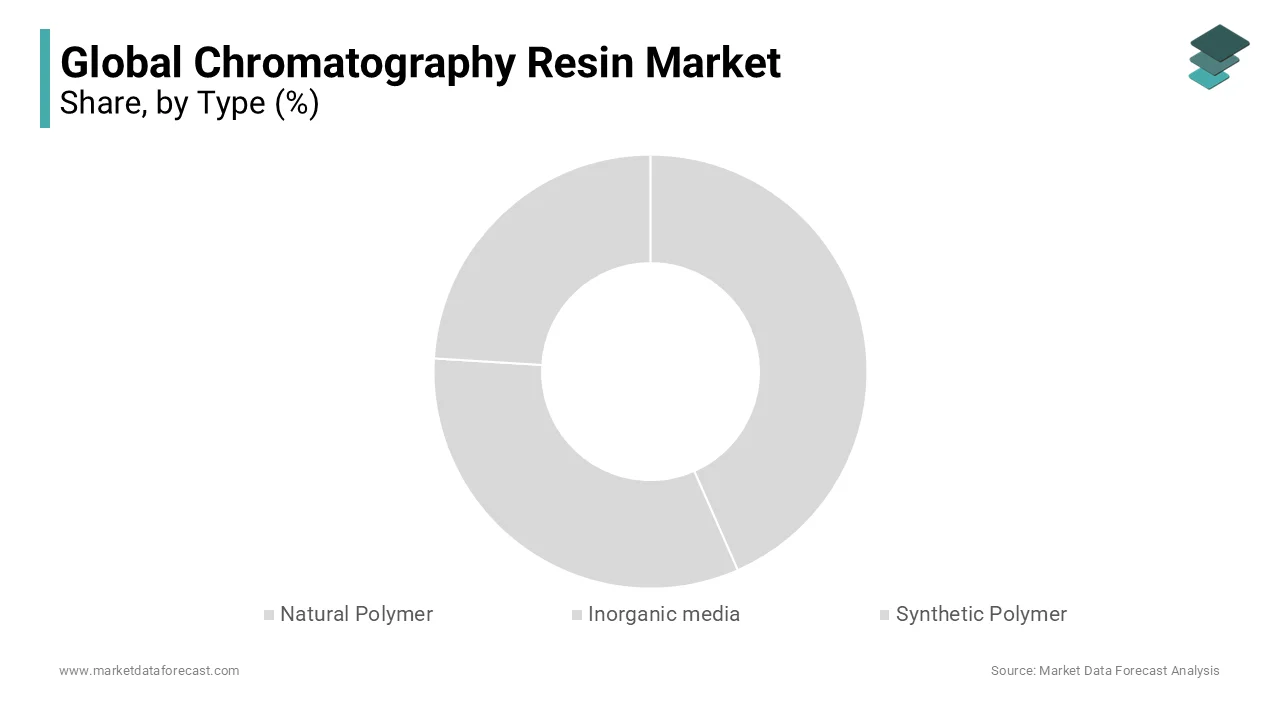
The Synthetic Polymer segment is expected to exhibit a noteworthy CAGR of 11.8% from 2026 to 2034. This rapid acceleration of the segment is propelled by the superior chemical and mechanical stability of synthetic matrices like polystyrene-divinylbenzene and polyacrylates, which are essential for harsh purification conditions and the isolation of small molecules and oligonucleotides. Apart from these, a major force driving the growth rate of synthetic polymers is its exceptional resistance to extreme pH levels, organic solvents, and high operating pressures, characteristics that are increasingly required for modern bioprocessing workflows involving virus inactivation, column sanitization, and the purification of non-traditional modalities. Unlike natural polymers that may swell, shrink, or degrade under aggressive cleaning regimes, synthetic matrices maintain their structural integrity and particle size distribution, ensuring consistent flow dynamics and separation efficiency over thousands of cycles. According to research, synthetic polymer resins can withstand pH ranges from 1 to 14 without degradation, enabling the use of potent sodium hydroxide solutions for effective virus clearance and endotoxin removal, a critical requirement for regulatory compliance. The National Institute for Bioprocessing Research and Training emphasizes that the mechanical rigidity of synthetic beads allows for higher flow rates and shorter cycle times, significantly increasing facility throughput and reducing production costs. Furthermore, the rise of oligonucleotide and peptide therapeutics, which often require organic modifiers for elution, has created a dedicated demand for solvent-resistant synthetic media that natural polymers cannot support. As the industry shifts toward more robust and flexible purification platforms, the unique durability of synthetic polymers positions them as the material of choice for next-generation biomanufacturing, driving their rapid market expansion. Along with this, the segment is driven by the highly tunable surface chemistry of synthetic polymers, which allows engineers to precisely design pore sizes, hydrophobicity levels, and functional groups to optimize separations for emerging therapeutic classes such as gene therapies, mRNA vaccines, and antibody-drug conjugates. The ability to control the polymerization process enables the creation of monodisperse particles with specific surface areas that maximize binding capacity for challenging targets that do not interact well with traditional agarose matrices. As per sources, synthetic polymers can be engineered with mixed-mode ligands that combine electrostatic and hydrophobic interactions in a single step, streamlining purification workflows for complex biologics and reducing the number of unit operations required. The Food and Drug Administration notes the increasing approval of novel modalities that require specialized purification strategies, creating a niche where the versatility of synthetic resins offers distinct advantages over rigid natural structures. Additionally, the consistency and lot-to-lot reproducibility of synthetic manufacturing processes reduce the risk of batch failures, a key concern for quality control teams. The diversity of the biopharmaceutical pipeline is expanding beyond standard antibodies. Because the customizable nature of synthetic polymers is becoming increasingly valuable, this segment is moving to the forefront of market growth.
By Technique Insights
The Affinity Chromatography segment held the majority share of 45.7% of the chromatography resin market in 2025 because of its unmatched specificity and ability to achieve high purity levels in a single step, making it the gold standard for the capture and purification of monoclonal antibodies and other targeted biologics. Among these, the primary factor driving the domination of affinity chromatography is its unique mechanism of utilizing biological recognition elements, such as Protein A, G, or L, to selectively bind target molecules with extreme precision, thereby removing vast amounts of impurities in a single operational step. This high selectivity drastically reduces the number of downstream processing stages required, saving time, resources, and facility footprint while maximizing yield. Furthermore, the ability of affinity resins to concentrate dilute feedstreams from bioreactors directly into a purified form simplifies process integration and enhances overall productivity. A study indicates that replacing traditional multi-step protocols with high-capacity affinity steps can reduce processing time, offering significant economic benefits. The specificity of these interactions also minimizes product loss, ensuring that expensive biologics are recovered efficiently. As the volume of antibody production continues to surge globally, the reliance on affinity techniques for their efficiency and effectiveness ensures their continued market leadership. Beyond that, the segment is influenced by the deep entrenchment of affinity chromatography in regulatory guidelines and industry standards, creating a high barrier to entry for alternative techniques despite potential cost advantages. Regulatory bodies like the Food and Drug Administration and the European Medicines Agency have extensive historical data supporting the safety and efficacy of Protein A-based purification, making the validation process for new drug applications smoother and more predictable when this technique is employed. As per compliance reports from the International Council for Harmonisation, the use of established affinity methods reduces the regulatory risk associated with impurity profiles, particularly regarding host cell proteins and DNA clearance, which are rigorously monitored. The widespread availability of standardized, pre-packed affinity columns and validated protocols from major suppliers further encourages adoption, as manufacturers can leverage existing knowledge bases to accelerate process development. Additionally, advancements in ligand stability and alkaline tolerance have addressed previous limitations, extending resin lifetime and reinforcing confidence in the technology. The combination of regulatory comfort, operational simplicity, and proven performance cements affinity chromatography as the dominant technique in the global market.
The Multi-Modal Chromatography segment is predicted to witness the highest CAGR of 13.2% during the forecast period, owing to the ability of multi-modal resins to engage multiple interaction mechanisms simultaneously, offering superior selectivity for difficult separations and enabling process intensification by replacing multiple traditional steps. The rapid expansion of multi-modal chromatography is largely driven by its unique capability to separate target molecules from structurally similar impurities, such as aggregates, fragments, and host cell proteins, which often co-elute in traditional single-mode chromatography steps. Multi-modal resins combine mechanisms such as hydrophobic, ionic, and hydrogen bonding interactions within a single ligand. This approach provides an additional dimension of selectivity crucial for polishing steps in the purification of complex biologics and biosimilars. The National Biopharma Queue highlights that as therapeutic molecules become more complex with bispecifics and fusion proteins, the limitations of single-mode techniques become apparent, driving the adoption of multi-modal solutions to meet stringent purity specifications. Furthermore, these resins are highly effective in flow-through modes for impurity clearance, allowing for high-throughput processing. As the industry faces increasing pressure to improve purity profiles while reducing costs, the versatile selectivity of multi-modal chromatography makes it an indispensable tool, fueling its rapid adoption. Following that, this segment is pushed by the pivotal role of multi-modal chromatography in process intensification strategies, where the goal is to consolidate multiple purification steps into fewer units to reduce facility footprint, buffer consumption, and processing time. In an era where speed to market and manufacturing agility are paramount, the ability of a single multi-modal column to perform the work of both an ion exchange and a hydrophobic interaction column offers compelling economic and operational advantages. The Food and Drug Administration encourages process intensification as a means to enhance supply chain resilience and reduce the risk of shortages, providing a regulatory tailwind for technologies that enable compact production lines. Data from facility design projects indicates that new biomanufacturing plants are increasingly specifying multi-modal resins to maximize output within limited square footage, particularly for single-use facilities. Additionally, the versatility of these resins allows for flexible platform processes that can be easily adapted for different products, reducing development timelines for pipeline candidates. Manufacturers are striving to optimize their downstream operations for efficiency and cost-effectiveness. Consequently, the strategic value of multi-modal chromatography is driving its status as the fastest-growing segment in the market.
By Application Insights
Based on the application, the pharmaceutical and biotechnology segment accounted for the largest share of the global chromatography resin market in 2024 and is expected to continue the trend during the forecast period. Pharmaceutical and biotechnology companies are the largest consumers of chromatography resins and are majorly driving segmental growth.
The F&B segment had the second-largest share of the global market in 2024 and is expected to grow at a prominent CAGR during the forecast period. Increasing awareness among consumers around food safety and quality is driving the demand for chromatography resins and boosting segmental growth.
REGIONAL ANALYSIS
North America Chromatography Resin Market Analysis
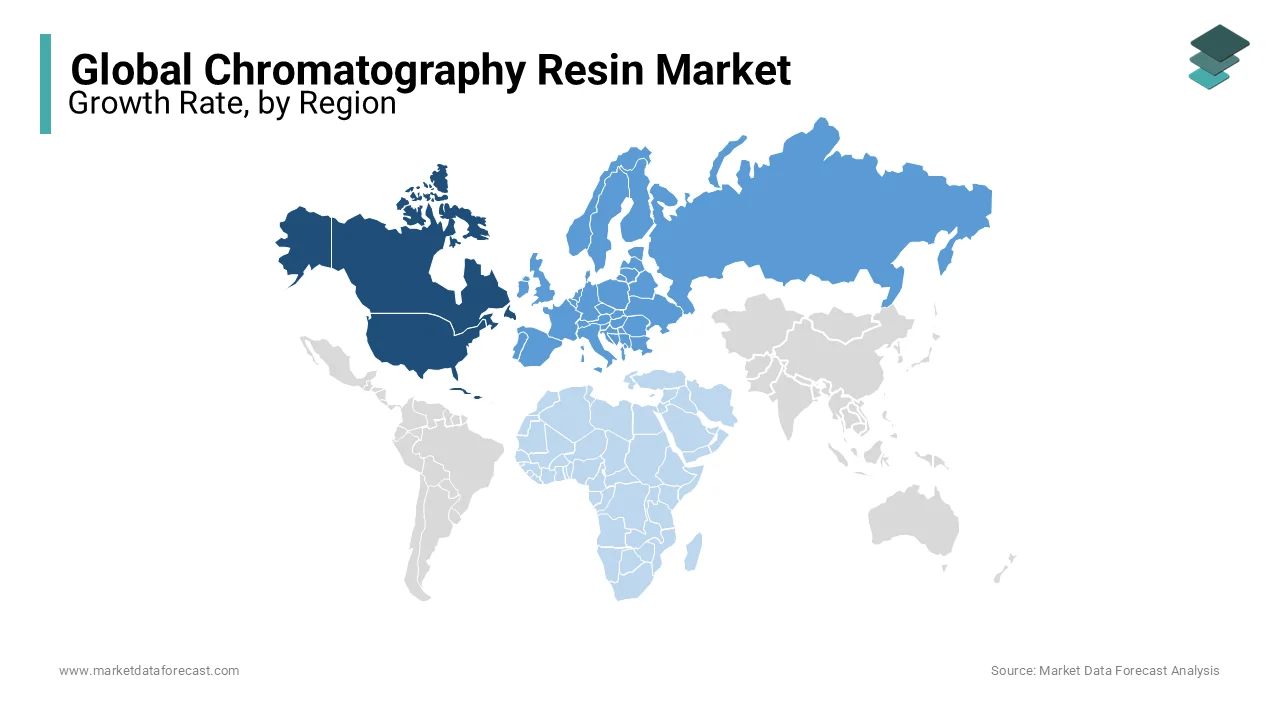
North America outperformed other countries in the global chromatography resin market and occupied a 38.9% share in 2025. The demand for these resins in North America is fuelled by its massive concentration of biopharmaceutical innovation, the presence of leading resin manufacturers, and substantial government funding for life sciences research that drives consistent demand for high-performance purification media. The United States is the main engine of growth, characterized by the highest number of biotech startups and clinical trials globally, all of which require robust chromatography solutions for process development and commercial manufacturing. The presence of major industry players like Cytiva and Thermo Fisher Scientific within the region fosters a collaborative ecosystem where new resin technologies are rapidly developed and commercialized. The Food and Drug Administration's supportive stance on advanced manufacturing technologies, including continuous processing, which relies heavily on specialized resins, further accelerates adoption. Furthermore, the trend toward personalized medicine and cell and gene therapies in the US requires customized purification solutions, driving innovation in niche resin segments. The well-established infrastructure for large-scale biologics production, combined with a skilled workforce proficient in downstream processing, ensures that North America remains the largest and most sophisticated market for chromatography resins, setting global trends in purification technology.
Europe Chromatography Resin Market Analysis
Europe was the second-largest region in the global chromatography resins market and captured a 29.7% share in 2025. This expansion of the European market is supported by a strong tradition in chemical engineering, rigorous regulatory standards, and a growing focus on biosimilar production and sustainable manufacturing practices. The region presents a mature market where efficiency and environmental impact are key drivers for resin selection and process optimization. In addition, the European market has the presence of major pharmaceutical hubs in Germany, Switzerland, and the United Kingdom, which drive significant consumption of high-quality resins for the production of blockbuster biologics and vaccines. According to studies, Europe produces a portion of the world's medicines, necessitating a vast and reliable supply of chromatography media to support this output. The European Medicines Agency's stringent requirements for impurity clearance and process validation encourage the adoption of premium, high-selectivity resins that ensure consistent product quality. Data from the Horizon Europe program shows substantial investment in developing green bioprocessing technologies, favoring resins that offer longer lifespans, reduced buffer consumption, and compatibility with water-based cleaning agents. The region is also a leader in the biosimilar market, where cost-efficiency is paramount, driving demand for high-capacity and reusable resin formats that lower the cost of goods. Furthermore, the strong academic network across countries like France and Sweden fosters cutting-edge research in novel ligand chemistries and synthetic polymers. Despite economic fluctuations, the commitment to maintaining a competitive pharmaceutical sector and the push toward continuous manufacturing ensure steady growth. The emphasis on sustainability and regulatory excellence makes Europe a critical market for advanced chromatography solutions that balance performance with environmental responsibility.
Asia-Pacific Chromatography Resin Market Analysis
The Asia-Pacific region is the most lucrative region in the global chromatography resin market due to the massive biomanufacturing expansion in China, India, South Korea, and Japan, coupled with increasing government initiatives to achieve self-sufficiency in biological drugs and vaccines. While historically a consumer of imported technologies, the region is rapidly developing indigenous capabilities and becoming a major hub for contract manufacturing. China and India are at the forefront of this transformation, driven by national strategies to boost domestic biopharmaceutical production and reduce reliance on imports for critical healthcare products. According to research, the number of approved biologics in China has grown exponentially in recent years, spurring the construction of numerous new manufacturing facilities that require vast quantities of chromatography resins. In India, the "Make in India" initiative and the country's role as the pharmacy of the world for generics and biosimilars drive high-volume demand for cost-effective purification media. Japan, with its advanced healthcare system and aging population, maintains a strong demand for innovative resins used in the production of regenerative medicines and advanced therapies. The rising prevalence of chronic diseases and increasing healthcare expenditure in emerging economies like Indonesia and Thailand further stimulate local production needs. Although the region still relies heavily on imported high-end resins, local manufacturers are beginning to emerge, offering competitive alternatives. The sheer scale of infrastructure development and the strategic importance of biological security position Asia-Pacific as the primary growth engine for the chromatography resin market in the coming decade.
Latin America Chromatography Resin Market Analysis
Latin America is moving ahead steadfastly in the global market, with growth driven primarily by Brazil and Mexico, where growing biopharmaceutical sectors, increasing prevalence of chronic diseases, and government efforts to expand local vaccine and biosimilar production are beginning to unlock demand for chromatography resins. The region benefits from a strategic location for serving both domestic and North American markets, though economic volatility remains a challenge. Brazil is the main force in the region, boasting the largest pharmaceutical market in Latin America and a state-owned producer, Bio-Manguinhos, that plays a critical role in vaccine production, driving significant consumption of purification media. According to sources, there is a concerted effort to modernize local manufacturing capabilities and attract foreign investment in biotech parks, which necessitates the importation of high-quality chromatography resins. In Mexico, proximity to the United States facilitates the growth of contract development and manufacturing organizations that serve the North American supply chain, creating a steady demand for reliable purification solutions. A study indicates a rising burden of diabetes and cancer in the region, prompting governments to prioritize local production of insulin and monoclonal antibodies to improve access and affordability. However, currency fluctuations and import tariffs can inflate the cost of advanced resins, limiting access for smaller local players. Despite these hurdles, the increasing collaboration between Latin American institutions and global biotech firms is transferring knowledge and raising standards. Regional stability is improving, and healthcare investments are increasing. As a result, Latin America is poised to see accelerated adoption of chromatography technologies, particularly in the vaccine and biosimilar sectors.
Middle East and Africa Chromatography Resin Market Analysis
The Middle East and Africa region is likely to expand significantly in the global chromatography resin market during the forecast period by displaying pockets of high potential in Gulf Cooperation Council countries and South Africa, where strategic investments in healthcare sovereignty and biotechnology parks are underway. On the other hand, it is constrained by limited local manufacturing infrastructure and economic disparities. The region represents a long-term frontier where gradual capacity building could unleash substantial future demand. South Africa and the Gulf states serve as the anchors of advancement in the region, with nations like Saudi Arabia and the UAE implementing ambitious vision plans that include the establishment of local biomanufacturing facilities to reduce dependence on imports for essential medicines and vaccines. In South Africa, the African Union's push for vaccine manufacturing autonomy following recent global health crises has spurred initiatives to build regional production capacity, driving initial demand for purification media. However, the broader African continent faces significant challenges. Research suggests that improving regulatory harmonization and investing in technical training are critical steps to unlocking the region's potential. The rising prevalence of infectious diseases and non-communicable conditions creates an urgent need for local therapeutic production. The Middle East and Africa are expected to transition from a marginal market to a meaningful contributor as political stability improves and foreign direct investment increases, particularly in the Gulf. This transformation is being driven by top-down mandates for health security and the gradual development of a skilled bioprocessing workforce.
COMPETITIVE LANDSCAPE
The competition in the chromatography resin market is characterized by intense rivalry among a few dominant global conglomerates and specialized niche players striving to offer superior resolution capacity and operational efficiency. Major competitors focus heavily on innovation, racing to develop novel ligand chemistries and synthetic base matrices that address the purification challenges of emerging modalities like gene therapies and bispecific antibodies. The landscape is shifting as companies increasingly compete on the strength of their integrated solutions combining resins with hardware and digital software for process optimization. Rivalry often manifests through strategic acquisitions of smaller technology firms to secure proprietary intellectual property and expand application capabilities. Smaller specialized firms differentiate themselves by offering custom-synthesized resins or unique mixed-mode ligands that solve specific purification bottlenecks for difficult targets. Pricing pressure exists particularly in the biosimilar sector, where cost reduction is paramount but premium pricing remains sustainable for high-performance resins offering distinct advantages in yield and purity. Supply chain reliability has become a critical battleground as manufacturers seek partners who can guarantee consistent quality and timely delivery amidst global logistical disruptions. Ultimately, the competitive dynamic is driven by the ability to combine scientific excellence with robust manufacturing scalability to win trust in a high-stakes environment where purification failure can halt entire production campaigns.
KEY MARKET PARTICIPANTS
Some of the promising companies operating in the global chromatography resin market profiled in the report are
- Bio-Rad Laboratories Inc.
- GE Healthcare
- Cytiva
- Tosoh Corporation
- Merck KGaA
- Pall Corporation
- Avantor Performance Materials Inc.
- Mitsubishi Chemical Corporation
- Purolite Corporation
- Repligen Corporation
- Thermo Fisher Scientific Inc.
TOP PLAYERS IN THE MARKET
- Cytiva stands as a global leader in the chromatography resin market, offering an extensive portfolio of agarose-based and synthetic media under the renowned Sepharose and Capto brands. The company plays a pivotal role in enabling the purification of monoclonal antibody vaccines and gene therapies for pharmaceutical manufacturers worldwide. Recent actions include the expansion of its manufacturing facilities in Europe and Asia to address supply chain barriers and ensure consistent availability of critical resins. Cytiva has also launched next-generation high-capacity resins designed specifically for continuous manufacturing processes to improve efficiency. By integrating digital tools for process modeling, the firm helps customers optimize purification workflows. These strategic initiatives demonstrate its commitment to supporting the biopharmaceutical industry with innovative solutions that enhance productivity and accelerate time to market for life-saving treatments globally.
- Thermo Fisher Scientific Inc is a dominant force in the chromatography resin sector, providing a comprehensive range of affinity ion exchange and hydrophobic interaction resins through its Gibco and Poros product lines. The company leverages its vast global distribution network to supply research laboratories and commercial biomanufacturers with high-performance purification media. Recent actions involve significant investments in developing novel synthetic polymer resins that offer superior chemical stability and longevity for harsh cleaning conditions. Thermo Fisher has also acquired specialized bioprocessing firms to broaden its technology portfolio and strengthen its position in the growing cell and gene therapy segment. The firm focuses on delivering single-use pre-packed columns that reduce contamination risks and simplify operations for clients. Through continuous innovation and strategic partnerships, Thermo Fisher ensures it remains at the forefront of delivering reliable and efficient chromatography solutions that meet the evolving needs of the global biopharmaceutical landscape.
- Merck KGaA, operating as EMD Millipore in North America, is a key contributor to the chromatography resin market, known for its advanced Eshmuno and Fractogel resin series, which excel in polishing steps for biologics. The company combines deep scientific expertise with robust manufacturing capabilities to deliver resins that ensure high purity and yield for complex molecules. Recent actions include the introduction of multimodal ligands that streamline purification processes by combining multiple separation mechanisms into a single step. Merck has also expanded its production capacity for single-use chromatography systems to support the shift toward flexible manufacturing models. The firm actively collaborates with biotech startups and large pharma companies to co-develop customized purification strategies. Merck is strengthening its market position as a trusted partner by focusing on sustainability and process intensification. This approach drives the advancement of bioprocessing technologies and facilitates the efficient, worldwide production of high-quality therapeutic proteins.
TOP STRATEGIES USED BY KEY MARKET PARTICIPANTS
Key players in the chromatography resin market primarily employ strategic acquisitions and partnerships to expand their product portfolios and gain access to novel ligand chemistries or synthetic base matrices. Companies frequently invest heavily in research and development to create high-capacity resins with improved selectivity and stability for challenging biomolecules like antibody drug conjugates. Another major strategy involves expanding global manufacturing footprints to mitigate supply chain risks and ensure reliable delivery of critical purification media to customers worldwide. Market participants are also focusing on developing pre-packed single-use columns and integrated systems that simplify operations and reduce contamination risks for biomanufacturers. Building strong technical support networks and offering comprehensive process development services helps firms foster long-term customer loyalty and drive adoption of new technologies. Additionally, companies are increasingly emphasizing sustainability by designing resins with longer lifespans and compatibility with green cleaning agents. These strategies collectively enable leaders to maintain competitive advantages and capture growth opportunities in a dynamic industry.
MARKET SEGMENTATION
This market research report on the global chromatography resin market has been segmented and sub-segmented into the following categories.
By Type
- Natural Polymer
- Inorganic media
- Synthetic Polymer
By Technique
- Affinity
- Hydrophobic Interaction
- Ion Exchange
- Size Exclusion
- Multi-Modal
By Application
- Pharmaceutical & Biotechnology
- Food & Beverage
- Water & Environmental Analysis
By Region
- North America
- Europe
- Asia Pacific
- Latin America
- Middle East & Africa