- Product Description Description
- Table of Contents TOC
- List of Table & Figure LOT
- Get Free Sample PDF Sample PDF
Market Size, 2025
$50.94 BnMarket Estimate, 2026
$53.84 BnMarket Forecast, 2034
$83.89 BnCAGR, 2026–2034
5.7%Global Cocoa and Chocolate Market Size
The global cocoa and chocolate market size was calculated to be USD 50.94 billion in 2025 and is anticipated to be worth USD 83.89 billion by 2034, from USD 53.84 billion in 2026, growing at a CAGR of 5.7% during the forecast period.
Cocoa and Chocolate are cocoa beans and their derivative products, including chocolate confectionery, cocoa powder, and industrial cocoa mass. This sector spans from smallholder farming in tropical equatorial zones to global manufacturing and retail distribution, integrating agricultural, nutritional, and cultural dimensions. Cocoa is predominantly grown within 20 degrees north and south of the equator, where climatic conditions support Theobroma cacao cultivation.
The transformation from bean to bar involves fermentation, drying, roasting, and conching, processes that significantly influence flavor profiles and quality. In Côte d’Ivoire and Ghana, which together produce a significant portion of the world’s cocoa, post-harvest handling is largely manual, affecting consistency and traceability. Meanwhile, consumer demand in developed economies has shifted toward premiumization, with an increasing preference for single-origin, high-cocoa-content, and ethically sourced chocolate. As per the World Cocoa Foundation, over 4.5 million tonnes of cocoa beans were harvested globally in 2023, underscoring the crop’s economic significance. Additionally, the integration of blockchain for supply chain transparency and agroforestry practices to combat deforestation reflects the sector’s evolving response to environmental and social accountability, positioning cocoa not merely as a commodity but as a nexus of sustainability, trade equity, and gastronomic value.
MARKET DRIVERS
Rising Consumer Preference for Premium and Dark Chocolate Products
A significant shift in consumer palates toward high-cocoa-content and artisanal chocolate has become a pivotal force in reshaping the global cocoa and chocolate market. Health-conscious consumers are increasingly associating dark chocolate, particularly varieties with 70% cocoa or higher, with cardiovascular benefits and antioxidant properties, prompting a surge in demand for premium variants. According to the European Food Safety Authority, clinical studies have validated that cocoa flavanols contribute to improved endothelial function and reduced blood pressure, reinforcing consumer trust in health-linked claims. This trend is mirrored in Asia-Pacific. Artisanal brands like Amano Artisan Chocolate and Royce’ have capitalized on this demand, emphasizing bean origin, small-batch production, and minimal sugar content. Furthermore, gourmet retailers and specialty chocolatiers are expanding in major cities. This cultural elevation of chocolate from a confection to a sophisticated, health-aligned indulgence is fundamentally altering production priorities and supply chain investments.
Expansion of Chocolate Consumption in Emerging Markets
The growing middle class in emerging economies is fueling a structural increase in chocolate consumption, particularly in regions where traditional diets are being influenced by global food trends. In countries like India, Indonesia, and Nigeria, rising disposable incomes and urbanization are enabling greater access to processed confectionery. The middle-income population in South and Southeast Asia is projected to reach over a billion by 2030, creating a vast consumer base for discretionary goods like chocolate. In India, per capita chocolate consumption rose in recent years, still significantly below global averages but indicating strong growth momentum. Retail modernization has accelerated this trend; convenience stores and supermarkets now account for a significant portion of chocolate sales in urban India, up from that in 2018. Similarly, in Vietnam, annual chocolate sales grew in 2023, driven by youth-oriented marketing. Multinational manufacturers have responded by launching localized products such as Cadbury Oreo Chocolates and KitKat variants with green tea and red bean flavors tailored to Asian palates. Additionally, e-commerce platforms like Shopee and Flipkart have expanded distribution reach, with online chocolate sales in Southeast Asia increasing between 2022 and 2023. These socio-economic transformations are embedding chocolate into daily consumption patterns, moving it beyond festive gifting into routine indulgence.
MARKET RESTRAINTS
Prevalence of Child Labor and Ethical Sourcing Challenges in Cocoa Farming
The cocoa sector continues to grapple with systemic ethical issues, particularly the widespread use of child labor in West African producing regions, which undermines brand integrity and regulatory compliance. According to the U.S. Department of Labor, an estimated over a million children were engaged in hazardous labor on cocoa farms in Côte d’Ivoire and Ghana, primarily in tasks such as clearing land with machetes, applying pesticides, and carrying heavy loads. Despite over two decades of industry pledges to eradicate exploitative practices, progress has been limited due to deep-rooted poverty, lack of education infrastructure, and weak enforcement mechanisms. The International Labour Organization notes that a large share of cocoa farming households in these regions live below the global poverty line, compelling families to rely on child labor for economic survival. Certification schemes like Fair Trade and Rainforest Alliance cover less share of global cocoa production, leaving the majority of supply chains unmonitored. In 2023, the European Union proposed stricter due diligence requirements under its Corporate Sustainability Reporting Directive, mandating companies to verify labor conditions across their supply chains. However, traceability remains a challenge. These ethical vulnerabilities expose chocolate manufacturers to reputational risks, consumer backlash, and potential regulatory penalties, constraining market expansion in ethically conscious markets.
Climate Change and Environmental Degradation Affecting Cocoa Yields
Cocoa cultivation is increasingly threatened by climate change, with rising temperatures, erratic rainfall, and prolonged droughts undermining the viability of traditional farming zones. According to the CGIAR Research Program on Climate Change, Agriculture and Food Security, cocoa yields in Ghana and Côte d’Ivoire could decline by 2030 if adaptive measures are not implemented. Besides, deforestation driven by illegal cocoa farming has exacerbated environmental degradation; as per the World Resources Institute, Côte d’Ivoire lost some of its primary forest cover between 2001 and 2022, much of it converted to cocoa plantations. This not only contributes to carbon emissions but also disrupts local microclimates, further stressing crop resilience. Pests and diseases such as cocoa swollen shoot virus and black pod rot are spreading more rapidly in warmer, humid conditions, destroying a portion of crops annually in affected areas. Smallholder farmers, who manage a large share of global cocoa production, lack the resources to invest in climate-resilient varieties or irrigation systems. In Indonesia, the region’s second-largest cocoa producer, output fell between 2021 and 2023 due to prolonged dry spells and aging tree stock. These environmental pressures threaten long-term supply stability and increase price volatility, posing a fundamental constraint on the global chocolate industry.
MARKET OPPORTUNITIES
Adoption of Blockchain and Digital Traceability in Cocoa Supply Chains
The integration of blockchain technology offers a transformative opportunity to enhance transparency, ensure ethical sourcing, and rebuild consumer trust in the cocoa and chocolate market. By enabling immutable record-keeping from farm to retail, blockchain allows stakeholders to verify labor practices, environmental impact, and product authenticity. Furthermore, consumer demand for transparency is rising. With the European Union mandating digital product passports for food items by 2027, early adopters of traceability technology are positioning themselves for regulatory compliance and brand differentiation, unlocking new value across the cocoa value chain.
Growth of Plant-Based and Dairy-Free Chocolate Innovations
The surge in plant-based dietary preferences is catalyzing innovation in dairy-free chocolate formulations, opening a high-growth niche within the cocoa and chocolate market. As consumers seek alternatives to animal-derived ingredients due to lactose intolerance, ethical concerns, or environmental impact, manufacturers are reformulating traditional recipes using almond, oat, coconut, and rice milk bases. Also, the global plant-based confectionery business expanded in recent years, with dairy-free chocolate accounting for a notable share of that growth. Major brands like Lindt and Green & Black’s have launched certified vegan dark chocolate bars, while startups such as Ombar and Alter Eco are gaining traction with organic, plastic-free packaging and direct-trade sourcing. In the United States, many of consumers now actively avoid dairy in confectionery. The Asia-Pacific region is also witnessing rapid adoption. These products not only cater to vegans but also appeal to flexitarians and health-conscious buyers. Hence, the shift toward dairy-free chocolate represents a strategic avenue for product differentiation and premiumization.
MARKET CHALLENGES
Price Volatility and Instability in Global Cocoa Markets
The cocoa market is characterized by extreme price fluctuations, driven by geopolitical instability, supply chain disruptions, and speculative trading, creating financial uncertainty for producers and manufacturers alike. In 2023, the global cocoa price surged to over USD 3,300 per metric tonne on the ICE Futures Exchange, an increase from the previous year, according to the International Cocoa Organization. This spike was triggered by a combination of poor harvests in West Africa, port congestion in Abidjan, and rising global demand, forcing chocolate manufacturers to absorb costs or pass them to consumers. For smallholder farmers, such volatility does not translate into stable incomes; in Côte d’Ivoire, farmers receive lesser share of the final retail price of a chocolate bar, as per Oxfam International, leaving them vulnerable to market swings. Additionally, currency devaluations in producing countries exacerbate income instability; Ghana’s cedi significantly depreciated against the U.S. dollar between 2022 and 2023, according to the Bank of Ghana, reducing the local purchasing power of cocoa revenues. Speculative trading on commodity exchanges further amplifies price swings, with hedge funds holding record net-long positions in cocoa futures in early 2025, as reported by the U.S. Commodity Futures Trading Commission. These dynamics discourage long-term investment in farm modernization and sustainability, perpetuating low yields and supply insecurity. For multinational chocolate companies, unpredictable input costs complicate pricing strategies and margin planning, especially in highly competitive retail environments where price sensitivity is high.
Aging Cocoa Tree Stock and Declining Farm Productivity
The aging of cocoa tree populations, particularly in West Africa and Southeast Asia, where the majority of trees are beyond their peak productive lifespan, is a critical structural challenge facing the cocoa sector. These aging orchards suffer from diminished yields, increased susceptibility to disease, and reduced resilience to climate stress. Smallholder farmers often lack the capital to undertake costly farm rehabilitation, which includes clearing old trees, purchasing certified seedlings, and maintaining nurseries for up to three years before new trees bear fruit. Government and private sector replanting programs remain underfunded. Without large-scale rejuvenation, global cocoa supply will struggle to meet rising demand, risking long-term shortages and price escalation, threatening the sustainability of the entire chocolate value chain.
REPORT COVERAGE
| REPORT METRIC | DETAILS |
| Market Size Available | 2025 to 2034 |
| Base Year | 2025 |
| Forecast Period | 2026 to 2034 |
| CAGR | 5.7% |
| Segments Covered | By Chocolate Type, Cocoa Type, Application, and Region |
| Various Analyses Covered | Global, Regional, & Country Level Analysis; Segment-Level Analysis; DROC, PESTLE Analysis; Porter’s Five Forces Analysis; Competitive Landscape; Analyst Overview of Investment Opportunities |
| Regions Covered | North America, Europe, APAC, Latin America, Middle East & Africa |
| Market Leaders Profiled | ADM, Cargill, Bunge, Barry Callebaut, Indcresa, Blommer, JB Foods Limited, Plot Ghana, Dutch Cocoa and Cocoa Processing Company Limited |
SEGMENT ANALYSIS
By Chocolate Type Insights
The milk chocolate segment held the largest share of the global cocoa and chocolate market at 55.3% in 2025. Its dominance is credited to the broad consumer appeal, particularly among younger demographics and in regions where sweetness and creamy texture are preferred over intense cocoa flavors. The widespread acceptance across age groups and cultural preferences is a primary driver of milk chocolate’s market position. In the United States, a large share of chocolate consumed in 2023 was milk chocolate, according to the National Confectioners Association, due to its integration into mainstream confectionery products such as candy bars, seasonal assortments, and snack packs. The inclusion of milk solids, typically 12–15% in formulations, enhances palatability, making it a preferred choice for children and first-time chocolate consumers. In India, where traditional sweets dominate, milk chocolate has become a gateway product for modern confectionery adoption; per capita consumption of milk chocolate rose between 2020 and 2023. Furthermore, multinational manufacturers like Nestlé and Ferrero have optimized distribution of milk chocolate variants through affordable single-serve formats, increasing accessibility in rural and semi-urban markets across Asia and Africa. In Nigeria, milk chocolate sales grew annually over the past years. The segment also benefits from strong brand equity, products like Cadbury Dairy Milk and Hershey’s Milk Chocolate have become synonymous with the category itself, reinforcing consumer loyalty and repeat purchases. A further key factor is the versatility of milk chocolate in product innovation and cross-category applications. It serves as the base for filled chocolates, nut-enriched bars, and seasonal novelty items, which dominate retail shelves during festivals. Besides, its compatibility with flavor inclusions such as caramel, fruit, and cookies allows continuous product differentiation. This adaptability ensures sustained relevance in both mass-market and premium segments, solidifying milk chocolate’s position as the cornerstone of the global chocolate industry.
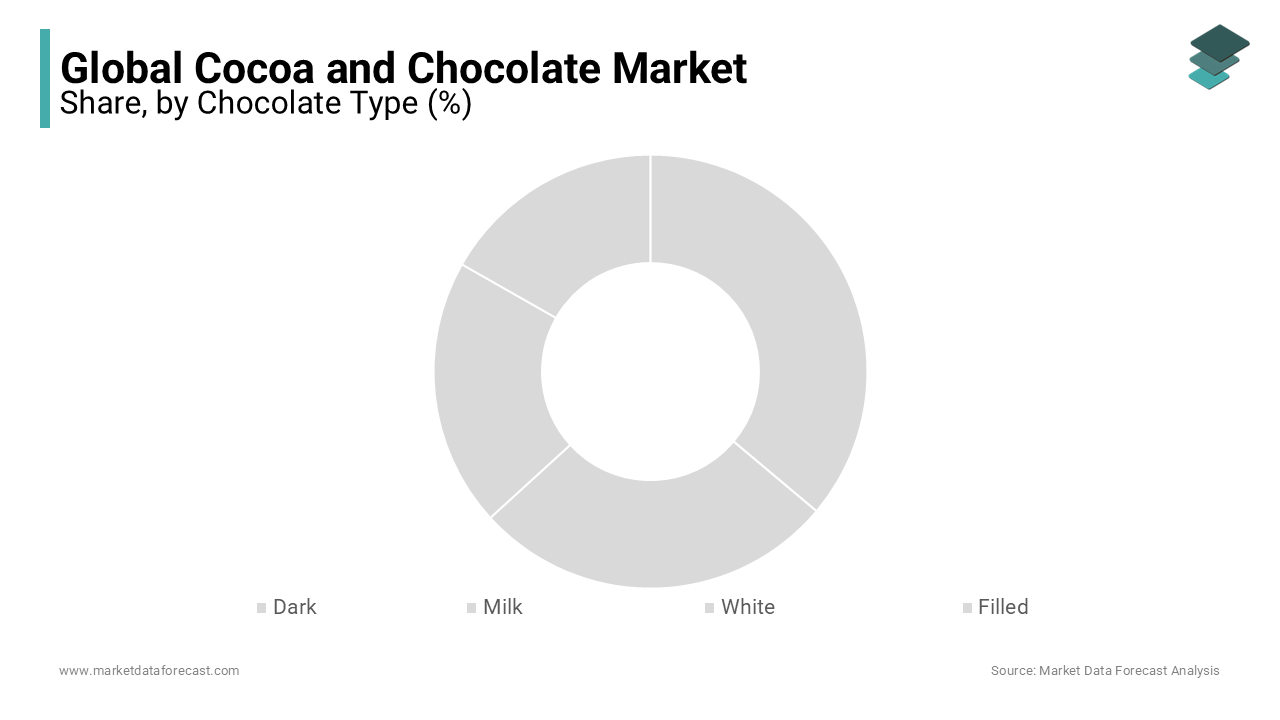
The Dark Chocolate segment is projected to register the highest CAGR of 8.7% from 2026 to 2034. This accelerated growth is driven by rising health consciousness and the premiumization of chocolate consumption. The increasing consumer belief in the health benefits associated with high-cocoa-content chocolate is a major driver. Cocoa flavanols improve blood flow and support cardiovascular function, leading to a surge in demand for dark chocolate with 70% cocoa or higher. In Germany, sales of dark chocolate increased by 6%, with a portion of consumers citing health reasons for their purchase. The trend is particularly strong among millennials and Gen Z, who prioritize functional foods. An additional critical factor is the expansion of premium and single-origin dark chocolate offerings. Artisanal brands like Hotel Chocolat and Amedei emphasize bean provenance, terroir, and ethical sourcing, commanding price premiums over mass-market products. In Australia, the premium dark chocolate segment grew in recent years, with retailers dedicating specialized sections to bean-to-bar products. Furthermore, e-commerce platforms have enabled niche producers to access global markets. These dynamics position dark chocolate not as a confectionery item but as a wellness-aligned, experiential product, fueling its rapid market ascent.
By Cocoa Type Insights
The cocoa Liquor segment prevailed within the cocoa type classification by capturing an estimated 46.7% of the global market in 2025. Its indispensable role in industrial chocolate production is the primary reason for cocoa liquor’s market growth. Every tonne of chocolate confectionery requires approximately 550 kg of cocoa liquor, making it the most volume-intensive cocoa derivative. Its dual form, pressed to extract cocoa butter or blended directly into chocolate mass, makes it highly versatile. This shift reduces reliance on raw bean exports and enhances national revenue. Furthermore, cocoa liquor is critical for maintaining flavor consistency in large-scale chocolate production. Major manufacturers like Mars and Mondelez rely on standardized liquor blends to ensure uniform taste across global product lines. Furthermore, the rise of high-cocoa-content dark chocolates has increased demand for unadulterated liquor with superior aroma profiles. These factors collectively reinforce cocoa liquor as the backbone of the global chocolate value chain.
The Cocoa Butter segment is anticipated to grow at the fastest CAGR of 7.9% from 2026 to 2034. It is driven by its expanding applications beyond confectionery into high-value industries. The escalating demand for cocoa butter in the cosmetics and personal care sector, where its emollient properties and stability make it a preferred ingredient in premium skincare products, is a key driver. In the United States, sales of natural skincare products containing cocoa butter grew, fueled by consumer preference for plant-based, non-comedogenic ingredients. Brands like L’Occitane and The Body Shop have launched dedicated cocoa butter lines, sourcing directly from sustainable cooperatives in Ghana and Papua New Guinea. A further significant factor is the rising use of cocoa butter in pharmaceuticals and nutraceuticals. Its high concentration of stearic and oleic acids makes it ideal for tablet coatings and suppository bases, ensuring smooth disintegration and bioavailability. Additionally, the growth of vegan alternatives, such as shea and mango butter, is limited by inferior texture and oxidative stability, preserving cocoa butter’s competitive edge.
By Application Insights
The Confectionery segment dominated the application landscape by capturing 64.5% of the global cocoa and chocolate market in 2025. This dominance is primarily driven by the entrenched cultural and emotional association between chocolate and indulgence, gift-giving, and festive consumption. In the United States, chocolate confectionery sales reached USD 21.4 billion in 2023, with holidays like Halloween, Valentine’s Day, and Christmas accounting for over 64% of annual sales. Seasonal assortments and limited-edition packaging stimulate impulse buying, particularly among younger consumers. Besides, product diversification within confectionery, ranging from mass-market bars to luxury truffles, enables broad market penetration. In Brazil, the confectionery sector grew in 2023, driven by innovations like chocolate-covered açaí and dulce de leche-filled bars. The integration of functional ingredients such as probiotics, protein, and nootropics has further expanded its appeal beyond taste. Moreover, the rise of subscription boxes and online gifting platforms has extended reach; in the UK, digital chocolate gifting sales rose by 27% in 2023, according to the British Retail Consortium. These dynamics ensure that confectionery remains the central axis of cocoa utilization.
The Cosmetics application segment is projected to grow at the fastest CAGR of 9.2% from 2026 to 2034. The rising preference for plant-based and ethically sourced components in beauty formulations is a major driver. Cocoa butter, rich in polyphenols and fatty acids, is prized for its moisturizing, anti-inflammatory, and antioxidant properties. Brands like Burt’s Bees and Weleda have reported double-digit sales growth in cocoa butter-based lotions, attributing success to clean-label positioning and dermatological endorsements. A further key factor is the expansion of beauty markets in emerging economies. Additionally, social media influence has amplified demand for “glow” and hydration-centric routines, where cocoa butter is promoted for improving skin elasticity. The combination of scientific validation, cultural relevance, and e-commerce accessibility positions cosmetics as the fastest-growing frontier for cocoa utilization
REGIONAL ANALYSIS
Europe
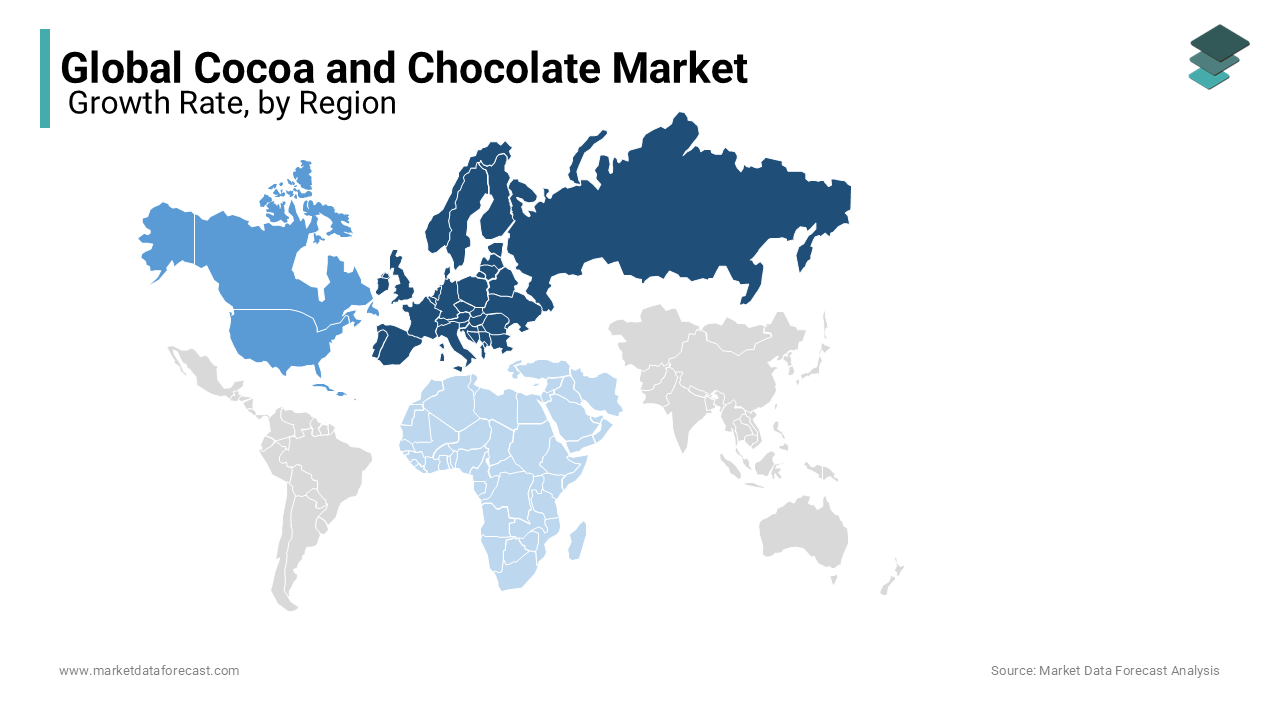
Europe spearheaded the global cocoa and chocolate market by accounting for 36.5% in 2025. As the historical epicenter of chocolate industrialization and premium consumption, Europe maintains a dominant position through its blend of artisanal craftsmanship and large-scale manufacturing. Germany, the UK, and Switzerland are key contributors, with Germany alone processing substantial metric tonnes of cocoa annually. The region leads in sustainability initiatives, with a significant share of cocoa imports into the EU certified under voluntary schemes like UTZ and Rainforest Alliance. Additionally, Europe is at the forefront of regulatory innovation, with the EU’s upcoming Deforestation Regulation mandating traceability for all cocoa entering the bloc. Premium brands such as Lindt, Milka, and Green & Black’s continue to expand through product innovation and ethical branding, while e-commerce penetration in Nordic countries has boosted direct-to-consumer sales.
North America
North America represents another key player in the global market. The U.S. chocolate industry remained in the lead, driven by mass-market brands and seasonal gifting. Canada complements this with strong institutional demand in healthcare and education catering. The region is a leader in functional chocolate innovation, with many of new product launches in 2023 featuring claims related to protein enrichment, low sugar, or mental focus. Additionally, the rise of dark and vegan chocolate has reshaped consumer preferences. The integration of AI in supply chain logistics has improved inventory accuracy across major distributors. With high retail density and digital adoption, North America remains a critical testing ground for new chocolate formats and marketing strategies.
Asia Pacific
Asia Pacific (APAC) is the fastest-growing region due to rising urbanization and disposable incomes. China and India are emerging as pivotal markets, with China’s chocolate sales growing annually. In India, the market is expanding, driven by youth consumption and gifting culture. Japan maintains a mature but innovative market, where limited-edition seasonal chocolates generate billions in revenue annually. South Korea has seen a surge in premium single-origin bars. Additionally, Indonesia and Malaysia are investing in domestic cocoa processing to reduce import dependency. With e-commerce penetration exceeding 60% in urban centers, APAC is redefining chocolate consumption through digital engagement and localization.
Latin America
Latin America holds a significant share of the global market, with Brazil and Mexico leading regional demand. Brazil is both a major producer and consumer. Mexican consumers favor sweet and spiced chocolate variants, with traditional brands like Abuelita maintaining strong cultural relevance. In Colombia, artisanal chocolate made from Nacional cocoa has gained international acclaim, fetching premiums in export markets. The region’s confectionery sector grew, supported by modern retail expansion and tourism-driven demand. However, economic volatility in Argentina and Venezuela limits purchasing power. Despite challenges, digital platforms like Mercado Libre have increased access to premium imports, with online chocolate sales rising. Latin America’s dual role as producer and consumer gives it strategic importance in the global cocoa ecosystem.
Middle East and Africa
Middle East and Africa (MEA) collectively account for small share of the global market, with South Africa and the GCC nations driving formal sector growth. Saudi Arabia’s Vision 2030 initiative has spurred investments in food manufacturing, including a new chocolate plant by Almarai in 2023.. However, in West Africa, local consumption remains low—Ghanaian per capita intake is just 0.3 kg annually. Informal trade dominates, and infrastructure gaps hinder processing. Nevertheless, initiatives like Côte d’Ivoire’s local chocolate promotion campaign are beginning to shift domestic demand, signaling long-term potential in the region.
KEY MARKET PLAYERS AND COMPETITIVE LANDSCAPE
Companies playing a major role in the global cocoa and chocolate market include ADM, Cargill, Bunge, Barry Callebaut, Indcresa, Blommer, JB Foods Limited, Plot Ghana, Dutch Cocoa and Cocoa Processing Company Limited. Cargill, Incorporated, will see significant growth in the healthy, premium, and sustainable chocolate-only market, and in the near future, regular candy will be replaced by healthy options. To stay ahead of the competition, companies must come up with innovative ideas. Cadbury's sales growth is anticipated to have a positive impact on the global cocoa and chocolate markets.
Competition in the cocoa and chocolate market is intensifying as global confectioners, regional specialists, and niche artisanal brands vie for consumer loyalty across diverse cultural and economic landscapes. The industry is characterized by a dual dynamic: multinational corporations leverage scale, distribution networks, and R&D capabilities to dominate mass markets, while boutique producers differentiate through origin storytelling, ethical sourcing, and premium craftsmanship. In Asia-Pacific, competition is particularly fragmented, with local players like Meiji and Parle leveraging cultural familiarity to resist global encroachment. At the same time, digital platforms have lowered entry barriers, enabling direct-to-consumer brands to thrive on transparency and customization. Sustainability has become a critical battleground, as consumers and regulators demand deforestation-free, child labor-free supply chains, compelling companies to invest in traceability technologies like blockchain. Price sensitivity in emerging markets contrasts with premiumization trends in developed economies, forcing brands to adopt segmented strategies. Innovation cycles have accelerated, with frequent product launches in flavors, formats, and functional claims. Mergers, acquisitions, and co-branding initiatives—such as KitKat’s collaborations with Japanese tea houses—are used to capture attention in crowded retail environments. As climate risks and cocoa supply constraints grow, competition is shifting from shelf space to resource security, with leading firms securing long-term farm partnerships and investing in climate-resilient cocoa varieties, redefining the basis of competitive advantage.
TOP PLAYERS IN THE MARKET
Mondelēz International
Mondelēz International maintains a formidable presence in the Asia-Pacific cocoa and chocolate market through its iconic brands such as Cadbury, Green & Black’s, and Toblerone. The company has deeply embedded itself in local markets by adapting formulations to regional tastes, exemplified by Cadbury Dairy Milk’s sweeter profile in India and Japan. In 2023, Mondelēz expanded its manufacturing footprint in Malaysia by commissioning a new chocolate production line at its Johor plant, enhancing supply chain resilience. It launched region-specific innovations like Oreo Choco Caramel in Thailand and launched limited-edition matcha-infused Dairy Milk bars in Japan. The company also intensified its digital engagement through e-commerce partnerships with platforms like Lazada and Flipkart, increasing direct-to-consumer reach. Mondelēz reinforced its sustainability commitments by sourcing 100% certified cocoa for its Cadbury line in Australia and New Zealand and investing in farmer livelihood programs across Indonesia. Its "Cocoa Life" initiative supports over 120,000 farmers in the region, improving yield and traceability. By combining localized product development with ethical sourcing and digital expansion, Mondelēz continues to strengthen its competitive standing across diverse Asian consumer bases.
Nestlé S.A.
Nestlé plays a pivotal role in shaping the cocoa and chocolate landscape across Asia-Pacific through its extensive portfolio, including KitKat, Aero, and Milkybar. The company has demonstrated exceptional agility in tailoring products to local palates, particularly in Japan, where it offers over 300 KitKat variants, such as wasabi, sake, and yuzu, reinforcing brand loyalty and cultural relevance. In 2023, Nestlé opened a new R&D center in Singapore focused on plant-based and reduced-sugar confectionery, aligning with regional health trends. It also launched a blockchain-enabled traceability system for cocoa sourced from Papua New Guinea, enhancing transparency for consumers in Australia and New Zealand. In India, Nestlé modernized its Moga chocolate facility to improve efficiency and food safety standards. The company has committed to regenerative agriculture practices, partnering with smallholder farmers in the Philippines and Indonesia to promote agroforestry and soil health. Additionally, Nestlé strengthened its e-commerce presence by integrating with major delivery platforms like Grab and Foodpanda. Its focus on innovation, sustainability, and hyper-localization enables it to maintain strong consumer engagement and operational resilience across the dynamic Asia-Pacific market.
Meiji Holdings Co., Ltd.
Meiji is a dominant domestic force in Japan’s chocolate market and a growing regional player in Asia-Pacific, known for its high-quality confectionery and nutritional expertise. The company’s flagship products, including Meiji Chocolate, Apollo, and Black Thunder, are deeply integrated into Japanese consumer culture, with seasonal and gift-oriented packaging driving repeat sales. In 2023, Meiji expanded its production capacity at its Tochigi facility to meet rising export demand for its premium dark chocolate line. It launched sugar-reduced and high-cocoa variants in response to health-conscious trends, particularly in South Korea and Taiwan. Meiji also invested in sustainable packaging, introducing recyclable wrappers for its best-selling milk chocolate bars. The company strengthened its supply chain by securing long-term cocoa contracts with Ghanaian cooperatives, ensuring quality and ethical sourcing. Through strategic partnerships with convenience store chains like Lawson and FamilyMart, Meiji maintains high product visibility and rapid turnover. Its emphasis on food safety, product innovation, and cultural resonance allows it to compete effectively against global brands while expanding its footprint across East and Southeast Asia.
TOP STRATEGIES USED BY THE KEY MARKET PLAYERS
Key players in the cocoa and chocolate market employ a range of strategic initiatives to consolidate their positions and respond to evolving consumer and regulatory demands. Vertical integration is increasingly adopted, with companies investing in farm-level programs to secure sustainable cocoa supplies and improve traceability. Major firms prioritize product innovation, launching region-specific flavors, reduced-sugar formulations, and functional chocolate with added health benefits. Digital transformation plays a crucial role, as brands enhance e-commerce capabilities, leverage AI for demand forecasting, and engage consumers through social media and mobile apps. Sustainability is central to branding, with commitments to deforestation-free supply chains, carbon neutrality, and fair farmer compensation. Strategic partnerships with governments and NGOs help scale agricultural development programs. Premiumization and diversification into organic, vegan, and single-origin segments allow differentiation in saturated markets. Additionally, companies are expanding into adjacent categories such as nutraceuticals and cosmetics to utilize cocoa derivatives beyond confectionery. These strategies collectively enable resilience against supply volatility and shifting consumer preferences.
RECENT HAPPENINGS IN THE MARKET
- In March 2023, Mondelēz International launched a new digital traceability platform for its Cadbury chocolate line in India, enabling consumers to scan QR codes and view the journey of cocoa from Ghanaian farms to retail shelves, enhancing transparency and brand trust.
- In July 2023, Nestlé opened a dedicated R&D center in Singapore focused on developing low-sugar, plant-based chocolate formulations tailored to Asian consumer preferences, accelerating innovation in health-oriented confectionery for the regional market.
- In November 2023, Meiji Holdings expanded its production capacity at its Tochigi facility in Japan to meet rising export demand for its premium dark chocolate range, ensuring stable supply for growing markets in South Korea and Southeast Asia.
- In February 2025, Ferrero partnered with the World Cocoa Foundation to launch a regenerative agriculture program in Indonesia, supporting 15,000 smallholder farmers with climate-smart farming techniques and improved cocoa seedlings to enhance yield and sustainability.
- In May 2025, Hershey established a strategic joint venture with a Malaysian distributor to localize manufacturing and distribution in Southeast Asia, reducing import dependency and improving responsiveness to regional market demands.
MARKET SEGMENTATION
This research report on the global cocoa and chocolate market has been segmented and sub-segmented based on chocolate type, cocoa type, application, & region.
By Chocolate Type
- Dark
- Milk
- White
- Filled
By Cocoa Type
- Cocoa Butter
- Cocoa Liquor
- Cocoa Powder
By Application
- Cosmetics
- Pharmaceuticals
- Food & Beverage
- Confectionery
By Region
- North America
- Europe
- Asia Pacific
- Latin America
- Middle East and Africa