- Product Description Description
- Table of Contents TOC
- List of Table & Figure LOT
- Get Free Sample PDF Sample PDF
Market Size, 2025
$86.67 BnMarket Estimate, 2026
$92.04 BnMarket Forecast, 2034
$148.93 BnCAGR, 2026–2034
6.20%Executive Summary: Confectionery Ingredients Market
- Market Scope: Comprehensive global confectionery ingredients industry analysis covering product categories, clean-label trends, functional ingredient integrations, strategic corporate developments, and competitive landscapes.
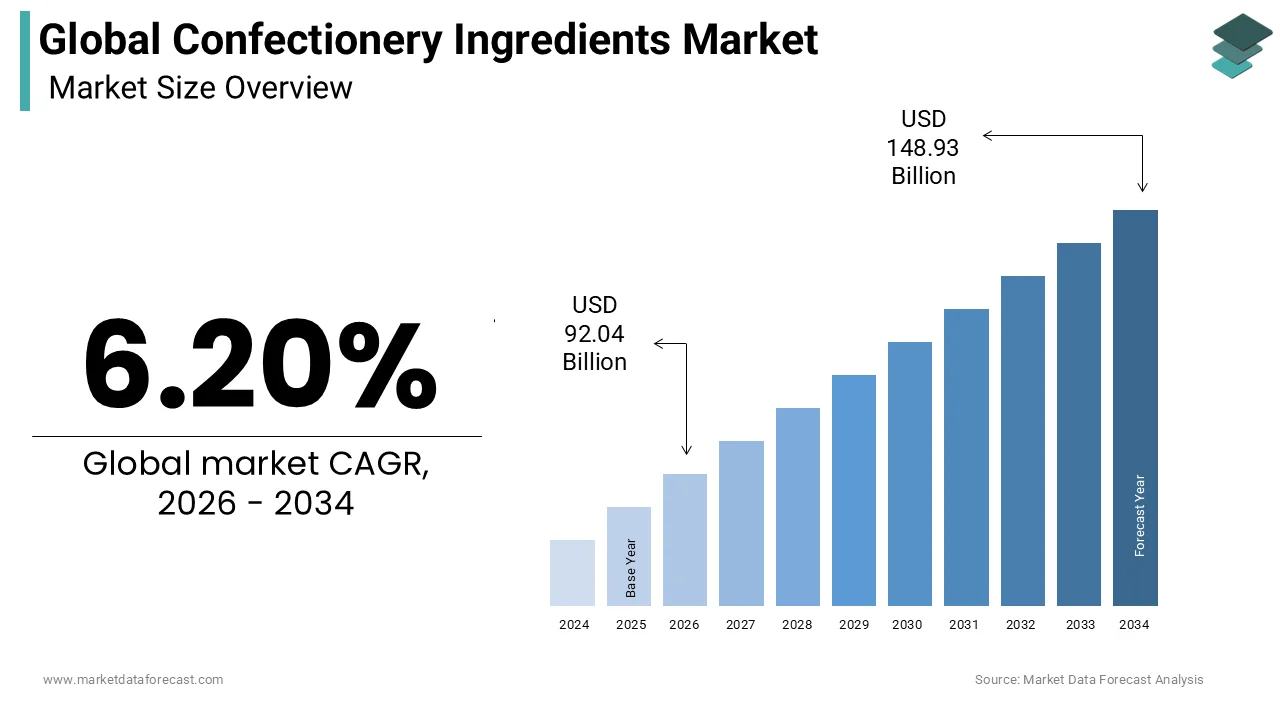
- Market Valuation: Valued at USD 86.67 billion (2025), estimated at USD 92.04 billion (2026), and projected to reach USD 148.93 billion by 2034, registering a steady CAGR of 6.20% (2026–2034).
- Primary Growth Drivers: Rising demand for premium artisanal confectionery, clean-label formulations, functional ingredients balancing indulgence and health, reduced sugar mandates, sustainable sourcing, and encapsulation/flavor delivery advancements. Restraints include raw material price volatility and cocoa/dairy supply chain disruptions.
Key Market Segment Metrics (2026–2034)
| Category | Leading Segment / Region (Position) | Fastest-Growing Segment |
|---|---|---|
| By Formulation / Type | Conventional sweetening and texturizing agents (established market share across global confectioners) | Alternative sweeteners, plant-based fats, and upcycled functional ingredients |
| By Application / Trend | Chocolate and confectionery manufacturing sectors leading ingredient consumption | Clean-label, reduced-sugar, and functional confectionery lines |
| By Region | North America & Europe (major consumption and established regulatory compliance regions) | Asia-Pacific emerging economies expanding confectionery production capabilities |
Major Market Players & Market Structure
Market Structure: Highly competitive global food ingredient processing ecosystem driven by sugar reduction technologies, plant-based and allergen-free alternatives development, and sustainable cocoa sourcing investments to mitigate supply chain volatility.
Key Companies: Barry Callebaut, Olam International, Cargill Incorporated, Archer Daniels Midland Company, Ingredion Incorporated, E. I. du Pont de Nemours and Company, Koninklijke DSM N.V., Kerry Group plc, Tate & Lyle PLC, and Concord Foods Inc.
 Download Free Sample Report
Global Confectionery Ingredients Market Size
The size of the global confectionery ingredients market was expected to be worth USD 86.67 billion in 2025 and is anticipated to be worth USD 148.93 billion by 2034, from USD 92.04 billion in 2026, growing at a CAGR of 6.20% during the forecast period.
Confectionery ingredients are the raw materials used to create sweet foods like candies, chocolates, baked goods, and traditional sweets. They provide flavor, texture, and structure. These ingredients include sugars, cocoa products, dairy derivatives, hydrocolloids, emulsifiers, flavors, and colors that define the texture, taste, and visual appeal of final products. The global appetite for confectionery remains robust despite shifting dietary preferences, driven by cultural traditions and emotional consumption patterns. According to the World Health Organization, both adults and children should limit their free sugar consumption to less than 10% of their total daily energy intake, with a conditional recommendation to drop below 5% for additional health benefits. The persistent demand necessitates continuous innovation in ingredient formulations to balance indulgence with health considerations. Manufacturers are increasingly focusing on clean label initiatives, removing artificial additives while maintaining product quality. As per the West African crop deficits, the International Cocoa Organization estimated a 13% drop in global cocoa supply to 4.38 million tons, heavily driven by weather volatility and crop diseases in West Africa, a region that produces over 60% of the world's raw cocoa supply. This supply chain vulnerability drives the search for alternative sources and sustainable farming practices. Regulatory bodies such as the European Food Safety Authority and the United States Food and Drug Administration enforce strict standards for food additives, ensuring consumer safety. The rise of functional confectionery incorporating vitamins, probiotics, and plant-based proteins reflects evolving consumer expectations. Technological advancements in encapsulation and flavor delivery systems enable the creation of novel sensory experiences. These dynamics shape a competitive landscape where ingredient suppliers must adapt to rapid changes in consumer behavior and regulatory frameworks.
MARKET DRIVERS
Rising Demand for Premium and Artisanal Confectionery Products
The growing consumer preference for premium and artisanal confectionery products accelerates the growth of the confectionery ingredients market. Consumers are increasingly willing to pay higher prices for high-quality chocolates and candies made with superior ingredients such as single-origin cocoa butter, organic cane sugar, and natural fruit extracts. According to the National Confectioners Association (NCA), overall candy sales surged to USD 55 billion, heavily driven by price inflation, forcing a trend where cost-conscious shoppers increasingly favor small, accessible premium chocolate purchases over mass-market volume packs to balance restricted personal budgets. This trend drives demand for specialised ingredients like rare vanilla beans, exotic nuts, and high-percentage cocoa solids, which offer distinct flavor profiles. Artisanal producers often prioritise ethical sourcing and transparency, requiring ingredient suppliers to provide detailed traceability information. The rise of craft confectionery boutiques in urban centers across North America and Europe further amplifies this demand. These small-batch manufacturers require flexible supply chains capable of delivering smaller quantities of high-grade materials. The emphasis on sensory complexity encourages the use of unique flavor combinations such as sea salt caramel or chilli-infused dark chocolate, necessitating innovative ingredient solutions. Additionally, the gift-giving culture surrounding holidays and special occasions sustains demand for visually appealing and tastefully crafted confections. Ingredient manufacturers respond by developing customised blends and premium packaging options that cater to this niche but lucrative segment. This shift towards quality over quantity ensures steady growth for suppliers of high-end confectionery inputs.
Expansion Of Functional and Health-Oriented Sweet Treats
The expansion of functional and health-oriented sweet treats has become a major driver for the confectionery ingredients market. This growth occurs as consumers increasingly seek indulgence without sacrificing wellness goals. There is a surging interest in products that offer additional benefits such as immune support, stress relief, or digestive health, leading to the incorporation of ingredients like adaptogens, probiotics,s and plant-based proteins. Sugar-freee and low-calorie confections utilizing sweeteners such as stevia, monk fruit, and erythritol are gaining popularity among diabetic and weight-conscious populations. As per the American Diabetes Association, using non-nutritive sweeteners serves as an effective short-term replacement tool to lower carbohydrate and calorie intake, provided individuals remain cautious of compensatory calorie additions in processed food formulations. Furthermore, the demand for vegan and allergen-free options necessitates the use of plant-based fats and dairy alternatives such as oat milk and coconut cream. Ingredient suppliers are investing in research to improve the texture and mouthfeel of these healthier alternatives, which often lack the richness of traditional fats and sugars. The integration of functional ingredients requires advanced technological processes to ensure stability and efficacy within the confectionery matrix. This evolution towards nutritious indulgence creates new opportunities for ingredient innovators who can deliver both taste and health benefits.
MARKET RESTRAINTS
Stringent Regulations on Sugar and Additive Content
Stringent regulations on sugar and additive content inhibit the growth of the confectionery ingredients market. This slowdown occurs as governments worldwide implement policies to combat obesity and related health issues. Many countries have introduced sugar taxes, labelling requirements, and marketing restrictions that impact the formulation and sale of confectionery products. According to the World Health Organization, countries are strongly urged to restrict public free sugar consumption to under 10% of daily caloric intake, which has legally pressured national health ministries to enforce strict front-of-pack warning labels on sugary snacks. In the United Kingdom, the soft drinks industry levy has influenced broader food manufacturing practices, encouraging companies to reduce sugar content across all product categories, including confectionery. These regulatory pressures force manufacturers to reformulate products, often requiring expensive research and development efforts to maintain taste and texture while lowering sugar levels. The European Union has also tightened regulations on certain food colourings and preservatives, requiring clear labeling of potential allergens and adverse effects. Compliance with these varying international standards increases operational costs and complexity for global ingredient suppliers. Additionally, negative public perception of artificial additives drives demand for natural alternatives, which can be more expensive and less stable. The need to constantly adapt formulations to meet changing regulatory landscapes slows down product launches and increases time to market. These regulatory hurdles create uncertainty for investors and manufacturers, limiting the scope for rapid innovation in traditional confectionery segments.
Volatility in Raw Material Prices and Supply Chain Disruptions
Volatility in raw material prices and supply chain disruptions greatly restrain the confectionery ingredients market. These factors affect profitability and planning accuracy for manufacturers. Key ingredients such as cocoa, sugar, and dairy are subject to fluctuating prices due to weather conditions, geopolitical tensions, and economic instability. As per the International Cocoa Organization, severe cocoa crop disease outbreaks and climate volatility in major growing nations like Ghana and the Ivory Coast caused global output to drop by 13%, causing ingredient cost spikes across global confectionery pipelines. These price spikes force manufacturers to either absorb higher costs or pass them on to consumers, potentially reducing demand. Sugar prices are similarly influenced by global trade policies and ethanol production demands, creating unpredictability in budgeting. Supply chain bottlenecks exacerbated by global logistics challenges delay the delivery of critical ingredients, leading to production stoppages and inventory shortages. The reliance on specific geographic regions for key commodities makes the supply chain vulnerable to local disruptions such as political unrest or natural disasters. Ingredient suppliers struggle to maintain consistent quality and availability amidst these fluctuations, impacting their relationships with confectionery manufacturers. Hedging strategies and long-term contracts offer some protection but cannot fully mitigate the risks associated with extreme market volatility. This instability discourages long-term investment in new product development and forces companies to prioritise cost containment over innovation. The resulting margin pressure affects the entire value chain from farmers to retailers.
MARKET OPPORTUNITIES
Innovation In Plant-Based And Alternative Protein Ingredients
Innovation in plant-based and alternative protein ingredients opens the door for the growth of the confectionery ingredients market. This trend is driven by increasing consumer interest in sustainable and ethical food choices. The rise of flexitarian and vegan diets has created demand for confectionery products that exclude animal-derived ingredients such as gelatine and dairy. Ingredient manufacturers are developing high-quality plant-based alternatives using pea protein, rice protein, and algae-based gelling agents that mimic the texture and functionality of traditional ingredients. According to the Good Food Institute, alternative proteins and plant-based innovations are expanding across food sub-categories as ingredient processors seek clean-label alternatives that prioritize first-mile supply chain traceability. Confectionery brands are launching vegan chocolates and gummies using cocoa butter equivalents and fruit pectins to appeal to this expanding demographic. Additionally, the use of upcycled ingredients such as fruit pulps and spent grain from brewing processes offers a sustainable solution for waste reduction while adding nutritional value. These innovations allow manufacturers to differentiate their products in a crowded market by appealing to environmentally conscious consumers. The development of clean-label plant-based ingredients that do not compromise on taste or texture requires significant research and development investment. However, the potential for premium pricing and brand loyalty among ethical consumers justifies these efforts. This trend aligns with broader sustainability goals and regulatory pushes for circular economy practices in the food industry.
Advancement In Natural Flavor and Color Technologies
Advancements in natural flavor and color technologies offer substantial opportunities for the confectionery ingredients market. Consumers are rejecting synthetic additives in favor of natural alternatives. The demand for food-label products has driven innovation in extracting vibrant colors and intense flavors from fruits, vegetables, and spices. Ingredient suppliers are utilizing advanced extraction methods such as supercritical fluid extraction and enzyme-assisted processing to obtain high-purity natural compounds. As per the Center for Science in the Public Interest (CSPI), mounting regulatory scrutiny over petroleum-derived colorants like Red 40 and Yellow 5 has actively driven multi-national snack brands to pivot toward plant-derived colors. Natural colors derived from beetroot, spirulina, and turmeric provide safe and appealing alternatives, although they often face challenges regarding stability and intensity. Flavor technologists are developing encapsulation techniques to protect delicate natural flavors from heat and moisture during processing, ensuring consistent taste profiles. The ability to offer a wide range of natural options allows confectionery manufacturers to cater to diverse consumer preferences and regulatory requirements. Furthermore, the use of natural ingredients enhances brand image and trust among health-conscious parents and carers. Investment in research to improve the performance and cost-effectiveness of natural flavors and colors will continue to drive adoption. This technological progress enables the creation of visually stunning and delicious confections that meet modern clean-label standards.
MARKET CHALLENGES
Sustainability and Ethical Sourcing Pressures
Sustainability and ethical sourcing pressures are major challenges for the confectionery ingredients market. Stakeholders are demanding greater transparency and responsibility in supply chains. Consumers and non-governmental organizations are increasingly scrutinizing the environmental and social impact of ingredient production, particularly for cocoa and palm oil. According to the Rainforest Alliance Annual Report, modern agricultural sourcing demands rigorous human rights monitoring alongside strict compliance with regenerative agriculture standards to combat structural poverty and child labor across global cocoa cooperatives. Confectionery companies face pressure to certify their supply chains and ensure fair wages and working conditions for farmers. Implementing sustainable practices often involves higher costs and complex monitoring systems, which can strain resources, especially for smaller suppliers. The transition to sustainable palm oil requires collaboration across multiple tiers of the supply chain to prevent leakage from uncertified sources. Additionally, the carbon footprint of ingredient transportation and processing is under scrutiny, prompting companies to seek local sourcing options, which may not always be feasible for tropical commodities. Balancing cost competitiveness with ethical commitments is difficult in a price-sensitive market. Failure to meet sustainability standards can result in reputational damage and loss of consumer trust. Companies must invest in traceability technologies and farmer support programs to address these challenges effectively. This ongoing requirement for ethical compliance adds layers of complexity to procurement and operations.
Complexity of Reformulating for Reduced Sugar and Fat
The complexity of reformulating confectionery products for reduced sugar and fat content is a further technical challenge for the confectionery ingredients market. Sugar and fat are not merely sweeteners or lubricants but play crucial roles in texture, structure, shelf life, and flavor release. Removing or replacing these components often leads to undesirable changes in mouthfeel, hardness, and stability. Ingredient scientists struggle to find substitutes that replicate the multifunctional properties of sucrose and cocoa butter without introducing off-flavours or aftertastes. Polyols and fibre-based bulking agents can affect digestion, causing gastrointestinal discomfort in some consumers, which limits their usage levels. The Maillard reaction, responsible for browning and flavor development in baked confections, is altered when sugar is reduced, affecting the final product's appearance. Maintaining microbial stability without sufficient sugar or fat requires additional preservatives or processing steps, which may conflict with clean-label goals. Extensive testing is required to optimise formulations, ensuring that the reduced sugar or fat product meets consumer expectations for taste and texture. This iterative process is time-consuming and expensive, delaying product launches. Furthermore, consumer acceptance of reformulated products is not guaranteed, as taste remains the primary driver of purchase decisions. Overcoming these technical hurdles requires deep expertise in food chemistry and process engineering.
REPORT COVERAGE
| REPORT METRIC | DETAILS |
| Market Size Available | 2025 to 2034 |
| Base Year | 2025 |
| Forecast Period | 2026 to 2034 |
| CAGR | 6.20% |
| Segments Covered | By Type, Source, Form, Application, and Region |
| Various Analyses Covered | Global, Regional & Country Level Analysis; Segment-Level Analysis, DROC, PESTLE Analysis, Porter’s Five Forces Analysis, Competitive Landscape, Analyst Overview of Investment Opportunities |
| Regions Covered | North America, Europe, APAC, Latin America, Middle East & Africa |
| Market Leaders Profiled | Barry Callebaut, Olam International, Cargill, Incorporated, Archer Daniels Midland Company, Ingredion Incorporated, E. I. du Pont de Nemours and Company, Koninklijke DSM N.V., Kerry Group plc, Tate & Lyle PLC, Concord Foods Inc, and Others. |
SEGMENTAL ANALYSIS
By Type Insights
The cocoa and chocolate ingredients segment dominated the confectionery ingredients market and accounted for a substantial share in 2025. This dominance of the segment was driven by the universal appeal of chocolate products and their deep integration into global culinary traditions. According to the International Cocoa Organization (ICCO), global cocoa grinding historically reached approximately 4.6 million metric tons, reflecting a baseline processing requirement that has recently faced unprecedented pricing stress due to West African structural supply deficits. Chocolate is not merely a treat but a cultural staple in many regions, driving consistent consumption regardless of economic fluctuations. The versatility of cocoa allows it to be used in various forms, including powder, butter, and liquor, catering to diverse product applications from premium bars to baked goods. Consumer preference for dark chocolate has risen significantly, with health-conscious individuals recognizing its antioxidant properties. As per the Centre for the Promotion of Imports (CBI), Europe remains the world's most dominant processing and purchasing arena, accounting for a massive 48% of global chocolate consumption. Manufacturers invest heavily in sourcing high-quality cocoa beans to meet the growing demand for premium and single-origin products. The emotional connection consumers have with chocolate ensures brand loyalty and repeat purchases. Additionally, the use of cocoa in non-traditional applications such as savory dishes and beverages expands its market reach. The complexity of chocolate production, requiring precise tempering and formulation, creates a barrier to entry that favours established ingredient suppliers with technical expertise. This combination of cultural significance, health perception, and technical complexity solidifies the dominance of cocoa and chocolate ingredients.
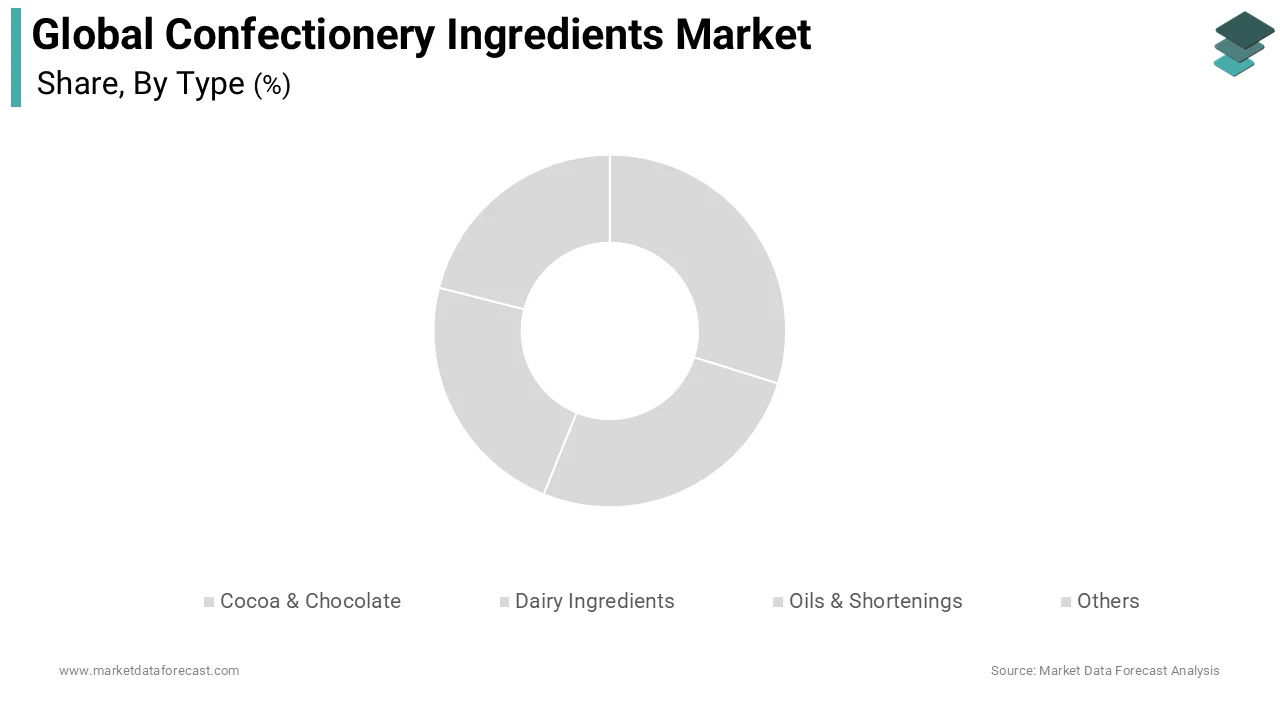
On the contrary, the dairy ingredients segment is on the rise and is expected to be the fastest-growing segment in the market by witnessing a CAGR of 5.8% over the forecast period due to its functional properties and nutritional benefits. Milk powder, whey protein, and butterfat are essential for creating creamy textures and rich flavors in chocolates, caramels, and fudges. Consumers increasingly seek confections that offer protein enrichment, leading to the incorporation of whey and casein isolates in snack bars and filled chocolates. As per the National Dairy Council, dairy proteins provide verified nutritional support for satiety and lean muscle retention, supplying a baseline formulation rationale for manufacturers pivoting into protein-fortified functional candy bars. Lactose-free dairy ingredients are also gaining traction as manufacturers address lactose intolerance concerns without compromising on taste. Innovations in membrane filtration technology allow for the production of high-purity dairy components that enhance mouthfeel and stability in confectionery matrices. The rise of premium ice cream and frozen confections further boosts demand for high-fat dairy ingredients that prevent ice crystal formation. Dairy ingredients also contribute to clean label formulations, as they are perceived as natural and wholesome by consumers. The ability of dairy proteins to act as emulsifiers and stabilizers reduces the need for synthetic additives. These functional and nutritional advantages drive the accelerated adoption of dairy ingredients in modern confectionery formulations.
By Source Insights
In 2025, the synthetic sources segment held the majority share of the confectionery ingredients market, particularly for colors, flavors, and preservatives, because of their cost-effectiveness, consistency, and stability. Synthetic ingredients such as artificial colors like Red 40 and flavors like vanillin are widely used in mass-market confectionery products where price sensitivity is high. According to the Food and Drug Administration (FDA), all permissible synthetic additives must undergo rigorous toxicology assessments to guarantee human safety compliance before clearing distribution pipelines for mass-market confections. Synthetic flavors offer superior shelf life and resistance to heat and light compared to natural alternatives, making them ideal for processed confections that undergo rigorous manufacturing conditions. As per the Society of Chemical Industry, synthetic and lab-derived formulation agents offer highly scalable yield profiles at lower, insulated production costs, buffering commercial snack manufacturers from agricultural harvest fluctuations. Uniformity in colour and taste is critical for brand recognition and consumer expectation, which synthetic ingredients provide reliably. While consumer trends are shifting toward natural options, synthetic ingredients remain dominant in emerging markets where affordability is a primary purchase driver. The regulatory framework in many countries supports the use of synthetic additives within specified limits, facilitating their continued presence in the market. Manufacturers rely on synthetic ingredients to maintain profit margins in competitive segments such as gummies and hard candies. The established supply chains and production infrastructure for synthetic ingredients further reinforce their market leadership despite growing competition from natural alternatives.
However, the natural sources segment is expected to exhibit a noteworthy CAGR of 7.2% from 2026 to 2034 due to the clean label movement and health consciousness. Consumers are increasingly avoiding artificial additives, seeking transparency and simplicity in ingredient lists. According to the Center for Science in the Public Interest (CSPI), the exit from synthetic food dyes is picking up legal momentum as progressive legislative bans on toxic colorants like Red Dye No. 3 force massive multinational brands to rewrite their global ingredient recipes. Natural ingredients such as beet juice, spirulina, and turmeric are replacing synthetic dyes, while vanilla extract and fruit essences substitute artificial flavors. As per the Organic Trade Association, sales of organic and natural food products continue to outpace conventional categories, driving demand for certified natural confectionery inputs. Advances in extraction technologies have improved the stability and intensity of natural colors and flavors, making them more viable for industrial applications. Although natural ingredients are often more expensive and less stable, their perceived health benefits justify the premium price for many consumers. Regulatory bodies in Europe and North America are tightening restrictions on certain synthetic additives, further accelerating the shift toward natural alternatives. Ingredient suppliers are investing in research to develop robust natural solutions that meet performance standards. The growing preference for plant-based and minimally processed foods supports the rapid expansion of natural confectionery ingredients. This trend reflects a broader societal shift toward wellness and sustainability.
By Application Insights
The chocolate applications segment led the confectionery ingredients market and captured a significant share in 2025. Moreover, the immense popularity of chocolate products across all age groups and demographics is a key factor behind the leading position of this segment. Chocolate is used in a wide variety of formats, including bars, filled pralines, coatings, and inclusions, driving substantial demand for cocoa butter, cocoa powder, and milk solids. According to the National Confectioners Association (NCA), chocolate confectionery sales are projected to scale up to USD 38 billion of a USD 70 billion market, indicating that chocolate holds an approximate 54% share of total US retail confectionery sales. The versatility of chocolate allows it to be combined with nuts, fruits, caramel, and other ingredients, creating endless product variations. Seasonal demand during holidays such as Easter, Halloween, and Christmas significantly boosts chocolate consumption and ingredient usage. Premiumisation trends encourage the use of high-quality cocoa and dairy ingredients in artisanal and luxury chocolate products. The rise of dark chocolate consumption, driven by health benefits, further supports ingredient demand. Chocolate manufacturing requires specialised equipment and expertise, creating a barrier to entry that favours established players using high-grade ingredients. The emotional appeal of chocolate as a comfort food and gift item ensures consistent demand regardless of economic conditions. Innovation in flavor profiles, such as spicy or salty chocolate, expands the application scope. The global nature of chocolate consumption ensures a stable and growing market for related ingredients.
But the gum applications segment is predicted to witness the highest CAGR of 6.5% during the forecast period. This rapid growth of the segment is propelled by the functional benefits of chewing gum and sugar-free innovations. Chewing gum is increasingly marketed for oral health benefits, breath freshening, and stress relief, attracting health-conscious consumers. As per clinical dental guidelines established by the American Dental Association (ADA), chewing sugar-free gum for 20 minutes after meals is medically proven to accelerate saliva flow, which effectively neutralizes plaque acids, cleanses food debris, and strengthens tooth enamel. This endorsement drives demand for sugar alcohols such as xylitol, sorbitol, and mannitol, which serve as bulk sweeteners in gum bases. The shift away from sucrose in gum formulations aligns with global efforts to reduce sugar intake. Innovation in texture and flavor release technologies enhances the consumer experience, encouraging repeat purchases. Functional gums incorporating vitamins, caffeine, or herbal extracts are gaining popularity as convenient delivery systems for active ingredients. The portability and convenience of gum make it a popular impulse purchase item globally. Manufacturers are developing biodegradable gum bases to address environmental concerns regarding litter, expanding the market appeal. The use of natural flavors and colors in gum aligns with clean label trends, further boosting ingredient demand. The low-calorie profile of sugar-free gum appeals to weight management-conscious consumers. These factors collectively drive the rapid growth of the gum application segment.
REGIONAL ANALYSIS
North America Confectionery Ingredients Market Analysis
North America outperformed other regions in the global confectionery ingredients market and occupied a 30.2% share in 2025. Factors such as high disposable income and strong demand for premium and functional products have contributed to the supremacy of this regional market. The United States is the largest consumer of confectionery in the region, with a mature market characterized by continuous innovation in health-oriented ingredients. According to the National Confectioners Association (NCA), the US confectionery industry actually generated a record $55 billion in retail sales in 2025, with expectations to reach $62.2 billion by 2030. Consumers in this region are highly aware of health trends driving the adoption of sugar-free, organic, and plant-based confectionery options. Major ingredient suppliers have established strong distribution networks and research facilities in the region to cater to local preferences. The presence of leading confectionery manufacturers fosters collaboration and innovation in ingredient development. Regulatory standards set by the Food and Drug Administration influence ingredient choice,s promoting transparency and safety. The trend toward snacking as a meal replacement boosts demand for protein-enriched and functional confectionery ingredients. Canada also contributes to market growth with increasing demand for natural and sustainable ingredients. The region's focus on clean label and ethical sourcing drives ingredient manufacturers to innovate and adapt. High consumer spending power supports the premiumisation of confectionery products, sustaining demand for high-end ingredients.
Europe Confectionery Ingredients Market Analysis
Europe was positioned second in the global confectionery ingredients market because of deep-rooted chocolate traditions and stringent sustainability standards. Countries like Belgium, Switzerland, and Germany are renowned for their high-quality chocolate production, driving consistent demand for premium cocoa and dairy ingredients. The European Commission implements strict regulations on food additives and labelling, promoting the use of natural and organic ingredients. As per research, while third-party frameworks like Fairtrade and Rainforest Alliance dictate premium consumer segments, European sourcing practices are strictly driven by legal compliance with the EU Deforestation Regulation (EUDR), making Europe the world's largest importer of certified and traceable sustainable cocoa. Consumers in this region are highly conscious of environmental and social impacts, preferring products with verified sustainable supply chains. As per the European Cocoa Association, Europe processes a significant portion of the world's cocoa beans, supporting a robust ingredient processing industry. The demand for dark chocolate and artisanal confections remains strong, driving innovation in flavor and texture. Government initiatives promoting healthy eating habits encourage the development of reduced sugar and fat formulations. The region's mature market focuses on value addition through quality and sustainability rather than volume. Strict adherence to food safety standards ensures high-quality ingredient supplies. The cultural significance of confectionery in European societies ensures steady demand despite health trends.
Asia Pacific Confectionery Ingredients Market Analysis
Asia Pacific shows growth potential in the global confectionery ingredients market due to rising disposable incomes and urbanization. China and India are the key drivers of growth in this region, with expanding middle-class populations increasing their consumption of packaged confectionery. As per sources, the Chinese chocolate landscape reached a significant level, driven directly by robust festival-gifting cultures and expanding digital e-commerce channels. Local manufacturers are increasingly using high-quality ingredients to compete with international brands, driving demand for cocoa, dairy, and natural flavors. The region's large population provides a vast consumer base for mass-market confectionery products. Urbanization leads to changing lifestyle patterns with increased snacking and convenience food consumption. Government initiatives to improve food safety standards are encouraging the use of certified and high-quality ingredients. The rise of e-commerce facilitates access to diverse confectionery products, expanding market reach. Local ingredient suppliers are investing in capacity expansion to meet growing demand. The preference for sweet flavors in many Asian cultures supports steady consumption. However, price sensitivity remains a challenge, requiring cost-effective ingredient solutions. The region's dynamic market environment offers significant opportunities for ingredient innovation and expansion.
Latin America Confectionery Ingredients Market Analysis
Latin America is experiencing consistent growth in the confectionery ingredients market owing to its status as a major cocoa-producing region and increasing domestic consumption. Brazil and Mexico are the largest markets in the region with strong cultural traditions of confectionery consumption. According to the Inter-American Institute for Cooperation on Agriculture (IICA), the institute runs targeted technical initiatives across Ecuador and Peru to optimize cocoa farm management and help local growers comply with strict European regulations on cadmium thresholds. Domestic manufacturers are increasingly using local ingredients to reduce costs and support local economies. The rising middle class in urban areas is driving demand for branded and premium confectionery products. Government policies supporting agricultural development help stabilise cocoa supply chains. The region's tropical climate favours the consumption of refreshing confections such as gummies and jellies, driving demand for hydrocolloids and fruit flavors. Economic volatility can impact purchasing power, but basic confectionery items remain affordable luxuries. The tourism industry also contributes to the demand for local specialty confections. Ingredient suppliers are focusing on sustainable sourcing practices to meet international standards. The region's potential for growth lies in value-added processing and export of premium cocoa products.
Middle East and Africa Confectionery Ingredients Market Analysis
The Middle East and Africa region is expected to showcase a promising CAGR in the confectionery ingredients market during the forecast period due to cultural preferences for sweet treats and growing urban populations. Dates and honey are traditional ingredients widely used in confectionery in this region, creating demand for natural sweeteners and flavourings. As per research, the Gulf Cooperation Council (GCC) countries maintain some of the highest regional revenue growth in luxury confectionery, supported by a booming premium artisanal chocolate market and expanding hospitality pipelines. Local manufacturers are increasingly adopting international quality standards, driving demand for standardized ingredients. Africa's role as a major cocoa producer influences the availability and cost of raw materials. Economic development in countries like Nigeria and South Africa is expanding the consumer base for packaged confectionery. The hot climate requires ingredients that provide heat stability, such as specialised fats and emulsifiers. Religious festivals and celebrations drive seasonal spikes in confectionery consumption. Ingredient suppliers are focusing on halal certification to access Muslim markets. The lack of local processing infrastructure in some areas creates opportunities for imported ingredients. Growing awareness of health issues is slowly influencing product formulations toward reduced sugar options. The region's diverse cultural landscape offers unique opportunities for customised ingredient solutions.
COMPETITION OVERVIEW
The Confectionery Ingredients Market features intense competition among global agricultural giants, specialized ingredient suppliers, and regional processors. Major players compete primarily on product quality, price stability, and sustainability credentials. Innovation drives differentiation as companies introduce natural colors, flavors, and texturants that align with clean label trends. Pricing pressure from large confectionery manufacturers forces suppliers to optimize costs through efficient sourcing and production methods. Regulatory barriers regarding food safety and labeling create compliance challenges that favor established entities with robust quality systems. Collaboration with research institutions enables validation of new ingredients and health claims. Customer loyalty stems from consistent supply reliability, technical support, and collaborative product development. The shift toward sustainable and ethically sourced ingredients introduces additional competitive dynamics as consumers demand transparency. Intellectual property protection safeguards proprietary formulations and processing technologies. Market participants must continuously invest in research and development to stay ahead of changing consumer tastes and nutritional guidelines. Strategic alliances with farmers and cooperatives secure raw material supplies and enhance corporate social responsibility profiles.
KEY MARKET PLAYERS
Major key players in the global confectionery ingredients market include
- Barry Callebaut
- Olam International
- Cargill
- Incorporated
- Archer Daniels Midland Company
- Ingredion Incorporated
- E. I. du Pont de Nemours and Company
- Koninklijke DSM N.V
- Kerry Group plc
- Tate & Lyle PLC
- Concord Foods Inc
Top Strategies Used by Key Market Participants
Key players in the Confectionery Ingredients Market employ several strategic approaches to maintain a competitive advantage and drive growth. Product innovation remains central as companies develop clean-label and functional ingredients that meet evolving consumer preferences. Strategic partnerships with confectionery manufacturers facilitate the co-creation of customized solutions that enhance product differentiation. Mergers and acquisitions enable the expansion of product portfolios and access to new geographic markets. Sustainability initiatives such as ethical sourcing and carbon footprint reduction build brand loyalty and comply with regulatory standards. Investment in digital technologies supports supply chain transparency and efficient customer engagement. Regulatory compliance and quality assurance ensure product safety and trust among consumers and retailers.
Top Leading Players in the Global Market
- Cargill Incorporated maintains a leading position through its extensive global supply chain for cocoa, sugar, and dairy ingredients. The company focuses on sustainable sourcing initiatives, ensuring ethical procurement of raw materials from key producing regions. Recent actions involve expanding its cocoa processing facilities in West Africa to enhance quality control and traceability. Cargill collaborates with confectionery manufacturers to develop customized fat systems that improve texture and shelf life. Their investment in research and development drives innovation in plant-based alternatives and reduced sugar solutions. The company leverages its integrated logistics network to ensure consistent delivery and competitive pricing. Educational programs support farmers in adopting best practices for climate resilience and yield improvement.
- Barry Callebaut NV contributes significantly by providing high quality chocolate and cocoa ingredients to artisanal and industrial customers worldwide. The company emphasizes craftsmanship and innovation, offering a wide range of premium cocoa products tailored to diverse culinary applications. Recent initiatives include launching new sustainable cocoa programs that support farmer livelihoods and environmental conservation. Barry Callebaut partners with chefs and brands to create unique flavor profiles and visual experiences in confectionery. Their digital platforms provide customers with technical support and recipe inspiration, enhancing user engagement. The company invests in advanced manufacturing technologies to improve efficiency and reduce environmental impact. Training centers across the globe foster skills development for professional chocolatiers and bakers.
- Ingredion Incorporated plays a vital role by supplying specialty sweeteners, starches, and texturants for the confectionery industry. The company focuses on clean label solutions, helping manufacturers replace artificial additives with natural alternatives. Recent efforts involve developing novel fiber-based ingredients that reduce sugar content while maintaining mouthfeel and stability. Ingredion engages in strategic collaborations with food scientists to optimize formulations for health-conscious consumers. Their global presence ensures reliable access to raw materials and technical expertise for clients in various regions. The company prioritizes sustainability by sourcing ingredients from responsible suppliers and reducing water usage in production. Innovation hubs facilitate rapid prototyping and testing of new ingredient combinations for market readiness.
MARKET SEGMENTATION
This research report on the global confectionery ingredients market has been segmented and sub-segmented based on type, source, form, application, and region.
By Type
- Cocoa & Chocolate
- Dairy Ingredients
- Oils & Shortenings
- Others (Starch & Derivatives, Hydrocolloids, Emulsifiers, Malts, Sweeteners, Flavors)
By Source
- Synthetic
- Natural
By Form
- Dry
- Liquid
By Application
- Chocolate
- Sugar Confectionery
- Gum
- Others (Coating, Fillings, caramel, aerated confectionery)
By Region
- North America
- Europe
- The Asia Pacific
- Latin America
- The Middle East and Africa