- Product Description Description
- Table of Contents TOC
- List of Table & Figure LOT
- Get Free Sample PDF Sample PDF
Market Size, 2025
$410 MnMarket Estimate, 2026
$458 MnMarket Forecast, 2034
$1,123 MnCAGR, 2026–2034
11.85%Executive Summary: Europe Acai Berry Market
- Market Scope: Regional analysis of Europe's acai berry sector, detailing application segments, product forms, distribution channels, regulatory compliance, and country-level profiles.
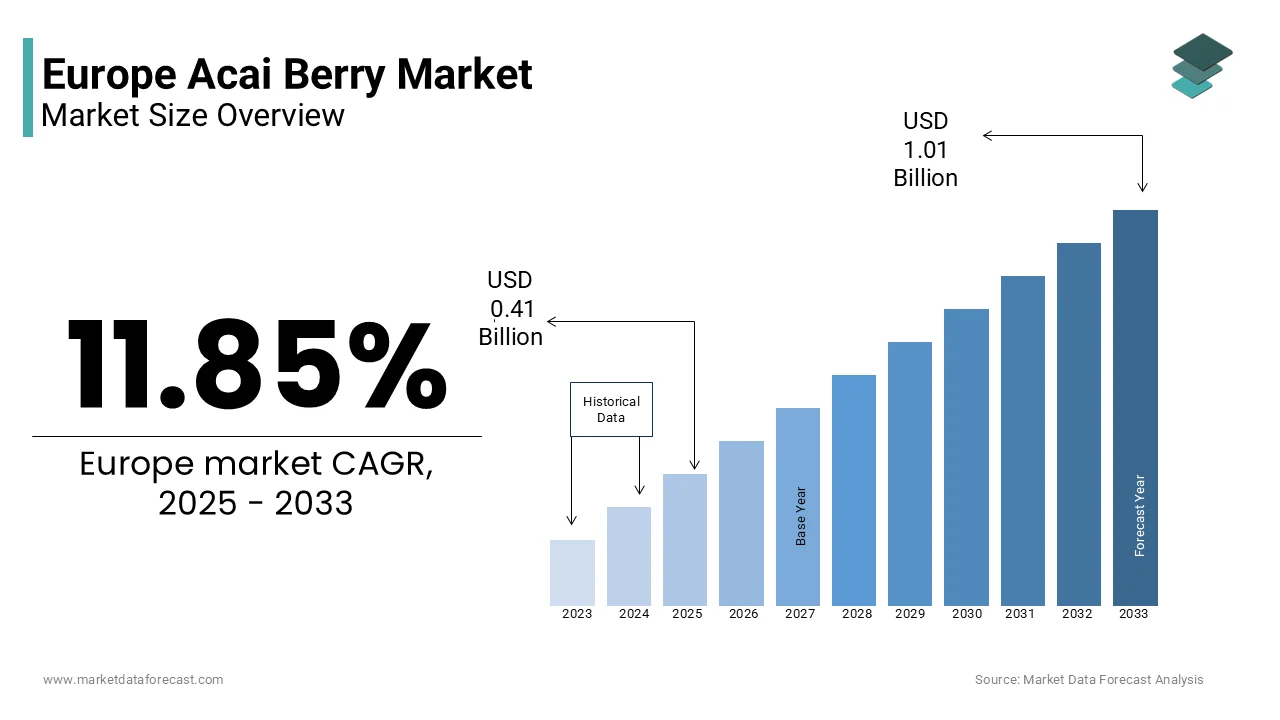
- Market Valuation: Valued at USD 410.03 million in 2025, reaching USD 458.62 million in 2026, and projected to expand to USD 1,123.42 million by 2034, growing at a robust CAGR of 11.85% from 2026 to 2034.
- Primary Growth Drivers: Escalating consumer demand for natural antioxidants in preventive healthcare, expansion of the clean-label and plant-based food movement, and rising integration of acai into cosmetics.
Key Market Segment Metrics
| Category | Leading Segment (Base Position) | Fastest-Growing / High-Growth Segment |
|---|---|---|
| By Application | Food and Beverages (held 47.3% share in 2025, driven by functional food formulations, smoothie bowls, and clean-eating trends) | Personal Care or Cosmetics (projected at a 10.8% CAGR, fueled by acai oil and anti-aging skincare formulations) |
| By Product | Pulp (held 54.3% share in 2025, preferred in frozen ready-to-consume formats retaining high anthocyanin content) | Dried (expected to register an 11.3% CAGR, driven by dietary supplements, instant beverages, and long shelf-life advantages) |
| By Distribution Channel | Hypermarkets or Supermarkets (held 42.3% share in 2025, backed by extensive shelf space and major retail chains like Carrefour and Tesco) | Online (projected at a 13.6% CAGR, driven by e-commerce platforms and subscription superfood delivery models) |
| By Country | Germany (market leader with an 18.4% share in 2025, backed by developed health food infrastructure and organic retailers) | France (anticipated to grow at the highest CAGR, driven by a culturally rooted emphasis on clean-label and gourmet nutrition) |
Major Market Players & Industry Landscape
Market Structure: Intensifying competition among specialized superfood brands, organic food manufacturers, and international exporters competing through sourcing ethics, transparency, and product form differentiation.
Key Companies: Sambazon, Nativa, Amazonia Superfoods, AcaiExotic, Acairoots, Vision America International, Amazon Forest Trading, Energy Foods International, Organique Acai USA, Tropical Acai, and Zola.
 Download Free Sample Report
Europe Acai Berry Market Size
The Europe Acai Berry market size was valued at USD 410.03 million in 2025, and is expected to reach USD 1,123.42 million by 2034 from USD 458.62 million in 2026. The market's promising CAGR for the predicted period is 11.85%.
The Acai Berry is primarily used in dietary supplement, functional food, and natural cosmetics sectors. As per Eurostat, over 62% of EU consumers in 2023 reported altering their diets to include more functional ingredients, with acai cited among the top five imported tropical berry products. The European Food Safety Authority (EFSA) has authorized specific health claims related to polyphenol-rich substances, indirectly supporting acai’s inclusion in wellness-focused formulations.
MARKET DRIVERS
The escalating consumer demand for natural antioxidants in preventive healthcare regimens is accelerating the growth of the Europe Acai Berry Market. Acai berries contain exceptionally high levels of anthocyanins and polyphenols, with laboratory analyses by the United States Department of Agriculture (USDA) indicating an Oxygen Radical Absorbance Capacity (ORAC) value exceeding 15,000 µmol TE per 100 grams, one of the highest among commercially available fruits. As per a 2023 study published in the journal Nutrients, European consumers in countries such as Germany, France, and Sweden have increasingly incorporated antioxidant-rich foods into daily routines to combat oxidative stress, with 48% of surveyed adults in Northern Europe consuming at least one superfood product weekly.
The expansion of the plant-based and clean-label food movement across Europe, which aligns directly with acai’s natural, non-GMO, and minimally processed profile is additionally fuelling the growth of Europe Acai Berry Market. A significant portion of this growth stems from consumer skepticism toward synthetic additives, with 74% of UK and Dutch shoppers in a 2022 YouGov survey stating they actively avoid artificial ingredients. Acai is imported as freeze-dried powder or organic pulp, meets stringent EU organic certification standards and is frequently labeled as vegan, non-allergenic, and sustainable. This compatibility has led to its integration into cold-pressed juices, dairy alternatives, and premium wellness shots by brands such as BioCare and Nakd by enhancing product differentiation in a competitive health food landscape.
MARKET RESTRAINTS
The vulnerability of supply chains to environmental and geopolitical disruptions in the Amazon Basin, where over 95% of global acai is harvested is limiting the growth of Europe Acai Berry Market. According to the World Resources Institute, deforestation in the Brazilian Amazon reached 2,233 square kilometers in the first quarter of 2023 alone, which is threatening the long-term sustainability of wild-harvested acai palms. Additionally, seasonal flooding patterns have intensified due to climate change, with the National Institute for Space Research (INPE) recording the highest river levels in the Solimões-Amazon basin since 1970 during the 2022–2023 wet season, severely disrupting transportation and export timelines.
The limited regulatory clarity surrounding health claims for acai-based products within the European Union is another factor restricting the growth of Europe Acai Berry Market. The European Food Safety Authority (EFSA) has rejected multiple applications for authorized health claims linking acai consumption to improved cognitive function, weight management, or detoxification due to insufficient human clinical trials. As of 2023, only general antioxidant claims tied to polyphenol content are permitted under EU Regulation (EC) No 1924/2006. This restriction limits marketing potential, as demonstrated by a 2022 case in which the German Federal Office of Consumer Protection banned promotional material from a major supplement brand for implying unapproved disease-risk reduction benefits.
MARKET OPPORTUNITIES
The integration of blockchain-enabled traceability systems to enhance consumer trust and meet sustainability expectations is creating new opportunities for the growth of Europe Acai Berry Market. As per a 2023 European Commission survey, 68% of consumers in France, Italy, and the Netherlands expressed willingness to pay a premium for food products with verifiable ethical sourcing. In response, companies like Eosta and Naturya have piloted blockchain platforms that track acai from Amazonian cooperatives to European retail shelves, providing transparency on harvest dates, carbon footprint, and fair-trade compliance. These initiatives align with the EU’s Digital Product Passport framework under the Circular Economy Action Plan, which mandates traceability for high-impact goods by 2026.
The rising demand for acai in the natural cosmetics and dermal care sector, where its antioxidant properties are leveraged for anti-aging and skin protection formulations is also to enhance the growth of Europe Acai Berry Market. Acai oil is extracted from the berry’s seed, is rich in oleic acid and phytosterols, making it ideal for moisturizers and serums. Clinical research conducted by the University of Porto in 2022 demonstrated that topical application of acai extract improved skin elasticity by 18% over eight weeks in a double-blind trial involving 120 participants. Brands such as Dr. Hauschka and Weleda have begun incorporating acai into premium skincare lines, capitalizing on clean beauty trends.
REPORT COVERAGE
| REPORT METRIC | DETAILS |
| Market Size Available | 2025 to 2034 |
| Base Year | 2025 |
| Forecast Period | 2026 to 2034 |
| CAGR | 11.85% |
| Segments Covered | By Application, Product, Distribution Channel, and Region |
| Various Analyses Covered | Global, Regional, & Country Level Analysis; Segment-Level Analysis; DROC; PESTLE Analysis; Porter’s Five Forces Analysis; Competitive Landscape; Analyst Overview of Investment Opportunities |
| Regions Covered | UK, France, Spain, Germany, Italy, Russia, Sweden, Denmark, Switzerland, Netherlands, Turkey, Czech Republic, Rest of Europe |
| Market Leaders Profiled | AcaiExotic, Acairoots, Nativo Acai, Sambazon, Vision America International, Amazon Forest Trading, Energy Foods International, Organique Acai USA, Tropical Acai, Zola, and others. |
SEGMENTAL ANALYSIS
By Application Insights
The food and beverages segment was accounted in holding 47.3% of Europe Acai Berry Market share in 2025 with the integration of acai into functional food formulations, particularly smoothie bowls, plant-based beverages, and cold-pressed juices. The rise of health-focused café chains such as Pret A Manger and Joe & the Juice, which feature acai bowls on their menus, has further institutionalized its presence in daily diets. Urbanization and the fast-paced lifestyle in metropolitan areas have also increased demand for convenient, nutrient-dense meal replacements, positioning acai as a staple in the clean-eating movement.
The personal care or cosmetics segment is projected to grow at a CAGR of 10.8% during the forecast period with the increasing use of acai oil in premium skincare and haircare formulations due to its high concentration of phytosterols and essential fatty acids. According to a 2023 analysis by the European Cosmetic and Toiletry Manufacturers’ Association, natural-origin ingredients now constitute 63% of new cosmetic launches across Germany, France, and Scandinavia. Acai seed oil, which contains up to 60% oleic acid as verified by the Journal of Cosmetic Science, is being incorporated into anti-aging creams and UV-protective serums for its regenerative properties. Furthermore, the EU’s Green Claims Directive, introduced in 2023, mandates substantiated environmental and health claims, prompting brands like Weleda and Lavera to adopt traceable, bioactive botanicals such as acai.
By Product Insights
The pulp segment was the largest and held 54.3% of the Europe Acai Berry Market share in 2025 with the preference for frozen acai pulp in ready-to-consume formats, particularly in the foodservice and retail sectors. Frozen pulp retains up to 90% of its anthocyanin content, as confirmed by a 2022 study conducted by the University of Lisbon, making it superior to powdered forms in preserving bioactive compounds. Additionally, the European Frozen Food Federation reported in 2023 that frozen functional ingredients experienced a 9.2% year-on-year growth, which is driven by improved cold chain logistics and consumer trust in frozen preservation methods. Regulatory compliance with EU hygiene standards for frozen botanicals has further solidified pulp’s position as the preferred form for commercial food preparation.
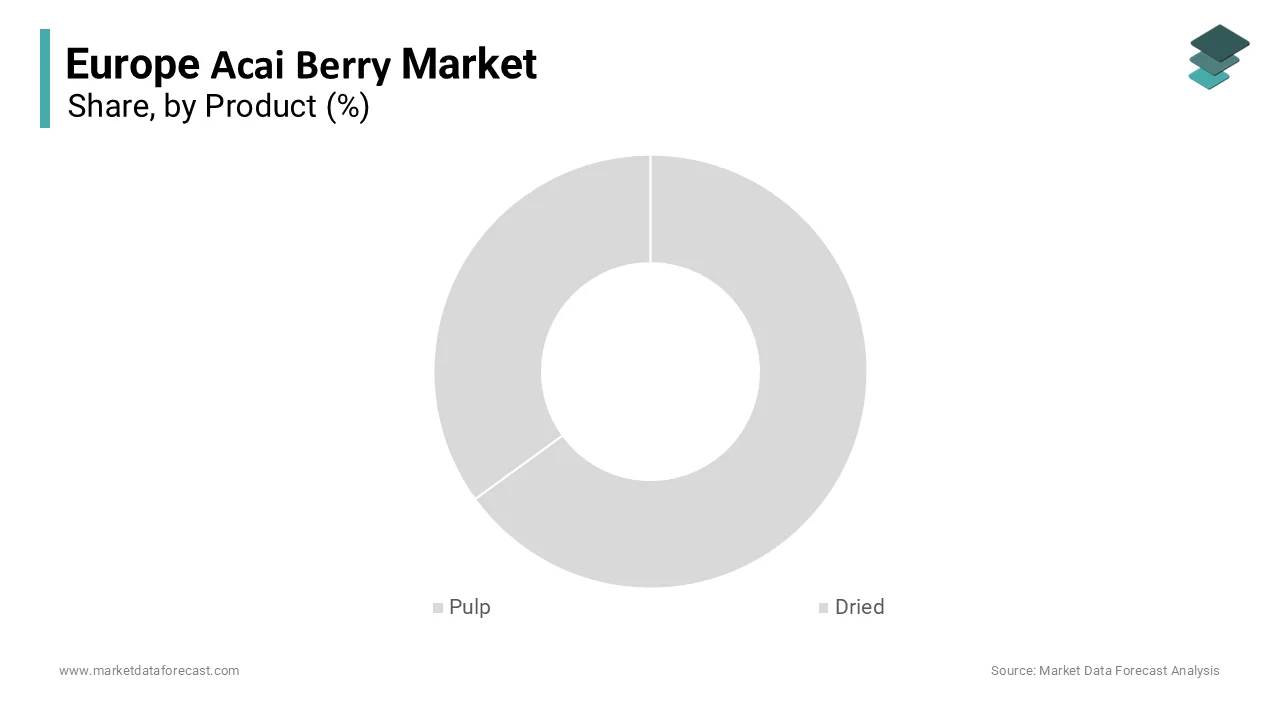
The dried segment is likely to register a CAGR of 11.3% in the coming years with rising popularity of acai powder in dietary supplements, instant beverages, and fortified snacks. Dried acai offers logistical advantages, including longer shelf life, reduced transportation costs, and ease of integration into capsule and tablet manufacturing. Moreover, freeze-drying technology has improved, preserving up to 85% of polyphenols, as demonstrated in research by the German Institute of Food Technologies by enhancing the product’s functional credibility.
By Distribution Channel Insights
The hypermarkets and supermarkets segment was accounted in holding 42.3% of the Europe Acai Berry Market share in 2025 with the extensive shelf space and consumer trust associated with major retail chains such as Carrefour, Tesco, and Edeka. According to Eurostat, over 68% of European households continue to rely on hypermarkets for routine grocery purchases, especially for perishable and premium health items. Additionally, in-store promotions and sampling events organized by brands like Nativa and Sambazon have proven effective in driving trial and repeat purchases.
The online distribution channel is likely to grow with an expected CAGR of 13.6% in the next coming years with the increasing preference for e-commerce platforms such as Amazon, iHerb, and Holland & Barrett’s digital storefront, which offer specialized health products with detailed ingredient transparency. Subscription-based models for superfood deliveries, offered by companies like Naturealm and Superfood UK, have gained traction, particularly among urban professionals.
REGIONAL ANALYSIS
Germany Acai Berry Market Insights
Germany was the top performer in the Europe Acai Berry Market by capturing 18.4% of share in 2025 with its highly developed health food infrastructure and strong consumer awareness of functional nutrition. As per the German Health Food Association, over 52% of adults in Germany regularly consume superfoods, with acai ranking among the top five most recognized. The presence of major organic retailers like Alnatura and Denn’s Biomarkt, which stock a wide range of acai-based products, supports widespread accessibility. Additionally, Berlin and Munich have emerged as hubs for health-focused food startups, many of which incorporate acai into plant-based meal solutions.
United Kingdom Acai Berry Market Insights
The United Kingdom was accounted in holding 16.7% of the Europe Acai Berry Market share in 2025. The UK’s position is bolstered by a mature wellness economy and high penetration of premium health brands in both retail and foodservice. According to the British Nutrition Foundation, 49% of UK consumers actively seek out foods with scientifically backed health benefits by creating fertile ground for acai’s antioxidant narrative. Chains like Itsu and Gourmet Burger Kitchen have integrated acai bowls into their menus, normalizing its consumption beyond niche health circles. Moreover, the UK’s post-Brexit regulatory flexibility has enabled faster approval of novel food imports, facilitating smoother entry for Brazilian-sourced acai.
France Acai Berry Market Insights
France Acai Berry Market growth is anticipated to grow with highest CAGR during the forecast period with a culturally rooted emphasis on natural and gourmet nutrition. French consumers exhibit a strong preference for clean-label, minimally processed ingredients by aligning with acai’s image as a pure, exotic superfood. Parisian juice bars and bio-stores like Naturalia and Biocoop have played a pivotal role in introducing acai to mainstream audiences.
Italy Acai Berry Market Insights
Italy Acai Berry Market growth is driven by a rising convergence of traditional Mediterranean eating patterns with modern functional nutrition. The growth is particularly evident in urban centers like Milan and Rome, where health-conscious millennials are embracing acai bowls and smoothies as part of balanced lifestyles. Italian supplement manufacturers, including Solgar Italia and Erba Vita, have begun incorporating acai into multivitamin complexes targeting oxidative stress.
Sweden Acai Berry Market Insights
Sweden Acai Berry Market growth is significantly growing with its progressive health policies and high digital adoption. Swedish consumers are among the most informed in Europe regarding nutritional science, with 64% consulting health apps or online platforms before purchasing wellness products, as per Statistics Sweden (SCB) in 2023. The country’s robust e-commerce ecosystem enables easy access to niche superfoods, while retailers like Coop and ICA prioritize sustainability and traceability—values that align with ethically sourced acai.
KEY MARKET PLAYERS AND COMPETITIVE LANDSCAPE
AcaiExotic, Acairoots, Nativo Acai, Sambazon, Vision America International, Amazon Forest Trading, Energy Foods International, Organique Acai USA, Tropical Acai, and Zola are some of the major players in the European acai berry market.
The Europe Acai Berry Market is characterized by intensifying competition among specialized superfood brands, organic food manufacturers, and international exporters vying for consumer trust and shelf space. While no single entity dominates, differentiation arises through sourcing ethics, product form, and branding precision. Domestic health retailers and global importers compete on transparency, with an increasing emphasis on fair trade, carbon footprint, and botanical authenticity. The absence of approved EFSA health claims levels the promotional field, pushing companies toward educational content and lifestyle branding. Innovation in packaging, such as compostable pouches and resealable formats, further separates market leaders.
TOP PLAYERS IN THE MARKET
- Sambazon is a pioneering force in the global acai industry and a dominant player in the Europe Acai Berry Market, known for its vertically integrated supply chain from Brazilian Amazon harvesters to European consumers. The company supplies certified organic, fair-trade acai in frozen pulp, powder, and ready-to-drink formats to retailers, foodservice chains, and wellness brands across Europe. Sambazon has strengthened its position by partnering with major organic distributors like Biovea and Algramo, expanding its footprint in Scandinavia and Germany. In the Asia Pacific region, Sambazon supports market development by providing technical expertise in cold-chain logistics and co-developing acai-based beverages with Australian smoothie brands. Recent initiatives include launching carbon-neutral packaging in 2023 and enhancing blockchain traceability for EU compliance, reinforcing its leadership in sustainable superfood sourcing.
- Nativa, a Brazilian-origin brand with strong European distribution, has become a preferred supplier of premium acai pulp and powders to health food manufacturers and retail chains across France, the UK, and the Nordic countries. The company emphasizes ethical sourcing through direct partnerships with Amazonian cooperatives, ensuring income stability for local harvesters while maintaining consistent product quality. In Europe, Nativa has expanded through strategic alliances with organic supermarkets such as Whole Foods Market and Eataly. Its recent investment in EU-based cold storage hubs has improved delivery efficiency and reduced spoilage. In the Asia Pacific market, Nativa contributes by licensing its sourcing model to Australian and Japanese wellness brands seeking authentic Amazonian ingredients. The company also participates in sustainability forums hosted by the Rainforest Alliance by enhancing its reputation as a responsible superfood provider.
- Amazonia Superfoods, headquartered in Australia, has extended its influence into the Europe Acai Berry Market by positioning acai as a core component of its holistic wellness philosophy. The brand offers certified organic acai powders and blends that comply with EU Novel Foods regulations, distributed through e-commerce platforms and health stores in Germany, the Netherlands, and Switzerland. Amazonia differentiates itself through transparent sourcing narratives and educational campaigns on gut and immune health. The company recently launched a pan-European digital campaign in early 2025 to increase consumer awareness of acai’s polyphenol benefits.
TOP STRATEGIES USED BY THE KEY MARKET PLAYERS
Key players in the Europe Acai Berry Market are deploying strategies centered on supply chain transparency, product innovation, and regulatory compliance to consolidate their presence. Companies are investing in blockchain traceability to meet EU sustainability mandates and build consumer trust. Expansion into functional food and premium cosmetics has diversified revenue streams beyond traditional supplements. Strategic partnerships with organic retailers and e-commerce platforms enhance distribution reach. Brands are reformulating products to align with clean-label trends, eliminating additives and emphasizing non-GMO, vegan credentials. Educational marketing campaigns highlight clinical research on antioxidants, improving consumer perception.
Europe Acai Berry Market News
- In February 2025, Amazonia Superfoods introduced a new range of acai-infused functional beverages in the UK and Sweden, targeting the premium wellness segment and leveraging partnerships with fitness studios and organic cafes in the Europe Acai Berry Market.
- In April 2025, Sambazon partnered with the Rainforest Foundation Europe to fund reforestation projects in the Brazilian Amazon, linking every acai purchase to one square meter of protected rainforest, strengthening its sustainability narrative in the Europe Acai Berry Market.
MARKET SEGMENTATION
This research report on the Europe acai berry market has been segmented and sub-segmented into the following categories.
By Application
- Food and Beverages
- Pharmaceuticals
- Dietary Supplements
- Personal Care or Cosmetics
- Other Applications
By Product
- Pulp
- Dried
By Distribution Channel
- Hypermarkets or Supermarkets
- Convenience Stores
- Pharmacies or Drugstores
- Online
- Others
By Country
- UK
- France
- Spain
- Germany
- Italy
- Russia
- Sweden
- Denmark
- Switzerland
- Netherlands
- Turkey
- Czech Republic
- Rest of Europe