- Product Description Description
- Table of Contents TOC
- List of Table & Figure LOT
- Get Free Sample PDF Sample PDF
Market Size, 2025
$1.16 BnMarket Estimate, 2026
$1.23 BnMarket Forecast, 2034
$1.91 BnCAGR, 2026–2034
5.67%Europe Betaine Market Size, Growth, Trends & Forecast (2026–2034)
The Europe betaine market size was calculated to be USD 1.16 billion in 2025, is anticipated to be worth USD 1.23 billion in 2026, and is projected to reach USD 1.91 billion by 2034, registering a compound annual growth rate (CAGR) of 5.67% during the forecast period from 2026 to 2034. Driven by the regional sugar beet processing infrastructure, antibiotic-free livestock regulations, and surging demand for sulfate-free personal care and clean-label nutrition formulations, the market continues to experience steady structural expansion.
Key Executive Metrics (At-a-Glance)
- 2025 Base Valuation: USD 1.16 Billion
- 2026 Current Valuation: USD 1.23 Billion
- 2034 Forecast Valuation: USD 1.91 Billion
- Compound Annual Growth Rate (CAGR): 5.67% (2026–2034)
- Dominant Type Segment: Natural Betaines (holding the majority share in 2025 anchored by sugar beet co-product extraction and the EU Farm to Fork Strategy)
- Fastest-Growing Type Segment: Synthetic Betaines (projected at a 6.2% CAGR driven by high-purity, scalability, and consistent industrial/detergent performance)
- Dominant Form Segment: Betaine Monohydrate (capturing a 59.5% market share in 2025 supported by animal feed efficiency and European Pharmacopoeia compliance)
- Fastest-Growing Form Segment: Cocamidopropyl Betaine (projected at a 7.8% CAGR propelled by clean beauty trends and sulfate-free personal care formulations)
- Dominant Application Segment: Animal Feed (capturing a 52.1% market share in 2025 driven by post-antibiotic growth promoter performance and heat stress management)
- Fastest-Growing Application: Personal Care (projected at an 8.1% CAGR driven by mild surfactants, biodegradable ingredients, and male grooming trends)
- Dominant Region / Country: Germany (top market performer accounting for 18.5% share in 2025 backed by large livestock scales and specialty chemical manufacturing)
Core Market Drivers
- Antibiotic-Free Livestock Standards: Regulatory pressures restricting antimicrobial growth promoters, elevating betaine as an essential osmoregulator and performance enhancer.
- Clean Label & Functional Foods: Shifting consumer preferences toward plant-derived ingredients and metabolic health supplements.
Primary Market Restraints & Challenges
- Sugar Beet Crop Volatility: Climate-driven weather variations impacting harvest volumes and tightening co-product raw material availability.
- Regulatory Authorization Hurdles: Strict EU approval mechanisms under Regulation EC No 1831/2003 delaying innovative feed additive market entries.
Europe Betaine Market Segmentation Breakdown
| Segment Category | Largest (Dominant) Sub-Segment | Fastest-Growing Sub-Segment |
|---|---|---|
| By Type | Natural Betaines (Dominant share in 2025 supported by sugar beet processing infrastructure and clean label preferences) | Synthetic Betaines (Fastest-growing at a 6.2% CAGR driven by high purity, consistent year-round supply, and industrial/detergent utility) |
| By Form | Betaine Monohydrate (59.5% share in 2025 anchored by cost-effectiveness, pellet stability, and animal feed prevalence) | Cocamidopropyl Betaine (Fastest-growing at a 7.8% CAGR propelled by clean beauty, foaming efficiency, and sulfate-free cosmetics) |
| By Application | Animal Feed (52.1% share in 2025 driven by post-antibiotic feed conversion efficiency and stress management) | Personal Care (Fastest-growing at an 8.1% CAGR driven by mild surfactants, biodegradability, and premium grooming trends) |
| By Region / Country | Germany (18.5% share in 2025 backed by advanced livestock industries and a heavy chemical manufacturing base) | Spain / Netherlands (Dynamic markets advancing via climate-stressed aquaculture/livestock sectors and stringent environmental laws) |
Major Industry Players Profiled
Key enterprises shaping the competitive European betaine market include BASF SE, Amino GmbH, Associated British Foods plc, Nutreco NV, DowDupont Inc., American Crystal Sugar Company, Solvay SA, Stepan Company, Kao Corporation, Sunwin Chemicals Co. Limited, Cosun Beet Company, and Evonik Industries.
Europe Betaine Market Size
The Europe Betaine Market size was calculated to be USD 1.16 billion in 2025 and is anticipated to be worth USD 1.91 billion by 2034, growing from USD 1.23 billion in 2026 at a CAGR of 5.67% during the forecast period.
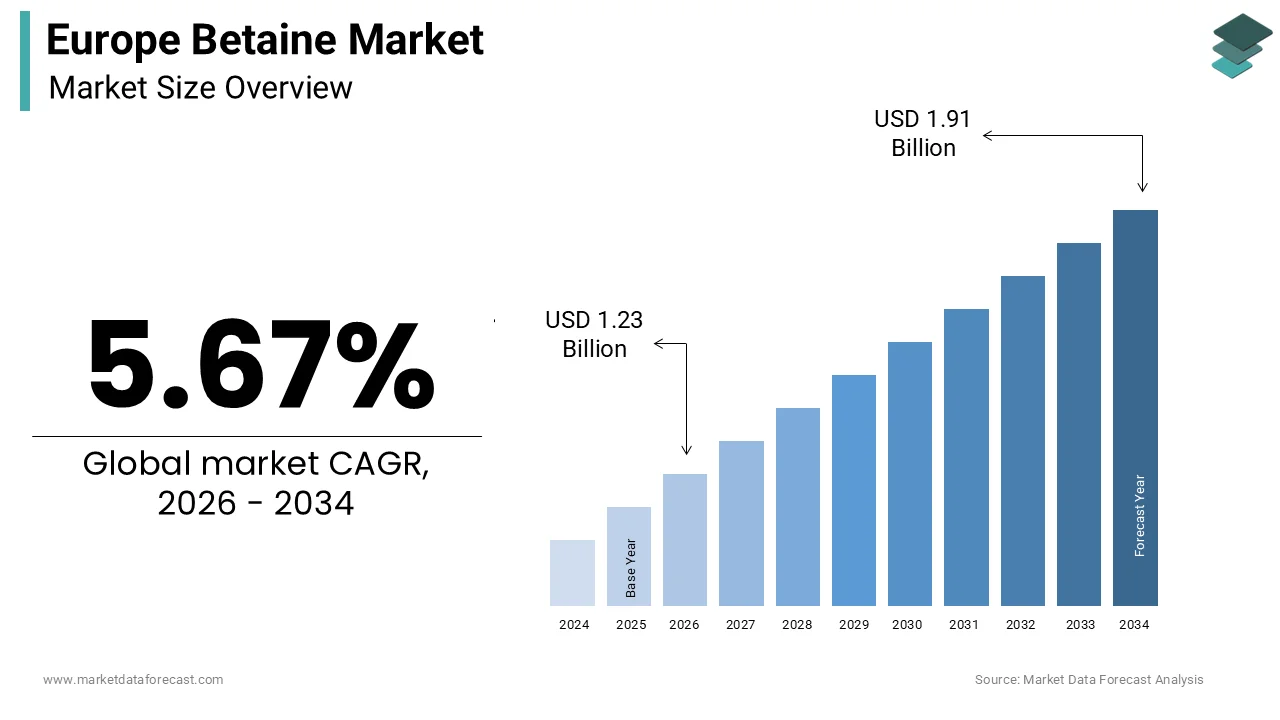
Betaine, chemically known as trimethylglycine, is a naturally occurring compound primarily derived from sugar beet processing and widely utilized across animal nutrition, human dietary supplements, and industrial applications. Functioning as both an osmoprotectant and a methyl donor, betaine supports metabolic efficiency, gut integrity, and stress resilience in livestock while also contributing to cardiovascular and liver health in humans. The European regulatory environment, particularly the long-standing ban on antibiotic growth promoters in animal feed since 2006, has cemented betaine’s role as a key natural performance enhancer. The strength of the European sugar beet industry provides a consistent and abundant source of raw materials, ensuring a reliable supply for the extraction of natural betaine to meet rising feed industry demand. Betaine’s origins as a co-product, combined with its high biodegradability, make it a key, eco-friendly component aligned with EU green transition objectives within modern agroindustrial policies.
MARKET DRIVERS
Rising Demand for Antibiotic-Free Livestock Production
The European livestock sector’s accelerated shift toward antibiotic-free production systems has significantly intensified demand for functional feed additives, which in turn contributes to the growth of the Europe betaine market. The European Medicines Agency, through ongoing surveillance, has confirmed that reducing the use of antibiotics in farmed animals directly correlates with a decrease in antimicrobial resistance in both animals and humans, reinforcing the Farm to Fork Strategy’s goal to drastically cut agricultural antibiotic reliance. Betaine meets this need by improving feed efficiency, supporting intestinal health, and mitigating heat stress without pharmacological intervention. Research, including studies within European agricultural research frameworks, has demonstrated that supplementing broiler feed with betaine during periods of intense heat helps maintain intestinal integrity, boosts growth performance, and increases survival rates compared to non-supplemented birds. Additionally, the German Federal Institute for Risk Assessment has indicated that including betaine in swine diets optimizes nitrogen metabolism, which reduces ammonia production in manure, supporting compliance with European Union directives aimed at reducing atmospheric pollution from farming. These multifaceted benefits make betaine a critical tool in aligning livestock productivity with regulatory and environmental mandates.
Expansion of Functional Food and Clean Label Trends
Consumer-driven demand for clean label and science-backed functional ingredients has fuelled the expansion of the Europe betaine market. This has expanded betaine’s role in Europe’s human nutrition sector. As a natural compound supporting liver function and homocysteine metabolism, betaine is increasingly incorporated into sports drinks, dietary supplements, and metabolic health products. Scientific bodies have found evidence supporting specific health benefits for betaine in managing homocysteine levels, following a review of numerous submissions over the past decade. Regulatory updates in Europe now permit the inclusion of betaine derived from sugar beets in energy products and supplements, removing earlier restrictions on its use. The use of betaine in sports nutrition products has grown in several European markets, according to industry observers. A growing preference for natural ingredients among European consumers is driving the replacement of synthetic alternatives with plant-based betaine in bakery and convenience products. This convergence of regulatory acceptance and consumer preference is driving consistent innovation in betaine-fortified food and beverage portfolios.
MARKET RESTRAINTS
Volatility in Sugar Beet Crop Yields Threatens Raw Material Consistency
The region’s reliance on sugar beet as the dominant feedstock for natural betaine creates significant supply chain vulnerability due to climate induced agricultural instability, which hampers the growth of the Europe betaine market. Betaine is recovered as a co-product during sugar refining, making its availability directly contingent on beet harvest volumes. Extended dry weather conditions in parts of Europe have historically impacted sugar beet productivity relative to established averages. Reduced output in major producing areas has contributed to tighter supplies of processed beet products and increased prices. Changing climate patterns indicate a potential long-term northward shift in suitable regions for sugar beet cultivation, which could necessitate changes to established logistics and processing infrastructure. The removal of previous production quotas has introduced greater market volatility, influencing farming decisions in certain areas. Europe’s reliance on traditional agriculture for betaine leaves the supply chain exposed to policy and environmental disruptions, creating planning uncertainties unless alternative routes are developed.
Stringent Regulatory Classification of Feed Additives Slows Market Entry
The European Union’s exhaustive authorization process for feed additives under Regulation EC No 1831 2003 hinders the expansion of the Europe betaine market. This is a formidable barrier to innovation and market diversification in the betaine sector. The regulatory process for evaluating feed additives involves a comprehensive assessment that focuses on safety, effectiveness, and ecological consequences. Navigating the authorization sequence generally demands a significant investment of time and financial resources for each submission. A noticeable downward trend has emerged in the number of newly approved applications compared to previous periods. This decline suggests a combination of more rigorous oversight and a potential shift in the level of certainty among those seeking approval. The overall environment for bringing new products to market appears to be becoming more demanding for stakeholders. Betaine sourced from non-traditional origins, such as microbial fermentation or non-beet botanicals, faces additional hurdles in proving bioequivalence to conventional beet-derived material. This barrier not only delays market responsiveness but also discourages investment in next-generation betaine formats with enhanced delivery or stability, thereby constraining the market’s ability to evolve alongside nutritional science.
MARKET OPPORTUNITIES
Growing Integration of Betaine in Precision Livestock Farming Systems
The digital transformation of the regional agriculture is opening advanced deployment models for betaine through precision livestock farming, which provides new opportunities for the growth of the Europe betaine market. Automated feeding systems equipped with environmental and physiological sensors now enable real-time nutrient modulation based on individual animal needs. Betaine’s role in osmoregulation and heat stress mitigation makes it particularly valuable in this context. Large-scale dairy operations in certain European regions are increasingly adopting digital management platforms to optimize feed strategies based on environmental factors. These digital systems enable the precise adjustment of feed components, such as adding specific nutrients, in response to rising ambient temperatures that typically impact feed consumption. Integrating adaptive, algorithm-driven nutrition strategies during warmer periods appears to support consistent milk production levels in dairy herds compared to traditional, static feeding approaches. Initiatives are exploring the use of tracking technologies to connect nutritional adjustments with environmental reporting metrics, aligning with broader sustainability frameworks. This data-driven integration not only enhances animal performance but also quantifies betaine’s contribution to emission reduction, creating new value propositions beyond traditional nutrition.
Emergence of Circular Economy Initiatives in Agroprocessing Unlocks New Betaine Streams
The region’s commitment to a circular bioeconomy is causing innovative recovery pathways that transform betaine from a residual byproduct into a high-value biorefinery output, which is expected to propel the expansion of the Europe betaine market. Numerous agroindustrial facilities throughout Europe are increasingly testing advanced technologies to extract valuable compounds from previously underutilized biomass. Pilot projects have demonstrated the feasibility of reclaiming specific compounds from bioethanol byproducts. Research institutions have developed specialized filtration processes to recover high-purity compounds from wastewater streams. Scaling these circular methods holds the potential to significantly increase the European supply of these compounds without requiring additional agricultural land. These advances align with the EU Industrial Emissions Directive, which offers regulatory incentives for zero liquid discharge facilities. Integrating betaine recovery into a circular, resource-efficient framework drives sustainability while enhancing the economic resilience of processing operations.
MARKET CHALLENGES
Price Competition from Synthetic and Asian Sourced Betaine Undermines Local Producers
European producers of natural betaine face intensifying cost pressure from synthetic alternatives and imports from Asia, which challenge the growth of the Europe betaine market. In these regions, lower environmental compliance costs and energy subsidies enable aggressive pricing. The market shows a price difference between synthetic and EU-derived natural betaine, impacting competitiveness in price-sensitive areas like aquaculture and standard feed. Although EU regulations distinguish betaine origin, inconsistent online platform monitoring can result in ambiguous sourcing information. Changes in trade measures for Chinese imports led to a significant increase in betaine entering the market. This increased supply has tightened profit margins, causing some European processors to temporarily stop production. Europe’s natural betaine industry faces potential marginalization due to a lack of harmonized sustainability standards and trade safeguards, especially in sectors where cost-cutting overshadows performance.
Limited Clinical Endorsement for Human Health Applications Constrains Premium Market Growth
Betaine’s expansion into high value human health landscape in the region is hindered by insufficient clinical validation under EU scientific standards, which constrains the expansion of the Europe betaine market. Regulatory bodies have not supported the use of betaine for managing non-alcoholic fatty liver disease, citing a need for larger, independent, randomized controlled trials. Recent reviews have noted a limited number of adequately powered human studies on betaine and hepatic steatosis. Existing studies on betaine for this condition have been characterized by industry funding and a high risk of bias. Consequently, permitted health claims remain restricted to homocysteine metabolism, excluding broader metabolic or liver health positioning available in other regions. As per sources, only a portion of betaine supplement launches in the EU featured liver health messaging, versus tthosein North America. This regulatory caution deters investment from major nutraceutical and pharmaceutical firms seeking substantiated ingredients. Betaine's human health potential in Europe will be underexploited and lose market share to competitors like omega-3 fatty acids or silymarin without strong public-private funding for clinical research.
REPORT COVERAGE
| REPORT METRIC | DETAILS |
| Market Size Available | 2025 to 2034 |
| Base Year | 2025 |
| Forecast Period | 2026 to 2034 |
| CAGR | 5.67% |
| Segments Covered | By Type, Form, Application, And Region |
| Various Analyses Covered | Global, Regional & Country Level Analysis; Segment-Level Analysis; DROC, PESTLE Analysis; Porter’s Five Forces Analysis; Competitive Landscape; Analyst Overview of Investment Opportunities |
| Regions Covered | UK, France, Spain, Germany, Italy, Russia, Sweden, Denmark, Switzerland, Netherlands, Turkey, and the Czech Republic |
| Market Leaders Profiled | BASF SE, Amino GmbH, Associated British Foods plc, Nutreco NV, DowDupont Inc, American Crystal Sugar Company, Solvay SA, Stepan Company, Kao Corporation, and Sunwin Chemicals Co. Limited |
SEGMENTAL ANALYSIS
By Type Insights
The natural betaine segment held the majority share of the Europe betaine market in 2025. The supremacy of the natural betaine segment is attributed to regulatory preferences, consumer demand for plant-derived ingredients, and Europe’s established sugar beet processing infrastructure. The European Union’s Farm to Fork Strategy explicitly encourages the use of naturally sourced feed additives as part of its antimicrobial reduction agenda, creating a favorable policy environment for natural betaine. Major sugar beet processing nations in the EU generate significant quantities of natural betaine as a co-product during the sugar refining process. Additionally, the European Food Safety Authority recognizes natural betaine from sugar beet as a safe ingredient for both animal and human use, facilitating cross-sector adoption. Clean label trends further reinforce this preference. Increasing consumer preference for natural ingredients in Western Europe is driving manufacturers across the food, feed, and personal care sectors to favor plant-derived additives, such as natural betaine, despite premium pricing.
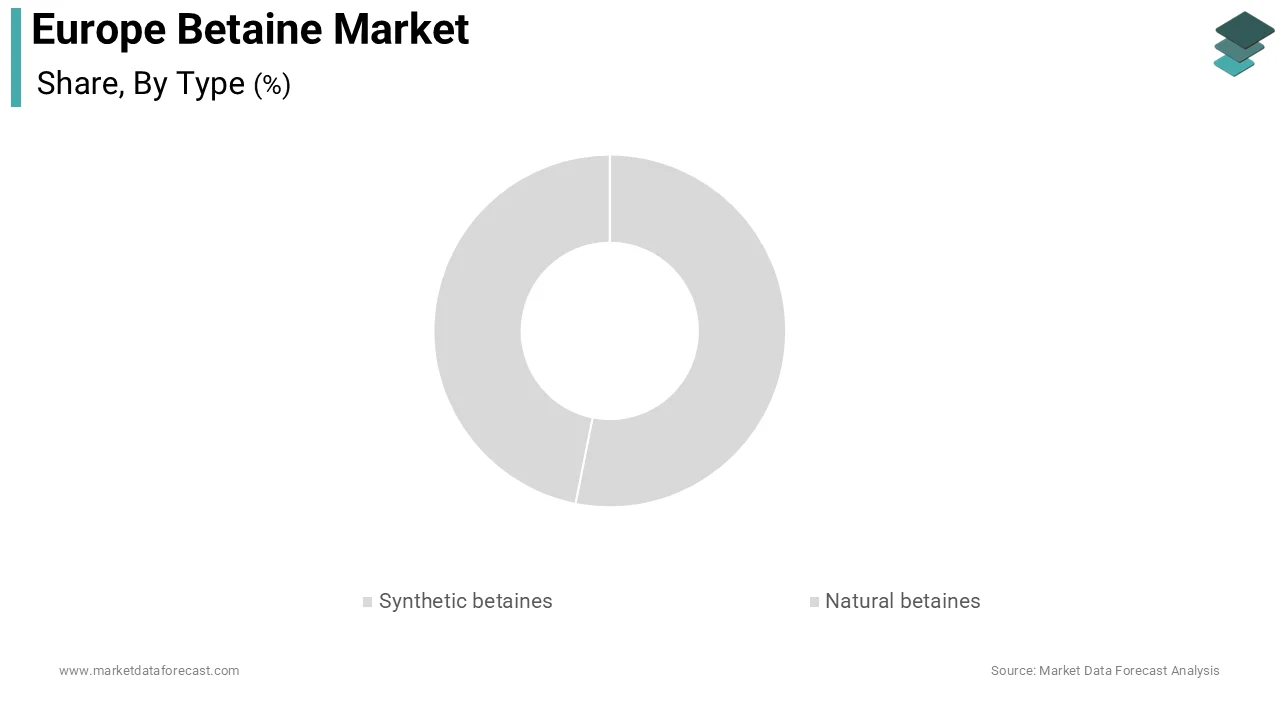
The synthetic betaine segment is estimated to register the fastest CAGR of 6.2% between 2026 and 2034 due to rising demand in industrial and specialty applications where purity, consistency, and scalability outweigh origin concerns. Synthetic betaine is frequently selected within the cosmetics and personal care sector for its high purity profile, which complies with stringent safety regulations. The European Detergent Association indicates that synthetic betaine is a primary choice for eco-labeled dishwashing liquids due to its foaming stability and biodegradability in hard water conditions. The preference for synthetic betaine in both sectors appears driven by its consistent performance characteristics and safety standards. Additionally, synthetic routes, primarily from chloroacetic acid and trimethylamine, offer agricultural volatility, providing a reliable year-round supply. This reliability is increasingly valued by manufacturers in Central and Eastern Europe, where just-in-time production models dominate. The growing complexity in high-performance products highlights synthetic betaine as the go-to ingredient, thanks to its consistent quality and absence of plant-derived impurities.
By Form Insights
The betaine monohydrate segment led the Europe betaine market by holding a 59.5% in 2025. The prominence of the betaine monohydrate segment is attributed to its cost-effectiveness, stability, and widespread acceptance in animal nutrition, the region’s single largest application area. The compound’s high solubility and osmoprotective efficacy make it ideal for inclusion in pelleted and mash feed formulations without compromising shelf life. The regulatory framework indicates a high volume of approved products containing the monohydrate form, suggesting a mature status in that sector. Production processes allow for the utilization of sugar beet refinery infrastructure, which facilitates direct crystallization. The compatibility with established drying and packaging systems supports the prevalence of the monohydrate form in the market. In human nutrition, betaine monohydrate is the preferred form in dietary supplements for homocysteine management, as it aligns with the specifications recognized in the European Pharmacopoeia. This dual utility across feed and health sectors, combined with established production economics, solidifies its market dominance.
The cocamidopropyl betaine segment is anticipated to witness the fastest CAGR of 7.8% over the forecast period, owing to the clean beauty movement and reformulation efforts to replace sulfates and other harsh surfactants in rinse-off products. Derived from coconut oil and dimethylaminopropylamine, cocamidopropyl betaine functions as a mild amphoteric surfactant that enhances foam volume, viscosity, and skin compatibility. Regulatory bodies continue to evaluate the safety of surfactants, with evaluations supporting the ongoing use of cocamidopropyl betaine in various cosmetic applications. Formulators in the Western European market are increasingly adopting sulfate-free, cocamidopropyl betaine-based formulas for new shampoo and shower gel products. Industry sustainability initiatives and product standards highlight the use of cocamidopropyl betaine due to its favorable environmental profile and biodegradation properties. These regulatory and consumer tailwinds position cocamidopropyl betaine as the cornerstone of next-generation personal cleansing formulations.
By Application Insights
The animal feed segment dominated the Europe betaine market by capturing a 52.1% share in 2025. The dominance of the animal feed segment is driven by betaine’s irreplaceable role in enhancing nutrient utilization and mitigating environmental stressors in intensive livestock systems. With the EU banning antibiotic growth promoters in 2006, betaine emerged as a key alternative for improving feed conversion ratios and gut health. Research indicates that incorporating betaine into broiler diets can help mitigate water loss and potentially enhance breast meat yield during periods of high environmental temperature. Aquaculture practices have shown a trend toward increasing betaine inclusion in salmon and trout feeds, particularly as a method to assist with osmotic challenges in recirculating systems. Efforts to align with environmental regulations regarding nitrogen and ammonia emissions have encouraged the inclusion of betaine in livestock diets. Studies suggest that adding betaine to pig feed can result in lower urinary nitrogen excretion, which supports compliance with emission reduction targets. This confluence of performance, regulatory, and sustainability drivers ensures animal feed remains the bedrock of European betaine consumption.
The personal care segment is likely to experience the fastest CAGR of 8.1% from 2026 to 2034. The rapid expansion of the personal care segment is propelled by escalating consumer demand for mild, biodegradable, and plant-derived surfactants in daily hygiene products. Betaine variants, particularly cocamidopropyl betaine, serve as primary foam enhancers and viscosity modifiers in sulfate-free shampoos, facial cleansers, and baby washes. Regulatory bodies have updated the classification of certain betaine derivatives, suggesting they are considered less likely to cause skin sensitization, which supports their continued use by formulators. Market observations indicate that a significant number of new personal cleansing products in key European regions are highlighting mildness and skin-friendly attributes, with betaine frequently appearing as a featured ingredient. The adoption of these ingredients is supported by environmental standards that favor biodegradable surfactants, a category that includes common betaine forms. Additionally, rising male grooming and premium skincare trends in Southern Europe have expanded betaine’s use beyond rinse-off products into micellar waters and toners, where its humectant properties improve hydration. This blend of safety, sustainability, and multifunctionality drives personal care to the forefront of betaine innovation.
SEGMENTAL ANALYSIS
Germany Betaine Market Analysis
Germany was the top performer in the Europe betaine market by accounting for a 18.5% share in 2025. The leading position of the German market is fuelled by its advanced animal nutrition sector, robust chemical manufacturing base, and stringent regulatory compliance culture. Germany is home to Europe’s largest pig and poultry industries, which collectively consume millions of metric tons of compound feed annually, as per sources. This scale drives consistent demand for high-performance feed additives like betaine, particularly in heat stress management during summer months. Additionally, Germany hosts major specialty chemical producers such as Evonik and BASF, which supply high-purity betaine for cosmetics, detergents, and pharmaceutical applications. As per research, a notable share of sulfate-free shampoos sold domestically contains cocamidopropyl betaine, reflecting strong consumer preference for mild formulations. The country’s dual focus on agricultural efficiency and green chemistry creates a fertile environment for betaine innovation across multiple sectors, cementing its position as Europe’s betaine epicenter.
France Betaine Market Analysis
France followed closely in the Europe betaine market by capturing a 16.2% share in 2025. This prominence of the French market is driven by its status as the EU’s top sugar beet producer, harvesting millions of metric tons according to sources. French beet refineries, concentrated in the northern regions of Hauts de France and Grand Est, recover betaine as a co-product during sugar crystallization, supplying thousands of metric tons annually of natural betaine to domestic and export channels. The French Agency for Food, Environmental and Occupational Health and Safety has long endorsed betaine as a safe feed additive, facilitating its integration into national livestock protocols. Moreover, French cosmetics houses such as L’Oréal and Pierre Fabre prioritize plant-derived betaine in clean beauty lines, aligning with national consumer preferences. This synergy between agricultural scale and formulation ethics solidifies France’s role as Europe’s natural betaine stronghold.
United Kingdom Betaine Market Analysis
The United Kingdom holds a notable share of the Europe betaine market. Despite its post Brexit regulatory divergence, the UK maintains rigorous feed and food safety standards that align closely with EU principles, ensuring continued betaine adoption in high-value applications. The UK’s livestock sector, particularly its dairy and poultry industries, relies heavily on betaine to maintain productivity amid rising climate volatility. The inclusion of betaine in poultry diets is becoming more prevalent to support animal welfare during periods of environmental stress. The personal care and pharmaceutical industries are increasingly utilizing high-purity betaine due to its functional properties in skincare applications. There is a notable trend toward incorporating soothing agents in new beauty product formulations. Changes in regulatory environments have enabled more streamlined processes for the approval of certain additives. This blend of climate adaptation needs, formulation sophistication, and regulatory agility positions the UK as a dynamic and responsive betaine market.
Netherlands Betaine Market Analysis
The Netherlands is steadily expanding in the Europe betaine market due to the country’s world-leading dairy and pig sectors, which operate under some of Europe’s strictest environmental regulations. Dutch farms are required to comply with the National Programme for Sustainable Livestock. Betaine plays a critical role in this strategy. Research indicates that incorporating specific nutritional additives into animal feed can result in lower levels of urinary nitrogen output, which subsequently helps to decrease ammonia volatilization. The adoption of sensor-based technology is increasing among large livestock operations, enabling more precise management of animal nutrition. Policy frameworks are encouraging the repurposing of agricultural byproducts, such as sugar processing co-products, to create valuable feed components. This integration of betaine into national sustainability and digital farming agendas ensures its continued centrality in Dutch agroindustry.
Spain Betaine Market Analysis
Spain is predicted to expand in the Europe betaine market over the forecast period owing to escalating climate stress on livestock and rapid expansion of aquaculture along the Mediterranean and Atlantic coasts. Agricultural regions in Spain frequently encounter extended periods of intense heat, which creates challenging conditions for poultry and swine production. These elevated temperatures often lead to reduced feed consumption and slower growth rates in livestock. Research suggests that incorporating specific dietary supplements, such as betaine, can enhance feed efficiency in broilers during warmer periods. This performance improvement has led to the increased adoption of certain additives in commercial feed formulations. Spain maintains a significant position in European aquaculture, producing a substantial amount of fish and shellfish. Betaine is essential in marine feed formulations to support osmoregulation in species like sea bream and sea bass, particularly in recirculating aquaculture systems where salinity fluctuates. This dual demand from climate-resilient livestock and expanding aquaculture secures Spain’s position as a high-growth betaine market in Southern Europe.
COMPETITION OVERVIEW
Competition in the Europe Betaine Market is characterized by a mix of specialized agrochemical refiners and global specialty chemical manufacturers. Natural betaine producers compete on traceability, agricultural integration, and sustainability credentials while synthetic betaine suppliers emphasize purity, consistency, and regulatory compliance. The market features moderate consolidation with players differentiating through application expertise, technical service,s and innovation in delivery formats. Regulatory complexity under the EU feed and cosmetic frameworks creates high entry barriers, favoring established firms with robust compliance capabilities. Price competition remains intense, particularly from Asian imports, prompting European producers to highlight origin transparency and environmental performance. Collaboration with research bodies and participation in EU-funded bioeconomy projects further distinguish market leaders. Overall, competition centers less on cost and more on scientific validation, sustainability narratives, and cross-sector adaptability across animal nutrition, human health, and green chemistry domains.
KEY MARKET PLAYERS
A few major players of the Europe betaine market include
- BASF SE
- Amino GmbH
- Associated British Foods plc
- Nutreco NV
- DowDupont Inc
- American Crystal Sugar Company
- Solvay SA
- Stepan Company
- Kao Corporation
- Sunwin Chemicals Co. Limited
Top strategies used by the key market participants
Key players in the Europe Betaine Market focus on vertical integration to secure raw material supply, particularly from sugar beet processing facilities. They invest heavily in research and development to validate betaine’s efficacy in emerging applications such as precision livestock nutrition and clean-label personal care. Companies pursue sustainability certifications and circular economy initiatives to align with EU regulatory and consumer expectations. Strategic collaborations with academic institutions and industry consortia help generate credible scientific data for health and environmental claims. Additionally, firms expand their technical service networks to offer formulation support and digital tools that enhance customer adoption and product differentiation in competitive segments.
Leading Players in the Market
- Cosun Beet Company is a leading European producer of natural betaine derived from sugar beet processing. Headquartered in the Netherlands, the company leverages its integrated beet refining infrastructure to supply high-purity betaine for animal nutrition and human health applications across Europe and beyond. In recent years, Cosun has invested in sustainability-driven innovations, including the SMARTBEET initiative, which enhances betaine recovery efficiency while reducing water and energy use. The company also collaborates with research institutions to validate betaine’s role in emission reduction, supporting the EU’s Green Deal objectives. These actions reinforce its position as a trusted supplier of circular economy-aligned betaine solutions in global markets.
- Evonik Industries is a German specialty chemicals giant with a significant footprint in the synthetic betaine segment. The company produces high-purity betaine variants for use in cosmetics, detergents, and personal care formulations under stringent quality controls. Evonik has strengthened its market presence by expanding its Care Solutions portfolio with sulfate-free and biodegradable surfactant systems centered on betaine derivatives. Its commitment to green chemistry and regulatory compliance enables it to serve premium global markets demanding safe and sustainable ingredients.
- DuPont operates in the Europe betaine market through its Nutrition and Biosciences division, supplying betaine for feed and food applications. The company emphasizes scientific validation and application development, supporting customers with tailored dosage and delivery solutions. Recently, DuPont enhanced its technical service capabilities by integrating betaine into digital feed formulation platforms that optimize animal performance under climate stress. It also partners with European livestock integrators to demonstrate betaine’s impact on nitrogen efficiency and meat quality. These initiatives underscore DuPont’s strategy of combining nutritional science with digital tools to reinforce its relevance in sustainable agriculture and human wellness sectors globally.
MARKET SEGMENTATION
This research report on the Europe betaine market has been segmented and sub-segmented based on type, form, application, and region.
By Type
- Synthetic betaines
- Natural betaines
By Form
- Betaine Monohydrate
- Betaine Anhydride
- Cocamidopropyl Betaine
By Application
- Food and beverage
- Detergents
- Animal feed
- Cosmetics
- Personal care
By Region
- UK
- France
- Spain
- Germany
- Italy
- Russia
- Swede
- Denmark
- Switzerland
- Netherland
- Turkey
- Czech Republic
- Rest of Europe