- Product Description Description
- Table of Contents TOC
- List of Table & Figure LOT
- Get Free Sample PDF Sample PDF
Market Size, 2025
$14.95 BnMarket Estimate, 2026
$16.88 BnMarket Forecast, 2034
$44.55 BnCAGR, 2026–2034
12.9%Europe Biomarkers Market Summary
Europe’s biomarkers market, valued at USD 14.95 billion in 2025, is projected to reach USD 44.55 billion by 2034, growing at a CAGR of 12.9% driven by precision oncology mandates, IVDR-backed diagnostic validation, and rapid expansion of liquid biopsy and multi-omics testing.
Market Snapshot
- 2025 Market Size: USD 14.95 billion
- 2026 Market Size: USD 16.88 billion
- 2034 Forecast: USD 44.55 billion
- CAGR (2026–2034): 12.9%
- Base Year: 2025
- Forecast Period: 2026–2034
Quick Growth Drivers
- Mandatory biomarker testing in national oncology pathways
- Rising adoption of precision medicine and targeted therapies
- Strong regulatory credibility under EU IVDR (2017/746)
- Growth in liquid biopsy, ctDNA, and blood-based biomarkers
- EU-funded programs supporting genomics, proteomics, and multi-omics
Principal Restraints
- Lengthy and expensive IVDR certification timelines
- Limited notified body capacity delaying CE approvals
- Fragmented reimbursement policies across EU member states
- High compliance burden for small biotech and academic spin-offs
High-Value Opportunities
- Expansion of liquid biopsy for early cancer detection and monitoring
- Adoption of multi-omics panels in neurology and autoimmune diseases
- Integration of AI-powered biomarker interpretation software
- National investments in population-scale genomic screening
Key Market Challenges
- Inadequate EHR and LIS integration for biomarker data
- Shortage of trained molecular pathologists and bioinformaticians
- Lack of harmonized EU-wide reimbursement frameworks
- Slow clinical translation of novel biomarkers beyond oncology
Fastest-Growing Segments
- Software & AI Biomarker Platforms: 15.5% CAGR
- Neurological Biomarkers: 17.4% CAGR
- Safety Biomarkers: 12.2% CAGR driven by drug development
Regional Leadership & Dynamics
- Germany (25.9%) — national cancer genomics mandate, strong reimbursement
- France — centralized genomic platforms under Plan France Médecine Génomique
- United Kingdom — NHS Genomic Medicine Service and early detection trials
- Netherlands — data-driven HTA, liquid biopsy leadership
- Italy — expanding NGS adoption through regional precision medicine hubs
What Wins Commercially
- Full IVDR-compliant biomarker portfolios
- Companion diagnostics aligned with targeted therapies
- Scalable NGS and liquid biopsy workflows
- Strong real-world evidence and registry participation
- Seamless integration into national precision medicine programs
Top Strategic Ask for Executives
Invest in IVDR-ready liquid biopsy platforms, AI-driven biomarker software, and workforce enablement to capture Europe’s shift from single-gene testing to population-scale, multi-omics precision diagnostics.
Leading Players
Some of the companies that are playing a dominating role in the Europe biomarkers market include:
- Roche Diagnostics GmbH
- Qiagen N.V.
- Thermo Fisher Scientific Inc.
- Bio-Rad Laboratories
- PerkinElmer, Inc.
- Merck & Co., Inc.
Europe Biomarkers Market Size
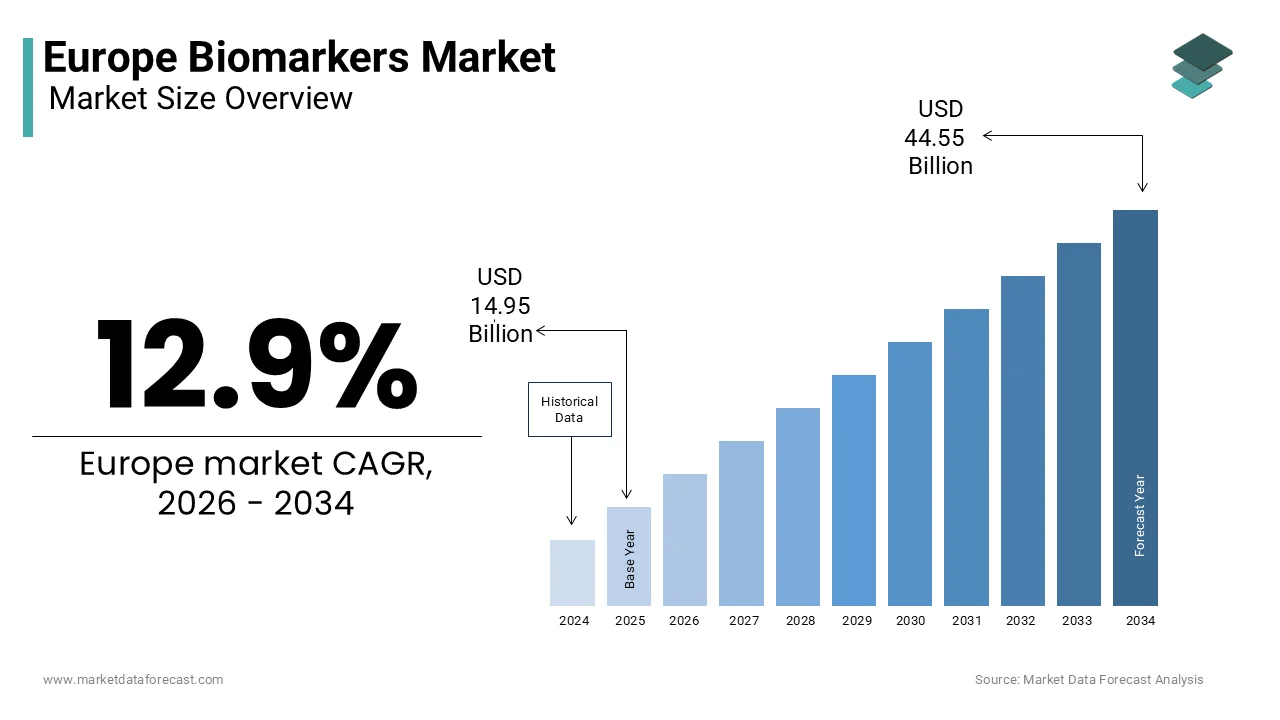
The europe biomarkers market was valued at USD 14.95 billion in 2025, is expected to have 12.9 % CAGR from 2026 to 2034, and be worth USD 44.55 billion by 2034 from USD 16.88 billion in 2026.
Biomarkers include measurable biological molecules such as proteins, genes, metabolites, and immune markers that indicate normal or pathological processes and are used to guide diagnosis, prognosis, treatment selection, and therapeutic monitoring across oncology, neurology, cardiovascular, and autoimmune diseases. Unlike generic diagnostics, biomarkers in the European context are rigorously validated under the EU In Vitro Diagnostic Medical Devices Regulation (IVDR) 2017/746, which demands robust clinical evidence for analytical and clinical validity. The market is propelled by Europe’s aging population, rising burden of chronic diseases, and institutional commitment to precision medicine. As per Eurostat, 21.3% of the EU population was aged 65 or older in 2025, a demographic at elevated risk for cancer and neurodegenerative conditions where biomarker guided care is critical. Concurrently,biomarker-guidedmmission’s 2023 Mission on Cancer allocated over 1.25 billion euros to advance early detection and personalized therapy, with biomarker validation as a central pillar. National initiatives such as France’s Plan France Médecine Génomique 2025 and Germany’s National Decade Against Cancer have established genomic and proteomic screening infrastructures across numerous academic medical centers. This convergence of demographic pressure, regulatory rigor, and policy driven innovation defines a market where bpolicy-driven not ancillary tests, but foundational tools in Europe’s transition toward predictive, preventive, and personalized healthcare.
MARKET DRIVERS
Integration of Biomarker Testing into National Precision Oncology Programs
Europe’s national cancer strategies have institutionalized biomarker testing as a mandatory step in oncology care pathways, which is directly driving demand across public healthcare systems and is majorly propelling the growth of the European biomarkers market. As per the European Society for Medical Oncology, most EU member states now require biomarker profiling for non-small cell lung cancer, melanoma, and colorectal cancer before initiating targeted or immunotherapy. France’s Plan France Médecine Génomique 2025 has established genomic medicine platforms capable of processing large volumes of tumor samples annually, with mandatory testing for EGFR, ALK, ROS1, and PD-L1 biomarkers. Similarly, Germany’s National Decade Against Cancer mandates that advanced solid tumors undergo molecular profiling, with statutory health insurance covering comprehensive genomic panels since 2023. The UK’s National Health Service now reimburses next-generation sequencing for multiple cancer types through its Genomic Medicine Service, processing a significant number of samples in 2025. This policy-driven standardization transforms biomarker testing from optional to essential to ensure consistent and growing demand across Europe’s publicly funded oncology infrastructure.
Regulatory Endorsement Under the EU In Vitro Diagnostic Regulation (IVDR)
The EU IVDR has elevated the scientific and clinical standards for biomarker-based diagnostics, fostering trust and accelerating the adoption of high-quality companion and complementary diagnostics, which further favours the growth of the biomarkers market grofavoursrope. As per the European Commission’s Medical Devices Coordination Group, the IVDR requires manufacturers to demonstrate clinical utility through retrospective or prospective studies, a shift that favors established biomarkers with robust evidence. The European Medicines Agency and notified bodies now jointly assess companion diagnostics alongside therapeutics, ensuring co-development and synchronized approval. In 2025, dozens of new biomarker-based IVDs received CE certification under IVDR, including assays for HER2 amplification in gastric cancer and MSI status in endometrial tumors. The European Society of Pathology reported that most university hospitals in Germany, the Netherlands, and Sweden have upgraded their laboratory information systems to comply with IVDR’s performance evaluation and post market surveillance requirements. This regulatory rigor eliminates low-quality tests from the market and reinforces physician confidence in biomarker-guided decisions, solidifying the role of validated biomarkers as indispensable tools in modern European medicine.
MARKET RESTRAINTS
Lengthy and Costly IVDR Certification Pathways for Novel Biomarker Assays
The European Union’s In Vitro Diagnostic Regulation has significantly increased the time and expense required to bring new biomarker tests to market, particularly for complex genomic and proteomic assays, which is a significant impediment to the growth of the European biomarkers market. As per the European Federation of IVD Manufacturers, the average cost to achieve IVDR certification for a novel biomarker test is now substantially higher than before, with timelines stretching beyond two years due to stringent requirements for clinical performance studies, post-market surveillance plans, and conformity assessments by notified bodies. In 2025, less than one-third of new biomarker IVD applications received first-round approval, according to Team NB, the European association of notified bodies. This bottleneck disproportionately impacts small biotech and academic spin-offs lacking regulatory infrastructure, delaying patient access to emerging markers like tumor mutational burden or circulating tumor DNA. Furthermore, the regulation’s risk classification system places most biomarker tests in Class C or D, the highest risk categories, triggering the most rigorous scrutiny. These barriers stifle innovation and limit the diversity of available biomarkers, particularly for rare cancers or non-oncology indications where clinical trial recruitment is challenging.
Fragmented Reimbursement Policies Across European Healthcare Systems
Despite clinical consensus on biomarker utility, reimbursement remains highly inconsistent across EU member states, creating unpredictable market access and adoption barriers, which further hamper the expansion of the European biomarkers market. As per the European Observatory on Health Systems and Policies, Germany and the Netherlands provide full coverage for comprehensive genomic profiling in advanced cancers, while countries like Spain and Portugal restrict reimbursement to single gene tests or require prior authorization that delays care. In Italy, reimbursement decisions are made at the regional level, which is leading to disparities where a PD L1 test may be fully covered in some regions but only partially reimbursed in others. The European Society for Medical Oncology documented in 2025 that these inconsistencies reduced the use of multi-analyte biomarker panels in Southern Europe compared to Northern counterparts. Additionally, novel liquid biopsy assays often fall into reimbursement gray zones as national coding systems lack specific billing codes. Without harmonized coverage criteria, manufacturers face uncertain revenue streams, and clinicians hesitate to integrate advanced diagnostics into routine practice, undermining the potential health and economic benefits of precision medicine across the region.
MARKET OPPORTUNITIES
Expansion of Liquid Biopsy Biomarkers for Early Cancer Detection and Monitoring
Liquid biopsy is emerging as a high growth frontier in the European biomarkers mahigh-growthto its non-invasive nature and potential for early detection, minimal residual disease monitoring, and real-time therapy adjustment. As per the European Liquid Biopsy Society, numerous clinical validation studies on circulating tumor DNA were active in Europe in 2025, with national cancer plans in Sweden and the Netherlands piloting population-based screening for lung and colorectal cancer using multi cancer early detection assays. The UK’s Natmulti-cancer Service launched the Galleri trial in 2025, enrolling a large cohort of asymptomatic individuals to evaluate a blood test detecting multiple cancer types via methylation biomarkers. The European Commission’s Horizon Europe program allocated 85 million euros in 2023 to the Biomarker4Early consortium to validate ctDNA and exosome-based markers for pancreatic and ovarian cancers, diseases with late diagnosis and poor survival. With the IVDR now providing a clear pathway for high-risk liquid biopsy IVDs, and public health systems seeking cost effective screening tools, liquid biomarkerscost-effectivening from late-stage monitoring to preventive oncology, creating a scalable market for analytically validated blood-based assays.
Adoption of Multi-omics Biomarker Panels in Neurodegenerative and Autoimmune Diseases
Beyond oncology, Europe is accelerating biomarker research in complex chronic conditions where early diagnosis remains elusive, which is another promising opportunity in the European biomarkers market. The European Joint Programme on Neurodegenerative Disease Research confirmed in 2025 that plasma phosphorylated tau217 and neurofilament light chain are now included in diagnostic criteria for Alzheimer’s disease across multiple EU countries. Similarly, the European League Against Rheumatism has endorsed multi-protein biomarker panels including anti CCP, RF, and 14 3 3η for early rheumatoid arthritis detection, reducing diagnostic delay compared to traditional approaches. The EU’s Horizon Europe program funded the NeuroBiomark initiative with 42 million euros in 2025 to develop blood-based proteomic and metabolomic signatures for Parkinson’s and multiple sclerosis. National biobanks such as Denmark’s National Biobank and Finland’s FinnGen are providing access to millions of deeply phenotyped samples for biomarker discovery. With aging populations increasing the burden of neurodegenerative and autoimmune disorders, and IVDR enabling CE certification of complex algorithms, multi-omics panels represent a high-value opportunity to transform diagnostic paradigms beyond traditional imaging and symptom based approaches.
MARKET CHALLENGES
Intersymptom-basednd Data Integration Gaps in Biomarker Reporting Systems
Despite advances in biomarker science, clinical utility is often undermined by fragmented data systems that fail to integrate biomarker results into electronic health records and therapeutic decision support tools, which is a key challenge to the expansion of the European biomarkers market. As per the European Institute for Health Records, fewer than half of EU hospitals use laboratory information systems that fully support HL7 or FHIR standards for structured biomarker data exchange. This disconnect forces oncologists to manually interpret genomic reports or switch between platforms during tumor board discussions, a process that introduces delays and errors. As per a 2025 audit by the French Agency for Digital Health, a majority of molecular pathology reports were not automatically linked to patient treatment plans in hospital EHRs, which is compromising timely therapy initiation. Furthermore, liquid biopsy results from private labs often lack audit trails or standardized units to reduce their clinical acceptability. Until biomarker data flows seamlessly into care pathways as actionable clinical variables, the full potential of precision medicine remains unrealized, which is hindering adoption even when tests are available and reimbursed.
Shortage of Trained Personnel in Molecular Pathology and Bioinformatics
Europe faces a critical deficit in specialists capable of interpreting complex biomarker data and managing next-generation sequencing workflows, which is further challenging the European biomarkers market growth. According to the European Society of Pathology, there is a projected shortfall of molecular pathologists by 2030, with rural and Eastern European regions most affected. Similarly, the European Bioinformatics Institute reported in 2025 that fewer than half of EU hospitals employ in house bioinformaticians to analyze genomic datin-houseng to outsourcing delays and reduced test turnaround. According to the survey by the German Society for Pathology, many district hospitals lack certified personnel to validate tumor mutational burden or microsatellite instability assays, limiting access to immunotherapy. Training programs remain fragmented, with no EU-wide certification for molecular diagnostics professionals. Without coordinated workforce development, the deployment of sophisticated biomarker tests will outpace human capacity, restricting patient access and undermining return on investment in precision medicine infrastructure across the region.
REPORT COVERAGE
| REPORT METRIC | DETAILS |
| Market Size Available | 2025 to 2034 |
| Base Year | 2025 |
| Forecast Period | 2026 to 2034 |
| Segments Covered | By Product, Type, Application, Disease Indications, and Region. |
| Various Analyses Covered | Global, Regional, and Country-Level Analysis, Segment-Level Analysis, Drivers, Restraints, Opportunities, Challenges; PESTLE Analysis; Porter’s Five Forces Analysis, Competitive Landscape, Analyst Overview of Investment Opportunities |
| Countries Covered | UK, France, Spain, Germany, Italy, Russia, Sweden, Denmark, Switzerland, Netherlands, Turkey, Czech Republic, Rest of Europe |
| Market Leaders Profiled | Bio-Rad Laboratories (U.S.), Qiagen N.V. (Netherlands), Enzo Biochem (U.S.), PerkinElmer, Inc. (U.S.), Merck & Co, Inc. (U.S.), EKF Diagnostics Holdings plc. (U.S.), Meso Scale Diagnostics, LLC (U.S.), Singulex, Inc. (U.S.), BioSims Technologies (France), Cisbio Bioassays (France), and Signosis, Inc. (U.S.). |
SEGMENTAL ANALYSIS
By Product Insights
The consumables segment dominated the market by capturing 59.5% of the regional market share in 2025. Consumables include reagents, kits, assay plates, and sample preparation materials form the operational backbone of biomarker testing in Europe’s dense network of clinical and research laboratories. As per Eurostat, thousands of accredited diagnostic laboratories operate across the EU, performing hundreds of millions of tests annually,y with biomarker assays representing a growing share in oncology and autoimmune diagnostics. According to the European Society of Pathology, in 2025, most university hospitals in Germany, France, and the Netherlands conduct regular PD L1, HER2, and EGFR testing using standardized IVD kits requiring recurring consumable purchases. These tests are mandated under national cancer plans such as Germany’s National Decade Against Cancer and France’s Genomic Medicine 2025 initiative which collectively process large volumes of tumor samples yearly. Unlike capital equipment or software, consumables generate consistent repeat revenue due to their single-use nature and batch expiration constraints. With the EU IVDR requiring strict lot traceability and performance validation for each reagent batch, manufacturers maintain close relationships with labs, ensuring continuous supply and compliance, which is solidifying the consumables segment as the largest and most stable segment in the biomarker ecosystem.

The software segment is the fastest growing segment in the European biomarkers market and is estimated to exhiEuropeananCAGR of 15.5% over the forecast period, owing to the rising complexity of genomic and proteomic data that exceeds manual interpretation capacity. AI-powered platforms now analyse next generation sequencing outputs to identify mutations, tumor mutational burden, and microsatellite instability with clinical-grade accuracy. As per the European Society of Medical Oncology a 2025 multicenter trial demonstrated that software, such as tools, reduced variant interpretation time and improved therapy matching concordance among pathologists. The EU IVDR recognizes such platforms as Class C IVD software requiring clinical validation, but also provides a clear certification pathway. National genomic infrastructures in France, Germany, and the UK now integrate these systems into routine workflows with France’s Plan France Médecine Génomique p, processing hundreds of thousands of samples annually through centralized bioinformatics pipelines. This shift transforms software from an analytical tool into a regulated diagnostic component, which is creating high value demand in Europe’s data-intensive pre-echelon ecosystem.
By Type Insights
By type, the efficacy biomarkers segment led the European biomarkers market with 52.5% of the regional share in 2025. Efficacy biomarkers such as EGFR mutations in lung cancer, HER2 amplification in breast cancer, and PD L1 expression in melanoma are central to treatPD-L1decision, which is made under Europe’s evidence-based oncology frameworks. As per the European Society of Medical Oncology, most EU national cancer guidelines require biomarker testing before initiating targeted or immune checkpoint inhibitors. Germany mandates EGFR, ALK, and ROS1 testing for all non-small cell lung cancer patients with statutory health insurance covering these assays since 2023. Similarly, France’s Plan France Médecine Génomique 2025 processes large volumes of tumor samples annually for efficacy markers across multiple genomic platforms. The UK’s National Institute for Health and Care Excellence updated its guidance in 2025 to recommend comprehensive genomic profiling for all advanced solid tumors ensuring consistent demand. These policy-drivenprotocols transform efficacy biopolicy-driven tests into gatekeepers of therapy access to ensure their dominance in both clinical relevance and market volume across Europe’s publicly funded healthcare systems.
The safety biomarkers segment is the fastest-growing type segment in the European biomarkers market and is expected to expand at a CAGR of 12.2% over the forecast period, owing to the growing regulatory scrutiny on drug-induced liver injury, cardiotoxicity, and nephrotoxicity during clinical development. As per the European Medicines Agency, the 2023 Guideline on Safety Biomarkers recommends the use of novel markers such as microRNA 122 for hepatotoxicity anheart-typepe fatty acid binding protein for myocardial stress in Phase I trials. The Innovative Medicines Initiative funded the SafeBiomark consortium with 56 million euros in 2025 to validate a panel of safety biomarkers across multiple drug classes. Pharmaceutical companies conducting trials in Europe are increasingly required to include these markers in their protocols to gain approval from national ethics committees. With thousands of clinical trials initiated in the EU in 2025 as per the EU Clinical Trials Register, safety biomarker demand is expanding beyond oncology into cardiovascular and metabolic drug development, which is creating a high-growth niche in pre-commercial research.
By Disease Indications Insights
By disease indication, the cancer segment commanded for the major share of 60.3% of the regional markn 2025. Cancer dominates the biomarker market due to Europe’s comprehensive policy infrastructure that institutionalizes molecular profiling as standard of care. As per the European Commission’s Mission on Cancer, all 27 member states are implementing national strategies that require biomarker testing for advanced solid tumors. France’s Plan France Médecine Génomique 2025 operates multiple genomic platforms processing hundreds of thousands of tumor samples annually with mandatory testing for EGFR, ALK, ROS1, and PD-L11. Germany’s National Decade Against Cancer mandates comprehensive genomic profiling for stage IV cancers with statutory health insurance covering multi-gene panels since 2023. The UK’s National Health Service Genomic Medicine Service performed a large number of cancer genomic tests in 2025 with results directly linked to therapy selection through its National Genomic Test Directory. These programs are backed by robust reimbursement; the Dutch Healthcare Institute covers next generation sequencing for numerous cancer tynext-generationuitable access. This policy, reimbursement, and infrastructure triad transforms biomarker testing from optional to obligatory making cancer the undisputed leader in biomarker adoption across Europe.
The neurological biomarkers segment is the fastest-growing disease segment in the European biomarkers market and is anticipated to register a CAGR of 17.4% over the forecast period due to the clinical validation of blood-based markers that enable early and accessible diagnosis of conditions previously confirmed only by invasive or expensive methods. As per the European Academy of Neurology, plasma phosphorylated tau217 and neurofilament light chain are now included in diagnostic criteria for Alzheimer’s disease across multiple EU countries. The Swedish Dementia Registry reported in 2025 that blood tests reduced diagnostic delay compared to traditional methods in primary care settings. Similarly, the EU-funded ParkBiomark initiative validated a,lpha synuclein seed amplification assays in CSF for Parkinson’s with high accuracy. The European Medicines Agency granted breakthrough designation to two blood based Alzheimer’s tests in 2025 acceleratinblood-basedh to CE IVD certification. With millions of Europeans living with dementia as per Alzheimer Europe, this shift to accessible, blood tests is transforming neurological diagnostics from specialty referral to primary care screening.
COUNTRY LEVEL ANALYSIS
Germany Biomarkers Market Analysis
Germany dominated the European biomarkers market by capturing 25.9% of the regional market share in 2025. The dominance of Germany in the European market is driven by its advanced molecular diagnostics infrastructure, robust public reimbursement, and leadership in national cancer genomics. As per the German Federal Ministry of Health, the National Decade Against Cancer mandates comprehensive genomic profiling for advanced solid tumors with statutory health insurance covering multi gene panels since 2023. The country operamulti-geneds of molecular pathology laboratories accredited under ISO 15189 with most offering next-generation sequencing for biomarkers like EGFR, ALK, and PD-L1. Germany is also a hub for biomarker research, with institutions such as the German Cancer Research Center leading EU-funded validation studies for liquid biopsy and safety markers. The Federal Joint Committee’s strict health technology assessment process ensures that only clinically validated biomarkers receive reimbursement, creating a high-trust environment for IVD manufacturers. This combination of policy rigor, clinical scale, and scientific excellence solidifies Germany’s position as Europe’s biomarker leader in both volume and innovation.
France Biomarkers Market Analysis
France captured the second largest position in the Europe biomarkers market in 2025 due to its centralized genomic medicine strategy and universal access to biomarker testing. As per the French Ministry of Health the Plan France Médecine Génomique 2025 operates, with multiple high-throughput genomic platforms processing large volumes of tumor samples annually, with mandatory testing for EGFR, ALK, ROS1, and PD-L1 across public hospitals. The National Authority for Health provides full reimbursement for IVDR-certified biomarker assays used in oncology, neurology, and rare diseases, ensuring equitable access nationwide. France is also a leader in neurological biomarker adoption,n with plasma p tau217 now integrated into Alzheimer’s diagnostic criteria. The National Institute of Health and Medical Research coordinates numerous biomarker validation trials under the EU Joint Programme on Neurodegenerative Diseases. This blend of centralized planning, scientific investment, and universal coverage ensures France’s sustained leadership in both oncology and emerging neurological applications.
United Kingdom Biomarkers Market Analysis
The United Kingdom is anticipated to register a promising CAGR in the European biomarkers market during the forecast period, owing to its integrated Genomic Medicine Service and proactive adoption of novel diagnostics. As per NHS England, the National Genomic Test Directory specifies hundreds of biomarker guided tests for cancer, rare diseasesbiomarker-guidednomics with results directly linked to therapy selection across Genomic Laboratory Hubs. The service performed a large number of cancer genomic tests in 2025 and recently expanded to include blood-based Alzheimer’s biomarkers in pilot programs. The UK’s Medicines and Healthcare products Regulatory Agency offers expedited approval for breakthrough biomarker tests under its Innovation Passport scheme, reducing time to market compared to EU processes. Furthermore, the UK Biobank provides access to hundreds of thousands of deeply phenotyped samples for biomarker discovery. Despite post Brexit regulatory divergence, the UK remains a high-value market due to its centralized procurement, clinical integration, and leadership in early detection trials such as the Galleri multi-cancer screening study.
Italy Biomarkers Market Analysis
Italy is predicted to witness a healthy CAGR in the European biomarkers market over the forecast period. Factors such as the strong oncology focus and regional innovation in molecular diagnostics are propelling the Italian market growth. As per the Italian National Institute of Health, numerous molecular pathology units operate across the country, with Lombardy and Emilia Romagna leading in next-generation sequencing adoption for lung, breast, and colorectal cancer biomarkers. The National Health Service provides reimbursement for PD-L1 and EGFR testing in advanced non-small cell lung cancer, with regional agencies in the North covering broader panels. Italy is also a key site for EU clinical trials, with biomarker-stratified studies conducted in Italian centers in 2025. The National Recovery and Resilience Plan allocated significant funding in 2023 to modernize molecular diagnostics infrastructure in Southern Italy, reducing geographic disparities. With high cancer incidence and growing investment in precision medicine, Italy maintains a significant and expanding role in the European biomarker landscape.
Netherlands Biomarkers Market Analysis
The Netherlands is expected to hold a notable share of the European biomarkers market over the forecast period. The leadership of the Netherlands in health technology assessment, personalized medicine, and data integrationise driving the biomarkers market growth in Netherlands. As per the Netherlands Comprehensive Cancer Organization, biomarker testing is mandatory for advanced solid tumors, with the Healthcare Institute providing reimbursement for numerous oncology biomarker panels including tumor mutational burden and MSI status. The country’s national pathology registry links biomarker results to treatment outcomes for real-world evidence generation, a model adopted by EUnetHTA. The Netherlands is also a pioneer in liquid biopsy, with the Center for Personalized Cancer Treatment running large circulating tumor DNA monitoring programs across hospitals. Furthermore, Dutch biobanks such as BBMRI NL provide harmonized sample access for biomarker discovery under GDPR compliant frameworks. With compact, high-quality care, data-driven policy, and strong industry-academia collaboration, the Netherlands industry-academia population serves as a model market for biomarker innovation and implementation.
COMPETITIVE LANDSCAPE
Competition in the EuropeanBiomarkers Market is defined by a concentrated landscape of global diagnostics leaders competing on regulatory compliance, clinical validation, and integration with national precision medicine infrastructures. The market is highly regulated under the EU In Vitro Diagnostic Regulation, which mandates robust clinical evidence for analytical and clinical validity, favoring companies with established R and D and quality management systems. Differentiation arises through assay performance, the breadth of biomarker coverage, and seamless integration with hospital data systems rather than price. While oncology biomarkers dominate the landscape, innovation thrives in neurological and cardio-vascular applications, with vascular applications driven by blood-based marker validation. Competition is further shaped by national reimbursement policies that prioritize IVDR-compliant kits over laboratory-developed tests, creating barriers for small players. Companies that combine scientific credibility, regulatory agility, ty and strategic alignment with public health initiatives gain preferential access to Europe’s dense network of academic medical centers and national genomic programs. The market rewards those who can translate complex biomarker science into reliable,s scalablee anpolicy-aligneded diagnostic solutions across Europe’s diverse healthcare ecosystems.
KEY MARKET PLAYERS
A few of the prominent companies operating in the europe biomarkers market profiled in this report are
- Bio-Rad Laboratories (U.S.)
- Qiagen N.V. (Netherlands)
- Enzo Biochem (U.S.)
- PerkinElmer, Inc. (U.S.)
- Merck & Co., Inc. (U.S.)
- EKF Diagnostics Holdings plc. (U.S.)
- Meso Scale Diagnostics, LLC (U.S.)
- Singulex, Inc. (U.S.)
- BioSims Technologies (France)
- Cisbio Bioassays (France)
- Signosis, Inc. (U.S.)
TOP LEADING PLAYERS IN THE MARKET
- Roche Diagnostics GmbH is a global leader in biomarker development with a commanding presence in the Europe Biomarkers Market through its portfolio of companion diagnostics for oncology and neurological diseases. The company contributes to the global market by co-developing biomarker assays alongside therapeutics, ensuring synchronized regulatory approval and clinical adoption. In Europe, Roche’s Ventana platform delivers CE IVD certified tests for PD L1, EGFR ALK, and HER2 uIVD-certified0% of major cancer centers. Recently, the company strengthened its position by launching the AVENIO ctDNA Expanded Kit for liquid biopsy monitoring compliant with EU IVDR requirements. It also partnered with the French Plan France Médecine Génomique to integrate its digital pathology and biomarker software into national genomic testing workflows, enhancing data continuity and therapy matching across public hospitals.
- Thermo Fisher Scientific Inc plays a pivotal role in the European Biomarkers Market through its comprehensive suite of genomic, proteomic,c and bioinformatics solutions for research and clinical use. The company contributes globally by enabling multi-omics biomarker discovery via its Ion Torrent NGS platforms and Oncomine panels widely adopted in EU academic medical centers. In Europe, Thermo Fisher supports national precision medicine initiatives with IVDR-compliant kits for tumor mutational burden, microsatellite instability,y and fusion detection. To reinforce its market presence, the company expanded its biomarker assay manufacturing facility in Bremen in 2025 to meet rising demand for oncology and neurological tests. It also launched the Ion Torrent Genexus System, with an integrated sample-to-report workflow, reducing turnaround time for biomarker results in community hospitals and reference labs.
- Qiagen N V is a Netherlands-based specialist in sample preparation and molecular diagnostics with deep integration into the European Biomarkers Market through its liquid biopsy and tissue-based assays. The company contributes to the global landscape by offering CE IVD kits for circulating tumor DNA methylation markers and tissue-based companion diagnostics aligned with EU regulatory standards. Qiagen’s QIAsymphony and QIAseq platforms are used in over 200 European laboratories for biomarker extraction and sequencing. Recently, the company enhanced its position by receiving IVDR certification for its therascreen PIK3CA RGQ PCR Kit used in breast cancer and by launching the QIAGEN Clinical Insight software foAI-powereded variant interpretation. It also partnered with the UK’s Genomic Medicine Service to validate blood-based biomarkers for early cancer detection, supporting national screening pilots.
TOP STRATEGIES USED BY THE KEY MARKET PARTICIPANTS
Key players in the European Biomarkers Market prioritize regulatory compliance by achieving full IVDR certification for consumables, software, and instruments to ensure market access and clinical trust. They invest in co-development partnerships with pharmaceutical companies to align biomarker assays with targeted therapies, enabling synchronized drug diagnostic launches. Companies expand manufacturing capacity within Europe to secure supply chains and meet national genomic medicine program demands. Strategic collaborations with public healthcare systems integrate biomarker platforms into national testing directories and reimbursement frameworks. Innovation focuses on liquid biopsy multi-omics panels and AI-driven interpretation software to address early detection and complex disease indications. Digital solutions for data integration and real-world evidence generation further differentiate offerings in a policy-driven and data-intensive market environment.
MARKET SEGMENTATION
This research report on the europe biomarkers market has been segmented and sub-segmented into the following categories.
By Product
- Consumables
- Software
- Services
By Type
- Safety Biomarkers
- Efficacy Biomarkers
- Validation Biomarkers
By Application
- Diagnostics Developments
- Drug Discovery & Development
- Personalized Medicine
- Disease Risk Assessment
By Disease Indications
- Cancer
- Cardiovascular
- Neurological
- Immunological Disorders
By Country
- UK
- France
- Spain
- Germany
- Italy
- Russia
- Sweden
- Denmark
- Switzerland
- Netherlands
- Turkey
- Czech Republic
- Rest of Europe