- Product Description Description
- Table of Contents TOC
- List of Table & Figure LOT
- Get Free Sample PDF Sample PDF
Market Size, 2025
$464.81 MnMarket Estimate, 2026
$482.47 MnMarket Forecast, 2034
$650.21 MnCAGR, 2026–2034
3.80%Europe Brackets Market Report Summary
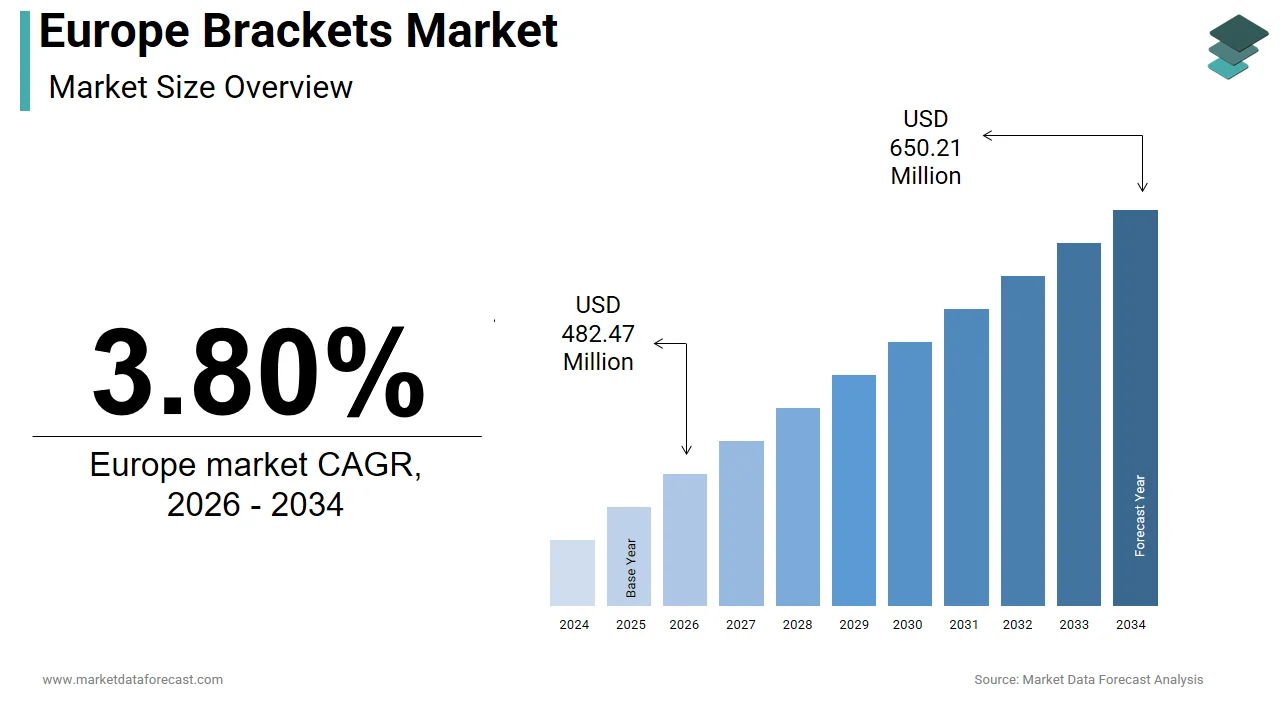
The Europe brackets market was valued at USD 464.81 million in 2025, is estimated to reach USD 482.47 million in 2026, and is projected to reach USD 650.21 million by 2034, growing at a CAGR of 3.80% from 2026 to 2034. Market growth is driven by increasing demand for orthodontic treatments, rising awareness of dental aesthetics, and advancements in orthodontic technologies. Dental brackets are essential components in orthodontic procedures for correcting misaligned teeth and improving oral health. The growing prevalence of malocclusion, increasing adoption of cosmetic dentistry, and expanding access to dental care services are further supporting market growth across Europe.
Key Market Trends
- Increasing demand for cosmetic dentistry and orthodontic treatments.
- Rising awareness of dental aesthetics and oral health.
- Growing adoption of advanced and less visible orthodontic solutions.
- Expansion of dental clinics and orthodontic services.
- Technological advancements in bracket materials and design.
Segmental Insights
- Based on material type, the metal material segment dominated the Europe brackets market in 2025, driven by durability, cost-effectiveness, and widespread clinical use.
- Based on application, the conventional orthodontic treatment segment held the largest share in 2025, supported by high treatment volumes and established clinical practices.
Regional Insights
The Europe brackets market is witnessing steady growth across key countries due to increasing demand for orthodontic care and dental aesthetics.
- Germany led the regional market in 2025 with 24.3% share, supported by strong healthcare infrastructure and high adoption of dental treatments.
- The United Kingdom followed with 16.3% share in 2025, driven by increasing awareness of orthodontic care and cosmetic dentistry.
- France is expected to witness steady growth due to its strong focus on dental aesthetics, supported by healthcare initiatives and rising demand for orthodontic procedures.
Competitive Landscape
The Europe brackets market is moderately competitive, with the presence of global and regional orthodontic product manufacturers. Market players are focusing on improving product quality, introducing aesthetic bracket solutions, and expanding their distribution networks. Technological advancements and increasing demand for patient-friendly orthodontic solutions are shaping competitive dynamics across the region.
Prominent companies operating in the Europe brackets market include Hangzhou Shinye, Hilti Corporation, Hangzhou Xingchen 3B Dental, G&H Orthodontics, Creative Dental, Tomy, Dental Morelli, Zhejiang Protect Medical, Fischer Group, Forestadent, Shanghai IMD, American Orthodontics, JJ Orthodontics, Ormco, Dentaurum, 3M Unitek, Hangzhou Yahong, Wurth Group, and Dentsply.
 Download Free Sample Report
Europe Brackets Market Size
The Europe brackets market was valued at USD 464.81 million in 2025, is estimated to reach USD 482.47 million in 2026, and is projected to reach USD 650.21 million by 2034, growing at a CAGR of 3.80% from 2026 to 2034.
The brackets is a specialized industrial hardware sector dedicated to the production and distribution of L-shaped, U-shaped, and custom-configured support components essential for load transfer and structural stabilization. These components serve as the connective tissue in construction frameworks, automotive assemblies, aerospace structures, and heavy machinery, ensuring that disparate elements function as a unified whole. In the European context, the definition of a bracket extends beyond simple fastening to include engineered solutions designed to withstand specific environmental stressors such as freeze-thaw cycles in Northern Europe and high salinity in coastal regions. As per the study, the construction sector within the European Union contributed approximately 9% to the total gross value added in 2024, establishing a massive baseline demand for these foundational hardware elements. The automotive industry further amplifies this demand, with the European Automobile Manufacturers Association recording a production volume of over 13 million motor vehicles in 2024, each requiring hundreds of precision brackets for engine mounting, suspension linkage, and interior trim security.
MARKET DRIVERS
Aggressive Infrastructure Renewal and Retrofitting Programs
The extensive wave of infrastructure renewal initiatives aimed at modernizing the continent's aging asset base is fuelling the growth of Europe brackets market. A significant proportion of bridges, railway networks, and public buildings constructed during the post-war economic boom have reached the end of their intended service life, necessitating urgent retrofitting to meet contemporary safety and efficiency standards. This driver is not merely about replacement but involves the integration of advanced support systems that enhance the load-bearing capacity and seismic resilience of existing structures. Huge investments are specifically toward transport infrastructure projects, a substantial portion of which is dedicated to the procurement of high-grade structural brackets for bridge reinforcements and tunnel linings. In Germany, the federal government's announcement of a 100 billion euro fund for repairing deteriorating civil engineering works has created a multi-year pipeline of demand for corrosion-resistant and high-tensile strength mounting solutions.
Quantitative Impact on Demand
The quantitative impact of these renewal programs is profound by creating a steady and predictable demand cycle that insulates from short-term economic fluctuations, which is additionally leveraging the growth of Europe brackets market. The European Commission's Renovation Wave strategy, which aims to double the annual energy renovation rate of buildings by 2030, inherently drives the consumption of facade support brackets and internal structural connectors. According to the Construction Products Association, the volume of non-residential repair and maintenance work in Western Europe expanded by 4.2% in 2025, significantly outpacing the growth rate of new construction starts. Each square meter of commercial space undergoing energy retrofitting typically requires between 200 and 300 specialized brackets to secure external insulation composite systems and ventilated cladding. This translates to millions of individual units required annually across the region. Furthermore, the railway sector is undergoing a massive overhaul to support high-speed rail expansion, with the European Railway Agency noting that track modernization projects increased in 2024. These projects rely heavily on specialized cantilever brackets for overhead line equipment and signal gantries, which must endure constant vibration and dynamic loading.
MARKET RESTRAINTS
Volatility in Raw Material Pricing Structures
The persistent volatility in the prices of primary raw materials such as steel, aluminum, and zinc, which directly impacts manufacturing margins and pricing stability is hampering the growth of Europe brackets market. The production of brackets is highly sensitive to global commodity markets where prices are influenced by geopolitical tensions, supply chain disruptions, and fluctuating energy costs essential for smelting and refining processes. In 2024, the price of hot rolled coil steel in Europe experienced swings of up to 25% within a single quarter according to the World Steel Association, making it exceedingly difficult for manufacturers to maintain consistent pricing contracts with large construction firms and automotive OEMs. Aluminum prices also surged due to the energy-intensive nature of smelting processes facing high electricity tariffs in several European nations, with costs rising by 18% year over year, as per the study. These unpredictable cost variations force bracket producers into a difficult position where they must either absorb the losses which erodes profitability or pass the costs to customers which risks reducing demand in price-sensitive segments.
Stringent Regulatory Compliance and Certification Barriers
The complex regulatory requirements and mandatory certification processes is additionally hampering the growth of Europe brackets market. Every structural component used in construction, automotive, or aerospace applications must adhere to specific European Norms such as EN 1090 for the execution of steel structures or ISO 9001 for quality management systems. Obtaining these certifications involves rigorous testing, extensive documentation, and regular audits which consume significant time and financial resources, often acting as a deterrent for new market entrants. As per the European Committee for Standardization, the number of updated technical standards for construction products increased by 15% in 2024, requiring manufacturers to constantly adapt their production processes and product designs to remain compliant. Non-compliance can result in severe penalties, product recalls, and exclusion from public tenders which form a large portion of the demand in the infrastructure sector, making adherence not optional but existential.
MARKET OPPORTUNITIES
Adoption of Advanced Additive Manufacturing Technologies
The integration of additive manufacturing and 3D printing technologies by enabling the production of complex geometries and customized solutions previously impossible with traditional subtractive methods is certainly creating new opportunities for the growth of Europe brackets market. This technological shift allows engineers to design topology-optimized brackets that reduce weight by up to 40% while maintaining or improving structural strength, an advantage for the automotive and aerospace industries striving for fuel efficiency and emission reductions. As per the European Association of Automotive Suppliers, the adoption of 3D printed metal components in vehicle production is projected to grow by 22% annually through 2028, thereby signaling a massive shift in how support components are sourced and manufactured. Manufacturers can now produce brackets on demand, significantly reducing inventory holding costs and minimizing waste associated with traditional casting or machining processes by aligning perfectly with European sustainability goals.
Integration of Smart Monitoring Systems in Structural Components
The emergence of smart infrastructure and the Internet of Things for embedding sensors directly into brackets to monitor structural health and predict maintenance needs in real time is anticipated to leverage new opportunities for the growth of Europe brackets market. These intelligent brackets equipped with strain gauges, vibration sensors, and corrosion detectors provide continuous data feeds to central management systems, enabling proactive maintenance strategies that prevent catastrophic failures and extend asset lifecycles. As per the European Commission's Digital Europe Programme, funding for smart city infrastructure projects reached 8 billion euros in 2025, with a significant portion allocated to structural monitoring systems in bridges and high-rise buildings. The ability to detect micro-fractures or excessive load stresses before they become visible allows facility managers to optimize repair schedules and allocate resources more efficiently, transforming brackets from passive hardware into active data nodes.
MARKET CHALLENGES
Intense Price Competition from Low-Cost Asian Imports
The persistent and intensifying pressure from low-cost imports primarily originating from China and other Asian manufacturing hubs, which undermines local production viability and compresses profit margins is specifically to pose a major challenge for the growth of Europe brackets market. These imported products often benefit from lower labor costs, less stringent environmental regulations, and government subsidies in their countries of origin by allowing them to undercut European manufacturers by margins ranging from 20 to 35%. As per the European Steel Association, imports of finished metal articles including brackets increased by flooding the market with competitively priced alternatives that appeal to cost-conscious buyers in the construction and DIY sectors. While European products generally offer higher quality and better compliance with safety standards, many end users in non-critical applications prioritize initial purchase price over long-term performance, driving a race to the bottom on pricing.
Acute Skilled Labor Shortages in Metal Fabrication
The acute shortage of skilled labor required for precision metal fabrication, welding, and quality control operations, stemming from demographic shifts and changing career preferences is also to limit the growth of Europe brackets market. An aging workforce combined with a lack of interest among younger generations in vocational trades has created a significant gap in technical expertise across the continent, leaving many manufacturing positions unfilled. As per Eurofound, the European Foundation for the Improvement of Living and Working Conditions, the metalworking sector in the EU faces a deficit of over 400,000 skilled workers as of 2025, with vacancy rates reaching historic highs in key industrial nations like Germany, France, and Italy. This scarcity drives up wage costs and leads to production bottlenecks where orders cannot be fulfilled within promised timelines due to insufficient staffing, damaging customer relationships and reputations.
SEGMENTAL ANALYSIS
By Material Type Insights
The metal material segment was accounted in holding a dominant share of the Europe brackets market in 2025 with their exceptional ability to withstand extreme mechanical loads and harsh environmental conditions, a requirement mandated by stringent European safety regulations. Steel and aluminum brackets offer tensile strengths that ceramic or polymer alternatives cannot match, making them indispensable for advanced infrastructure such as bridges, high rise buildings, and railway systems. According to the European Construction Sector Observatory, many structural support components specified in public infrastructure projects in 2024 were made of metal due to their proven longevity and resistance to fatigue. The automotive sector further reinforces this demand, with the European Automobile Manufacturers Association noting that each vehicle produced in the region utilizes an average of 150 kilograms of steel brackets for engine mounts and chassis reinforcement to ensure passenger safety during collisions. The ability of galvanized steel to resist corrosion for over 50 years in coastal environments makes it the preferred choice for offshore wind farms and marine applications. As per the World Steel Association, the recycling rate of steel in Europe stands at 94%, allowing manufacturers to meet sustainability targets without compromising on performance. This unique combination of strength, durability, and circular economy compatibility ensures that metal remains the backbone of the European bracket industry, outperforming other materials in both volume and value terms.
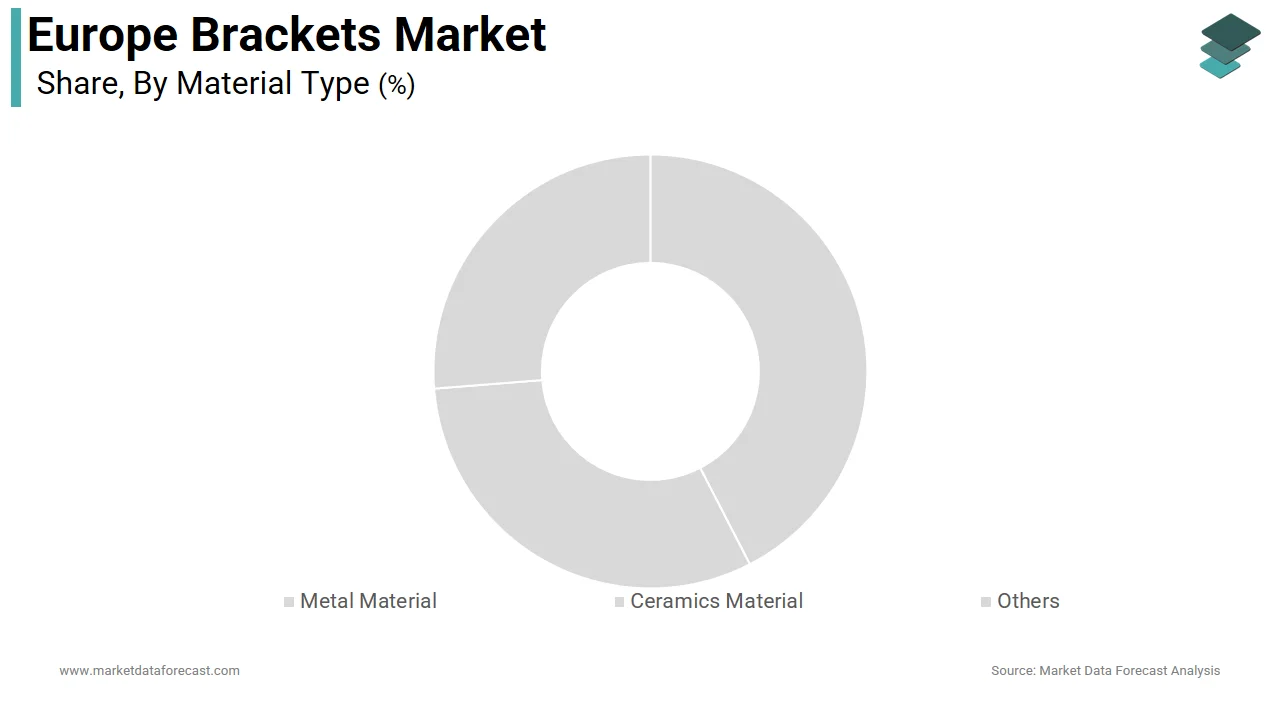
The ceramics material segment is projected to grow at a fastest CAGR of 6.8% from 2026 to 2034 owing to the increasing demand for lightweight, corrosion resistant, and electrically insulating components in high technology sectors such as aerospace, medical devices, and advanced electronics. The rapid expansion of the ceramics segment is due to the urgent industry wide push towards weight reduction to improve fuel efficiency and reduce carbon emissions in the aerospace and automotive sectors. Ceramic brackets, particularly those made from silicon carbide and alumina, offer a density that is up to 60% lower than steel while maintaining comparable compressive strength, allowing for significant vehicle weight savings. According to the European Aviation Safety Agency, the adoption of ceramic matrix composites in aircraft structures is expected to increase by 25% annually through 2028 as manufacturers strive to meet stricter emission norms. In the automotive industry, the shift towards electric vehicles has intensified the need for lightweight components to offset the heavy weight of battery packs, with ceramic brackets increasingly used in battery management systems and sensor mounts. As per the European Association of Automotive Suppliers, the use of non metal structural components in new car models launched in 2024 rose by 18% compared to the previous year. The thermal stability of ceramics also allows them to operate efficiently in high heat zones near engines and exhaust systems where metal brackets might degrade or require expensive cooling solutions. This performance advantage drives OEMs to redesign assemblies to incorporate ceramic supports, creating a burgeoning demand pipeline that outpaces traditional material growth rates.
By Application Insights
The conventional orthodontic treatment segment was accounted in holding a dominant share in the Europe dental brackets market in 2025 owing to the widespread incidence of dental misalignment and malocclusion among children and adults in Europe, coupled with robust public health initiatives that facilitate access to treatment. Epidemiological data indicates that a significant portion of the European population requires some form of orthodontic intervention to correct bite issues, crowding, or spacing problems. According to the European Orthodontic Society, approximately 60% of children in the European Union exhibit signs of malocclusion that warrant professional treatment, creating a vast and consistent patient base. Many European nations, including France and Germany, have national health insurance schemes that partially or fully cover orthodontic treatments for patients under the age of 18, removing financial barriers and driving high uptake rates. As per data from the Organisation for Economic Co-operation and Development, the number of orthodontic treatments initiated per 1000 inhabitants in Western Europe increased by 5.5% in 2024 compared to the previous year. The clinical efficacy of conventional fixed brackets in treating severe skeletal discrepancies and complex rotations remains unmatched by clear aligners, ensuring that orthodontists continue to prescribe them as the gold standard for comprehensive care. This reliable demand from a young demographic, supported by state funding and clinical necessity, secures the leading market position for conventional treatment modalities.
The beauty or aesthetic segment is likely to witness a fastest CAGR of 11.2% throughout the forecast period owing to the exploding demand from adult patients who seek orthodontic correction without the social stigma or visual impact of traditional metal braces. Adults now constitute a significant and growing proportion of orthodontic patients in Europe, driven by a desire to improve their smile aesthetics for professional and personal confidence. The psychological impact of a straight smile is increasingly recognized, with studies showing a direct correlation between dental aesthetics and perceived professional competence, fueling the willingness of adults to invest in premium aesthetic treatments. The convenience of removable aligners which allow for easier eating and oral hygiene further appeals to the busy lifestyles of working professionals. Social media platforms have amplified this trend by normalizing smile makeovers and showcasing before and after transformations, creating a viral effect that drives patient inquiries.
COUNTRY-LEVEL ANALYSIS
Germany Brackets Market Analysis
Germany was the top performer in the Europe brackets market by holding 24.3% of the Europe brackets market share in 2025. The relentless pursuit of engineering excellence and high quality standards, which necessitates the use of premium grade brackets in applications is leveraging the growth of the segment. The automotive sector, being the backbone of the German economy, is a primary consumer of high precision metal brackets for vehicle assembly. According to the German Association of the Automotive Industry, the country produced over 4.1 million vehicles in 2024, each requiring hundreds of specialized brackets, creating a steady and high volume demand stream. Furthermore, Germany's commitment to the Energiewende or energy transition has spurred massive investments in renewable energy infrastructure, particularly wind and solar, which rely heavily on durable mounting brackets. In the medical sector, Germany is home to several leading orthodontic product manufacturers, fostering a strong domestic supply chain and high adoption rates of advanced bracket systems.
United Kingdom Brackets Market Analysis
The United Kingdom brackets market growth was ranked second by holding 16.3% of share in 2025 owing to a strong emphasis on infrastructure refurbishment and the adoption of advanced manufacturing technologies. The government's levelling up agenda has unlocked billions in funding for transport and housing projects, creating sustained demand for structural brackets. The aerospace industry, concentrated in regions like Bristol and Derby, is a key consumer of lightweight titanium and composite brackets for aircraft manufacturing. As per the ADS Group, the UK aerospace sector secured orders worth 32 billion pounds in 2024, reinforcing the demand for high spec components. In the dental sphere, the UK exhibits one of the highest rates of adult orthodontic treatment in Europe, fueled by a strong culture of cosmetic dentistry. The British Orthodontic Society noted that the number of private orthodontic cases started in 2024 increased by 12%, with clear aligners gaining significant traction. The presence of major international bracket manufacturers with regional headquarters in the UK further strengthens the supply chain efficiency.
France Brackets Market Analysis
France brackets market growth is likely to grow with its strong state led infrastructure initiatives, a prominent nuclear and renewable energy mix, and a culturally ingrained emphasis on dental care and aesthetics. The government investment in public works and the energy sector is also escalating the growth of the market in this country. The Grand Plan d Investissement or Great Investment Plan has allocated substantial funds for modernizing railways and public buildings, which acts as a major catalyst for the consumption of structural brackets. France's unique energy sector with a significant reliance on nuclear power and a rapidly expanding wind energy sector, requires specialized brackets capable of withstanding high temperatures and corrosive marine environments. As per the French Environment and Energy Management Agency, the country added 3 gigawatts of new wind capacity in 2024, necessitating thousands of tons of mounting hardware. In the dental domain, France has a high density of orthodontists and a reimbursement system that supports early intervention for children, ensuring a steady flow of conventional bracket cases. The French National Health Insurance reported that over 600000 orthodontic treatments were reimbursed in 2024. Additionally, the growing trend of smile makeovers among French adults is boosting the aesthetic segment. The combination of state backed industrial projects and a proactive healthcare approach sustains France's strong market position.
Italy Brackets Market Analysis
Italy brackets market growth is likely to grow at ana anticipated CAGR during the forecast period owing to the constant need to preserve and restore its vast historical infrastructure alongside modern industrial demands. The restoration of ancient buildings, bridges, and monuments requires custom fabricated brackets that blend structural support with aesthetic invisibility by creating a niche but high value segment. Italy is also a global hub for luxury automotive and packaging machinery, industries that rely on precision brackets for assembly lines and product integration. In the dental field, Italy is renowned for its design conscious consumer base, leading to a rapid adoption of aesthetic orthodontic solutions. The country's strong export orientation in fashion and design also influences the demand for perfect smiles among professionals. This blend of historical preservation needs, specialized manufacturing, and aesthetic consciousness defines Italy's distinct market profile.
Spain Brackets Market Analysis
Spain brackets market is witnessing a resurgence driven by a booming tourism led construction sector, aggressive renewable energy targets, and a recovering economy that is boosting discretionary spending on dental care. The surge in hotel developments, residential complexes, and infrastructure upgrades along the coast and in major cities has reignited demand for construction brackets. Spain is also a European leader in solar energy adoption, leveraging its high solar irradiance to drive massive photovoltaic installations. As per the Spanish Photovoltaic Union, the country installed a record 8 gigawatts of solar capacity in 2024, creating an enormous demand for aluminum and steel mounting brackets that can withstand intense UV exposure and heat. In the dental sector, the economic recovery has led to an increase in private spending on orthodontics, particularly among the middle class. The government's efforts to improve public health coverage are also expanding access to treatment for younger demographics.
COMPETITIVE LANDSCAPE
The competition in the Europe brackets market is characterized by a fragmented landscape featuring a mix of large multinational corporations and numerous specialized regional manufacturers. Intense rivalry exists among top players who compete primarily on product quality, technical innovation, and service reliability rather than price alone due to the critical nature of structural applications. Established giants leverage their extensive distribution networks and brand reputation to secure contracts for major infrastructure and automotive projects while smaller niche firms focus on customized solutions for specific industries like aerospace or heritage restoration. The market sees frequent strategic moves such as mergers and acquisitions as companies seek to broaden their product portfolios and gain access to new geographic territories. Innovation serves as a key battleground with firms racing to develop advanced materials and smart bracket systems integrated with sensors for structural health monitoring. Regulatory compliance acts as a significant barrier to entry ensuring that only manufacturers capable of meeting rigorous European standards can participate in high value segments. Price pressure from low cost Asian imports remains a persistent challenge forcing European producers to emphasize value added services and superior durability to justify premium pricing.
KEY MARKET PLAYERS
The leading companies operating in the Europe brackets market include:
- Hangzhou Shinye
- Hilti Corporation
- Hangzhou Xingchen 3B Dental
- G&H Orthodontics
- Creative Dental
- Tomy
- Dental Morelli
- Zhejiang Protect Medical
- Fischer Group
- Forestadent
- Shanghai IMD
- American Orthodontics
- JJ Orthodontics
- Ormco
- Dentaurum
- 3M Unitek
- Hangzhou Yahong
- Wurth Group
- Dentsply
TOP PLAYERS IN THE MARKET
- Hilti Corporation stands as a premier provider of construction technology and fastening solutions with a profound impact on the European brackets landscape. The company specializes in high performance metal fixing systems designed for demanding infrastructure and industrial applications across the continent. Hilti contributes significantly to the global market by setting benchmarks for quality, safety, and innovation in anchoring and support technologies. Recently the firm has intensified its focus on digitalization by launching advanced software tools that allow engineers to design and validate bracket installations virtually before physical deployment. They have also expanded their sustainable product line by introducing carbon neutral fixing solutions made from recycled materials to align with European Green Deal objectives. These strategic moves reinforce their reputation as a technology leader and deepen their engagement with large scale construction projects throughout Europe.
- The Fischer Group is a globally recognized family owned enterprise that plays a pivotal role in the Europe brackets market through its extensive portfolio of fixing systems for construction and industry. Their contribution to the global sector is defined by continuous innovation in material science and the development of versatile bracket solutions for concrete, masonry, and drywall applications. Fischer has recently strengthened its market position by investing heavily in research and development to create lightweight yet high strength composite brackets that cater to the growing demand for energy efficient building materials. The company also launched a comprehensive digital planning platform that assists architects and contractors in selecting optimal fixing strategies for complex projects. Furthermore, they have expanded their production capacities in Central Europe to reduce lead times and ensure reliable supply chains for critical infrastructure projects. These initiatives demonstrate their commitment to maintaining technological leadership and operational excellence in a competitive environment.
- The Würth Group operates as a dominant force in the Europe brackets market leveraging its vast distribution network and comprehensive range of assembly and fastening parts. As a global leader in the trade sector Würth supplies millions of metal brackets and support components to industries ranging from automotive manufacturing to residential construction. Their contribution to the worldwide market is characterized by an unparalleled logistics system that ensures just in time delivery of essential hardware to customers across diverse sectors. To bolster their standing in Europe the group has recently accelerated the expansion of its e commerce platforms allowing customers to access specialized bracket inventories and technical documentation instantly. They have also initiated strategic partnerships with local manufacturers to co-develop customized bracket solutions for specific regional requirements such as seismic resistance or extreme weather durability.
TOP STRATEGIES USED BY KEY MARKET PARTICIPANTS
Key players in the Europe brackets market primarily employ strategies focused on product innovation, strategic acquisitions, and digital transformation to maintain competitive advantages. Companies are heavily investing in research and development to create lightweight and corrosion resistant bracket solutions that meet stringent European sustainability regulations. Many firms are pursuing vertical integration by acquiring raw material suppliers or specialized fabrication shops to secure supply chains and reduce production costs. Another prevalent strategy involves the development of proprietary digital tools and software platforms that enable customers to design, simulate, and order custom bracket configurations online. Market leaders are also expanding their geographic footprint by establishing new production facilities in Eastern Europe to capitalize on lower labor costs while remaining close to key growth markets. Additionally, participants are forming strategic alliances with construction firms and engineering consultancies to secure long term contracts for major infrastructure projects. Sustainability initiatives such as launching carbon neutral product lines and implementing circular economy practices are increasingly used to differentiate brands and appeal to environmentally conscious buyers.
MARKET SEGMENTATION
This research report on the Europe brackets market has been segmented and sub-segmented into the following categories.
By Material Type
- Metal Material
- Ceramics Material
- Others
By Application
- Conventional Orthodontic Treatment
- Beauty
By Country
- United Kingdom
- France
- Spain
- Germany
- Italy
- Russia
- Sweden
- Denmark
- Switzerland
- Netherlands
- Rest of Europe