- Product Description Description
- Table of Contents TOC
- List of Table & Figure LOT
- Get Free Sample PDF Sample PDF
Market Size, 2025
$1.72 BnMarket Estimate, 2026
$1.83 BnMarket Forecast, 2034
$3.08 BnCAGR, 2026–2034
6.67%Europe Breaker Market Report Summary
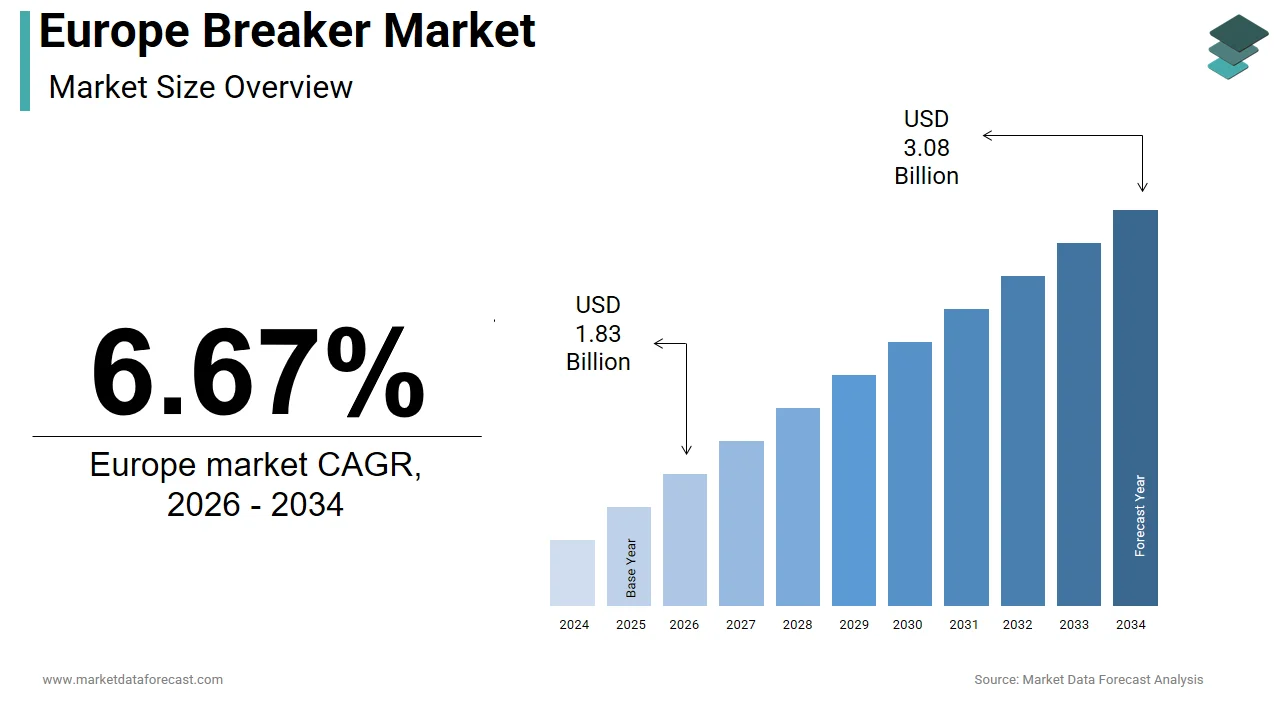
The Europe breaker market was valued at USD 1.72 billion in 2025, is estimated to reach USD 1.83 billion in 2026, and is projected to reach USD 3.08 billion by 2034, growing at a CAGR of 6.67% from 2026 to 2034. Market growth is driven by increasing investments in power infrastructure modernization, expansion of renewable energy installations, and rising demand for electrical safety systems across residential, commercial, and industrial sectors. Circuit breakers play a critical role in protecting electrical networks from overloads and short circuits, ensuring system reliability and operational safety. Growing urbanization, expansion of smart grids, and increasing electrification across industries are further supporting the growth of the breaker market across Europe.
Key Market Trends
- Increasing deployment of smart grid infrastructure and power distribution upgrades.
- Rising demand for advanced circuit protection systems in renewable energy installations.
- Growing adoption of low-voltage circuit breakers in residential and commercial buildings.
- Expansion of industrial automation and electrification across manufacturing sectors.
- Strengthening regulatory standards focused on electrical safety and energy efficiency.
Segmental Insights
- Based on power rating, the low voltage segment held the largest share of the Europe breaker market in 2025, driven by its extensive use in residential buildings, commercial facilities, and light industrial applications.
- Based on end user, the industrial segment dominated the market in 2025 by capturing the highest share, supported by increasing electricity consumption and expanding industrial automation across Europe.
- Based on type, the miniature circuit breaker (MCB) segment accounted for the largest share of the Europe breaker market in 2025, due to its widespread adoption in residential and commercial electrical distribution systems.
Regional Insights
The Europe breaker market is witnessing steady growth across major economies, supported by infrastructure development, grid modernization initiatives, and increasing energy demand.
- Germany held the leading position in 2025 with 23.2% share, driven by strong industrial activity, renewable energy expansion, and advanced electrical infrastructure.
- France ranked second in the regional market in 2025, supported by ongoing power grid modernization and infrastructure investments.
- The United Kingdom maintains a prominent position in the Europe breaker market, supported by investments in smart grid development and modernization of power distribution systems.
Competitive Landscape
The Europe breaker market is characterized by strong competition among global electrical equipment manufacturers and regional power technology providers. Market participants are focusing on technological innovation, improved circuit protection solutions, and integration with smart grid systems. Strategic partnerships, product launches, and expansion of manufacturing capabilities are shaping the competitive landscape across Europe.
Prominent companies operating in the Europe breaker market include ABB Ltd., BCH Electric Ltd., Camsco Electric Co. Ltd., CG Power and Industrial Solutions Ltd., Eaton Corp. plc, General Electric Co., Hyundai Electric and Energy Systems Co. Ltd., Larsen and Toubro Ltd., LS ELECTRIC Co. Ltd., Meidensha Corp., Mitsubishi Electric Corp., Myers Power Products Inc., Powell Industries Inc., Schneider Electric SE, Siemens AG, Tavrida Electric GmbH, Toshiba Corp., and Zhejiang CHINT Electrics Co. Ltd.
Europe Breaker Market Size
The Europe breaker market was valued at USD 1.72 billion in 2025, is estimated to reach USD 1.83 billion in 2026, and is projected to reach USD 3.08 billion by 2034, growing at a CAGR of 6.67% from 2026 to 2034.
Breaker encompasses the manufacturing, distribution, and installation of circuit protection devices designed to interrupt electrical flow during faults such as short circuits or overloads. These critical components safeguard residential, commercial, and industrial infrastructure across the continent from fire hazards and equipment damage. The sector includes low voltage medium voltage and high-voltage breakers that serve as the backbone of regional power reliability. As European nations aggressively pursue decarbonization goals, the underlying electrical grid undergoes a profound transformation, requiring advanced protection mechanisms. According to Eurostat, the European Union consumed high levels of electricity in 2022, which requires robust interruption systems to manage complex load flows. The integration of distributed energy resources further complicates grid dynamics since bidirectional power flows demand smarter and faster-acting breakers than traditional models. As per the International Energy Agency, renewable sources accounted for a significant share of total electricity generation in Europe during 2023, which is creating unique stress points on existing networks. This shift forces utilities to upgrade legacy protection schemes to handle variable inputs from wind and solar farms. The definition of the market now extends beyond simple mechanical switching to include digital communication capabilities that enable real-time monitoring and predictive maintenance within smart grid architectures.
MARKET DRIVERS
Accelerated Deployment of Renewable Energy Infrastructure Demands Advanced Protection Systems
The rapid expansion of renewable energy installations is one of the major factors propelling the growth of the European breaker market. Governments across the region have mandated aggressive targets to phase out fossil fuels, which directly increases the need for specialized circuit protection capable of handling intermittent power sources. As per the European Environment Agency, wind and solar capacity in the EU grew significantly in 2023, requiring extensive grid interconnection upgrades. Unlike conventional thermal plants, renewable assets introduce volatility that standard breakers cannot manage effectively due to differing fault current characteristics. Solar photovoltaic systems and offshore wind farms generate direct current or variable frequency alternating current that necessitates DC breakers or sophisticated AC units with enhanced tripping curves. According to the European Commission, renewables must supply at least 42.5% of total energy consumption by 2030 under the revised Renewable Energy Directive. This legislative push drives massive investment in substations and transmission lines, where high voltage breakers are essential for isolating faults without destabilizing the entire network. Furthermore, the decentralization of power generation means thousands of new connection points require low-voltage breakers to protect local distribution transformers and consumer interfaces. Manufacturers are consequently innovating products with higher breaking capacities and faster response times to meet these specific technical requirements imposed by green energy integration.
Extensive Modernization of Aging Electrical Grids Fuels Replacement Cycles
A significant portion of the European electrical infrastructure dates back several decades and requires urgent modernization to ensure safety and efficiency, which is further boosting the breaker market expansion in Europe. Many transmission and distribution assets installed during the post war reconstruction era have reached the end of their operational lifespan, creating a substantial replacement market for modern breakers. According to Entso-E, a considerable share of high voltage equipment in certain member states exceeds forty years of service life. Older oil-filled circuit breakers pose environmental risks due to potential leaks and lack the precision needed for today's complex grid management tasks. National grid operators are investing heavily to replace these legacy units with SF6-free or vacuum technology breakers that offer superior performance and lower environmental impact. The German Federal Ministry for Economic Affairs and Climate Action announced a grid expansion plan involving 14,000 kilometers of new lines by 2030, which inherently requires millions of new protection devices. Additionally, the rise in electric vehicle charging stations places unprecedented loads on local distribution networks, forcing utilities to upgrade secondary substations with intelligent breakers. These modern devices provide remote controllability and diagnostic features that allow operators to minimize outage durations and optimize asset utilization. The sheer scale of this renewal program ensures sustained demand for both medium and low voltage interruption technologies across all European markets.
MARKET RESTRAINTS
Stringent Environmental Regulations Regarding SF6 Gas Usage Limit Product Options
The widespread use of sulfur hexafluoride gas in high-voltage circuit breakers faces severe regulatory headwinds due to its extreme global warming potential, which is a notable restraint to the growth of the European breaker market. SF6 is identified as one of the most potent greenhouse gases, with a warming effect thousands of times greater than carbon dioxide over a century period. As per the European Union F-Gas Regulation, authorities have implemented strict quotas and bans on the use of fluorinated gases in new electrical equipment to align with climate neutrality goals. This legislative framework forces manufacturers to redesign product portfolios and develop alternative insulation mediums such as clean air or fluoronitrile mixtures. The transition process involves extensive testing and certification, which delays product launches and increases research and development costs significantly. Industry reports from the European Association of Electrical Contractors indicate that retrofitting existing SF6-based infrastructure requires specialized handling procedures and disposal facilities that are not universally available. Smaller market players struggle to absorb the financial burden of developing compliant technologies, which consolidates market power among large multinational corporations. Furthermore, the uncertainty surrounding future amendments to environmental laws creates hesitation among utility companies when planning long-term procurement strategies. Some projects face delays while stakeholders await clarity on approved alternative gases and their long-term performance characteristics in diverse climatic conditions found across Europe. This regulatory complexity acts as a formidable barrier to rapid market expansion despite the clear need for grid upgrades.
Volatility in Raw Material Prices Disrupts Manufacturing Supply Chains
Fluctuating costs of essential raw materials such as copper, silver, and rare earth elements create significant economic pressure on breaker manufacturers operating in Europe, which is further hindering the expansion of the European breaker market. These metals are fundamental components in conductive parts, contacts, and magnetic trip units, making production costs highly sensitive to commodity market swings. According to the London Metal Exchange, prices for industrial copper have experienced notable volatility in recent years due to geopolitical tensions and supply chain bottlenecks. European producers face additional disadvantages compared to Asian competitors because of higher energy costs and stricter labor regulations, which amplify the impact of material price spikes. The European Central Bank has noted that input cost inflation in the manufacturing sector remained persistently high throughout 2023, squeezing profit margins for electrical equipment makers. When raw material costs surge, manufacturers often hesitate to pass full increases to customers, fearing loss of market share in a competitive bidding environment. This dynamic leads to reduced inventory levels and longer lead times for custom-engineered high-voltage breakers required for major infrastructure projects. Supply chain disruptions also stem from dependency on imported components from outside the EU, which subjects the market to trade tariffs and logistics delays. Consequently, project developers encounter budget overruns and scheduling uncertainties that can postpone the installation of critical protection equipment. The inability to predict material costs accurately hampers strategic planning and discourages aggressive expansion into new geographic segments within the region.
MARKET OPPORTUNITIES
Integration of Digital Technologies Enables Smart Grid Capabilities
The convergence of operational technology and information technology is a promising opportunity in the European breaker market. These intelligent devices embed sensors and communication modules that facilitate real-time data exchange between field equipment and central control systems. As per the European Commission Digital Decade policy target, all critical infrastructure should be digitally transformed by 2030 to enhance resilience and efficiency. Smart breakers provide granular visibility into grid health by monitoring parameters such as temperature, arc detection, and contact wear continuously. This capability allows utility operators to shift from reactive maintenance schedules to predictive strategies that prevent failures before they occur. The deployment of Internet of Things protocols enables seamless integration with distributed energy management systems, optimizing load balancing across microgrids. According to the Fraunhofer Institute, digitalized grid assets can reduce outage durations through automated fault isolation and restoration sequences. Moreover, the ability to remotely configure trip settings offers flexibility in managing dynamic load profiles caused by electric vehicles and heat pumps. Manufacturers who prioritize software-defined functionality and cybersecurity features will capture significant market share as utilities seek to modernize their networks. The evolution toward fully autonomous grids relies heavily on these advanced interruption devices to make split-second decisions that maintain stability without human intervention.
Expansion of Electric Vehicle Charging Networks Creates New Demand Segments
The explosive growth of electromobility in Europe generates a distinct and lucrative demand stream for specialized low and medium-voltage breakers, which is another notable opportunity for the European breaker market. Governments have set ambitious targets to ban the sale of internal combustion engine vehicles, which accelerates the rollout of public and private charging infrastructure. According to the European Alternative Fuels Observatory, the number of publicly accessible charging points in the EU surpassed half a million in 2023 and continues to grow rapidly. Each charging station requires dedicated circuit protection to handle high current draws safely while preventing overheating and electrical fires in diverse environments. Fast charging hubs particularly demand robust breakers capable of managing simultaneous high-power transactions without nuisance tripping. The unique load characteristics of battery charging necessitate devices with specific time current curves that differ from traditional residential applications. Urban planning initiatives mandate the installation of charging facilities in new buildings and parking structures, which drives volume sales for compact molded case breakers. Furthermore, the vehicle-to-grid concept introduces bidirectional power flow requirements that challenge conventional protection schemes and open avenues for innovative product designs. Companies that develop solutions tailored specifically for EV infrastructure, including DC fast charging protection, will gain a competitive edge. This segment represents a high-growth avenue as transportation electrification becomes central to European climate policy and urban development strategies.
MARKET CHALLENGES
Severe Shortage of Skilled Technical Workforce Hinders Installation and Maintenance
A critical bottleneck facing the Europe breaker market is the acute scarcity of qualified engineers and technicians capable of installing and maintaining advanced electrical protection systems. The aging demographic profile of the current workforce, combined with an insufficient influx of young talent, creates a skills gap that threatens project timelines. As per Eurostat, the construction and installation sector in the EU reported a labor shortage rate affecting electrical specialties disproportionately. Modern breakers increasingly incorporate complex digital interfaces and programming requirements that demand higher levels of technical proficiency than legacy electromechanical devices. Training programs have failed to keep pace with technological advancements, leaving many contractors ill-equipped to handle smart grid components effectively. This deficiency leads to improper installation practices that compromise system reliability and void manufacturer warranties. Utilities often delay commissioning of new substations because certified personnel are unavailable to perform necessary testing and calibration procedures. The situation is exacerbated by rigorous safety standards in Europe, which mandate specialized certification for working on high-voltage equipment. Educational institutions struggle to update curricula quickly enough to cover emerging technologies such as arc flash mitigation and cyber secure communications. Without a concerted effort to upskill the workforce through vocational training and apprenticeship schemes, the market faces constraints in realizing its full potential. Project developers increasingly factor labor availability into risk assessments, which can deter investment in regions with the most severe shortages.
Complexity of Cross-Border Regulatory Compliance Increases Operational Burdens
Navigating the fragmented landscape of national regulations and international standards is further challenging the regional market growth. Although the European Union strives for harmonization, individual member states often retain specific grid codes and safety requirements that differ significantly from one another. According to the European Committee for Electrotechnical Standardization, discrepancies in national implementation of IEC standards create compliance complexities for products sold in multiple jurisdictions. Manufacturers must obtain separate certifications for each country, which prolongs time to market and inflates administrative costs substantially. Differences in voltage levels, frequency tolerances, and grounding practices further complicate the design of universal products suitable for the entire region. The evolving nature of these regulations means that products compliant today may become obsolete tomorrow if laws change unexpectedly. Small and medium-sized enterprises find it particularly difficult to allocate resources for comprehensive legal and technical compliance teams. This regulatory fragmentation impedes economies of scale and discourages innovation as companies focus on meeting minimum requirements rather than pushing technological boundaries. Additionally, Brexit has introduced new trade barriers and certification hurdles for goods moving between the United Kingdom and the EU mainland. The lack of a unified approval mechanism forces companies to duplicate testing efforts, which reduces overall industry efficiency. Addressing these inconsistencies requires deeper collaboration between policymakers and industry stakeholders to streamline processes and foster a truly single market for electrical equipment.
REPORT COVERAGE
| REPORT METRIC | DETAILS |
| Market Size Available | 2025 to 2034 |
| Base Year | 2025 |
| Forecast Period | 2026 to 2034 |
| Segments Covered | By Power Rating, End-user, Type, and Country. |
| Various Analyses Covered | Global, Regional, and Country-Level Analysis, Segment-Level Analysis, Drivers, Restraints, Opportunities, Challenges; PESTLE Analysis; Porter’s Five Forces Analysis, Competitive Landscape, Analyst Overview of Investment Opportunities |
| Countries Covered | UK, France, Spain, Germany, Italy, Russia, Sweden, Denmark, Switzerland, Netherlands, Turkey, Czech Republic, and the Rest of Europe. |
| Market Leaders Profiled | ABB Ltd., BCH Electric Ltd., Camsco Electric Co. Ltd., CG Power and Industrial Solutions Ltd., Eaton Corp. plc, General Electric Co., Hyundai Electric and Energy Systems Co. Ltd., Larsen and Toubro Ltd., LS Electric Co. Ltd., Meidensha Corp., Mitsubishi Electric Corp., Myers Power Products Inc., Powell Industries Inc., Schneider Electric SE, Siemens AG, Tavrida Electric GmbH, Toshiba Corp., Zhejiang CHINT Electrics Co. Ltd., and Others. |
SEGMENTAL ANALYSIS
By Power Rating Insights
The low voltage segment led the market by commanding the highest share of the European breaker market in 2025. The growth of the low-voltage segment in the European market is driven by its ubiquitous application across residential, commercial, and light industrial sectors. The sheer volume of installation points required in buildings where safety regulations mandate protection for every final circuit is further boosting the expansion of the low-voltage segment in the European market. The proliferation of smart home technologies and the electrification of heating systems have further amplified demand for sophisticated low-voltage devices. According to Eurostat, residential buildings in the European Union account for a significant portion of total final energy consumption, which necessitates extensive electrical distribution networks protected by miniature circuit breakers. Furthermore, the European Green Deal initiatives drive renovations that include complete electrical rewiring to support heat pumps and electric vehicle chargers. As per the European Commission, a majority of the existing building stock is energy inefficient, prompting massive retrofitting projects. These upgrades inherently require replacing outdated fuse boxes with modern low-voltage breaker panels to meet current safety standards. The versatility of these devices in handling currents up to 630 amperes makes them suitable for diverse applications ranging from single-family homes to large shopping malls. Manufacturers focus heavily on this segment because replacement cycles are shorter compared to high-voltage equipment, ensuring consistent revenue streams. The integration of digital features such as remote monitoring in low-voltage breakers also appeals to facility managers seeking energy efficiency. Consequently, the cumulative effect of new construction and renovation activities solidifies the leading position of the low voltage category in terms of unit sales and market value.
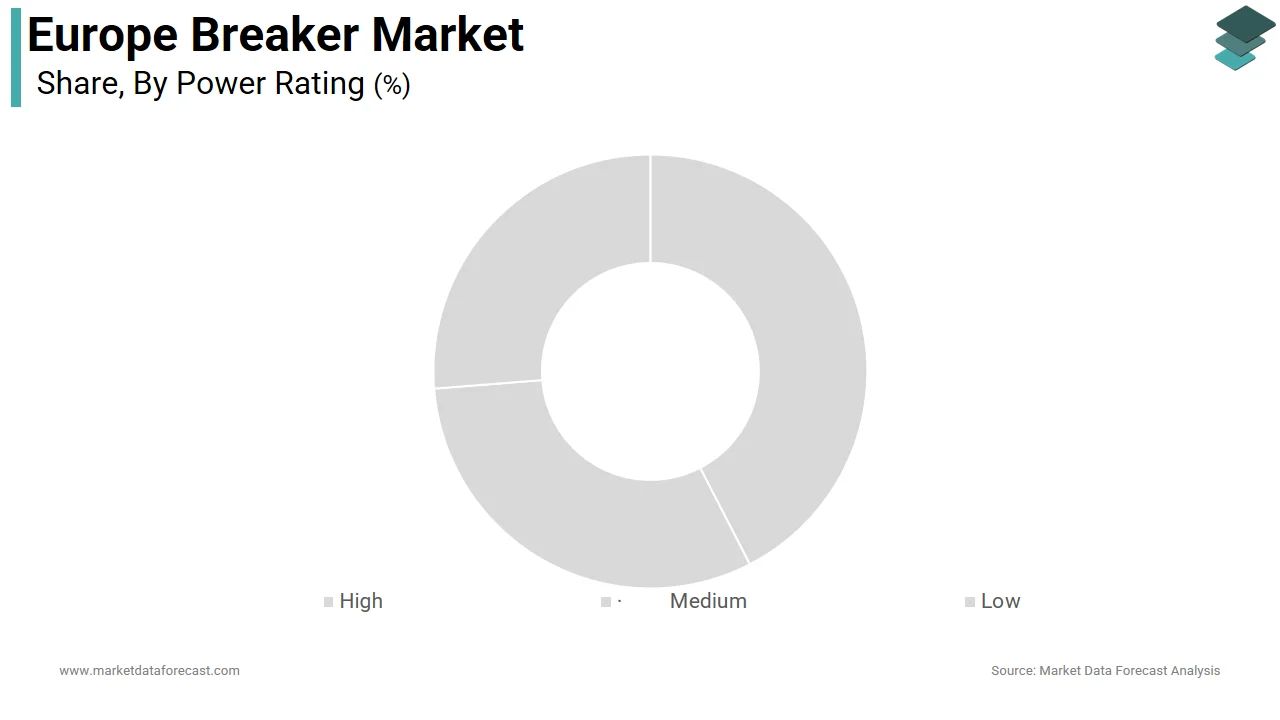
The high voltage segment is projected to register the highest CAGR of 7.4% over the forecast period in the European market, owing to the massive investments in transmission infrastructure and renewable integration. The urgent need to connect offshore wind farms and solar parks located in remote areas to the main continental grid is further aiding the expansion of the high-voltage segment in the regional market. As per the European Network of Transmission System Operators for Electricity, member states plan to invest heavily in grid expansion by 2030 to accommodate renewable energy targets. High voltage breakers are critical components in these new substations as they must isolate faults in networks operating at levels exceeding 72.5 kilovolts without causing widespread blackouts. The shift toward underground cabling in urban areas also demands specialized gas-insulated breakers that occupy less space than traditional air-insulated units. According to the International Energy Agency, Europe added record levels of wind capacity in 2023, requiring robust high-voltage protection at connection points. Additionally, the decommissioning of aging nuclear and coal plants necessitates reconfiguration of the transmission network to maintain stability with variable renewable inputs. Governments are prioritizing cross-border interconnectors to enhance energy security, which further boosts demand for ultra-high voltage interruption technology. The technical complexity and high unit value of these devices contribute significantly to the revenue growth of this segment despite lower installation volumes compared to low-voltage counterparts.
By End User Insights
The industrial segment held the dominant position in the European breaker market in 2025 by capturing the highest share of the regional market. The leading position of the industrial segment in the European market is attributed to the intensive electrical requirements of manufacturing, processing, and heavy industry operations. Factories and industrial plants rely on complex power distribution systems that demand reliable protection against overloads and short circuits to prevent costly production downtime. The resurgence of manufacturing activities in Europe, coupled with automation trends, has increased the density of electrical loads within industrial facilities. According to Eurostat, the industrial sector consumed a substantial portion of total electricity in the European Union in 2022, highlighting its massive dependency on a stable power supply. Stringent safety regulations enforced by national authorities mandate the use of advanced circuit breakers to protect workers and expensive machinery from electrical hazards. The transition toward Industry 4.0 involves deploying smart sensors and connected devices that require precise power management solutions available in modern industrial breakers. Furthermore, the chemical and petrochemical industries, which are prevalent in countries like Germany and Belgium, utilize hazardous area-rated breakers to prevent explosions in volatile environments. The continuous operation of assembly lines means that even minor electrical faults can result in significant financial losses, driving industries to invest in premium protection equipment. Retrofitting older plants to improve energy efficiency also contributes to steady demand as companies replace legacy protection systems with intelligent devices capable of monitoring power quality. The sheer scale of industrial infrastructure ensures that this segment remains the largest consumer of medium and low voltage breakers across the region.
The utilities segment is anticipated to witness the fastest CAGR of 8.4% in the European breaker market during the forecast period, owing to the comprehensive grid modernization programs and the integration of distributed energy resources. Utility companies are under immense pressure to upgrade aging transmission and distribution networks to handle bidirectional power flows caused by rooftop solar and community wind projects. As per the European Commission, the RePowerEU plan aims to accelerate the green transition, which requires utilities to deploy thousands of new substations equipped with advanced switchinggear. The increasing frequency of extreme weather events linked to climate change has exposed vulnerabilities in existing grids, prompting utilities to invest in resilient infrastructure. According to the European Association of Electrical Contractors, utility spending on grid reinforcement has increased in recent years. Smart grid initiatives necessitate the installation of breakers with communication capabilities that allow remote control and automated fault restoration to minimize outage times. The phase out of sulfur hexafluoride gas in favor of environmentally friendly alternatives is also driving replacement cycles in high voltage applications managed by utilities. Moreover, the development of microgrids and virtual power plants requires sophisticated protection schemes that can island sections of the grid during disturbances. These factors collectively propel the utilities segment to the forefront of market growth as operators strive to build a flexible and sustainable energy system for the future.
By Type Insights
The miniature circuit breaker (MCB) segment accounted for the largest share of the European breaker market in 2025. The dominance of the MCB segment in the European market is driven by its essential role in protecting final circuits in residential and commercial buildings. These devices are installed in virtually every electrical distribution board to safeguard lighting, sockets, and appliance circuits from overcurrent conditions. The widespread adoption of MCBs is driven by strict building codes that require individual circuit protection for safety and fire prevention. According to the European Committee for Electrotechnical Standardization, harmonized standards mandate the use of certified MCBs in all new constructions and major renovations across member states. The boom in residential construction, particularly in urban centers where apartment complexes are rising rapidly, fuels continuous demand for these compact protection devices. As per national statistical offices, housing starts in the Eurozone remained strong in 2023, with millions of new dwellings completed. Each new dwelling requires dozens of MCBs to comply with electrical safety regulations, ensuring a steady volume of market. Additionally, the trend toward smart homes encourages the replacement of traditional MCBs with connected versions that offer energy monitoring and remote control via smartphone applications. The ease of installation and replacement makes MCBs a preferred choice for electricians during maintenance and upgrade projects. Their cost effectiveness, combined with high reliability, ensures that this segment maintains its leadership position in terms of unit volume and overall market penetration throughout Europe.
The vacuum circuit breaker (VCB) segment is experiencing the most rapid expansion and is expected to exhibit a CAGR of 7.5% over the forecast period. The shift toward eco-friendly and maintenance-free medium voltage solutions is driving the expansion of the VCB segment in the European market. Utilities and industrial users are increasingly replacing oil-filled and SF6-based breakers with vacuum technology to eliminate environmental risks and reduce operational costs. As per the European Union F-Gas Regulation, restrictions on fluorinated gases are pushing manufacturers and end users to adopt vacuum interrupters for applications up to 38 kilovolts. According to the International Council on Large Electric Systems, vacuum technology now accounts for the majority of new medium voltage breaker installations in Europe. The superior performance of vacuum breakers in terms of breaking capacity and electrical life makes them ideal for frequent switching operations in renewable energy plants. The compact design of vacuum breakers allows for space-saving switchgear configurations, which is crucial for urban substations where real estate is expensive. Furthermore, the lack of regular maintenance requirements compared to oil or gas-filled units results in significant lifecycle cost savings for asset owners. The growing number of wind farms and solar parks, which require reliable medium voltage protection for collector networks, further accelerates adoption. Manufacturers are investing heavily in expanding their vacuum interrupter production capacities to meet surging demand. This technological transition positions the VCB segment as the fastest-growing category within the type classification of the Europe breaker market.
COUNTRY LEVEL ANALYSIS
Germany Breaker Market Analysis
Germany held the leading position in the Europe breaker market with 23.2% of the regional share in 2025. The dominance of Germany in the European market is attributed to its robust industrial base and aggressive energy transition policies. The nation serves as the primary hub for electrical equipment manufacturing and consumption, driven by the Energiewende strategy, which mandates a complete overhaul of the power grid. According to the German Federal Ministry for Economic Affairs and Climate Action, the country plans to expand its renewable energy capacity to 80% of gross electricity consumption by 2030, requiring massive grid reinforcements. This ambitious target drives unprecedented demand for high and medium-voltage breakers to connect offshore wind farms in the North Sea to southern industrial centers. The automotive and chemical sectors, which are pillars of the German economy, continuously upgrade their electrical infrastructure to support electrification and automation initiatives. As per the German Association of Energy and Water Industries, grid operators invested heavily in network expansion in 2023. Strict safety regulations and a strong culture of preventive maintenance ensure high replacement rates for aging protection devices. The presence of major global breaker manufacturers within Germany fosters innovation and rapid adoption of smart grid technologies. Consequently, the German market sets the pace for the entire region with its combination of industrial demand and policy-driven infrastructure projects.
France Breaker Market Analysis
France occupied the second largest position in the Europe breaker market in 2025. The growth of France in the European market is attributed to its unique energy mix and state-led infrastructure programs. The country is simultaneously managing the life extension of its nuclear fleet and integrating significant amounts of renewable energy, which creates diverse requirements for circuit protection solutions. As per the French Ministry of Ecological Transition, the national strategy involves adding substantial solar and wind capacity by 2035 while maintaining nuclear baseload power. This dual approach necessitates specialized breakers capable of handling both conventional thermal generation and variable renewable inputs. The government-owned utility EDF is undertaking a massive grid modernization plan to enhance resilience against climate induced disruptions. According to the French Transmission System Operator RTE, investment in the transmission network will reach tens of billions of euros over the next decade. The residential sector also contributes significantly due to nationwide initiatives promoting electric vehicle adoption and heat pump installation. Regulatory mandates for energy-efficient buildings drive retrofits that include upgrading electrical panels with modern miniature circuit breakers. France’s commitment to reducing carbon emissions ensures sustained public and private investment in electrical infrastructure. The market benefits from strong domestic manufacturing capabilities and a regulatory environment that prioritizes safety and reliability in power distribution.
United Kingdom Breaker Market Analysis
The United Kingdom retains a prominent spot in the Europe breaker market. The urgent need to upgrade aging infrastructure and meet net-zero targets is one of the key factors propelling the UK breaker market growth. Despite leaving the European Union, the UK continues to align with many environmental standards, which influences the adoption of SF6-free and smart breaker technologies. According to the UK National Grid ESO, the pathway to net zero requires doubling the size of the electricity network by 2030 to accommodate offshore wind and electric vehicles. This monumental task drives demand for high-voltage gas-insulated switchgear and advanced protection relays in new substations. The government has announced significant funding for grid connectivity projects to unlock renewable energy zones in Scotland and Wales. As per the Department for Energy Security and Net Zero, connections for low-carbon technologies have surged, creating bottlenecks that require immediate grid reinforcement. The commercial real estate sector in London and other major cities is also undergoing green retrofits to improve energy ratings, spurring demand for low-voltage smart breakers. Supply chain diversification efforts post Brexit have encouraged local manufacturing and stockpiling of critical electrical components. The UK market is characterized by a strong focus on innovation and digitalization to manage increasingly complex grid dynamics efficiently.
Italy Breaker Market Analysis
Italy represents a key market in Southern Europe. The explosive growth in solar photovoltaic installations and grid rehabilitation projects is driving the Spanish market expansion. The country benefits from high solar irradiance, which has made it a leader in distributed generation requiring extensive low and medium-voltage protection at connection points. As per the Italian National Agency for New Technologies, Energy and Sustainable Economic Development, solar capacity additions reached record levels in 2023. This decentralized generation model places stress on distribution networks, necessitating upgrades to handle bidirectional power flows and prevent voltage instability. The state-owned grid operator Terna is implementing a strategic plan to digitize the transmission network and integrate storage systems, which boosts demand for intelligent breakers. According to the Italian Ministry of Environment, incentives for renewable energy and energy efficiency continue to drive private investment in electrical upgrades. The tourism and hospitality sectors also contribute to demand through the electrification of facilities and the adoption of sustainable practices. Aging infrastructure in older cities requires the comprehensive replacement of obsolete switchgear to meet modern safety standards. Italy’s market dynamics are shaped by the interplay between abundant renewable resources and the need for a resilient grid to support economic recovery and decarbonization goals.
Spain Breaker Market Analysis
Spain is anticipated to record a notable CAGR in the European breaker market over the forecast period. Spain has a status of a renewable energy powerhouse and ongoing efforts to modernize its electrical grid. The nation has set ambitious targets to become a green hydrogen hub and export clean energy to the rest of Europe, which requires substantial investment in transmission infrastructure. According to the Spanish Transmission System Operator Red Eléctrica de España, the grid expansion plan includes thousands of kilometers of new lines and hundreds of new substations by 2030. This infrastructure push creates robust demand for high-voltage breakers capable of managing long-distance power transfers. The solar and wind sectors in Spain have seen exponential growth, with renewable sources accounting for a large share of electricity generation in recent months. As per the Institute for Diversification and Saving of Energy, government subsidies and auctions have attracted billions in private capital for renewable projects. The industrial sector is also decarbonizing rapidly, with factories installing onsite generation and storage systems that need specialized protection. Urban development projects in Madrid and Barcelona incorporate smart grid technologies to enhance energy efficiency and reliability. Spain’s favorable climatic conditions and supportive policy framework make it a hotbed for electrical equipment deployment, ensuring strong market growth in the coming years.
COMPETITIVE LANDSCAPE
The competition in the Europe breaker market is characterized by intense rivalry among established multinational corporations and emerging regional manufacturers who vie for dominance through technological differentiation and service excellence. Market leaders leverage their extensive global resources to drive innovation in digitalization and sustainability, while smaller players often focus on niche applications or cost-effective solutions for specific local needs. The landscape is highly fragmented with numerous competitors offering similar core functionalities, which forces companies to distinguish themselves via advanced features such as IoT connectivity and arc flash mitigation. Regulatory pressures regarding environmental compliance act as a significant barrier to entry for less capitalized firms, thereby consolidating power among top-tier entities capable of funding extensive research and development programs. Price competition remains fierce, particularly in the low voltage segment, where standardization limits differentiation opportunities, prompting vendors to compete on brand reputation and after-sales support. Strategic collaborations and joint ventures are becoming increasingly common as companies seek to share risks associated with large-scale infrastructure projects and accelerate the deployment of next-generation grid technologies across the diverse European region.
KEY MARKET PLAYERS
The leading companies operating in the Europe breaker market include:
- ABB Ltd.
- BCH Electric Ltd.
- Camsco Electric Co. Ltd.
- CG Power and Industrial Solutions Ltd.
- Eaton Corp. plc
- General Electric Co.
- Hyundai Electric and Energy Systems Co., Ltd.
- Larsen and Toubro Ltd.
- LS ELECTRIC Co. Ltd.
- Meidensha Corp.
- Mitsubishi Electric Corp.
- Myers Power Products Inc.
- Powell Industries Inc.
- Schneider Electric SE
- Siemens AG
- Tavrida Electric GmbH
- Toshiba Corp.
- Zhejiang CHINT Electrics Co. Ltd.
TOP PLAYERS IN THE MARKET
- Schneider Electric stands as a global leader in energy management and automation with a profound impact on the Europe breaker market through its extensive EcoStruxure portfolio. The company consistently innovates by integrating digital connectivity into its circuit protection devices to enable smart grid functionality and predictive maintenance. Recently, Schneider Electric launched new ranges of SF6-free medium voltage breakers to align with stringent European environmental regulations and sustainability goals. Their active participation in shaping industry standards ensures their technologies remain at the forefront of safety and efficiency. The firm strengthens its position by collaborating with utilities and industrial partners to deploy microgrid solutions that rely on advanced interruption technology. Continuous investment in research and development allows them to offer compact and highly reliable breakers for diverse applications ranging from residential buildings to large data centers across the continent.
- ABB Ltd operates as a pivotal force in the Europe breaker market by delivering high-performance electrical protection solutions that support the transition to a low-carbon economy. The company leverages its strong engineering heritage to produce vacuum and gas-insulated breakers that meet the rigorous demands of modern transmission networks. ABB recently expanded its manufacturing capabilities in Europe to reduce lead times and enhance supply chain resilience for critical infrastructure projects. Their focus on digitalization is evident in the integration of condition monitoring sensors within their breaker products to optimize asset lifecycle management. By partnering with renewable energy developers, ABB ensures seamless integration of wind and solar farms into the grid through specialized high-voltage equipment. The company also drives market evolution by promoting fluoronitrile-based alternatives to traditional insulating gases, thereby addressing ecological concerns while maintaining superior technical performance.
- Siemens AG maintains a dominant presence in the Europe breaker market through its comprehensive suite of power distribution technologies and commitment to innovation. The company plays a crucial role in electrifying transport and industry by providing robust circuit breakers that ensure operational continuity and safety. Siemens recently introduced next-generation digital switchgear systems that feature embedded communication modules for real-time grid monitoring and control. Their strategic initiatives include expanding service offerings to help customers modernize aging infrastructure with minimal downtime. The firm actively engages in large-scale grid expansion projects across Europe, supplying high-voltage breakers that facilitate cross-border energy trading. Siemens also prioritizes sustainability by developing products with reduced carbon footprints and enhanced recyclability. Their ability to integrate hardware with sophisticated software platforms positions them as a preferred partner for utilities seeking to build resilient and intelligent power networks.
TOP STRATEGIES USED BY KEY MARKET PARTICIPANTS
Key players in the Europe breaker market primarily employ product innovation and strategic acquisitions to maintain a competitive advantage and expand their portfolios. Companies heavily invest in research and development to create eco-friendly breakers that eliminate sulfur hexafluoride gas usage while enhancing digital capabilities for smart grid integration. Mergers and acquisitions allow leading firms to absorb niche technology startups and gain access to specialized intellectual property or regional distribution networks. Another prevalent strategy involves forming strategic partnerships with utility providers and renewable energy developers to secure long-term supply contracts for major infrastructure projects. Manufacturers also focus on expanding local production facilities to mitigate supply chain risks and comply with local content requirements imposed by government tenders. Additionally, companies are increasingly offering comprehensive lifecycle services, including remote monitoring and predictive maintenance to generate recurring revenue streams and deepen customer relationships. These combined approaches enable market participants to navigate regulatory complexities and capture growth opportunities in a rapidly evolving landscape.
MARKET SEGMENTATION
This research report on the Europe breaker market has been segmented and sub-segmented into the following categories.
By Power Rating
- High
- Medium
- Low
By End-user
- Commercial
- Industrial
- Residential
- Utilities
By Type
- MCB
- MCCB
- ACB
- VCB
- GIB
By Country
- United Kingdom
- France
- Spain
- Germany
- Italy
- Russia
- Sweden
- Denmark
- Switzerland
- Netherlands
- Rest of Europe