- Product Description Description
- Table of Contents TOC
- List of Table & Figure LOT
- Get Free Sample PDF Sample PDF
Market Size, 2025
$6.09 BnMarket Estimate, 2026
$7.38 BnMarket Forecast, 2034
$34.52 BnCAGR, 2026–2034
21.26%Europe Cannabidiol Market Summary
The European cannabidiol (CBD) market was valued at USD 6.09 billion in 2025 and is projected to reach USD 34.52 billion by 2034, expanding at a CAGR of 21.26% from 2026 to 2034. The growth of the Europe cannabidiol market is driven by increasing consumer awareness of CBD-based wellness products, expanding applications in pharmaceuticals, cosmetics, and food & beverages, and supportive regulatory developments across several European nations. Growing demand for natural remedies and rising acceptance of CBD in healthcare and lifestyle sectors are further accelerating market expansion.
Key Market Trends
- Rising adoption of CBD-based health and wellness supplements.
- Increasing use of CBD in cosmetics and personal care products.
- Expanding legalization and regulation frameworks across Europe.
- Growing investments by global CBD brands entering the European market.
- Rising demand for organic and premium CBD products.
Regional Insights
- Germany dominated the European cannabidiol market in 2024, driven by favorable regulations, rising consumer demand, and strong healthcare infrastructure.
- The UK is witnessing significant growth, supported by expanding retail availability and increasing adoption of CBD-based wellness products.
- France is showing steady demand, although regulatory barriers continue to influence product availability.
- Italy and Spain are emerging as promising markets, supported by growing awareness and consumer adoption of CBD-infused products.
Competitive Landscape
Key players operating in the European cannabidiol market include Pharmahemp d.o.o, ENDOCA, NuLeaf Naturals LLC, Folium Biosciences, Elixinol, Cannoid LLC, Medical Marijuana Inc., and Isodiol International Inc. These companies are focusing on regulatory compliance, product diversification, and strategic partnerships to strengthen their foothold in the European CBD market.
Europe Cannabidiol Market Size
The size of the Europe cannabidiol market was valued at USD 6.09 billion in 2025. This market is expected to grow at a CAGR of 21.26% from 2026 to 2034 and be worth USD 34.52 billion by 2034, up from USD 7.38 billion in 2026.
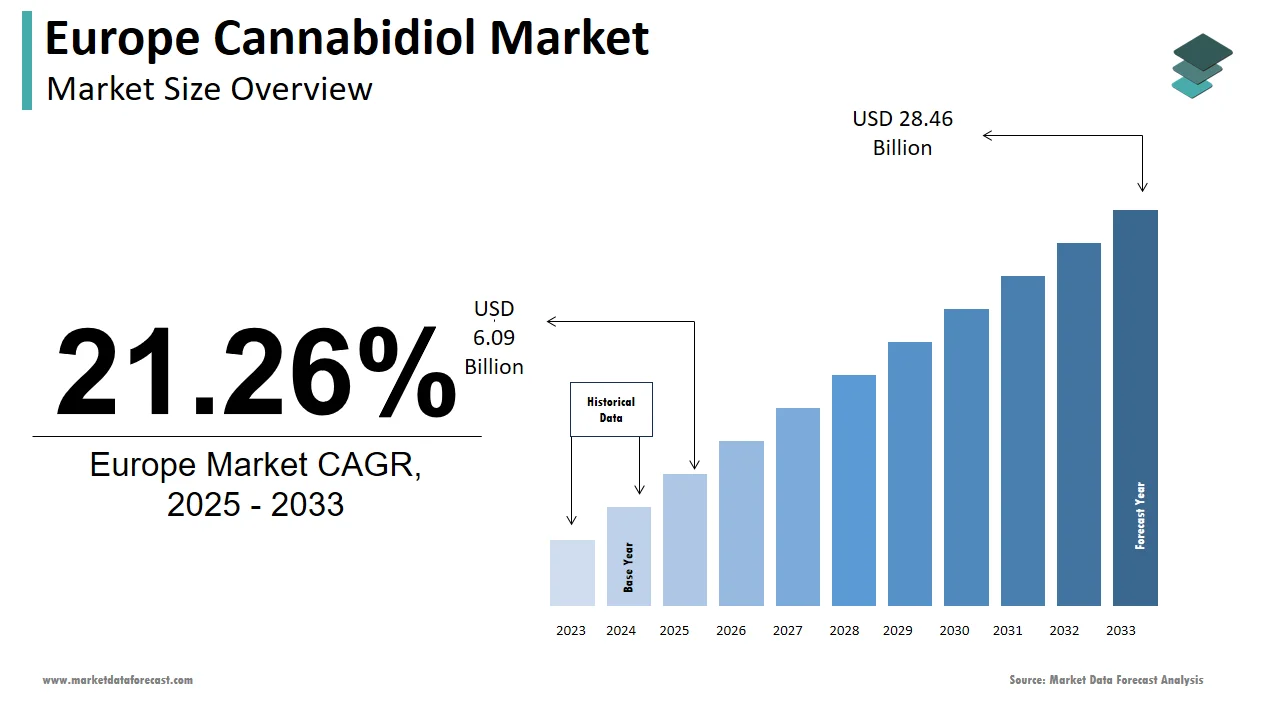
Cannabidiol, more commonly referred to as CBD, has gained significant recognition across Europe as a versatile compound derived from the cannabis plant, primarily due to its therapeutic potential and non-psychoactive properties. European consumers have shown a growing inclination toward natural and plant-based remedies, and CBD has emerged as a leading ingredient driving this trend. Regulatory clarity in some countries has further accelerated its acceptance, while in others, ongoing discussions continue to shape the landscape for its use in food and health products.
MARKET DRIVERS
Increasing Consumer Awareness of Therapeutic and Wellness Benefits
The rising consumer awareness towards managing anxiety, chronic pain, sleep disorders, and skin conditions is greatly influencing the growth of the Europe cannabidiol market. According to this, growth is driven by users who recognize CBD’s analgesic, anti-inflammatory, and anxiolytic properties, particularly in forms such as oils, creams, and capsules. The shift in public perception away from stigma has been accelerated by media, influencer content, and peer reviews, which reinforce trust in natural wellness products. Moreover, in 2023, over 25 million regular consumers of CBD products were estimated in Europe, according to Agropharm, reflecting broader adoption beyond niche user groups.
Regulatory Developments and Legal Clarity
The favourable regulatory changes and increasingly clear legal frameworks are enhancing the growth ofthe Europe cannabidiol market. The recognition by the European Court of Justice in 2020 that CBD is not a narcotic under EU law removed major regulatory uncertainty. Also, regulatory bodies such as the European Food Safety Authority (EFSA) are engaging in safety evaluations and establishing guidelines: in 2025, EFSA proposed a daily intake limit of 2 milligrams of CBD for novel foods, especially oral consumption, to ensure consumer safety. These kinds of measures, though restrictive in some respects, help establish trusted standards that reassure consumers and enable manufacturers to plan product development and marketing with more certainty.
MARKET RESTRAINTS
Regulatory uncertainty and tightening novel food controls
Regulatory ambiguity across jurisdictions and recent moves toward much lower acceptable daily intake are restricting the growth of the Europe cannabidiol market. In 2023, the United Kingdom Food Standards Agency revised its guidance, reducing the previously tolerated daily intake to ten milligrams, citing potential risks to liver and thyroid function, which forced many beverage and edible product makers to reformulate or withdraw high-dose items, according to the United Kingdom Food Standards Agency. At the same time, the European Union maintains a strict delta-9 THC ceiling in hemp of around 0.2 percent, which limits raw material sourcing and raises analytical burdens for producers, as described by EU regulatory overviews. These layered restrictions increase compliance costs because firms must perform routine high-precision testing, redesign label claims, and fund additional toxicology studies to obtain novel food authorisations.
Product quality variability, contamination, and enforcement risk
Inconsistent product quality and safety failures undermine consumer confidence and invite enforcement action that curtails distribution channels is limiting the growth of the Europe cannabidiol market. Independent and government testing programmes have repeatedly found wide variability in labelled cannabidiol content and instances of contaminants, including pesticide residues, heavy metals, and undeclared cannabinoids, as summarised in the United Kingdom Food Standards Agency analysis of CBD products for 2022 to 2023. At the same time, Europe saw continued cannabis related policing, with roughly six hundred and fifteen thousand use or possession offences reported across the European Union in 2023, which illustrates the enforcement environment in which producers must operate, as reported by the European Drug Report from the European Monitoring Centre for Drugs and Drug Addiction. Trace levels of delta-9 THC above permitted thresholds can render a shipment illegal, which has led to product recalls and seizures in several member states, creating distribution interruptions and reputational damage. Moreover, clinical evidence for many therapeutic claims remains limited, and regulators such as the World Health Organization have emphasised gaps in robust human efficacy and long-term safety data.
MARKET OPPORTUNITIES
Growth in Skin Care and Beauty Products Market Driven by Premium & Natural Ingredient Demand
The expanding CBD skin care and beauty segment, as European consumers increasingly seek natural, plant-based, premium beauty solutions, is creating new opportunities for the growth of the Europe cannabidiol market. The creams, moisturizers, and lotions category was the largest revenue generator in 2024 among subsegments, while serums are forecast to grow fastest as consumers increasingly demand higher potency, targeted skincare formats. Additionally, the European Commission clarified that hemp-derived cannabidiol is permitted in cosmetics under certain regulatory frameworks, which gives vendors regulatory certainty to introduce new beauty lines.
Expansion of Medical Cannabis / Therapeutic Applications and Clinical Research
The ongoing expansion of medical cannabis therapies and growing clinical research is creating new opportunities for the growth of the Europe cannabidiol market. Demand is being stimulated by increasing disease burden from chronic conditions such as multiple sclerosis, epilepsy, neuropathic pain, and anxiety disorders, where CBD derivatives are viewed as promising adjunct or alternative treatments. Further, Evidence synthesis studies in peer-reviewed medical literature show that many EU Member States have now licensed pharmaceutical preparations of cannabinoids as controlled clinical trials accumulate, improving the evidence base. Regulatory frameworks in Germany, the UK, Italy, and other countries are evolving to allow reimbursement, prescription, or formal medical use of CBD-based medications.
MARKET CHALLENGES
High Cost and Complexity of Regulatory Compliance Across Multiple Jurisdictions
The different regulatory requirements in each country and across EU bodies are restricting the growth of the Europe cannabidiol market. For example, companies seeking novel food authorization must often carry out extensive toxicological safety studies, labelling compliance, and batch testing. These requirements impose high upfront costs that can run into hundreds of thousands of euros per product before market launch. The differing enforcement of THC thresholds among EU member states adds further complication: what is acceptable in one country may lead to seizure or rejection in another. Additionally, customs and import regulations differ widely, creating bottlenecks in cross-border trade. Inconsistent judicial interpretations also mean long lead times or legal uncertainty.
Raw Material Supply Constraints and Farming to Extraction Bottlenecks
Securing high-quality hemp biomass or CBD‐rich plant material that meets EU legal requirements on THC content and pesticide residue is also a challenging factor for the growth of the Europe cannabidiol market. Many cultivators across Europe still struggle to meet strict regulatory limits (for example, THC below 0.2 percent in hemp in many jurisdictions) as well as to avoid contamination from heavy metals or pesticides. Climatic variation and soil variability further affect cannabinoid yield consistency. Extraction capacity is uneven, with few certified extraction facilities that use pharmaceutical-grade methods.
REPORT COVERAGE
| REPORT METRIC | DETAILS |
| Market Size Available | 2025 to 2034 |
| Base Year | 2025 |
| Forecast Period | 2026 to 2034 |
| Segments Covered | By Type, Distribution Channel, End-Users, and Region. |
| Various Analyses Covered | Global, Regional and Country-Level Analysis, Segment-Level Analysis, Drivers, Restraints, Opportunities, Challenges; PESTLE Analysis; Porter’s Five Forces Analysis, Competitive Landscape, Analyst Overview of Investment Opportunities |
| Countries Covered | Germany, UK, France, Italy, Rest of Europe |
| Market Leaders Profiled | Pharmahemp d.o.o, ENDOCA, NuLeaf Naturals LLC, Folium Biosciences, Elixinol, Cannoid LLC, Medical Marijuana Inc., and Isodiol International Inc. |
SEGMENTAL ANALYSIS
By Type Insights
The hemp-derived CBD segment was the largest by holding 56.16% of the total Europe cannabidiol market share in 2024. The growth of the segment is driven by many European countries that legally define hemp as cannabis varieties containing very low tetrahydrocannabinol (THC), often 0.2 percent or lower. Because hemp meets those thresholds, its cultivation, extraction, and sale of CBD derived from hemp are much more straightforward under many EU agricultural and novel food safety laws. For example, the EU Common Agricultural Policy allows certified hemp varieties to be cultivated and eligible for subsidies if they keep THC levels below legal limits. This legal clarity reduces compliance risk for hemp-based product companies compared to products derived from marijuana, which usually have stricter controls or even prohibitions. The ability to use hemp across wellness cosmetics, food supplements, and some pharmaceutical precursors gives hemp a broader legal operating space.
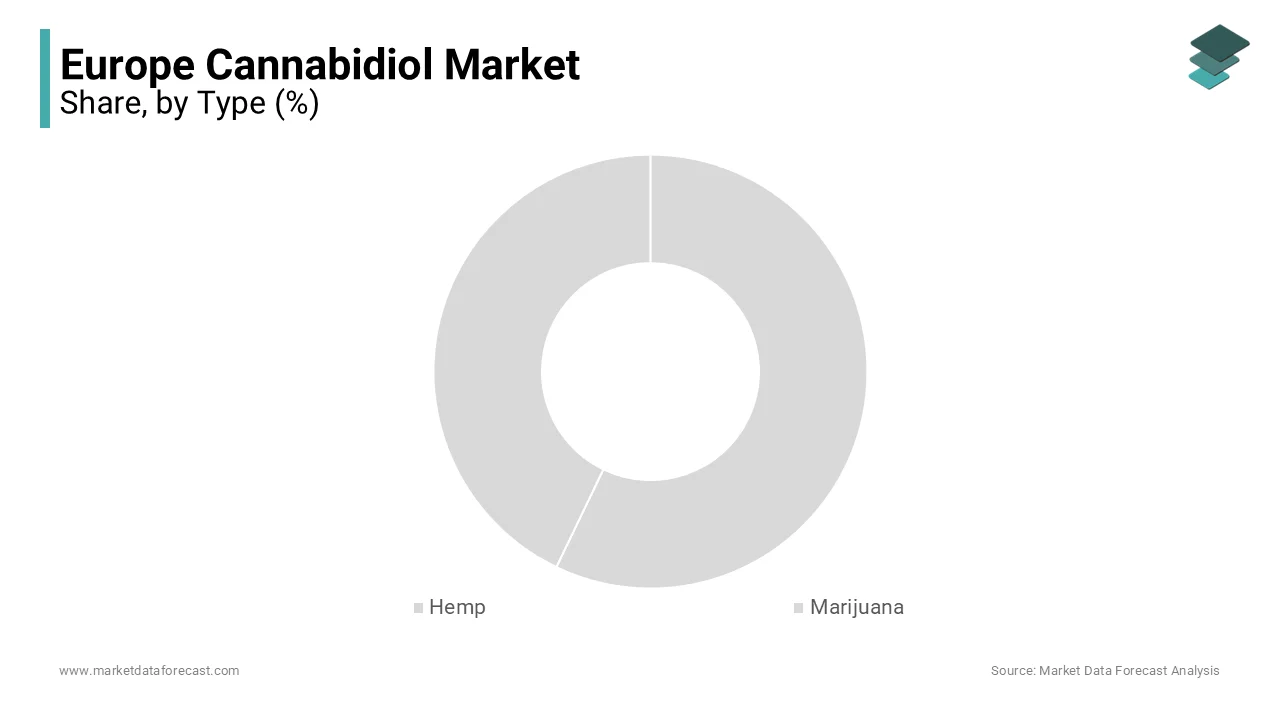
The marijuana derived CBD segment is expected to grow at a CAGR of 25.4% during the forecast period, where marijuana derived CBD growth is the expansion of regulatory approval and clinical recognition of its therapeutic applications. Countries such as Germany, Italy, and the UK are increasingly approving or licensing cannabis‐based medicines where cannabidiol from marijuana sources plays a role. Although medical cannabis includes other cannabinoids beyond CBD, the growing acceptance of marijuana derived CBD formulations in prescription contexts supports strong investment into those subsegments. Several European nations are moving toward liberalizing laws for cannabis for medical or even limited recreational use.
By Distribution Channel Insights
The B2B (business-to-business) sales channel segment was the largest and held 52.3% of the Europe cannabidiol market share in 2024. Pharmaceutical firms require large volumes of high-purity CBD extracts for clinical trials, drug development, and prescription medicines. The Europe cannabidiol market size was estimated at USD 347.7 million in 2023 and is forecast to grow at a compound annual growth rate of 25.8 percent through 2024 to 2030, partly because of increasing purchases of CBD by companies rather than individual consumers. Because bulk orders reduce per-unit cost and processing cost for downstream producers, the B2B channel becomes more cost-efficient.T
The B2C (business-to-consumer) segment is expected to grow at a CAGR of 25.8 % from 2025 to 2033, with the increasing penetration of internet-based retail and direct-to-consumer sales for CBD products. Consumers are more comfortable purchasing health and wellness products online, often enabling greater selection, better pricing, and discreet delivery. According to reports, the online channel in B2C is expanding swiftly.
By End-User Insights
The pharmaceuticals segment held a dominant share of the Europe cannabidiol market in 2024, with the large number of ongoing clinical trials and increasing acceptance of CBD for the treatment of medical conditions. In 2024, the Europe medical cannabis market size was USD 2,586.1 million, and it is projected to reach USD 12,652.9 million by 2033 at a CAGR of 18.33 percent. Many of these medical cannabis products include cannabidiol derivatives or formulations, leading pharmaceutical companies to invest heavily in CBD. Governments and health authorities in countries such as Germany, Italy, and the UK increasingly permit prescription or subsidized CBD-based treatments. When pharmaceuticals are used, products must meet strict safety, efficacy, and purity standards, which often raises barriers to entry but also act as a moat for those who comply. Because of these higher barriers, many companies focus their efforts on serving the pharmaceuticals segment, leading to large volumes and higher margins.
The wellness end-user segment is expected to witness a CAGR of 21.26% during the forecast period, with the rising consumer interest in health, beauty, lifestyle, and nonprescription prevention or wellness tools. The wellness segment includes personal care, cosmetics, nutraceuticals, and functional foods. Another growth factor for wellness is the rapid expansion of online retail, social commerce, and retail partnerships that allow wellness brands to reach consumers more directly. Products in wellness end use are easier to market through nonmedical channels (retail stores, beauty chains, direct to consumer) because the regulatory burden is lower in many cases (depending on the country). This makes launch and scaling faster.
COUNTRY LEVEL ANALYSIS
Germany Cannabidiol Market Insights
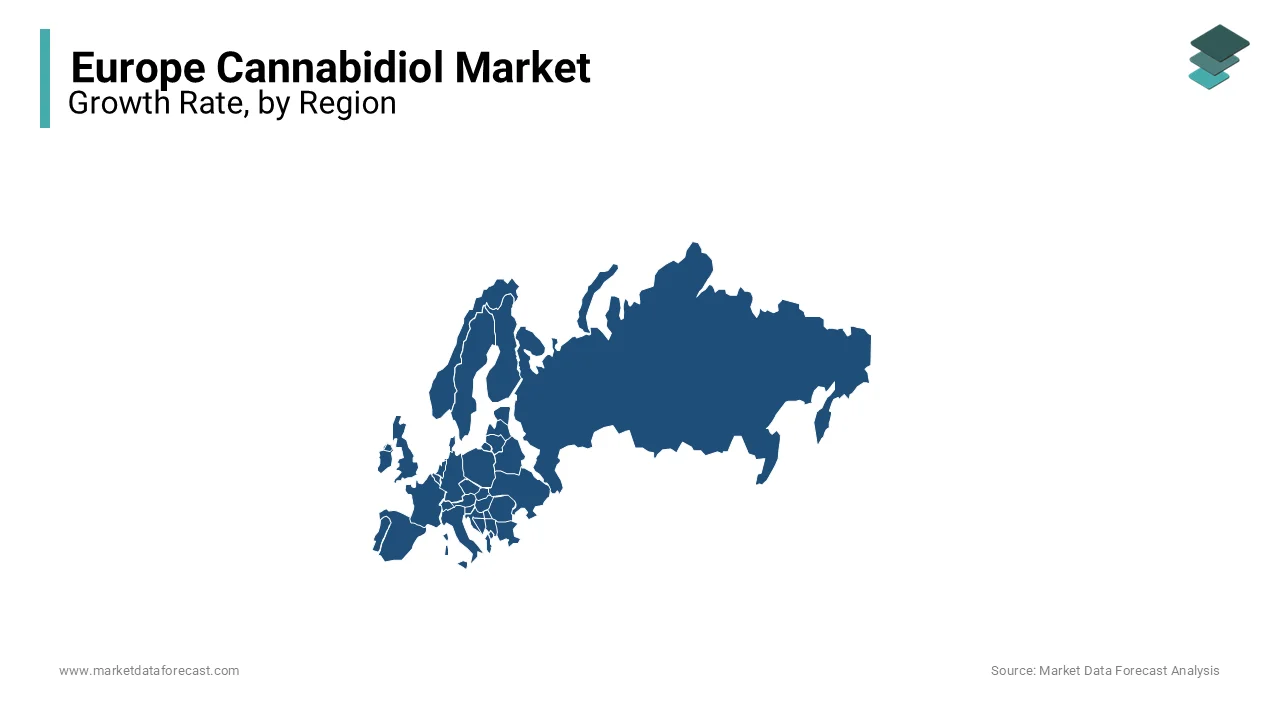
Germany was the top performer in the cannabidiol market and held 26.3% of the share in 2024. Germany has an established reimbursement system and health insurance coverage for certain cannabis-based medicines, which boosts medicinal CBD demand. The medical cannabis program, legalized in 2017, allows physicians to prescribe cannabis, including CBD-heavy formulations, which has increased physician adoption. The strong healthcare infrastructure also ensures high standards of product quality, safety, and regulated supply. This regulatory clarity helps firms confidently enter the German market for both medical and wellness CBD products. Germany’s widespread consumer awareness of wellness and alternative therapies contributes to demand.
France Cannabidiol Market Insights
France cannabidiol market was positioned second by occupying 23.2% of the market share in 2024. France has been moving toward clarifying its regulations for CBD and medical cannabis. For example, in 2025, it submitted regulatory decrees to the European Union to define technical standards and conditions for cannabis use in medical contexts. These steps reduce uncertainty for industry players. The progressive regulatory stance also enhances investor confidence and encourages product development. Consumer interest in natural health, botanicals, pain relief, skin care, and anxiety relief has been growing in France. Retail channels like pharmacies, wellness stores, and e-commerce are increasingly stocking CBD oil, topicals, and ingestibles.
United Kingdom (UK) Cannabidiol Market Insights
The UK cannabidiol market is also expected to have significant growth opportunities throughout the forecast period. In the UK, CBD products (oils, supplements, etc.) were classed under the novel foods regulatory procedure in 2020. This gave clarity for companies and retailers to bring products to market legally. The post-novel foods era has seen more CBD items in health food stores, wellness shops, and online platforms. This improvement in regulatory clarity reduces risk for companies, promotes product launches, and increases consumer trust. UK consumers show high awareness of CBD and its uses.
Spain Cannabidiol Market Insights
Spain's CBD market growth is likely to grow with approvals for the cultivation and sale of certain CBD products becoming easier or more consistent. The Spanish Agency of Medicines and Medical Devices (AEMPS) recently approved cultivation of medicinal cannabis for research purposes (Trichome Pharma), which signals greater institutional acceptance.
Italy Cannabidiol Market Insights
Italy cannabidiol market is likely to grow with the prominent opportunities throughout the forecast period. Italy has been investing in domestic cultivation, research initiatives, and pharmaceutical or wellness product development leveraging CBD. Growing companies and startups are entering the sector. The increasing number of clinics, research approval procedures, and cannabis pilot programs helps support medical and wellness CBD product launches. Italian consumers have historically been open to herbal remedies, botanical health products, and natural cosmetics.
COMPETITIVE LANDSCAPE
Competition in the Europe cannabidiol market is intensifying as pharmaceutical leaders, consumer wellness brands, and vertically integrated cannabis companies vie for growth opportunities in both medical and non-medical applications. Large pharmaceutical firms such as Jazz Pharmaceuticals are consolidating their dominance through prescription-based cannabidiol medicines supported by regulatory approvals and ongoing clinical trials. At the same time, global cannabis groups like Tilray Brands and Aurora Cannabis are focusing on the expansion of EU GMP-certified production and distribution to address the fast-growing medical cannabis segment. Consumer wellness players, including Endoca and Charlotte’s Web, are competing on transparency, organic farming practices, and brand differentiation in topical and edible products. Companies are investing heavily in research, regulatory compliance, and product diversification to build trust and secure retail shelf space in a market still evolving under strict safety standards. Partnerships with pharmacies, online retailers, and healthcare providers are becoming important to extend reach and build consumer confidence.
KEY MARKET PLAYERS
Some of the companies that are playing a dominant role in the europe cannabidiol market include
- Pharmahemp d.o.o
- ENDOCA
- NuLeaf Naturals LLC
- Folium Biosciences
- Elixinol
- Cannoid LLC
- Medical Marijuana Inc.
- Isodiol International Inc.
Top players in the market
- Jazz Pharmaceuticals commercialises Epidyolex in Europe and has positioned the medicine as the leading prescription cannabidiol therapy for certain severe paediatric epilepsies. The company continues to expand clinical and real-world evidence and to pursue additional indications while strengthening regulatory and payer engagement in Europe. To support Asia Pacific expansion, Jazz is running clinical programmes and regulatory interactions in Japan and Australia and is presenting real-world data at major neurology meetings to build physician awareness and reimbursement cases across the region.
- Tilray Brands operates an integrated global cannabis platform with EU GMP-certified cultivation and manufacturing capacity that supplies both medical products and consumer wellness lines across Europe. The company has actively expanded its Asia Pacific footprint by launching EU GMP medical brands in Australia and by scaling cultivation and processing capacity to meet cross-border demand. Tilray has invested in supply chain enhancements and product registrations to enable prescription-level distribution and patient access in Asia Pacific markets while leveraging partnerships with local distributors and clinical groups to accelerate adoption.
- Endoca is a European CBD brand that manages seed-to-shelf cannabis production and emphasises organic farming, third-party lab testing, and full transparency. The company has broadened retail distribution beyond Europe into the Asia Pacific through dedicated local e-commerce platforms and regional distributors offering topical and ingestible formulations adapted to local regulations. Endoca is investing in clinical research and in localised manufacturing and compliance capabilities in the Asia Pacific to ensure products meet regulatory and retail requirements, thereby boosting availability and consumer trust in those markets.
Top Strategies Used by the Key Market Participants
Key players in the Europe cannabidiol market use a mix of strategic approaches to consolidate their positions and capture future growth opportunities. Another widely used strategy is regulatory compliance and certification, since aligning with European Union novel food guidelines or securing EU GMP certification ensures credibility and market access. Firms also adopt geographic expansion through partnerships, joint ventures and localised production facilities to reach both developed and emerging markets across Europe and the Asia Pacific. Strategic collaborations and acquisitions are leveraged to scale distribution and research capacities, which is helping firms shorten time to market.
MARKET SEGMENTATION
This Europe cannabidiol market research report is segmented and sub-segmented into the following categories.
By Type
- Hemp
- Marijuana
By Distribution Channel
- B2B
- B2C
- Hospital Pharmacies
- Online
- Retail Stores
By End Users
- Medical
- Chronic Pain
- Mental Disorders
- Cancer
- Others
- Personal Use
- Pharmaceuticals
- Wellness
- Food & Beverages
- Personal Care & Cosmetics
- Nutraceuticals
- Others
By Country
- UK
- France
- Spain
- Germany
- Italy
- Russia
- Sweden
- Denmark
- Switzerland
- Netherlands
- Turkey
- Czech Republic
- Rest of Europe