- Product Description Description
- Table of Contents TOC
- List of Table & Figure LOT
- Get Free Sample PDF Sample PDF
Market Size, 2025
$7.39 BnMarket Estimate, 2026
$9.01 BnMarket Forecast, 2034
$44.15 BnCAGR, 2026–2034
21.97%Executive Summary: Europe Medical Cannabis Market
- Market Scope: Comprehensive European pharmaceutical cannabis assessment covering product types (flowers/buds, vape pens, extracts), derivatives (CBD, THC), plant species, routes of administration, therapeutic applications (cancer, pain management), distribution channels, and regional country markets.
- Market Valuation: Valued at USD 7.39 billion (2025), estimated at USD 9.01 billion (2026), and projected to reach USD 44.15 billion by 2034, registering an exceptional CAGR of 21.97% (2026–2034).
- Primary Growth Drivers: Sweeping legislative modernizations across key European nations (such as Germany's MedCanG reform leading to massive import surges), integration of digital telemedicine and e-pharmacy access models, and strict adherence to EU-GMP manufacturing compliance.
Key Market Segment Metrics (2026–2034)
| Category | Leading Segment (2025 Position) | Fastest-Growing Segment |
|---|---|---|
| By Product Type | Flowers/buds (capturing 46.4% share due to rapid bioavailability and traditional medical preference) | Vape pens and clinical-grade inhalation devices (projected at a 13.8% CAGR) |
| By Derivative | Cannabidiol - CBD (holding 50.9% share backed by high clinical versatility and non-psychoactive safety profiles) | Tetrahydrocannabinol - THC (projected at a 23.5% CAGR driven by declassification and chronic pain demand) |
| By Species | Cannabis Indica (capturing 41.9% share favored for sedative, analgesic, and sleep disorder therapies) | Hybrid species (projected at a 20.3% CAGR due to stabilized chemical profiles and precise chemotypes) |
| By Application | Cancer and oncology care (holding 42.9% share for chemotherapy-induced symptom management and cachexia) | Pain management (projected at a 24.2% CAGR addressing non-cancer neuropathic pain and opioid alternatives) |
| By Distribution Channel | Hospital & retail pharmacies (dominating with 56.5% share via regulated statutory prescription networks) | Online retailers and e-pharmacies (projected at a 15.5% CAGR powered by telehealth platforms) |
Major Market Players & Market Structure
Market Structure: Highly regulated, fast-maturing pharmaceutical market dominated by multinational cultivators and medical cannabis enterprises competing through strict EU-GMP certification, cross-border supply chain logistics, and digital health partnerships.
Key Companies: BOL Pharma, Tilray, MedReleaf Corporation, Aurora Cannabis, Inc., Curaleaf Holdings, Inc., Canopy Growth Corporation, Insys Therapeutics, Inc., Aphria, Inc., MGC Pharmaceuticals Limited, GW Pharmaceuticals plc, and others.
 Download Free Sample Report
Europe Medical Cannabis Market Size
The size of the Europe medical cannabis market was valued at USD 7.39 billion in 2025. This market is expected to grow at a CAGR of 21.97% from 2026 to 2034 and be worth USD 44.15 billion by 2034 from USD 9.01 billion in 2026.
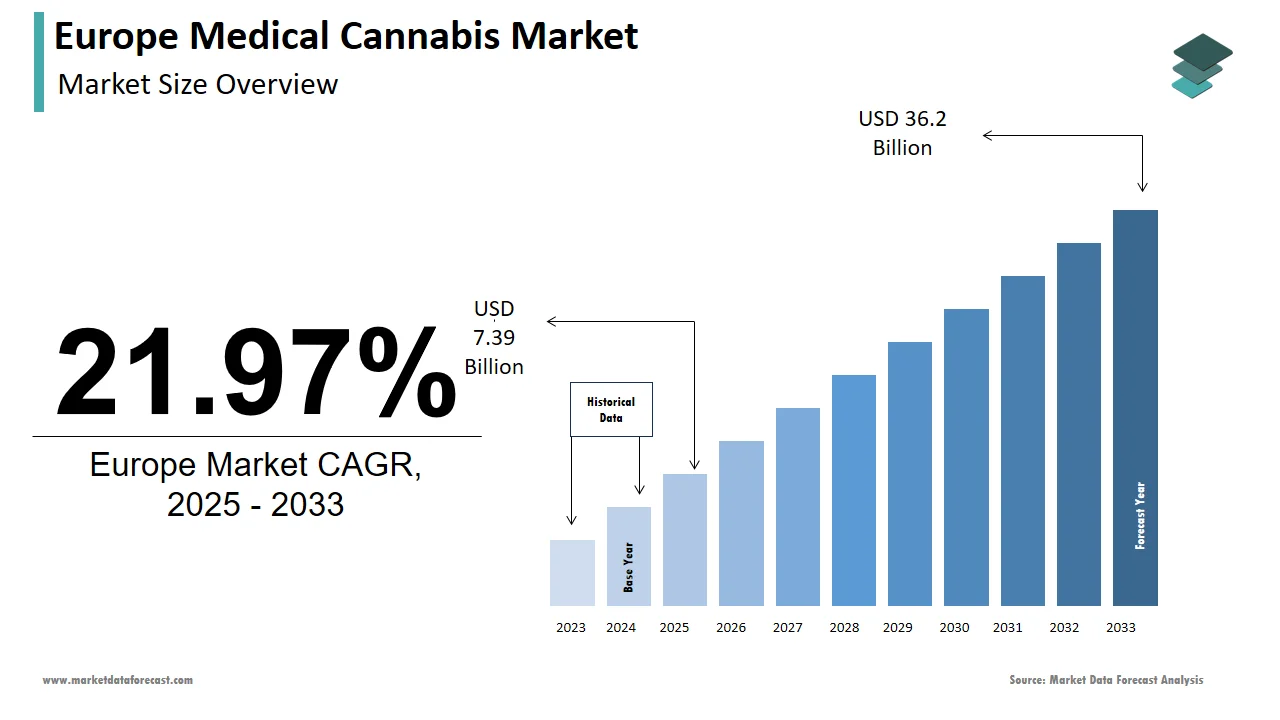
The Europe medical cannabis market represents a rapidly maturing and highly regulated pharmaceutical sector, which is characterized by a transition from speculative growth to robust operational infrastructure. The European medical cannabis market is projected to grow significantly over the forecast period due to the sweeping legislative modernizations across key nations. Germany remains the clear economic engine of this regional expansion, according to the German Federal Institute for Drugs and Medical Devices (BfArM), medical cannabis imports into Germany surged dramatically from approximately 73 tonnes in 2024 to more than 201 tonnes in 2025 following the historic MedCanG reform. Concurrently, the United Kingdom has emerged as a critical secondary growth corridor, where expanding patient volumes pushed market values to $298 million in 2025. This macroeconomic trajectory reflects a structural shift toward digitized access models, where telemedicine platforms and stringent EU-GMP compliance standards dictate commercial success for enterprise operators looking to capitalize on European patient demand.
MARKET DRIVERS
Macro-Level Legislative Declassification and Regulatory Harmonization
The structural shift in regional regulatory frameworks is one of the major factors propelling the Europe medical cannabis market growth. For years, the market faced friction due to arduous administrative bottlenecks. The primary demand factor shifting this paradigm is the sudden ease of prescribing capabilities for physicians, which effectively removes systemic hurdles to patient access. The elimination of prior authorization requirements creates an immediate consumer demand pull, encouraging healthcare providers to integrate cannabinoid therapies into routine patient care pathways. According to data published by Germany’s Federal Institute for Drugs and Medical Devices (BfArM), the practical impact of legislative reform has been immense; German medical cannabis imports grew dramatically from 72 tonnes in 2024 to an unprecedented 201 tonnes in 2025 following the implementation of the Cannabis Act (CanG). This reclassification eliminated the strenuous narcotic prescription form requirements, allowing regular physicians to prescribe medical cannabis effortlessly. Furthermore, as per a market analysis released by the Bloomwell Group, medical cannabis prescriptions in Germany experienced a staggering 3,300% surge from early 2024 through the end of 2025. This legislative liberalization has triggered a massive influx of legal demand, establishing a highly scalable and European Union Good Manufacturing Practice (EU-GMP) compliant commercial landscape across Western Europe.
Digital Healthcare Integration and the Telemedicine Infrastructure Boom
The rapid proliferation of specialized digital health ecosystems, digital pharmacies, and remote telehealth infrastructure is further driving the Europe medical cannabis market expansion. Medical cannabis distribution in Europe relies heavily on structured patient onboarding, clinical validation, and targeted product matching. The underlying demand factor here centers on the modern patient's preference for discreet, seamless, and remote healthcare consultations, combined with price stabilization within the legal commercial supply chain. Telemedicine bridges the geographical and cultural gap between specialized clinicians and eligible chronic care patients. According to industry data tracked by the European data analytics organization Cannamonitor, the total number of active medical cannabis patients in Germany escalated from roughly 250,000 at the start of 2024 to approximately 900,000 by mid-2025, a trajectory sustained entirely by integrated telemedicine networks. Concurrently, consumer adoption has been heavily reinforced by shifting supply economics. As per a comprehensive pricing index compiled by the Bloomwell Group, the average retail price per gram of medical cannabis flower in specialized European pharmacies plummeted from €8.33 in January 2025 to €5.23 by December 2025. This significant reduction in out-of-pocket costs, paired with digital point-of-care delivery models, successfully migrates consumers from the illicit market directly into the highly regulated pharmaceutical supply chain.
MARKET RESTRAINTS
The Fragmentation of National Regulatory Frameworks and Lack of Centralized EU Approval
The absence of a unified, pan-European regulatory framework is primarily hampering the Europe medical cannabis market growth. While the European Medicines Agency (EMA) oversees centrally authorized pharmaceutical products, it has not granted centralized marketing authorization for raw medical cannabis flowers or magistral preparations. The primary demand factor suppressed by this fragmentation is consumer and institutional ease of access. Because there is no single point of commercial entry, a product successfully registered in one member state does not receive automatic mutual recognition in another. This forces enterprise operators to execute highly expensive, country-by-country compliance strategies. According to the comprehensive industry data compiled in the European Cannabis Regulations Business Guide by Cannabis Europa, businesses entering the continent face more than 30 distinct legal regimes, ranging from highly liberalized frameworks to completely restricted ecosystems. Consequently, this regulatory friction deeply stifles cross-border demand and localized market scaling. For instance, as per data published by the French National Agency for Medicines and Health Products Safety (ANSM), while neighboring Germany expanded rapidly via its 2024 Cannabis Act, France’s medical cannabis patient base reached an estimated 70,000 by late 2024, operating entirely within a restricted, time-limited pilot architecture. This regulatory bottleneck leaves significant addressable demand locked behind diverse national pilot programs, severely capping total addressable market velocity across the broader European Union.
Pervasive Reimbursement Disparities and Out-of-Pocket Cost Burdens
The highly uneven distribution of statutory health insurance coverage and the resulting financial burden placed directly on the patient are further impeding the regional market expansion. The critical demand factor at play is product affordability. In traditional European healthcare models, consumer adoption is inextricably tied to state-backed reimbursement infrastructure. When public or private insurance funds refuse to cover medical cannabis, it ceases to be an affordable clinical therapy for the average chronic disease sufferer, resulting in a dramatic drop-off in sustained customer retention. According to data tracked by the European industry advisory network Cannabis Europa, Germany stands as the outlier where the Statutory Health Insurance (GKV) is legally mandated to reimburse approved medical cannabis prescriptions under certain clinical criteria. However, this financial accessibility vanishes across the rest of the continent. For instance, the United Kingdom has emerged as a major private medical cannabis market, yet the National Health Service (NHS) offers virtually zero reimbursement for these therapies. As a result, approximately 100,000 active British patients are forced to pay entirely out of pocket, spending between £150 and £300 monthly for specialized consultations and medicine. This prohibitive pricing structure isolates demand solely within affluent demographics, preventing medical cannabis from achieving mainstream, high-volume pharmaceutical penetration across the United Kingdom and Southern Europe.
MARKET OPPORTUNITIES
The Proliferation of Next-Generation Formulations and Certified Medical Devices
Moving beyond traditional raw flower toward highly standardized and next-generation delivery systems is a promising opportunity for the Europe medical cannabis market. The underlying demand factor driving this shift is the clinical community’s insistence on dosing precision, reproducibility, and non-combustible intake methods. For medical cannabis to achieve deeper institutional penetration, it must mirror conventional pharmaceutical modalities. Enterprise operators that invest heavily in advanced oil extracts, sublingual sprays, and certified inhalation technologies can capture substantial market share by appealing directly to physician trust and traditional clinical guidelines. According to a regulatory and technology product announcement published by the IMARC Group, the structural transition toward advanced delivery systems achieved a critical milestone when Curaleaf International, in partnership with Jupiter Research, secured an EU Class IIa medical device certification for the continent's first handheld liquid inhalation device specifically engineered for cannabis-based medicinal products. This device utilizes magnetic, pre-metered cartridges to deliver standardized, highly bioavailable cannabinoid doses. This rapid product evolution matches shifting consumer demographics. For instance, the broader European legal market nearly tripled to reach €1.5 billion, propelled heavily by diversifying product matrices. By offering clinical-grade alternatives to traditional smoking or vaporization of raw flower, manufacturers unlock vast, untapped segments of the patient population who previously resisted cannabinoid therapies due to delivery format constraints.
Transitioning Transition-Phase Economies into Permanent Frameworks
The imminent conversion of large-scale European pilot programs and provisional regimes into permanent and fully commercialized medical cannabis infrastructures is another significant opportunity for the regional market. When a country shifts from a highly restrictive, government-capped experimental framework to a permanent, commercially accessible model, it immediately triggers an aggressive wave of domestic healthcare demand that cannot be met by existing localized production, opening lucrative corridors for cross-border enterprise partnerships. According to an extensive regulatory matrix published in the European Cannabis Report by Prohibition Partners, several major European economies are aggressively transitioning toward permanent legal frameworks. Most notably, Denmark permanently codified its medical cannabis architecture, while France finalized the migration of its long-standing national pilot program into a permanent, state-regulated medical cannabis system. Concurrently, central and southern European nations are accelerating their frameworks. According to data tracked by the European advisory firm Cannabis Europa, Slovenia completely overhauled its regulatory landscape, legalizing domestic cultivation and distribution by licensed pharmaceutical entities while empowering doctors to prescribe medical cannabis across an unrestricted range of clinical conditions. For enterprise operators, this rolling wave of institutionalization across Western and Central Europe creates a predictable roadmap for market entry, allowing multinational firms to scale their EU-GMP-certified supply chains into newly liberalized territories where patient demand is surging but local cultivation ecosystems remain deeply underdeveloped.
MARKET CHALLENGES
Looming Telemedicine Prescription Restrictions and Domestic Policy Instability
The vulnerability of digital healthcare frameworks to sudden legislative reversals is one of the major challenges to the European medical cannabis market. The primary demand factor disrupted by this instability is seamless, remote patient onboarding. The rapid acceleration of European patient registries has been almost entirely sustained by digitized telemedicine platforms, which stripped away the geographic and social frictions historically associated with accessing cannabinoid therapies. However, when regulatory bodies attempt to claw back these digital liberties, it creates a volatile consumer environment that threatens long-term patient retention and spikes customer acquisition costs for operators. The immediate reality of this threat is evident in Europe's largest marketplace. According to statutory legislative filings tracked by the German Federal Ministry of Health, a highly contested amendment to the Medical Cannabis Act (MedCanG) was advanced to restrict the very telemedicine frameworks that drove the market’s initial boom. As per regulatory updates published by the legal advisory group DeeMED Consulting, the proposed rollbacks mandate strict in-person clinical consultations for all new patients, introduce heavy restrictions on remote prescribing, and attempt to limit mail-order specialized pharmacy fulfillment. This sudden regulatory pivot acts as a massive bottleneck to the digital pipeline. For institutional investors and enterprise operators, this policy flip-flopping destabilizes predictable demand forecasting, as forcing a highly digitized, modern patient demographic back into traditional brick-and-mortar clinics inevitably chokes off market velocity and creates severe friction within the consumer journey.
Acute Supply Chain Vulnerability and Technical EU-GMP Standardization Friction
The severe operational friction and steep capital expenditures required to maintain compliance across a heavily fragmented international supply chain are further challenging the regional market expansion. The underlying demand factor compromised here is product consistency, batch-to-batch chemical stability, and predictable pricing for the end consumer. Unlike conventional, synthetic pharmaceuticals, medical cannabis is a highly complex botanical matrix. Because European authorities mandate absolute adherence to European Union Good Manufacturing Practice (EU-GMP) standards, international cultivators face extreme technological hurdles when trying to export medical-grade APIs into the European commonwealth. According to a comprehensive technological and pharmaceutical manufacturing profile published in the peer-reviewed medical journal MDPI, global cannabis producers face immense difficulty ensuring chemical stability, selectivity, and reproducible terpene/cannabinoid profiles across distinct cultivation batches. The absence of an international reporting standard for active pharmaceutical ingredients (APIs) results in significant technological heterogeneity. According to operational insights published by Blossom Pharma, a leading European pharmaceutical contract manufacturing operator, the industry is suffering from a hidden infrastructure bottleneck, where the majority of global cultivation facilities fail to achieve true, single-site EU-GMP validation. When import batches are rejected at European borders due to minor deviations in impurity profiles or microbial testing, it triggers immediate domestic product shortages. This supply disruption ultimately spikes retail shelf prices, forcing disillusioned patients to turn away from the legal pharmaceutical market and return to the unregulated illicit space.
REPORT COVERAGE
| REPORT METRIC | DETAILS |
| Market Size Available | 2025 to 2034 |
| Base Year | 2025 |
| Forecast Period | 2026 to 2034 |
| Segments Covered | By Product Type, Derivative, Species, Source, Application, Route of Administration, End User, Distribution Channel, and Country. |
| Various Analyses Covered | Global, Regional, and Country-Level Analysis, Segment-Level Analysis, Drivers, Restraints, Opportunities, Challenges; PESTLE Analysis; Porter’s Five Forces Analysis, Competitive Landscape, Analyst Overview of Investment Opportunities |
| Countries Covered | North America, Europe, APAC, Latin America, Middle East & Africa |
| Market Leaders Profiled | BOL Pharma, Tilray, MedReleaf Corporation, Aurora Cannabis, Inc., Curaleaf Holdings, Inc., Canopy Growth Corporation, Insys Therapeutics, Inc., Aphria, Inc., MGC Pharmaceuticals Limited, GW Pharmaceuticals plc, and Others. |
SEGMENTAL ANALYSIS
By Product Type Insights
The flowers/buds product segment stood as the largest category in the European medical cannabis market by commanding 46.4% of the total regional market share in 2025. One leading factor driving the domination of the flower segment is its immediate bioavailability and the preference of European physicians for natural botanical profiles. Unlike processed alternatives, dried flower inhalation offers rapid therapeutic onset for acute conditions like breakthrough chronic neuropathic pain, while maintaining the natural botanical "entourage effect" favored by healthcare practitioners. According to patient registry data published by the United Kingdom’s Medical Cannabis Registry, over 65% of all newly registered medical cannabis patients in the UK receive prescriptions for dried flower as their primary treatment medium. The explosive scale of Germany’s import and distribution infrastructure that is heavily oriented toward raw flower is further aiding the dominance of the flowers segment in the European market. As per official regulatory statistics compiled by Germany's Federal Institute for Drugs and Medical Devices (BfArM), German medical cannabis imports surged dramatically to exceed 201 tonnes in 2025 following the declassification of cannabis under the landmark Cannabis Act (CanG). This massive influx of physical supply solidifies raw flower as the dominant volume contributor across continental pharmacies.
In contrast, the vape pens segment constitutes the fastest-growing product category within the European landscape and is projected to expand at an outstanding CAGR of 13.8% over the forecast period owing to the introduction of clinical-grade, technologically advanced inhalation devices that address the medical community's historical concerns regarding dosing precision and product standardization. For example, according to a product filing registered by Curaleaf International, the company successfully secured an EU Class IIa medical device certification for its innovative handheld medical cannabis vaporizer, allowing physicians to prescribe pre-metered, aerosolized cannabinoids with clinical precision. This rise in medical-grade hardware is coupled with shifting patient demographics that prioritize discretion and lung-friendly alternatives to smoking raw flower. As per European patient-use tracking surveys released by the data analytics firm Cannamonitor, active consumer demand and pharmacy orders for vape cartridges and specialized inhalation pens experienced a remarkable surge of 185% from the beginning of 2024 through early 2026, positioning this segment as the premier engine of product-type growth across Western Europe.
By Derivative Insights
The cannabidiol (CBD) segment was the largest category in the European medical cannabis market and accounted for 50.9% of the European market share in 2025. The sustained market domination of the CBD segment is primarily propelled by its extensive clinical versatility and highly favorable, non-psychoactive safety profile. Unlike psychoactive cannabinoids, CBD does not cause cognitive impairment or intoxication, making it exceptionally well-suited for pediatric, geriatric, and highly sensitive chronic patient populations. According to clinical trial dossiers validated by the European Medicines Agency (EMA), the centralized approval of Epidyolex, which is a highly purified CBD oral solution and paved the way for standardizing cannabinoid therapies across the European Union. As per the financial disclosures released by Jazz Pharmaceuticals, European revenues for Epidyolex surged to approximately €350 million in 2025, driven by expanding public reimbursement approvals in major markets like Germany and the United Kingdom. This clinical and commercial validation has given conservative medical boards and general practitioners the confidence to write volume-heavy CBD prescriptions, establishing it as the most widely integrated derivative molecule in mainstream European healthcare. The significantly lower regulatory scheduling and streamlined import-export compliance frameworks associated with non-narcotic cannabinoids are further contributing to the dominance of the CBD segment in the European market. According to regulatory mapping documentation published by the European Industrial Hemp Association (EIHA), CBD is widely classified under less restrictive categories than psychoactive compounds, which substantially reduces the bureaucratic red tape required for cross-border logistics and pharmacy distribution. This regulatory ease enables compounding pharmacies to formulate custom magistral CBD preparations with minimal administrative delay. As per supply chain metrics tracked by the specialized European distribution group Cansativa, the streamlined compliance pathway for CBD isolates and distillates has reduced wholesale import friction by nearly 40% compared to high-THC substances, keeping the average retail cost of CBD-based magistral formulations affordable and highly accessible to self-paying patients who are otherwise priced out of restricted pharmaceutical therapies.
Conversely, the tetrahydrocannabinol (THC) segment is the fastest-growing derivative category within the European market and is estimated to grow at a promising CAGR of 23.5% over the forecast period in the European market owing to the rapid declassification of THC-dominant products from restrictive narcotic schedules and their increasingly critical role in severe chronic pain and oncology regimens. According to clinical guidelines compiled by the European Monitoring Centre for Drugs and Drug Addiction (EMCDDA), THC derivatives are uniquely effective at alleviating chemotherapy-induced nausea, multiple sclerosis spasticity, and severe neuropathic pain where conventional opioids fail. As per official import statistics published by Germany’s Federal Institute for Drugs and Medical Devices (BfArM), the domestic demand for THC-dominant medical formulations experienced an unprecedented spike, contributing to Germany importing more than 201 tonnes of medical cannabis in 2025. This demand was unleashed by Germany’s Cannabis Act (CanG), which removed THC from the strict Narcotics Act. This legal shift allows standard physicians to prescribe THC-dominant medicines using basic prescriptions instead of highly regulated narcotic sheets, instantly opening a massive, previously suppressed patient pipeline and accelerating the segment’s growth across Europe.
By Species Insights
The cannabis indica segment represents the largest segment and held a dominant share of 41.9% of the regional market share in 2025 due to the sheer domination of Indica-dominant species across Europe, as well as its highly potent, clinically favored therapeutic profile, particularly regarding its sedative, spasmolytic, and analgesic qualities. Traditional European medical practitioners increasingly prescribe Indica cultivars to target severe, treatment-resistant chronic pain, muscle spasticity, and acute neuropathic insomnia. According to clinical patient survey data published in the peer-reviewed medical journal PMC by researchers at Hannover Medical School in Germany, pain disorders and severe sleep disturbances make up the vast majority of legal European medical cannabis prescriptions, with clinicians heavily favoring cultivars that mimic the relaxing, high-myrcene chemical profiles characteristic of pure Indica lines to achieve therapeutic efficacy. A second leading factor cementing the domination of Indica is its highly favorable agricultural economics for licensed European cultivators. Indica-dominant species inherently possess shorter vegetative and flowering cycles, a stockier physical stature ideal for indoor vertical farming, and significantly higher yields per square meter compared to Sativa counterparts. As per cultivation facility profiles tracked by the London-based advisory firm Prohibition Partners, more than 60% of the commercial cultivation infrastructure built in EU-GMP certified facilities across major production hubs like Portugal, Denmark, and North Macedonia is dedicated to Indica-dominant production, ensuring a highly reliable, consistent, and cost-efficient supply chain that satisfies bulk pharmacy demand.
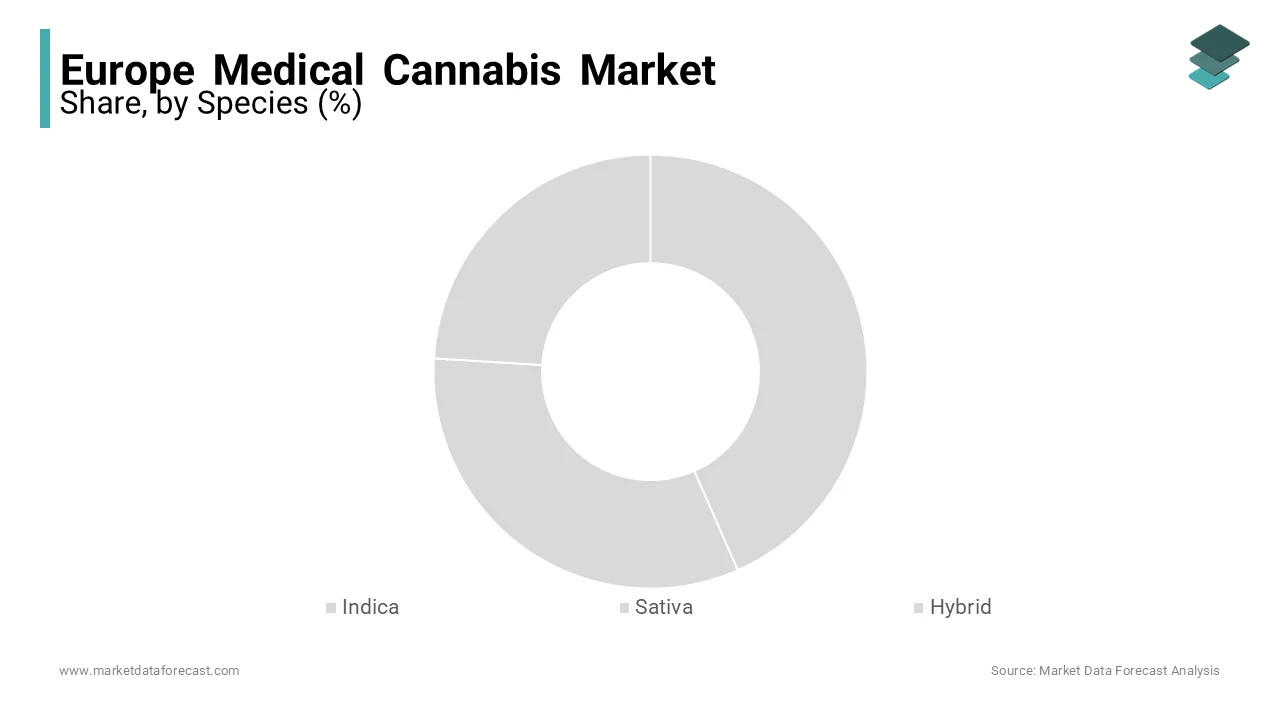
Conversely, the hybrid species segment is emerging as the fastest-growing category within the European market and is expected to exhibit a CAGR of 20.3% over the forecast period owing to the clinical demand for highly tailored, consistent chemical profiles (chemotypes) that cannot be achieved through wild-type pure species. Modern hybrid breeding allows pharmaceutical-grade cultivators to precisely stabilize the ratio of active cannabinoids and dominant terpenes, creating predictable, targeted therapeutic outcomes. For example, according to a landmark agricultural innovation report published by the European Industrial Hemp Association (EIHA), the introduction of stabilized F1 hybrid cannabis cultivars has revolutionized commercial crop uniformity, ensuring that medical patients receive exact botanical dosing from batch to batch. A second major driver for the rapid rise of Hybrid species is the changing nature of medical cannabis prescriptions, which increasingly demand daytime-functional, balanced therapies. Unlike the heavily sedating Indica or highly stimulating Sativa, hybrid strains can be specifically engineered to offer moderate pain relief without cognitive impairment, facilitating better patient compliance. As per prescribing logs analyzed by the Germany-based data group Cannamonitor, pharmacy requests for balanced hybrid cultivars containing near-equal ratios of THC and CBD surged by over 140% from early 2024 through 2026, positioning hybrids as the future standard of care for long-term chronic disease management across European healthcare networks.
By Application Insights
The cancer segment dominated the market by commanding 42.9% of the regional market share in 2025 due to the extensive, clinically validated role of cannabinoids in managing chemotherapy-induced peripheral neuropathy, severe chronic pain, and tumor-associated cachexia. European oncologists are increasingly integrating medical cannabis into standard palliative and active cancer care to ease debilitating symptoms that conventional therapeutics fail to address. According to clinical trial data published by the European Journal of Pain, cancer patients utilizing medical-grade cannabis recorded an average 30% reduction in baseline pain scores alongside a substantial decrease in opioid dependency. A second leading factor cementing the domination of the cancer segment is the widespread physician acceptance and regulatory endorsement of specific cannabinoid medicines for oncology patients across Europe. As per prescribing guidelines authorized by the Spanish Agency for Medicines and Medical Products (AEMPS), cannabinoid formulations are officially prioritized as standard adjunctive therapies for oncology-related nausea and pain. This strong clinical support has translated into high-volume prescription patterns, helping the cancer application segment capture the largest share of the broader medical cannabis market.
Conversely, the pain management segment is anticipated to record the fastest CAGR of 24.2% over the forecast period in the European market owing to the immense, escalating clinical demand to treat chronic, non-cancer neuropathic pain amidst a concerted effort by European healthcare systems to curb opioid prescribing. Chronic pain affects more than 150 million citizens across Europe, and medical cannabis offers a highly effective, lower-risk alternative for long-term therapeutic relief. For instance, according to an exhaustive regional pain registry report published by the UK’s Medical Cannabis Clinicians Society, chronic pain accounted for over 75% of all private medical cannabis prescriptions generated across British clinics between 2024 and 2025. A second major driver for this segment’s rapid growth is the shift in public health policy and insurance reimbursement structures to favor non-addictive pain therapies. According to statistical databases compiled by Germany’s Statutory Health Insurance (GKV), reimbursement approvals for chronic neuropathic pain treatments using medical cannabis reached an all-time high of nearly 72% in 2025. This favorable regulatory and insurance environment has dramatically lowered the financial barrier for chronic pain sufferers, fueling a massive wave of domestic pharmacy demand and establishing pain management as the fastest-growing therapeutic frontier in the European market.
By Distribution Channel Insights
The pharmacies (hospital & retail) segment dominated the market by capturing 56.5% of the regional market share in 2025. The absolute dominance of this segment is majorly driven by the highly institutionalized and pharmaceuticalized nature of Europe's healthcare systems, which mandate that controlled substances only be dispensed through licensed pharmacy networks. Unlike the open dispensary-based models seen in North America, European countries treat medical cannabis as a strictly regulated prescription medication. According to official pharmacy registration records published by the Federal Union of German Associations of Pharmacists (ABDA), there are over 17,500 community pharmacies in Germany alone authorized to dispense specialized magistral formulations. This extensive, pre-existing brick-and-mortar retail and hospital pharmacy infrastructure provides patients with immediate, trusted, and legally compliant access to therapeutic cannabinoids. A second critical factor sustaining the dominance of physical pharmacies is their integration with state-backed health insurance and statutory reimbursement frameworks. In prominent European nations like Germany, medical cannabis is only eligible for statutory health insurance coverage when processed and dispensed directly through approved hospital or retail pharmacy networks. As per official statistical updates released by the German Statutory Health Insurance (GKV), retail and hospital pharmacies process more than 75% of all reimbursed medical cannabis prescriptions, representing hundreds of millions of euros in covered patient therapies. This deeply integrated financial pipeline ensures that the vast majority of high-volume medical cannabis transactions remain firmly anchored within the traditional pharmacy channel, locking out unintegrated distribution formats.
Conversely, the online retailers segment is the fastest-growing distribution channel in the European market and is estimated to record a CAGR of 15.5% over the forecast period. The rapid acceleration of the online retailers and e-pharmacy segment is driven primarily by the massive expansion of telehealth networks and digitized prescribing services that have reshaped the modern European patient journey. Rather than navigating traditional brick-and-mortar hospital visits, patients managing chronic pain and sleep disorders increasingly leverage remote medical consultations to obtain compliant digital e-prescriptions. According to digital health market research published by the European data group Cannamonitor, active consumer utilization of integrated tele-cannabis platforms and mail-order pharmacy fulfillment grew by over 185% from early 2024 through early 2026. A second major driver fueling the growth of online pharmacies is their ability to offer unparalleled product availability, transparent pricing, and home-delivery convenience for self-paying patients. In countries like the United Kingdom, where public NHS coverage for medical cannabis remains extremely limited, private patients must fund their therapies out of pocket. According to retail pricing indexes tracked by the Bloomwell Group, specialized online pharmacy networks have successfully optimized supply chains, reducing the average cost of high-quality medical cannabis from €8.33 per gram to €5.23 per gram by early 2026. This stark cost reduction, combined with discrete home delivery, has triggered a massive consumer migration toward digital storefronts, securing online pharmacies as the fastest-growing commercial corridor across Europe.
REGIONAL ANALYSIS
Germany Medical Cannabis Market Analysis
Germany was the undisputed powerhouse of the European medical cannabis market and commanded 33.7% of the European market share in 2025. The country’s market status is highly advanced, having transitioned into the world's largest regulated medical cannabis market in 2025. This extraordinary growth is driven primarily by the historic Medical Cannabis Act (MedCanG) passed in 2024, which declassified cannabis as a restricted narcotic. According to official data released by the German Federal Institute for Drugs and Medical Devices (BfArM), this regulatory liberation caused medical cannabis imports to skyrocket to an unprecedented 201.1 tonnes in 2025, representing a staggering 176% year-over-year increase. Furthermore, data from Cannamonitor reveals that the German pharmacy sell-out market surpassed €1 billion for the first time in 2025, propelled by a rapidly expanding patient base of approximately 900,000 individuals and an extensive network of over 30 active tele-cannabis platforms.
United Kingdom Medical Cannabis Market Analysis
The United Kingdom has solidified its position as the second-largest medical cannabis market in Europe. The UK’s market status is highly active and commercial, operating almost exclusively within a booming private-sector clinic model. According to the UK Medical Cannabis White Paper published by Prohibition Partners, the country's active patient base reached over 140,000 individuals in early 2026, a remarkable rise from roughly 80,000 in 2025. A primary driving factor behind this growth is the rapid scaling of specialized private clinics and digital prescribing infrastructure. As per import data from the UK Home Office, imports of cannabis-based medicinal products more than doubled to 30,061 kilograms in 2025. Because public National Health Service (NHS) reimbursement remains strictly restricted, this entire €269 million market is sustained by self-paying patients, making the UK a highly lucrative target for premium international flower and oil brands.
Poland Medical Cannabis Market Analysis
Poland has emerged as a key regional leader and is the second-largest medical cannabis market in the European Union by volume. The market status in Poland is characterized by high volume consumption paired with rapid price compression. According to granular pharmacy-level dispensing records obtained from Poland's national health data authority (Centrum e-Zdrowia), Polish pharmacies dispensed nearly 5,450 kilograms of dried cannabis flower in 2025. This represented a resilient 12% increase in physical volume, despite the government enforcing a strict ban on telemedicine prescribing in late 2024. This regulatory shift triggered a transition toward more structured, in-person clinic networks. However, according to the Polish Society of Cannabis Medicine, aggressive wholesale price compression caused total market revenues to dip by 19% to approximately €60 million in 2025, proving that while patient demand is growing, operators must scale volume to offset declining margins.
Italy Medical Cannabis Market Analysis
Italy represents a mature and highly controlled medical cannabis landscape. Italy’s market status is highly institutionalized, with the military (via the Military Pharmaceutical Chemical Stabilimentum in Florence) and strict state-backed import tenders tightly managing the domestic supply chain. The primary market driver in Italy is the extensive integration of cannabinoid therapies within public hospital networks and the high rate of regional reimbursement. According to data tracked by the Italian Ministry of Health, medical cannabis prescriptions are fully or partially reimbursed for qualifying indications across most of Italy’s 20 administrative regions. This structured integration has attracted major international players; for instance, in July 2025, EU-GMP multi-country operator SOMAÍ Pharmaceuticals executed a major expansion into the Italian market through a strategic partnership with Materia Medica Processing, aiming to fulfill the country's consistent, state-funded medical demand.
Denmark Medical Cannabis Market Analysis
Denmark holds a notable share of the European market and is serving a vital dual role as both a domestic consumer market and a major European export hub. In late 2024, the Danish government confirmed plans to transition its long-standing medical cannabis pilot program into a permanent, long-term regulatory framework. This regulatory permanence serves as a major driver for the domestic market, providing long-term structural stability for growers and prescribers. According to European supply chain metrics published by Prohibition Partners, Denmark’s domestic market size is valued at over €3.5 million, with non-terminal patients receiving up to 50% state reimbursement for their prescriptions. More importantly, the country has leveraged its robust agricultural and pharmaceutical infrastructure to export over 7 tonnes of medical cannabis to Germany in 2024 alone, positioning Danish-cultivated products as a primary supply pillar for the broader Central European market.
COMPETITIVE LANDSCAPE
The competition in the European medical cannabis market is intensifying as more players enter the space, driven by the increasing acceptance of cannabis for medicinal use. Established companies like Aurora Cannabis, Tilray, and Canopy Growth are competing alongside emerging startups, creating a dynamic landscape characterized by innovation and rapid growth. The regulatory environment varies significantly across countries, leading to a patchwork of market conditions that companies must navigate. This complexity encourages collaboration and partnerships, as firms seek to leverage local expertise and comply with diverse regulations. Additionally, the focus on research and development is fostering competition, with companies investing heavily in clinical trials to validate the efficacy of their products. As patient demand for medical cannabis continues to rise, companies are also competing on product quality, variety, and accessibility. The growing trend of personalized medicine is further driving competition, as firms aim to develop tailored solutions for specific medical conditions. Overall, the European medical cannabis market is characterized by a competitive landscape that is rapidly evolving, with companies striving to establish themselves as leaders in this burgeoning industry.
KEY MARKET PLAYERS
A few of the notable players operating in the European medical cannabis market profiled in the report include
- BOL Pharma
- Tilray
- Medreleaf Corporation
- Aurora Cannabis, Inc.
- Curaleaf Holdings, Inc.
- Canopy Growth Corporation
- Insys Therapeutics, Inc.
- Aphria, Inc.
- MGC Pharmaceuticals Limited
- GW Pharmaceuticals, plc.
TOP PLAYERS IN THE MARKET
- Tilray Brands, Inc. acts as a cornerstone of the European medical cannabis sector, utilizing its state-of-the-art, EU-GMP-certified cultivation and manufacturing facilities in Portugal and Germany to supply standardized medical-grade products across continental pharmacies. The company has focused heavily on building a vertically integrated healthcare infrastructure to bridge the gap between cultivation and patient delivery. Recently, Tilray completed the acquisition of the UK-based Lyphe Group, integrating Lyphe Clinic’s digital healthcare capabilities and patient access programs to significantly scale its clinical prescribing, dispensing, and pharmaceutical distribution footprint throughout the United Kingdom.
- Curaleaf Holdings, Inc. operates as a leading international provider of medical-grade cannabinoid products, leveraging its highly sophisticated EU-GMP certified manufacturing facility and research laboratory in Alicante, Spain. The company has dedicated years to pioneering standardized botanical derivatives that align perfectly with the strict safety demands of conservative European medical boards. To cement its regional leadership, Curaleaf recently became the first operator to secure formal AEMPS registration for standardized THC and CBD formulations in Spain under the country’s new medical decree, enabling direct supply to Spanish hospital pharmacies.
- Aurora Cannabis Inc. is a major global player that has established a dominant operational footprint in Europe, driven by its extensive network of domestic EU-GMP-certified facilities and medical-grade product brands, including Pedanios. The company has positioned itself as a key supplier for Germany's newly expanded, post-declassification market while scaling up high-volume logistics channels into expanding medical corridors like Poland. In a strategic move to optimize its portfolio and increase consumer accessibility, Aurora recently launched its "Daily Special" brand in Germany, offering high-quality, cost-competitive medical flower.
TOP STRATEGIES USED BY THE KEY MARKET PARTICIPANTS
Key market participants in the Europe medical cannabis market rely on three primary, highly integrated strategic pillars to secure long-term commercial dominance:
- Securing Single-Site EU-GMP Certifications: Enterprise operators prioritize upgrading their domestic and international cultivation facilities to meet stringent European Union Good Manufacturing Practice (EU-GMP) standards. This regulatory alignment is mandatory for importing botanical APIs and distributing finished pharmaceutical-grade formulations across continental pharmacies.
- Integrating Specialized Telemedicine Platforms: Companies actively partner with or acquire digital health networks and remote clinic platforms. By digitizing the patient onboarding, clinical consultation, and e-prescribing processes, operators bypass physical supply bottlenecks and directly capture growing consumer demand.
- Formulating Next-Generation Standardized Delivery Systems: Top players are shifting focus away from raw flower toward medical-grade vaporizers, softgel capsules, and oral solutions. Securing medical device certifications for these delivery systems allows firms to win the confidence of conservative European physicians.
EUROPE MEDICAL CANNABIS MARKET NEWS
- In December 2025, Aurora Cannabis, a global medical cannabis operator, launched its Daily Special brand in Germany. This launch is anticipated to allow Aurora Cannabis to offer more cost-accessible, high-quality botanical products and strengthen the Europe Medical Cannabis Market in its market presence.
- In April 2026, Tilray Brands, a global lifestyle and cannabis company, acquired Lyphe Group, a prominent UK medical cannabis provider. This acquisition is anticipated to allow Tilray Brands to offer integrated clinic and dispensing services and strengthen the Europe Medical Cannabis Market in its market presence.
- In April 2026, SOMAÍ Pharmaceuticals, a vertically integrated cannabinoid manufacturer, partnered with Bedrocan International, a pharmaceutical-grade flower producer. This partnership is anticipated to allow SOMAÍ Pharmaceuticals to offer standardized, EU-GMP-compliant oral extracts and strengthen the Europe Medical Cannabis Market in its market presence.
- In April 2026, Aurora Cannabis, an international medical-grade cannabis provider, acquired Safari Flower Company, an agricultural production specialist. This acquisition is anticipated to allow Aurora Cannabis to offer a more diverse, high-volume product portfolio and strengthen the Europe Medical Cannabis Market in its market presence.
- In July 2026, Curaleaf Holdings, an international cannabis manufacturer, registered two standardized cannabis preparations under Spain's new medical decree. This registration is anticipated to allow Curaleaf Holdings to offer targeted clinical therapies to Spanish hospital pharmacies and strengthen the Europe Medical Cannabis Market in its market presence.
MARKET SEGMENTATION
This research report on the European medical cannabis market is segmented and sub-segmented into the following categories.
By Product Type
- Flowers/Buds
- Oils & Tinctures
- Concentrates (e.g., waxes, resins)
- Edibles
- Topicals (e.g., creams, ointments)
- Capsules & Tablets
- Vape Pens
- Patches
- Dissolvables/Powders
- Others (e.g., creams, moisturizers, serums)
By Derivative
- Cannabidiol (CBD)
- Tetrahydrocannabinol (THC)
- Balanced THC & CBD
- Cannabigerol (CBG)
- Cannabinol (CBN)
- Others
By Species
- Sativa
- Indica
- Hybrid
By Source
- Natural
- Synthetic
By Application
- Pain Management
- Cancer
- Epilepsy
- Arthritis
- Migraine
- Mental Health Disorders (e.g., anxiety, depression, PTSD)
- Neurological Disorders (e.g., Parkinson’s, Alzheimer’s, Multiple Sclerosis)
- AIDS
- Diabetes
- Glaucoma
- Amyotrophic Lateral Sclerosis (ALS)
- Autism
- Sleep Disorders
- Appetite Loss
- Others
By Route of Administration
- Oral Solutions & Capsules
- Smoking
- Vaporizers
- Topicals
- Intravenous
- Others
By End User
- Pharmaceutical Industry
- Research & Development Centers
- Hospitals
- Rehabilitation Centers
- Homecare Settings
- Others
By Distribution Channel
- Dispensaries
- Pharmacies (Hospital & Retail)
- Online Retailers
- Business-to-Business (B2B)
- Business-to-Consumer (B2C)
By Country
- UK
- France
- Spain
- Germany
- Italy
- Russia
- Sweden
- Denmark
- Switzerland
- Netherlands
- Turkey
- Czech Republic
- Rest of Europe