- Product Description Description
- Table of Contents TOC
- List of Table & Figure LOT
- Get Free Sample PDF Sample PDF
Market Size, 2025
$3.6 BnMarket Estimate, 2026
$4.47 BnMarket Forecast, 2034
$25.39 BnCAGR, 2026–2034
24.24%Europe Industrial Hemp Market Size, Growth, Trends & Forecast (2026–2034)
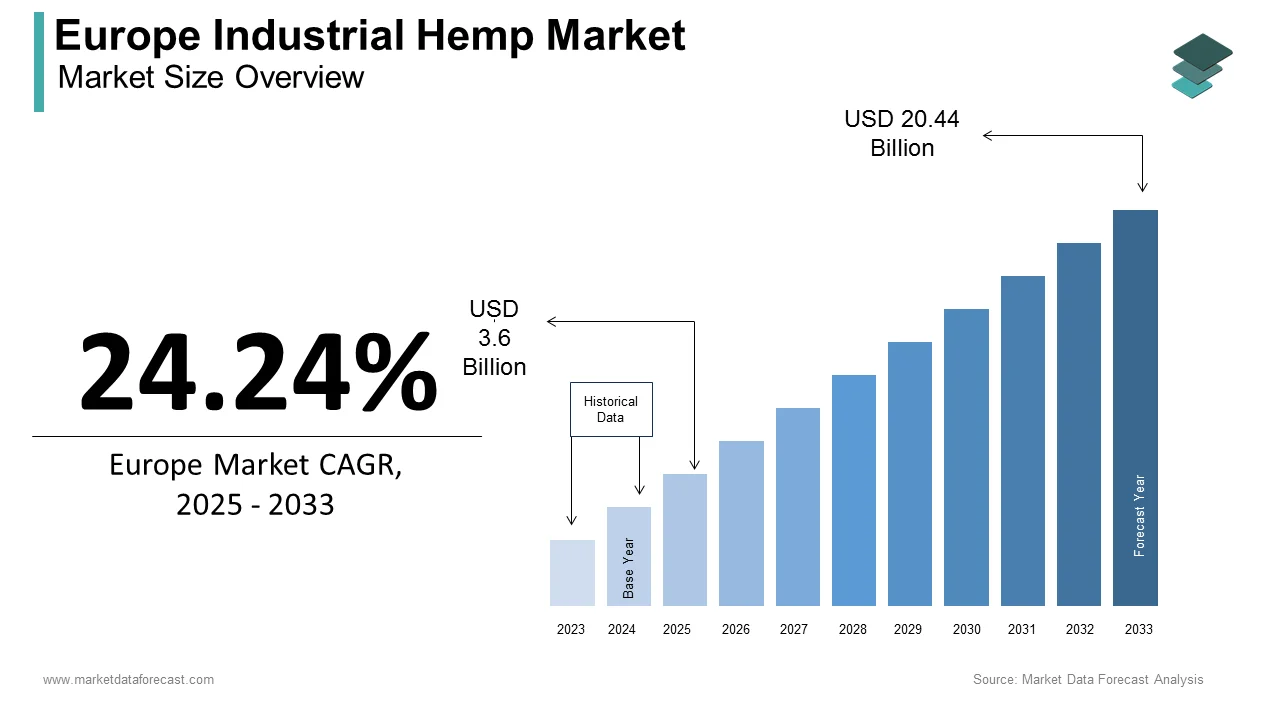
The industrial hemp market size in Europe was valued at USD 3.6 billion in 2025, stands at USD 4.47 billion in 2026, and is projected to reach USD 25.39 billion by 2034, registering a compound annual growth rate (CAGR) of 24.24% during the forecast period from 2026 to 2034. Market expansion is massively propelled by the construction sector’s regulatory push toward low-carbon building materials (such as hempcrete and insulation), the expansion of plant-based and functional foods, and supportive European Union agricultural policies.
Key Executive Metrics (At-a-Glance)
- 2025 Base Valuation: USD 3.60 Billion
- 2026 Current Valuation: USD 4.47 Billion
- 2034 Forecast Valuation: USD 25.39 Billion
- Compound Annual Growth Rate (CAGR): 24.24% (2026–2034)
- Leading Country Market: France (contributing 42.8% of the total share in 2024, backed by decades of agricultural specialization and integrated processing)
- Significant Regional Hub: Germany (holding 19.4% share in 2024, leading in downstream applications like pharmaceuticals, CBD extraction, and eco-construction)
Core Market Drivers
- Surging Demand for Sustainable Construction Materials: Regulatory action under the EU Energy Performance of Buildings Directive driving the shift toward low-carbon hemp-lime composites and insulation.
- Expansion of Plant-Based & Functional Foods: Growing consumer preference for sustainable, allergen-free proteins, amino acids, and omega-rich hemp seeds and oils.
Primary Market Restraints & Challenges
- Stringent Regulations & Limited Infrastructure: Burdensome licensing frameworks across member states, strict THC threshold enforcement, and a shortage of localized decortication and processing facilities.
- Public Misconception & Stigma: Social and institutional resistance linked to the cannabis association, hindering retail placement and agricultural extension support.
Europe Industrial Hemp Market Segmentation Breakdown
| Segment Category | Sub-Segment Details |
|---|---|
| By Type | Hemp Fiber (dominant share at 48.5%), CBD Hemp Oil (fastest-growing at 14.2% CAGR), Hemp Seed, and Hemp Seed Oil |
| By Application | Construction & Materials (dominant at 32.4%), Pharmaceuticals (fastest-growing at 16.8% CAGR), Food, Beverages, Personal Care Products, and Textiles |
| By Country | UK, France, Spain, Germany, Italy, Russia, Sweden, Denmark, Switzerland, Netherlands, Turkey, Czech Republic, and Rest of Europe |
Major Industry Players Profiled
Key global and regional participants include Hempco, Ecofibre, Hemp Inc., Gencanna, Hempflax BV, Konoplex Group, Hemp Oil Canada, BAFA, Hemp Poland, Dun Agro, Colorado Hemp Works, Canah International, Canopy Growth Corporation, and Fibredyn.
Europe Industrial Hemp Market Size
The industrial hemp market size in Europe was valued at USD 3.6 billion in 2025. The European market is further estimated to grow at a CAGR of 24.24% from 2026 to 2034 and be worth USD 25.39 billion by 2034, up from USD 4.47 billion in 2026.
Industrial Hemp involves the cultivation, processing, and commercialization of Cannabis sativa L. varieties containing less than 0.2% THC, which are cultivated exclusively for non-psychoactive applications such as fiber, seed, and biomass. Unlike recreational cannabis, industrial hemp is regulated under the EU Common Agricultural Policy, where it qualifies for crop subsidies when grown by licensed farmers. Industrial hemp is grown for its strong fibers, nutritious seeds, and oil-rich extracts, which are used in textiles, paper, biodegradable plastics, building materials, food products, and personal care items. It is also recognized for its environmental benefits, such as improving soil health and requiring fewer pesticides.
MARKET DRIVERS
Surging Demand for Sustainable Building Materials
The construction sector’s shift toward low-carbon materials has significantly boosted demand for hemp-based insulation and hempcrete, leading tothe growth of the Europe Industrial Hemp Market. As per the European Environment Agency, buildings account for 40% of the EU’s total energy consumption and 36% of greenhouse gas emissions, prompting regulatory action under the Energy Performance of Buildings Directive. Hemp-lime composites, known for their thermal regulation and moisture absorption, are increasingly used in energy-efficient retrofits and passive housing. The hemp construction is supported in France; the estimated number of homes built using hempcrete since 2000 is between 200 and 300. The rate of construction is said to have increased by 400% in the last decade. According to the UK’s Alliance for Sustainable Building Products, hemp insulation has a carbon footprint 90% lower than mineral wool.
Expansion of Plant-Based and Functional Food Products
The growing integration of hemp seeds and cold-pressed hemp oil into the functional food and beverage sector, owing to their high nutritional value, is significantly driving the growth of the Europe Industrial Hemp Market. According to the European Food Safety Authority (EFSA), hemp seeds contain all nine essential amino acids and are rich in omega-3 and omega-6 fatty acids in an optimal 3:1 ratio. The Deutscher Hanfverband (DHV) has actively worked toward legalizing cannabis in Germany, which has contributed to increased public awareness and market growth for hemp products, such as seeds, that are not regulated like THC-containing cannabis. In 2023, the Netherlands reported a year-on-year increase in hemp-based food product registrations is reflecting consumer demand for sustainable, allergen-free protein sources. This dietary shift among flexitarian and health-conscious people is driving sustained upstream demand for certified hemp cultivation.
MARKET RESTRAINTS
Stringent Cultivation Regulations and Licensing Complexity
The presence of fragmented and often burdensome regulatory frameworks is primarily hindering the growth of the Europe Industrial Hemp Market. While the EU permits cultivation of certified low-THC varieties, individual member states impose additional licensing requirements, field inspections, and reporting obligations. The Polish government, in accordance with European Union (EU) regulations, requires permits for the import of agricultural products. In general, approvals for imports are obtained through inspections, certifications, and compliance checks with EU and national regulations. Italy, a prominent leader in hemp production, saw a decline in cultivated area between 2020 and 2022 due to inconsistent enforcement of THC thresholds, where crops exceeding 0.2% are subject to mandatory destruction. These regulatory uncertainties deter investment, limit scalability, and discourage smallholders from entering the sector, undermining the crop’s economic viability.
Limited Processing Infrastructure and Supply Chain Fragmentation
The rising costs due to a lack of localized processing facilities for decortication, shelling, and oil extraction force farmers to transport raw biomass over long distances, which is a majorly restraint on the Europe Industrial Hemp Market. According to the European Industrial Hemp Association, only 12 industrial-scale decortication plants operate across the EU, with one present in major producing countries like Romania. According to the European Commission’s Directorate-General for Agriculture, over 70% of harvested hemp stalks are either underutilized or exported for processing outside Europe. Seed processing is equally constrained. In France, 40% of hemp seeds are processed in non-EU facilities due to capacity shortages. This infrastructure deficit hampers vertical integration, reduces farmer margins, and limits the availability of high-quality raw materials for downstream industries such as textiles and biocomposites.
MARKET OPPORTUNITIES
Integration into Circular Bioeconomy and Biodegradable Packaging
Industrial hemp is a key feedstock for bioplastics and compostable packaging, which aligns with the EU’s Single-Use Plastics Directive and Circular Economy Action Plan by creating growth opportunities for the Europe Industrial Hemp Market. As per the European Bioplastics Association, demand for bio-based polymers in Europe grew in 2023, with hemp fiber being used to reinforce polylactic acid (PLA) composites for food containers and trays. In Austria, the company BICO Group developed hemp-based biodegradable films that decompose rapidly under industrial composting conditions. According to the European Commission, replacing 20% of conventional plastic packaging with bio-based alternatives could reduce packaging-related emissions of CO₂ annually.
MARKET CHALLENGES
Public Misconception and Stigma Linked to Cannabis Association
Despite its legal and biochemical distinction from marijuana, industrial hemp continues to face social and institutional resistance due to its association with psychoactive cannabis, which is acting as a major challenge for the Europe Industrial Hemp Market. The EMCDDA, in its 2025 report, analyzing 2023 data, found that after a 43% decrease in cannabis resin seizures in 2022, the overall quantity increased slightly in 2023. This stigma also affects retail placement, with some supermarket chains hesitant to stock hemp-derived products. According to the European Monitoring Centre for Drugs and Drug Addiction, the fact that only 12 EU countries include industrial hemp in agricultural extension programs is limiting awareness and technical support for farmers seeking to diversify into this crop.
Inconsistent THC Threshold Enforcement and Crop Destruction Risks
The EU’s 0.2% THC limit for industrial hemp is scientifically problematic, as environmental stressors such as drought or UV exposure can cause compliant plants to exceed the threshold during flowering, which is another significant factor challenging the Europe Industrial Hemp Market growth. In April 2025, Coldiretti and Filiera Italia expressed concern over a proposed "security decree" that they warned could cause significant damage to the hemp sector. This regulatory rigidity discourages investment and undermines trust in the legal framework. The European Industrial Hemp Association and several research institutions have called for a shift to a post-harvest testing model and a higher threshold of 0.3%, which is aligned with international standards, but legislative inertia has delayed reform.
REPORT COVERAGE
| REPORT METRIC | DETAILS |
| Market Size Available | 2025 to 2034 |
| Base Year | 2025 |
| Forecast Period | 2026 to 2034 |
| Segments Covered | By Type, Application, and country. |
| Various Analysis Covered | Global, Regional & Country Level Analysis, Segment-Level Analysis; DROC, PESTLE Analysis, Porter's Five Forces Analysis, Competitive Landscape, Analyst Overview of Investment Opportunities |
| Countries Covered | UK, France, Spain, Germany, Italy, Russia, Sweden, Denmark, Switzerland, Netherlands, Turkey, Czech Republic, and Rest of Europe. |
| Market Leader Profiled | Hempco, Ecofibre, Hemp Inc., Gencanna, Hempflax BV, Konoplex Group, Hemp Oil Canada, BAFA, Hemp Poland, Dun Agro, Colorado Hemp Works, and Canah International, and Others. |
SEGMENT ANALYSIS
By Type Insights
The Hemp Fiber segment dominated the Europe Industrial Hemp Market by accounting for 48.5% in 2024. The presence of extensive use of sustainable construction and insulation materials is primarily driving the segment growth. The European Commission reported that total EU hemp fiber production was about 179,020 tons in 2022. A more recent market report indicates that France cultivated 23,000 hectares in 2024, yielding around 28,000 metric tons of fiber. The fiber’s hygroscopic properties are capable of regulating indoor humidity, making it ideal for energy-efficient housing, a priority under the EU’s Renovation Wave Initiative, which aims to retrofit 35 million buildings by 2030. The European Committee for Standardization (CEN) has developed EN 16978, a dedicated standard for hemp-lime composites by enhancing technical credibility and facilitating integration into public infrastructure projects.
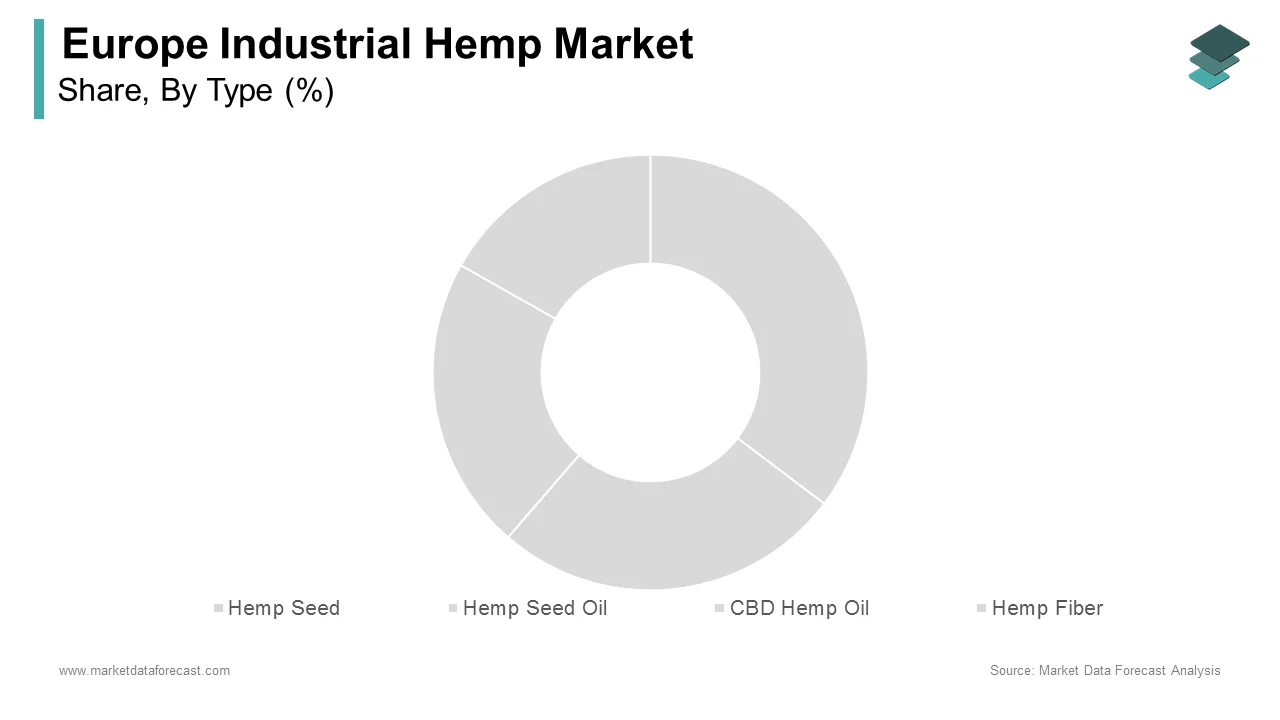
The CBD Hemp Oil segment is projected to expand at a CAGR of 14.2% from 2025 to 2033. The rising consumer demand for natural wellness products and evolving regulatory clarity are majorly escalating the segment growth. The total sales of all medicinal cannabis products in Germany through statutory health insurance were about €209 million in 2023. In the UK, the Centre for Medicinal Cannabis reports that millions of adults use CBD products regularly is primarily for anxiety and sleep management. Moreover, clinical research supported by institutions like King’s College London has validated CBD’s anxiolytic and anti-inflammatory effects, which is increasing medical legitimacy and consumer trust, thereby accelerating mainstream adoption beyond niche wellness circles.
By Application Insights
The Construction & Materials segment dominated the Europe Industrial Hemp Market by representing 32.4% of the market share in 2024. The urgent need to decarbonize the built environment, with the EU targeting a 60% reduction in building-related emissions by 2030. As per the reports, Hemp-based materials such as hemplime and insulation batts offer carbon-negative profiles where each cubic meter of hempcrete sequesters up to 160 kg of CO₂ during growth and curing.
The Pharmaceuticals segment is projected to grow at a CAGR of 16.8% in Europe Industrial Hemp Market between 2025 and 2033. The segment growth is driven by clinical advancements and regulatory shifts in cannabinoid-based therapeutics. The European Medicines Agency (EMA) has approved two cannabis-based medicines, Sativex for multiple sclerosis and Epidyolex for rare forms of epilepsy, which is validating the therapeutic potential of cannabinoids. A 2024 study on patient usage patterns found that cannabis flowers were the most common product prescribed, with extracts, dronabinol, and the patients taking flowers also reported using higher median daily THC doses compared to those on other CbM.
COUNTRY LEVEL ANALYSIS
France Industrial Hemp Market Insights
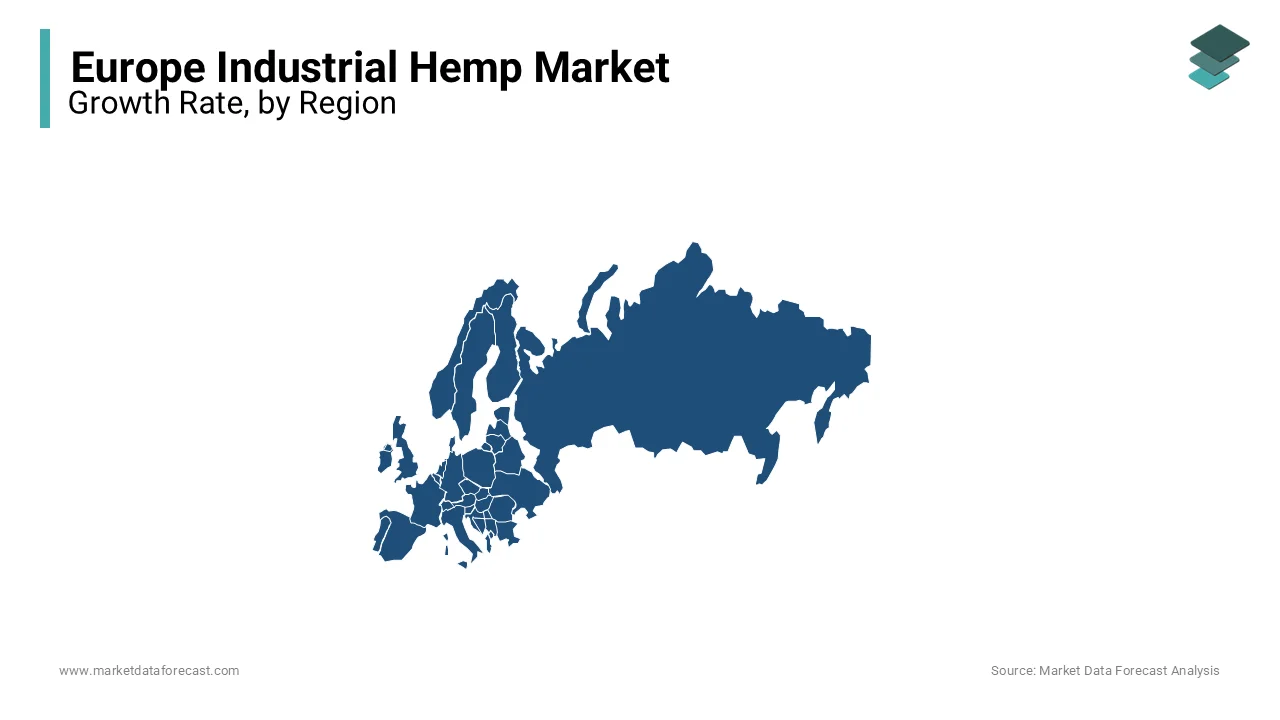
France was the top performer in the Europe Industrial Hemp Market by contributing 42.8% of total share in 2024. The decades of agricultural specialization with over thousands of licensed hemp farmers primarily concentrated in Brittany and northern regions is enhancing the nation’s market growth. France is the only EU nation with a fully integrated hemp processing chain from decortication to insulation manufacturing, which is supported by public-private partnerships under the “Plan Chanvre” initiative. As per the French Ministry of Agriculture, Farmers in France receive a "Basic Income Support for Sustainability" (BISS) of €250–€300 per hectare. France supplies 70% of the EU’s hemp seed for food use with domestic brands like Chanvrière de l’Aube exporting to various countries. This vertical integration and policy continuity make France the significant in the Europe’s industrial hemp ecosystem.
Germany Industrial Hemp Market Insights
Germany held the significant position in Europe Industrial Hemp Market which is accounting for 19.4% of share in 2024. While cultivation remains limited due to strict licensing, Germany is a powerhouse in downstream applications, particularly in CBD extraction, pharmaceuticals, and eco-construction. In 2023, Germany was the largest importer of Hemp Fibers globally, importing $12 million worth of the product. Germany's medical and scientific cannabis imports also reached a record high in 2023, importing 31,398 kilograms (34.6 tons). Berlin and Bavaria host more than 60 CBD extraction facilities, which is making Germany the continent’s largest processor of cannabinoid oils. The legalization of adult-use cannabis in 2024 is expected to further stimulate investment in pharmaceutical-grade hemp. These advancements and initiatives by the government are reinforcing the country’s role as an innovation and regulatory leader in high-value hemp applications.
Italy Industrial Hemp Market Insights
Italy Industrial Hemp Market is estimated to showcase new opportunities for the growth in the coming years. The 2016 passage of Law 242/2016, which liberalized industrial hemp farming for fiber and seed. According to the Italian Farmers’ Confederation (Coldiretti), as of April 2025, estimates indicate that over 4,000 hectares are cultivated with hemp in Italy. Italy also leads in hemp-based food innovation with over 1,200 hemp-derived products registered with the Ministry of Health. However, regulatory instability particularly the zero-tolerance policy on THC exceedance has led to the destruction of 500+ hectares of compliant crops, which is limiting the farmer confidence.
United Kingdom Industrial Hemp Market Insights
United Kingdom Industrial Hemp Market is expanding due to its operation as a key center for research, CBD product development, and sustainable materials innovation. The Centre for Medicinal Cannabis reports that the UK CBD market was valued at £690 million in 2021 where most of the brands are providing oils, edibles, and topicals. The government’s Industrial Strategy Challenge Fund has allocated millions of funds to bio-based materials research which includes hemp-reinforced composites for construction. The universities like the University of Bath are pioneering hemp-based carbon fiber alternatives.
KEY MARKET PLAYERS
Companies playing a dominating role in the European industrial hemp market include Hempco, Ecofibre, Hemp Inc., Gencanna, Hempflax BV, Konoplex Group, Hemp Oil Canada, BAFA, Hemp Poland, Dun Agro, Colorado Hemp Works, and Canah International.
TOP LEADING PLAYERS IN THE MARKET
Canopy Growth Corporation
Canopy Growth Corporation (Europe Division) has established a significant presence in the European Industrial Hemp Market through strategic investments in cultivation, extraction, and pharmaceutical-grade processing. The company is headquartered in Canada and its European operations in Germany and Switzerland focus on high-purity CBD oil production for medical and wellness applications. Canopy launched a GMP-certified extraction facility in Europe, which is enabling compliant supply to EU pharmacies and healthcare providers. The company also partnered with German research institutions to advance clinical trials on cannabinoid-based therapies for chronic pain.
Fibredyn
Fibredyn (France) is a French enterprise specializing in industrial-scale hemp fiber processing and biocomposite development. The company operates one of the few fully integrated decortication plants in Europe, which is converting raw hemp stalks into high-quality shives, fibers, and insulation materials. Fibredyn also supplies fiber to automotive manufacturers exploring natural composites for interior panels. Through continuous R&D and adherence to EU sustainability standards the company has become a prominent enabler of the circular bioeconomy in Western Europe.
Hempflax Group
Hempflax Group (Netherlands) is a leading European producer of industrial hemp, which is operating across cultivation, processing, and product development in fiber, seed, and biomass. With large-scale farms in the Netherlands, Germany, and Lithuania, Hempflax supplies raw materials to construction, textile, and animal bedding industries. It also expanded its seed processing capacity to meet rising demand for hemp-based food products in the EU. Hempflax actively participates in EU-funded research projects like Horizon Europe’s “SmartChain,” optimizing supply logistics and carbon sequestration tracking. Its vertically integrated model and commitment to regenerative agriculture have made it a benchmark for scalable and sustainable hemp farming in temperate climates.
TOP STRATEGIES USED BY THE KEY MARKET PARTICIPANTS
Key players in the Europe Industrial Hemp Market are leveraging vertical integration, regulatory compliance, research collaboration, and product diversification to strengthen their market positioning in the region. Companies are investing in end-to-end control from seed to shelf by ensuring quality and traceability. Strategic partnerships with academic institutions and EU-funded programs enhance innovation in processing and application development. Firms are prioritizing GMP, organic, and carbon-neutral certifications to meet consumer and regulatory demands. Expansion into high-growth segments such as pharmaceuticals, bioplastics, and green construction is accelerating. The stakeholder engagement with policymakers aims to influence favorable legislation while digital platforms are used to showcase sustainability metrics and build brand trust in an evolving with compliance-sensitive marketplace.
COMPETITION OVERVIEW
The competition in the Europe Industrial Hemp Market is characterized by a fragmented yet rapidly evolving landscape, where agricultural producers, processors, and technology innovators vie for dominance across diverse value chains. While national leaders like France and Germany host integrated players, smaller enterprises focus on niche applications such as biocomposites or premium CBD extracts. Differentiation hinges on certification, sustainability claims, and technical performance rather than price alone. Regulatory uncertainty around THC thresholds and novel food approvals is creating both barriers and opportunities for well-resourced firms. The market is witnessing consolidation in processing infrastructure while startups drive innovation in bioplastics and construction materials.
RECENT MARKET DEVELOPMENTS
- In 2023, A Swiss-based Company named PhytoXtract operates a GMP-certified medical cannabis facility in Zurich. PhytoXtract was one of the first companies licensed for medical cannabis by Swissmedic, the Swiss regulatory authority for therapeutic products.
- In late 2021, Hempflax announced a €3 million investment plan and dubbed "HempFlax 3.0," for its headquarters in Oude Pekela, Netherlands.
MARKET SEGMENTATION
This research report on the Europe industrial hemp market is segmented and sub-segmented into the following categories.
By Type
- Hemp Seed
- Hemp Seed Oil
- CBD Hemp Oil
- Hemp Fiber
By Application
- Food
- Snacks & Cereals
- Soup, Sauces, And Seasonings
- Bakery
- Dairy & Frozen Desserts
- Others (Cold Cereals, Pasta, Chocolate Spreads, And Pet Food)
- Beverages
- Hot Beverages
- Sports & Energy Drinks
- Ready To Drink
- Others (Meal Replacement Drinks, Beverage Mixes, Beverage Concentrates, And Juice Drinks)
- Personal Care Products
- Textiles
- Pharmaceuticals
- Others (Paper, Automobiles, Construction & Materials, Furniture, And Pet Food)
By Country
- UK
- France
- Spain
- Germany
- Italy
- Russia
- Sweden
- Denmark
- Switzerland
- Netherlands
- Turkey
- Czech Republic
- Rest of Europe