- Product Description Description
- Table of Contents TOC
- List of Table & Figure LOT
- Get Free Sample PDF Sample PDF
Market Size, 2025
$387.50 MnMarket Estimate, 2026
$455.31 MnMarket Forecast, 2034
$1,654.28 MnCAGR, 2026–2034
17.50%Executive Summary: Latin America Industrial Hemp Market
- Market Scope: Comprehensive regional market evaluation of industrial hemp in Latin America covering product types, multi-industry applications, and country-level distribution frameworks.
- Market Valuation: Valued at USD 387.50 million (2025), estimated at USD 455.31 million (2026), and projected to reach USD 1,654.28 million by 2034, registering a remarkable CAGR of 17.50% (2026–2034).
- Primary Growth Drivers: Diverse utility of hemp across the food, beverage, pharmaceutical, and personal care sectors. Key structural catalysts include supportive government initiatives and investments in cultivation, rising health awareness and healthcare spending, growing prevalence of chronic conditions like epilepsy and sleep disorders, and high protein content in hemp seeds appealing to vegan diets.
Key Market Segment Metrics (2026–2034)
| Category | Leading Segment (2025 Position) | Fastest-Growing Segment |
|---|---|---|
| By Type | Hemp Seed and Hemp Seed Oil (dominant in food and nutritional applications) | CBD Hemp Oil and Hemp Fiber (driven by pharmaceutical and textile expansions) |
| By Application | Pharmaceuticals & Food / Snacks (led market consumption due to medicinal and vegan diet trends) | Personal Care Products and Textiles |
| By Country | Argentina (positioned top in leading market growth rate backed by legal home cultivation and medical/scientific use) | Brazil and Argentina (ruling dominant shares supported by pharmaceutical backing and government initiatives) |
Major Market Players & Market Structure
Market Structure: Highly competitive regional agro-industrial and wellness landscape featuring specialized agricultural cooperatives, extractors, and pharmaceutical developers competing intensely on cultivation practices, regulatory compliance, and product innovation.
Key Companies: Hempco, Ecofibre, Hemp Inc., Gencanna, Hempflax BV, Konoplex Group, Hemp Oil Canada, BAFA, Hemp Poland, Dun Agro, Colorado Hemp Works, and Canah International.
 Download Free Sample Report
Latin America Industrial Hemp Market Size
The size of the Latin America industrial hemp market was valued at USD 387.50 million in 2025. This market is expected to grow at a CAGR of 17.50% from 2026 to 2034 and be worth USD 1,654.28 million by 2034, from USD 455.31 million in 2026.

The size of the Latin America industrial hemp market was valued at USD 387.50 million in 2025. This market is expected to grow at a CAGR of 17.50% from 2026 to 2034 and be worth USD 1,654.28 million by 2034, up from USD 455.31 million in 2026.
Industrial hemp is a specific variety of the Cannabis sativa plant species grown specifically for industrial and commercial uses. According to the Food and Agriculture Organization of the United Nations, there has been a worldwide revival of interest in hemp cultivation for multifunctional uses. This international trend influences Latin American nations as they seek to diversify agricultural outputs and reduce dependency on traditional crops. As per the World Bank, sustainable agriculture practices are critical for climate resilience in developing regions where water scarcity affects crop yields. Industrial hemp requires significantly less water than cotton, making it an attractive option for farmers facing environmental constraints. The market includes segments such as textiles, construction materials, biofuels, and nutritional supplements derived from hemp seeds. Regulatory frameworks in countries like Uruguay and Colombia are evolving to support legal cultivation under strict licensing. Consumer demand for eco-friendly products drives innovation in hemp-based goods across the region. This definition clarifies the scope of industrial hemp, distinct from psychoactive cannabis, while highlighting its economic and environmental relevance. The integration of hemp into supply chains offers potential for rural development and export growth throughout Latin America.
MARKET DRIVERS
Growing Demand for Sustainable Textiles and Eco-Friendly Materials
The growing demand for sustainable textiles and eco-friendly materials is a key factor behind the growth of the Latin American industrial hemp market. Industrial hemp offers a viable alternative to resource-intensive crops like cotton. According to the United Nations Environment Programme (UNEP), the textile and fashion industry is responsible for approximately 2 to 8 per cent (or 8–10 per cent in regional UNEP communications) of global greenhouse gas emissions, prompting UNEP to support enterprises in transitioning toward circularity and lower-impact production. Hemp requires minimal pesticides and fertilizers compared to conventional cotton, which aligns with corporate sustainability goals in the region. Manufacturers in Brazil and Chile are increasingly exploring hemp blends for clothing and accessories to meet consumer preferences for green products. The durability and breathability of hemp fabric make it suitable for tropical climates prevalent in many Latin American countries. Government incentives for organic farming further encourage growers to transition to hemp cultivation. International fashion retailers source hemp from Latin America to diversify their supply chains and reduce environmental footprints. The lower water footprint of hemp addresses concerns about drought conditions affecting traditional agriculture. Consumers are willing to pay premium prices for ethically produced and sustainable garments. This shift in consumer behavior creates a robust market for hemp-derived textiles. Industry collaborations focus on improving processing technologies to enhance fiber quality. Consequently, the push for sustainability acts as a primary catalyst for market expansion by establishing hemp as a key material in the eco-conscious economy.
Expansion of Medical and Wellness Applications
The expansion of medical and wellness applications boosts the Latin American industrial hemp market. This expansion, in turn, increases the utilization of hemp-derived cannabidiol and nutritional products. According to the World Health Organization (WHO), preliminary clinical evidence demonstrates that cannabidiol (CBD) has therapeutic value for treating seizures due to epilepsy and related conditions, leading several countries to modify their national controls to accommodate CBD as a medicinal product. Nations such as Uruguay and Mexico have implemented frameworks allowing the production of hemp for medicinal extracts. The rising prevalence of lifestyle-related diseases prompts consumers to seek natural remedies, including hemp seed oil rich in omega fatty acids. Healthcare providers recommend hemp-based supplements for their anti-inflammatory properties and nutritional benefits. The aging population in countries like Argentina increases demand for joint health and pain management solutions. Pharmaceutical companies invest in research to develop standardized hemp extracts for clinical use. Retail pharmacies expand their offerings to include hemp oils, capsules, and topicals. Consumer awareness campaigns educate the public on the difference between industrial hemp and marijuana. The legalization of medical cannabis in various jurisdictions facilitates the growth of the hemp sector. Investors view the wellness segment as a high-growth area with significant revenue potential. These factors collectively accelerate market adoption by validating hemp as a legitimate health and wellness resource.
MARKET RESTRAINTS
Stringent Regulatory Frameworks and Legal Ambiguity
Stringent regulatory frameworks and legal ambiguity are major obstacles to the Latin American industrial hemp market. These factors create barriers to entry and limit investment confidence. According to studies, varying national laws regarding tetrahydrocannabinol (THC) thresholds create regulatory uncertainty and compliance barriers for cross-border hemp trade. Many countries lack clear distinctions between industrial hemp and psychoactive cannabis, leading to enforcement challenges and bureaucratic delays. Farmers face difficulties in obtaining licenses due to complex application processes and limited government guidance. The absence of harmonized regulations across the region hinders the development of a unified supply chain. Banks and financial institutions hesitate to provide loans to hemp businesses due to perceived legal risks. Insurance coverage for hemp crops remains limited, exposing growers to financial vulnerability. Import and export restrictions complicate access to international markets and technology. Legal uncertainties discourage large-scale commercial investments in processing infrastructure. Stakeholders advocate for standardized laws to facilitate legitimate business operations. The slow pace of legislative reform impedes market growth and innovation. Until comprehensive legal frameworks are established, the market remains fragmented and constrained. This regulatory uncertainty significantly hampers the potential for widespread adoption and economic contribution of industrial hemp in Latin America.
Lack of Processing Infrastructure and Technical Expertise
The lack of processing infrastructure and technical expertise hinders the Latin American industrial hemp market. This gap limits the ability to convert raw biomass into high-value products. According to the Inter-American Development Bank, agricultural value chains in the region often suffer from inadequate post-harvest facilities, which reduces competitiveness. Hemp requires specialized equipment for decortication and extraction, which is scarce in many Latin American countries. Farmers struggle to find local buyers for their harvests, forcing them to sell raw materials at low prices. The absence of trained agronomists familiar with hemp cultivation leads to suboptimal yields and quality issues. Extension services rarely include hemp in their programs, leaving growers without adequate support. Investment in processing plants is risky due to uncertain market demand and regulatory hurdles. Small-scale producers cannot afford expensive machinery, limiting their participation in the value chain. The reliance on imported technology increases costs and dependency on foreign suppliers. Educational institutions have yet to integrate hemp science into their curricula broadly. This skills gap prevents the industry from scaling up efficiently. Without robust infrastructure and knowledge transfer, the market cannot realize its full economic potential. Addressing these structural deficiencies is essential for building a sustainable and competitive hemp industry.
MARKET OPPORTUNITIES
Development of Biodegradable Packaging Solutions
The development of biodegradable packaging solutions offers a major opportunity in the Latin American industrial hemp market. This innovation addresses global plastic pollution concerns. According to the United Nations Environment Programme, millions of tons of plastic waste enter oceans annually, prompting governments to ban single-use plastics. Hemp-based bioplastics offer a compostable alternative that decomposes naturally without harming the environment. Companies in Mexico and Brazil are exploring hemp fiber composites for packaging food and consumer goods. The durability and lightweight nature of hemp materials make them suitable for various packaging applications. Regulatory bans on conventional plastics create immediate demand for sustainable alternatives. Brands seek eco-friendly packaging to enhance their corporate image and meet consumer expectations. Investment in research and development improves the performance and cost-effectiveness of hemp bioplastics. Partnerships between agricultural producers and packaging manufacturers streamline supply chains. Government grants support innovation in green materials and circular economy initiatives. The growing e-commerce sector requires sustainable shipping materials, which hemp can provide. This segment offers high growth potential as environmental regulations tighten globally. The shift towards circular economy models favors renewable resources like hemp. These factors position hemp as a key material in the future of sustainable packaging.
Integration into Construction and Building Materials
The integration of industrial hemp into construction and building materials is a key growth area for the Latin America industrial hemp market. This application promotes energy-efficient housing. Hempcrete, a mixture of hemp hurds and lime, provides excellent insulation and carbon sequestration properties. Architects and builders in countries like Chile and Colombia are experimenting with hemp-based materials for sustainable housing projects. The lightweight nature of hempcrete reduces structural load and transportation costs. Government initiatives for affordable and eco-friendly housing support the adoption of innovative materials. Hemp cultivation absorbs carbon dioxide, contributing to climate change mitigation efforts. The durability and fire resistance of hemp-based composites enhance building safety standards. Local production of hemp building materials creates jobs and stimulates rural economies. Certification programs for green buildings encourage the use of renewable resources. Research institutions collaborate with construction firms to optimize hemp material formulations. The rising cost of traditional materials makes hemp a competitive alternative. These developments open new avenues for market expansion in the construction sector.
MARKET CHALLENGES
High Initial Investment Costs and Financial Barriers
High initial investment costs and financial barriers constrain the growth of the Latin American industrial hemp market. These hurdles limit accessibility for small- and medium-sized enterprises. According to the World Bank, access to finance remains a critical constraint for agricultural entrepreneurs in developing regions due to high interest rates and collateral requirements. Establishing hemp processing facilities requires substantial capital for specialized machinery and technology. Farmers need funding for seeds, equipment, and labor before harvesting, which poses cash flow risks. Limited availability of agricultural loans specific to hemp discourages new entrants into the market. Insurance premiums for hemp crops are often higher due to perceived risks and lack of historical data. Venture capital investors may hesitate to fund hemp ventures due to regulatory uncertainties. The high cost of compliance with legal standards adds to operational expenses. Small holders struggle to compete with larger agribusinesses that have better financial resources. Lack of government subsidies for hemp compared to traditional crops exacerbates the financial burden. Credit guarantees and risk-sharing mechanisms are rarely available for this emerging sector. These financial constraints slow down the adoption of hemp cultivation and processing. Overcoming these barriers requires innovative financing models and policy support.
Consumer Misconceptions and Social Stigma
Consumer misconceptions and social stigma challenge the Latin American industrial hemp market. These factors create resistance to product adoption and market acceptance. According to research, the historical association of cannabis with marijuana and drug-related stigma affects public perception and adoption of non-psychoactive cannabis and hemp products. Many consumers confuse industrial hemp with marijuana, leading to unwarranted fears about intoxication or legal issues. This lack of understanding hinders the marketing and sales of hemp-based foods, textiles, and cosmetics. Retailers may avoid stocking hemp products due to fear of negative customer reactions. Media portrayals often fail to distinguish between industrial and recreational cannabis, reinforcing stereotypes. Educational campaigns are insufficient to reach broad audiences in rural and urban areas. Cultural attitudes towards cannabis vary significantly across different Latin American societies. Religious and traditional beliefs may oppose the use of any cannabis derived items. Healthcare providers may be reluctant to recommend hemp products due to professional caution. The stigma limits the target market to a niche group of early adopters. Brands face difficulties in building trust and credibility with skeptical consumers. Overcoming deep-rooted misconceptions requires sustained effort in public education. This social barrier significantly impedes market penetration and growth potential.
REPORT COVERAGE
| REPORT METRIC | DETAILS |
| Market Size Available | 2025 to 2034 |
| Base Year | 2025 |
| Forecast Period | 2026 to 2034 |
| Segments Covered | By Type, Application, and Region. |
| Various Analyses Covered | Global, Regional, and Country-Level Analysis, Segment-Level Analysis, Drivers, Restraints, Opportunities, Challenges; PESTLE Analysis; Porter’s Five Forces Analysis, Competitive Landscape, Analyst Overview of Investment Opportunities |
| Regions Covered | North America, Europe, APAC, Latin America, Middle East & Africa |
| Market Leaders Profiled | Hempco, Ecofibre, Hemp Inc., Avicanna Inc., GenCanna, Khiron Life Sciences Corp., Canopy Growth Corporation, HempFlax BV, Konoplex Group, Hemp Oil Canada, BAFA, Hemp Poland, Dun Agro, Colorado Hemp Works, Canah International, and Others. |
SEGMENTAL ANALYSIS
By Type Insights
The hemp fiber dominated the Latin American industrial hemp market and accounted for a substantial share in 2025. This dominance was driven by its versatility and established demand in the textile and construction industries. According to the Food and Agriculture Organization of the United Nations (FAO), industrial hemp is a multi-purpose crop yielding over 25,000 products across nine submarkets, though crop water productivity decreases at higher soil salinity levels. This ecological advantage drives manufacturers in Brazil and Chile to adopt hemp blends for sustainable clothing lines. The durability and breathability of hemp fiber make it ideal for tropical climates prevalent in the region. Construction companies utilize hemp hurds for hempcrete, which offers excellent insulation and carbon sequestration properties. As per the Inter-American Development Bank (IDB), replacing fossil fuels in buildings, transportation, and industry is essential for building climate resilience, and the bank supports nature-based solutions in social infrastructure across Latin America and the Caribbean that yield energy savings and flood reduction. This trend supports the integration of hemp-based materials into affordable housing projects. Government incentives for organic farming further encourage growers to prioritize fiber production. The global shift towards circular economy models boosts demand for biodegradable industrial fibers. Retailers prefer hemp products for their longevity and low environmental footprint. Established supply chains for textile exports facilitate market penetration. Consequently, hemp fiber remains the dominant segment driven by industrial applications and sustainability mandates.
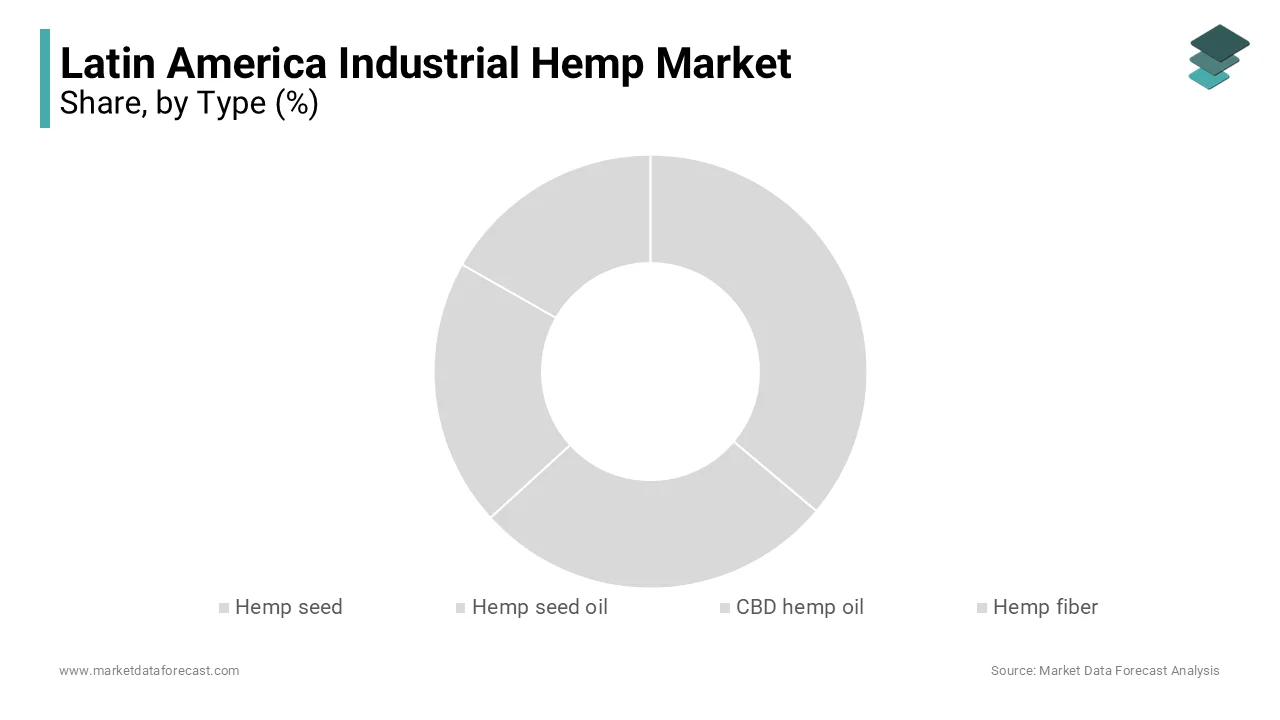
The CBD hemp oil segment is experiencing the most rapid growth within the Latin American industrial hemp market. This growth is fueled by increasing medical acceptance and wellness trends. Countries like Uruguay and Colombia have implemented regulatory frameworks allowing the extraction and export of high-quality CBD oil. According to the WHO, clinical trials show CBD effectiveness in treating epilepsy, and several nations have adjusted controls, though the WHO does not formally recommend CBD for general medical use. Patients seek natural alternatives to opioids for pain management, driving demand for standardized CBD extracts. Pharmaceutical companies invest in clinical trials to validate efficacy and safety profiles. Wellness consumers incorporate CBD oil into daily routines for stress relief and sleep improvement. E-commerce platforms facilitate discreet access to CBD products across borders. The aging population increases demand for joint health and anti-inflammatory solutions. Regulatory clarity in select nations encourages foreign investment in extraction facilities. This segment grows at a rapid pace as stigma decreases and scientific evidence accumulates. The high value-added nature of CBD oil attracts significant capital inflow.
By Application Insights
The food segment led the Latin America industrial hemp market and captured a significant share in 2025. This position was supported by the high nutritional value of hemp seeds and their integration into daily diets. According to PAHO, combating malnutrition involves promoting healthy diets and discouraging energy-dense, ultra-processed products. Hemp seeds are rich in protein, omega-3 fatty acids, and essential minerals, making them an ideal supplement for health-conscious consumers. Manufacturers incorporate hemp flour into bakery products, snacks, and cereals to enhance nutritional profiles. The rising prevalence of lifestyle diseases such as diabetes and obesity drives demand for healthy food alternatives. Supermarkets in major cities like São Paulo and Mexico City stock hemp-based products to meet consumer preferences. The versatility of hemp allows for easy integration into traditional Latin American recipes. Government nutrition programs explore hemp as a sustainable source of plant-based protein. Retailers report increased sales of hemp snacks and protein bars among younger demographics. The lack of psychoactive effects ensures broad consumer acceptance without legal concerns. Food processors benefit from the long shelf life and stability of hemp ingredients. Consequently, the food segment dominates the market due to widespread dietary adoption and health benefits.
The pharmaceuticals segment registers the highest CAGR in the Latin America industrial hemp market, owing to regulatory reforms and the clinical validation of cannabis based medicines. As per sources, clinical trials established CBD efficacy for rare forms of epilepsy, while Brazil regulates CBD under specialized product frameworks. Governments establish strict licensing systems for pharmaceutical-grade hemp cultivation and extraction. Hospitals and clinics begin prescribing hemp-derived medications for patients with refractory conditions. The aging population increases demand for effective pain management and palliative care solutions. Pharmaceutical companies collaborate with research institutions to develop standardized formulations with precise dosing. Insurance coverage for medical cannabis expands in some jurisdictions, reducing out-of-pocket costs for patients. The professionalization of the sector attracts investment from global healthcare giants. Regulatory agencies harmonize standards to ensure product safety and quality control. Doctors receive specialized training on the therapeutic applications of hemp extracts. Patient advocacy groups raise awareness about access to legal medical treatments. This segment grows rapidly as scientific evidence supports clinical use and regulatory barriers lower. The focus on patient outcomes drives professional acceptance and market expansion.
COUNTRY-LEVEL ANALYSIS
Brazil Industrial Hemp Market Analysis
Brazil held a major share in the Latin America industrial hemp market in 2025. This standing was strengthened by its vast agricultural land and growing regulatory openness. According to Brazilian regulatory frameworks, the National Health Surveillance Agency (ANVISA) approved Collegiate Board Resolutions in January 2026 permitting domestic cultivation of cannabis containing no more than 0.3% THC for medical, pharmaceutical, and industrial uses under a Special Authorization. This initiative aims to diversify crop rotation and reduce dependency on imported raw materials. The country possesses a robust textile industry that can absorb large volumes of hemp fiber for sustainable fashion. Local startups innovate in hemp-based food products and cosmetics catering to urban consumers. The National Health Surveillance Agency regulates cannabidiol products, allowing importation and sale under specific conditions. This framework encourages pharmaceutical companies to develop hemp-derived therapies. Farmers benefit from technical assistance programs promoting sustainable agricultural practices. Export opportunities exist for hemp seeds and oils to international markets. Investment in processing infrastructure remains a challenge but is gradually improving. Public awareness campaigns educate consumers about the benefits of industrial hemp. The large domestic market provides a stable base for growth. These factors solidify Brazil's leadership in regional hemp production and consumption.
Mexico Industrial Hemp Market Analysis
Mexico is also a key player in the Latin American industrial hemp market because of progressive legal reforms and its proximity to the United States. According to sources, the Mexican Senate approved a bill in November 2020 to enact the Federal Law for the Regulation of Cannabis (including removing hemp from the list of psychotropic substances and establishing licensing for commercialization). This legal clarity attracts foreign investment in cultivation and processing facilities. The country aims to become a major exporter of hemp-derived products to North American markets. Agricultural cooperatives in northern states begin transitioning to hemp cultivation due to its drought resistance. The Ministry of Health oversees the issuance of licenses for medical and industrial purposes. Local manufacturers develop hemp-based textiles and construction materials to meet domestic demand. Consumer interest in wellness products drives sales of hemp oils and supplements. Cross-border trade agreements facilitate the movement of goods and technology. Regulatory challenges remain regarding implementation details and enforcement. However, the potential for economic growth in rural areas supports political will. Educational institutions offer courses on hemp agronomy and processing. These developments position Mexico as a key player in the regional hemp industry.
Argentina Industrial Hemp Market Analysis
Argentina maintains a notable position in the Latin American industrial hemp market due to its strong agricultural expertise and export orientation. The Argentine government, through Law No. 27.669 and the Regulatory Agency for the Hemp and Medicinal Cannabis Industry (ARICCAME) under the Ministry of Economy, established a national licensing and regulatory framework enabling legal cultivation for industrial and medicinal hemp. This regulatory framework supports farmers in accessing international markets for hemp fiber and seeds. The country has a history of successful hemp cultivation dating back decades, providing a valuable knowledge base. Research institutions collaborate with private companies to improve seed varieties and extraction techniques. The textile industry explores hemp blends for high-quality garments destined for European markets. Government incentives promote sustainable farming practices to combat soil degradation. Hemp offers a viable alternative for regions affected by climate change and water scarcity. Export volumes of hemp seeds and oil have increased steadily in recent years. Domestic consumption remains limited but is growing among health-conscious consumers. Financial institutions are beginning to offer credit lines for hemp-related projects. The focus on value-added products enhances profitability for producers. These factors enable Argentina to compete effectively in the global hemp market.
Chile Industrial Hemp Market Analysis
Chile is expanding steadily in the Latin American industrial hemp market, owing to its stable economy and focus on innovation. The country leverages its unique climate to produce premium hemp seeds and oils. Research centers develop new applications for hemp in construction and bioplastics. The government supports startups through incubation programs focused on sustainable materials. Chilean companies export hemp-based cosmetics and wellness products to neighboring countries. The construction sector adopts hempcrete for energy-efficient buildings in line with green certification goals. Consumer awareness of environmental issues drives demand for eco-friendly products. Retailers expand their offerings to include hemp foods and personal care items. Regulatory clarity provides confidence for investors and entrepreneurs. The small but sophisticated market allows for rapid testing of new products. Partnerships with international brands enhance technological transfer. These attributes position Chile as a hub for hemp innovation in the region.
COMPETITIVE LANDSCAPE
The competitive landscape of the Latin America Industrial Hemp Market features a mix of international corporations and regional specialists striving to establish dominance. Global players leverage their financial resources and technical expertise to set up large-scale cultivation and processing facilities in countries like Colombia and Uruguay. Local companies focus on niche applications such as traditional textiles and artisanal food products to differentiate themselves. Competition intensifies as more nations legalize industrial hemp, creating new opportunities for market entry. Price sensitivity remains a key factor influencing purchasing decisions in emerging economies. Companies differentiate themselves through superior quality control certifications and sustainable farming practices. Strategic partnerships with local governments facilitate access to land and regulatory approvals. The lack of harmonized regulations across the region creates operational challenges for multinational firms. Digital marketing plays a crucial role in educating consumers about the benefits of hemp products. Supply chain efficiency becomes a critical differentiator as logistics costs impact profitability. Innovation in extraction technologies drives competitive advantage in the high-value CBD segment. Sustainability and ethical sourcing are increasingly important for brand reputation. Regulatory compliance and clinical validation are essential for long-term success in the medical sector.
KEY MARKET PLAYERS
The leading companies operating in the Latin America industrial hemp market include:
- Hempco
- Ecofibre
- Hemp Inc.
- Avicanna Inc
- GenCanna
- Khirona Life Sciences Corp
- Canopy Growth Corporation
- HempFlax BV
- Konoplex Group
- Hemp Oil Canada
- BAFA
- Hemp Poland
- Dun Agro
- Colorado Hemp Works
- Canah International
TOP PLAYERS IN THE MARKET
- Khirona Life Sciences Corp maintains a strong presence in the Latin American Industrial Hemp Market through its integrated cultivation and extraction operations in Colombia. The company focuses on producing high-quality cannabidiol and hemp-derived ingredients for global pharmaceutical and wellness markets. Khirona recently expanded its processing facilities to increase production capacity and meet rising international demand. This expansion allows the company to adhere to strict Good Manufacturing Practice standards required by regulatory bodies. The firm collaborates with local farmers to ensure a sustainable supply of raw hemp biomass. Khirona also invests in research to develop innovative hemp-based formulations for therapeutic applications. Its commitment to quality control enhances credibility among international buyers and partners. The company actively engages with Colombian regulators to shape favorable industry policies. These efforts reinforce Khironas' position as a leading exporter of premium hemp products from the region.
- Avicanna Inc. plays a pivotal role in the Latin American industrial hemp market by leveraging strategic partnerships in Colombia for product development. The company specializes in creating standardized cannabinoid and hemp-derived therapies for neurological and dermatological conditions. Avicanna recently launched new topical products utilizing hemp extracts to address chronic pain and skin inflammation. This launch expands its portfolio and strengthens its brand recognition in the medical cannabis sector. The company works closely with clinical researchers to validate the efficacy of its hemp-based solutions. Avicanna also focuses on building a robust distribution network across Latin American pharmacies. Its emphasis on scientific evidence supports regulatory approvals and physician acceptance. The firm promotes sustainable agricultural practices among its supply chain partners. These strategic actions enhance Avacanna's contribution to advancing the therapeutic potential of industrial hemp in the region.
- Canopy Growth Corporation contributes significantly to the Latin American Industrial Hemp Market through its investment in Colombian cultivation and processing infrastructure. The company utilizes its global expertise to produce high-grade hemp extracts for export to regulated markets worldwide. Canopy recently optimized its extraction technologies to improve yield and purity of hemp-derived cannabinoids. This optimization ensures consistent product quality and competitive pricing for international clients. The corporation partners with local entities to navigate complex regulatory landscapes effectively. Canopy also supports community development initiatives in regions where it operates to foster social license. Its focus on sustainability aligns with global trends towards eco-friendly agricultural practices. The company actively participates in industry forums to advocate for harmonized hemp regulations. These efforts demonstrate Canopy's commitment to establishing a reliable and scalable hemp supply chain in Latin America.
TOP STRATEGIES USED BY KEY MARKET PARTICIPANTS
- Vertical Integration: Companies control the entire supply chain from cultivation to extraction to ensure quality and reduce costs.
- Regulatory Advocacy: Firms actively engage with policymakers to shape favorable laws and streamline licensing processes.
- Strategic Partnerships: Collaborations with local farmers and distributors enhance market access and secure raw material supplies.
- Product Diversification: Developing a wide range of hemp-based goods, including textiles, foods, and pharmaceuticals, caters to diverse needs.
- Sustainability Focus: Implementing eco-friendly farming and processing practices appeals to environmentally conscious consumers and investors.
KEY MARKET PLAYERS
Noteworthy companies dominating the Latin American Industrial Hemp market are
- Hempco
- Ecofibre
- Hemp Inc.
- GenCanna
- HempFlax BV
- Konoplex Group
- Hemp Oil Canada
- BAFA
- Hemp Poland
- Dun Agro
- Colorado Hemp Works
- Canah International
MARKET SEGMENTATION
This Latin America industrial hemp market research report is segmented and sub-segmented into the following categories.
By Type
- Hemp seed
- Hemp seed oil
- CBD hemp oil
- Hemp fiber
By Application
- Food
- Snacks & cereals
- Soup, sauces, and seasonings
- Bakery
- Dairy & frozen desserts
- Others (cold cereals, pasta, chocolate spreads, and pet food)
- Beverages
- Hot beverages
- Sports & energy drinks
- Ready to drink
- Others (meal replacement drinks, beverage mixes, beverage concentrates, and juice drinks)
- Personal care products
- Textiles
- Pharmaceuticals
- Others (paper, automobiles, construction & materials, furniture, and pet food)
By Country
- Brazil
- Mexico
- Argentina
- Chile
- Rest of Latin America