- Product Description Description
- Table of Contents TOC
- List of Table & Figure LOT
- Get Free Sample PDF Sample PDF
Market Size, 2025
$47.98 BnMarket Estimate, 2026
$50.34 BnMarket Forecast, 2034
$73.92 BnCAGR, 2026–2034
4.92%Europe Cheese Market Report Summary
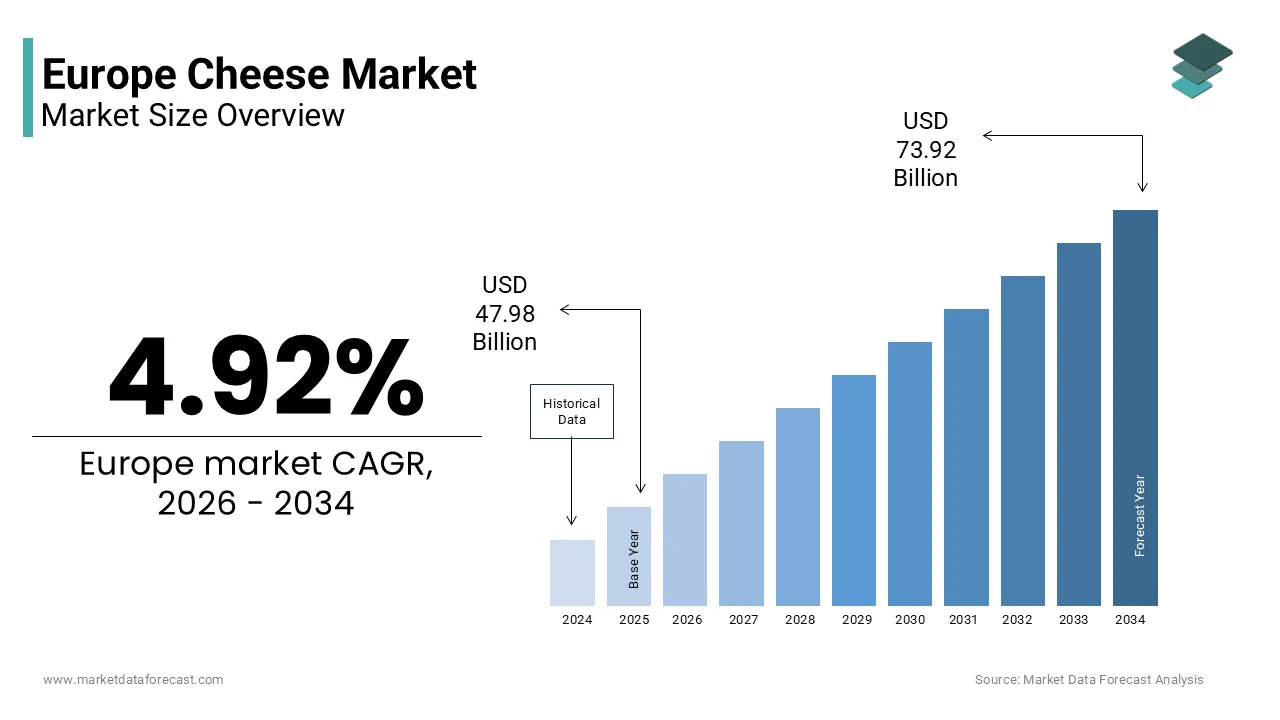
The Europe cheese market was valued at USD 47.98 billion in 2025, is estimated to reach USD 50.34 billion in 2026, and is projected to reach USD 73.92 billion by 2034, growing at a CAGR of 4.92% during the forecast period. Market growth is driven by strong consumer demand for dairy products, deep rooted culinary traditions, and increasing consumption of processed and specialty cheeses. Cheese remains a staple ingredient across households, restaurants, and food processing industries. The expansion of premium cheese offerings and innovation in flavored and functional dairy products are further supporting steady market growth across Europe.
Key Market Trends
- Rising demand for processed and specialty cheese products is driving market growth.
- Increasing consumption of dairy based convenience foods is boosting demand.
- Growing popularity of premium and artisanal cheese varieties is supporting market expansion.
- Expansion of retail and foodservice channels is enhancing product accessibility.
- Innovation in cheese flavors and formulations is influencing consumer preferences.
Segmental Insights
- Based on product, the fresh and processed cheese segment held a substantial share of the Europe cheese market in 2025. This dominance is attributed to wide consumer acceptance and extensive applications in food preparation.
- Based on process, the cheddar cheese segment accounted for 31.9% of the Europe cheese market share in 2025, driven by its strong popularity and widespread usage across households and foodservice applications.
- Based on source, the cow milk cheese segment held the majority share of the Europe cheese market in 2025, supported by large scale dairy production and consumer preference.
Regional Insights
- The Europe cheese market is experiencing steady growth across key countries, supported by strong dairy consumption and established food cultures.
- The United Kingdom accounted for 18.1% of the Europe cheese market share in 2025, driven by high cheese consumption, developed retail infrastructure, and demand for processed and specialty cheese products.
Competitive Landscape
The Europe cheese market is highly competitive, with key players focusing on product diversification, premium offerings, and expansion of distribution networks to strengthen their market position. Companies are investing in dairy processing technologies, branding strategies, and new flavor innovations. Prominent players in the Europe cheese market include Mother Dairy, Almarai, Bega Cheese, Cady Cheese Factory, Amul, Parag Milk Foods, Hook's Cheese Company, Bel Group, Brunkow Cheese Factory, Bletsoe Cheese, Kraft, and Burnett Dairy.
Europe Cheese Market Size
The Europe cheese market size was valued at USD 47.98 billion in 2025 and is projected to reach USD 73.92 billion by 2034 from USD 50.34 billion in 2026, growing at a CAGR of 4.92%.
Cheese is a nutrient-dense dairy food made by concentrating the proteins (primarily casein) and fats found in milk. This market is defined not merely by commodity trade but by a complex ecosystem of Protected Designation of Origin PDO labels artisanal craftsmanship and industrial scale manufacturing. According to the European Commission’s Short-term Outlook (Autumn 2024), the European Union is the largest global producer of cheese, accounting for approximately 36% of worldwide output, with Germany, France, and Italy leading production volumes. The cultural significance of cheese in Europe is profound as per Eurostat data which indicates that the average European consumes over 20 kilograms of cheese annually reflecting its integral role in daily diets. The market structure is characterized by a dichotomy between mass produced varieties for retail and food service sectors and premium artisanal cheeses that command higher value through geographical indication status. The Food and Agriculture Organization of the United Nations highlights that dairy farming supports millions of rural jobs across Europe emphasizing the socio economic importance of the sector. Regulatory frameworks such as the Common Agricultural Policy influence production standards and sustainability practices ensuring quality and safety. The integration of digital traceability systems further modernizes the supply chain enhancing transparency from farm to fork. This dynamic landscape balances traditional methods with innovation driving both domestic consumption and export growth.
MARKET DRIVERS
Deep Rooted Cultural Heritage and Culinary Integration
The enduring cultural heritage and deep integration of cheese into European culinary traditions is a key driver of the Europe Cheese Market. Cheese is not merely a food item but a cultural symbol embedded in national identities particularly in countries like France Italy and Switzerland where specific varieties are protected by law. According to the European Commission (eAmbrosia 2026), there are over 370 cheeses with Protected Designation of Origin (PDO) or Protected Geographical Indication (PGI) status, reinforcing consumer loyalty and preserving traditional production methods. This legal protection ensures authenticity and quality fostering a strong emotional connection between consumers and local products. The World Health Organization notes that dietary patterns in Southern Europe such as the Mediterranean diet heavily feature cheese as a source of protein and calcium contributing to its consistent consumption. Social rituals involving cheese boards during gatherings and festivals further cement its place in social life. The European Dairy Association reports that household expenditure on cheese remains stable even during economic fluctuations indicating its status as a staple rather than a discretionary item. Educational initiatives promoting the benefits of dairy in balanced diets also support demand. The versatility of cheese in cooking from simple snacks to gourmet dishes ensures its relevance across all age groups. This cultural entrenchment creates a resilient baseline demand that withstands market volatility and changing trends.
Rising Demand for Premium and Artisanal Varieties
The increasing consumer preference for premium and artisanal cheese varieties propels growth in the Europe Cheese Market. This trend is driven by shoppers seeking high-quality, unique sensory experiences. Modern consumers are becoming more discerning prioritizing flavor complexity origin and production ethics over price alone. According to Mintel the launch of new premium cheese products in Europe has increased by 15 percent in recent years reflecting this shift toward indulgence and quality. The rise of food tourism and culinary exploration has exposed consumers to diverse regional specialties encouraging them to experiment with aged hard cheeses blue veins and soft ripened varieties. The Specialty Food Association highlights that artisanal producers are gaining market share by offering small batch products with distinct characteristics that mass produced items cannot replicate. Retailers respond by expanding their specialty sections and partnering with local dairies to provide authentic options. The European Parliament’s support for geographical indications helps these smaller producers compete against large industrial brands by highlighting their unique heritage. Social media platforms play a crucial role in educating consumers about pairing techniques and tasting notes driving interest in niche products. This trend toward premiumization allows manufacturers to command higher margins and fosters brand loyalty among affluent demographics. The desire for authentic and transparent food sources further fuels the demand for artisanal cheeses.
MARKET RESTRAINTS
Health Concerns Regarding Saturated Fats and Sodium Content
Growing health consciousness regarding the nutritional profile of cheese is a significant hurdle for the Europe Cheese Market. Consumers are becoming more aware of the risks associated with high saturated fat and sodium intake. Cheese is often perceived as a calorie dense food that can contribute to cardiovascular issues and weight gain if consumed in excess. According to the World Health Organization excessive intake of saturated fats is a major risk factor for heart disease prompting public health campaigns to encourage moderation. The European Society of Cardiology recommends limiting dairy fat consumption which influences dietary choices among health aware individuals. Although some studies suggest that fermented dairy may have neutral or beneficial effects on heart health the prevailing public perception remains cautious. Studies notes that sales of reduced fat and low sodium cheese variants are growing but still represent a small fraction of the total market. Reformulating cheese to reduce fat and salt without compromising texture and flavor is technologically challenging and often results in products that fail to satisfy consumer expectations. This nutritional stigma limits the frequency of consumption for some demographics and drives a shift toward plant based alternatives. The market faces the ongoing challenge of balancing traditional taste profiles with evolving health standards.
Environmental Impact of Dairy Farming and Sustainability Pressures
The environmental footprint of dairy farming is a substantial restraint on the Europe cheese market. This is due to intensifying scrutiny on greenhouse gas emissions and resource usage. Cheese production is resource intensive requiring significant amounts of water land and energy while generating methane emissions from livestock. The European Green Deal aims to make Europe climate neutral by 2050 imposing stricter regulations on farming practices and emissions. The Food and Agriculture Organization of the United Nations highlights that improving efficiency in dairy production is critical to reducing environmental impact but requires substantial investment. Consumers are increasingly favoring brands with sustainable credentials leading to pressure on producers to adopt eco friendly practices. The Carbon Trust reports that carbon labeling is becoming a key factor in purchasing decisions influencing market dynamics. High costs associated with transitioning to sustainable farming methods such as organic feed and renewable energy can strain profit margins for smaller dairies. Additionally water scarcity in certain regions affects milk production capabilities. These environmental challenges necessitate a reevaluation of production processes and supply chains. Failure to address sustainability concerns risks losing market share to plant based alternatives and damaging brand reputation among eco conscious consumers.
MARKET OPPORTUNITIES
Expansion of Plant Based and Hybrid Cheese Alternatives
The development of plant-based and hybrid cheese alternatives offers a significant opportunity for the Europe Cheese Market. This trend helps companies capture new consumer segments and address specific dietary restrictions. As veganism and flexitarianism gain traction there is a growing demand for dairy free options that mimic the taste and texture of traditional cheese. According to the Good Food Institute Europe the plant based food market is expanding rapidly with cheese alternatives representing a key growth category. Innovations in fermentation and protein extraction technologies allow manufacturers to create products from nuts oats and peas that closely resemble dairy cheese. Traditional cheese manufacturers can leverage their expertise by launching hybrid products that blend dairy with plant based ingredients to reduce environmental impact and cater to lactose intolerant consumers. Retailers are dedicating more shelf space to these alternatives reflecting their rising popularity. The European Commission’s support for sustainable food systems encourages investment in alternative proteins. By diversifying portfolios to include plant based options companies can mitigate risks associated with declining dairy consumption and appeal to younger demographics. This strategic expansion opens new revenue streams and enhances brand relevance in a changing market landscape.
Growth in E Commerce and Direct to Consumer Channels
The expansion of e-commerce and direct-to-consumer (DTC) channels provides a promising prospect for the Europe cheese market. These platforms enhance accessibility and customer engagement. Online platforms allow producers to reach wider audiences beyond local markets offering specialized and artisanal cheeses that may not be available in physical stores. According to Statista online grocery sales in Europe have surged in recent years with fresh food categories including cheese experiencing significant growth. The convenience of home delivery appeals to busy consumers who value time saving solutions. DTC models enable manufacturers to build direct relationships with customers gathering valuable data on preferences and feedback. The European E Commerce Association notes that subscription services for cheese boxes are gaining popularity providing curated experiences and discovering new varieties. Social media marketing facilitates brand storytelling and education driving traffic to online stores. The ability to offer personalized recommendations and exclusive products enhances customer loyalty. Logistics improvements such as cold chain solutions ensure product quality during transit. By embracing digital transformation cheese producers can overcome geographical barriers and expand their market reach. This shift toward online sales complements traditional retail channels and drives overall market growth.
MARKET CHALLENGES
Volatility in Raw Material Costs and Supply Chain Disruptions
Volatility in raw material costs and supply chain disruptions is a formidable challenge to the Europe Cheese Market. This affects production stability and profitability. The price of milk the primary ingredient in cheese is subject to fluctuations driven by feed costs weather conditions and global demand. According to the European Milk Board milk prices have experienced significant volatility in recent years impacting the margins of dairy farmers and processors. Climate change effects such as droughts and heatwaves affect fodder availability and cow productivity leading to inconsistent supply. The World Bank highlights that inflation in energy and transportation sectors increases operational costs for manufacturing and distribution. Geopolitical tensions and trade restrictions further complicate supply chains causing delays and shortages of essential inputs. The International Trade Centre notes that non tariff barriers and regulatory differences across borders add complexity to international trade. These uncertainties make long term planning difficult for producers who must balance cost pressures with competitive pricing. Small and medium sized enterprises are particularly vulnerable to these shocks due to limited financial reserves. The need for robust risk management strategies and diversified sourcing is critical. However implementing these measures requires significant investment and coordination. The inherent instability of agricultural inputs remains a persistent challenge for the industry.
Stringent Regulatory Compliance and Labeling Requirements
Stringent regulatory compliance and labeling requirements are a serious hindrance to the Europe Cheese Market. Authorities are implementing stricter guidelines to ensure food safety and consumer protection. The European Union mandates detailed labeling information including allergen declarations nutritional values and origin details which requires precise tracking and documentation. According to the European Food Safety Authority compliance with hygiene and safety standards involves rigorous testing and auditing processes. The General Food Law Regulation imposes strict penalties for non compliance including product recalls and fines which can damage brand reputation. Additionally the introduction of new sustainability labels and carbon footprint disclosures adds complexity to packaging design and marketing strategies. Small artisans often struggle with the administrative burden and costs associated with these regulations. The need for continuous monitoring and verification of supply chains increases operational complexity. These regulatory hurdles force companies to allocate resources away from innovation and growth initiatives. Navigating this complex legal landscape requires diligent effort and strategic planning to maintain market access and consumer trust.
REPORT COVERAGE
| REPORT METRIC | DETAILS |
| Market Size Available | 2025 to 2034 |
| Base Year | 2025 |
| Forecast Period | 2026 to 2034 |
| CAGR | 4.92% |
| Segments Covered | By Product, Process, Source, and Region |
| Various Analyses Covered | Global, Regional, & Country Level Analysis; Segment-Level Analysis; DROC, PESTLE Analysis; Porter’s Five Forces Analysis; Competitive Landscape; Analyst Overview of Investment Opportunities |
| Regions Covered | UK, France, Spain, Germany, Italy, Russia, Sweden, Denmark, Switzerland, Netherlands, Turkey, and the Czech Republic |
| Market Leaders Profiled | Mother Dairy, Almarai, Bega Cheese, Cady Cheese Factory, Amul, Parag Milk Foods, Hook's Cheese Company, Bel Group, Brunkow Cheese Factory, Bletsoe Cheese, Kraft and Burnett Dairy |
SEGMENTAL ANALYSIS
By Product Insights
The fresh and processed cheese segment led the Europe cheese market and captured a substantial share in 2025. This leading position of the segment is attributed to its extensive versatility in food service operations and industrial food manufacturing. This segment includes varieties such as mozzarella cream cheese and processed slices which are essential ingredients in pizzas sandwiches and ready meals. The consistency and meltability of processed cheese make it indispensable for standardized culinary applications ensuring uniform quality in large scale food production. The ability of these cheeses to have a longer shelf life compared to some artisanal varieties reduces waste for retailers and manufacturers. Furthermore the integration of fresh cheese into healthy snack options such as cottage cheese cups appeals to health conscious consumers seeking high protein low fat alternatives. The widespread availability and affordability of fresh and processed cheese ensure its dominance in both retail and commercial channels. This functional utility combined with operational efficiency cements its leadership in the market. The affordability and mass market accessibility of fresh and processed cheese significantly contribute to its domination in the Europe Cheese Market. Unlike specialty or aged cheeses which often command premium prices fresh and processed varieties are produced at scale allowing for competitive pricing that appeals to a broad demographic. Supermarkets and discount retailers dedicate substantial shelf space to these products driving high volume sales. The standardization of production processes ensures consistent quality and supply reducing price volatility for consumers. Additionally the convenience of pre sliced and packaged formats aligns with modern lifestyles that prioritize ease of preparation. The National Retail Federation reports that private label fresh and processed cheeses have gained market share due to their lower price points compared to branded equivalents. This economic advantage ensures that fresh and processed cheese remains accessible to all income levels sustaining its position as the largest product segment in the European market.
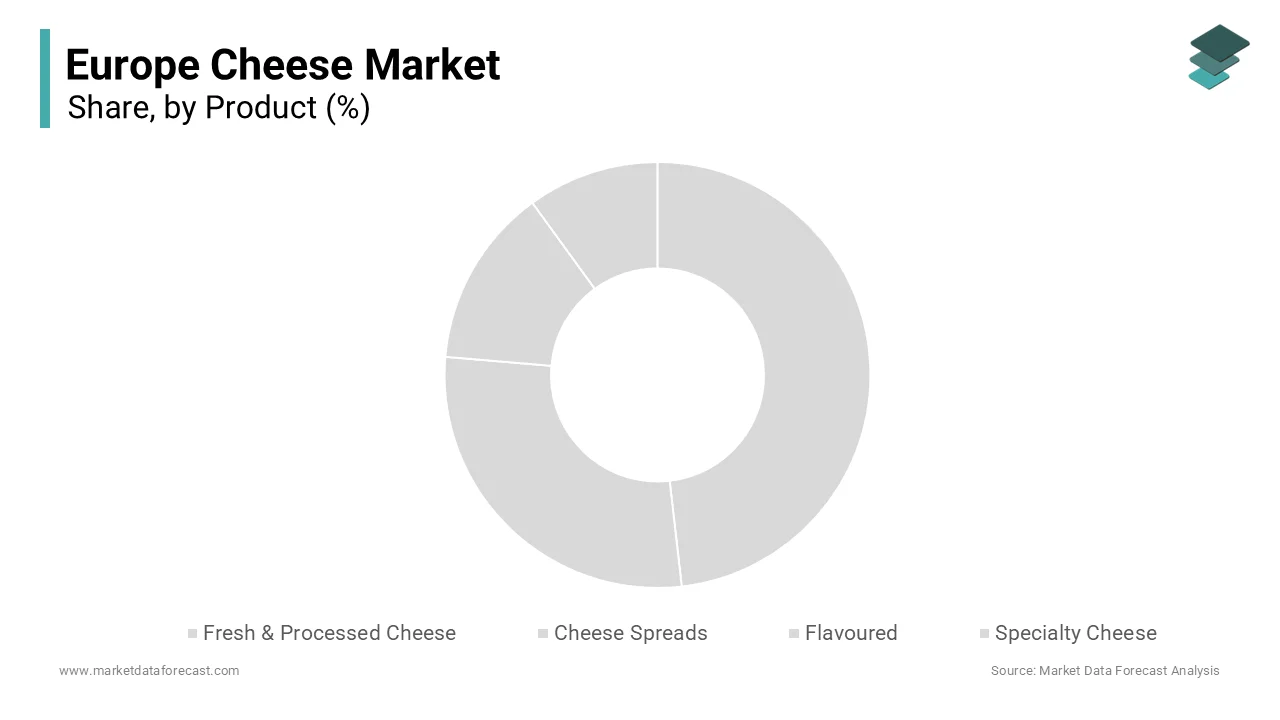
The specialty cheese segment is likely to experience the fastest CAGR of 6.2% between 2026 and 2034 due to the trend toward premiumization and consumer demand for artisanal quality. Shoppers are increasingly seeking unique flavors textures and authentic production methods that differentiate specialty cheeses from mass produced alternatives. The European Commission’s protection of Protected Designation of Origin labels enhances the perceived value of regional specialties such as Roquefort Parmigiano Reggiano and Manchego. A study notes that consumers are willing to pay higher prices for cheeses that offer a story and cultural heritage. This shift toward experiential consumption is fueled by food tourism and culinary education which expose individuals to diverse cheese varieties. Retailers respond by expanding their gourmet sections and offering tasting events to engage customers. The rise of social media influencers sharing cheese pairing ideas further drives interest in niche products. This focus on quality and authenticity allows producers to command higher margins and fosters strong brand loyalty among affluent demographics. The perception of specialty cheese as a natural and minimally processed food option contributes to its rapid growth in the Europe Cheese Market. Consumers are moving away from highly processed foods in favor of clean label products with simple ingredient lists. Specialty cheeses typically contain only milk salt cultures and rennet aligning with this demand for transparency and purity. The World Health Organization emphasizes the importance of consuming whole foods as part of a balanced diet supporting the appeal of traditional cheese making methods. Many specialty cheeses are also marketed for their probiotic content and digestive benefits attracting health conscious shoppers. This alignment with health and wellness trends differentiates specialty cheese from processed alternatives. Manufacturers highlight the natural aging process and traditional craftsmanship to reinforce the health halo. This strategic positioning resonates with modern consumers who prioritize nutrition and integrity in their food choices driving the exceptional growth of the specialty segment.
By Process Insights
The cheddar cheese segment dominated the Europe Cheese Market in 2025 and accounted for a 31.9% share in 2025. This dominance of the segment is driven by its status as a cultural staple and its wide range of culinary applications. Originating in the United Kingdom Cheddar has become a ubiquitous ingredient in European households used in sandwiches sauces baking and snacking. Its firm texture and sharp flavor profile make it versatile for both cold and hot dishes appealing to diverse taste preferences. The availability of various maturity levels from mild to extra sharp allows consumers to choose based on their intensity preference. Retailers prioritize Cheddar due to its high turnover rates and long shelf life. The adaptability of Cheddar to industrial processing for snacks and ready meals further boosts its volume. This deep integration into daily diets and food manufacturing cements its leadership in the market. The established production infrastructure and strong export capabilities of Cheddar cheese significantly drive its dominance in the Europe Cheese Market. Major producing countries such as the United Kingdom Ireland and the Netherlands have optimized manufacturing processes to produce high volumes of consistent quality Cheddar. The efficiency of large scale production allows for competitive pricing making Cheddar accessible to a broad consumer base. The robust supply chain network ensures reliable distribution to retail and food service sectors across the continent. Investments in aging facilities and technology enhance product quality and variety. The strong brand recognition of European Cheddar supports its market position against competitors. This combination of operational excellence and global reach sustains the leadership of Cheddar cheese in the European market.
The mozzarella cheese segment is on the rise and is expected to be the fastest growing segment in the market by witnessing a CAGR of 5.5% during the forecast period owing to the enduring popularity of pizza and increasing food service demand. Pizza remains one of the most consumed dishes in Europe with both independent pizzerias and international chains driving significant volume. The convenience of pre shredded and portion controlled mozzarella appeals to commercial operators seeking efficiency. Home cooking trends also boost retail sales as consumers replicate restaurant style pizzas at home. The versatility of mozzarella in salads caprese dishes and baked goods further expands its usage. This consistent and growing demand from both commercial and residential sectors fuels the rapid expansion of the mozzarella segment. Innovation in low moisture and functional mozzarella variants contributes to its rapid growth in the Europe Cheese Market. Manufacturers are developing specialized mozzarella types that offer improved performance in specific applications such as frozen pizzas and grilled dishes. Low moisture mozzarella has a longer shelf life and reduced shipping costs making it attractive for industrial buyers. Brands are introducing organic and lactose free mozzarella options to cater to dietary restrictions and health trends. These innovations ensure that mozzarella meets the evolving needs of both manufacturers and consumers driving its exceptional growth trajectory.
By Source Insights
The cow milk cheese held the majority share of the Europe Cheese Market in 2025. This supremacy of the segment is credited to the abundance of cow milk production and the well established dairy industry across the continent. Cows are the primary dairy animals in Europe providing a consistent and large volume of raw material for cheese manufacturing. The extensive infrastructure for cow dairy farming including breeding feeding and milking technologies supports efficient production. The scalability of cow milk processing allows for both artisanal and industrial production meeting diverse market needs. The familiarity of cow milk taste profiles appeals to the majority of consumers ensuring broad market acceptance. This structural advantage in supply and tradition cements the dominance of cow milk cheese in the market. The versatility of cow milk in creating diverse flavor and texture profiles significantly contributes to its leadership in the Europe Cheese Market. Cow milk can be processed into a wide range of cheese types from soft and creamy to hard and aged offering something for every palate. This diversity enables manufacturers to cater to various consumer preferences and culinary applications. The ability to blend cow milk with other ingredients or cultures creates unique products that drive innovation. Retailers benefit from the wide assortment of cow milk cheeses which attract different customer segments. The consistent quality and predictable behavior of cow milk in processing reduce production risks. This adaptability ensures that cow milk cheese remains the cornerstone of the European cheese industry.
The goat milk cheese segment is expected to exhibit a noteworthy CAGR of 7.1% between 2026 and 2034. This quick surge of the segment is propelled by its perceived health benefits and superior digestibility. Many consumers find goat milk easier to digest than cow milk due to smaller fat globules and different protein structures. Goat cheese is also perceived as lower in calories and fat appealing to health conscious shoppers. The presence of medium chain fatty acids in goat milk is linked to metabolic benefits further enhancing its appeal. This health halo drives trial and adoption among new consumer segments. The growing awareness of these benefits fuels the rapid expansion of the goat milk cheese segment. The gourmet positioning of goat milk cheese and its integration into contemporary culinary trends contribute to its rapid growth in the Europe Cheese Market. Goat cheese is often associated with fine dining and sophisticated flavors attracting affluent consumers and food enthusiasts. Chefs and restaurants frequently feature goat cheese in salads tarts and appetizers elevating its status. Social media platforms showcase creative goat cheese recipes driving consumer interest. The artisanal nature of many goat cheese productions aligns with the demand for authentic and handcrafted foods. This combination of culinary prestige and flavor innovation drives the exceptional growth of the goat milk cheese segment.
REGIONAL ANALYSIS
United Kingdom Cheese Market Analysis
The United Kingdom is a key player in the Europe Cheese Market and accounting for a 18.1% in 2025. This growth of the UK market is driven by a strong cultural affinity for Cheddar and other traditional varieties. The UK market features high per capita cheese consumption supported by strong domestic production. According to the Department for Environment, Food and Rural Affairs (DEFRA), the UK produces over 500,000 tonnes of cheese annually, with Cheddar remaining the dominant variety. The prevalence of cheese in everyday meals from sandwiches to cooked dinners ensures steady demand. The British Retail Consortium notes that supermarkets offer extensive ranges of both mainstream and artisanal cheeses catering to diverse preferences. The rise of foodie culture has boosted interest in specialty and local cheeses. Economic pressures have led to increased demand for value oriented private label products. However the premium segment remains resilient driven by loyal consumers. The UK market benefits from strong distribution networks and brand recognition. Post Brexit trade adjustments have influenced import dynamics but domestic production remains strong. The focus on quality and tradition sustains the UK’s prominent position in the European cheese market.
France Cheese Market Analysis
France led the Europe Cheese Market and occupied a share of 20.2% share in 2025. This leading position of the French market is fuelled by its unparalleled diversity of cheese varieties and deep culinary heritage. The market status in France is defined by the presence of over 1000 distinct cheese types many of which hold Protected Designation of Origin status. According to the French National Institute of Statistics and Economic Studies cheese is a daily staple in French households with high consumption of soft ripened and blue cheeses. The cultural significance of cheese is reinforced by its role in traditional meals and social gatherings. The French Ministry of Agriculture supports local producers through subsidies and promotional campaigns. Consumers prioritize quality origin and authenticity driving demand for artisanal products. The European Commission’s geographical indication protections help French cheeses maintain premium positioning globally. The market faces challenges from changing dietary habits but remains resilient due to cultural pride. Innovation in packaging and sustainability initiatives helps modernize the sector. France’s leadership in cheese culture ensures its continued dominance in the European market.
Spain Cheese Market Analysis
Spain holds a substantial share of the Europe Cheese Market due to a rich tradition of sheep and goat milk cheeses. Manchego, Idiazabal, and Cabrales are the most popular cheese varieties in the Spanish market. According to the Spanish Ministry of Agriculture, Fisheries and Food (MAPA), cheese consumption has remained stable in volume but grown in economic value, with consumers increasingly opting for protected designation of origin (DOP) varieties like Manchego. The Mediterranean diet which features cheese as a key component supports market growth. The Spanish Cheese Federation promotes local varieties through festivals and exports. Consumers are increasingly interested in premium and aged cheeses driving value growth. The tourism sector boosts demand for traditional cheeses as souvenirs and culinary experiences. Retailers expand their specialty sections to meet this interest. Sustainability and animal welfare are becoming important factors for Spanish shoppers. The market benefits from strong domestic production and export opportunities. Spain’s unique cheese heritage positions it as a key player in the European market.
Germany Cheese Market Analysis
Germany grew steadily in the Europe Cheese Market owing to high consumption of semi hard and soft cheeses. Consumer demand in Germany tends to center on popular choices like Tilsiter, Edam, and Gouda. According to the German Dairy Industry Association cheese is a popular breakfast and snack item with high household penetration. The demand for convenient and packaged cheese products is strong driven by busy lifestyles. Discount supermarkets play a major role in distribution offering competitive prices. Consumers are increasingly interested in organic and regional cheeses reflecting health and sustainability trends. The German government supports sustainable farming practices influencing production standards. The market benefits from a well developed logistics network and strong retail presence. Innovation in lactose free and reduced fat options caters to health conscious shoppers. Germany’s large population and high consumption rates ensure its significant share in the European market.
Italy Cheese Market Analysis
Italy is predicted to expand significantly in the Europe Cheese Market from 2026 to 2034 due to its iconic cheese varieties and culinary traditions. Mozzarella, Parmigiano Reggiano, and Pecorino define the landscape of the Italian cheese market. According to the Italian Cheese Consortium these cheeses are integral to Italian cuisine and enjoy global recognition. Domestic consumption is high with cheese used in pasta pizzas and antipasti. The Protected Designation of Origin status protects traditional methods and enhances value. Consumers prioritize quality and origin driving demand for authentic products. The food service sector is a major driver of demand particularly for Mozzarella. Export markets also contribute significantly to revenue. The market faces challenges from rising production costs but remains resilient due to strong brand equity. Innovation in sustainable packaging and digital marketing helps modernize the sector. Italy’s culinary influence ensures its continued importance in the European cheese market.
COMPETITIVE LANDSCAPE
The competition in the Europe cheese market is characterized by a mix of large multinational cooperatives and specialized artisanal producers vying for dominance through brand heritage and innovation. Major players leverage extensive distribution networks and economies of scale to maintain strong market positions while smaller firms compete on uniqueness and quality. The market is moderately consolidated with key brands controlling significant shelf space in retail outlets. Sustainability credentials and ethical sourcing serve as primary differentiators attracting environmentally conscious consumers. Price competitiveness remains crucial in the mass market segment forcing businesses to optimize costs. The rise of private label brands from major retailers intensifies pressure on branded manufacturers to justify premium pricing. Regulatory compliance regarding food safety and labeling shapes competitive dynamics. Companies must continuously adapt to changing consumer trends such as the demand for organic and lactose free options. The integration of digital sales channels offers new avenues for growth. Overall, the market demands strategic agility and continuous innovation to sustain profitability amidst fluctuating raw material costs and evolving dietary preferences.
Key Market Players
Some of the key players in Europe cheese market are
- Mother Dairy
- Almarai
- Bega Cheese
- Cady Cheese Factory
- Amul
- Parag Milk Foods
- Hook's Cheese Company
- Bel Group
- Brunkow Cheese Factory
- Bletsoe Cheese
- Kraft
- Burnett Dairy
Top Players in the Market
- Lactalis Group stands as a dominant force in the European cheese sector leveraging its vast portfolio of iconic brands such as Président and Galbani. The company actively invests in sustainable dairy sourcing and modernizes production facilities to enhance efficiency and reduce environmental impact. Recent strategic actions include expanding its organic cheese offerings to meet growing consumer demand for natural products. Lactalis strengthens its market position through targeted acquisitions of regional artisanal producers which diversifies its product range. The company also focuses on digital transformation to optimize supply chain logistics and improve customer engagement. By prioritizing innovation and sustainability Lactalis maintains its leadership role. These initiatives ensure consistent quality and broaden its appeal across diverse European markets while reinforcing its commitment to ethical practices.
- Savencia Fromage & Dairy is a key player in the Europe cheese market renowned for its expertise in specialty and premium cheeses including Brie and Roquefort. The company emphasizes craftsmanship and tradition while integrating modern sustainability practices into its operations. Recent efforts to strengthen its position include launching eco friendly packaging solutions and expanding its plant based cheese alternatives. Savencia collaborates with local farmers to ensure high quality milk sourcing and supports biodiversity initiatives. The company enhances brand visibility through innovative marketing campaigns that highlight the heritage of its products. By focusing on premiumization and health-conscious options Savencia appeals to discerning consumers. These strategies reinforce its reputation for quality and drive growth in the competitive European landscape.
- Arla Foods amba is a leading cooperative in the European cheese market known for its strong presence in organic and conventional dairy products. The company leverages its farmer owned structure to ensure transparency and sustainability throughout the supply chain. Recent actions to bolster its market position include investing in carbon neutral production technologies and expanding its range of lactose free cheeses. Arla focuses on innovation by developing new cheese formats that cater to convenient snacking trends. The company actively engages in educational programs promoting the nutritional benefits of dairy. By prioritizing environmental responsibility and product diversity Arla strengthens consumer trust. These initiatives enhance its competitive edge and support long term growth in the evolving European cheese sector.
Top Strategies Used by Key Market Participants
Key players in the Europe Cheese Market predominantly focus on sustainability and product innovation to maintain competitive advantage. Companies invest in eco friendly packaging and carbon neutral production to align with regulatory goals. Strategic expansion into organic and plant based segments addresses shifting consumer preferences. Partnerships with local farmers ensure high quality raw materials and supply chain transparency. Digital marketing campaigns emphasize health benefits and culinary versatility to engage shoppers. Mergers and acquisitions facilitate market consolidation and entry into niche categories. Investment in research and development drives the creation of functional cheeses with added health benefits. These multifaceted strategies enable participants to navigate market complexities and sustain growth in the dynamic European landscape.
MARKET SEGMENTATION
This research Report on Europe Cheese Market is segmented and sub segmented into following categories.
By Product
- Fresh & Processed Cheese
- Cheese Spreads
- Flavoured
- Specialty Cheese
By Process
- Mozzarella Cheese
- Cheddar Cheese
By Source
- Goat Milk Cheese
- Cow Milk Cheese
By Country
- UK
- France
- Spain
- Germany
- Italy
- Russia
- Sweden
- Denmark
- Switzerland
- Netherlands
- Turkey
- Czech Republic
- Rest of Europe