- Product Description Description
- Table of Contents TOC
- List of Table & Figure LOT
- Get Free Sample PDF Sample PDF
Market Size, 2025
$50.43 BnMarket Estimate, 2026
$54.34 BnMarket Forecast, 2034
$98.73 BnCAGR, 2026–2034
7.75%Europe Commercial Aquafeed Market Report Summary
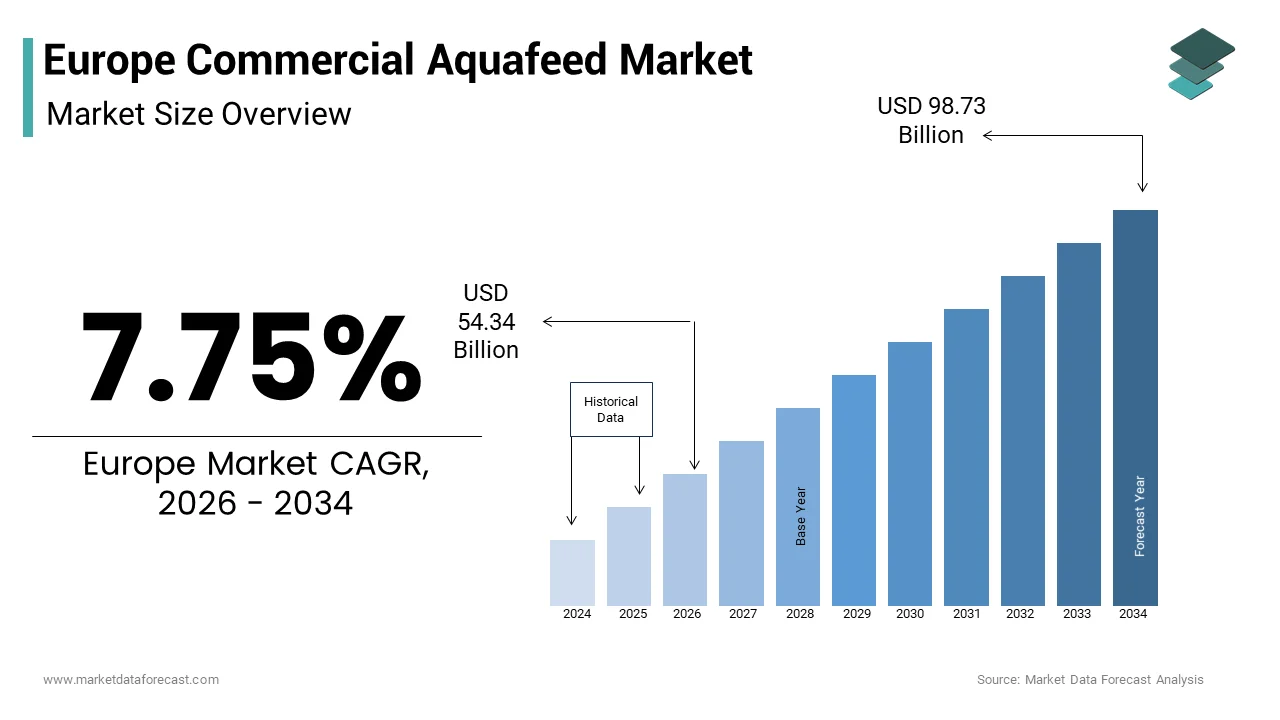
The Europe commercial aquafeed market was valued at USD 50.43 billion in 2025, is estimated to reach USD 54.34 billion in 2026, and is projected to expand to USD 98.73 billion by 2034, registering a robust CAGR of 7.75% during the forecast period from 2026 to 2034. The growth of the European commercial aquafeed market is driven by the rapid expansion of aquaculture production, increasing demand for sustainably farmed fish and seafood, and technological advancements in feed formulations. Rising pressure on wild fish stocks and stricter sustainability regulations are accelerating the shift toward efficient, nutritionally optimized commercial aquafeeds. In addition, continuous investments in offshore and recirculating aquaculture systems (RAS) are supporting strong feed demand across Europe.
Key Market Trends
Growing demand for high-performance aquafeeds that improve feed conversion ratios and fish health. Increasing focus on sustainable feed ingredients, including alternatives to traditional fish meal and fish oil. Rising use of functional additives such as vitamins, minerals, and probiotics to enhance immunity and disease resistance. Expansion of offshore aquaculture and land-based RAS facilities, particularly in Northern and Western Europe. Greater emphasis on traceability, environmental compliance, and carbon footprint reduction across the aquafeed value chain.
Segmental Insights
- Based on end users, the fish farming segment dominated the Europe commercial aquafeed market in 2025, driven by the large-scale production of species such as salmon, trout, seabass, and seabream. The segment’s dominance reflects the growing commercialization and intensification of fish farming operations across Europe.
- Based on ingredients, the fish meal segment remained the largest, accounting for 32.1% of the Europe commercial aquafeed market share in 2025. Fish meal continues to be a critical protein source due to its high digestibility, balanced amino acid profile, and proven effectiveness in supporting growth and feed efficiency.
- Based on additives, the vitamins segment led the market by capturing 38.3% of the share in 2025. The strong demand for vitamins is attributed to their essential role in supporting fish metabolism, immunity, stress resistance, and overall productivity in intensive aquaculture systems.
Country Insights
- The Europe commercial aquafeed market is led by major aquaculture-producing countries with advanced farming infrastructure.
- Norway emerged as the top-performing market in 2025, accounting for 28.4% of the regional share, supported by its globally dominant salmon farming industry and high adoption of premium aquafeed solutions.
- Spain ranked second with a 21.6% share, driven by the strong production of seabass, seabream, and trout.
- France is experiencing moderate growth, supported by vertically integrated freshwater trout farming and emerging offshore aquaculture projects.
- Italy is expected to expand steadily from 2026 to 2034, driven by increasing investments in marine aquaculture and feed innovation.
Competitive Landscape
The Europe commercial aquafeed market is highly competitive, characterized by the presence of multinational feed manufacturers and specialized aquaculture nutrition companies. Leading players are focusing on sustainable ingredient sourcing, functional feed development, and strategic collaborations with aquaculture producers. Prominent companies operating in the market include Archer Daniels Midland Company, Ridley Corporation Limited, Skretting AS, Cargill, Nutreco N.V., Avanti Feeds Ltd, Purina Animal Nutrition LLC, Nutriad, Alltech, Biostadt India Limited, Aller Aqua A/S, BioMar, BIOMIN Holding GmbH, Norel Animal Nutrition, Dibaq A.S., and De Heus Animal Nutrition.
Europe Commercial Aquafeed Market Size
The Europe commercial aquafeed market size was valued at USD 50.43 billion in 2025 and is anticipated to reach USD 54.34 billion in 2026 to reach USD 98.73 billion by 2034, growing at a CAGR of 7.75%, during the forecast period from 2026 to 2034.
Introduction to the Europe Commercial Aquafeed Market
Commercial aquafeed refers to the scientifically formulated nutrition designed to support the health, growth, and sustainability of farmed aquatic species, including finfish, crustacea, n,s and mollusks. In Europe, this market is shaped by the region’s strategic commitment to food security, marine conservation, and protein self-sufficiency. The European Union produce1.11 million metric tons of farmed seafood in 2023, according to Eurostat. The primary species by volume were mussels (34.5%), trout (15.8%), and gilthead seabream (10.0%). Sustainable aquaculture development is a core EU strategy, addressing wild catch limits within the Common Fisheries Policy and supporting Blue Economy/Farm to Fork goals. The EU maintains robust regulatory frameworks, such as the EU Feed Hygiene Regulation, which enforce high standards of quality control and hygiene across the feed industry. These frameworks promote the exploration and integration of alternative, sustainable protein sources to improve supply chain resilience and reduce environmental impact. The European Commission’s Green Deal and Farm to Fork Strategy further incentivize circular feed solutions, including insect mea, algal protein, and processed animal byproducts. Europe's aquafeed sector is an established and important part of the global feed industry. The ongoing focus on sustainability certifications and innovation drives the sector's role in developing advanced nutritional strategies and more environmentally friendly practices for future aquaculture.
MARKET DRIVERS
Rising Demand for Farmed Seafood Driven by Protein Security and Dietary Shifts
The region’s growing reliance on aquaculture to meet protein demand is a major driver for the Europe commercial aquafeed market. Wild capture fisheries face ecological limits, which have led to stabilized fish landings in the EU. Per capita seafood consumption in the EU is generally high, with farmed products making up a significant portion of the total supply. This shift is amplified by health-conscious dietary trends. The European Food Safety Authority recognizes omega-3-rich species like salmon as essential for cardiovascular health, driving retail demand. National strategies reflect this urgency. Norway provides a large amount of the EU's farmed salmon and follows sustainability criteria that align with EU standards. Aquaculture production in some EU countries, such as Spain and Greece, has been expanding, which increases the need for fish feed. The EU's goal of boosting aquaculture production will likely drive a proportional increase in the demand for feed.
Regulatory Push for Sustainable and Alternative Feed Ingredients
EU policy frameworks are actively reshaping aquafeed formulation by mandating reduced dependence on fishmeal and fish oil derived from wild forage fish, which fuels the expansion of the Europe commercial aquafeed market. The industry is shifting towards using alternative proteins in fish feed. This transition aims to reduce reliance on marine-derived ingredients. A range of new feed components, including insect and algal proteins, is receiving authorization for use. The use of these alternatives is expanding across product lines within the industry. Incorporating novel proteins helps to save wild fish populations used for feed production. There is a general trend toward improved efficiency and sustainability in the production of farmed fish. Besides, the EU Ecolabel for aquaculture now requires certified farms to use feeds with verified sustainable sourcing, which creates market pull. This policy-driven transformation positions Europe as a global leader in eco-conscious aquafeed innovation.
MARKET RESTRAINTS
Volatility in Raw Material Prices and Supply Constraints
Fluctuating costs and limited availability of key raw materials, particularly marine and plant-based proteins, restrict the growth of the Europe commercial aquafeed market. Fishmeal prices have increased significantly, influenced by environmental factors that reduced the availability of key marine resources. Concurrently, prices for soybean meal, an alternative plant-based protein, also rose due to adverse weather conditions in growing regions. These combined price changes in primary ingredients have put pressure on the operating profits for businesses producing animal feed. Alternative proteins hold promise, but the current production scale is limited. The current amount of insect meal produced is relatively minor in relation to the total need for protein in the region. This supply gap forces reliance on volatile traditional inputs, exposing the sector to geopolitical and climatic disruptions. Reliable and varied ingredient sourcing is essential for maintaining consistent and affordable feed prices.
Stringent Feed Safety and Traceability Requirements Increase Compliance Burden
European aquafeed producers operate under one of the world’s most rigorous regulatory environments, which imposes significant operational and financial constraints to ultimately inhibit the expansion of the Europe commercial aquafeed market. Regulatory frameworks are increasingly emphasizing full traceability throughout the supply chain, necessitating systems that can digitally track and document ingredient lots from their source to the finished product. Additionally, the European Food Safety Authority enforces strict limits on contaminants, such as dioxins, heavy metals, and mycotoxins, with zero tolerance for unapproved novel ingredients. Compliance necessitates investment in real-time analytical equipment and certified quality personnel. Adhering to these regulations constitutes a notable portion of operational expenses, particularly for small and medium-sized producers. National variations further complicate matters. Specific compliance requirements can vary geographically, with some regions imposing additional mandates such as supplementary screening for certain ingredients or separate storage facilities based on ingredient origin. These fragmented yet stringent rules delay time to market for innovative formulations and disproportionately burden smaller players, which limits competitive diversity and slows ingredient modernization across the sector.
MARKET OPPORTUNITIES
Integration of Precision Nutrition and Digital Feed Management Systems
The adoption of precision nutrition technologies optimizes feed formulation and delivery based on real-time biological and environmental data, which generates new opportunities for the Europe commercial aquafeed market. Leading integrators in Norway and the Netherlands now use AI-driven platforms that adjust feed composition based on fish size, water temperature, and dissolved oxygen levels, reducing waste. Companies have launched digital feed advisors that connect farm sensors to cloud-based nutritional models, enabling dynamic rationing. Additionally, blockchain-enabled traceability allows retailers and consumers to verify feed sustainability credentials. These innovations align with the EU’s goal of reducing feed conversion ratios. Europe is revolutionizing aquaculture feed, using digital tools to make it an adaptive and data-driven service rather than just a static ingredient, due to advances in nutritional science.
Expansion of Insect and Microbial Protein Production Capacity
The region is poised for significant growth in alternative protein adoption through strategic investments in insect and microbial fermentation facilities dedicated to aquafeed. This offers fresh prospects for the expansion of the Europe commercial aquafeed market. Financial commitment supports alternative protein production. Operational facilities producing insect protein are active in several European countries. Insect protein is a viable ingredient for fish feed. Microbial protein production using gas fermentation is an innovative method. The microbial process offers a reduced land footprint compared to traditional protein sources. Regulatory momentum supports this shift. So, these emerging ingredients will alleviate pressure on marine resources while enhancing feed security and circularity across the continent.
MARKET CHALLENGES
Limited Consumer Acceptance of Alternative Protein-Based Feeds
Consumer skepticism toward novel feed ingredients, particularly insect and processed animal proteins, despite scientific validation and regulatory approval, poses a major barrier to the Europe commercial aquafeed market. As per sources, a portion of respondents expressed discomfort with farmed fish raised on insect meal, citing concerns about naturalness and safety. This perception influences retailer procurement policies. Major supermarket chains in Germany and Sweden currently prohibit aquaculture products fed with non-marine animal proteins unless certified under strict labeling schemes. Consequently, feed manufacturers hesitate to fully substitute fishmeal even when economically viable, fearing market rejection. The absence of harmonized EU labeling for feed ingredients exacerbates confusion; consumers cannot distinguish between insect-fed and conventionally farmed fish at the point of sale. Public acceptance, cultivated through transparent communication of safety and sustainability benefits, is essential for the alternative protein market to scale; otherwise, adoption constraints will remain social, not technical, impeding progress toward circularity goals.
Geographic Mismatch Between Feed Production and Aquaculture Sites
The spatial disconnect between feed manufacturing hubs and aquaculture production zones leads to high logistics costs and carbon emissions, which constrain the expansion of the Europe commercial aquafeed market. Aquafeed production facilities are primarily located in the Northern and Central regions. Marine aquaculture activities are concentrated in the Southern coastal areas. This geographical separation between feed production and use is a trend. The imbalance in location leads to long average distances for transporting feed. Increased transport distances influence operational costs. Transportation of feed results in associated emissions. Remote sites like Greek island farms face additional delays due to ferry dependency, risking feed freshness. Modular micro feed mills are being piloted (e.g., a solar-powered unit in Sicily), but their high cost means small producers cannot afford them. Europe cannot achieve an efficient aquafeed supply chain, economic viability, or environmental sustainability without decentralized production models and regional feed hubs.
REPORT COVERAGE
| REPORT METRIC | DETAILS |
| Market Size Available | 2025 to 2034 |
| Base Year | 2025 |
| Forecast Period | 2026 to 2034 |
| CAGR | 7.75% |
| Segments Covered | By End-User, Ingredients, Additive, and By Country |
| Various Analyses Covered | Global, Regional & Country Level Analysis, Segment-Level Analysis, DROC, PESTLE Analysis, Porter’s Five Forces Analysis, Competitive Landscape, Analyst Overview on Investment Opportunities |
| Regions Covered | UK, France, Spain, Germany, Italy, Russia, Sweden, Denmark, Switzerland, Netherlands, Turkey, the Czech Republic, and the Rest of Europe |
| Market Leaders Profiled | Archer Daniels Midland Company, Ridley Corporation Limited, Skretting AS, Cargill, Nutreco N.V., Avanti Feeds Ltd, Purina Animal Nutrition LLC, Nutriad, Alltech, Biostadt India Limited, Aller Aqua A/S, Biomar, BIOMIN Holding GmbH, Norel Animal Nutrition, Dibaq A.S, De Heus Animal Nutrition. |
SEGMENTAL ANALYSIS
By End User Insights
The fish farming segment captured the majority share of the Europe commercial aquafeed market in 2025. The leading position of the fish farming segment is attributed to the high economic value and intensive feeding requirements of key finfish species such as Atlantic salmon, European seabass, and gilthead seabream. Unlike mollusks, cs which are filter feeders and require no commercial feed, finfish are obligate carnivores or omnivores dependent on formulated diets throughout their lifecycle. Major aquaculture nations like Norway (non-EU but key supplier, er), Spain, Greece, and Denmark operate large-scale recirculating and sea cage systems that rely entirely on precision aquafeeds. The European Commission’s Strategic Guidelines for Sustainable Aquaculture prioritize finfish due to their high protein conversion efficiency and export potential. Furthermore, consumer preference strongly favors finfish. This convergence of biology, economics, cs, and policy solidifies fish as the central end user segment.
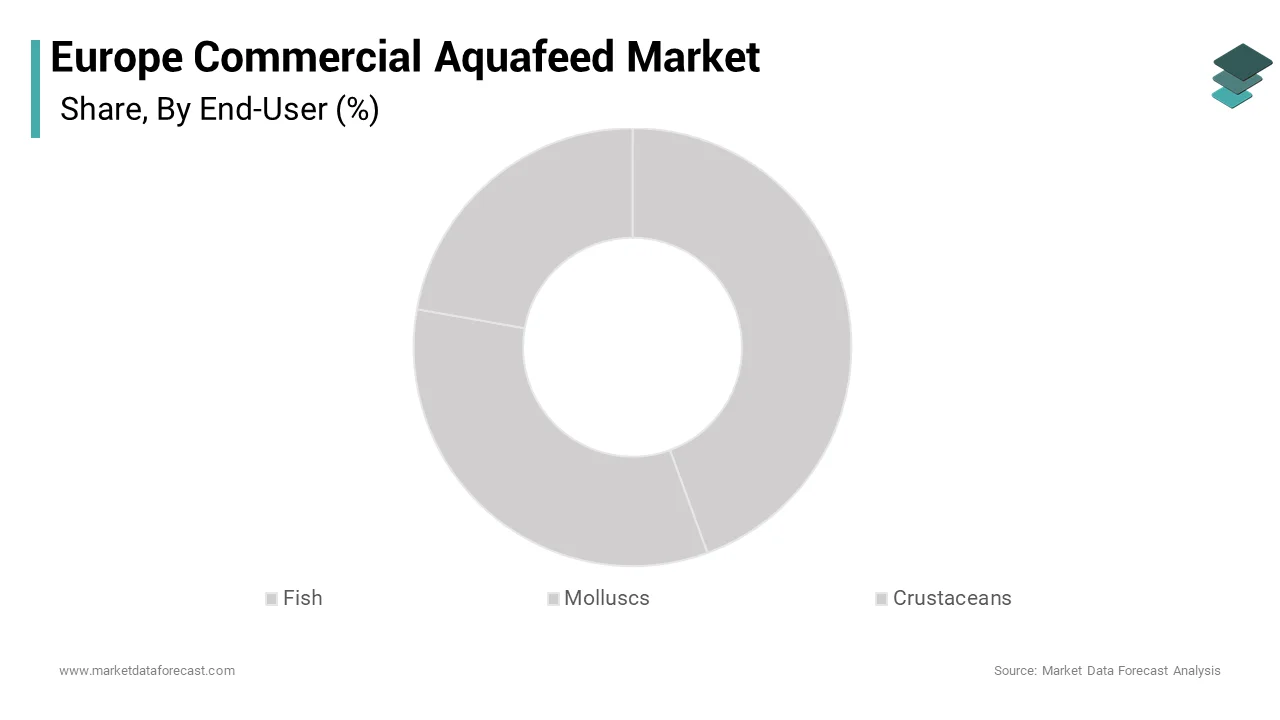
The crustaceans segment is anticipated to witness the fastest CAGR of 8.6% from 2025 to 2033 due to rising demand for premium shellfish and emerging intensive farming models for warm water species. Countries in Europe are investing in pilot farms for whiteleg shrimp and freshwater crayfish using imported stock. Specific nations involved in this trend include Spain, Italy, and Greece. These systems require specialized high-protein feeds with balanced amino acid and cholesterol profiles, creating new demand for formulated aquafeed. New feed additives tailored for crustaceans have received approval, which facilitates commercial-scale aquaculture operations. Additionally, premium restaurants and retail chains are increasingly sourcing locally farmed shrimp to reduce air freight emissions from Southeast Asia. Funding has been directed toward diversifying aquaculture species. This has helped transition crustacean farming and its related feed requirements from an experimental phase to a commercially viable industry, supporting segment growth.
By Ingredients Insights
The fish meal segment remained the largest segment in the Europe commercial aquafeed market by occupying a share of 32.1% in 2024. The prominence of the fish meal segment is propelled by its unmatched amino acid profile, high digestibility, ty and palatability for carnivorous species such as salmon and seabass. Despite sustainability pressures, fish meal is irreplaceable in starter agrow-out diets where rapid development and feed acceptance are critical. Regulatory frameworks under the EU’s Marine Strategy Framework Directive allow its use as long as it originates from certified reduction fisheries with full traceability. Furthermore, the European Food Safety Authority confirms that fish meal from approved sources contains negligible levels of contaminants, ensuring feed safety. Fish meal will remain the cornerstone of premium aquafeed until alternative proteins match its performance capabilities.
The additives segment is likely to experience the fastest CAGR of 9.3% between 2025 and 2033. The growth of the additives segment is propelled by the rising need to enhance feed efficiency, support fish health, and reduce antibiotic reliance in intensive farming systems. Key drivers include immunostimulants, probiotics, and organic acidifiers that strengthen gut health and disease resistance, critical as Europe phases out prophylactic antibiotics under Regulation EU 2019 6. Salmon farms are incorporating functional additives into feed rations. Research and development initiatives focus on novel feed additives derived from marine algae and yeast derivatives. Besides, digital nutrition platforms now enable precision dosing of vitamins and amino acids based on real-time fish performance data, minimizing waste. The tightening of sustainability and welfare standards is transforming the role of additives. They are no longer just supplements but critical components for achieving performance goals, which is accelerating their adoption.
By Additive Insights
The vitamins segment led the Europe commercial aquafeed market by accounting for a 38.3% share in 2024. The supremacy of the vitamins segment is propelled by its essential role in maintaining metabolic function, immune competence, and stress resilience across all farmed species. Fat-soluble vitamins A, D, E, and K and water-soluble B complex vitamins are routinely included in aquafeeds at precise concentrations to prevent deficiency disorders that impair growth and survival. The European Food Safety Authority mandates minimum vitamin levels in all commercial aquafeeds, species-specific requirements codified in EU feed legislation. For example, Atlantic salmon have a necessary requirement for vitamin C during specific life stages, a need that is reflected in feed composition. Major vitamin producers like DSM and BASF operate GMP-certified blending facilities in the Netherlands and Germany, ensuring stability and uniformity. Consistent inclusion of essential vitamins in aquafeed is important for ensuring feed quality and maintaining fish health.
The feed enzymes segment is on the rise and is expected to be the fastest-growing segment in the market by witnessing a CAGR of 10.7% from 2025 to 2033, owing to the dual need to improve nutrient utilization from plant-based ingredients and reduce environmental phosphorus discharge. Proteases and carbohydrases further break down complex proteins and fibers, allowing greater substitution of fish meal with plant meals without compromising growth. The EU’s Industrial Emissions Directive now requires aquaculture facilities to limit phosphorus effluent, making enzyme supplementation a regulatory as well as economic imperative. The proliferation of alternative ingredients highlights the crucial role of enzymes in optimizing nutritional uptake and adhering to environmental standards.
COUNTRY ANALYSIS
Norway Commercial Aquafeed Market Analysis
Norway was the top performer in the Europe commercial aquafeed market by capturing a share of 28.4% in 2024. Production in a specific country is substantial. Significant quantities of specialized feed are consistently utilized. Norwegian feed mills like Skretting and BioMar operate state-of-the-art facilities with R&D centers focused on low fish meal formulations and digital nutrition. The Norwegian Food Safety Authority enforces some of the world’s strictest feed regulations, which align closely with EU standards, ensuring seamless market integration. The nation's administration is implementing an environmental policy. Goals involve reducing the environmental impact of feed. Alternative ingredients, such as insect meal and algal oil, are becoming more common. Norway's seamless integration with EU processors means its cutting-edge aquafeed solutions immediately influence European practices, which strengthens its role as the technological and volumetric benchmark.
Spain Commercial Aquafeed Market Analysis
Spain was the second-largest country in the Europe commercial aquafeed market and held a 21.6% share in 2024. The growth of the Spanish market is propelled by extensive marine cage farming of seabass, seabream, and meagre along its Mediterranean and Atlantic coasts, producing significant metric tons of finfish annually. The warm climate enables year-round production, driving consistent feed demand. Spain hosts major feed manufacturers, including Feed&Care and Nanta, which operate plants dedicated to Mediterranean species nutrition. Additionally, Spanish researchers at the Institute of Aquaculture Torre de la Sal have pioneered low-phosphorus diets using enzyme technology, reducing environmental impact. Spain is the EU's key center for warm-water aquafeed innovation, leveraging robust exports to France, Italy, and Germany.
Greece Commercial Aquafeed Market Analysis
Greece is growing steadily in the Europe commercial aquafeed market. The country is Europe’s second-largest producer of farmed seabass and seabream, with notable metric tons harvested from offshore marine cages in the Aegean and Ionian Seas. These high-density systems require premium feeds with enhanced immunostimulants and stability in warm water, conditions that accelerate nutrient leaching. Greek feed mills like Alltech Hellas and Coppens Hellas formulate species-specific diets with elevated vitamin C and E levels to combat oxidative stress. Furthermore, Greece’s island geography necessitates efficient logistics. Feed barges deliver directly to farm sites, minimizing storage losses. This specialized operational model ensures Greece remains a core and resilient market for high-performance aquafeeds.
France Commercial Aquafeed Market Analysis
France is moderately growing in the Europe commercial aquafeed market due to vertically integrated trout farming in freshwater systems and emerging offshore pilot projects for seabass. France produces considerable metric tons of rainbow trout annually, requiring feeds with precise amino acid balancing for cold water metabolism. Major players operate R&D centers focused on functional additives and circular ingredients such as processed poultry byproducts. The French National Research Institute for Agriculture,e Fo, od and Environment has validated feather meal as a partial fish meal substitute in trout diets, aligning with the national Protein Autonomy Plan. Additionally, France leads EU initiatives ed digitalization. This blend of tradition and innovation positions France as a high-value niche market with strong regulatory influence.
Italy Commercial Aquafeed Market Analysis
Italy is likely to expand in the Europe commercial aquafeed market from 2025 to 2033 due to traditional seabass and seabream farming in coastal regions and rapid growth in land-based recirculating aquaculture systems (RAS) near urban centers. Italy now operates numerous commercial RAS facilities, more than any other EU country, producing salmon trout and even shrimp for local markets. These closed systems require highly digestible, low-waste feeds with probiotics and enzymes to maintain water quality. Additionally, Italian chefs and retailers are increasingly sourcing zero-kilometer farmed fish, driving demand for traceable and sustainable feeds. This shift toward localized high-tech production is transforming Italy into a dynamic, ic, forward-looking aquafeed market.
COMPETITIVE LANDSCAPE
The Europe commercial aquafeed market features intense competition among multinational feed corporations and regional specialists, driven by innovation, sustainability, and service differentiation rather than price alone. Leading players like Skretting BioMar and Cargill dominate through an integrated R&D network, advanced production facilities, and digital feed management tools. Smaller regional mills compete by offering species-specific formulations and localized logistics, particularly in Southern Europe. Competition is increasingly shaped by environmental performance, with feed carbon footprint and marine ingredient sourcing becoming key selection criteria for integrated fish farmers and retailers. The European Union’s stringent feed safety regulations create high entry barriers, favoring established players with robust quality systems. However, the rise of land-based recirculating aquaculture systems is opening opportunities for agile formulators specializing in low-waste high high-digestibility diets. Collaborative innovation through EU research consortia further blurs competitive lines, fostering a dynamic ecosystem where scientific advancement and sustainability leadership determine market influence.
KEY MARKET PLAYERS
The commercial aquafeed market is highly competitive with a large number of players. Key market players dominating the market with their products are
- Archer Daniels Midland Company
- Ridley Corporation Limited
- Skretting AS
- Cargill, Nutreco N.V.,
- Avanti Feeds Ltd
- Purina Animal Nutrition LLC
- Nutriad
- Alltech
- Biostadt India Limited
- Aller Aqua A/S
- Biomar
- BIOMIN Holding GmbH
- Norel Animal Nutrition
- Dibaq A.S,
- De Heus Animal Nutrition.
Top Players In The Market
- Skretting AS, a wholly owned subsidiary of Nutreco, is a leading force in the Europe commercial aquafeed market with a strong legacy in salmon and marine fish nutrition. The company operates advanced feed mills in NorwaScotlandnSp, and Italy, supplying tailored diets to both traditional sea cage and land-based aquaculture systems. Skretting has pioneered low fish meal formulations using insect protein and microbial oils, aligning with EU sustainability mandates. Skretting also collaborates with the European Aquaculture Technology Platform on circular feed ingredient trials. Through continuous innovation in alternative proteins and digital aquaculture services, Skretting strengthens its global leadership while supporting Europe’s transition to eco-efficient fish farming.
- BioMar Group maintains a significant presence in the Europe commercial aquafeed market through its species-specific formulations and commitment to sustainable sourcing. Headquartered in Denmark, the company supplies feeds for salmon, seabass, seabream, and emerging species across 20 European countries. BioMar’s Blue Balance certification ensures full traceability of marine ingredients and verified inclusion of alternative proteins like algal oil and yeast. The company also partners with RAS operators in the Netherlands and Italy to develop low-emission diets optimized for closed systems. BioMar reinforces its status as a responsible global innovator by weaving sustainability metrics into product design and supporting advanced aquaculture models.
- Cargill Aqua Nutrition plays a strategic role in the Europe commercial aquafeed market by leveraging its global supply chain and R&D capabilities to deliver resilient and traceable feed solutions. The company operates production facilities in Norway and the UK, focusing on high-performance diets for salmon and trout. Cargill has invested heavily in ingredient diversification, securing long-term contracts for certified insect meal and algal DHA to reduce marine dependency. Cargill also participates in the EU-funded AquaIMPACT project to validate novel protein blends in commercial settings. Through scalable innovation and digital integration, Cargill enhances feed efficiency and sustainability across Europe’s evolving aquaculture landscape.
Top Strategies Used By The Key Market Participants
Key players in the Europe commercial aquafeed market prioritize ingredient diversification to reduce reliance on finite marine resources by incorporating insect meal, algal oioiland processed animal proteins. They invest in digital nutrition platforms that enable time-based feed optimization based on environmental and biological data. Strategic partnerships with research institutions and EU-funded projects accelerate validation of novel formulations. Companies implement full traceability and carbon footprint labeling to meet retailer and consumer sustainability demands. Geographic expansion includes dedicated feed mills near aquaculture clusters to reduce logistics emissions. Vertical integration with hatcheries and farming operations ensures demand alignment and product testing. Regulatory compliance with EU feed safety and environmental directives remains central to all innovation efforts. These strategies collectively enhance nutritional performance, environmental credentials, and market responsiveness across Europe’s dynamic aquaculture sector.
MARKET SEGMENTATION
This research report on the europe commercial aquafeed market is segmented and sub-segmented into the following categories.
By End User
- Fish
- Molluscs
- Crustaceans
By Ingredients
- Soybean
- Corn
- Fish Meal
- Fish Oil
- Additives
By Additive
- Antibiotics
- Vitamins
- Anti-Oxidants
- Amino Acids
- Feed Enzymes
- Feed Acidifiers
By Country
- UK
- France
- Spain
- Germany
- Italy
- Russia
- Sweden
- Denmark
- Switzerland
- Netherlands
- Turkey
- Czech Republic
- Rest of Europe