- Product Description Description
- Table of Contents TOC
- List of Table & Figure LOT
- Get Free Sample PDF Sample PDF
Market Size, 2025
$78.85 BnMarket Estimate, 2026
$83.88 BnMarket Forecast, 2034
$137.58 BnCAGR, 2026–2034
6.38%Executive Summary: Europe Consumer Healthcare Market
- Market Scope: Regional analysis of Europe's consumer healthcare sector, detailing over-the-counter pharmaceuticals, dietary supplements, distribution channels, regulatory frameworks, and country-level profiles for the forecast period 2026-2034.
- Market Valuation: Valued at USD 83.88 billion in 2026 and projected to expand to USD 137.58 billion by 2034, growing at a robust CAGR of 6.38% from 2026 to 2034.
- Primary Growth Drivers: Rising burden of chronic lifestyle-related conditions, expansion of digital health platforms and e-pharmacy services, and an increasing shift toward proactive self-care.
Key Market Segment Metrics
| Category | Largest Segment (Base Position) | Fastest-Growing / High-Growth Segment |
|---|---|---|
| By Product | OTC Pharmaceuticals (dominated market share, driven by entrenched consumer reliance on self-treatment for common ailments) | Dietary Supplements (projected at high CAGR, fueled by rising preventive health focus and personalized wellness) |
| By Distribution Network | Pharmacies or Drugstores (led market share, anchored by high consumer trust in accessible pharmacist advisors) | Online Retail (expected to register highest CAGR, driven by shifting preferences for convenience, discretion, and e-commerce access) |
| By Country | Germany (market leader with largest share, backed by robust regulatory frameworks and developed pharmacy networks) | United Kingdom (key high-growth regional hub driven by long-standing self-care culture and NHS digital guidance) |
Major Market Players & Industry Landscape
Market Structure: Highly consolidated ecosystem characterized by a convergence of multinational pharmaceutical giants, retail pharmacy chains, and digital health innovators competing for consumer trust and channel dominance from 2026 to 2034.
Key Companies: Johnson & Johnson, Boehringer Ingelheim GmbH, GlaxoSmithKline plc, Amway, Bayer AG, Pfizer Inc., Abbott Laboratories, Sanofi, BASF SE, DSM, American Health, Herbalife, The Himalaya Drug Company, Kellogg, Takeda Pharmaceuticals, and Teva Pharmaceuticals.
 Download Free Sample Report
Europe Consumer Healthcare Market Size
The size of the Europe consumer healthcare market was valued at USD 78.85 billion in 2025. This market is expected to grow at a CAGR of 6.38% from 2026 to 2034 and be worth USD 137.58 billion by 2034 from USD 83.88 billion in 2026.
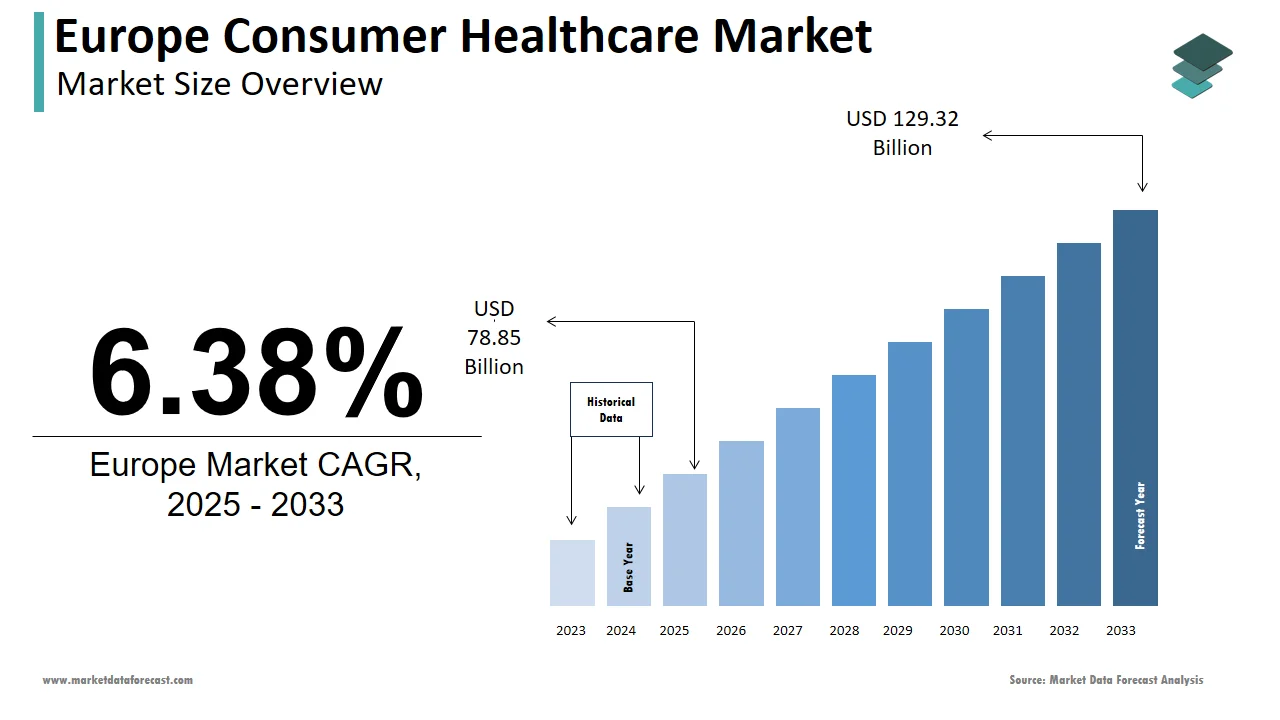
Consumer Healthcare involves over-the-counter (OTC) pharmaceuticals, dietary supplements, self-diagnostic devices, and wellness products that empower individuals to manage their health independently, outside formal clinical settings. This domain reflects a paradigm shift from reactive treatment to proactive self-care, driven by increasing health literacy and digital integration. According to the study, many adults in Western Europe have used self-care products for minor ailments without consulting a physician, showcasing the embedded role of consumer-driven health solutions. In parallel, the proliferation of telehealth platforms has elevated consumer confidence in self-diagnosis, with millions of virtual consultations in 2022, as per the research.
MARKET DRIVERS
Rising Burden of Chronic Lifestyle-Related Conditions
The escalating prevalence of non-communicable diseases is propelling the growth of the Europe consumer healthcare market. Individuals increasingly adopt self-management strategies for conditions such as hypertension, type 2 diabetes, and obesity. According to the World Health Organization Regional Office for Europe, over 86% of all deaths in the region are attributable to chronic diseases, with cardiovascular conditions alone affecting more than 60 million Europeans. In the UK, there has been a rise in OTC sales of metabolic health supplements, driven by preventive health consciousness. The integration of these tools into daily routines enables sustained tracking, reducing strain on primary care systems and strengthening consumer autonomy in long-term health management.
Expansion of Digital Health Platforms and E-Pharmacy Services
Digital transformation is fundamentally reshaping how Europeans access and utilize consumer healthcare products, which drives the growth of the Europe consumer healthcare market. The surge in e-pharmacy adoption is accelerated by the pandemic, which has created seamless pathways for discreet and convenient product procurement. According to the research, online sales of OTC medications and wellness supplements grew, with Germany, France, and the Netherlands leading in digital penetration. Companies serve millions of customers annually across the EU, offering AI-driven symptom checkers and personalized product recommendations. Apart from these, the EU’s Digital Health Certificate framework has normalized digital health interactions, increasing consumer comfort with self-directed care.
MARKET RESTRAINTS
Stringent and Fragmented Regulatory Landscapes Across Member States
The divergence in national regulations governing OTC product classification, labeling, and advertising is hindering the growth of the Europe consumer healthcare market. This complicates pan-European market entry and scalability. The EU has harmonized certain aspects through directives like the Falsified Medicines Directive (FMD). Individual countries maintain distinct rules on product claims and accessibility. Besides, the implementation of the EU Medical Devices Regulation (MDR) has delayed the certification of self-diagnostic kits, according to the study. These regulatory inconsistencies increase compliance costs and delay product launches, which discourages innovation and limits consumer access to advanced self-care tools.
Persistent Price Sensitivity and Reimbursement Limitations
Persistent price sensitivity and reimbursement limitations are restraining the growth of the Europe consumer healthcare market. This is a critical barrier to widespread adoption of premium consumer healthcare products in Southern and Eastern Europe. Many OTC medications and wellness supplements are not covered by public or private insurance, placing the full financial burden on consumers. As per the survey, households in Greece and Bulgaria allocate a smaller share of their total spending to health, compared to those in Sweden and Germany. A portion of respondents delayed purchasing vitamins, pain relievers, or home tests due to cost. Furthermore, the absence of standardized pricing controls allows significant variation between countries; paracetamol prices in Luxembourg are higher than in Poland for identical formulations.
MARKET OPPORTUNITIES
Integration of AI-Powered Self-Diagnostic Tools into Consumer Ecosystems
The integration of artificial intelligence with consumer healthcare is setting up new opportunities for the growth of the Europe consumer healthcare market. This enables real-time, accurate self-assessment and personalized product recommendations. AI-driven symptom checkers, such as Ada Health and Babylon Health, are used by millions of Europeans monthly, according to the research. These platforms not only guide users toward appropriate OTC treatments but also reduce unnecessary physician visits, easing healthcare system strain. Also, the EU's primary legal framework for AI, the AI Act, was agreed upon in 2023, and broader funding for AI in healthcare is being allocated through other programs like the Digital Europe Programme.
Growing Emphasis on Preventive Health and Wellness Among Aging Populations
The rapidly aging demographic is setting up new opportunities for the Europe consumer healthcare market. As per Eurostat, 21% of the EU population was aged 65 or over in 2023, a figure projected to reach 29% by 2050, intensifying demand for products that support independent living and chronic disease prevention. In response, consumers are increasingly investing in vitamins D and B12, calcium supplements, and home-based mobility aids. According to the research, many adults over 60 regularly use OTC supplements to maintain bone and cognitive health. Retailers such as DM and Boots have introduced “healthy aging” product lines, which are supported by pharmacist consultations, to cater to this cohort.
MARKET CHALLENGES
Ensuring Product Authenticity and Combating Counterfeit Goods
The proliferation of counterfeit and substandard OTC products, particularly through unregulated online marketplaces, is degrading the growth of the Europe consumer healthcare market. These products often lack active ingredients or contain harmful contaminants, posing serious health risks. The decentralized nature of e-commerce platforms complicates enforcement, especially on global marketplaces not subject to EU pharmaceutical standards. Besides, a survey found that many consumers could not distinguish between authorized e-pharmacies and illegal sellers. This erosion of trust undermines legitimate brands and threatens public safety, which necessitates stronger digital verification systems and cross-border regulatory coordination.
Maintaining Data Privacy in Connected Self-Care Devices
Safeguarding personal health data is challenging the growth of the Europe consumer healthcare market. Wearables, smart scales, and mobile health apps collect sensitive information, yet compliance with the General Data Protection Regulation (GDPR) remains inconsistent across manufacturers. According to a study, many health-focused mobile apps in the EU failed to provide transparent data usage policies or secure encryption protocols. In the case of fertility trackers and mental health apps, unauthorized data sharing with third-party advertisers is a concern, as per the research.
REPORT COVERAGE
| REPORT METRIC | DETAILS |
| Market Size Available | 2025 to 2034 |
| Base Year | 2025 |
| Forecast Period | 2026 to 2034 |
| Segments Covered | By Product, Distribution Network, and Region. |
| Various Analyses Covered | Global, Regional and Country-Level Analysis, Segment-Level Analysis, Drivers, Restraints, Opportunities, Challenges; PESTLE Analysis; Porter’s Five Forces Analysis, Competitive Landscape, Analyst Overview of Investment Opportunities |
| Countries Covered | UK, France, Spain, Germany, Italy, Russia, Sweden, Denmark, Switzerland, Netherlands, Turkey, Czech Republic and Rest of Europe |
| Market Leaders Profiled | Johnson & Johnson, Boehringer Ingelheim GmbH, GlaxoSmithKline plc, Amway, Bayer AG, Pfizer Inc., Abbott Laboratories, Sanofi, BASF SE, DSM, American Health, Herbalife, The Himalaya Drug Company, Kellogg, Takeda Pharmaceuticals and Teva Pharmaceuticals. |
SEGMENTAL ANALYSIS
By Product Insights
The OTC Pharmaceuticals segment dominated the Europe consumer healthcare market by capturing 64.5% of the market share in 2024, with the entrenched consumer reliance on self-treatment for common ailments such as pain, allergies, colds, and gastrointestinal discomfort. The upper respiratory tract infections account for millions of primary care consultations annually across the EU, yet a significant proportion are managed without medical consultation. The national health systems in countries like the UK and France actively promote self-care to reduce primary care burden, with estimates that a portion of GP visits could be avoided through appropriate OTC use. This institutional endorsement, combined with high consumer trust in branded pharmaceutical,s strengthens OTC drugs as the cornerstone of the consumer healthcare ecosystem.
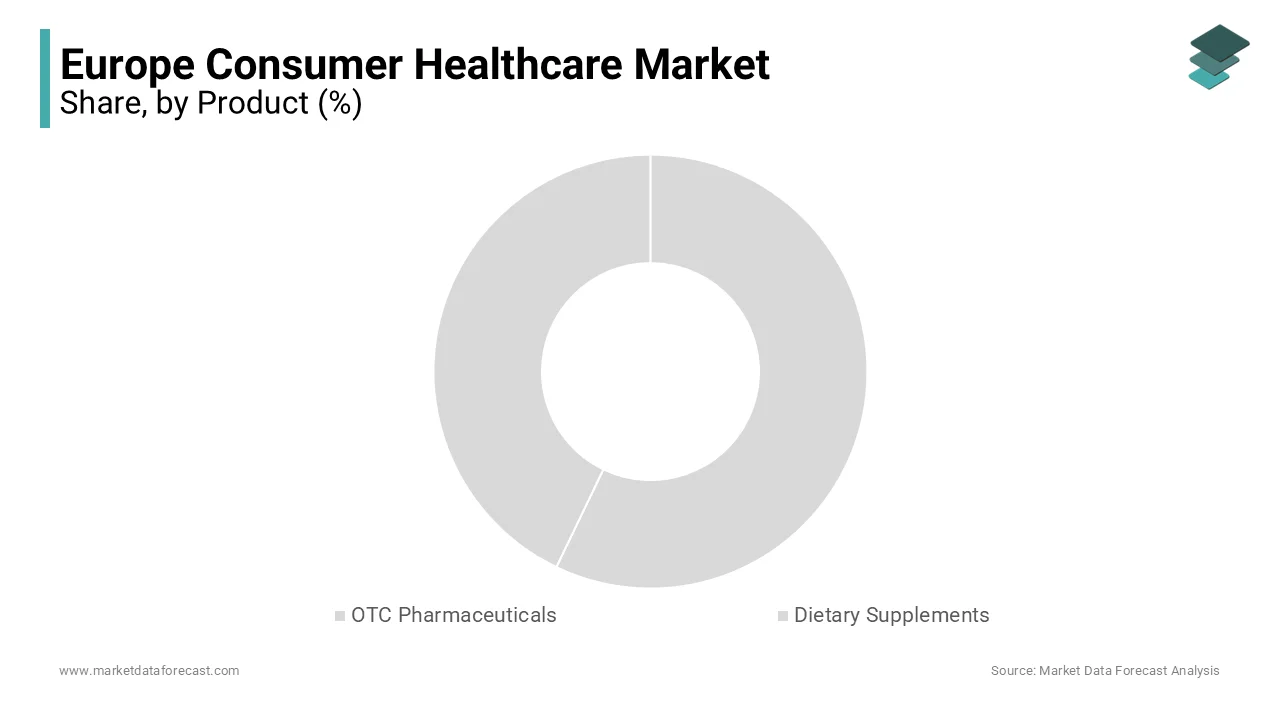
The dietary Supplements segment is estimated to witness a CAGR of 8.7% from 2025 to 2033 due to the rising consumer focus on preventive health, immunity enhancement, and personalized wellness. The pandemic significantly altered health behaviors, with a survey indicating that many EU citizens increased their intake of vitamins D, C, and zinc to support immune function. In Germany, sales of vitamin D supplements surged in recent years, as per the research. Furthermore, the aging population is fueling demand for bone, joint, and cognitive health formulations, and calcium and omega-3 sales grew, according to a study. The integration of nutrigenomics and digital health platforms offering personalized supplement regimens is further accelerating adoption.
By Distribution Network Insights
The pharmacies or drugstores segment led the Europe consumer healthcare market by occupying 56.2% of the share in 2024. The high level of consumer trust in pharmacists as accessible healthcare advisors is propelling the growth of the pharmacies or drugstores segment. In countries like France, Sweden, and the Netherlands, pharmacists are authorized to recommend OTC treatments for minor conditions, which reduces the need for physician visits. According to many, most Europeans consult pharmacists before purchasing self-care products, particularly for complex conditions like allergies or digestive disorders. Apart from these, pharmacy-exclusive product positioning, such as premium probiotics, specialized pain relief formulations, and medical-grade skincare which enhances their competitive edge. In Germany, where Apotheken (licensed pharmacies) maintain a legal monopoly on OTC pharmaceutical sales, most of such products are dispensed through this channel.
The online retail segment is predicted to witness a CAGR of 12.3% during the forecast period, owing to the shifting consumer preferences for convenience, discretion, and access to a broader product range. The number of Europeans purchasing OTC medicines and supplements online surged, reaching millions of users, as per the report. In the UK, online pharmacy sales accounted for a portion of total consumer healthcare transactions in 2023, up from that 2019. According to the study, these sales have expanded across multiple EU markets, leveraging fast delivery, AI-driven recommendations, and verified product authenticity.
COUNTRY-LEVEL ANALYSIS
Germany Consumer Healthcare Market Insights
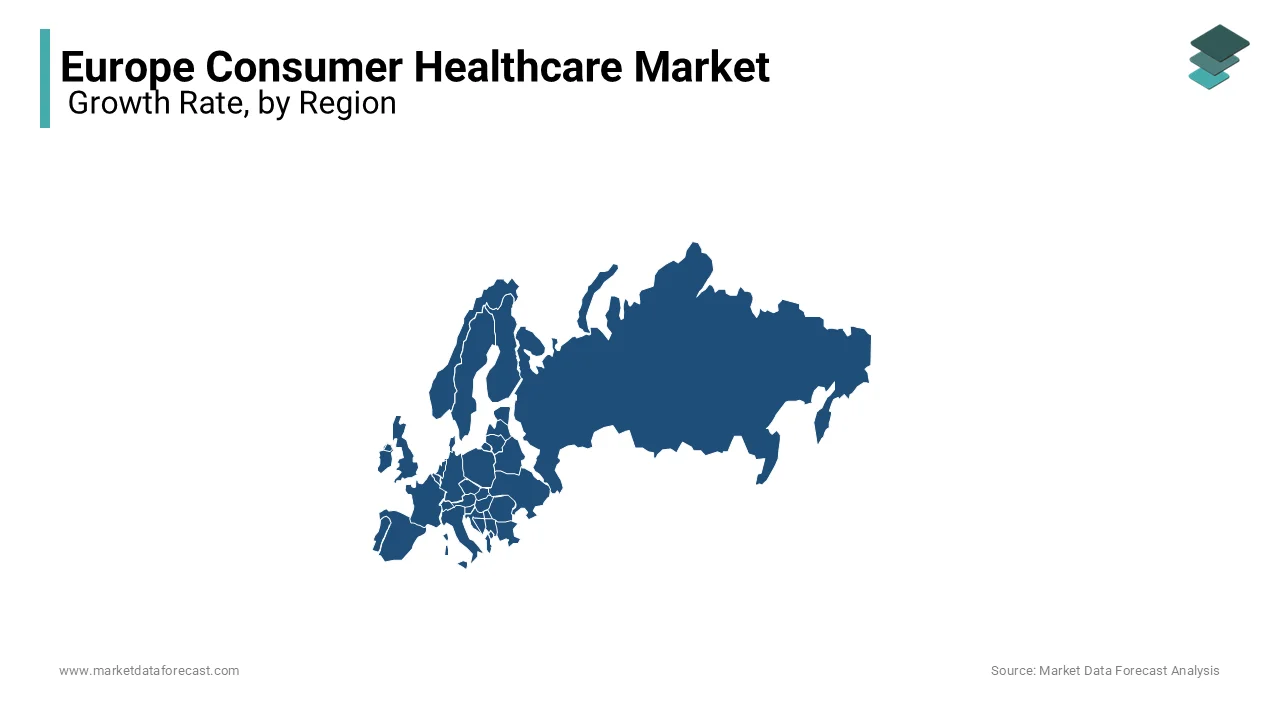
Germany was the top performer in the European consumer healthcare market in 2024, with a 23.5% share 2024. Germany's consumer healthcare market is primarily driven by a robust regulatory framework, high consumer trust in pharmaceutical quality, and one of the most developed pharmacy networks in Europe. According to the study, many adults use OTC medications annually, primarily for pain and respiratory conditions. The government’s active promotion of self-medication to alleviate primary care congestion has further institutionalized consumer healthcare.
France Consumer Healthcare Market Insights
The French consumer healthcare market held 17.4% of the share in 2024, owing to the strong consumer engagement in self-care, supported by a dense network of community pharmacies and pharmacist-led health education initiatives. As per a study, many citizens prefer consulting a pharmacist before visiting a doctor for minor ailments. Apart from these, the rise of pharmacy-exclusive brands such as Mustela and Avène has strengthened the sector’s commercial appeal. This blend of regulatory support, professional guidance, and trusted retail exclusivity supported France’s sustained dominance in consumer healthcare adoption.
United Kingdom Consumer Healthcare Market Insights
United Kingdom consumer healthcare market growth is expected to have a significant CAGR during the forecast period. The growth of the United Kingdom in the global market share is driven by a long-standing culture of self-care, reinforced by NHS guidance that encourages over-the-counter treatment for several common conditions. The region occupies a dynamic and evolving position in the regional market. The deregulation of certain medications, such as the 2022 reclassification of orlistat to pharmacy-only, has broadened consumer options.
Italy Consumer Healthcare Market Insights
Italy consumer healthcare market growth is likely to be propelled by the growing emphasis on natural and herbal remedies, with phytotherapeutic products accounting for a notable share of OTC sales for digestive and respiratory health. As per a study, many adults regularly use herbal supplements such as echinacea, valerian, and artichoke extract. Community pharmacies, known as parafarmacie, have expanded rapidly, with several authorized to sell a wide range of OTC products, increasing accessibility beyond traditional Apotheken.
Spain Consumer Healthcare Market Insights
Spain consumer healthcare market growth is driven by public healthcare system pressures and rising consumer awareness. The country’s market status is transitioning toward greater self-reliance. With substantial community pharmacies, among the key densities in Europe, Spain offers widespread access to OTC advice and products. As per the study, many patients self-medicate for headaches, colds, and musculoskeletal pain, which is often under pharmacist guidance. The Ministry of Health has also initiated programs to expand the list of self-care eligible conditions, aiming to reduce primary care visits. Apart from these, e-pharmacy adoption is accelerating, with online OTC sales growing.
COMPETITIVE LANDSCAPE
The competitive landscape of the Europe consumer healthcare market is characterized by a convergence of pharmaceutical giants, retail pharmacy chains, and digital health innovators vying for consumer trust and channel dominance. Multinational corporations such as Bayer, Reckitt, and Sanofi leverage brand equity, scientific rigor, and pan-European distribution to maintain leadership. At the same time, pharmacy-led players like Boots and BENU are capitalizing on proximity, professional advice, and private-label development to differentiate their offerings. The rise of e-pharmacies and AI-driven platforms has intensified competition, compelling traditional players to accelerate digital adoption. Regulatory scrutiny, particularly around product claims and data privacy, has raised entry barriers, favoring established entities with compliance infrastructure. Price sensitivity and sustainability demands are reshaping consumer preferences, prompting innovation in formulation, packaging, and service delivery.
KEY MARKET PLAYERS
Some of the companies that are playing a dominating role in the Europe consumer healthcare market include
- Johnson & Johnson
- Boehringer Ingelheim GmbH
- GlaxoSmithKline plc
- Amway
- Bayer AG
- Pfizer Inc.
- Abbott Laboratories
- Sanofi
- BASF SE
- DSM
- American Health
- Herbalife
- The Himalaya Drug Company
- Kellogg
- Takeda Pharmaceuticals
- Teva Pharmaceuticals
TOP PLAYERS IN THE MARKET
- Bayer AG has established a dominant presence in the European consumer healthcare landscape through its extensive portfolio of trusted over-the-counter brands such as Aspirin, Bepanthen, and Claritin. The company has reinforced its market position by expanding digital health integration, launching AI-powered self-care tools that guide users in symptom assessment and product selection. The company also strengthened its pharmacy partnerships by providing digital training modules for pharmacists on OTC treatment pathways. Apart from these, Bayer has prioritized sustainability by reformulating packaging across its European product lines to meet EU plastic reduction targets.
- Reckitt Benckiser Group (RB) plays a pivotal role in shaping consumer behavior across Europe through its flagship health and hygiene brands, including Nurofen, Strepsils, and Dettol. The company has deepened its market engagement by leveraging real-time consumer insights to refine product formulations and delivery mechanisms. It also expanded its digital footprint by integrating symptom-checker technology into e-commerce platforms like Amazon and Boots.com, enhancing product discoverability. Furthermore, RB has invested in clinical validation studies for its OTC products, publishing peer-reviewed data on the efficacy of ibuprofen formulations for acute pain relief.
- Boots UK is operating under Walgreens Boots Alliance, functions as both a retailer and a developer of proprietary consumer healthcare solutions, significantly influencing market dynamics across Europe. The company’s Boots Pharmaceuticals division manufactures over 1,200 private-label OTC products, offering cost-effective alternatives without compromising quality. The company also introduced a mobile app with AI-driven symptom analysis and prescription refill tracking, enhancing patient continuity. Apart from these, Boots expanded its partnership with the NHS to deliver minor ailment services in community pharmacies, reducing clinical burden.
TOP STRATEGIES USED BY KEY MARKET PARTICIPANTS
Key players in the Europe consumer healthcare market are deploying integrated strategies to enhance brand loyalty, regulatory compliance, and digital engagement. Companies are investing in clinical validation of OTC products to reinforce credibility and meet evolving regulatory expectations under EU health directives. Strategic partnerships with pharmacies and national health systems enable seamless integration of self-care into public health frameworks. Firms are also expanding private-label portfolios to offer affordable alternatives amid cost-of-living pressures. Digital transformation is central, with AI-powered symptom checkers, telehealth integration, and e-pharmacy optimization improving accessibility. Sustainability initiatives, including eco-friendly packaging and carbon-neutral manufacturing, align with EU Green Deal objectives.
MARKET SEGMENTATION
This Europe consumer healthcare market research report is segmented and sub-segmented into the following categories.
By Product
-
OTC Pharmaceuticals
-
Dietary Supplements
By Distribution Network
- Departmental Stores
- Independent Retailers
- Pharmacies or Drugstores
- Specialist Retailers
- Supermarkets or Hypermarkets
By Country
- UK
- France
- Spain
- Germany
- Italy
- Russia
- Sweden
- Denmark
- Switzerland
- Netherlands
- Turkey
- Czech Republic
- Rest of Europe