- Product Description Description
- Table of Contents TOC
- List of Table & Figure LOT
- Get Free Sample PDF Sample PDF
Market Size, 2025
$214.42 MnMarket Estimate, 2026
$238.69 MnMarket Forecast, 2034
$562.63 MnCAGR, 2026–2034
10.8%Executive Summary: Europe Digital Pathology Market
- Market Scope: Regional analysis of the European digital pathology market covering product categories, application domains, end-user segments, country-level breakdowns, and digital slide management innovations.
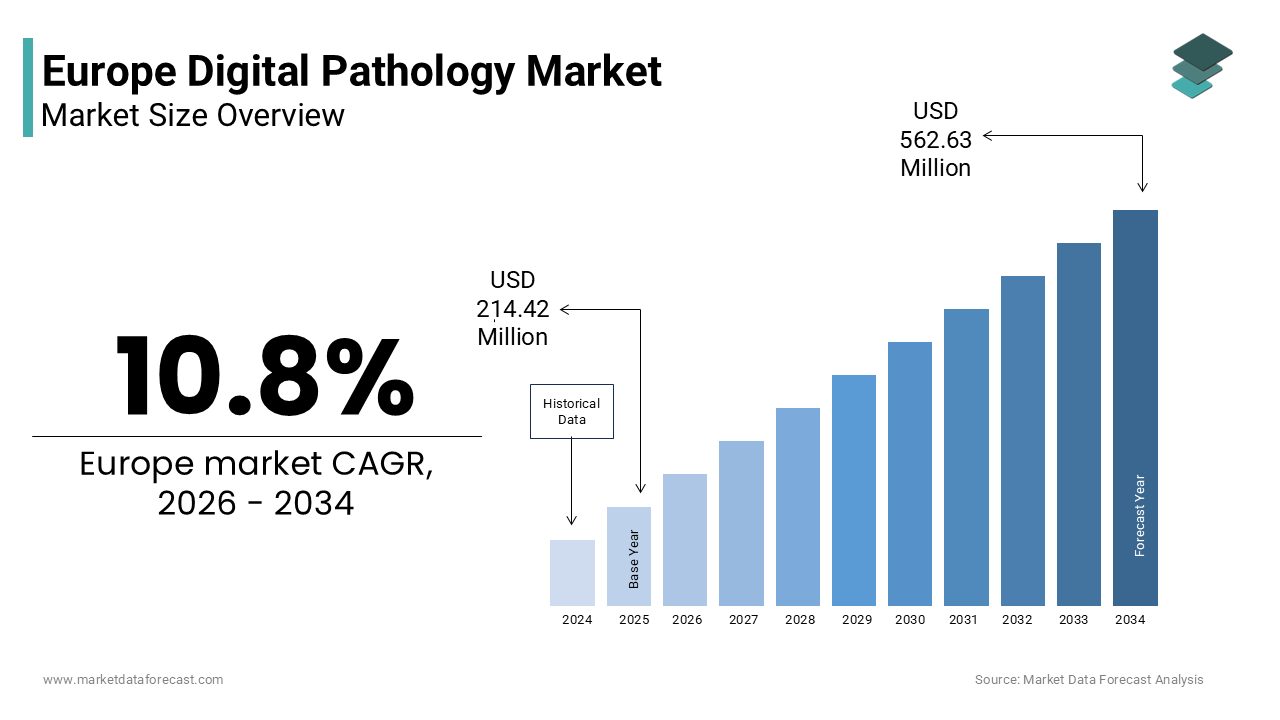
- Market Valuation: Valued at USD 214.42 million in 2025, estimated at USD 238.69 million in 2026, and projected to reach USD 562.63 million by 2034, registering a steady CAGR of 10.8% from 2026 to 2034.
- Primary Growth Drivers: Rising prevalence of cancer cases driving fast and accurate diagnosis; expanding teleconsultation adoption; high efficacy of digital pathology platforms; and supportive government healthcare policies and private funding initiatives.
Key Market Segment Metrics (2026–2034)
| Category | Leading Segment / Position | Segment Details / Breakdown |
|---|---|---|
| By Type | Human Digital Pathology & Animal Digital Pathology | Human digital pathology captures the vast majority of clinical and diagnostic applications. |
| By Product | Scanners, Software, Communication Systems & Storage Systems | Scanners and software solutions drive hardware/software investment pipelines for digital slide imaging. |
| By Application | Teleconsultation, Disease Diagnosis, Drug Discovery, Training & Education | Disease diagnosis and drug discovery lead utilization volumes across clinical laboratories and pharmaceutical pipelines. |
| By End User | Pharmaceutical Companies, Hospitals & Academic Institutions | Hospitals and diagnostic networks form the largest deployment base, followed by pharma research entities. |
| By Country / Region | Germany (Leading Market) | Germany dominates the European landscape backed by structured guidelines from the Professional Association of German Pathologists, robust healthcare infrastructure, and government funding. Additional coverage includes UK, France, Spain, Italy, Russia, Sweden, Denmark, Switzerland, Netherlands, Turkey, Czech Republic, and Rest of Europe. |
Major Market Players & Market Structure
Market Structure: Highly competitive medical imaging and healthcare IT ecosystem driven by prominent technology corporations and specialized pathology solutions providers engaging in strategic AI partnerships and acquisitions.
Key Companies: PerkinElmer Inc., Definiens AG, Sectra AB, Koninklijke Philips N.V., GE Healthcare, Inspirata Co., Ventana Medical Systems Inc., Leica Biosystems, 3DHISTECH Ltd., Hamamatsu Photonics K.K., DigiPath Co., ZEISS, Olympus Corporation, Yokogawa Electronics Corporation, and Quorum Technologies Inc.
 Download Free Sample Report
Europe Digital Pathology Market Size
The Europe digital pathology market size was valued at USD 214.42 million in 2025 and is anticipated to reach USD 238.69 million in 2026 from USD 562.63 million by 2034, growing at a CAGR of 10.8% during the forecast period from 2026 to 2034.
Digital pathology represents a transformative shift in diagnostic medicine, transitioning from traditional glass slide microscopy to high-resolution digital imaging and computational analysis. This sector encompasses whole slide imaging scanners, software for image management, and artificial intelligence algorithms that facilitate remote diagnosis and quantitative assessment. According to the European Commission, cancer accounts for approximately 26% of all deaths in the European Union, creating an urgent need for faster and more accurate diagnostic workflows. According to the World Health Organization, there is a projected shortage of 10 million health workers globally by 2030, with pathology specialists being among the most critically affected groups in Europe. As per Eurostat, the population aged 65 and over in the EU is expected to reach 30% by 2050, significantly increasing the volume of biopsy samples requiring analysis. According to the European Society of Pathology, manual review of tissue samples is time-consuming and prone to inter-observer variability, driving the adoption of digital solutions to standardize results. Furthermore, the General Data Protection Regulation imposes strict requirements on patient data handling, influencing the architecture of digital pathology infrastructure. These demographic and regulatory dynamics compel healthcare institutions to invest in scalable digital systems that enhance diagnostic precision, enable tele-pathology and support personalized medicine initiatives across the continent.
MARKET DRIVERS
Rising Prevalence of Cancer and Chronic Diseases
The escalating prevalence of cancer and chronic diseases contributes to the European digital pathology market growth. According to the International Agency for Research on Cancer, there were approximately 3 million new cancer cases diagnosed in Europe in 2022, which is necessitating a substantial increase in histopathological examinations. Each diagnosis typically requires multiple tissue sections and stains, generating a massive volume of slides that overwhelm traditional manual workflows. According to the European Cancer Information System, the five-year survival rate for many cancers has improved due to early detection, which relies heavily on rapid and accurate pathological assessment. These statistics directly correlate with market growth as hospitals seek technologies that can handle high throughput without compromising accuracy. Digital pathology enables pathologists to analyze slides more efficiently using automated scanning and AI-assisted tools, reducing turnaround times. As per data from the Organisation for Economic Co-operation and Development, healthcare spending on oncology in Europe has increased by 8% annually, reflecting the priority placed on cancer care. This financial commitment supports the procurement of advanced diagnostic equipment. The sheer volume of cases drives the need for scalable digital solutions that can store, manage, and share large image files securely, ensuring that patients receive timely diagnoses and treatment plans.
Shortage of Qualified Pathologists and Workforce Aging
The critical shortage of qualified pathologists and the aging workforce is further aiding the European digital pathology market growth. According to the Royal College of Pathologists, the United Kingdom faces a deficit of nearly 20% in its pathology workforce, a trend mirrored in other major European nations such as Germany and France. According to the European Society of Pathology, the average age of practicing pathologists is increasing, with over 40% expected to retire within the next decade, exacerbating the staffing crisis. These demographic realities make it impossible to sustain current diagnostic volumes using traditional manual methods alone. Digital pathology facilitates telepathology, allowing experts to review cases remotely and share workloads across institutions, thereby optimizing the use of limited human resources. As per data from the European Union Agency for Fundamental Rights, workload-induced stress is a leading cause of burnout among medical professionals, further reducing effective capacity. By automating routine tasks and enabling collaborative diagnosis, digital systems alleviate pressure on existing staff. This operational efficiency is not merely a convenience but a necessity for maintaining healthcare standards. Consequently, the urgent need to bridge the gap between demand for diagnostics and available expertise drives sustained investment in digital pathology infrastructure across Europe.
MARKET RESTRAINTS
High Initial Capital Investment and Maintenance Costs
The substantial initial capital investment required for digital pathology infrastructure hampers the regional market growth, particularly for smaller hospitals and private practices. According to the European Hospital and Healthcare Federation, the cost of implementing a comprehensive digital pathology system, including high-resolution scanners, storage servers, and licensed software, can exceed 500,000 euros for a medium-sized facility. Additionally, the ongoing maintenance and upgrade costs for these complex systems can account for 15% to 20% of the annual IT budget, straining financial resources. According to the World Bank, public healthcare budgets in several Southern and Eastern European countries have remained stagnant or declined in real terms, limiting the ability of institutions to allocate funds for non-emergency capital expenditures. These financial constraints force many facilities to delay adoption or rely on outdated manual processes. As per data from the European Investment Bank, access to favorable financing for healthcare technology upgrades is limited for smaller providers, who often face higher interest rates and stricter collateral requirements. The complexity of integrating digital systems with existing Laboratory Information Systems also adds to implementation costs. This economic burden restricts widespread adoption, keeping a significant portion of the market reliant on traditional methods and slowing the overall transition to digital workflows despite the clear long-term benefits.
Complex Regulatory Compliance and Data Privacy Concerns
Stringent regulatory compliance and data privacy concerns are further hindering the European market expansion. According to the General Data Protection Regulation, patient data, including digital pathology images, must be stored and processed with the highest level of security, requiring expensive encryption and access control measures. According to the European Medicines Agency, software used for diagnostic purposes must undergo rigorous clinical validation and certification as a Medical Device Regulation Class II or III product, a process that can take up to two years and cost millions of euros. These regulatory hurdles slow down the introduction of new technologies and increase the risk for manufacturers. As per data from the European Data Protection Supervisor, non-compliance penalties can reach up to 4% of global annual turnover, creating a significant liability risk for healthcare providers. Additionally, the lack of harmonized standards for image formats and data exchange between different vendors hinders seamless integration across borders. This fragmentation forces institutions to invest in proprietary solutions that may not be compatible with future upgrades or partner networks. The complexity of navigating this regulatory landscape discourages smaller innovators and limits the speed at which digital pathology can be scaled across the diverse healthcare systems of Europe.
MARKET OPPORTUNITIES
Integration of Artificial Intelligence and Machine Learning
The integration of artificial intelligence and machine learning is a lucrative opportunity for the European digital pathology market. According to the European Association for Artificial Intelligence in Medicine, AI algorithms can detect subtle patterns in tissue samples that are invisible to the human eye, improving the identification of biomarkers for personalized therapy. According to the Nature Medicine journal, AI-assisted diagnosis has shown a 15% improvement in accuracy for certain types of cancer compared to manual review alone, highlighting the potential for clinical impact. These capabilities allow pathologists to prioritize complex cases while automating routine screenings, significantly increasing productivity. As per data from the European Commission’s Horizon Europe program, funding for AI in healthcare has increased by 25% annually, supporting research and development in this field. Pharmaceutical companies are increasingly using digital pathology data for drug discovery and clinical trials, creating a new revenue stream for technology providers. The ability to quantify tissue features precisely enables better patient stratification and treatment monitoring. By leveraging AI, digital pathology transforms from a diagnostic tool into a comprehensive platform for precision medicine, offering substantial value to healthcare providers, researchers, and patients alike.
Expansion of Telepathology and Remote Collaboration Networks
The expansion of telepathology and remote collaboration networks offers significant growth potential for the European digital pathology market by breaking down geographic barriers and facilitating expert consultation. According to the European Reference Networks initiative, specialized healthcare providers across the EU are encouraged to share knowledge and resources for rare and complex diseases, a model that relies heavily on digital image sharing. According to the World Health Organization, telemedicine adoption in Europe has grown by 30% since the pandemic, establishing a behavioral and infrastructural foundation for remote pathology services. This trend allows rural hospitals to access specialist opinions from urban centers without transporting physical slides, reducing delays and costs. As per data from the European Society of Digital and Integrative Pathology, multi-institutional studies using shared digital repositories have increased by 20% annually, fostering collaborative research and standardized diagnostic criteria. Governments are investing in national broadband infrastructure to support these digital health initiatives, ensuring reliable connectivity even in remote areas. The ability to conduct second opinions and multidisciplinary team meetings virtually enhances patient care quality. By enabling seamless collaboration, digital pathology strengthens the overall healthcare ecosystem, making it an essential component of modern medical practice and opening new markets for service providers.
MARKET CHALLENGES
Interoperability Issues and Lack of Standardization
Interoperability issues and the lack of universal standardization pose significant challenges to the European digital pathology market by hindering seamless data exchange and workflow integration. According to the Integrating the Healthcare Enterprise initiative, different vendors use proprietary file formats and communication protocols, making it difficult for hospitals to mix and match scanners, software, and storage systems. According to the European Committee for Standardization, while efforts are underway to establish common standards such as DICOM for pathology, adoption remains inconsistent across manufacturers. This fragmentation forces healthcare institutions to lock into single vendor ecosystems, limiting flexibility and increasing long-term costs. As per data from the European Health Management Association, 40% of digital health projects fail due to integration challenges, highlighting the severity of the issue. Pathologists often struggle to view images from different sources on a single platform, disrupting their workflow and reducing efficiency. The lack of standardized metadata also complicates the training of AI algorithms, which require large, diverse datasets to be effective. Overcoming these technical barriers requires industry-wide cooperation and regulatory intervention, which is slow to materialize. Until true interoperability is achieved, the full potential of digital pathology to connect healthcare systems across Europe will remain unrealized.
Resistance to Change and Cultural Barriers
Resistance to change and cultural barriers among medical professionals present a major challenge for the European digital pathology market by slowing the adoption of new workflows. According to the European Federation of Clinical Chemistry and Laboratory Medicine, many senior pathologists are accustomed to traditional microscopy and perceive digital screens as inferior for detailed morphological assessment. According to the Royal College of Pathologists, 35% of pathologists express concern about eye strain and fatigue associated with prolonged screen time, affecting their willingness to transition fully to digital workflows. This skepticism is compounded by the steep learning curve associated with new software interfaces and navigation tools. As per data from the European Society of Pathology, training programs for digital pathology are not yet uniformly integrated into medical curricula, leaving many practitioners ill-prepared for the transition. The fear of technology failure during critical diagnoses also contributes to hesitation. Changing deeply ingrained professional habits requires significant effort in change management and education, which many institutions underestimate. Without addressing these human factors, even the most advanced technical solutions may fail to achieve optimal utilization. Overcoming this cultural inertia is essential for realizing the efficiency gains promised by digital pathology, requiring a concerted effort to demonstrate value and provide adequate support.
REPORT COVERAGE
| REPORT METRIC | DETAILS |
| Market Size Available | 2025 to 2034 |
| Base Year | 2025 |
| Forecast Period | 2026 to 2034 |
| CAGR | 10.8% |
| Segments Covered | By Type, Product, Application, End-User and Region. |
| Various Analyses Covered | Global, Regional & Country Level Analysis, Segment-Level Analysis, DROC, PESTLE Analysis, Porter’s Five Forces Analysis, Competitive Landscape, Analyst Overview of Investment Opportunities |
| Regions Covered | UK, France, Spain, Germany, Italy, Russia, Sweden, Denmark, Switzerland, the Netherlands, Turkey, the Czech Republic, and the Rest of Europe. |
| Market Leaders Profiled | PerkinElmer, Inc., Definiens AG, Sectra AB, Koninklijke Philips N.V., GE Healthcare, Inspirata Co., Ventana Medical Systems, Inc., Leica Biosystems, 3DHISTECH Ltd., Hamamatsu Photonics K.K., DigiPath Co., ZEISS, Olympus Corporation, Yokogawa Electronics Corporation, Quorum Technologies Inc., and Others. |
SEGMENTAL ANALYSIS
By Type Insights
The human digital pathology segment led the market by capturing the highest share of the European market in 2025 due to the immense volume of clinical diagnostic workflows required for patient care. According to Eurostat, cancer incidence in the European Union exceeds 2.7 million new cases annually, each necessitating histopathological confirmation through tissue biopsy analysis. This sheer volume creates a foundational demand for whole slide imaging systems that can process thousands of slides per day in hospital laboratories. According to the World Health Organization, noncommunicable diseases account for 87% of deaths in Europe, ensuring a steady stream of samples requiring digital evaluation. These statistics directly correlate with market dominance as healthcare systems prioritize human diagnostics over veterinary applications. Hospitals are mandated to maintain high throughput and rapid turnaround times, which drives the procurement of enterprise-grade scanners and viewing software. As per data from the European Society of Pathology, over 90% of diagnostic pathology departments in major European nations have initiated some form of digital transformation to handle this caseload. The critical nature of human diagnosis means that budget allocations for equipment and infrastructure significantly outweigh those for animal health. Consequently, the overwhelming scale of human medical needs sustains the leadership of this segment by making it the primary revenue generator for technology vendors across the continent.
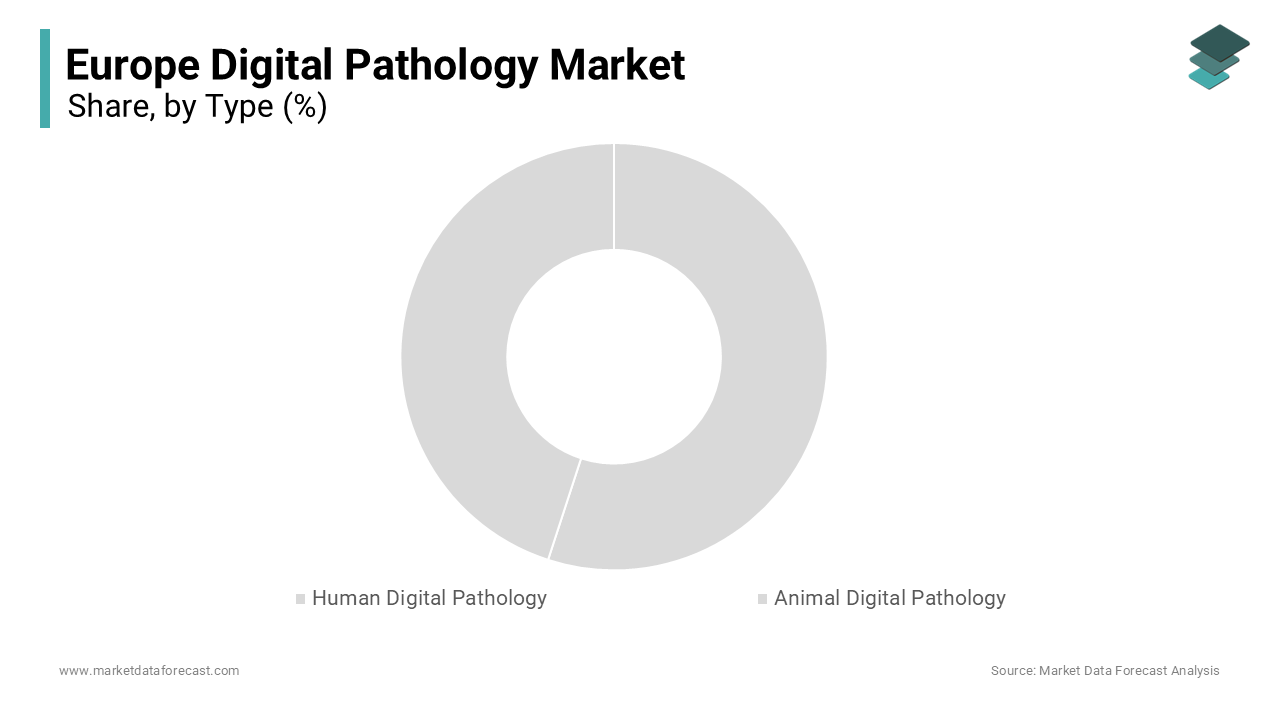
However, the animal digital pathology segment is emerging as the fastest-growing segment in the European digital pathology market over the forecast period owing to the rising pet ownership and increased veterinary healthcare spending. According to the European Pet Food Industry Federation, the number of pet cats and dogs in Europe has surpassed 160 million, which is creating a substantial client base for advanced veterinary diagnostics. Owners increasingly view pets as family members, leading to higher willingness to pay for sophisticated medical procedures, including oncology and dermatology assessments. According to the American Veterinary Medical Association, veterinary diagnostic testing volumes have grown by 12% annually in developed markets, reflecting this trend toward premium care. These statistics highlight a shift from basic treatment to comprehensive diagnostic services that mirror human medicine. Veterinary clinics are adopting digital scanners to improve diagnostic accuracy and enable tele-consultations with specialists, addressing the shortage of veterinary pathologists. For instance, the companion animal diagnostics market is expanding at a compound annual growth rate exceeding 9%, outpacing many human segments. This rapid expansion is fueled by emotional bonds and disposable income, positioning animal digital pathology as a high-growth niche where technology adoption is accelerating to meet evolving consumer expectations for pet health.
By Product Insights
The scanners segment dominated the market by accounting for the major share of the European market in 2025 because they serve as the essential entry point for any digitization initiative. According to the College of American Pathologists, a laboratory cannot implement digital pathology without first acquiring high-throughput whole slide imaging hardware, making scanners the prerequisite capital expenditure. According to the European Society of Digital and Integrative Pathology, over 70% of digital pathology budgets are initially allocated to scanner acquisition and installation. These statistics underscore the hardware dependency of the entire ecosystem. Even as software becomes more advanced, the physical conversion of glass slides to digital images remains the bottleneck that dictates workflow capacity. Hospitals prioritizing primary diagnosis require multiple scanners to handle daily caseloads, driving recurring sales. As per data from major manufacturers, scanner replacement cycles typically occur every 5 to 7 years, ensuring a steady baseline of demand independent of software licensing trends. The tangible nature of this equipment also makes it easier for hospital administrators to justify capital approval compared to intangible software assets. Consequently, scanners dominate the product segment by virtue of being the indispensable foundation upon which all other digital pathology capabilities are built.
However, the software segment is estimated to record the fastest CAGR in the European market over the forecast period owing to the surge in artificial intelligence and algorithmic analysis applications. According to the Nature Medicine journal, AI algorithms for detecting metastasis in lymph nodes have achieved sensitivity rates exceeding 95%, demonstrating clinical utility that drives adoption. Regulatory bodies like the European Medicines Agency are establishing frameworks for approving AI as a medical device, legitimizing its use in routine diagnostics. These developments transform software from a passive viewer into an active diagnostic assistant, creating new value propositions. As per data from Frost & Sullivan, the AI in pathology market is projected to grow at a compound annual growth rate of over 20%, significantly outpacing hardware. Hospitals are increasingly purchasing algorithm licenses alongside scanners to enhance diagnostic accuracy and efficiency. The recurring revenue model of software subscriptions also appeals to vendors and investors, which is fuelling the segmental expansion. Unlike hardware, which faces saturation, software offers limitless scalability and functional expansion. This shift toward intelligent analytics positions software as the dynamic growth engine of the market due to the promise of augmented intelligence and precision medicine.
COUNTRY ANALYSIS
Germany Digital Pathology Market Analysis
Germany held the leading share of the European market in 2025 and is likely to experience robust expansion over the next few years due to its robust healthcare infrastructure and strong industrial base. According to the Federal Ministry of Health, Germany has the highest number of hospital beds per capita in Western Europe, supporting widespread deployment of digital pathology systems. The country is also home to major optical and engineering firms that supply critical components for scanners, fostering local innovation. According to the German Society of Pathology, over 60% of university hospitals have implemented whole slide imaging for primary diagnosis, reflecting high maturity. The statutory health insurance system provides stable reimbursement for diagnostic services, encouraging investment in efficiency-enhancing technologies. As per Statista, healthcare spending in Germany exceeds 12% of GDP, providing ample fiscal space for digital transformation. Government initiatives like the Digital Healthcare Act specifically fund interoperable digital solutions, accelerating adoption. The combination of clinical volume, manufacturing expertise, and supportive policy creates a virtuous cycle that sustains Germany’s market leadership and sets standards for the broader region.
United Kingdom Digital Pathology Market Analysis
The United Kingdom is poised to accelerate its digital transformation over the coming years, driven by a highly centralized and strategically driven market for digital pathology in Europe. According to NHS England, the national pathology consolidation program aims to create integrated networks serving populations of 2 to 3 million people, mandating digital workflows to enable hub and spoke models. This top-down approach drives bulk procurement and standardized implementation across the country. According to the Royal College of Pathologists, workforce shortages are acute, with vacancy rates exceeding 20%, making digital efficiency a survival imperative. According to the Department of Health, over 500 million pounds has been allocated to digital pathology infrastructure in recent years. The UK’s early adoption of AI validation frameworks also attracts global vendors seeking regulatory precedent. As per the Office for National Statistics, the aging population increases cancer incidence, sustaining demand. The unique combination of centralized funding, network restructuring, and urgent workforce needs positions the UK as a pivotal market where digital pathology is treated as essential national infrastructure rather than optional technology.
France Digital Pathology Market Analysis
France is projected to maintain steady progress in the near future, characterized by academic leadership and regional hospital clustering. According to the French National Authority for Health, digital pathology is recognized as a priority for improving cancer care equity across territories. The country hosts several world-renowned research institutes that pioneer computational pathology methods, spilling over into clinical practice. According to the Ministry of Solidarity and Health, regional hospital groups are pooling resources to acquire shared digital platforms, overcoming individual budget constraints. The national cancer plan allocates specific funding for diagnostic modernization, supporting equipment purchases. As per INSEE, France has one of the highest life expectancies in Europe, correlating with high age-related diagnostic volumes. Academic centers in Paris and Lyon serve as reference sites for validation and training, influencing adoption patterns nationwide. This blend of research excellence, collaborative procurement, and public health planning ensures France remains a key pillar of the European digital pathology landscape, balancing innovation with equitable access.
Italy Digital Pathology Market Analysis
Italy is anticipated to see gradual evolution in the upcoming years, exhibiting a fragmented but evolving market for digital pathology influenced by regional healthcare autonomy and varying investment levels. According to the Italian Ministry of Health, northern regions like Lombardy and Emilia-Romagna lead in digital adoption due to stronger fiscal capacity and organized screening programs. The Italian Society of Anatomic Pathology and Cytopathology promotes national guidelines to harmonize practices despite regional disparities. According to ISTAT, cancer mortality remains a major public health concern, driving demand for improved diagnostics in underserved areas. The National Recovery and Resilience Plan includes 15 billion euros for healthcare modernization, with digital pathology eligible for funding. As per the Agenas, telepathology projects are being piloted to connect island and rural hospitals with mainland centers. This mix of regional inequality and national recovery funds creates a dynamic environment where digital pathology is both a marker of excellence and a tool for cohesion. The ongoing decentralization reform will likely shape future adoption patterns as regions balance autonomy with interoperability requirements.
Spain Digital Pathology Market Analysis
Spain is expected to show accelerated development ahead, demonstrating steady growth in the Europe Digital Pathology Market driven by public health system modernization and specialist society advocacy. According to the Spanish Society of Anatomical Pathology, over 40% of tertiary hospitals now use digital pathology for at least part of their workflow, up from 15% five years ago. The Ministry of Health’s digital strategy prioritizes interoperability and data sharing, creating a favorable regulatory environment. According to the National Statistics Institute, life expectancy is among the highest globally, sustaining high diagnostic volumes for age-related diseases. Regional health services in Catalonia and Madrid act as early adopters, influencing national trends. As per Red.es, government grants for digital health projects have increased by 20% annually, supporting SME participation. The focus on reducing waiting lists through efficiency gains aligns digital pathology with political priorities. This convergence of clinical advocacy, regional leadership, and public funding positions Spain as a resilient growth market where digital transformation is seen as key to sustaining universal healthcare coverage amid demographic pressures.
COMPETITIVE LANDSCAPE
The competition in the Europe Digital Pathology Market is characterized by intense rivalry among established multinational corporations and emerging niche brands seeking to capture market share. Large dairy conglomerates leverage their extensive distribution networks and brand recognition to dominate mainstream segments while specialized biotechnology firms focus on high potency supplements and personalized solutions. Price competition is moderate due to the premium nature of functional foods but private label offerings from major retailers exert pressure on branded products. Innovation serves as a key differentiator with companies constantly launching new formats and strains to appeal to health conscious consumers. Regulatory compliance creates barriers to entry favoring players with robust scientific validation capabilities. Digital transformation has intensified competition as online platforms enable direct to consumer models that bypass traditional retail channels. Collaborations with healthcare professionals enhance credibility and drive prescription based sales. The market sees frequent mergers and acquisitions as companies seek to consolidate resources and expand portfolios. Consumer loyalty is driven by perceived efficacy and brand trust making reputation management crucial. Overall the competitive landscape demands continuous adaptation to technological advancements and shifting consumer preferences to sustain growth and profitability in this dynamic sector.
KEY MARKET PLAYERS
A few of the prominent companies operating in the European digital pathology market include
- PerkinElmer, Inc.
- Definiens AG
- Sectra AB
- Koninklijke Philips N.V.
- GE Healthcare
- Inspirata Co.
- Ventana Medical Systems, Inc.
- Leica Biosystems
- 3DHISTECH Ltd.
- Hamamatsu Photonics K.K.
- DigiPath Co.
- ZEISS
- Olympus Corporation
- Yokogawa Electronics Corporation
- Quorum Technologies Inc.
Top Players in the Europe Digital Pathology Market
Leica Biosystems
Leica Biosystems is a prominent leader in the Europe Digital Pathology Market, offering comprehensive solutions that include high throughput whole slide scanners and integrated laboratory information management systems. The company focuses on streamlining workflow efficiency for pathology departments through automation and digital connectivity. Recent initiatives involve expanding its portfolio of AI ready imaging platforms and enhancing interoperability with third party software vendors. Leica actively collaborates with healthcare institutions to validate digital diagnostic workflows and ensure regulatory compliance. By prioritizing user friendly interfaces and robust hardware reliability, the company strengthens its reputation as a trusted partner for hospitals transitioning from analog to digital microscopy. Its commitment to innovation supports the broader adoption of precision medicine across European healthcare networks.
Roche Diagnostics
Roche Diagnostics plays a pivotal role in the Europe Digital Pathology Market by integrating digital pathology into its broader oncology and diagnostics ecosystem. The company provides advanced tissue staining solutions alongside high performance scanning hardware and image analysis software. Recent actions include strategic partnerships with artificial intelligence developers to enhance algorithmic accuracy for biomarker assessment. Roche emphasizes end to end solutions that connect laboratory data with clinical decision support tools. The company invests heavily in research to validate digital endpoints for clinical trials, supporting pharmaceutical clients. By leveraging its global reach and scientific expertise, Roche drives standardization and quality in digital pathology. Its holistic approach ensures seamless integration of digital tools into existing hospital infrastructures, fostering trust and long term adoption among pathologists and healthcare providers.
Koninklijke Philips N.V.
Koninklijke Philips N.V. contributes significantly to the Europe Digital Pathology Market through its enterprise grade digital pathology platform and cloud based infrastructure. The company specializes in secure image storage, sharing, and advanced analytics powered by artificial intelligence. Recent strategies involve expanding its cloud capabilities to facilitate multi site collaboration and remote diagnosis across European health networks. Philips focuses on interoperability standards to ensure compatibility with various hospital information systems. The company also engages in clinical studies to demonstrate the efficacy of AI assisted diagnostics in routine care. By combining hardware agnostic software with strong data security protocols, Philips addresses key concerns regarding privacy and scalability. This approach positions the company as a key enabler of networked pathology services, supporting healthcare systems in improving diagnostic access and operational efficiency.
Top Strategies Used by Key Market Participants
Key players in the Europe Digital Pathology Market employ diverse strategies to maintain competitive advantage and drive growth. Product innovation remains a primary focus with companies investing heavily in research and development to create novel formulations that address specific health needs such as immune support and mental well being. Strategic partnerships and collaborations with academic institutions enable firms to validate product efficacy through rigorous clinical trials enhancing consumer trust and regulatory compliance. Expansion into digital health platforms allows brands to offer personalized nutrition advice and subscription services fostering long term customer loyalty and recurring revenue streams. Mergers and acquisitions facilitate access to new technologies and distribution networks enabling rapid market penetration and portfolio diversification. Sustainability initiatives are increasingly central to corporate strategies with manufacturers adopting eco friendly packaging and ethical sourcing practices to align with consumer values and regulatory requirements. Marketing efforts emphasize transparency and scientific backing leveraging social media and influencer partnerships to educate consumers and build brand credibility. These multifaceted approaches ensure that leading participants remain agile and responsive to evolving market dynamics while strengthening their position in the competitive Europe landscape
MARKET SEGMENTATION
This research report on the European digital pathology market has been segmented and sub-segmented into the following categories
By Type
- Human Digital Pathology
- Animal Digital Pathology
By Product
- Scanners
- Software
- Communication Systems
- Storage Systems
By Application
- Teleconsultation
- Diseases Diagnosis
- Drug Discovery
- Training
- Education
By End User
- Pharmaceutical Companies
- Hospitals
- Academic Institutions
By Country
- UK
- France
- Spain
- Germany
- Italy
- Russia
- Sweden
- Denmark
- Switzerland
- Netherlands
- Turkey
- Czech Republic
- Rest of Europe