- Product Description Description
- Table of Contents TOC
- List of Table & Figure LOT
- Get Free Sample PDF Sample PDF
Market Size, 2025
$60.88 BnMarket Estimate, 2026
$65.63 BnMarket Forecast, 2034
$119.69 BnCAGR, 2026–2034
7.80%Europe Game Apps Market Report Summary
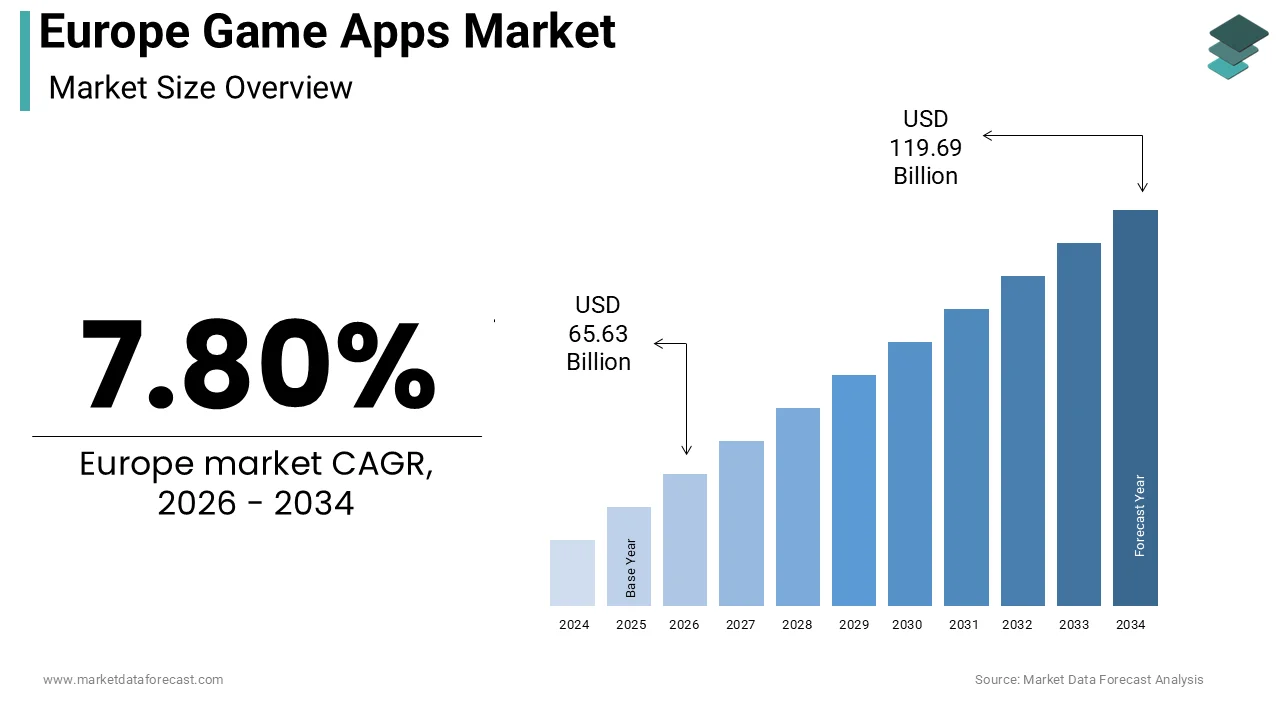
The Europe game apps market was valued at USD 60.88 billion in 2025, is estimated to reach USD 65.63 billion in 2026, and is projected to reach USD 119.69 billion by 2034, growing at a CAGR of 7.80% from 2026 to 2034. Market growth is driven by the increasing penetration of smartphones, rising popularity of mobile gaming, and the expansion of digital distribution platforms. The growing demand for immersive gaming experiences, integration of advanced technologies such as augmented reality (AR) and artificial intelligence (AI), and the rise of in-app purchases and subscription models are further fueling market expansion. Additionally, the increasing influence of esports and social gaming is strengthening the overall ecosystem.
Key Market Trends
- Rising adoption of mobile gaming across diverse demographics.
- Growth of in-app purchases and subscription-based gaming models.
- Increasing integration of AR, AI, and cloud gaming technologies.
- Expansion of esports and multiplayer gaming ecosystems.
- Strong demand for casual and entertainment-focused gaming apps.
Segmental Insights
- Based on type, the entertainment segment dominated the Europe game apps market by capturing 60.6% share in 2025, driven by high consumer engagement and demand for casual gaming experiences.
- Based on application, the Android operating system segment held the largest share of 56.9% in 2025, supported by its wide user base and accessibility across devices.
Regional Insights
The Europe game apps market is experiencing strong growth across major countries due to digital adoption and gaming culture.
- The United Kingdom led the regional market in 2025 with 23.5% share, driven by its mature digital infrastructure and strong gaming development ecosystem.
- Germany followed as the second-largest market, supported by a large user base, high disposable income, and evolving regulatory landscape.
- France is expected to witness significant growth due to its vibrant creative industry, government support for digital innovation, and culturally diverse gaming audience.
Competitive Landscape
The Europe game apps market is highly competitive, with the presence of global gaming giants and innovative developers. Market players are focusing on enhancing user engagement, developing immersive gaming content, and expanding monetization strategies through in-app purchases and subscriptions. Strategic collaborations, continuous innovation, and investments in new technologies are shaping the competitive landscape.
Prominent companies operating in the Europe game apps market include Tencent, Nintendo, Activision Blizzard, Ubisoft Entertainment SA, Supercell Oy, Electronic Arts Inc., Take-Two Interactive, Bethesda Softworks LLC, Zynga, Epic Games, Inc., NetEase, Inc., GungHo Online Entertainment Inc., Kabam Games Inc., King Digital Entertainment, Rovio Entertainment Corporation, Atari, Bandai Namco, FarSight Studios, Taito, Game Circus, and Backbone Entertainment.
Europe Game Apps Market Size
The size of the Europe game apps market was worth USD 60.88 billion in 2025. The regional market is anticipated to grow at a CAGR of 7.80% from 2026 to 2034 and be worth USD 119.69 billion by 2034 from USD 65.63 billion in 2026.
Game apps constitute a vibrant and technologically advanced sector encompassing the development, distribution, and monetization of interactive software applications designed for smartphones, tablets, and hybrid mobile devices across the continent. This ecosystem extends beyond mere entertainment to include educational gamification, fitness integration, and social networking platforms that utilize gaming mechanics to drive engagement. The market is characterized by a highly diverse consumer base with distinct preferences ranging from casual puzzle solvers in Southern Europe to competitive esports enthusiasts in Nordic regions. According to data from Eurostat, individuals in the European Union aged 16 to 74 now use the internet daily, which is creating a pervasive digital environment where mobile applications serve as primary conduits for leisure activities. Furthermore, as per the European Commission, the widespread adoption of high-speed 5th-generation networks has fundamentally altered user expectations, enabling complex cloud gaming experiences and real-time multiplayer interactions that were previously impossible on mobile hardware. The cultural landscape is equally significant, as per findings from the Interactive Software Federation of Europe, video games are now the most popular form of cultural expression among young Europeans, which is surpassing traditional media consumption. This market operates within a stringent regulatory framework concerning data privacy and digital content and requires developers to balance innovation with compliance while navigating a fragmented linguistic and cultural terrain that demands hyper-localized strategies for success.
MARKET DRIVERS
Pervasive Smartphone Penetration and Advanced Mobile Infrastructure
The near-universal ownership of sophisticated smartphones, coupled with the rapid deployment of 5th-generation mobile networks that enable high-fidelity gaming experiences, is primarily driving the growth of the European game apps market. Consumers across the continent now possess devices with powerful processors, high-resolution displays, and advanced graphics capabilities that rival dedicated gaming consoles, removing the hardware barrier to entry for complex mobile titles. According to the Global System for Mobile Communications Association, smartphone penetration in Western Europe is very high, which provides a massive installed base capable of running demanding game applications smoothly. The rollout of fifth-generation infrastructure further amplifies this driver by drastically reducing latency and increasing bandwidth, which is critical for cloud gaming services and real-time multiplayer battles. This technological backbone allows developers to create immersive augmented reality experiences and massive open-world games that stream directly to mobile devices without requiring extensive local storage. The ability to access high-quality gaming content instantly via app stores has transformed mobile phones into the dominant gaming platform for millions of Europeans. As per the European Commission, the digital literacy of the population ensures that users can easily navigate app ecosystems, download updates, and engage with in-app purchase mechanisms, which is fostering a robust revenue model.
Cultural Shift Toward Gamification and Social Connectivity
The profound cultural shift where gaming mechanics are increasingly integrated into social interactions, education, and lifestyle management, which is expanding the definition of game apps beyond traditional play, and is further contributing to the game apps market expansion in Europe. European consumers, particularly younger demographics, view gaming not as an isolated activity but as a social hub where friendships are forged, communities are built, and shared experiences are celebrated through multiplayer modes and guild systems. According to YouGov, many young adults in the United Kingdom and Germany report using game apps primarily to connect with friends and participate in social events rather than solely for solo entertainment. This social dimension drives high retention rates and viral growth as users invite peers to join teams or compete in tournaments within apps. Furthermore, the concept of gamification has permeated sectors like fitness and language learning, where apps utilize points, leaderboards, and rewards to motivate users, effectively blurring the lines between utility and gaming. As per the Interactive Software Federation of Europe, the average age of gamers in Europe continues to rise, showing that these social and gamified elements appeal to a broad spectrum of the population, including older adults seeking mental stimulation and community. The normalization of gaming as a legitimate and socially acceptable pastime has removed historical stigmas, encouraging wider adoption across all demographic groups.
MARKET RESTRAINTS
Stringent Data Privacy Regulations and Compliance Complexities
The rigorous enforcement of the General Data Protection Regulation and related digital privacy laws that impose strict limitations on how developers collect, process, and utilize user data for monetization and personalization is impeding the European game apps market growth. These regulations require explicit consent for tracking user behavior, which has severely impacted the effectiveness of targeted advertising models that many free-to-play games rely upon for revenue. As per the European Data Protection Board, penalties for non-compliance can reach up to 4% of global annual turnover, which is forcing companies to invest heavily in legal counsel and compliance infrastructure rather than product development. The requirement for granular consent mechanisms often leads to lower opt-in rates for ad tracking, resulting in diminished ad revenues and higher customer acquisition costs. According to the International Association of Privacy Professionals, navigating differing national interpretations of EU rules creates a fragmented operational landscape where a strategy valid in one member state may be illegal in another. This regulatory burden disproportionately affects smaller independent studios that lack the resources to implement sophisticated consent management platforms, which is stifling innovation and market entry.
Market Saturation and Discovery Challenges for Independent Developers
The extreme saturation of app stores with millions of available titles is creating an intensely competitive environment where visibility for new and independent games is increasingly difficult to achieve without substantial marketing budgets, and further hampering the regional market expansion. The sheer volume of daily releases means that even high-quality games can easily get lost in the noise, failing to reach potential players despite their merit. According to Sensor Tower, the top tier of game apps accounts for the vast majority of downloads and revenue in European app stores, which is leaving thousands of titles with negligible traction. This winner-takes-all dynamic forces developers to spend disproportionately on user acquisition campaigns, often exceeding the lifetime value of the acquired users, which renders many projects financially unsustainable. The dominance of established publishers with deep pockets allows them to bid up advertising costs, pricing out smaller competitors who cannot match the spending levels required to secure prominent featuring or top search rankings. As per the European Indie Game Network, many independent studios struggle to break even due to these discovery hurdles, leading to a consolidation of the market around major franchises and sequels. The algorithmic nature of app store recommendations further exacerbates the issue by favoring apps with existing momentum, which is creating a feedback loop that makes it nearly impossible for newcomers to gain initial traction. This saturation acts as a potent deterrent to innovation and diversity within the ecosystem.
MARKET OPPORTUNITIES
Integration of Augmented Reality and Location-Based Experiences
The widespread adoption of augmented reality technologies that blend digital gameplay with the physical environment and offer unique immersive experiences that leverage Europe's rich historical and urban landscapes is a promising opportunity in the European game apps market. Developers can create location-based games that encourage exploration of real-world landmarks, museums, and city centers, turning entire cities into interactive game boards that appeal to both locals and tourists. According to the European Tourism Commission, there is a growing demand for interactive cultural experiences, and AR game apps can fulfil this by overlaying historical narratives, virtual characters, and puzzles onto physical sites. The proliferation of advanced smartphone cameras and sensors enables precise spatial mapping, allowing for sophisticated gameplay mechanics that were previously impossible. As per the Interactive Software Federation of Europe, location-based AR games foster stronger community bonds as players gather in physical spaces for collaborative events. This synergy between tourism, culture, and gaming opens new revenue streams through partnerships with municipalities, heritage sites, and local businesses seeking to attract foot traffic. As fifth-generation networks improve geolocation accuracy and data throughput, the potential for seamless AR experiences expands, positioning Europe as an ideal testing ground for these innovative applications.
Expansion of Cloud Gaming and Subscription-Based Models
The rapid evolution of cloud gaming infrastructure presents a lucrative opportunity to the European game apps market. By streaming games directly from remote servers, developers can offer console-quality titles with complex graphics and deep narratives to any smartphone with a stable internet connection. According to the European Cloud Partnership, investment in edge computing centers across the continent is reducing latency to levels suitable for real-time action games, which is making cloud gaming a viable mainstream option. Subscription models associated with these services provide a predictable recurring revenue stream for developers while offering consumers unlimited access to vast libraries of games for a fixed monthly fee. As per Statista, European consumers are increasingly willing to pay for digital subscriptions, influenced by the success of similar models in music and video streaming. This shift allows developers to focus on creating high-quality, long-form experiences rather than optimizing for short-session mobile mechanics or aggressive microtransactions. The ability to reach users who previously could not afford high-end devices unlocks a new demographic segment, driving growth in user numbers and engagement hours while fostering a more sustainable and diverse game development ecosystem.
MARKET CHALLENGES
Fragmentation of Languages and Cultural Preferences
The extreme fragmentation of languages, cultural nuances, and regulatory environments across the continent that necessitates costly and complex localization strategies to achieve meaningful penetration is one of the major challenges to the expansion of the Europe game apps market. Unlike homogeneous markets, Europe comprises dozens of distinct linguistic groups and cultural identities, each with specific gaming preferences, humour styles, and sensitivity to certain themes that require developers to tailor content extensively. According to the European Commission, there are 24 official languages in the European Union, and successful game apps must often support multiple languages with culturally adapted assets, voice-overs, and narratives to resonate with local audiences. Failure to adequately localize can lead to poor reception, negative reviews, and low retention rates. As per the Localization Industry Standards Association, the cost of comprehensive localization can consume a significant portion of a development budget, which is posing a severe challenge for small and medium-sized studios. Furthermore, varying national regulations regarding loot boxes, age ratings, and content restrictions add another layer of complexity, forcing developers to maintain multiple versions of their apps to comply with local laws. This fragmentation dilutes marketing efforts and increases operational overhead, making it difficult to achieve economies of scale and hindering the rapid expansion of game apps across the entire region.
Rising User Acquisition Costs and Monetization Pressures
The growth of the Europe game apps market is further challenged by the escalating costs of acquiring users, combined with increasing resistance to traditional monetization methods such as intrusive advertising and aggressive microtransactions, squeezing profit margins for developers. As competition intensifies and privacy regulations limit targeting capabilities, acquisition costs have surged, making it difficult for developers to recoup their investment through standard ad revenue or in-app purchases. According to Adjust, user acquisition costs in Europe have risen significantly, while conversion rates for in-app purchases have stagnated due to consumer fatigue with pay-to-win mechanics. The growing awareness of digital well-being and spending limits among parents and regulators has led to stricter scrutiny of monetization practices, forcing developers to rethink their revenue models. As per the European Consumer Organisation, complaints regarding hidden costs and confusing payment structures in game apps have increased, prompting calls for greater transparency and fairness. This environment forces studios to balance the need for profitability with the imperative of maintaining user trust and satisfaction. The pressure to deliver high-quality content at low or no cost while facing soaring marketing expenses creates a precarious financial situation that threatens the sustainability of many game app ventures, particularly those lacking a strong brand or loyal community.
REPORT COVERAGE
| REPORT METRIC | DETAILS |
| Market Size Available | 2025 to 2034 |
| Base Year | 2025 |
| Forecast Period | 2026 to 2034 |
| Segments Covered | By Types, Application, and Country. |
| Various Analyses Covered | Global, Regional, and Country-Level Analysis, Segment-Level Analysis, Drivers, Restraints, Opportunities, Challenges; PESTLE Analysis; Porter’s Five Forces Analysis, Competitive Landscape, Analyst Overview of Investment Opportunities |
| Countries Covered | UK, France, Spain, Germany, Italy, Russia, Sweden, Denmark, Switzerland, Netherlands, Turkey, Czech Republic, and the Rest of Europe. |
| Market Leaders Profiled | Tencent, Nintendo, Activision Blizzard, Ubisoft Entertainment SA, Supercell Oy, Electronic Arts Inc., Games Inc. (Take-Two Interactive), Bethesda Softworks LLC, Zynga, Epic Games, Inc., NetEase, Inc., GungHo Online Entertainment Inc. (SoftBank Group), Kabam Games Inc., King Digital Entertainment, Rovio Entertainment Corporation, Atari, Bandai Namco, FarSight Studios, Taito, Game Circus, Backbone Entertainment, and Others. |
SEGMENTAL ANALYSIS
By Types Insights
The entertainment segment dominated the market by holding 60.6% of the regional market share in 2025. The growth of the entertainment segment in the European market is driven by the universal appeal of casual gaming as a primary method for stress relief and the deep integration of social features that transform solitary play into communal experiences. The widespread adoption of casual games as an accessible and immediate form of stress relief for Europeans navigating busy urban lifestyles and economic pressures is further propelling the dominance of the entertainment segment in the European market. These games, characterized by simple mechanics, short session lengths, and low cognitive load, fit seamlessly into the fragmented time slots of daily commutes, work breaks, and waiting periods. According to the Interactive Software Federation of Europe, a majority of mobile gamers in the region identify as casual players who prefer puzzle, match three, and arcade genres over complex strategy or action titles. The demographic reach of these games extends far beyond traditional gamer profiles, attracting significant participation from older adults and non-gamers who seek mental stimulation without the steep learning curve of hardcore titles. As per YouGov, consumption of light-hearted entertainment content increases during periods of economic uncertainty as consumers seek affordable escapism. The free-to-play model prevalent in this segment further lowers the barrier to entry, allowing millions to download and play without financial commitment, thereby maximizing the user base.
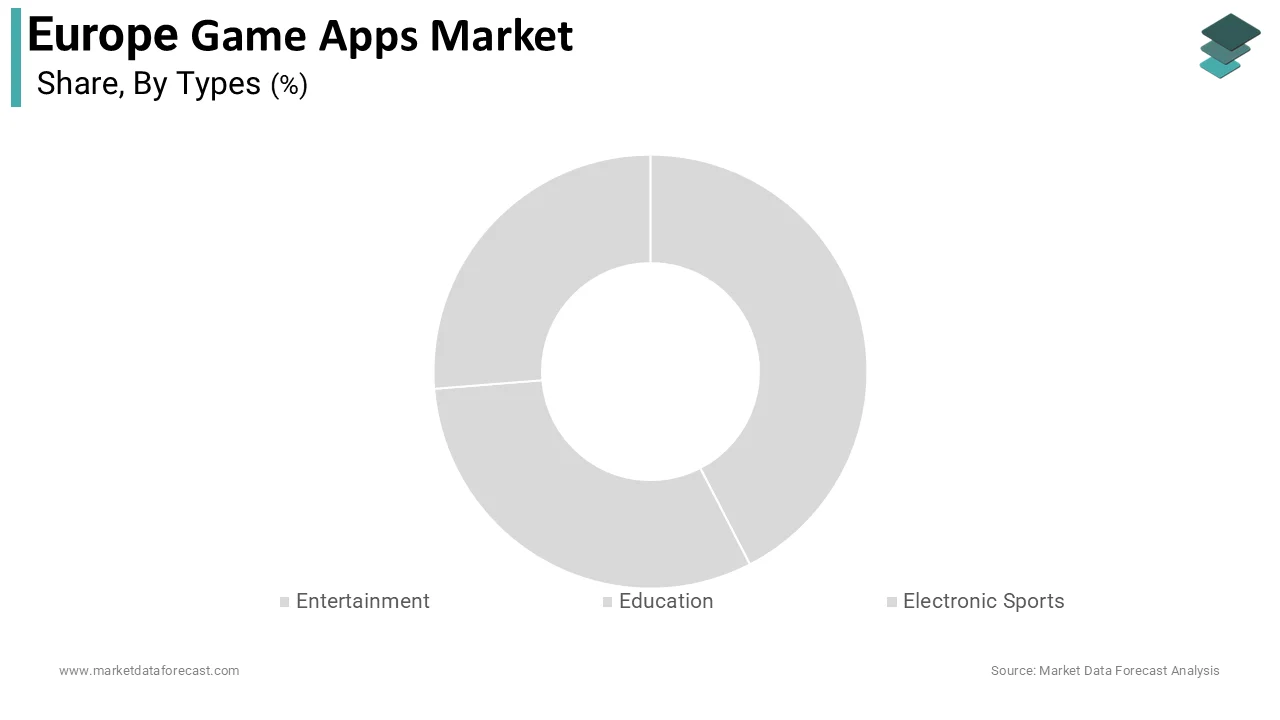
However, the electronic sports segment is projected to be the fastest-growing type and is estimated to record a CAGR of 15.5% over the forecast period. The professionalization of mobile competitive gaming and the massive surge in viewership for mobile-specific tournaments across the continent are propelling the expansion of the electronic sports segment in the European market. The emergence of structured professional leagues and high-stakes tournaments specifically designed for mobile platforms is further boosting the growth of the electronic sports segment in the European market. Organizations and publishers are investing heavily in infrastructure, coaching staff, and prize pools that rival traditional PC or console esports, attracting top-tier talent and serious competitors to the mobile arena. According to Esports Charts, viewership for mobile esports tournaments in Europe has grown significantly, with titles like Clash Royale and PUBG Mobile drawing millions of concurrent viewers. This professionalization has attracted sponsorship from non-endemic brands such as automotive manufacturers and financial institutions, injecting capital that fuels further growth and production quality. The establishment of regional qualifiers and continental championships provides a clear pathway for amateur players to turn professional, creating a sustainable ecosystem of aspirational content. As per the European Esports Federation, the number of registered mobile esports athletes in Europe is rising, indicating a deepening pool of talent and engagement.
By Application Insights
The Android operating system segment held the dominant position in the Europe game apps market by capturing 56.9% of the regional market share. This leadership of the Android segment in the European market is rooted in the diverse range of affordable devices available, the open nature of the ecosystem, and its extensive penetration across various socioeconomic demographics. The vast array of hardware options, ranging from budget-friendly entry-level smartphones to premium flagships, which is making mobile gaming accessible to a much broader spectrum of the European population than closed ecosystems, is further contributing to the dominance of android segment in the European market. Unlike competitors that rely on a limited set of high-cost devices, the Android platform is licensed to numerous manufacturers who produce phones at every price point, ensuring that individuals with lower disposable income can still participate in the gaming revolution. According to StatCounter, Android holds a strong market share in many Eastern and Southern European countries where price sensitivity is a key factor in device purchasing decisions. The ability of the Android operating system to run efficiently on less powerful hardware also extends the lifecycle of older devices, keeping them relevant for gaming purposes for longer periods. As per the International Data Corporation, shipments of mid-range Android devices in Europe continue to outpace premium segments, which is fuelling a constant influx of new gamers.
However, the iOS segment is emerging as the fastest-growing application platform in terms of revenue and engagement quality and is estimated to register a CAGR of 13.3% over the forecast period due to the superior hardware performance of Apple devices, the high spending power of its user base, and the seamless integration of services. The consistent release of high-performance hardware featuring advanced processors, graphics units, and display technologies that set the benchmark for mobile gaming fidelity is further contributing to the expansion of the iOS segment in the European market. Apple devices are renowned for their optimized software and hardware integration that allows game developers to push graphical boundaries and deliver console-quality experiences with stable frame rates and minimal latency. According to GFXBench, iPhones and iPads consistently outperform comparable Android devices in sustained graphics performance, which is making them the preferred platform for demanding titles. This technical superiority attracts hardcore gamers and enthusiasts who prioritize visual quality and smooth gameplay, which leads to higher engagement times and willingness to pay for premium content. The uniformity of the iOS device landscape simplifies the development process and enables studios to optimize their games perfectly for a limited set of configurations rather than fragmenting efforts across thousands of Android models. As per Unity Technologies, games launched on iOS often achieve higher user ratings and fewer crash reports due to this optimization advantage. As game graphics become increasingly complex, the performance gap widens, driving a migration of serious gamers to the iOS ecosystem and fueling its rapid growth in value and prestige.
COUNTRY LEVEL ANALYSIS
United Kingdom Game Apps Market Analysis
The United Kingdom dominated the game apps market in Europe in 2025 with 23.5% of the regional market share due to its mature digital infrastructure, strong development heritage, and deeply ingrained gaming culture. The nation benefits from being home to some of the world's most successful game studios and a population that consistently ranks among the highest in Europe for mobile gaming engagement and expenditure. According to Ukie, mobile gaming represents the largest segment of the domestic games market, surpassing both console and PC in terms of active users and revenue generation. The widespread availability of fifth-generation networks and high smartphone penetration ensures seamless access to the latest game apps. The cultural acceptance of gaming as a mainstream hobby across all age groups drives consistent demand, while the presence of major tech headquarters facilitates early access to new titles and features. As per Ofcom, mobile devices are the primary screen for gaming for a large portion of the UK population, reinforcing the centrality of game apps in daily life.
Germany Game Apps Market Analysis
Germany occupied the second-largest position in the European game apps market in 2025 due to a massive user base, high disposable income, and a rapidly evolving regulatory landscape. The German market shows a strong preference for strategy, simulation, and puzzle games, which reflects a demographic that values intellectual challenge and long-term engagement. According to the Federal Association of Interactive Media and Games Industry, mobile gaming has grown significantly in recent years, driven by adoption among older demographics who view gaming as a form of mental fitness. The country's robust economy supports high spending on in-app purchases, although users are discerning and sensitive to privacy concerns. The rollout of fifth-generation infrastructure across major cities is enhancing multiplayer experiences, which is fostering a growing community of competitive mobile gamers. As per Bitkom, the number of Germans playing games on mobile devices has reached record highs, making gaming a standard leisure activity comparable to television. The presence of major international publishers' European offices in Berlin and Munich further strengthens the ecosystem.
France Game Apps Market Analysis
France is anticipated to account for a prominent share of the Europe game apps market during the forecast period owing to a vibrant creative sector, strong government support for digital industries, and a culturally diverse gaming community. The French market blends domestic development talent with high consumption of international hits, creating a dynamic environment where local stories and global franchises coexist. According to the National Union of Video Game Publishers, mobile gaming revenue in France has surged, driven by narrative-driven games and social casino apps. Government tax credit schemes for video game production have stimulated innovative mobile titles. French consumers are highly engaged with social features and community events within games, leading to strong retention rates. As per Mediametrie, mobile gaming is the most practiced digital leisure activity among French youth, signaling a generational shift. The cultural emphasis on artistry and storytelling gives the French market a distinct character, attracting developers who wish to test creative concepts.
Italy Game Apps Market Analysis
Italy is predicted to register a healthy CAGR in the Europe game apps market during the forecast period due to its large population, high smartphone penetration, and cultural affinity for social and casual gaming. The Italian market shows a strong preference for puzzle games, card games, and sports simulations, particularly football-related titles. According to ISTAT, mobile device usage for entertainment has risen sharply, with gaming becoming a primary pastime for commuters and families. The economic recovery and digitalization of small businesses have spurred the adoption of gamified applications for education and training. Italian gamers are loyal to their favorite franchises and highly engaged in social features, making community management critical. As per the Digital Innovation Observatory, time spent on mobile games in Italy is among the highest in Europe. Affordable Android devices have democratized access, bringing millions of new users into the ecosystem. The social culture of Italy translates well into multiplayer mobile experiences, positioning the country as a vibrant market.
Spain Game Apps Market Analysis
Spain is estimated to showcase a healthy CAGR in the Europe game apps market during the forecast period due to its young demographic profile, high tourism inflow, and lively social culture. The Spanish market is fueled by a tech-savvy younger generation that views mobile gaming as a natural extension of social life, particularly in battle royale and multiplayer online battle arena games. According to the National Statistics Institute of Spain, smartphone penetration among teenagers and young adults is nearly universal, creating fertile ground for the rapid adoption of new game apps. Tourism also plays a role, as visitors often download local or global games during transit, boosting downloads. As per Red.es, the digital economy in Spain is growing rapidly, with gaming contributing significantly. Free wifi in public spaces and cafes encourages mobile gaming sessions outside the home. The energetic and social nature of the Spanish population drives high engagement in competitive and cooperative modes, which is making Spain a testing ground for social gaming features.
COMPETITIVE LANDSCAPE
The competition within the Europe game apps market is characterized by intense rivalry between established global publishers, agile independent studios, and emerging tech giants vying for user attention in a highly saturated landscape. Incumbent players leverage their extensive portfolios of iconic franchises and massive marketing budgets to dominate app store charts and secure prime featuring spots. Conversely, smaller indie developers differentiate themselves through innovative gameplay mechanics, artistic styles, and niche targeting that appeal to specific demographic segments overlooked by mainstream titles. The landscape is further complicated by varying national regulations regarding loot boxes, age ratings, and data privacy, which force companies to adopt localized compliance strategies rather than a unified continental approach. Competitive pressure drives continuous investment in user acquisition technologies and retention tools such as personalized notifications and dynamic events to keep players engaged. Brands compete fiercely for influencer partnerships and esports sponsorships to build credibility and reach younger audiences who are increasingly skeptical of traditional advertising. The rise of subscription services and cloud gaming platforms adds another layer of complexity as companies battle for ecosystem dominance. Trust and ethical monetization practices have become key differentiators, with firms highlighting their commitment to fair play and data security to appeal to cautious European consumers. This dynamic environment fosters rapid innovation but also leads to consolidation as smaller entities struggle with rising acquisition costs and regulatory burdens.
KEY MARKET PLAYERS
The leading companies operating in the Europe game apps market include:
- Tencent
- Nintendo
- Activision Blizzard
- Ubisoft Entertainment SA
- Supercell Oy
- Electronic Arts Inc.
- Games Inc. (Take-Two Interactive)
- Bethesda Softworks LLC
- Zynga
- Epic Games, Inc.
- NetEase, Inc.
- GungHo Online Entertainment Inc. ( SoftBank Group)
- Kabam Games Inc.
- King Digital Entertainment
- Rovio Entertainment Corporation
- Atari
- Bandai Namco
- FarSight Studios
- Taito
- Game Circus
- Backbone Entertainment
TOP PLAYERS IN THE MARKET
- Supercell Oy stands as a Finnish mobile game developer renowned for creating globally dominant titles like Clash of Clans and Brawl Stars that define the strategy and action genres. The company contributes significantly to the global market by pioneering the games as a service model, which emphasizes long term player engagement and community building over short term gains. Its involvement in Europe is characterized by a unique corporate culture that empowers small independent teams to make creative decisions rapidly without bureaucratic interference. Recent actions to strengthen its market position include the soft launch of new experimental titles in select European regions to refine gameplay mechanics based on real user feedback before global release. The firm has also invested heavily in esports infrastructure to support competitive scenes for its existing portfolio, ensuring sustained relevance among younger demographics. By maintaining strict quality standards and focusing on player retention, Supercell continues to set industry benchmarks for live operations and monetization ethics while fostering loyal communities across the continent.
- King Digital Entertainment operates as a leading interactive entertainment company and a subsidiary of Activision Blizzard, with its headquarters in Stockholm, Sweden, serving as a hub for European innovation. The group plays a pivotal role in the global market through its flagship Candy Crush Saga franchise, which remains one of the most played mobile games worldwide, generating substantial recurring revenue. Its European operations focus on leveraging advanced data analytics to optimize level design and personalize player experiences across diverse linguistic and cultural markets. Recent actions to strengthen its market position involve the integration of artificial intelligence tools to dynamically adjust difficulty curves and offer tailored incentives that enhance player satisfaction and longevity. The company has also expanded its portfolio through strategic acquisitions of smaller studios specializing in hyper casual and puzzle genres to diversify its content offerings. By prioritizing responsible gaming initiatives and adhering to strict European data privacy regulations, King reinforces its reputation as a trustworthy operator. These efforts ensure the company maintains its leadership in the casual gaming sector while adapting to evolving consumer preferences and regulatory landscapes.
- Ubisoft Entertainment SA functions as a major French video game publisher that has successfully transitioned its beloved console franchises into the mobile gaming space with high-fidelity adaptations and original spin-offs. The company contributes to the global market by bridging the gap between hardcore gaming narratives and accessible mobile mechanics, allowing fans to engage with iconic universes on the go. Its involvement in Europe is marked by a strong commitment to local development studios that create content resonating with regional tastes while maintaining global quality standards. Recent actions to strengthen its market position include the launch of cloud gaming services that enable users to stream premium mobile titles without hardware limitations, thereby expanding its addressable audience. Ubisoft has also partnered with telecommunications providers to bundle game subscriptions with mobile data plans, increasing accessibility and user acquisition rates. The firm continues to invest in cross-platform play features that allow mobile users to interact with console and PC players, fostering a unified community. These strategic moves demonstrate a clear vision to integrate mobile gaming deeply into its broader ecosystem while driving growth through innovation and accessibility.
TOP STRATEGIES USED BY THE KEY MARKET PARTICIPANTS
Key players in the Europe game apps market primarily employ strategies centered on data-driven personalization and community-centric live operations to maximize user retention and lifetime value. Companies heavily invest in artificial intelligence and machine learning algorithms to analyze player behavior patterns and dynamically adjust game difficulty, rewards, and content recommendations in real time. This technical approach ensures that each user receives a tailored experience that maintains engagement and reduces churn rates significantly. Another major strategy involves the expansion into cross-platform ecosystems, allowing players to seamlessly continue their progress across mobile devices, consoles, and personal computers. Firms actively develop robust esports frameworks and social features within their apps to foster strong community bonds and encourage viral growth through organic sharing. Strategic partnerships with telecommunications providers and hardware manufacturers serve as critical tactics to secure pre-installation deals and exclusive distribution channels. Enhancing compliance with stringent European data privacy regulations builds trust and mitigates legal risks while ensuring long term operational stability. These combined approaches enable participants to navigate a saturated market effectively while capturing growth through innovation and deep user engagement.
MARKET SEGMENTATION
This research report on the Europe game apps market has been segmented and sub-segmented into the following categories.
By Types
- Entertainment
- Education
- Electronic Sports
- Others
By Application
- Android
- IOS
- Others
By Country
- United Kingdom
- France
- Spain
- Germany
- Italy
- Russia
- Sweden
- Denmark
- Switzerland
- Netherlands
- Rest of Europe