- Product Description Description
- Table of Contents TOC
- List of Table & Figure LOT
- Get Free Sample PDF Sample PDF
Market Size, 2025
$1,077 MnMarket Estimate, 2026
$1,143 MnMarket Forecast, 2034
$1,835.08 MnCAGR, 2026–2034
6.1%Europe Hemostats Market Size, Growth, Trends & Forecast (2025–2034)
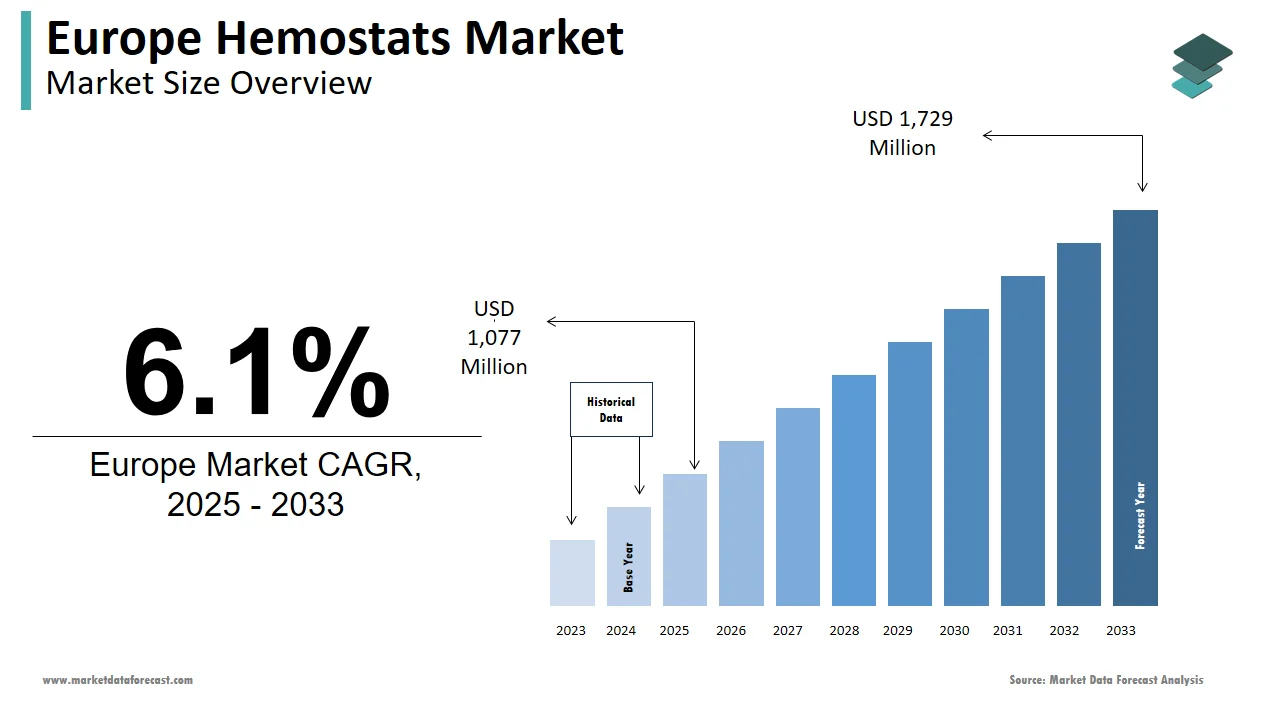
The hemostats market size in Europe was valued at USD 1,077 million in 2025, is anticipated to reach USD 1,143 million in 2026, and is projected to scale up to USD 1,835.08 million by 2034, registering a compound annual growth rate (CAGR) of 6.1% during the forecast period from 2026 to 2034. Driven by the expansion of minimally invasive procedures, an aging demographic with high chronic disease burdens, and the widespread integration of advanced surgical consumables, the industry continues to evolve across European healthcare networks.
Key Executive Metrics (At-a-Glance)
- 2025 Base Valuation: USD 1,077 Million
- 2026 Current Valuation: USD 1,143 Million
- 2034 Forecast Valuation: USD 1,835.08 Million
- Compound Annual Growth Rate (CAGR): 6.1% (2026–2034)
- Dominant Product Type Segment: Topical Hemostats (holding the largest share backed by broad applicability across general and orthopedic surgeries)
- Fastest-Growing Product Type Segment: Tissue Sealants (projected to witness the highest growth fueled by minimally invasive and reconstructive surgery expansion)
- Dominant Application Segment: Surgical Hemostats (accounting for the majority share as a procedural necessity in invasive operations)
- Fastest-Growing Application Segment: Wound Closure (driven by emergency care, trauma, and aesthetic dermatology demands)
- Dominant Distribution Channel Segment: Direct Tenders (accounting for the majority share due to centralized public hospital procurement)
- Dominant Country Market: Germany (top performer driven by advanced hospital networks and high surgical volumes)
Core Market Drivers
- Minimally Invasive & Complex Surgeries: Surging demand for reliable hemostatic solutions in laparoscopic, robotic, and endoscopic procedures where traditional suturing is challenging.
- Aging Demographic Pressures: Growing elderly populations experiencing high rates of cardiovascular conditions, cancers, and orthopedic surgeries requiring intensive blood management.
- Outpatient Care Expansion: The proliferation of ambulatory surgical centers increasing the need for fast-acting, pre-sterilized single-use hemostatic devices.
Primary Market Restraints & Challenges
- Regulatory Bottlenecks: Stringent EU Medical Device Regulation (EU MDR) conformity assessments causing review delays and restricting fast-track innovation commercialization.
- Cost & Reimbursement Constraints: High unit pricing of advanced hemostats versus traditional gauze colliding with strict public hospital budgets and variable regional reimbursement codes.
- Raw Material Vulnerabilities: Supply chain dependencies on specialized biological components (e.g., bovine thrombin, porcine gelatin) risking disruption.
Europe Hemostats Market Segmentation Breakdown
| Segment Category | Leading Sub-Segment (2025 Base) | Fastest-Growing Sub-Segment (2026–2034) |
|---|---|---|
| By Product Type | Topical Hemostats (widely deployed in wet fields across general and trauma surgeries) | Tissue Sealants (driven by robotic workflows and cardiovascular procedures) |
| By Application | Surgical Hemostats (essential standard component for intraoperative capillary oozing control) | Wound Closure (fueled by trauma care, emergency departments, and cosmetic dermatology) |
| By Distribution Channel | Direct Tenders (governed by centralized public hospital contract directives) | Retail (expanding via specialized medical distributors for private clinics and ambulatory suites) |
| By Country | Germany (leading hub backed by high surgical volumes and university hospital trials) | Spain & Italy (high-growth potential due to healthcare modernization and rising procedure rates) |
Major Industry Players Profiled
Key enterprises shaping the competitive European hemostats market include Ethicon Inc., Baxter International Inc., B. Braun SE (Aesculap), 3M, ADCO Europe, Inc., Abbott Laboratories, Advanced Medical Solutions Group, PLC., and Dymax Corporation.
Europe Hemostats Market Size
The hemostats market size in Europe was valued at USD 1,077 million in 2025. The European market is estimated to be worth USD 1,835.08 million by 2034 from USD 1,143 million in 2026, growing at a CAGR of 6.1% from 2026 to 2034.
Hemostats refer to specialized agents and devices deployed during surgical or traumatic interventions to arrest bleeding by promoting blood coagulation or mechanically occluding vessels. These include absorbable hemostatic agents such as oxidized regenerated cellulose, gelatin matrices, and thrombin-based compounds, as well as mechanical aids like vascular clips and electrocautery tools. Their clinical utility spans general surgery, trauma care, neurosurgery, and minimally invasive procedures where precision and rapid hemostasis are critical to patient outcomes. According to sources, intraoperative blood loss is a leading contributor to complications during surgery, frequently necessitating transfusion support for major abdominal procedures. As per research, the substantial procedural volume consistently observed in inpatient surgical procedures across the European Union underpins a sustained demand for effective hemostatic solutions. Regulatory bodies emphasize that hemostats used in these procedures are classified as medical devices, requiring a rigorous assessment process to ensure they meet essential safety and performance requirements before they can be marketed. This regulatory stringency ensures high safety standards but also shapes innovation pathways. Unlike commodity consumables, hemostats are integrated into surgical protocols where efficacy, speed, and biocompatibility directly influence clinical decision-making, making their adoption deeply intertwined with surgical practice evolution across the continent.
MARKET DRIVERS
Rising Volume of Minimally Invasive and Complex Surgical Procedures Drives Demand
The continuous expansion of advanced surgical interventions across European healthcare systems has significantly intensified the need for reliable and rapid hemostatic solutions, which boosts the expansion of the Europe hemostats market. Laparoscopic, robotic, and endoscopic procedures, now routine in specialties from urology to cardiothoracic surgery, present unique hemostatic challenges due to limited tactile feedback and confined operative fields. According to studies, a percentage of all cholecystectomies and colorectal resections in the EU were performed laparoscopically. These techniques increase reliance on topical hemostats because traditional suturing or clamping is often impractical. Furthermore, the growing prevalence of comorbidities such as diabetes and anticoagulant therapy complicates natural clotting. As per sources, a portion of adults aged 65 and above in the EU use antithrombotic medications, which heightens bleeding risk during surgery. In response, hospitals are integrating advanced hemostats into standard surgical packs to mitigate complications. National health systems in some countries have updated perioperative guidelines to recommend absorbable hemostatic matrices in high-risk oncology and transplant surgeries. This procedural shift transforms hemostats from optional adjuncts into essential components of modern surgical safety protocols, thereby sustaining robust clinical demand across Europe.
Aging Population and Increasing Burden of Chronic Diseases Amplify Clinical Need
The region’s demographic trajectory, marked by a rapidly aging population, is a major driver of the Europe hemostats market. This is due to the direct correlation between age, chronic illness, and surgical intervention rates. Elderly patients are more likely to undergo procedures such as hip fracture repairs, cardiovascular surgeries, and cancer resections, all of which involve significant bleeding risks. Moreover, age-related physiological changes, including reduced platelet function and vascular fragility, impair natural hemostasis. As per research, ischemic heart disease and stroke account for a notable number of deaths annually in the region, often necessitating emergency or elective vascular interventions. In oncology, the rising incidence of cancer further fuels demand as tumor resections frequently involve highly vascular tissues. Hospitals routinely use fibrin sealants and gelatin-based hemostats in geriatric surgical pathways to reduce transfusion requirements and accelerate recovery. This confluence of demographic pressure and disease burden ensures that hemostats remain indispensable in Europe’s evolving surgical care landscape.
MARKET RESTRAINTS
Stringent Regulatory Requirements Delay Product Commercialization
The European Union’s Medical Device Regulation EU 2017 745 imposes rigorous conformity assessment procedures that significantly extend the time required to bring new hemostatic products to the market, and thereby impedes the expansion of the Europe hemostats market. Unlike pharmaceuticals, which follow centralized pathways, hemostats classified as Class IIb or III devices must undergo clinical evaluation by notified bodies whose capacity remains strained. According to sources, the review time for high-risk device approvals exceeded several months due to heightened scrutiny and staffing shortages among notified bodies. This delay discourages small and medium-sized enterprises from entering the market and limits the availability of innovative formulations such as chitosan-based or synthetic polymer hemostats. Furthermore, post-market surveillance obligations require continuous data collection on adverse events, which increases operational costs. Consequently, clinicians often rely on legacy products despite advances in biomaterial science slowing the adoption of safer or more effective alternatives and constraining market dynamism.
High Cost and Reimbursement Uncertainties Limit Adoption in Public Healthcare Systems
Cost sensitivity and inconsistent reimbursement policies are hampering the growth of the Europe hemostats market. As a result, advanced hemostats face significant uptake barriers in Europe’s predominantly publicly funded healthcare systems, despite their clinical benefits. Many absorbable hemostatic agents cost a noteworthy amount per unit, substantially more than traditional gauze or sutures, raising concerns about budget impact in cost-constrained hospitals. According to studies, only a few EU member states have specific reimbursement codes for advanced hemostatic devices, leading to variable hospital procurement practices. In some countries, caps on surgical supplies often result in restrictive formularies that exclude premium hemostats unless justified by exceptional clinical need. Even in wealthier nations such as Germany, the G-BA Institute requires health technology assessments proving cost-effectiveness before nationwide adoption, which can take years. This financial friction prevents optimal utilization even when clinical guidelines recommend their use, ultimately limiting market expansion despite proven patient benefits.
MARKET OPPORTUNITIES
Expansion of Ambulatory Surgery Centers Creates New Application Avenues
The rapid growth of outpatient surgical facilities across the region offers an opportunity for hemostat manufacturers to penetrate decentralized care settings, which contributes to the expansion of the Europe hemostats market. Ambulatory surgery centers perform a share of all elective procedures in countries. These facilities prioritize rapid recovery, minimal complications, and same-day discharge, outcomes directly enhanced by effective hemostasis. Unlike hospital operating rooms, ambulatory centers often lack access to blood banks or transfusion services, making prevention of postoperative bleeding critical. Consequently, there is heightened interest in single-use absorbable hemostats that reduce reoperation risk and support fast-track protocols. Manufacturers are responding with compact pre-sterilized formats tailored to minor procedures. This shift aligns with Europe’s broader healthcare efficiency agenda and opens a high-growth channel where hemostats can demonstrate value through reduced readmission rates and enhanced patient satisfaction.
Integration with Digital Surgical Platforms Enables Precision Application
Emerging synergies between hemostatic technologies and digital surgery ecosystems provide a major opportunity for the growth of the Europe hemostats market. This opens the pathway for product differentiation and clinical integration. The increasing adoption of robotic and image-guided surgery in European hospitals is driving the need for hemostatic agents that can be delivered through minimally invasive tools. Companies are developing applicator tips that integrate with robotic arms or endoscopic ports, enabling targeted placement in deep cavities with minimal tissue disruption. Additionally, smart hemostats embedded with bioresponsive indicators that change color upon clot formation are under clinical evaluation in university hospitals in Germany and Switzerland. These innovations align with the EU’s Horizon Europe funding priorities for digital health and precision medicine. Integrating hemostats into the digital surgical workflow elevates them from simple consumables to vital components of integrated operating room solutions, a move that enhances their clinical utility and ensures their sustained adoption by manufacturers.
MARKET CHALLENGES
Supply Chain Vulnerability for Critical Raw Materials Threatens Continuity
The production of advanced hemostats relies on specialized biomaterials such as bovine thrombin, porcine gelatin, and plant-derived oxidized cellulose, whose supply chains are susceptible to biological and regulatory disruptions, negatively impacting the expansion of the European hemostats market. According to research, a portion of biological excipients used in EU medical devices is sourced from outside the bloc, primarily from the United States and India. This dependency creates vulnerability to export restrictions, disease outbreaks, and quality deviations. More critically, the European Medicines Agency maintains a strict risk-based import control system that can delay raw material clearance by weeks if documentation is incomplete. These vulnerabilities not only risk product shortages but also inflate inventory costs as companies stockpile critical inputs. Europe's supply of hemostats will remain vulnerable to unpredictable global biologic market changes unless it implements strategic reshoring or diversification.
Clinical Heterogeneity and Lack of Standardized Protocols Impede Optimal Use
The absence of universal guidelines and significant variation in surgeon training also hinders the growth of the Europe hemostats market. A 2023 multicenter study published in the British Journal of Surgery observed that hemostat selection in liver resection procedures varied across 12 EU countries, with no consensus on agent type, timing, or dosage. This heterogeneity stems from limited high-quality comparative effectiveness data and reliance on institutional tradition rather than evidence-based protocols. According to sources, surgical curricula in many EU member states often lack dedicated, structured modules on advanced hemostasis techniques, leading to recognized knowledge and skills gaps among younger surgeons. Consequently, underuse or inappropriate use persists, such as applying gelatin sponges in high-pressure arterial bleeding where they are ineffective, which increases complication risks. Furthermore, hospital procurement committees often prioritize cost over clinical suitability, further disconnecting product choice from patient need. This fragmented clinical landscape not only compromises patient safety but also obscures real-world performance data needed to justify premium pricing or reimbursement expansion, thereby constraining market maturity and innovation adoption across the region.
REPORT COVERAGE
| REPORT METRIC | DETAILS |
| Market Size Available | 2025 to 2034 |
| Base Year | 2025 |
| Forecast Period | 2026 to 2034 |
| Segments Covered | By Product Type, Application, Distribution Channel, and Country. |
| Various Analyses Covered | Global, Regional, and Country-Level Analysis, Segment-Level Analysis, Drivers, Restraints, Opportunities, Challenges; PESTLE Analysis; Porter’s Five Forces Analysis, Competitive Landscape, Analyst Overview of Investment Opportunities |
| Countries Covered | UK, France, Spain, Germany, Italy, Russia, Sweden, Denmark, Switzerland, Netherlands, Turkey, Czech Republic, and the Rest of Europe. |
| Market Leaders Profiled | 3M, ADCO Europe, Inc., Ethicon Inc., Abbott Laboratories, Baxter International Inc., B. Braun SE, Advanced Medical Solutions Group, PLC., and Dymax Corporation. |
SEGMENTAL ANALYSIS
By Product Type Insights
The topical hemostats segment was the largest in the Europe hemostats market in 2024. The dominance of the topical hemostats segment is attributed to broad applicability across general surgery, orthopedics, and trauma, where rapid surface bleeding control is essential. It is the most widely used category in European surgical practice. Topical agents are a standard component of surgical kits specifically designed for liver and kidney operations, primarily because they are well-tolerated by living tissue and can be absorbed effectively by the body. Unlike adhesives or sealants, which require specific tissue conditions, topical hemostats function effectively in wet fields and irregular wound beds. The widespread use is further supported by significant regulatory approval across a major governing body for medical devices, which has granted numerous topical hemostatic products the necessary certification to be marketed and used in surgical settings. Their use is further reinforced by hospital procurement policies that prioritize cost-effective single-use devices with established safety records.
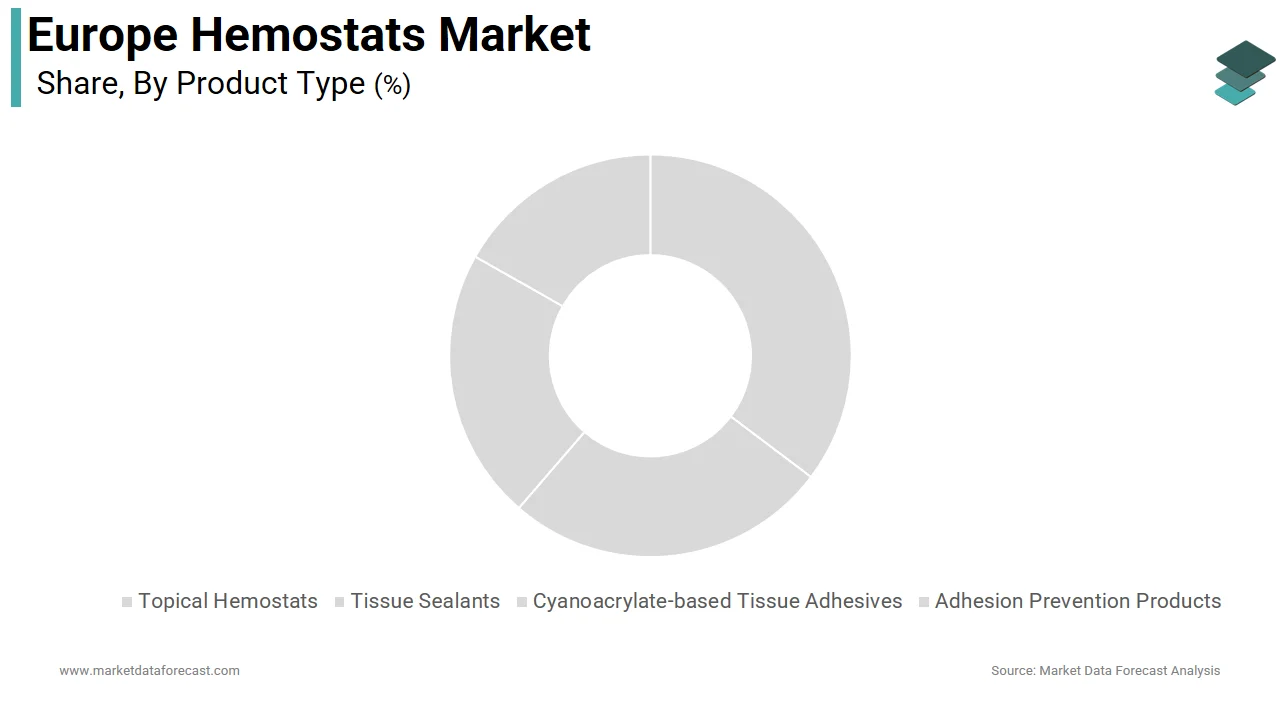
The tissue sealants segment is on the rise and is expected to be the fastest-growing segment in the market by witnessing the highest CAGR during the forecast period due to the expansion of minimally invasive and reconstructive surgeries. These products provide dual functionality as both hemostats and adhesion barriers, making them ideal for neurosurgery, cardiovascular repair and thoracic procedures. Growth is also fueled by integration into robotic surgery workflows, where precision application is critical. Unlike cyanoacrylate adhesives, which face biocompatibility concerns, tissue sealants derived from human or recombinant proteins align with EU safety standards, enhancing clinician trust and institutional adoption.
By Application Insights
In 2024, the surgical hemostats segment accounted for the majority share of the Europe hemostats market, as bleeding control is an inherent requirement in virtually all invasive procedures. From routine appendectomies to complex oncology resections, hemostatic intervention is not optional but a procedural necessity. According to studies, millions of inpatient surgical procedures were performed in the EU in 2023, with millions more outpatient interventions. National surgical guidelines in France and the Netherlands mandate the availability of advanced hemostats in operating rooms for high-risk cases. The European Board of General Surgery includes hemostasis management as a core competency, underscoring its centrality to surgical training. Unlike wound closure, which often relies on sutures or staples, surgical hemostats address intraoperative capillary oozing and parenchymal bleeding that mechanical methods cannot control, making them indispensable across specialties.
The wound closure segment is the fastest-growing segment owing to the convergence of trauma care, military medicine, and aesthetic surgery demands. In emergency departments, topical hemostats and tissue adhesives are increasingly used for laceration repair, reducing procedure time and eliminating suture-related complications. Apart from these, the rise of cosmetic dermatology, a significant number of aesthetic procedures being performed in the EU, fueling demand for scar-minimizing closure methods. Unlike traditional sutures, adhesives provide waterproof seals and reduce infection risk, aligning with patient-centered care models. This expansion beyond operating rooms into emergency and outpatient settings is redefining the application scope of hemostatic technologies.
By Distribution Channel Insights
The direct tenders segment dominated the Europe hemostats market in 2024 because nearly all hospitals operate under centralized public procurement systems. In countries like Germany, Italy, and Spain, healthcare facilities must source medical devices through national or regional tender processes governed by public contract directives. According to research, many hospitals medical device purchases in the EU occur via formal tenders, ensuring price transparency and compliance. Manufacturers engage in lengthy bidding cycles where product efficacy, clinical data, and cost per procedure are evaluated. This system favors established players with regulatory dossiers and health economic evidence, but ensures consistent large volume sales. Retail channels are virtually irrelevant for professional-grade hemostats due to prescription requirements and sterile handling needs.
The retail segment is expected to exhibit a noteworthy CAGR over the forecast period. The rapid growth of the retail segment is fuelled by specialized medical supply distributors serving private clinics, ambulatory surgery centers, and veterinary practices. In Switzerland and the Netherlands, independent surgical suites can procure directly from authorized distributors, bypassing public tenders. According to sources, the number of private surgical facilities in the EU has grown, creating demand for flexible procurement. Besides, some cyanoacrylate-based adhesives with Class IIa classification are available through licensed medical retailers for professional use. This channel offers faster access and product choice but remains constrained by regulatory restrictions that prohibit over-the-counter sales of hemostatic agents to non-professionals.
COUNTRY LEVEL ANALYSIS
Germany Hemostats Market Analysis
Germany was the top performer in the Europe hemostats market and was driven by its dense network of university hospitals, high surgical volume, and early adoption of innovative medical devices. Millions of inpatient surgeries in 2023, as per studies. The country’s robust medtech industry and stringent quality expectations foster demand for premium absorbable hemostats. Regulatory clarity under the Medical Devices Implementation Act ensures predictable approval pathways. Leading hospitals in Berlin, Munich, and Heidelberg routinely participate in multicenter trials for next-generation sealants, reinforcing Germany’s role as a clinical innovation hub. Public reimbursement through the G-BA system supports adoption when cost-effectiveness is demonstrated, making it a benchmark market for European entry.
France Hemostats Market Analysis
France captured a strong position in the Europe hemostats market in 2024 due to its centralized healthcare system and national emphasis on surgical standardization. The French National Authority for Health issues detailed procedural guidelines that often specify hemostat types for oncology and transplant surgeries. According to research, a significant number of major surgical procedures were recorded in 2023. The country’s extensive public hospital network procures hemostats through national tenders managed by the Union des Groupements d’Achats Publics, ensuring wide institutional access. Furthermore, France’s leadership in robotic surgery drives demand for precision hemostats compatible with minimally invasive platforms. Cultural preference for locally manufactured medical devices also benefits domestic and EU-based suppliers.
Italy Hemostats Market Analysis
Italy is expected to be the most lucrative region in the Europe hemostats market because of high procedural volume and regional variability in healthcare delivery. The aging population increases the need for complex interventions where advanced hemostasis is critical. Northern centers in Milan and Turin actively adopt tissue sealants and fibrin matrices, in contrast to southern regions, where budget constraints limit the use of premium products. The Italian Medicines Agency enforces strict conformity with EU MDR but allows regional procurement autonomy, creating a dual speed market. This dynamic offers opportunities for tiered product portfolios tailored to local economic conditions.
United Kingdom Hemostats Market Analysis
The United Kingdom maintains a significant share of the Europe hemostats market despite Brexit-related regulatory divergence. The National Health Service performs millions of surgical procedures annually. NICE guidelines influence hemostat adoption, with technology appraisals determining national reimbursement. The UK’s strong trauma network and military medicine legacy support consistent demand for rapid hemostatic solutions. Post Brexit, the Medicines and Healthcare products Regulatory Agency operates independently but aligns closely with the EU standard, easing market continuity. Private healthcare expansion further diversifies procurement channels. London and Manchester serve as key hubs for clinical evaluation and new product introduction.
Spain Hemostats Market Analysis
Spain emerges as a high-growth country in the Europe hemostats market due to rising surgical volumes and healthcare system modernization. The country’s universal healthcare system ensures broad access while regional governments manage procurement, leading to varied adoption rates. Catalonia and Madrid lead in adopting advanced hemostats driven by academic medical centers. Apart from these, Spain’s role as a destination for medical tourism promotes premium product use to meet international standards. Economic recovery has stabilized hospital budgets, enabling reinvestment in surgical consumables after years of austerity.
COMPETITIVE LANDSCAPE
Competition in the Europe Hemostats Market is characterized by a handful of multinational medtech leaders who dominate through established brand trust, regulatory expertise, and deep integration into hospital procurement systems. The market features moderate rivalry with emphasis on clinical differentiation rather than price competition, as hemostats are evaluated on efficacy, safety, and compatibility with surgical protocols. New entrants face significant barriers, including the high cost of EU MDR certification, limited notified body capacity, and the need for extensive clinical data. Incumbents leverage their existing relationships with surgical teams and national health systems to maintain preference. Innovation is incremental, focusing on material science improvements rather than disruptive technologies. Regional variations in healthcare funding influence product tiering, with premium sealants favoured in Western Europe and cost-effective topical agents in Southern and Eastern regions. Overall, the competitive landscape remains stable with evolution driven by regulatory adaptation, clinical evidence generation, and alignment with surgical workflow digitization.
KEY MARKET PLAYERS
Some of the companies that are playing a dominating role in the Europe hemostats market include
- 3M
- ADCO Europe, Inc.
- Ethicon Inc
- Abbott Laboratories
- Baxter International Inc
- Braun SE
- Advanced Medical Solutions Group, Plc
- Dymax Corporation
TOP PLAYERS IN THE MARKET
- Ethicon Inc. is a leading provider of surgical hemostats in Europe, offering a comprehensive portfolio that includes oxidized regenerated cellulose Surgicel and gelatin-based Gelfoam products. The company leverages Johnson & Johnson’s extensive European distribution infrastructure and deep relationships with hospital procurement networks. Ethicon actively collaborates with surgical societies to integrate its hemostats into clinical training programs and procedural guidelines. Recently, the company launched updated formulations of its topical hemostats with enhanced absorption profiles tailored for minimally invasive surgeries. It also strengthened its regulatory compliance capabilities to align with EU Medical Device Regulation requirements, ensuring uninterrupted product availability across the region while reinforcing its reputation for clinical reliability and surgical innovation.
- Baxter International Inc. plays a pivotal role in the Europe hemostats market through its Tisseel and Evicel fibrin sealant platforms, which are widely used in cardiovascular, neurosurgical, and transplant procedures. The company benefits from established manufacturing facilities in Germany and Sweden, ensuring a consistent regional supply. Baxter has intensified its focus on health technology assessment submissions to secure favorable reimbursement in public healthcare systems. In recent years, it expanded its clinical evidence base by funding multicenter studies across European university hospitals to demonstrate reduced transfusion rates and shorter operating times. These initiatives support adoption in cost-conscious environments while positioning Baxter as a partner in surgical efficiency and patient safety across the continent.
- Braun SE contributes significantly to the European hemostats landscape through its Aesculap division, which offers both mechanical hemostatic devices and absorbable topical agents. Headquartered in Germany, the company capitalizes on its strong presence in European operating rooms and its reputation for precision surgical instruments. B. Braun has integrated hemostats into its broader surgical solutions portfolio, including robotic and endoscopic platforms. The company recently enhanced its product labeling and digital instructions for use to meet EU MDR traceability mandates. It also launched training modules for surgical teams on optimal hemostat application in laparoscopic settings. These efforts reinforce B. Braun’s commitment to procedural excellence and strengthen its embedded position within European surgical workflows.
TOP STRATEGIES USED BY THE KEY MARKET PARTICIPANTS
Key players in the Europe Hemostats Market prioritize regulatory compliance with the EU Medical Device Regulation to ensure uninterrupted product availability and build institutional trust. They invest in generating real-world clinical evidence through multicenter studies to demonstrate cost-effectiveness and improved surgical outcomes. Strategic integration of hemostats into broader surgical ecosystems, including robotic and minimally invasive platforms, enhances product stickiness. Companies actively engage with national health technology assessment bodies to secure favorable reimbursement decisions. Continuous reformulation focuses on faster absorption, biocompatibility, and ease of use in wet surgical fields. Partnerships with surgical training academies embed products into professional education. Digital enhancements such as QR-coded instructions support MDR traceability and clinician guidance. Geographic manufacturing within the EU reduces supply chain risks. Focusing on sustainability includes eco-friendly packaging and reduced waste in single-use formats. These strategies collectively reinforce clinical relevance and market resilience.
MARKET SEGMENTATION
This Europe hemostats market research report is segmented and sub-segmented into the following categories.
By Product Type
- Topical Hemostats
- Tissue Sealants
- Cyanoacrylate-based Tissue Adhesives
- Adhesion Prevention Products
By Application
- Wound Closure
- Surgical Hemostats
By Distribution Channel
- Direct Tenders
- Retail
By Country
- UK
- France
- Spain
- Germany
- Italy
- Russia
- Sweden
- Denmark
- Switzerland
- Netherlands
- Turkey
- Czech Republic
- Rest of Europe