- Product Description Description
- Table of Contents TOC
- List of Table & Figure LOT
- Get Free Sample PDF Sample PDF
Market Size, 2025
$123 BnMarket Estimate, 2026
$132.50 BnMarket Forecast, 2034
$240.20 BnCAGR, 2026–2034
7.72%Europe Home Services Market Report Summary
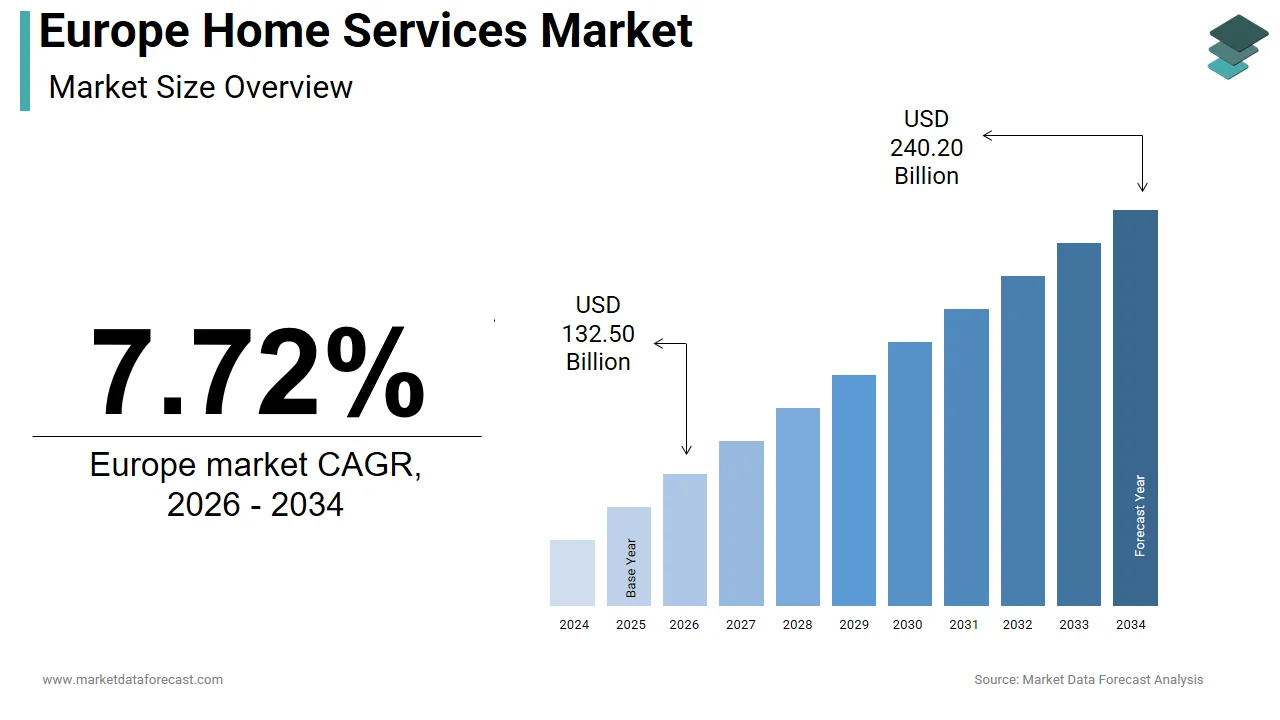
The Europe home services market was valued at USD 123 billion in 2025, is estimated to reach USD 132.50 billion in 2026, and is projected to reach USD 240.20 billion by 2034, growing at a CAGR of 7.72% from 2026 to 2034. Market growth is driven by increasing urbanization, rising demand for convenient household solutions, and expanding digital platforms connecting service providers with consumers. Home services include a wide range of offerings such as cleaning, plumbing, electrical repairs, pest control, and maintenance services. The growing number of dual-income households, increasing renovation activities, and the rising adoption of on-demand service platforms are further supporting the expansion of the home services market across Europe.
Key Market Trends
- Increasing adoption of digital platforms and mobile applications for booking home services.
- Rising demand for professional repair, maintenance, and home improvement services.
- Growing popularity of on-demand home service marketplaces.
- Increasing focus on home renovation and property maintenance activities.
- Expansion of subscription-based and bundled home service offerings.
Segmental Insights
- Based on mode of operation, the offline segment held the majority share of the Europe home services market in 2025, supported by strong consumer preference for traditional service providers and locally established contractors.
- Based on offerings, the repair and maintenance segment dominated the market by accounting for 42.6% share in 2025, driven by the ongoing need for plumbing, electrical, HVAC, and appliance repair services across residential households.
Regional Insights
The Europe home services market is witnessing steady growth across major countries due to rising urban populations, increasing household incomes, and growing demand for professional home maintenance services.
- Germany led the regional market in 2025 with 24.3% share, supported by strong housing infrastructure, high consumer spending on home improvement, and increasing demand for professional maintenance services.
- The United Kingdom ranked second with 18.1% share in 2025, driven by rising adoption of online home service platforms and growing demand for property maintenance services.
- France continues to hold a significant position in the market due to strong government incentives for home renovation and a cultural emphasis on home aesthetics and comfort.
Competitive Landscape
The Europe home services market is characterized by the presence of both traditional service providers and digital home service platforms competing through service quality, pricing, and platform accessibility. Companies are focusing on expanding their service networks, improving customer experience through digital platforms, and offering bundled service packages. Strategic partnerships, franchise expansion, and technology integration are shaping competitive dynamics across the region.
Prominent companies operating in the Europe home services market include Amazon.com, Inc., CleanWhale GmbH, Rentokil Initial plc, Rollins, Inc., Dwyer Franchising LLC (Drain Doctor), Aquevo, 1st Online Solutions Limited, Hello Services Ltd., Checkatrade, Helpling, Homelike, DSP Drainage and Plumbing Ltd., Flo-Well Drainage and Plumbing Limited, and Le Marche Home Services.
Europe Home Services Market Size
The Europe home services market was valued at USD 123 billion in 2025, is estimated to reach USD 132.50 billion in 2026, and is projected to reach USD 240.20 billion by 2034, growing at a CAGR of 7.72% from 2026 to 2034.
Home services are a vast array of professional solutions delivered directly to residential properties, ranging from essential maintenance and repair to lifestyle enhancement and personal care. This sector includes plumbing, electrical work, HVAC installation, cleaning, gardening, security system monitoring, and elderly care assistance. It represents the critical infrastructure that supports the functionality and comfort of the European housing stock. The aging nature of the European housing stock is necessitating a large-scale wave of structural repairs and energy-efficient retrofitting to align with modern environmental and safety standards. Furthermore, the movement of the population into densely populated metropolitan centers is creating a robust market for professional household services as residents seek to balance demanding work schedules with the maintenance of urban living spaces. The region is also witnessing a profound shift in household composition, with single-person households rising, altering the nature of service requirements towards convenience and security. Regulatory frameworks such as the Energy Performance of Buildings Directive are reshaping the market by mandating upgrades that require specialized technical labor. This ecosystem is evolving from reactive repairs to proactive, technology-enabled management of home environments, reflecting a broader societal trend where time is valued over DIY efforts.
MARKET DRIVERS
Aging Housing Stock Necessitates Continuous Maintenance and Retrofitting
The advanced age of residential building inventory across the region serves as a growth enabler for the Europe home services market. This aging infrastructure drives consistent demand for repair, renovation, and compliance upgrades. Older structures require frequent intervention to maintain structural integrity, update obsolete electrical systems, and improve thermal performance to meet modern standards. The European housing market is characterized by an aging infrastructure, with more than a third of residential buildings having been constructed over half a century ago, necessitating significant long-term maintenance. This aging infrastructure is prone to wear and tear, leading to a perpetual cycle of plumbing fixes, roof repairs, and facade restorations. Furthermore, the European Green Deal mandates significant energy efficiency improvements, forcing homeowners to invest in insulation, heat pump installations, and smart heating controls. A vast majority of buildings across Europe require substantial thermal upgrades and modern heating systems to meet contemporary environmental standards and reduce energy consumption. As governments introduce stricter regulations on carbon emissions for residential properties, the urgency to upgrade older homes intensifies. This structural reality ensures a robust and non-discretionary stream of work for service providers, as neglecting these needs can lead to severe safety hazards or legal penalties, making maintenance a priority for millions of property owners.
Rising Urbanization and Dual Income Households Fuel Demand for Convenience
The rapid pace of urbanization and the prevalence of dual-income households have mainly altered lifestyle patterns and propelled the expansion of the Europe home services market. This shift has created a surging demand for outsourced home services as a solution to time poverty. As more Europeans migrate to cities for employment opportunities, they face longer commutes and demanding work schedules that leave little room for domestic chores and property maintenance. Data from the European Commission indicates that over 75 percent of the EU population resided in urban areas in 2025, a figure that continues to climb annually. In these dense urban environments, the opportunity cost of time is high, prompting families to delegate tasks such as cleaning, gardening, and repairs to professionals. Additionally, the rise of dual earner couples, who now represent the majority of household types in Western Europe, means that traditional unpaid domestic labor is no longer feasible. Actual time spent at work per employee has been gradually declining across the continent, although regional differences persist, with southern and eastern member states maintaining longer work weeks than their northern counterparts. This demographic shift transforms home services from a luxury into a necessity for maintaining work-life balance. Consequently, consumers are increasingly willing to pay a premium for reliable, on-demand services that reclaim their personal time, driving growth across all segments of the market.
MARKET RESTRAINTS
Acute Shortage of Skilled Tradespeople Limits Service Capacity
A severe deficit of qualified technicians and tradespeople is a primary bottleneck for the Europe home services market. This constrains the ability of providers to meet growing demand. The sector faces a demographic cliff as a generation of skilled workers retires without sufficient young entrants to replace them, exacerbated by a longstanding societal bias against vocational training in favor of university education. The European construction market is facing a structural labour deficit as an aging workforce retires faster than new skilled tradespeople are entering the field. This scarcity drives up labor costs significantly, making services unaffordable for price-sensitive consumers and delaying project completion times. Companies struggle to scale their operations when they cannot recruit certified staff, leading to lost revenue and customer dissatisfaction. The gap is particularly acute in specialized areas like green technology installation, where new skills are required faster than training programs can deliver them. Furthermore, the informal economy thrives in this vacuum, with unqualified individuals offering cheaper but risky services that undermine market integrity. Aggressive initiatives are needed to revitalize vocational education and attract new talent. Without them, this labor crunch will continue to stifle market expansion and compromise service quality across the continent.
High Inflation and Cost of Living Pressures Suppress Discretionary Spending
Persistent inflationary pressures and the escalating cost of living across Europe are dampening consumer willingness to engage in non-essential home services, which acts as a significant restraint on the Europe home services market growth. Households are grappling with rising energy bills, food prices, and mortgage rates. Consequently, discretionary income shrinks, forcing families to postpone or cancel optional maintenance and improvement projects. Following a period of severe pressure, real household incomes in Europe are beginning to stabilize as wage increases finally exceed the rate of price growth. Consumers are increasingly adopting a "make do and mend" approach, attempting DIY repairs or delaying professional interventions until necessary. This behavior is particularly evident in sectors like landscaping, deep cleaning, and cosmetic renovations, which are often the first expenses to be cut during economic uncertainty. Even for essential repairs, homeowners are seeking multiple quotes and opting for the lowest cost providers, squeezing profit margins for established companies. The price sensitivity is heightened by the perception that home services are a variable cost that can be controlled, unlike fixed utility bills. The market will continue to face headwinds until economic stability returns and real incomes recover. Consequently, cautious spending habits will limit the volume of transactions and slow the adoption of premium service offerings.
MARKET OPPORTUNITIES
Integration of Smart Home Technologies and IoT-Enabled Maintenance
The proliferation of Internet of Things devices and smart home ecosystems offers a transformative opportunity for the Europe home services market. It allows the home services market in the region to evolve from reactive repairs to predictive maintenance and remote management. European households are increasingly adopting connected thermostats, security cameras, leak detectors, and smart appliances. Consequently, there is a burgeoning need for specialized installation, integration, and ongoing technical support services. The adoption of connected home technology is expanding steadily in Europe, though it currently remains a growing segment rather than a universal standard. This technological shift allows service providers to offer subscription-based models where sensors monitor equipment health and alert technicians to potential failures before they occur, ensuring uninterrupted service and extending asset life. Companies can leverage data analytics to optimize visit schedules and parts inventory, enhancing operational efficiency. Furthermore, the complexity of integrating diverse smart systems creates a barrier to entry for DIY enthusiasts, driving demand for certified experts who can ensure seamless interoperability and cybersecurity. This transition opens new revenue streams for traditional tradespeople who upskill in digital technologies, positioning them as essential partners in the modern connected home landscape.
Expansion of Silver Economy and Aging in Place Support Services
The rapidly aging population in the region presents a major growth opportunity for specialized home services within the Europe home services market. These services help elderly individuals stay in their homes instead of moving to care facilities. The number of seniors living alone is skyrocketing due to increased life expectancy and declining birth rates. Consequently, there is an urgent demand for adapted housing, mobility aid installation, and personal care assistance. Europe is experiencing a significant demographic shift toward an older population, driving a specialized demand for services and technologies that support "aging in place. This trend drives specific service needs such as bathroom modifications, stairlift installation, emergency response system setup, and regular wellness checks. Governments are increasingly supporting "aging in place" policies through grants and subsidies, further stimulating demand for these specialized modifications. Service providers who can offer compassionate, reliable, and comprehensive packages that combine physical maintenance with personal care are well-positioned to capture this lucrative segment. The opportunity extends beyond mere repairs to creating holistic environments that enable safe independent living, fostering long-term client relationships, and recurring revenue models that are resilient to economic fluctuations.
MARKET CHALLENGES
Fragmentation of the Market and Prevalence of Informal Labor
A vast number of small independent operators and a large shadow economy dominate the fragmented European home services market. Consequently, the industry struggles with quality assurance, standardization, and tax compliance. A large portion of transactions occurs in the informal sector, where cash payments avoid taxation and regulatory oversight, undermining legitimate businesses that bear the full cost of compliance and insurance. The European Commission estimated in 2024 that undeclared work in the household services sector accounts for a substantial percentage of total activity in Southern and Eastern Europe, distorting competition and depressing prices. This fragmentation makes it difficult for larger players to achieve economies of scale or build strong brand recognition across borders. Consumers often struggle to verify the credentials and reliability of informal workers, leading to variable service quality and potential safety risks. The lack of standardized pricing and service protocols further complicates the market, eroding trust and hindering the adoption of digital platforms that rely on transparency. Combating this informality requires coordinated regulatory enforcement and incentives for formalization, yet the deeply entrenched nature of cash-based local services remains a formidable obstacle to market maturation and professionalization.
Complex Regulatory Compliance and Varying National Standards
Home service providers face a labyrinth of diverse regulatory frameworks, licensing requirements, and safety standards across the nations in the region, which slows down the expansion of the Europe home services market. Navigating these complexities is a significant hurdle for those seeking to operate or expand. Each country maintains distinct rules regarding worker qualifications, insurance mandates, data privacy for smart home devices, and environmental compliance for waste disposal and chemical usage. The European Consumer Organisation highlighted in 2025 that the lack of harmonization in vocational recognition prevents skilled workers from easily moving between member states, exacerbating labor shortages in high-demand regions. For companies operating in multiple markets, the administrative burden of adhering to varying local laws increases operational costs and slows down deployment of standardized service models. Changes in regulations, such as new fluorinated gas rules for HVAC technicians or updated electrical safety codes, require continuous training and investment to remain compliant. Non-compliance carries severe penalties and reputational damage, deterring innovation and cross-border expansion. This regulatory patchwork creates barriers to entry for smaller firms and complicates the scaling strategies of larger enterprises, fragmenting the market along national lines and preventing the emergence of truly pan-European service leaders.
SEGMENTAL ANALYSIS
By Mode of Operation Insights
The Offline segment held the majority share of the Europe home services market in 2025. The dominance of the segment is supported by the intrinsic nature of home services, which often require physical presence, manual labor, and immediate tactile assessment that digital interfaces cannot fully replicate, alongside a strong consumer preference for traditional booking methods among older demographics. The fundamental requirement for human intervention to execute tasks such as plumbing repairs, electrical wiring, and deep cleaning ensures that the offline mode remains the primary operational channel. Unlike goods that can be shipped, home services are inseparable from the provider's physical location and action within the customer's property. The market for on-demand household services in Europe remains overwhelmingly dominated by traditional offline channels, with digital platforms capturing only a negligible fraction of total transaction volume. The complexity of diagnosing issues like hidden water leaks or structural faults often requires an on-site evaluation before any quote or service plan can be formulated, making the initial interaction inherently offline. Furthermore, a significant portion of the workforce, particularly skilled tradespeople in rural areas, relies on established local networks and word of mouth rather than digital visibility. Older demographics in Europe continue to exhibit a strong preference for established, interpersonal relationships when engaging service providers, often relying on local networks over digital intermediaries. Deep-seated trust issues regarding security, quality assurance, and data privacy drive many European consumers to rely on offline channels where they can vet providers personally before granting access to their homes. The fear of inviting strangers into private spaces is mitigated by recommendations from neighbors, local community boards, and long-standing relationships with family-owned businesses. European consumers consistently rate personal recommendations and local presence as higher trust indicators than online ratings, which are increasingly viewed with skepticism due to the prevalence of fake reviews. This psychological barrier is particularly pronounced in high-value services like gas installation or security system maintenance, where the consequences of poor workmanship are severe. In many European cultures, the handshake agreement and face-to-face negotiation remain standard practices that build rapport and ensure accountability. Offline operations allow providers to demonstrate credibility through physical branding, uniformed staff, and branded vehicles, which serve as tangible proof of legitimacy. Consequently, despite the rise of digital tools, the core transaction and relationship-building phases of the home services market remain firmly anchored in the offline realm.
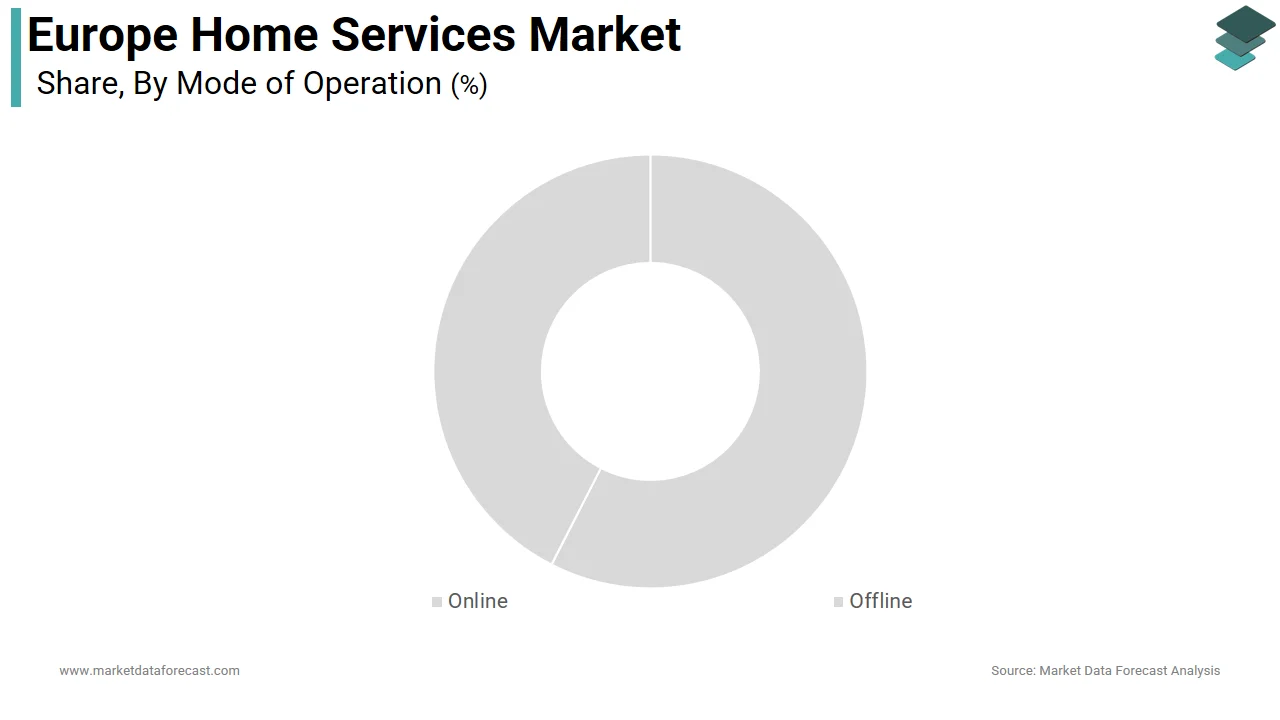
The Online segment is likely to experience the fastest CAGR of 14.2% from 2026 to 2034 due to the increasing penetration of smartphones, the convenience of instant booking and price transparency, and the emergence of trusted aggregator platforms that reduce friction in the hiring process. The widespread adoption of mobile devices and the growing comfort of all age groups with digital interfaces are acting as powerful enablers for the shift toward online home service procurement. Consumers increasingly demand the ability to book, track, and pay for services instantly from their smartphones, mirroring their experiences in other sectors like retail and transportation. Mobile connectivity has become the primary access point for the internet in Europe, with next-generation 5G networks now covering the vast majority of the population. This ubiquity enables service platforms to reach users at the exact moment of need, offering geolocation-based matching that connects homeowners with nearby available professionals in minutes. Younger generations, who are now entering the housing market, expect seamless digital experiences as a baseline requirement, forcing traditional providers to adopt online booking systems to remain competitive. The ability to view real-time availability, read verified reviews, and compare prices transparently empowers consumers and streamlines the decision-making process. As digital literacy improves among older demographics through targeted education initiatives, the addressable market for online home services continues to expand rapidly across the continent. The proliferation of specialized aggregator platforms that standardize pricing, vetting, and insurance coverage is removing key barriers to entry for online home service adoption. These platforms act as trusted intermediaries that guarantee quality and provide recourse in case of disputes, addressing the historical trust deficit associated with hiring strangers online. The adoption of digital tools for home management is growing steadily, though it has not yet reached the explosive mass-market expansion rates seen in other app categories like fintech or entertainment. These platforms leverage algorithms to match supply and demand efficiently, reducing wait times and optimizing routes for service providers, which lowers costs and improves margins. They also offer features like background checks, identity verification, and insured workmanship, which reassure customers about safety and reliability. The integration of cashless payment systems and automated invoicing further enhances the user experience by eliminating administrative hassles. As these platforms scale, they benefit from network effects that attract more providers and customers, creating a virtuous cycle of growth. The standardization of service descriptions and outcomes allows consumers to purchase complex services with confidence, accelerating the migration from offline to online channels.
By Offerings Insights
The Repair and Maintenance segment dominated the Europe home services market and accounted for a 42.6% share in 2025. This supremacy is attributed to the critical necessity of maintaining functional living environments, the aging infrastructure of European housing stock, and the regulatory mandates requiring regular safety inspections and upgrades. The advanced age of residential buildings across Europe creates a perpetual and non-discretionary demand for repair and maintenance services to ensure safety, functionality, and compliance with modern standards. Older properties are prone to frequent failures in essential systems such as plumbing, electrical wiring, and heating, necessitating regular professional intervention. The European residential landscape is dominated by aging structures built during the mid-20th century, necessitating a continuous cycle of structural maintenance and modernization. These aging assets require constant upkeep to prevent catastrophic failures, leading to a steady stream of work for plumbers, electricians, and carpenters. The European Commission estimates that roughly 75 percent of the existing building stock is energy inefficient, driving a massive wave of retrofitting projects involving insulation, window replacement, and HVAC upgrades to meet Green Deal targets. Homeowners cannot postpone these repairs without risking property damage or violating safety regulations, making this segment resilient to economic downturns. The complexity of modern building systems also means that DIY solutions are often insufficient, forcing reliance on certified professionals. This structural reality ensures that repair and maintenance remain the largest and most stable component of the home services market. Strict government regulations and mandatory inspection regimes across European nations compel homeowners to engage professional services for regular maintenance and certification, solidifying the dominance of this segment. Laws regarding gas safety, electrical integrity, and fire prevention require periodic checks by qualified technicians, creating a recurring revenue model for service providers. The European Union's Energy Performance of Buildings Directive mandates that all homes meet specific efficiency criteria, forcing millions of owners to undertake renovations and system upgrades. Non-compliance can result in heavy fines, invalidation of insurance policies, or restrictions on property sales, providing a strong incentive for homeowners to prioritize professional maintenance. Additionally, warranty requirements for appliances and heating systems often stipulate annual servicing by authorized personnel to remain valid. This regulatory framework transforms maintenance from an optional expense into a legal obligation, ensuring consistent demand regardless of consumer sentiment. As regulations tighten further to meet climate goals, the volume of mandated repair and upgrade work is set to increase, sustaining the segment's leadership position.
The Health and Wellness segment is on the rise and is expected to be the fastest-growing segment in the market by witnessing a CAGR of 16.5% during the forecast period, owing to the aging population's desire to age in place, rising health consciousness, and the increasing availability of specialized home care services that substitute institutional care. The rapid aging of the European population is creating an unprecedented demand for home-based health and wellness services as seniors increasingly choose to remain in their own homes rather than move to nursing facilities. This demographic trend is reshaping the home services landscape, driving the need for physiotherapy, nursing care, and mobility assistance delivered directly to the residence. The European population is undergoing a rapid and sustained aging process, with the oldest-old age group becoming a significantly larger proportion of the total citizenry over the coming decades. Governments are actively promoting "aging in place" policies to reduce the burden on public healthcare systems and care homes, providing subsidies and support for home modifications and personal care services. Families are seeking professional help to manage chronic conditions, post operative recovery, and daily living activities, viewing home care as a more dignified and comfortable alternative to institutionalization. The emotional preference for staying in familiar surroundings, combined with the high cost of residential care facilities, makes home-based wellness services an attractive and necessary solution. This demographic inevitability ensures sustained and accelerating growth for providers capable of delivering high-quality, compassionate care in the home setting. A growing cultural emphasis on holistic well-being and preventive health is expanding the scope of home wellness services beyond medical necessity to include lifestyle enhancement and fitness. Europeans are increasingly investing in personal training, nutrition counseling, mental health support, and spa treatments within the privacy and convenience of their homes. Public interest in personal wellness and preventative healthcare is expanding across Europe, though this awareness has not yet translated into a uniform improvement in population-wide health indicators. The pandemic accelerated this trend, normalizing remote consultations and home visits for various therapies. Busy professionals and affluent households are willing to pay a premium for personalized wellness experiences that save time and offer exclusivity. The rise of mobile beauty therapists, private yoga instructors, and home-based rehabilitation specialists reflects this shift towards customized care. Technology also plays a role, with wearable devices and health apps prompting users to seek professional guidance to interpret data and optimize routines. As the definition of health expands to encompass overall quality of life, the market for diverse home-based wellness offerings continues to broaden, driving rapid sector expansion.
COUNTRY LEVEL ANALYSIS
Germany Home Services Market Analysis
Germany led the Europe home services and captured a 24.3% share in 2025. The leading position of the German market is supported by its massive housing stock, stringent regulatory environment requiring regular maintenance, and a strong culture of home ownership that incentivizes property upkeep. The country's rigorous building codes and energy efficiency laws, such as the Building Energy Act, mandate frequent inspections and upgrades, generating consistent demand for skilled tradespeople. Germany faces a significant shortage of skilled labor, which has driven up service prices and encouraged the formalization of the market as consumers seek reliable, certified providers. The aging population further boosts demand for home adaptation and care services. The German market is characterized by a high willingness to pay for quality and reliability, with consumers preferring established companies over informal workers. The strong economy and high disposable income levels support robust spending on both essential repairs and discretionary wellness services, cementing Germany's role as the regional leader in volume and value.
United Kingdom Home Services Market Analysis
The United Kingdom was the second largest country in the Europe home services market and occupied a share of 18.1% in 2025 because of an extremely old housing inventory and a vibrant gig economy facilitating on-demand service access. The UK possesses some of the oldest housing stock in Europe, with a significant proportion of homes built before 1919, necessitating frequent and costly maintenance interventions. The UK market is also distinguished by the rapid adoption of digital platforms for booking home services, fueled by a tech-savvy population and a mature gig economy workforce. High urbanization rates in cities like London create dense markets for cleaning, gardening, and repair services. The cost of living crisis has led to a bifurcation in the market, with some consumers delaying non-essential work while others invest in energy efficiency upgrades to reduce bills. The regulatory framework emphasizes consumer protection and trader competence, pushing the market towards formalization. The combination of structural housing needs and dynamic service delivery models ensures the UK remains a critical and highly active market for home services.
France Home Services Market Analysis
France remains a major player in the European market due to strong government incentives for home renovation and a cultural emphasis on home aesthetics and comfort. The French market is largely fuelled by state-sponsored programs like MaPrimeRénov', which provide substantial grants for energy efficiency upgrades, stimulating vast activity in the insulation, heating, and window replacement sectors. France also boasts a robust tradition of artisanal craftsmanship, with consumers valuing high-quality, bespoke services for interior design, gardening, and restoration. The prevalence of second homes in rural areas adds a seasonal dimension to the market, driving demand for property management and maintenance services. Urban centers like Paris see high demand for compact living solutions and regular cleaning services due to busy lifestyles. The regulatory environment is strict regarding worker qualifications and insurance, fostering a professionalized market structure. French consumers are increasingly adopting digital tools for service discovery, but still place high value on personal recommendations and long-term relationships with local artisans, blending tradition with modern convenience.
Italy Home Services Market Analysis
Italy saw a consistent growth in the European market owing to a unique mix of historic preservation needs and a significant informal service sector that is gradually formalizing. The Italian housing stock includes a vast number of historic and listed buildings that require specialized restoration and maintenance skills, creating a niche but lucrative segment for expert craftsmen. Historically, the Italian market has been dominated by informal labor, but recent tax incentives like the Superbonus scheme have encouraged formal declarations and professional engagements to access benefits. This policy shift is reshaping the market landscape, bringing more transactions into the regulated economy. The strong family culture often implies informal care arrangements, yet the rising number of single-person households and working women is increasing demand for professional cleaning and elderly care services. Regional disparities are evident, with Northern Italy showing higher adoption of formal services and digital platforms compared to the South. The blend of heritage conservation requirements and evolving social dynamics defines the unique trajectory of the Italian home services market.
Spain Home Services Market Analysis
Spain is anticipated to expand notably in the European market over the forecast period due to a booming tourism rental market and a climate that necessitates specific outdoor and cooling maintenance services. The Spanish market is mainly driven by the extensive short-term rental sector, where property owners require regular cleaning, maintenance, and turnover services to accommodate tourists. The Mediterranean climate also drives specific needs for pool maintenance, garden irrigation, and air conditioning repair, which are essential for comfort during hot summers. The construction boom of the early 2000s left a legacy of large housing developments that are now entering their prime maintenance phase, requiring facade repairs and system upgrades. Economic recovery post pandemic has boosted consumer confidence, leading to increased spending on home improvement and wellness services. The market is seeing a gradual shift towards digital platforms, particularly in major cities like Madrid and Barcelona, where convenience is valued. The interplay between the tourism industry, climatic factors, and housing lifecycle stages creates a dynamic and growing environment for home service providers in Spain.
COMPETITIVE LANDSCAPE
The competition within the Europe home services market is highly fragmented and characterized by an intense rivalry between established local firms, emerging digital platforms, and a vast informal sector. Large multinational platforms compete primarily on technology, convenience, and trust signals such as verified reviews and insurance guarantees, aiming to consolidate the scattered supply side. Conversely, traditional local businesses leverage deep community roots, personalized relationships, and specialized expertise to retain loyal customer bases that value face-to-face interactions. The informal economy remains a significant competitor by offering lower prices due to tax avoidance, forcing formal entities to constantly justify their premium pricing through superior reliability and safety. Price wars are common in commoditized segments like basic cleaning, while specialized fields such as HVAC repair see competition based on technical certification and response time. Regulatory compliance acts as a barrier that differentiates professional operators from unregistered individuals, yet enforcement varies widely across nations. The battle for skilled labor is equally fierce, with companies vying to attract and retain qualified tradespeople through better wages and flexible working conditions. Innovation in service delivery and customer experience remains the primary battleground for gaining a competitive edge in this diverse landscape.
KEY MARKET PLAYERS
The leading companies operating in the Europe home services market include:
- Amazon.com, Inc.
- CleanWhale GmbH
- Rentokil Initial plc
- Rollins, Inc.
- Dwyer Franchising LLC (Drain Doctor)
- Aquevo
- 1st Online Solutions Limited
- Hello Services Ltd.,
- Checkatrade
- Helpling
- Homelike
- DSP Drainage and Plumbing Ltd.
- Flo-Well Drainage and Plumbing Limited.
- Le Marche Home Services
TOP PLAYERS IN THE MARKET
- Helpling stands as a pioneering digital platform connecting households with verified cleaning and home service professionals across multiple European nations. The company contributes to the global market by demonstrating how technology can formalize the domestic work sector through rigorous vetting, insurance coverage, and transparent pricing models. In Europe, Helpling has expanded its service portfolio beyond cleaning to include ironing and gardening, addressing broader household needs. Recently, the firm strengthened its position by enhancing its mobile application with AI-driven matching algorithms that optimize scheduler efficiency and customer satisfaction. They have also launched extensive training programs for their service providers to ensure high-quality standards and professional development. By prioritizing data security and user trust, Helpling continues to set benchmarks for the gig economy in the home services space. Their scalable marketplace model allows for rapid expansion into new cities while maintaining operational consistency, solidifying their role as a key enabler of modern domestic labor solutions.
- Checkatrade operates as a leading trusted trader directory in the United Kingdom and is expanding its influence across Europe by connecting consumers with vetted tradespeople for repair and maintenance tasks. The organization contributes globally by establishing a gold standard for verification processes that include identity checks, qualification validation, and customer review monitoring. In the European market, Checkatrade focuses on building consumer confidence in the informal sector by guaranteeing workmanship and offering dispute resolution mechanisms. Recent actions include the integration of advanced background check systems and the launch of a dedicated app for instant quote requests and booking management. They have partnered with major insurance providers to offer guaranteed protection on completed jobs, thereby reducing risk for homeowners. Checkatrade also invests heavily in marketing campaigns that educate consumers on the importance of hiring certified professionals. Their commitment to transparency and quality assurance helps professionalize the fragmented trades industry, making them a vital bridge between skilled workers and households seeking reliable home improvement services.
- Homelike specializes in providing fully furnished corporate housing and related home services for business travelers and relocating employees across major European cities. The company contributes to the global market by redefining temporary living standards through a seamless blend of real estate and concierge home services such as cleaning and maintenance. In Europe, Homelike manages a vast inventory of apartments that come with integrated service packages, ensuring a turnkey experience for international clients. Recently, the company strengthened its market position by acquiring local property management firms to expand its footprint in key tech hubs like Berlin and Amsterdam. They have introduced a digital portal that allows tenants to request additional services like deep cleaning or grocery delivery with a single click. Homelike also focuses on sustainability by partnering with eco-friendly cleaning suppliers and energy-efficient property owners. Their ability to combine accommodation with on-demand home services creates a unique value proposition that caters to the growing mobile workforce. This holistic approach ensures high retention rates and establishes Homelike as a leader in the serviced living sector.
TOP STRATEGIES USED BY KEY MARKET PARTICIPANTS
Key players in the Europe home services market predominantly employ digital transformation strategies by developing robust mobile applications and online platforms to streamline booking and payment processes. Companies frequently invest in rigorous vetting and training programs for service providers to build trust and ensure consistent quality standards across their networks. Another vital strategy involves forming strategic partnerships with real estate agencies and property management firms to secure steady streams of recurring contracts for maintenance and cleaning. Market leaders also focus on diversification by expanding their service portfolios to include adjacent offerings such as elderly care or smart home installation. Furthermore, participants utilize dynamic pricing models and subscription plans to enhance customer retention and stabilize revenue flows. Aggressive marketing campaigns emphasizing safety guarantees and insurance coverage are used to differentiate from informal competitors. Finally, firms actively pursue geographic expansion into underserved regions to capture market share before local competitors can establish dominance.
MARKET SEGMENTATION
This research report on the Europe home services market has been segmented and sub-segmented into the following categories.
By Mode of Operation
- Online
- Offline
By Offerings
- Home Cleaning
- Garden and Lawn Mowing
- Pest Control
- Others
- Repair and Maintenance
- Electricity
- Plumbing and Drainage
- Carpentry
- Gas
- Others
- Health and Wellness
- Beauty / Salon Services
- Physiotherapy
- Others
- Others
By Country
- United Kingdom
- France
- Spain
- Germany
- Italy
- Russia
- Sweden
- Denmark
- Switzerland
- Netherlands
- Rest of Europe