- Product Description Description
- Table of Contents TOC
- List of Table & Figure LOT
- Get Free Sample PDF Sample PDF
Market Size, 2025
$28.13 BnMarket Estimate, 2026
$29.42 BnMarket Forecast, 2034
$41.07 BnCAGR, 2026–2034
4.54%Executive Summary: Europe Leafy Greens Market
- Market Scope: Comprehensive regional analysis of the European leafy greens market covering product types, application segments, geographic country leadership, sustainable farming initiatives, and fresh convenience food trends.
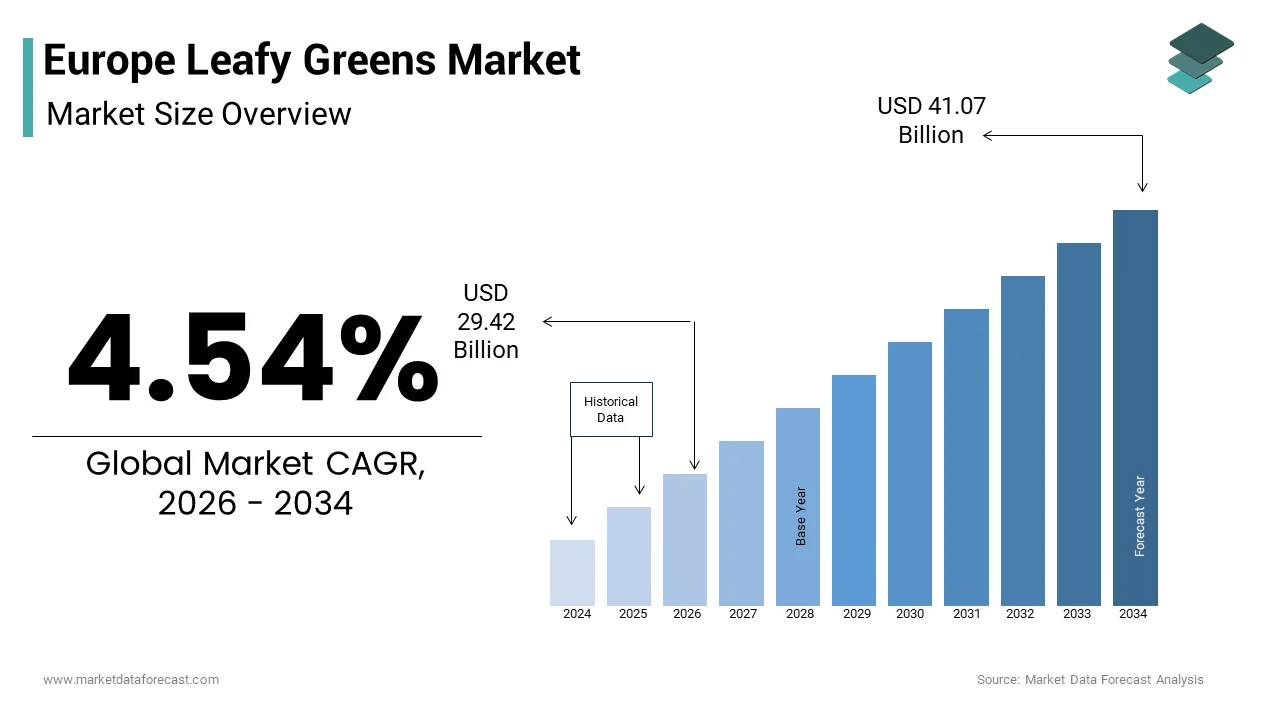
- Market Valuation: Valued at USD 28.13 billion (2025), estimated at USD 29.42 billion (2026), and projected to reach USD 41.07 billion by 2034, registering a CAGR of 4.54% (2026–2034).
- Primary Growth Drivers: Increasing consumer preference for healthy, nutrient-rich diets, rising demand for organic produce, expansion of sustainable farming practices, and growing adoption of ready-to-eat fresh vegetables. Key opportunities are anchored by the EU's Farm to Fork strategy, vertical agriculture projects, and controlled-environment innovations.
Key Market Segment Metrics (2026–2034)
| Category | Leading Segment (2025 Position) | Fastest-Growing / Opportunity Segment |
|---|---|---|
| By Type / Production | Europe Lettuce Production Base & Conventional Leafy Greens | Organic Produce & Specialized Microgreens / Specialty Greens Varieties |
| By Application | Fresh Consumption & Retail Supermarket Produce Channels | Ready-to-Eat (RTE) & Convenience Food Processing Segments |
| By Farming Method | Traditional Field-Grown Agriculture & Greenhouse Production | Vertical Farming & Controlled-Environment Agriculture (CEA) Projects |
| By Region / Country | Germany (one of the largest fresh produce consumers and regional anchors) | UK, France, Spain, Netherlands, Italy & Expanding European Union Agricultural Hubs |
Major Market Players & Market Structure
Market Structure: Fragmented and evolving European agricultural and fresh-produce supply landscape shaped by strict food safety regulations, sustainability mandates (such as the Farm to Fork strategy), supply chain logistics, and cold-chain innovations.
Key Market Focus: Major regional growers, agricultural cooperatives, and fresh-cut produce processors competing on organic certifications, waste reduction, supply chain efficiency, and vertical farming scalability.
Europe Leafy Greens Market Size
The Europe leafy greens market size was valued at USD 28.13 billion in 2025 and is anticipated to reach USD 29.42 billion in 2026 and USD 41.07 billion by 2034, growing at a CAGR of 4.54%, from 2026 to 2034.
Leafy greens are edible plants characterized by their high nutrient density and low caloric content, including spinach, lettuce, kale, arugula, and Swiss chard. In the Europe, these vegetables are integral to dietary patterns that prioritize health, sustainability, and culinary versatility. The consumption of leafy greens is deeply embedded in Mediterranean and Northern European cuisines, serving as staple ingredients in salads, soups, and side dishes. As per data from the Food and Agriculture Organization of the United Nations, Europe accounts for approximately 25% of global lettuce production, reflecting the region's significant agricultural output in this category. The European Union’s Farm to Fork strategy emphasizes the importance of sustainable food systems by encouraging the cultivation of crops with lower environmental footprints, such as leafy vegetables, which often require shorter growing cycles compared to fruit bearing plants. Consumer awareness regarding the health benefits of antioxidants, fiber, and vitamins found in leafy greens has surged, driven by public health campaigns across member states. The rise of urban farming initiatives and vertical agriculture in cities like Berlin and Paris further supports local supply chains, reducing transportation emissions and ensuring freshness.
MARKET DRIVERS
Rising Health Consciousness and Demand for Nutrient Dense Diets
The escalating focus on preventive healthcare and wellness is amplifying the growth of the Europe leafy greens market. Public health , across the continent actively promote diets rich in vegetables to combat rising rates of obesity, cardiovascular diseases, and diabetes. As per the World Health Organization, noncommunicable diseases account for over 80% of all deaths in the European Region, prompting governments to implement dietary guidelines that recommend at least 400 grams of fruits and vegetables daily. Leafy greens are particularly emphasized due to their high content of essential nutrients such as vitamin K, iron, and folate. This shift in consumer behavior is evident in the increasing sales of premium varieties like baby spinach and kale, which are marketed for their superior nutritional profiles. Retailers have responded by expanding their organic and ready to eat leafy green offerings to cater to time constrained, yet health-conscious shoppers. The integration of leafy greens into functional food products, such as green smoothies and fortified snacks, further amplifies demand. Educational campaigns in schools and workplaces reinforce the importance of vegetable consumption, creating a long term cultural shift toward plant-based diets. This sustained demand for nutrient dense foods ensures robust growth for the leafy greens sector, as consumers increasingly view these vegetables as essential components of a healthy lifestyle rather than mere dietary accessories.
Expansion of Organic Farming and Sustainable Agricultural Practices
The rapid expansion of organic farming, as these crops are well suited to organic cultivation methods is accelerating the growth of the Europe leafy greens market. The European Union’s target to have 25% of agricultural land under organic management by 2030 has incentivized farmers to transition away from synthetic pesticides and fertilizers. Leafy greens are particularly favored in organic systems because they have relatively short growing seasons and can be effectively managed using biological pest control and crop rotation techniques. Consumers are increasingly willing to pay a premium for organic produce due to concerns about pesticide residues and environmental impact. Retailers, such as Aldi and Lidl have expanded their organic private label ranges, making organic leafy greens more accessible to a broader demographic. The alignment of leafy green production with sustainability goals, such as reduced water usage and soil conservation, appeals to environmentally conscious consumers. Government subsidies for organic farming further lower the entry barriers for growers, encouraging increased production.
MARKET RESTRAINTS
High Perishability and Supply Chain Vulnerabilities
The inherent perishability, leading to substantial post-harvest losses and supply chain inefficiencies is restricting the growth of the leafy greens market. Leafy vegetables have a short shelf life and are highly susceptible to wilting, discoloration, and microbial contamination if not stored and transported under optimal conditions. As per the Food and Agriculture Organization, approximately 30% of fresh produce is lost or wasted globally along the supply chain, with leafy greens being among the most affected categories due to their delicate nature. In Europe, stringent food safety regulations require rigorous quality control, which adds complexity and cost to logistics. Temperature fluctuations during transportation can rapidly degrade product quality, resulting in rejected shipments and financial losses for retailers and growers. The reliance on cold chain infrastructure, which requires significant energy input, also increases the carbon footprint of leafy green distribution. Recent disruptions in global logistics, such as those caused by geopolitical tensions and fuel price volatility, have exacerbated these challenges, leading to inconsistent supply and price fluctuations. Small and medium sized farmers often lack the resources to invest in advanced packaging and cooling technologies, limiting their ability to access distant markets. Retailers face pressure to maintain high visual standards, leading to the rejection of aesthetically imperfect but edible produce.
Labor Shortages and Rising Production Costs
Acute labor shortages and escalating production costs, particularly in regions reliant on manual harvesting is also declining the growth of the Europe leafy greens market. Leafy greens often require careful hand picking to prevent damage, a process that is labor intensive and difficult to automate fully. The agricultural sector faces a persistent shortage of seasonal workers, exacerbated by stricter immigration policies and an aging workforce. Countries like Spain and Italy, which are major producers of leafy vegetables, have reported difficulties in recruiting sufficient labor during peak harvest periods, leading to delayed harvesting and reduced yields. The cost of labor has risen significantly due to minimum wage increases and social security contributions, squeezing profit margins for growers. Additionally, the rising prices of energy, fertilizers, and water further inflate production expenses. The war in Ukraine disrupted supply chains for agricultural inputs, causing fertilizer prices to surge by over 50% in some European countries in 2022. These increased costs are often passed on to consumers, potentially dampening demand if prices become prohibitive. Small scale farmers are particularly vulnerable to these economic pressures, as they lack the economies of scale to absorb higher input costs. While mechanization offers a potential solution, the development of robots capable of delicately harvesting leafy greens is still in its early stages and requires substantial investment.
MARKET OPPORTUNITIES
Adoption of Vertical Farming and Controlled Environment Agriculture
The adoption of vertical farming and controlled environment agriculture is likely to set up new opportunities for the growth of the Europe leafy greens market. These innovative cultivation methods allow for year-round production of leafy greens in urban settings, independent of external weather conditions. Vertical farms use significantly less water and land compared to traditional agriculture, aligning with the European Union’s sustainability objectives. Companies like Infarm and Jones Food Company have established large scale vertical farming facilities in cities, such as London and Berlin, supplying fresh leafy greens directly to local retailers and restaurants. This proximity reduces transportation distances, minimizing carbon emissions and ensuring superior freshness. The controlled environment allows for precise regulation of light, temperature, and nutrients, resulting in consistent quality and higher yields per square meter. Furthermore, vertical farming eliminates the need for pesticides, appealing to health-conscious consumers who prefer clean label products. The integration of artificial intelligence and automation in these facilities optimizes resource use and reduces labor dependency. As urbanization continues to rise in Europe, the demand for locally grown produce will increase, providing a lucrative market for vertical farming operators. Investment in this sector is growing, with venture capital and government grants supporting the development of new facilities.
Growth in Ready to Eat and Convenience Food Segments
The expanding ready to eat and convenience food products is additionally to promote new opportunities for the growth of the Europe leafy greens market. Modern lifestyles characterized by busy schedules and dual income households have increased the demand for convenient meal solutions that do not compromise on health. As per research, the ready to eat salad foods in Europe has experienced steady growth, with consumers seeking quick and nutritious options for lunch and dinner. Pre washed and pre-cut leafy greens, often packaged in resealable bags or bowls with dressings, cater to this need for convenience. Retailers are innovating with diverse mixtures that include exotic leaves and superfoods, appealing to adventurous palates and health enthusiasts. The rise of food delivery platforms has further boosted the sales of ready to eat salads, as consumers order healthy meals from home or office. Food service providers are also incorporating more leafy greens into their menus, responding to consumer demand for lighter and healthier dining options. Partnerships between growers and food processors enable the creation of value added products with extended shelf lives through advanced packaging technologies. The trend toward plant based diets also drives the inclusion of leafy greens in meal kits and subscription services.
MARKET CHALLENGES
Climate Change and Extreme Weather Events
Climate change is increasing the frequency and intensity of extreme weather events that disrupt production, which is one of the major challenges for the growth of the Europe leafy greens market. Heatwaves, droughts, and heavy rainfall can devastate crops, leading to yield losses and supply shortages. As per the study, Europe has experienced a significant increase in average temperatures over the past few decades, with southern regions facing heightened risks of water scarcity. Leafy greens are particularly sensitive to heat stress, which can cause bolting, bitterness, and reduced quality. The drought conditions in recent summers have forced farmers in countries like France and Germany to reduce planting areas or rely heavily on irrigation, straining water resources. Unpredictable weather patterns make it difficult for growers to plan planting schedules and manage pests effectively. Floods can contaminate fields with pathogens, posing food safety risks and leading to crop destruction. The variability in climate also affects the consistency of supply, causing price volatility that impacts both producers and consumers. Adapting to these changes requires investment in resilient crop varieties and advanced irrigation systems, which may be financially burdensome for smaller farms. The uncertainty associated with climate change discourages long term investment in leafy green production. Furthermore, the environmental footprint of adapting to these conditions, such as increased energy use for irrigation, conflicts with sustainability goals.
Stringent Food Safety Regulations and Compliance Costs
The stringent food safety regulations for producers are imposing high compliance costs and operational complexities that is likely to be a challenge for the growth of the Europe leafy greens market. Leafy greens are often consumed raw by making them susceptible to contamination by pathogens such as E coli and Salmonella, which can lead to serious public health outbreaks. Fresh vegetables are among the top contributors to foodborne illnesses in the EU, prompting regulators to enforce strict hygiene standards throughout the supply chain. Producers must implement comprehensive Hazard Analysis and Critical Control Points systems, conduct regular testing, and maintain detailed traceability records. These requirements necessitate significant investment in infrastructure, training, and monitoring technologies. Small and medium sized enterprises may struggle to bear these costs, potentially leading to market consolidation favoring larger players. Recent updates to EU hygiene packages have further tightened controls on water quality used for irrigation and washing, requiring upgrades to treatment facilities. Non-compliance can result in product recalls, legal penalties, and reputational damage, which can be devastating for brands. The complexity of navigating different national regulations within the EU adds another layer of difficulty for exporters.
REPORT COVERAGE
| REPORT METRIC | DETAILS |
| Market Size Available | 2025 to 2034 |
| Base Year | 2025 |
| Forecast Period | 2026 to 2034 |
| CAGR | 4.54% |
| Segments Covered | By Type, Application, By Country |
| Various Analyses Covered | Global, Regional & Country Level Analysis; Segment-Level Analysis, DROC, PESTLE Analysis, Porter’s Five Forces Analysis, Competitive Landscape, Analyst Overview of Investment Opportunities |
| Regions Covered | UK, France, Spain, Germany, Italy, Russia, Sweden, Denmark, Switzerland, Netherlands, Turkey, Czech Republic,c & Rest of Europe |
| Market Leaders Profiled | Dole Food Company, Fresh Express, Dole plc, Fresh Del Monte Produce Inc, Taylor Farms , Bonduelle SA, Green Giant, Earthbound Farm, Salinas Valley, Crisp & Green, Basil Street, Mann's Fresh Vegetables |
SEGMENTAL ANALYSIS
By Type Insights
The lettuce and chicory segment was the largest by accounting for 38.2% of the Europe leafy greens market share in 2025 due to their widespread culinary acceptance and versatility in European diets. This segment includes various varieties, such as iceberg, romaine, butterhead, and radicchio, which are staples in salads, sandwiches, and garnishes across the continent. As per data from the Food and Agriculture Organization of the United Nations, lettuce is one of the most produced vegetable crops in Europe, with millions of tons harvested annually to meet domestic and export demands. The adaptability of lettuce to different growing conditions, including open fields and protected greenhouse environments, ensures a steady supply chain. Retailers prioritize this segment due to its high turnover rate and consumer demand for fresh, ready to eat options. Furthermore, the development of new hybrid varieties with improved shelf life and resistance to diseases has enhanced productivity and reduced post-harvest losses.
The kale segment is expected to grow at a fastest CAGR of 6.8% from 2026 to 2034 owing to the rising popularity of kale as a superfood, driven by its exceptional nutritional profile and versatility in modern cuisine. Rich in vitamins A, C, and K, as well as antioxidants and fiber, kale has gained significant attention from health-conscious consumers and nutritionists. The trend toward plant-based diets and functional foods has propelled kale into the mainstream, appearing in smoothies, chips, salads, and cooked dishes. Social media and celebrity endorsements have further amplified its status as a health essential, influencing purchasing behavior among younger demographics. Retailers have responded by expanding their kale offerings, including pre washed bags and baby kale varieties, to cater to convenience seeking shoppers. The adaptability of kale to various culinary applications, from raw consumption to baking and frying, broadens its appeal beyond traditional salad eaters. Agricultural producers are increasing kale cultivation to meet this surging demand, benefiting from its hardiness and ability to grow in cooler climates. The perception of kale as a premium health product allows for higher price points, incentivizing growers to allocate more land to its production.
By Application Insights
The retail segment was accounted in holding 36.2% of the Europe leafy greens market share in 2025 with the predominant consumer preference for purchasing fresh produce for home consumption. Supermarkets, hypermarkets, and grocery stores serve as the primary channels for distributing leafy greens, offering a wide variety of options including loose, packaged, and organic products. The household expenditure on food and non-alcoholic beverages remains a significant portion of consumer spending in Europe, with fresh vegetables constituting a substantial part of this budget. The convenience of one stop shopping and the ability to select produce based on personal quality standards attract consumers to retail outlets. Retailers have invested heavily in improving the presentation and preservation of leafy greens, using advanced packaging technologies to extend shelf life and maintain freshness. The rise of private label brands has made leafy greens more affordable, increasing accessibility for budget conscious shoppers. Online grocery shopping has also expanded the reach of retail channels, allowing consumers to order fresh leafy greens for home delivery. The trust established between consumers and major retail chains ensures consistent sales volumes. Promotional activities, loyalty programs, and seasonal campaigns further stimulate demand in the retail sector.
The foodservice segment is expected to grow at a fastest CAGR of 5.5% from 2026 to 2034 owing to the increasing frequency of dining out, the rise of casual dining establishments, and the growing popularity of healthy menu options. Restaurants, cafes, and catering services are incorporating more leafy greens into their offerings to meet consumer demand for nutritious and visually appealing meals. The trend toward health-conscious dining has led to the proliferation of salad bars, grain bowls, and wrap stations in fast casual restaurants. The number of health focused eateries in Europe has increased significantly, with leafy greens serving as foundational ingredients. The professionalization of the foodservice sector, with chefs emphasizing fresh and local ingredients, further boosts demand for high quality leafy greens. Corporate catering and institutional feeding programs are also shifting toward healthier menus, including more vegetable-based dishes. The convenience of ready to eat meals provided by foodservice operators appeals to busy urban professionals. The expansion of food delivery platforms has extended the reach of foodservice establishments, allowing consumers to access healthy leafy green meals at home.
COUNTRY LEVEL ANALYSIS
Germany Leafy Greens Market Analysis
Germany holds a significant position in the Europe leafy greens market, characterized by a strong demand for organic and sustainably produced vegetables. The country is one of the largest consumers of fresh produce in Europe, with a high penetration of organic supermarkets such as Alnatura and Denns. As per data, Germany has the largest organic market in Europe, driving substantial demand for organic leafy greens. Consumers in Germany are highly informed about health and environmental issues, preferring products with certified organic labels and minimal packaging. The retail sector is dominated by discounters like Aldi and Lidl, which have expanded their organic ranges to meet this demand. Local production is supported by favorable climatic conditions in regions like Lower Saxony and North Rhine Westphalia. The German government promotes sustainable agriculture through subsidies and research initiatives by encouraging the adoption of eco-friendly farming practices. The presence of major food processing companies also contributes to the demand for leafy greens in value added products. The trend toward plant-based diets is particularly strong in urban centers like Berlin and Munich, further boosting consumption. Germany’s robust logistics infrastructure ensures efficient distribution of fresh produce across the country.
France Leafy Greens Market Analysis
France leafy greens market was ranked second by capturing 24.3% of share in 2025 with its rich culinary heritage and emphasis on fresh, high quality ingredients. Leafy greens are integral to French cuisine, particularly in salads and side dishes accompanying main courses. As per agricultural statistics, France is a major producer of lettuce and endives, with significant production concentrated in regions like Brittany and the Loire Valley. The French consumer places a high value on taste and origin, preferring locally sourced and seasonal produce. Farmers markets and direct sales channels remain popular, allowing consumers to purchase fresh leafy greens directly from producers. The restaurant sector in France, renowned globally, drives demand for premium varieties of leafy greens for gourmet preparations. The French government supports local agriculture through initiatives that promote short supply chains and sustainable farming practices. Organic farming is gaining traction, with an increasing number of farms transitioning to organic methods to meet consumer demand. The cultural importance of meal times and the social aspect of dining reinforce the consumption of fresh vegetables. France’s strong export capabilities also contribute to its market position, supplying neighboring countries with high quality leafy greens.
Spain Leafy Greens Market Analysis
Spain leafy greens market growth is likely to grow with the leading producer and exporter of fresh vegetables. The country’s favorable climate allows for year-round cultivation of leafy greens, particularly in regions like Andalusia and Murcia. As per the study, Spain is the primary supplier of lettuce and other leafy vegetables to Northern European countries during the winter months. The intensive agricultural model in Spain, utilizing advanced irrigation and greenhouse technologies, ensures high yields and consistent quality. Spanish growers are increasingly adopting sustainable practices to meet the requirements of international retailers and environmental standards. The domestic market also shows growing demand for leafy greens, driven by health awareness and the influence of Mediterranean dietary patterns. Retailers in Spain are expanding their offerings of organic and ready to eat leafy greens to cater to changing consumer preferences. The efficient logistics network in Spain facilitates rapid transportation of fresh produce to other European markets, maintaining freshness and reducing waste. Government support for the agricultural sector, including water management initiatives, helps sustain production levels.
Italy Leafy Greens Market Analysis
Italy leafy greens market growth is driven with the strong agricultural tradition and diverse culinary uses of vegetables. Leafy greens such as radicchio, chicory, and spinach are staples in Italian cuisine, used in risottos, pastas, and salads. As per the study, Italy is one of the top producers of leafy vegetables in Europe, with significant cultivation in regions like Emilia, Romagna, and Lazio. Italian consumers value freshness and quality, often purchasing produce from local markets and specialized greengrocers. The slow food movement in Italy emphasizes the importance of local, seasonal, and traditionally grown ingredients, supporting small scale farmers. Organic farming is expanding in Italy, with a growing number of consumers seeking pesticide free produce. The government supports agricultural innovation and sustainability through various national programs. Italy’s export sector is also strong, supplying high quality leafy greens to other European countries.
United Kingdom Leafy Greens Market Analysis
The United Kingdom leafy greens market growth is likely to grow with the high consumer demand for convenience and health-oriented products. The major supermarket chains that offer a wide range of leafy greens, including pre-washed and ready to eat options. The UK has one of the highest penetrations of online grocery shopping in Europe, facilitating easy access to fresh produce. Consumers in the UK are increasingly health conscious, driving demand for organic and exotic leafy greens such as kale and rocket. The foodservice sector, including pubs and restaurants, also contributes significantly to demand, with salads becoming popular meal choices. Domestic production is supported by growers in regions like Lincolnshire and Cornwall, although the UK relies on imports during winter months. The government’s agricultural policies aim to support sustainable farming and reduce environmental impact. The strong trend toward plant-based diets in the UK further boosts the consumption of leafy greens.
COMPETITIVE LANDSCAPE
The competition in the Europe leafy greens market is characterized by a mix of multinational corporations and local specialized producers vying for market dominance. Large global players leverage their extensive distribution networks and brand recognition to secure contracts with major retail chains. Local producers compete on the basis of freshness sustainability and unique regional varieties that appeal to discerning consumers. The market exhibits moderate fragmentation with numerous small and medium sized enterprises contributing to supply diversity. Competitive intensity is driven by the increasing consumer demand for organic and sustainably sourced produce. Companies differentiate themselves through innovative packaging solutions that enhance convenience and reduce environmental impact. Price competition remains significant but is often secondary to quality and reliability assurances. Strategic alliances between growers and retailers facilitate efficient supply chains and reduce logistical costs. The rise of private label brands by supermarket chains adds pressure on branded manufacturers to offer superior value. Regulatory compliance regarding food safety and environmental standards acts as a barrier to entry for smaller players. Continuous innovation in cultivation techniques and product offerings is essential for maintaining competitive advantage.
KEY MARKET PLAYERS
A dominating market players that are in the Europe leafy greens market are
- Dole Food Company
- Fresh Express
- Dole plc
- Fresh Del Monte Produce Inc
- Taylor Farms
- Bonduelle SA
- Green Giant
- Earthbound Farm
- Salinas Valley
- Crisp & Green
- Basil Street
- Mann's Fresh Vegetables
Top Players In The Market
- Fresh Del Monte Produce Inc maintains a robust presence in the European leafy greens sector through its extensive distribution network and commitment to quality. The company focuses on supplying premium lettuce and salad mixes to major retail chains and foodservice providers across the continent. Recent initiatives include expanding its sustainable farming practices and investing in advanced packaging technologies to extend product shelf life. Fresh Del Monte actively collaborates with local growers to ensure consistent supply and adherence to strict European safety standards. The company has launched several eco friendly branding campaigns to appeal to environmentally conscious consumers. By prioritizing traceability and transparency in its supply chain, Fresh Del Monte strengthens consumer trust and brand loyalty. Its strategic partnerships with logistics providers ensure efficient delivery of fresh produce to key markets. These efforts enhance its competitive edge and solidify its reputation as a reliable supplier of high-quality leafy greens in Europe.
- Dole plc is a significant contributor to the Europe leafy greens market, leveraging its global expertise in fresh produce to offer diverse vegetable options. The company supplies a wide range of leafy greens, including spinach kale and mixed salads to retailers and hospitality sectors. Dole has recently intensified its focus on sustainability by implementing water conservation techniques and reducing plastic usage in packaging. The company invests heavily in research and development to improve crop resilience and nutritional value. Dole engages in community outreach programs to promote healthy eating habits among European consumers. Its robust cold chain infrastructure ensures that products reach customers in optimal condition. By aligning its operations with European environmental regulations, Dole enhances its market acceptance. The company continues to innovate with ready to eat solutions that cater to busy lifestyles. These strategic moves reinforce its position as a leading provider of fresh and sustainable leafy greens in the region.
- Bonduelle SA plays a pivotal role in the European leafy greens market with its strong emphasis on frozen and fresh vegetable products. The company sources high quality leafy greens from trusted farmers and processes them using advanced preservation methods to retain nutrients. Bonduelle has recently expanded its organic product line to meet the growing demand for chemical free produce in Europe. The company invests in sustainable agriculture projects to support local farming communities and reduce environmental impact. Bonduelle collaborates with retailers to develop private label offerings that provide affordable and convenient options for consumers. Its commitment to quality control and food safety ensures compliance with stringent European standards. The company also focuses on innovation in packaging to minimize waste and improve convenience.
Top Strategies Used By the Key Market Participants
Key players in the Europe leafy greens market primarily employ vertical integration strategies to control supply chains and ensure product quality. Companies invest heavily in sustainable farming practices to meet regulatory requirements and consumer expectations for eco-friendly products. Innovation in packaging technology is a critical strategy to extend shelf life and reduce food waste. Strategic partnerships with local farmers help secure consistent supply and support regional economies. Diversification into organic and value-added products allows companies to capture higher margins and appeal to health-conscious consumers. Digital transformation through supply chain tracking enhances transparency and builds consumer trust. Marketing campaigns focusing on health benefits and culinary versatility drive consumer engagement. Expansion into online retail channels increases accessibility and convenience for shoppers. Continuous research and development efforts aim to improve crop yields and resistance to climate change.
MARKET SEGMENTATION
This research report on the Europe leafy greens market is segmented and sub-segmented into the following categories.
By Type
- Chard
- Kale
- Mustard Greens
- Radish Greens
- Lettuce and Chicory
- Spinach
- Cabbages and Other Brassicas
- Cassava Leaves
- Others
By Application
- Retail
- Foodservice
- Others
By Country
- UK
- France
- Spain
- Germany
- Italy
- Russia
- Sweden
- Denmark
- Switzerland
- Netherlands
- Turkey
- Czech Republic
- Rest of Europe