- Product Description Description
- Table of Contents TOC
- List of Table & Figure LOT
- Get Free Sample PDF Sample PDF
Market Size, 2025
$4.26 BnMarket Estimate, 2026
$4.45 BnMarket Forecast, 2034
$6.38 BnCAGR, 2026–2034
4.59%Executive Summary: Europe Legumes Market
- Market Scope: Comprehensive European legumes industry analysis covering product types (peas, lentils), cultivation categories (conventional, organic), regional leadership frameworks, strategic corporate developments, and competitive landscapes.
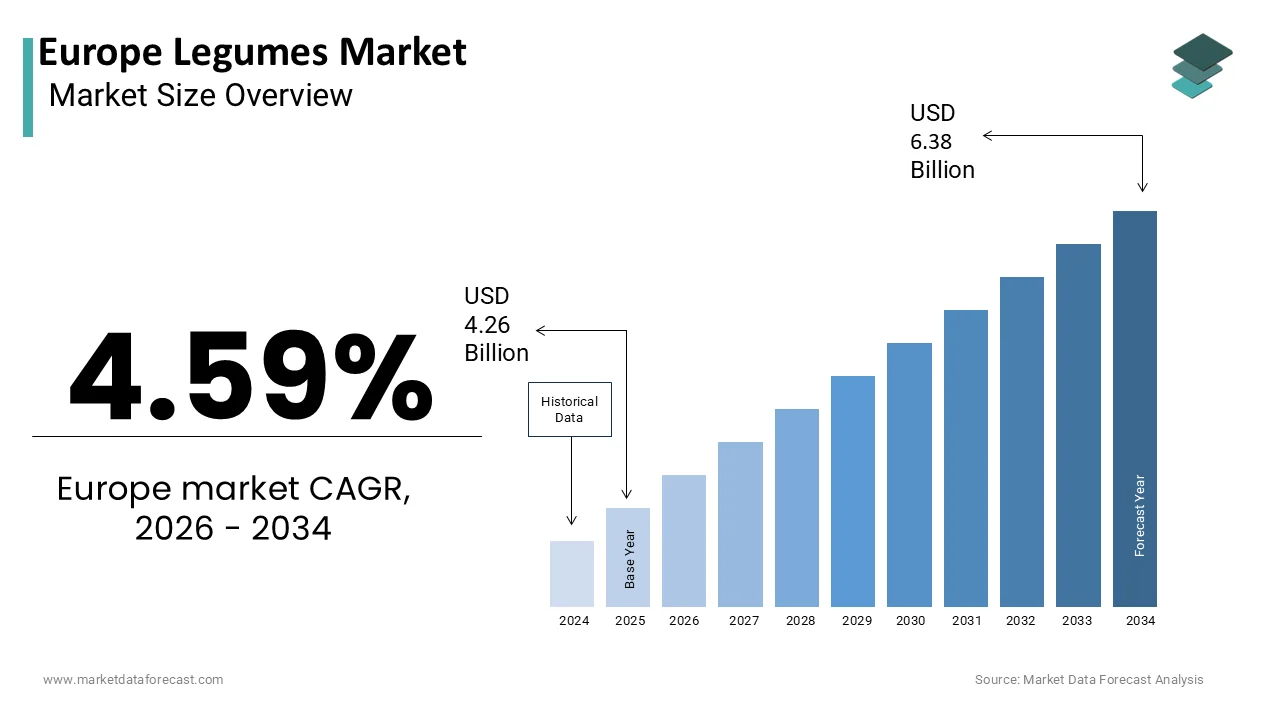
- Market Valuation: Valued at USD 4.26 billion (2025), estimated at USD 4.45 billion (2026), and projected to reach USD 6.38 billion by 2034, registering a steady CAGR of 4.59% (2026–2034).
- Primary Growth Drivers: Plant-based protein demand, supportive EU agricultural policies (Farm to Fork strategy), flexitarian diet adoption, ready-to-eat convenience formats, and organic cultivation incentives. Restraints include climate-induced yield volatility, supply chain import dependencies, and traditional consumer preparation barriers.
Key Market Segment Metrics (2026–2034)
| Category | Leading Segment / Region (Position) | Fastest-Growing Segment |
|---|---|---|
| By Product & Category | Peas (dominated with 33.4% share in 2025) & Conventional category (led with 38.1% share due to affordability) | Lentils (projected at 7.2% CAGR) & Organic legumes (fastest CAGR of 9.5% via pesticide concerns and sustainability) |
| By Application | Human food consumption, meat alternatives, protein ingredients, and animal feed sectors | Ready-to-eat convenience formats and plant-based dairy/meat substitute formulations |
| By Region / Country | France (largest contributor holding 29.1% share in 2025) & Germany (second at 19.2% share) | Spain (expected to witness fastest CAGR due to warm climates and lentil export performance) |
Major Market Players & Market Structure
Market Structure: Highly integrated European agricultural commodity and plant-based ingredient ecosystem characterized by sustainable sourcing programs (such as Agrocorp's Southern Europe initiative), localized cultivation investments (LDC in Poland), and advanced protein extraction technologies.
Key Companies: Agrocorp International Inc., Louis Dreyfus Company, Scoular Company, AGT Food and Ingredients Inc., Archer Daniels Midland Company (ADM), Cargill Incorporated, Bonduelle SA, Greenyard NV, Emsland Group, Roquette Frères, The Hain Celestial Group, Inc., General Mills, Inc., Nestlé SA, Pedon S.p.A., D’aucy (Eureden Group), and La Doria S.p.A.
Europe Legumes Market Size
The Europe Legumes Market is projected to grow from USD 4.26 billion in 2025 to USD 4.45 billion in 2026 and reach USD 6.38 billion by 2034, registering a CAGR of 4.59% during the forecast period from 2026 to 2034.
Legumes are crops,thath serplant-basedtial sources of protein and dietary fiber. These crops are increasingly recognized for their dual role in enhancing human nutrition and promoting sustainable agricultural systems through nitrogen fixation. The European Union has prioritized legume cultivation, as part of its strategic approach to reducing dependency on imported protein feeds and mitigating environmental impacts associated with intensive farming. The Common Agricultural Policy supports legume farmers through specific subsidies aimed at increasing crop diversity and improving soil health. Consumer interest in plant-based diets has surged, driven by health consciousness and ethical considerations regarding animal welfare. According to Eurostat, the area harvested for grain legumes in the European Union increased by 20% between 2015 and 2023, indicating a steady shift in agricultural priorities. This growth is further supported by the European Green Deal, which emphasizes the need for sustainable food systems and reduced greenhouse gas emissions. The emergence of regulatory support, nutritional awareness, and environmental sustainability defines the current trajectory of the Europe legumes market.
MARKET DRIVERS
Surging Demand for Plant-Based Protein Sources
The escalating consumer preference for plant-based protein sources is driving the growth of the Europe legumes market. Health-conscious individuals are increasingly moving away from animal-derived proteins due to concerns about cholesterol levels, heart disease, and environmental sustainability. The number of vegetarians and vegans in the European Union has increased over the past decade due to high demand for high-quality plant proteins. Legumes such as lentils, chickpeas, and beans are rich in essential amino acids, fiber, and micronutrients, making them ideal substitutes for meat in various culinary applications. The rise of flexitarian diets, where consumers reduce but do not eliminate meat consumption,t further amplifies this trend. Retailers have responded by expanding their ranges of legume-ready-to-eat products, including ready-to-eat meals, snacks, and protein powders. The versatility of legumes allows them to be incorporated into diverse dishes, from traditional stews to modern burgers and pasta alternatives. Public health campaigns across member states promote the consumption of pulses as part of a balanced diet, reinforcing consumer behavior changes. The availability of convenient legume products, vacuum-sealed cans and vacuum-sealed packs, addresses time constraints faced by modern households.
Regulatory Support and Sustainable Agricultural Policies
The strong regulatory support and sustainable agricultural policies are additionally elevating the growth of the Europe legumes market. The European Union’s Farm to Fork strategy aims to increase the share of organic farming and reduce the use of chemical fertilizers, objectives that align perfectly with the agronomic benefits of legumes. Farmers receive eco-scheme payments andeco-schemee incentives for cultivating protein crops, which help improve soil biodiversity and reduce nitrogen runoff. Legumes possess the unique ability to fix atmospheric nitrogen, thereby reducing the need for synthetic fertilizers and lowering greenhouse gas emissions associated with fertilizer production. Increasing legume cultivation can contribute significantly to climate change mitigation efforts in the agricultural sector. National governments in countries like France and Germany have implemented specific action plans to boost domestic legume production by reducing reliance on imports from North and South America. These policy measures encourage farmers to include legumes in crop systems, enhancing long-term soil health and yield stability. The regulatory framework also supports research and development initiatives focused on improving legume varieties for better yield and disease resistance.
MARKET RESTRAINTS
Consumer Perception and Culinary Habits
Deeply entrenched consumer perceptions and traditional culinary habits are a major restraining factor for the growth of the Europe legumes market. Despite growing health awareness, many consumers still view legumes as secondary ingredients or associate them with lengthy preparation times and digestive discomfort. As pera survey, a substantial portion of the population cites flatulence and bloating as reasons for limiting legume intake, despite the availability of improved varieties and processing methods. In Northern and Central European countries, meat and dairy products remain central to traditional diets, making it challenging to replace staples with plant-based alternatives. The lack of familiarity with diverse legume varieties beyond common beans and peas limits culinary experimentation among households. Many consumers perceive legumes as bland or difficult to cook, requiring soaking and long simmering times that do not fit into busy modern lifestyles. Educational gaps regarding the nutritional benefits and proper preparation techniques further hinder widespread acceptance. Overcoming these cultural and perceptual barriers requires sustained educational campaigns and innovative product development that simplifies consumption.
Supply Chain Volatility and Import Dependency
Supply chain volatility and significant import dependency are also hindering the growth of the Europe legumes market. While domestic production is increasing, Europe still relies heavily on imports for certain legumes such as lentils and chickpeas, primarily from Canada, Turkey, and Australia. Fluctuations in global harvests due to climate change and geopolitical tensions can lead to sudden price spikes and supply shortages. The war in Ukraine disrupted logistical routes and increased energy costs, impacting the affordability and availability of agricultural inputs and finished goods. Domestic production faces challenges related to variable yields caused by unpredictable weather patterns, including droughts and excessive rainfall. The lack of standardized pricing mechanisms for legumes compared to major cereals like wheat and corn makes farmers hesitant to commit large areas to these crops. Storage and handling infrastructure for legumes is less developed than for other staple crops, leading to higher post-harvest losses and small-scale degradation. Small-scale farmers often lack the bargaining power to secure favorable contracts with processors and retailers, resulting in inconsistent income streams. These structural weaknesses in the supply chain create uncertainty for both producers and consumers.
MARKET OPPORTUNITIES
Innovation in Plant-Based Meat Alternatives
The rapid innovation in plant-based meat alternatives is a major factor in creating new opportunities for the growth of the Europe legumes market. Food technology companies are increasingly utilizing pea protein, fava bean protein, and lentil flour as key ingredients in developing realistic meat substitutes. Legumes offer superior functional properties such as gelling, emulsifying, and texturizing, which are essential for mimicking the mouthfeel and appearance of animal meat. Major food manufacturers are investing heavily in research to improve the taste and texture of legume-based proteins, addressing previous consumer complaints about beany flavors. The introduction of extrusion technologies allows for the creation of fibrous structures that closely resemble muscle tissue. Retailers are dedicating plant-based shelf space to plant-based products, increasing visibility and accessibility for consumers. Collaborations between agricultural producers and food tech startups facilitate the development of specialized legume varieties optimized for protein extraction. This synergy between agriculture and food technology creates new value chains and revenue streams for legume growers. Plant-based acceptance of plant-based diets among younger demographics further fuels Ready-to-Eat
Expansion into Ready-to-Eat and Convenience Formats
The expansion of legumes intoready-to-eatt and convenience formats is also set to surge the growth of the Europe legumes market. Modern consumers prioritize convenience without compromising on health, driving demand for pre-cooked, seasoned, and packaged legume products. As per retail trends, sales of canned and ppouch-packedlegumes have increased steadily, as they eliminate the need for soaking and long cooking times. Food manufacturers are introducing innovative formats such as legume-based pastas, crackers, and snack bars, which appeal to health-conscious shoppers looking for nutritious on-the-go options. The development of sshelf-stablemeals featuring legumes as the primary protein source caters to busy professionals and students. Retailers are launching private label lines of marinated chickpeas, spiced lentils, and bean salads, offering variety and flavor diversity. The use of advanced preservation techniques ensures that these products retain their nutritional value and texture. Online grocery platforms facilitate the discovery and purchase of niche legume products, reaching a wider audience. The convenience factor removes the primary barrier to consumption, encouraging regular inclusion of legumes in daily diets. Partnerships with food service providers allow for the integration of legume-based convenience items into cafeteria and restaurant menus.
MARKET CHALLENGES
Climate Change Impact on Yield Stability
Climate change is affecting yield stability, and crop quality is a significant challenge for the growth of the Europe legumes market. Legumes are sensitive to extreme weather conditions, such as heatwaves, droughts, and heavy rainfall, which are becoming more frequent in Europe. As per the study, rising temperatures can disrupt the flowering and pod setting stages of legume crops, leading to significant yield reductions. Drought stress particularly affects rrain-fedlegume production in Southern Europe, where water scarcity is a growing concern. Conversely, excessive rainfall in Northern regions can cause waterlogging and increase the prevalence of fungal diseases such as root rot and anthracnose. These climatic variations make it difficult for farmers to predict harvest outcomes and plan production schedules. The lack of resilient crop varieties adapted to changing climatic conditions exacerbates the problem. Insurance costs for farmers are rising due to increased risk exposure, impacting profitability. The variability in supply affects downstream processors and retailers, leading to price volatility and potential shortages. Adapting to climate change requires substantial investment in irrigation infrastructure, breeding programs for drought-tolerant varieties, and sustainable farming practices. However, small and medium-sized farmers often lack the financial resources to implement these adaptations.
Limited Processing Infrastructure and Technical Expertise
Limited processing infrastructure and technical expertise are also hindering the growth of the Europe legumes market. Unlike cereals and oilseeds, which have well-established processing networks, the legume sector lacks sufficient facilities for cleaning, splitting, milling, and protein extraction. As per, many European countries rely on exporting raw legumes and importing processed products, resulting in lost economic value and job opportunities. The absence of specialized processing equipment tailored to different legume types hinders the development of high-value ingredients such as flours, starches, and isolates. Technical expertise in optimizing processing parameters to maintain nutritional quality and functional properties is scarce. Small-scale processors face high capital costs for acquiring advanced machinery, limiting their ability to compete with larger international players. The fragmentation of the supply chain, with numerous small producers and limited coordination, further complicates the establishment of efficient processing hubs. Regulatory requirements for food safety and quality add complexity to processing operations, requiring rigorous testing and certification. The lack of standardized protocols for legume processing leads to inconsistencies in product quality, affecting consumer trust. Bridging this infrastructure gap requires coordinated investment from public and private sectors, along with training programs to build technical capacity.
REPORT COVERAGE
| REPORT METRIC | DETAILS |
| Market Size Available | 2025 to 2034 |
| Base Year | 2025 |
| Forecast Period | 2026 to 2034 |
| Segments Covered | By Source, Category, and Region. |
| Various Analyses Covered | Global, Regional and Country-Level Analysis, Segment-Level Analysis, Drivers, Restraints, Opportunities, Challenges; PESTLE Analysis; Porter’s Five Forces Analysis, Competitive Landscape, Analyst Overview of Investment Opportunities |
| Countries Covered | Spain, Italy, France, Germany, United Kingdom, Rest of Europe |
| Market Leaders Profiled | AGT Food and Ingredients Inc., Archer Daniels Midland Company (ADM), Cargill Incorporated, Bonduelle SA, Greenyard NV, Emsland Group, Roquette Frères, The Hain Celestial Group, Inc., General Mills, Inc., The Kraft Heinz Company, Nestlé SA, Eden Foods, Inc., Goya Foods, Inc., B&G Foods, Inc., Conagra Brands, Inc., Müller’s Mühle GmbH, Pedon S.p.A., D’aucy (Eureden Group), Intersnack Group GmbH & Co. KG, La Doria S.p.A. |
SEGMENTAL ANALYSIS
By Source Insights
The peas segment was the largest, holding 33.4% of the Europe legumes market share in 2025 due to their extensive cultivation area and versatile applications in both human consumption and animal feed. This segment includes green peas, dry peas, and split peas, which are staples in European diets and industrial processing. The high adaptability of pea crops to various European climatic conditions, particularly in Northern and Central regions, is expected to drive the growth of the segment. The strong demand for pea protein in the plant-based food industry further amplifies its market growth. Peas are preferred by manufacturers due to their neutral flavor profile and excellent functional properties for texturization. The established supply chain for peas, supported by decades of agronomic research and breeding programs, ensures consistent quality and yield. Retailers widely stock pea products in various forms, including frozen, canned, and dried, ensuring broad consumer accessibility. The integration of peas into traditional dishes such as soups and stews maintains steady household demand. Additionally, the use of pea straw and haulms as livestock feed adds economic value for farmers, encouraging continued cultivation.
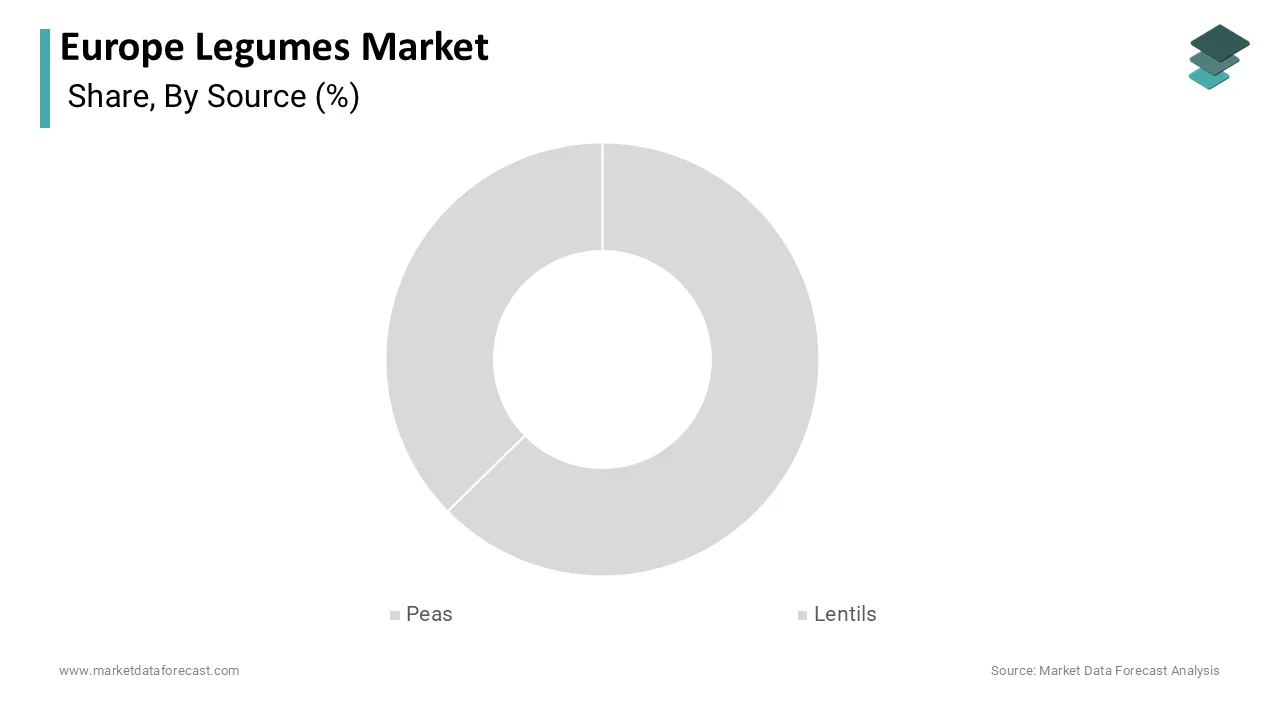
The lentils segment is projected to expand at a CAGR of 7.2% from 2026 to 2034 owing to the increasing popularity of lentils in health-conscious diets and their versatility in modern cuisine. Rich in protein, fiber, and essential minerals, lentils are recognized as a superfood that supports heart health and weight management. The rise of Mediterranean and Middle Eastern culinary influences in Europe has introduced consumers to diverse lentil varieties such as red, green, and black lentils. Retailers are expanding their offerings of packaged and ready-to-cook lentil products to meet this demand. The convenience of lentils, which do not require soaking and cook quickly, appeals to busy consumers seeking nutritious meal options. The growth of vegan and vegetarian populations drives the inclusion of lentils as a primary protein source in daily diets. Food manufacturers are incorporating lentil flour into pasta, bread, and snacks to boost nutritional content.
By Category Insights
The conventional category segment was the largest by holding 38.1% of the Europe legumes market share in 2025 owing to its affordability and widespread availability in mainstream retail channels. Conventional legumes are produced using standard agricultural practices, including the use of synthetic fertilizers and pesticides, which result in higher yields and lower production costs. Conventional agriculture still accounts for the majority of crop production in the European Union, providing a stable and cost-effective supply of legumes. Price-sensitive consumers prefer conventional legumes due to their lower retail prices compared to organic alternatives. Supermarkets and hypermarkets stock large volumes of conventional legumes to meet mass market demand. The established supply chains for conventional legumes ensure consistent availability throughout the year. Institutional buyers, such as schools and hospitals, often procure conventional legumes due to budget constraints. The familiarity of conventional farming methods among producers reduces the barriers to entry and maintenance. While organic consumption is growing, the volume of conventional legumes remains significantly higher due to their role as staple foods in many households. The efficiency of conventional production systems allows for competitive pricing, making legumes accessible to a broad demographic.
The organic category segment is anticipated to register the fastest CAGR of 9.5% from 2026 to 2034 owing to the increasing consumer concern about pesticide residues and environmental sustainability. Organic legumes are cultivated without synthetic chemicals, appealing to health-conscious and environmentally aware shoppers. The European Union’s Farm to Fork strategy promotes organic farming, creating a favorable policy environment for growth. Retailers are expanding their organic ranges to meet rising demand, offering diverse organic legume options. Consumers are willing to pay a premium for organic products due to perceived health and ethical benefits. The transparency of organic certification builds trust and confidence among buyers. The rise of eco-friendly lifestyles drives the preference for organic legumes in household consumption.
COUNTRY LEVEL ANALYSIS
France Legumes Market Analysis
France was the largest contributor in the European legume market by holding 29.1% of the share in 2025, with its strong agricultural tradition and government support for protein crops. The country is one of the largest producers of peas and lentils in the European Union, benefiting from favorable climatic conditions and advanced farming techniques. French consumers are increasingly incorporating legumes into their diets, influenced by health trends and culinary innovation. The restaurant sector in France features legume-based dishes prominently,plant-forward shift toward plant-forward gastronomy. Retailers offer a wide range of conventional and organic legumes, catering to diverse consumer preferences. The presence of major food processing companies in France supports the development of value-added legume products. Government subsidies for protein crops encourage farmers to include legumes in rotation systems, improving soil health. The strong export orientation of French agriculture also contributes to its significance, supplying high-quality legumes to countries.
Germany Legumes Market Analysis
Germany's legume market was ranked second by Hol, holding 19.2% of the share in 202 plant-based high-protein products and organic products. The country has a large vegetarian and vegan population, driving substantial consumption of peas, lentils, and beans. Germany is one of the largest markets for plant-based food products in Europe, with legumes serving as key ingredients. German retailers have expanded their organic legume offerings, responding to consumer preference for sustainable and chemical-free foods. Domestic production of legumes is increasing, supported by government initiatives to promote sustainable agriculture. However, Germany still relies on imports to meet its high demand, particularly for lentils and chickpeas. The strong logistical infrastructure in Germany facilitates efficient distribution of legumes across the country and to other European markets. Consumer awareness campaigns promote the health benefits of legumes, encouraging regular consumption.
Spain's legumerket Analysis
Spain's legume market growth is likely to see the fastest CAGR in the coming years, with the warm climate and supporting culinary ppractices supportingextensive legume cultivation, particularly in regions like Castile and Leon. Spain is a top exporter of lentils in the European Union, supplying both domestic and international markets. Spanish consumers have a long-standing tradition of consuming legumes in stews and salads, ensuring steady domestic demand. The quality of Spanish legumes is highly regarded, with several varieties holding protected geographical indication status. The Spanish government supports legume farmers through subsidies and research programs aimed at improving yield and disease resistance. The export sector benefits from Spain’s strategic location and trade agreements with other European countries. Retailers in Spain offer a diverse range of local and imported legumes, catering to evolving consumer tastes.
Italy Legumes Market Analysis
Italy's legumemarket gs steadily growing with its high-quality specialty legumes and strong culinary heritage. The country produces renowned varieties, such as Lenticchia di Castelluccio and Fagiolo Cannellino, which are prized for their flavor and texture. As per reports, Italy has seen a resurgence in legume cultivation, driven by consumer interest in traditional and healthy foods. Italian consumers value locally sourced and authentic products, supporting small-scale farmers and cooperatives. The restaurant industry in Italy incorporates legumes into classic dishes, maintaining their cultural relevance. Retailers emphasize the origin and quality of legumes, appealing to discerning shoppers. The Italian government promotes sustainable farming practices, encouraging the use of legumes in crop rotation to improve soil fertility. Export of premium Italian legumes to other European countries adds to the market value.
United Kingdom Legumes Market Analysis
The United Kingdom legumes market growth is driven by rising health consciousness and the popularity of plant-based diets. The UK has a growing number of vegetarians and vegans, increasing demand for peas, lentils, and beans. Domestic production of peas is strong, particularly for processing into frozen and canned products. The food service sector in the UK offers diverse legume-based meals, reflecting changing dietary preferences. Government initiatives promote sustainable agriculture, encouraging farmers to grow more protein crops. Consumer education campaigns highlight the environmental and health benefits of legumes. The strong presence of major supermarket chains facilitates wide distribution and accessibility. The trend toward convenience drives sales of ready-to-eat legume products.
COMPETITIVE LANDSCAPE
The competition in the Europe legumes market is characterized by a mix of global trading houses and specialized regional processors vying for market influence. Large multinational corporations leverage their extensive distribution networks and financial resources to dominate bulk trading and ingredient supplbased oners comp,ete based on quality, sustainability, and unique regional varieties that appeal to discerning consumers. The market exhibits moderate fragmentatmedium-sizederous small and medium sized enterprises contributing to supply diversity. Competitive intensity is driven by the increasing consumer demand for organic and sustainably sourced legumes. Companies differentiate themselves through innovative processing solutions that enhance nutritional value and functional properties. Price competition remains significant but is often secondary to quality and reliability assurances. Strategic alliances between growers and retailers facilitate efficient supply chains and reduce logistical costs. The rise of private label brands by supermarket chains adds pressure on branded manufacturers to offer superior value. Regulatory compliance regarding food safety and environmental standards acts as a barrier to entry for smaller players. Continuous innovation in cultivation techniques and product offerings is essential for maintaining competitive advantage. Overall, the landscape fosters a dynamic environment where sustainability and quality are key differentiators for success in the European market.
KEY MARKET PLAYERS
Some of the companies that are playing a dominant role in the Europe Legumes Market include:
- AGT Food and Ingredients Inc.
- Archer Daniels Midland Company (ADM)
- Cargill Incorporated
- Bonduelle SA
- Greenyard NV
- Emsland Group
- Roquette Frères
- The Hain Celestial Group, Inc.
- General Mills, Inc.
- The Kraft Heinz Company
- Nestlé SA
- Eden Foods, Inc.
- Goya Foods, Inc.
- B&G Foods, Inc.
- Conagra Brands, Inc.
- Müller’s Mühle GmbH
- Pedon S.p.A.
- D’aucy (Eureden Group)
- Intersnack Group GmbH & Co. KG
- La Doria S.p.A.
TOP LEADING PLAYERS IN MARKET
- Agrocorp International Inc plays a pivotal role in the European legumes sector by facilitating large-scale trade and distribution of high-quality pulses. The company sources lentils, chickpeas, and peas from global producers to supply European manufacturers and retailers. Recent initiatives include expanding its logistics network in Northern Europe to ensure faster delivery times and reduced carbon emissions. Agrocorp has invested in advanced cleaning and sorting facilities to meet stringent European food safety standards. The company actively collaborates with local farmers to promote sustainable cultivation practices and secure reliable supply chains. By focusing on traceability and quality assurance, Agrocorp strengthens trust among business partners and consumers. Its strategic partnerships with food processors enable the development of customized legume ingredients for plant-based products.
- Louis Dreyfus Company is a major contributor to the Europe legumes market through its extensive agricultural origination and processing capabilities. The company manages a robust supply chain for peas and beans, supporting both domestic consumption and export activities across the continent. Recently, Louis Dreyfus has strengthened its position by investing in protein extraction technologies to cater to the growing demand forplant-basedd ingredients. The company emphasizes sustainability by working closely with farmers to implement regenerative agriculture practices that improve soil health. It has also expanded its storage infrastructure to mitigate supply chain disruptions and ensure year-round availability. Louis Dreyfus engages in strategic collaborations with research institutions to develop improved legume varieties.
- Scoular Company maintains a strong presence in the European legumes market by specializing in the sourcing and merchandising of dry peas and lentils. The company leverages its global network to provide consistent quality and volume to European buyers. Recent actions include enhancing its digital trading platforms to improve transparency and efficiency for customers. Scoular has focused on developing value-added services such as custom blending and packaging to meet specific client requirements. The company actively promotes the benefits of pulse crops to farmers, encouraging increased production in key European regions. By prioritizing customer service and supply chain reliability, Scoular builds long-term relationships with processors and retailers. Its investment in sustainable sourcing initiatives aligns with European regulatory expectations and consumer preferences.
TOP STRATEGIES USED BY THE KEY MARKET PARTICIPANTS
Key players in the Europe legumes market primarily employ vertical integration strategies to control supply chains and ensure product quality. Companies invest heavily in sustainable farming practices to meet regulatory requirements and consumer expectations for eco-friendly products. Innovation in processing technology is a strategy to extract high-value proteins and create diverse ingredient options. Strategic partnerships with local farmers help secure consistent supply and support regional economies. Diversification into organic and specialty legume varieties allows companies to capture higher margins and appeal to niche markets. Digital transformation through supply chain tracking enhances transparency and builds consumer trust. Marketing campaigns focusing on health benefits and culinary versatility drive consumer engagement. Expansion into online retail channels increases accessibility and convenience for shoppers. Continuous research and development efforts aim to improve crop yields and resistance to climate change.
EUROPE LEGUMES MARKET NEWS
In March 2024, Agrocorp International Inc launched a new sustainable sourcing program for lentils in Southern Europe. This initiative is anticipated to improve supply chain transparency and strengthen eco-consciousresence among eco-conscious buyers.
In June 2023, Louis Dreyfus Company invested in a new pea protein extraction facility in France. This expansion is anticipated to enhance plant-based capacity for plant based ingrcompany's and strengthen the company's presence in the alternative protein sector.
In September 2023, Scoular Company introduced a digital trading platform for legume transactions in Northern Europe. This technology is anticipated to improve operational efficiency and strengthen the company's presence in the digital agriculture market.
In January 2024, Agrocorp International Inc partnered with several organic farmers in Germany to secure premium chickpea supplies. This collaboration was initiated to ensure high-quality raw materials and strengthen the company's presence in the organic segment.
In November 2023, Louis Dreyfus Company launched a regenerative agriculture pilot project for pea cultivation in Poland. This initiative is anticipated to improve soil quality and strengthen thecompany'sy presence in sustainable farming practices.
MARKET SEGMENTATION
This research report on the europe legumes market is segmented and sub-segmented into the following categories.
By Source
- Peas
- Lentils
- Beans
- Chickpeas
- Others
By Category
- Conventional
- Organic
By Country
- France
- Germany
- Spain
- Italy
- United Kingdom
- Rest of Europe