- Product Description Description
- Table of Contents TOC
- List of Table & Figure LOT
- Get Free Sample PDF Sample PDF
Market Size, 2025
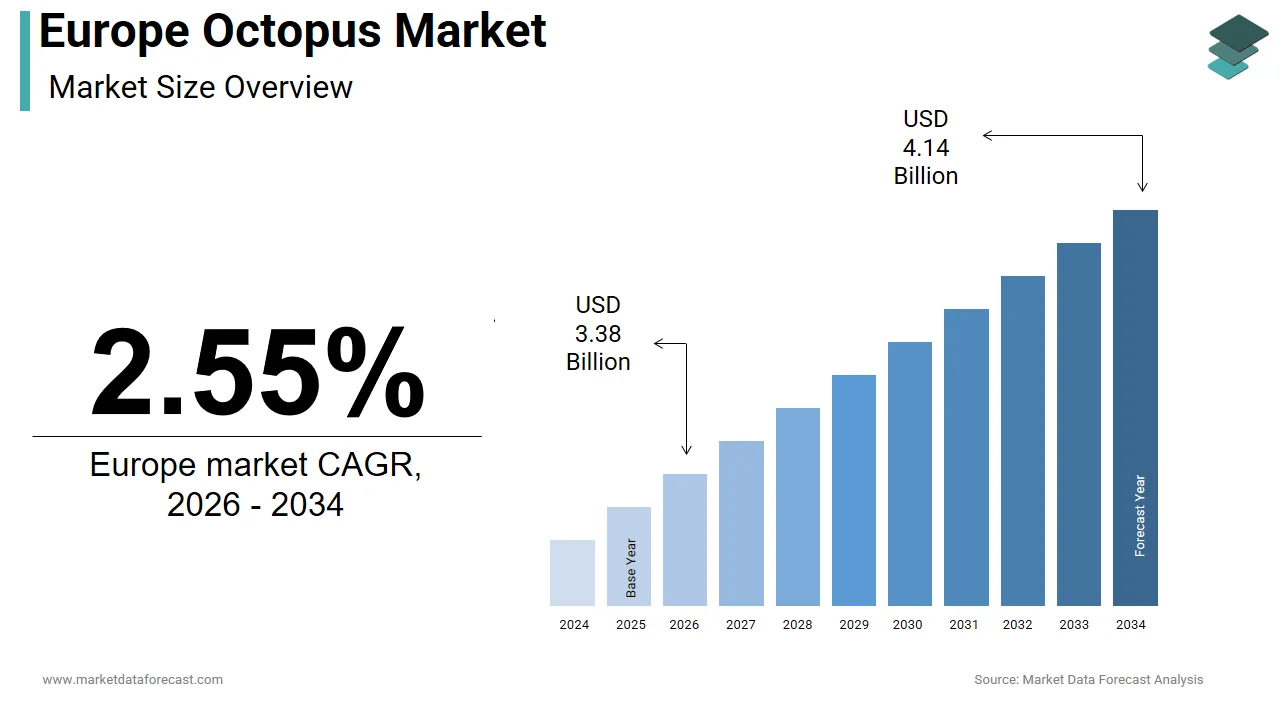
$3.30 BnMarket Estimate, 2026
$3.38 BnMarket Forecast, 2034
$4.14 BnCAGR, 2026–2034
2.55%Europe Octopus Market Report Summary
The Europe octopus market was valued at USD 3.30 billion in 2025, is estimated to reach USD 3.38 billion in 2026, and is projected to reach USD 4.14 billion by 2034, growing at a CAGR of 2.55% from 2026 to 2034. Market growth is driven by strong seafood consumption across Mediterranean countries, increasing demand for high-protein diets, and the cultural significance of octopus in European cuisine. Octopus is widely used in traditional dishes and gourmet preparations, particularly in Southern Europe. The market is also supported by growing imports, expansion of seafood processing industries, and increasing consumer preference for premium and exotic seafood products.
Key Market Trends
- Strong demand for seafood in Mediterranean diets and culinary traditions.
- Increasing consumer preference for high-protein and premium seafood products.
- Growth in seafood imports and processing industries across Europe.
- Rising popularity of octopus in gourmet and restaurant cuisines.
- Expansion of cold chain logistics and seafood distribution networks.
Segmental Insights
- Based on product type, the fresh octopus segment dominated the Europe octopus market by capturing 61.7% share in 2025, driven by consumer preference for freshness and quality in seafood consumption.
- Based on application, the food and beverage segment held the largest share in 2025, supported by widespread use of octopus in restaurants, hospitality, and household cooking.
- Based on distribution channel, the indirect distribution segment led the market in 2025, driven by the strong presence of wholesalers, distributors, and seafood retail networks.
Regional Insights
The Europe octopus market is witnessing stable growth across key coastal countries due to strong seafood consumption patterns and cultural preferences.
- Spain led the regional market in 2025 with 36.3% share, supported by its role as a major import hub and strong domestic consumption.
- Portugal followed as a key market, driven by one of the highest per capita seafood consumption rates globally and deep-rooted maritime traditions.
- Italy holds a significant position due to its diverse culinary use of octopus across regional cuisines.
- Greece is emerging as a dynamic market supported by its extensive coastline and strong seafood-based dietary culture.
Competitive Landscape
The Europe octopus market is characterized by the presence of seafood processing companies, importers, and distributors. Market participants are focusing on expanding supply chains, improving product quality, and strengthening distribution networks to meet growing demand. Strategic sourcing, cold chain logistics, and partnerships with fisheries are shaping competitive dynamics across the region.
Prominent companies operating in the Europe octopus market include Joe Patti’s Seafood Company, Pescanova Hellas EPE
Europe Octopus Market Size
The size of the Europe octopus market was worth USD 3.30 billion in 2025. The regional market is anticipated to grow at a CAGR of 2.55% from 2026 to 2034 and be worth USD 4.14 billion by 2034 from USD 3.38 billion in 2026.
An octopus is a soft-bodied, eight-armed marine mollusc belonging to the class Cephalopoda. This market is defined by a profound disconnect between robust domestic demand and limited native supply, forcing the region to rely heavily on complex global trade networks to satisfy its gastronomic appetite. The European Union functions as the world's largest importer of octopus, absorbing a substantial portion of the global catch to feed markets in Southern Europe, where the creature is a cultural staple. According to data from the Food and Agriculture Organization of the United Nations, the annual global capture of octopus hovers around 380000 tonnes, yet European coastal fisheries contribute less than 15% of this volume, creating a structural dependency on imports from West Africa, Asia, and Latin America. The market dynamics are deeply influenced by seasonal fishing bans and strict quotas designed to prevent stock depletion in the Mediterranean and Atlantic waters. As per statistics from the European Commission, Spain represents the vast majority of all octopus imports into the bloc, illustrating how heavily concentrated consumption and processing are within specific Southern European markets. The definition of the market extends beyond fresh catches to include a growing segment of frozen and processed products, which facilitate year-round availability despite the seasonal nature of wild stocks. This commodity remains critical to the economic viability of small-scale coastal communities while simultaneously driving international trade agreements and sustainability debates regarding marine resource management.
MARKET DRIVERS
Deep Rooted Culinary Traditions in Southern European Gastronomy
The entrenched cultural significance of cephalopods in the culinary identities of Southern European nations contributes to the growth of the Europe octopus market. This significance is particularly strong in nations such as Spain, Portugal, Italy, and Greece. In these regions, octopus is not merely a seafood option but a cornerstone of traditional cuisine, featuring prominently in iconic dishes such as the Spanish pulpo a la gallega, the Portuguese polvo à lagareiro, and various Italian pasta preparations. According to the European Market Observatory for Fisheries and Aquaculture Products, per capita consumption of cephalopods in Portugal remains exceptionally high, significantly exceeding the average across the continent and highlighting a deeply rooted local preference for these species. This cultural adherence ensures a consistent and inelastic demand curve, where consumers prioritize the availability of octopus regardless of price fluctuations or economic downturns. The social ritual of consuming octopus during festivals, family gatherings, and religious holidays further cements its status as an essential food item. In Galicia, Spain, the density of restaurants specializing exclusively in octopus dishes creates a localized demand hub that pulls supply from across the globe. The transmission of recipes through generations maintains high consumption levels among younger demographics, preventing the decline seen in other traditional food categories. This unwavering cultural preference acts as a stable foundation for the market, compelling importers and distributors to maintain robust supply chains to prevent shortages that would be viewed as a cultural disruption rather than a mere market inconvenience.
Expanding Presence of Mediterranean Cuisine in Northern Europe
The rapid proliferation of Mediterranean dining concepts and the increasing cosmopolitan palate of consumers in Northern and Central European countries also boosts the expansion of the Europe octopus market. Migration patterns and broader travel experiences have changed consumer preferences in Germany, the United Kingdom, and the Netherlands. Consequently, these countries have witnessed a surge in the popularity of Spanish tapas bars, Greek tavernas, and upscale seafood restaurants featuring octopus as a premium item. Research indicates that the rising popularity of Mediterranean cuisine in Northern Europe has contributed to a notable increase in the demand for octopus, leading to higher import volumes of both fresh and frozen products in those regions. The perception of octopus has evolved from a niche regional ingredient to a symbol of sophisticated, healthy, and sustainable dining among urban populations. This trend is amplified by the influence of celebrity chefs and culinary media who frequently showcase octopus preparation techniques, demystifying the ingredient for home cooks and encouraging retail purchases. Supermarkets in non-traditional markets have responded by expanding their frozen seafood sections to include cleaned and ready-to-cook octopus, making it accessible to a broader audience. The integration of octopus into the mainstream food service sector of Northern Europe diversifies the demand base, reducing the market's reliance solely on Southern European consumption and opening new growth avenues in previously untapped geographic areas.
MARKET RESTRAINTS
Critical Overfishing and Depletion of Wild Stock Levels
The severe pressure on wild fishery resources impedes the growth of the Europe octopus market. This pressure is caused by decades of intensive harvesting and inadequate management measures in key fishing grounds. Unlike many finfish species, octopus populations are highly sensitive to fishing effort due to their short life cycles and lack of robust stock assessment data, leading to frequent collapses in local fisheries. According to the General Fisheries Commission for the Mediterranean, a significant portion of commercial stocks in the region continues to face high fishing pressure, necessitating continued management efforts to ensure the long-term viability of the European fishing industry. The situation is particularly acute in Northwest Africa, a primary sourcing region for Europe, where illegal, unreported, and unregulated fishing has decimated local populations, prompting exporting nations to impose stricter quotas or temporary bans. These supply constraints result in volatile pricing and inconsistent availability, forcing European importers to compete fiercely for dwindling catches. The biological reality that octopus cannot be easily farmed at scale exacerbates the issue, leaving the market entirely dependent on wild capture, which is inherently unpredictable. Scientific assessments by the International Council for the Exploration of the Sea warn that without immediate and drastic reductions in fishing mortality, several key stocks face the risk of commercial extinction. This ecological bottleneck acts as a hard ceiling on market growth, as demand continues to rise while the natural capacity to supply it diminishes, creating a structural deficit that threatens the stability of the entire value chain.
Stringent Regulatory Frameworks and Import Compliance Barriers
The increasingly rigorous regulatory environment governing seafood imports, traceability, and sustainability certification within the European Union limits the expansion of the Europe octopus market. The EU's Illegal, Unreported and Unregulated Fishing Regulation mandates comprehensive documentation and verification for all seafood entering the bloc, creating significant administrative burdens and delays for suppliers from developing nations who often lack the infrastructure to comply. According to compliance reports from the European Commission, shipments from various international partners are subject to strict scrutiny and potential detention when documentation is incomplete or when there are concerns regarding the ethical sourcing and labor standards involved in the catch. The implementation of the new EU Deforestation Regulation and upcoming due diligence laws further complicate the supply chain by requiring proof that seafood production does not contribute to environmental degradation or human rights abuses. These regulatory hurdles increase the cost of compliance for exporters, which is ultimately passed on to European consumers in the form of higher retail prices, potentially dampening demand. Furthermore, the lack of harmonized sustainability standards specifically for cephalopods creates confusion among buyers and retailers who are hesitant to source products without clear eco-labels. The complexity of navigating these legal landscapes discourages new market entrants and limits the diversity of supply sources, forcing the market to rely on a shrinking pool of compliant suppliers. This regulatory rigidity acts as a friction point that slows market fluidity and restricts the ability to rapidly scale imports to meet surging demand.
MARKET OPPORTUNITIES
Advancements in Cephalopod Aquaculture and Farming Technologies
The breakthrough developments in cephalopod aquaculture offer a major opportunity for the growth of the Europe octopus market. These advancements promise to alleviate reliance on depleted wild stocks and provide a sustainable, year-round supply source. For decades, farming octopus was considered impossible due to the specific dietary needs of larvae and the aggressive, cannibalistic nature of the species, but recent scientific strides have begun to overcome these biological barriers. Research institutions in Spain and Greece, supported by funding from the European Union's Horizon Europe program, have successfully developed closed-cycle breeding protocols and formulated artificial feeds that support high survival rates in captivity. According to studies, commercial-scale octopus farming could become a reality within the next decade, potentially supplying a notable share of European demand by 2035. This shift would revolutionize the market by stabilizing prices, ensuring consistent quality, and removing the seasonal volatility associated with wild catches. The ability to control rearing conditions also allows for the optimization of texture and flavor, catering to specific consumer preferences. Furthermore, land-based recirculating aquaculture systems offer an environmentally friendly alternative that minimizes habitat destruction and bycatch. As investment in this sector accelerates, the emergence of farmed octopus presents a transformative opportunity to decouple market growth from ecological limits, securing the future of the industry while meeting the ethical demands of modern consumers.
Development of Value-Added Processed and Convenience Products
The expansion of value-added processed octopus products exhibits a substantial potential to broaden the consumer base and increase profit margins within the Europe octopus market. Traditionally sold whole or in large frozen blocks requiring extensive preparation, octopus is increasingly being transformed into ready-to-eat meals, marinated skewers, salads, and snack formats that appeal to time-poor urban consumers. By offering pre-cooked, seasoned, and portion-controlled products, manufacturers can penetrate the retail sector more effectively and introduce octopus to demographics that previously avoided it due to preparation complexity. Innovation in packaging technologies, such as modified atmosphere packaging, extends shelf life and preserves the delicate texture of the meat, making it suitable for distribution in non-coastal regions. Additionally, the creation of octopus-based deli meats or protein bars could unlock entirely new usage occasions beyond traditional main courses. This product diversification allows brands to command premium pricing and differentiate themselves in a crowded seafood aisle. Embracing convenience and innovation enables the market to transcend its traditional boundaries, turning octopus from a specialty ingredient into a versatile staple accessible to the mass market.
MARKET CHALLENGES
Ethical Controversies Regarding Sentience and Welfare Standards
The intensifying ethical debate surrounding the sentience of cephalopods and the welfare implications of both wild capture and potential farming methods is challenging the growth of the Europe octopus market. Scientific consensus, including a landmark review commissioned by the United Kingdom government, has officially recognized octopuses as sentient beings capable of experiencing pain and distress, triggering a wave of regulatory scrutiny and consumer activism. According to sources, the current methods of slaughtering wild-caught octopus, which often involve asphyxiation or ice slurry immersion, are increasingly viewed as inhumane and unacceptable by a growing segment of the population. This shift in public perception poses a significant reputational risk to the industry, with major retailers and restaurant chains facing pressure to adopt higher welfare standards or cease selling octopus altogether. The prospect of commercial farming raises even greater ethical concerns, as the solitary and intelligent nature of octopuses makes high-density rearing inherently problematic and potentially cruel. Legislative bodies in several European nations are considering bans on octopus farming and stricter slaughter regulations, which could drastically increase operational costs or limit supply availability. Navigating this ethical minefield requires the industry to invest in humane harvesting technologies and transparent welfare certifications; failure to do so could lead to consumer boycotts and restrictive legislation that stifles market growth and alters the fundamental nature of octopus consumption in Europe.
Geopolitical Instability and Supply Chain Vulnerabilities
Geopolitical tensions and the fragility of international supply chains are a critical barrier to the European octopus market. This is due to its heavy dependence on imports from politically volatile regions in West Africa and Southeast Asia. A significant portion of the octopus consumed in Europe originates from countries like Mauritania, Senegal, and Morocco, where political instability, changes in fishing access agreements, and resource nationalism can abruptly disrupt trade flows. Additionally, global logistics disruptions, such as those caused by pandemics or conflicts affecting shipping routes, can lead to significant delays and spoilage of perishable seafood cargo. The concentration of supply in a few key regions creates a single point of failure, where a local crisis can ripple through the entire European market, causing price spikes and shortages. Furthermore, the rising influence of Asian markets, particularly China, as competitors for African seafood resources, intensifies the competition for limited supplies, driving up costs and squeezing European importers. This external volatility makes long-term planning difficult for businesses and threatens the food security of a product that has become essential to European culinary culture, necessitating an urgent diversification of sourcing strategies that is currently difficult to achieve.
REPORT COVERAGE
| REPORT METRIC | DETAILS |
| Market Size Available | 2025 to 2034 |
| Base Year | 2025 |
| Forecast Period | 2026 to 2034 |
| Segments Covered | By Product Type, Application, Distribution Channel, and Country. |
| Various Analyses Covered | Global, Regional, and Country-Level Analysis, Segment-Level Analysis, Drivers, Restraints, Opportunities, Challenges; PESTLE Analysis; Porter’s Five Forces Analysis, Competitive Landscape, Analyst Overview of Investment Opportunities |
| Countries Covered | UK, France, Spain, Germany, Italy, Russia, Sweden, Denmark, Switzerland, Netherlands, Turkey, Czech Republic, and the Rest of Europe. |
| Market Leaders Profiled | Joe Pattis Seafood Company, Pescanova Hellas EPE, Jerónimo Martins, Findus Group, Galveston Shrimp Company, Frigorificos de Camarinas S.L. |
SEGMENTAL ANALYSIS
By Product Type Insights
The Fresh Octopus segment was the largest in the Europe octopus market and occupied a 61.7% share in 2025. This prominence of the segment is attributed to the deep culinary traditions of Southern Europe, where the quality, texture, and flavor of octopus are best preserved when consumed shortly after capture or thawing from a frozen state close to the point of sale. The preference for fresh product is particularly strong in coastal regions where daily fish markets serve as the primary source of seafood for both households and restaurants. The definition of "fresh" in this context often includes previously frozen octopus that has been thawed and displayed on ice, which satisfies the consumer demand for raw-looking product while accommodating the logistical realities of long-distance importation. The primary factor driving the domination of the fresh segment is the uncompromising demand from European consumers, particularly in Spain, Portugal, and Italy, for the specific textural qualities that only fresh or properly thawed octopus can provide. The delicate balance between tenderness and firmness is easily lost in heavily processed or canned varieties, making fresh product the only acceptable option for traditional dishes like pulpo a la gallega. Also, the sensory discrimination drives retailers and restaurateurs to prioritize fresh supply chains despite higher costs and shorter shelf lives. The cultural expectation that high-quality seafood must be sold whole and unprocessed reinforces this trend, as consumers view cleaning and preparation as part of the authenticity of the ingredient. In major urban fish markets like those in Lisbon and Barcelona, fresh octopus accounts for a significant share of daily sales volume, emphasizing the depth of this preference. The inability of processed forms to replicate the gastronomic experience of fresh octopus ensures that this segment remains the cornerstone of the European market. A further reason for this growth of the segment is the enduring prominence of traditional wet markets and independent fishmongers in the European retail landscape, which serve as the primary distribution channels for fresh seafood. Unlike Northern Europe, where supermarkets dominate, Southern European countries maintain a robust network of specialized fish shops that cater to daily shopping habits and emphasize personal relationships between buyers and sellers. These vendors rely on the visual appeal of fresh octopus displayed on ice to attract customers, a marketing strategy that processed packaging cannot replicate. The flexibility of fishmongers to cut, clean, or prepare octopus to order adds significant value that pre-packaged processed goods lack. Furthermore, these traditional channels often have direct links to local fishing fleets or specialized importers who prioritize speed to ensure freshness. The trust placed in local fishmongers to select the highest quality catch reinforces the demand for fresh product, creating a resilient distribution ecosystem that sustains the dominance of the fresh segment against the encroachment of industrial processing.
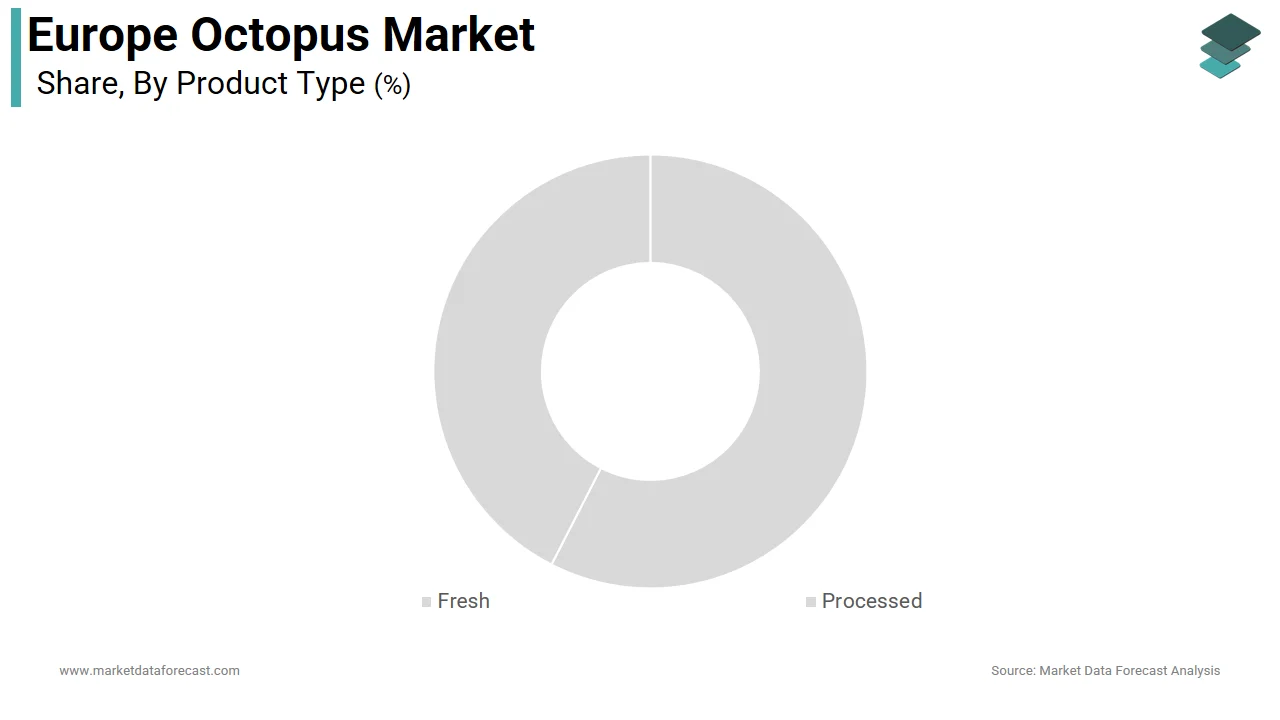
The Processed Octopus segment is expected to exhibit a noteworthy CAGR of 8.1% from 2026 to 2034. This growth of the segment is fueled by the expansion of octopus consumption into non-traditional markets in Northern and Central Europe, where consumers lack the skills or time to prepare raw cephalopods. While currently smaller in volume compared to fresh offerings, processed varieties, including cooked, marinated, canned, and ready-to-eat formats, are gaining rapid traction due to shifting lifestyle patterns and the need for convenience. The segment benefits from innovations in packaging and preservation technologies that extend shelf life while maintaining acceptable quality standards. A key growth enabler of this segment is the accelerating consumer demand for convenience foods driven by busy urban lifestyles and the decline of time available for meal preparation. Modern European consumers, especially in dual-income households, increasingly seek protein sources that require minimal effort, leading to a surge in popularity for pre-cooked, cleaned, and seasoned octopus products. The complexity of cleaning and tenderizing raw octopus acts as a significant barrier to entry for many potential consumers, a hurdle that processed products effectively remove. Brands are capitalizing on this by offering vacuum-packed cooked octopus that can be added directly to salads or heated quickly for dinner. This convenience factor is particularly effective in attracting younger demographics and those in landlocked regions where access to fresh seafood is limited. The ability of processed products to offer consistent portion sizes and predictable cooking outcomes further enhances their appeal to novice cooks. As the pace of life continues to accelerate across the continent, the convenience offered by processed octopus will remain the key driver of its superior growth rate. In addition, this area is supported by the technological advancement in preservation methods such as high-pressure processing and modified atmosphere packaging which significantly extend shelf life and enable distribution to remote areas. These technologies allow processed octopus to be transported far beyond the coastal zones of Southern Europe into inland markets in Germany, Switzerland, and Eastern Europe, where fresh seafood logistics are challenging and costly. The extended shelf life reduces waste for retailers and allows for broader distribution networks that were previously inaccessible to perishable fresh octopus. Furthermore, processed formats like cans and jars facilitate online grocery sales, a channel that has seen exponential growth in recent years. The standardization of taste and texture in processed products also helps build brand loyalty among consumers who may be intimidated by the variability of fresh catch. By overcoming geographical and temporal limitations, processed octopus is unlocking new customer bases and driving rapid market penetration in regions that were historically underserved.
By Application Insights
The Food and Beverage segment retained the majority share of the Europe octopus market in 2025. This supremacy of the segment is supported by the dining culture of Europe, where octopus is predominantly viewed as a restaurant dish rather than a home-cooked meal. The expertise required to prepare octopus correctly, combined with the social nature of dining out in Southern Europe, ensures that the bulk of consumption occurs in commercial food service establishments. From high-end seafood towers to casual tapas bars, the HoReCa sector serves as the primary gateway for octopus consumption across the continent. The main factor sustaining the dominance of the Food and Beverage segment is the integral role that seafood plays in the European dining out culture, particularly in Mediterranean countries, where eating out is a frequent social activity. In nations like Spain and Greece, the tradition of gathering in tavernas and seaside restaurants to share plates of fresh seafood is a fundamental aspect of daily life and tourism. The perception of octopus as a premium dish that is best enjoyed in a professional setting, where chefs can guarantee perfect preparation, drives consumers to restaurants rather than attempting to cook it at home. The ambiance of dining by the sea, paired with expertly prepared octopus, creates an experiential value that home cooking cannot match. Furthermore, the rise of gastronomic tourism has bolstered this trend, with travelers specifically seeking authentic local seafood experiences. The reliance on professional kitchens to deliver the complex flavors and textures expected from octopus ensures that the HoReCa sector remains the primary conduit for market volume, overshadowing retail consumption. An additional driver for the Food and Beverage segment is the pivotal role of professional chefs in innovating octopus preparations and introducing the ingredient to new audiences through creative menu offerings. Chefs possess the technical skills required to handle octopus, utilizing techniques like slow cooking, grilling, and sous vide to achieve textures that are difficult for home cooks to replicate. This culinary endorsement elevates the status of octopus and stimulates demand among diners who trust the expertise of the kitchen. Restaurants also have the advantage of sourcing whole octopuses and utilizing all parts, reducing waste and cost compared to retail consumers who might only buy specific cuts. The ability of chefs to pair octopus with diverse global flavors has expanded its appeal beyond traditional preparations, attracting adventurous eaters. The continuous innovation in presentation and flavor profiles by the hospitality industry keeps octopus relevant and exciting, driving repeat visits and sustained consumption levels that solidify the sector's market leadership.
The Commercial segment is predicted to witness the highest CAGR of 7.2% during the forecast period due to the increasing availability of user-friendly products in supermarkets and the incorporation of octopus into industrial food lines. The shift toward home cooking, stimulated by recent global events and the rising cost of dining out have contributed to this surge, as consumers seek to recreate restaurant experiences in their own kitchens. A major factor that aids this segment is the aggressive expansion of octopus products in mainstream supermarket chains and the development of affordable private label ranges. Major retailers across Europe, including Carrefour, Tesco, and Aldi, have significantly widened their frozen and chilled seafood aisles to include a variety of octopus options ranging from whole frozen bodies to pre-marinated skewers. The democratization of access has made octopus available to a much broader demographic beyond the affluent diners of specialty restaurants. The strategic placement of octopus in promotional flyers and the introduction of recipe cards in stores have educated consumers on how to prepare it, lowering the barrier to trial. The consistency of supply provided by large retail contracts encourages manufacturers to invest in capacity, further driving down costs and increasing availability. As supermarkets become the primary destination for weekly grocery shopping, the visibility and accessibility of octopus in these venues are driving rapid volume growth in the commercial sector. Also, this sector is boosted by the increasing utilization of octopus as an ingredient in industrial ready meals, frozen pizzas, and gourmet snack lines produced by large food manufacturers. Food processing companies are recognizing the premium appeal of octopus and are incorporating it into value-added products that cater to the demand for exotic and healthy protein sources. The inclusion of octopus in baby food and pet food sectors, albeit smaller, also contributes to the diversification of industrial applications. Manufacturers leverage the nutritional profile of octopus, rich in protein and low in fat, to market these products as healthy alternatives to traditional meat-based ready meals. The scalability of industrial production allows for consistent quality and widespread distribution that small-scale processors cannot achieve. As food technologists continue to refine methods for preserving the texture of octopus in processed formats, the range of commercial applications will expand, fueling the rapid growth of this segment.
By Distribution Channel Insights
The Indirect Distribution channel segment led the Europe octopus market and accounted for a substantial share in 2025. This dominance of the segment is driven by the complex and fragmented nature of the seafood supply chain, which relies heavily on intermediaries such as wholesalers, auction houses, importers, and distributors to bridge the gap between distant fishing grounds and final points of sale. The necessity of specialized cold chain logistics and the consolidation of catches from numerous small-scale vessels make indirect channels the most efficient and practical method for moving octopus across the continent. One more factor that adds strength is the critical requirement for sophisticated cold chain infrastructure and the need to consolidate fragmented supplies from diverse geographic origins. Octopus is highly perishable and often sourced from remote locations in West Africa, Asia, and the Atlantic, necessitating a network of specialized intermediaries who manage freezing, storage, and transportation. Wholesalers play an indispensable role in aggregating small catches from multiple boats to create volumes sufficient for large-scale export and distribution. This consolidation function is vital for maintaining a steady supply flow to major markets like Spain and Italy, where demand far exceeds local catch capabilities. The expertise of intermediaries in navigating customs, health certifications, and quality control checks adds a layer of security that direct transactions often cannot provide. The high capital investment required for refrigerated transport and storage facilities creates a barrier to entry that reinforces the reliance on established indirect networks, ensuring their continued dominance in the market. Additionally, the segment is helped by the deep-rooted system of trade relationships and credit facilities that intermediaries provide to both suppliers and buyers in the volatile seafood market. The octopus trade involves significant financial risk due to price fluctuations and seasonal variability, prompting fishermen and small exporters to rely on wholesalers who offer advance payments and guaranteed purchase agreements. These established relationships foster trust and stability in a market characterized by uncertainty, allowing producers to focus on catching while distributors manage market access. Restaurants and retailers also benefit from the credit terms and flexible ordering options provided by local wholesalers, who can deliver small quantities frequently to match daily demand. The ability of intermediaries to absorb shocks in supply and demand, smoothing out volatility for end-users, makes them component of the distribution ecosystem. This financial and operational support structure cements the position of indirect channels as the backbone of the European octopus trade.
The Direct Distribution segment is estimated to register the fastest CAGR of 10.5% over the forecast period. This expansion is propelled by digital transformation and the rising consumer preference for short supply chains that guarantee sustainability and ethical sourcing. Direct sales from fishermen to consumers, restaurants, or via online platforms are gaining momentum due to the desire for traceability, freshness, and higher margins for producers. One key reason for the rapid growth of the direct distribution segment is the intensifying consumer demand for transparency regarding the origin, fishing methods, and sustainability credentials of their seafood. Modern European shoppers are increasingly skeptical of long supply chains and seek direct connections with producers to verify that their octopus was caught legally and ethically. Digital platforms and apps now allow fishermen to sell their catch directly to households or restaurants, providing real-time information on catch location and date. This direct link eliminates the opacity of traditional wholesale markets and builds trust through radical transparency. The "boat-to-plate" narrative resonates strongly with environmentally conscious consumers who want to support local economies and reduce carbon footprints associated with middlemen logistics. As technology lowers the barriers to direct marketing, more fishermen are bypassing traditional auctions to capture higher margins and build loyal customer bases, propelling the growth of this channel. An added support for this segment comes from the proliferation of specialized e-commerce platforms and digital marketplaces that facilitate direct transactions between producers and end-users. Startups and tech-enabled fisheries across Europe are leveraging online tools to connect small-scale octopus fishermen directly with urban consumers and boutique restaurants, effectively disintermediating traditional wholesalers. These platforms handle logistics and delivery, solving the historical challenge of last-mile distribution for perishable goods. The ability of digital channels to aggregate demand from scattered individual buyers allows small producers to achieve economies of scale previously only available to large distributors. Furthermore, social media marketing enables fishermen to tell their stories and build brand equity directly, fostering a community of supporters. The efficiency and reach of digital direct distribution are reshaping the market landscape, offering a viable and rapidly expanding alternative to conventional indirect channels.
COUNTRY LEVEL ANALYSIS
Spain Octopus Market Analysis
Spain dominated the European octopus market and captured a 36.3% share in 2025 by serving as the primary entry point for imports into the continent. The country's market sees an insatiable domestic demand driven by the cultural iconography of octopus in Galician cuisine, where it is celebrated in festivals and daily meals alike. A key driving factor is the existence of a highly specialized distribution network centered in Vigo, one of the world's largest fishing ports, which acts as the logistical heart for octopus imports from Africa and Asia. The density of specialized restaurants known as pulperías creates a consistent and high-volume demand that dictates global pricing trends. Furthermore, the Spanish processing industry adds significant value by cleaning, freezing, and packaging octopus for re-export to other European nations. The deep integration of the octopus into national identity ensures that consumption remains resilient even during economic downturns. This combination of massive import capacity, processing infrastructure, and cultural devotion cements Spain's position as the undisputed anchor of the European octopus economy.
Portugal Octopus Market Analysis
Portugal was the next prominent player in the Europe octopus market in 2025 because it has the highest per capita consumption of cephalopods in the world and a market status deeply rooted in maritime tradition. While smaller in total volume than Spain, Portugal's intensity of consumption is unparalleled, with octopus serving as a staple protein source across all socioeconomic groups. The driving force behind this prominence is the ubiquitous presence of octopus in traditional dishes like polvo à lagareiro and its central role in local festivals and religious celebrations. The country maintains a robust domestic fleet but relies heavily on imports to meet demand, fostering strong trade ties with former colonies in Africa. The market is characterized by a preference for fresh products sold in traditional markets, though processed options are gaining ground. The government's support for the fishing sector and the cultural imperative to consume local seafood sustain the high demand levels. Portugal's unique position as a consumption powerhouse relative to its population size makes it a critical indicator of market health and a key driver of premium pricing in the region.
Italy Octopus Market Analysis
Italy holds a significant position in the Europe octopus market. It is renowned for integrating octopus into a diverse array of regional cuisines ranging from Sicilian pasta dishes to Venetian lagoon specialties. The market status in Italy is characterized by a sophisticated demand for high-quality fresh octopus, particularly in coastal regions where seafood is the centerpiece of the diet. A primary driver of this position is the strong tourism sector, which amplifies demand during summer months as millions of visitors seek authentic Italian seafood experiences. The Italian market is notable for its discerning consumers who prioritize texture and freshness, often rejecting lower-quality imports. The presence of a vibrant street food culture featuring fried octopus also contributes to volume sales. Additionally, the Italian processing industry is adept at creating value-added products like marinated octopus salads that are popular in delicatessens. The blend of regional culinary diversity, tourism-driven demand, and a commitment to quality ensures Italy remains a pivotal and high-value market for octopus in Southern Europe.
Greece Octopus Market Analysis
Greece expanded steadily in the European octopus market by emerging as a dynamic player fueled by its extensive coastline, island culture, and the centrality of seafood in the Mediterranean diet. The market status in Greece is defined by a strong preference for locally caught fresh octopus, although imports are increasingly used to fill gaps during off-seasons or to meet tourist demand. The driving force behind this market is the traditional taverna culture, where grilled or sun-dried octopus is a mandatory offering, supported by a population that views seafood as a daily dietary essential. The archipelago's geography necessitates efficient inter-island logistics, creating a unique distribution challenge that favors local supply chains. Tourism acts as a significant multiplier, with islands like Crete and Santorini driving seasonal spikes in consumption. The Greek market is also seeing a gradual shift towards packaged octopus products for export, leveraging the "Greek diet" brand image. The combination of deep-seated culinary habits, geographic necessity, and tourism influence sustains Greece's role as a key consumption hub in the Eastern Mediterranean.
France Octopus Market Analysis
France is anticipated to grow notably in the Europe octopus market over the forecast period, owing to its evolving palate that increasingly embraces octopus as a gourmet ingredient beyond its traditional strongholds in the south. The market status in France is characterized by a bifurcated demand: a traditional base in Mediterranean regions like Marseille and Nice, and a growing interest in Parisian and urban fine dining scenes. A key driving factor is the influence of haute cuisine, where renowned chefs are reinventing octopus preparations, elevating its status and introducing it to new demographics. The French market places a high premium on sustainability and labeling, driving demand for certified and traceable products. The expansion of Asian fusion cuisine in major cities has also introduced new flavor profiles for octopus, diversifying consumption occasions. While per capita consumption is lower than in Iberian nations, the high value placed on quality and the willingness to pay for premium sustainable seafood make France a lucrative and strategically important market for high-end octopus suppliers looking to expand in Western Europe.
COMPETITIVE LANDSCAPE
The competition in the Europe octopus market is characterized by intense rivalry between large multinational seafood corporations and specialized regional processors vying for control over limited global supplies. Major players compete fiercely for the ability to secure reliable sourcing contracts from key fishing nations in Africa and Asia, as wild stock depletion creates a scarcity-driven environment. Competitive dynamics are heavily influenced by sustainability credentials, with companies differentiating themselves through eco-labels and transparent traceability systems to meet retailer and consumer demands. Price volatility remains a central battleground, forcing firms to optimize logistics and processing efficiencies to maintain margins. The race for innovation is evident in the development of convenient, ready-to-eat products that target non-traditional consumers in Northern Europe. Furthermore, the threat of new entrants focusing on niche sustainable aquaculture projects adds pressure on established entities to adapt quickly. Retailers exert significant power by demanding lower prices and higher standards, squeezing suppliers from both ends. This complex interplay of supply constraints, regulatory pressures, and shifting consumer preferences creates a highly dynamic and challenging competitive landscape where agility and sustainability are paramount for survival and growth.
KEY MARKET PLAYERS
The leading companies operating in the Europe octopus market include:
- Joe Patti’s Seafood Company
- Pescanova Hellas EPE
- Jerónimo Martins
- Findus Group
- Galveston Shrimp Company
- Frigorificos de Camariñas S.L.
TOP PLAYERS IN THE MARKET
- Pescanova Group operates as a global leader in the seafood industry with a dominant presence in the European octopus market through its extensive sourcing and processing capabilities. The company contributes to the global market by managing a vast international supply chain that connects fishing grounds in Africa and Asia with European consumers. Recent actions to strengthen its position include heavy investments in sustainable fishing certifications and the expansion of its ready-to-eat octopus product lines to meet rising demand for convenience. Pescanova actively collaborates with local fisheries to ensure traceability and compliance with strict European regulations. By focusing on vertical integration from catch to retail shelf, the company guarantees consistent quality and supply stability. This strategic emphasis on sustainability and product innovation allows Pescanova to maintain its reputation as a trusted supplier while addressing the ethical concerns surrounding cephalopod harvesting in the modern marketplace.
- Jerónimo Martins functions as a major Portuguese retail and food distribution conglomerate that significantly influences the European octopus market through its massive supermarket network and wholesale operations. The company contributes to the global market by acting as a primary off-taker for octopus imports into Southern Europe, thereby shaping trade flows and pricing dynamics. Recent actions to strengthen its market position involve launching exclusive private-label octopus products that emphasize affordability and high quality for everyday consumers. Jerónimo Martins has also implemented rigorous supplier codes of conduct to ensure ethical sourcing and reduce environmental impact across its seafood portfolio. By leveraging its strong relationships with producers in West Africa and optimizing its cold chain logistics, the group ensures fresh and frozen octopus availability year-round. This focus on vertical control and brand differentiation enables the company to capture significant consumer loyalty and drive volume growth in both domestic and international markets.
- Findus Group stands as a prominent European frozen food specialist that plays a crucial role in the octopus market by transforming raw catches into accessible consumer-ready products. The company contributes to the global market by utilizing advanced freezing technologies to preserve the texture and flavor of octopus, making it available far from coastal regions. Recent actions to strengthen its position include the introduction of innovative marinated and pre-cooked octopus ranges designed for quick home preparation and food service use. Findus actively invests in research to improve sustainable sourcing practices and reduce the carbon footprint of its supply chain. By partnering with certified fisheries and developing value-added formulations, the company appeals to busy urban consumers seeking healthy protein options. This commitment to convenience, quality, and sustainability allows Findus to expand its reach across Northern and Central Europe, effectively democratizing access to octopus beyond traditional Mediterranean strongholds.
TOP STRATEGIES USED BY THE KEY MARKET PARTICIPANTS
Key players in the Europe octopus market primarily employ strategies focused on securing sustainable supply chains through direct partnerships with international fisheries and aquaculture ventures. Companies invest heavily in obtaining eco-certifications and traceability systems to comply with stringent European regulations and appeal to ethically conscious consumers. Another major strategy involves product diversification by developing value-added processed items such as marinated, cooked, and ready-to-eat formats to broaden appeal beyond traditional markets. Market participants actively pursue vertical integration to control costs and ensure consistent quality from catch to retail shelf. Firms also leverage advanced freezing and packaging technologies to extend shelf life and facilitate distribution to inland regions. Additionally, companies engage in aggressive branding campaigns to educate consumers on preparation methods and health benefits. These combined approaches enable key players to navigate supply volatility and drive growth in a competitive landscape.
MARKET SEGMENTATION
This research report on the Europe octopus market has been segmented and sub-segmented into the following categories.
By Product Type
- Fresh
- Processed
By Application
- Commercial
- Food and Beverage
By Distribution Channel
- Direct
- Indirect
By Country
- United Kingdom
- France
- Spain
- Germany
- Italy
- Russia
- Sweden
- Denmark
- Switzerland
- Netherlands
- Rest of Europe