- Product Description Description
- Table of Contents TOC
- List of Table & Figure LOT
- Get Free Sample PDF Sample PDF
Market Size, 2025
$0.38 BnMarket Estimate, 2026
$0.41 BnMarket Forecast, 2034
$0.82 BnCAGR, 2026–2034
9.14%Europe Quince Market Size, Growth, Trends & Forecast (2026–2034)
The Europe quince market size was calculated to be USD 0.38 billion in 2025, is anticipated to be worth USD 0.41 billion in 2026, and is projected to reach USD 0.82 billion by 2034, growing at a compound annual growth rate (CAGR) of 9.14% during the forecast period from 2026 to 2034. Driven by the resurgence of heritage gastronomy, artisanal food culture, expanding applications in functional foods and natural cosmetics, and the valorization of processing by-products for circular economy initiatives, the regional market continues to expand steadily.
Key Executive Metrics (At-a-Glance)
- 2025 Base Valuation: USD 0.38 Billion
- 2026 Current Valuation: USD 0.41 Billion
- 2034 Forecast Valuation: USD 0.82 Billion
- Compound Annual Growth Rate (CAGR): 9.14% (2026–2034)
- Dominant Product Segment: Quince Jam and Marmalade (holding 38.2% market share in 2025 anchored by traditional Mediterranean gastronomy)
- Fastest-Growing Product Segment: Quince Juice (projected at a 6.8% CAGR driven by functional beverages and sober-curious movements)
- Dominant Application Segment: Food and Beverages (holding a dominant share in 2025)
- Fastest-Growing Application Segment: Cosmetics (projected at a 7.5% CAGR driven by natural, plant-based personal care trends)
- Dominant Country Market: Spain (holding 35.4% market share in 2025 anchored by ideal agroclimatic conditions and high domestic consumption)
Core Market Drivers
- Heritage Gastronomy Renaissance: Consumer shift toward slow food, authentic regional flavors, and clean-label artisanal food culture.
- Functional & Cosmetic Applications: Growing scientific validation of quince's antioxidant, vitamin, and mucilaginous properties for wellness and skincare.
Primary Market Restraints & Challenges
- Climatic Vulnerability: High sensitivity to volatile weather, late spring frosts, and Mediterranean heatwaves impacting yield stability.
- Supply Chain Fragmentation & Labor Shortages: Small-scale orchards, manual harvesting requirements, and labor gaps increasing production costs.
Europe Quince Market Segmentation Breakdown
| Segment Category | Leading Sub-Segment (Base/Current) | Fastest-Growing Sub-Segment |
|---|---|---|
| By Product Type | Quince Jam and Marmalade (38.2% share in 2025) | Quince Juice (6.8% CAGR driven by functional and craft beverage trends) |
| By Application | Food and Beverages (dominant share) | Cosmetics (7.5% CAGR driven by natural/organic beauty formulations) |
| By Region / Country | Spain (35.4% share in 2025) & Portugal (18.3%) | Romania & Germany (processing hub expansion) |
Major Industry Players Profiled
Key enterprises shaping the competitive European quince market include Fresh Del Monte Produce Inc., Dole Food Company Inc., Greenyard NV, Total Produce plc (Dole plc), Nature’s Pride B.V., SanLucar Group, Anecoop S. Coop, The Fruit Company, Camposol Holding PLC, Frutas Montosa SL, Grefusa, Hero Group, and Dulcesol.
 Download Free Sample Report
Europe Quince Market Size
The Europe quince market size was calculated to be USD 0.38 billion in 2025 and is anticipated to be worth USD 0.82 billion by 2034, from USD 0.41 billion in 2026, growing at a CAGR of 9.14% during the forecast period.
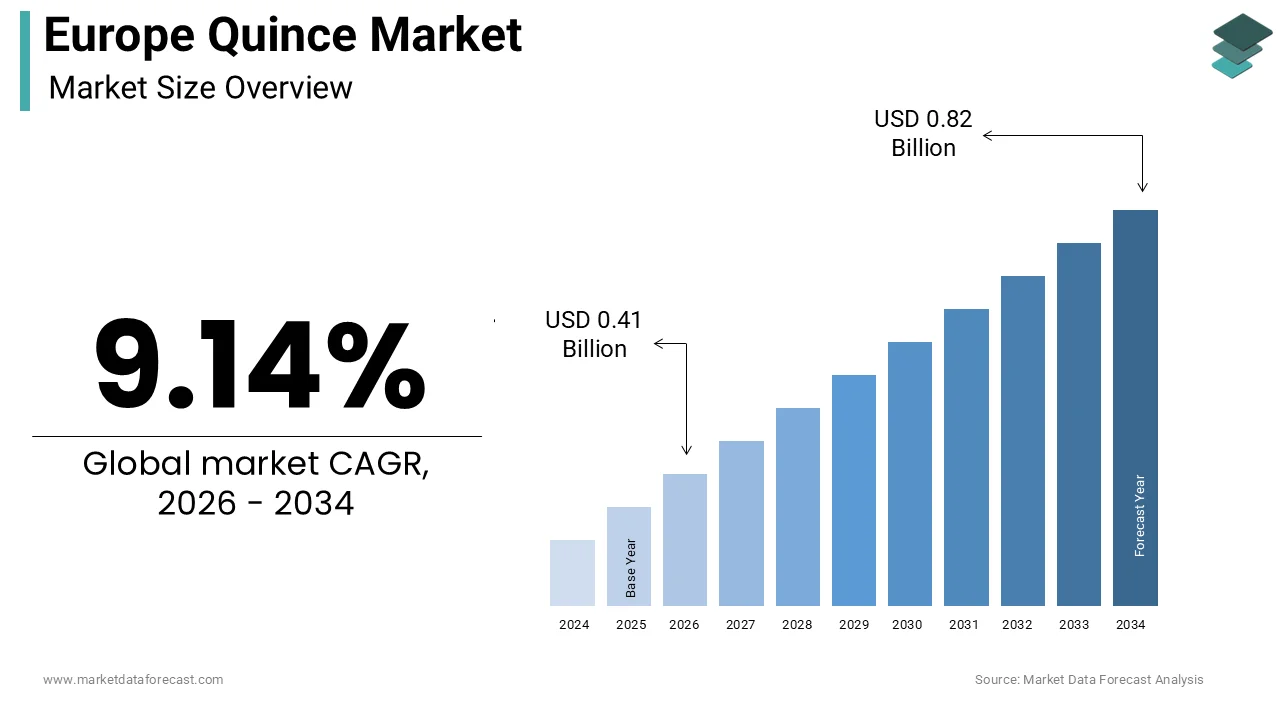
The quince is a pome fruit distinguished by its aromatic profile and high pectin content, which renders it unsuitable for raw consumption but ideal for processing into jellies, pastes, and beverages. In 2024, total quince production across Europe reached approximately 72000 tons, reflecting a stable output compared to the previous year. The average yield per hectare in Europe stabilized at 6.1 tons in 2024, indicating consistent agronomic performance despite varying climatic conditions. Consumption patterns reveal a gradual resurgence, with total European consumption rising by 0.4% to 40000 tons in 2024, marking the fifth consecutive year of growth following a prior period of decline. Per capita consumption varies significantly by nation, with Portugal and Latvia demonstrating the highest intake levels, recording 752 kg and 534 kg per 1000 persons, respectively, in 2024. This specialized market is increasingly defined not merely by fresh fruit sales but by the valorization of quince into value-added gastronomic and cosmetic products by leveraging its historical heritage and functional properties to appeal to modern consumers seeking authentic and natural ingredients.
MARKET DRIVERS
Resurgence of Heritage Gastronomy and Artisanal Food Culture
The revitalization of traditional European culinary practices for quince demand, as consumers increasingly seek authentic, region-specific flavors that connect them to historical foodways. This factor is eventually gaining huge traction over the growth of Europe quince market. Quince, once a staple in monastic and rural kitchens across the Mediterranean and Balkans, has found renewed relevance in the artisanal food sector, where it is transformed into premium jellies, membrillo pastes, and craft spirits. As per a recent study, the trend toward old monastic recipes has spurred the creation of specialized product lines, such as quince secco and heritage preserves, particularly in German-speaking regions, where quince trees historically represented only 0.5% of all fruit trees. This cultural renaissance is supported by a broader consumer shift toward slow food and traceable origins, with 2026 food trends in Europe highlighting a strong preference for fiber-forward and subtly healthy innovations that align with the nutritional profile of quince. The fruit's unique ability to gel without added pectin makes it indispensable for small-batch producers aiming for clean-label formulations, thereby driving demand from the gourmet and specialty retail sectors. Furthermore, the integration of quince into modern fusion cuisines and its presence in high-end restaurant menus have expanded its visibility beyond traditional strongholds. The enduring popularity of quince in countries like Portugal and Spain, where it remains a culinary icon that ensures a steady baseline demand that supports market expansion into new demographic segments interested in experiential dining and heritage ingredients.
Expanding Applications in Functional Foods and Natural Cosmetics
The escalating utilization of quince derivatives in the functional food and natural cosmetics industries, driven by the fruit's rich composition of antioxidants, vitamins, and mucilaginous compounds, is additionally driving the growth of Europe quince market. Modern scientific validation of quince health benefits has positioned it as a valuable ingredient for wellness-oriented products, ranging from gut-health beverages to anti-aging skincare formulations. According to a survey, the rising demand for organic and natural cosmetic products is significantly expanding opportunities for quince-derived ingredients, particularly extracts from seeds and pulp, which offer soothing and film-forming properties. In the food sector, quince by-products such as peel and core are being valorized through advanced extraction techniques to develop nutraceutical ingredients, offering a sustainable solution for functional food innovation. This diversification reduces reliance on fresh fruit sales and opens high-margin revenue streams for processors. The alignment of quince with the 2026 European trend of plant-based eating and functional wellness further amplifies its market potential, as brands seek natural alternatives to synthetic additives. Additionally, the fruit's adaptability to sustainable agricultural practices enhances its appeal to eco-conscious manufacturers. The market's projected expansion to 98000 tons by 2035, with confidence in these non-traditional applications to sustain long-term growth.
MARKET RESTRAINTS
Climatic Vulnerability and Yield Instability
The crop's heightened sensitivity to erratic weather patterns and extreme climatic events, which threaten yield stability and supply consistency, is hindering the growth of Europe quince market. Although quince trees possess a degree of drought tolerance, they require specific chilling hours and are susceptible to late spring frosts that can decimate blossoms, a risk that has intensified with the increasing frequency of volatile weather systems across the continent. As per the European Environment Agency, climate change risks are outpacing policy responses, with 21 of 36 major identified risks directly impacting food systems and agricultural productivity. The concentration of production in Southern Europe, particularly in Spain and Portugal, exposes the supply chain to Mediterranean heatwaves and water scarcity issues that are becoming more prevalent. Unlike hardier crops, quince orchards require precise microclimates to thrive, and deviations can lead to substantial economic losses for growers who lack the resources for advanced irrigation or protective infrastructure. These environmental pressures not only limit the expansion of cultivation areas but also introduce volatility into pricing and availability, discouraging large-scale commercial investment.
Limited Commercial Scale and Supply Chain Fragmentation
The fragmented nature of its production base, characterized by small-scale orchards and a lack of industrialized supply chains compared to major pomological crops, is additionally hindering the growth of Europe quince market. This limited scale results in inconsistent supply volumes, making it difficult for large retailers and food manufacturers to secure the quantities necessary for nationwide product launches. The absence of standardized harvesting and post-harvest handling protocols further exacerbates losses, given the fruit's susceptibility to bruising and rapid perishability if not processed promptly. The limited availability of quince in certain regions restricts market penetration and keeps the product in a niche category rather than a household staple. Furthermore, the labor-intensive nature of quince harvesting, often done manually to preserve fruit integrity, increases production costs and reduces competitiveness against imported alternatives or substitute fruits. The disconnect between smallholder farmers and modern distribution networks impedes the efficient flow of goods from orchard to processor by leading to bottlenecks that stifle market growth.
MARKET OPPORTUNITIES
Valorization of By-Products for Circular Economy Initiatives
The comprehensive valorization of processing by-products, aligning with the European Union's stringent circular economy goals and sustainability mandates, is substantially creating new opportunities for the growth of Europe quince market. Traditionally, parts of the quince fruit, such as peels, cores, and seeds, were discarded during the production of jams and pastes, representing a significant loss of bioactive compounds and economic value. However, emerging research demonstrates that these by-products are rich sources of polyphenols, dietary fiber, and essential oils, which can be extracted for use in high-value nutraceuticals, functional foods, and cosmeceuticals. According to recent studies, quince peel and core show great promise as raw materials for developing functional ingredients, thereby turning waste streams into profitable revenue channels. This approach not only enhances the overall profitability of quince processing facilities but also appeals to environmentally conscious consumers and regulators demanding zero-waste operations. Furthermore, leveraging these residues supports the development of local bio-economies in rural producing regions, creating jobs and fostering technological advancement in extraction methods.
Expansion into Premium Beverage and Plant-Based Alternatives
The growing prominence as a key ingredient in premium non-alcoholic drinks and plant-based formulations is additionally prompting the growth of Europe quince market. As consumer preferences shift away from sugary sodas and toward sophisticated, low-alcohol, or alcohol-free options, the distinct aromatic profile of quince offers a unique selling point for craft sodas, sparkling waters, and botanical spirits. The trend toward quince secco and other heritage-inspired beverages illustrates the potential for this fruit to anchor a new category of refined, adult soft drinks that cater to the growing sober-curious demographic. The successful export growth seen in neighboring regions, where quince products are gaining traction, validates the potential for similar expansion within the sector. By positioning quince as a versatile, natural, and exotic ingredient, producers can tap into the high-margin segments of the beverage industry that prioritize authenticity and health. Strategic partnerships with craft breweries and boutique beverage makers could further amplify visibility, transforming quince from a seasonal curiosity into a year-round staple of the modern European pantry.
MARKET CHALLENGES
Susceptibility to Devastating Pests and Pathogens
The form of biological threats, specifically a range of pests and diseases that can drastically reduce yield and fruit quality if left unmanaged, is one of the challenges for the growth of Europe quince market. Quince trees are particularly vulnerable to fire blight, a bacterial disease caused by Erwinia amylovora that can kill entire branches or trees by posing a catastrophic risk to orchards. Additionally, fungal infections such as quince leaf blight (Diplocarpon mespili) and rust disease frequently afflict foliage and fruit by leading to premature defoliation and spotted, unmarketable produce. As per recent agricultural assessments, managing pesticide resistance in weeds, diseases, and insect pests remains a critical challenge for European agriculture, necessitating the adoption of costly and knowledge-intensive integrated pest management strategies. The economic burden of implementing these protective measures falls heavily on small-scale farmers who dominate the quince sector, potentially eroding profit margins and discouraging new entrants.
Labor Shortages and High Production Costs
The acute shortage of agricultural labor, coupled with the inherently high costs associated with quince cultivation and harvesting, which is alsolimitst the growth of Europe quince market. Unlike many mechanized fruit crops, quince often requires manual harvesting to prevent bruising and ensure the integrity of the fruit for processing, a labor-intensive process that is becoming increasingly expensive and difficult to staff. The broader European agricultural sector is grappling with an aging workforce and a declining interest in seasonal farm work, leading to labor gaps that threaten the timely harvest of perishable crops. This scarcity drives up wage costs, which, when combined with the low yield density of quince orchards compared to apples or pears, results in a high cost of production per unit. The economic viability of quince farming is further strained by the need for specialized pruning and disease management, tasks that demand skilled labor, which is in short supply. These labor restricts the ability to scale operations efficiently. The situation is exacerbated by inflationary pressures on inputs such as fertilizers and energy, which have risen sharply in recent years, squeezing farmer margins even further. Unless the sector can innovate through mechanization adapted for quince or attract a new generation of growers through subsidies and training, the high cost structure and labor dependency will continue to restrain market growth and competitiveness against cheaper imports.
REPORT COVERAGE
| REPORT METRIC | DETAILS |
| Market Size Available | 2025 to 2034 |
| Base Year | 2025 |
| Forecast Period | 2026 to 2034 |
| CAGR | 9.14% |
| Segments Covered | By Product Type, Application, And Region |
| Various Analyses Covered | Global, Regional & Country Level Analysis; Segment-Level Analysis; DROC, PESTLE Analysis; Porter’s Five Forces Analysis; Competitive Landscape; Analyst Overview of Investment Opportunities |
| Regions Covered | UK, France, Spain, Germany, Italy, Russia, Sweden, Denmark, Switzerland, Netherlands, Turkey, and the Czech Republic |
| Market Leaders Profiled | Fresh Del Monte Produce Inc, Dole Food Company Inc, Greenyard NV, Total Produce plc (Dole plc), Nature’s Pride B.V, SanLucar Group, Anecoop S. Coop, The Fruit Company, Camposol Holding PLC, Frutas Montosa SL |
SEGMENTAL ANALYSIS
By Product Type Insights
The quince jam and marmalade segment was the largest by holding 38.2% of the Europe quince market share in 2025. The growth of the segment is majorly driven by the enduring strength of traditional gastronomy across the Mediterranean basin, where these products are staples rather than novelties. In countries like Spain and Portugal, quince paste, known as membrillo or marmalade, is a daily dietary component often paired with cheese or bread, creating a resilient demand cycle unaffected by fleeting food trends. The average per capita consumption of fruit preserves in Southern Europe exceeds 2.5 kg annually, with quince varieties accounting for a substantial niche within this category due to their unique flavor profile that cannot be replicated by apples or pears. Furthermore, the rise of gourmet food tourism has amplified the visibility of these traditional products, with artisanal producers reporting an increase in sales of heritage-labeled jams over the last three years as consumers seek authentic regional tastes.
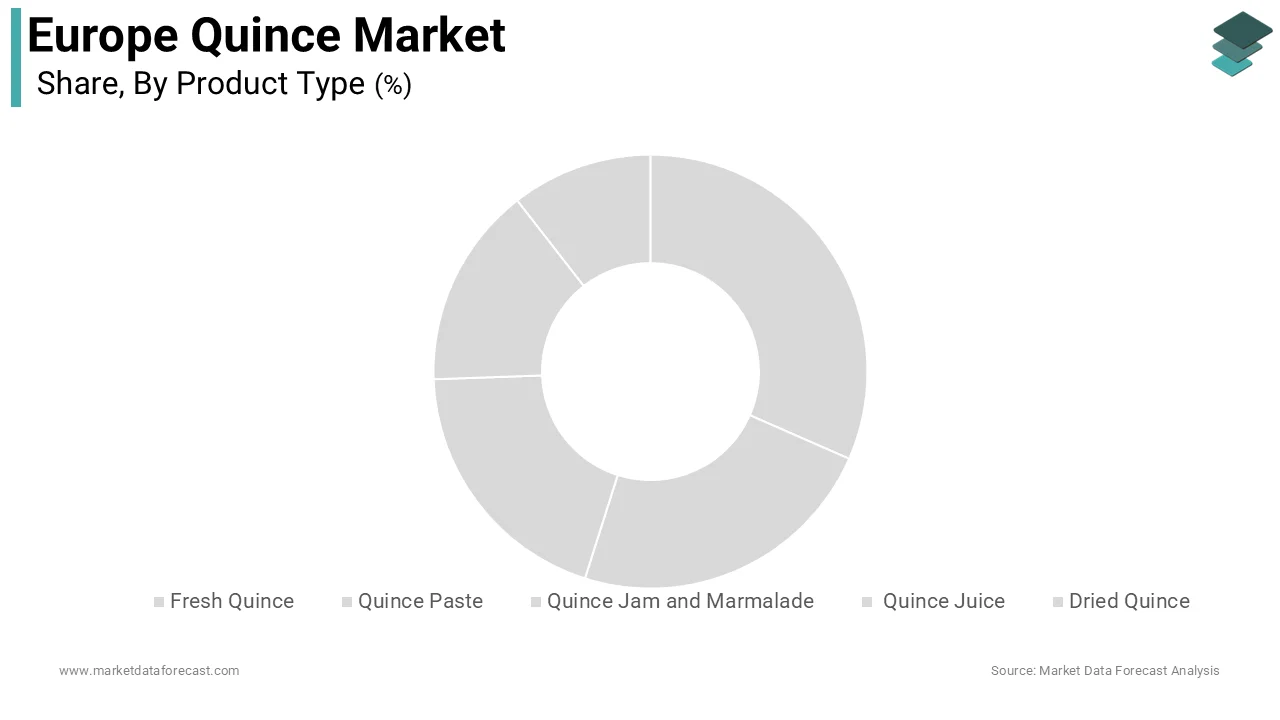
The quince juice segment is projected to register the fastest CAGR of 6.8% during the forecast period from 2026 to 2034, with the innovative repurposing of quince from a solid preserve ingredient into a liquid format that caters to the booming functional beverage and sober curious movements. The surging consumer demand for functional beverages that offer specific health benefits beyond basic hydration is also expanding the growth of the segment. Quince juice is rich in antioxidants, vitamin C, and dietary fiber, properties that are increasingly marketed to support digestive health and immune function, aligning perfectly with the 2026 European wellness trends. The natural astringency of quince, once a barrier to fresh consumption, is now valued in juice blends for its palate-cleansing effect and ability to balance sweeter fruit profiles in mixed drinks. The positioning of quince juice as a digestive aid after heavy meals resonates strongly in cultures with strong dining traditions, creating a specific usage occasion that drives repeat purchases. The introduction of cold-pressed and unpasteurized quince juice variants in premium retail chains has further legitimized the category, with sales volumes doubling in key urban markets like Berlin and London over the past two years.
By Application Insights
The Food and Beverages application segment held a dominant share of the Europe quince market in 2025, with the deep integration of quince into the daily diet and festive traditions of multiple European nations, where it serves as both a staple and a celebratory ingredient. In regions such as the Iberian Peninsula and the Balkans, quince is not merely a flavoring but a central component of national identity, consumed in forms ranging from roasted meats glazed with quince reduction to desserts featuring quince paste. As per statistical data from Eurostat, household expenditure on fruit-based preserves and processed fruit products in Southern Europe remains robust, with quince-based items contributing significantly to the 40000 ton annual consumption figure recorded in 2024. The versatility of the fruit allows it to traverse various meal occasions, from breakfast jams to dinner accompaniments and dessert fillings, ensuring a consistent and diversified demand stream that stabilizes the market. This broad applicability ensures that the Food and Beverages segment captures the vast majority of the raw material supply, leaving only marginal quantities for other uses.
The cosmetics application segment is anticipated to witness the fastest CAGR of 7.5% from 2026 to 2034. The growth of the segment is expected to grow with the intensifying consumer preference for natural, organic, and plant-based ingredients in personal care products, a trend that has reshaped the European beauty landscape. Quince seed oil, rich in essential fatty acids and mucilage, and quince fruit extract, loaded with polyphenols, are gaining recognition for their ability to soothe sensitive skin and provide hydration without synthetic chemicals. Within this burgeoning category, brands are actively seeking unique botanicals with proven efficacy to differentiate their product lines, and quince fits this criterion perfectly due to its historical use and emerging scientific validation. The fruit's extract is increasingly featured in serums, creams, and masks targeting anti-aging and barrier repair, with product launches containing quince ingredients increasing by 40% year over year. This surge in formulation activity is supported by the clean beauty movement, which demands transparency and sustainability, attributes that quince sourcing can readily satisfy.
REGIONAL ANALYSIS
Spain Quince Market Analysis
Spain was the largest contributor to the European quince market by holding 35.4% of the share in 2025. The country's agroclimatic conditions in regions like Extremadura and Andalusia provide an ideal environment for cultivating high-yielding quince orchards, establishing it as the foundational pillar of the regional supply chain. This volumetric dominance is supported by a highly organized cooperative structure that links thousands of smallholder farmers with large industrial facilities, ensuring efficient harvesting and minimal post-harvest losses. The domestic consumption of quince products in Spain is among the highest globally, with per capita intake driving a steady internal market that absorbs significant production volumes before exports are considered. Furthermore, Spanish exporters have successfully penetrated international markets in Latin America and North America, leveraging the reputation of Spanish membrillo as a premium gourmet product. The government's support for traditional fruit sectors through subsidies and rural development programs has further stabilized orchard maintenance and encouraged the replanting of aging trees with high productivity varieties.
Portugal Quince Market Analysis
Portugal's quince market was positioned second by holding 18.3% of the share in 2025, owing to its exceptional per capita consumption rates and the iconic status of marmelada in its culinary heritage. The country acts as a vital quality leader, focusing on high-value artisanal products and traditional recipes that command premium pricing in both domestic and export markets. Unlike other regions where quince is seasonal, in Portugal, it is a year-round staple found in households, restaurants, and confectioneries, driving a consistent and inelastic demand that supports local growers. Portuguese producers have excelled in branding their quince products as protected geographical indications, enhancing their appeal to tourists and export buyers seeking authentic Iberian flavors. The tourism sector plays a crucial role in amplifying this demand, as visitors experience quince-based dishes and subsequently seek out these products in their home countries, boosting export volumes. Additionally, the Portuguese government has invested in research to improve disease resistance and yield stability, ensuring that the sector remains viable despite climatic challenges.
Romania Quince Market Analysis
Romania's quince market is expected to witness a prominent growth opportunity in the coming years due to its extensive land availability and lower labor costs. The country serves as a crucial supplier of raw fruit to Western European processors who face capacity constraints or higher production expenses in their home nations. While domestic consumption is moderate compared to Iberian nations, the production capacity is immense, driven by a tradition of home preservation and a growing commercial sector aimed at export. Romanian quince is increasingly sought after by German and Austrian manufacturers who utilize the fruit for bulk processing into juices and concentrates, taking advantage of the competitive pricing offered by Romanian growers. The driving factor behind this growth is the modernization of agricultural practices and the influx of EU funds dedicated to improving fruit farming infrastructure, which has led to higher yields per hectare and better fruit quality standards. Furthermore, the resilience of Romanian agriculture to certain pests and the availability of water resources in key growing zones provide a comparative advantage over more drought-stricken Southern European regions.
Italy Quince Market Analysis
Italy quince market is expected to witness a renowned gastronomic reputation to drive demand for premium quince derivatives used in high-end culinary and confectionery applications. The Italian market is characterized by a focus on quality over quantity, with a strong emphasis on regional specialties and artisanal production methods. Italian consumers exhibit a strong preference for locally sourced and organically grown fruit, prompting growers to adopt sustainable practices that align with the country's broader agricultural ethos. Furthermore, the Italian wine and spirits sector has begun experimenting with quince distillates and liqueurs, opening new avenues for fruit utilization that complement traditional jam production. The presence of a dense network of small-scale artisanal producers ensures diversity in product offerings, catering to niche segments that value authenticity and craftsmanship.
Germany Quince Market Analysis
Germany's quince market is expected to grow into a consumption hub and a center for processing innovation rather than a leading producer of raw fruit. The German market status is defined by high import dependency to meet the robust domestic demand for quince juices, spirits, and specialty preserves. With domestic production limited to small orchards that account for less than 0.5% of total fruit trees, Germany relies heavily on imports from Spain, Romania, and Turkey to feed its sophisticated processing industry. German manufacturers are leaders in developing value-added quince products, including organic baby food, dietary supplements, and craft gins flavored with quince, which command high prices in the retail sector. Additionally, the strong retail infrastructure in Germany, dominated by discounters and premium supermarkets alike, ensures the wide distribution of quince products, making them accessible to a broad demographic. The investment in research and development for quince extraction technologies in German universities and private labs further stimulates the market by creating new applications for the fruit in the nutraceutical and cosmetic sectors.
COMPETITION OVERVIEW
The competition in the Europe quince market is characterized by a fragmented landscape where large industrial food processors coexist with numerous small-scale artisanal producers and regional cooperatives. Major multinational corporations leverage their extensive distribution networks and strong brand recognition to dominate the mass market segment, particularly in the jam and preserve categories. However, niche players compete effectively by emphasizing authenticity traditional recipes, and organic credentials which resonate strongly with discerning consumers seeking premium gourmet experiences. The barrier to entry remains moderate due to the specialized agricultural knowledge required for quince cultivation and processing, but intense rivalry exists over access to high-quality raw materials, especially during years of poor harvests. Competitive dynamics are further shaped by the ability of firms to innovate in product development, such as creating ready-to-eat formats or integrating quince into healthy beverage lines. Price competition is less severe than in commodity fruit markets because the unique properties of quince allow for premium pricing strategies based on heritage and quality.
KEY MARKET PLAYERS
A few major players of the Europe quince market include
- Fresh Del Monte Produce Inc
- Dole Food Company Inc
- Greenyard NV
- Total Produce plc (Dole plc)
- Nature’s Pride B.V
- SanLucar Group
- Anecoop S. Coop
- The Fruit Company
- Camposol Holding PLC
- Frutas Montosa SL
Top Strategies Used by the Key Market Participants
Key players in the Europe quince market primarily employ strategies focused on product differentiation through organic certification and premium branding to capture high-value consumer segments. Companies are increasingly investing in vertical integration by securing long term contracts with local farmers to ensure a stable supply of high-quality raw fruit amidst climatic volatility. Another major strategy involves the diversification of product portfolios to include innovative formats such as quince juices, functional snacks, and cosmetic derivatives, which appeal to younger demographics. Furthermore, expansion into emerging international markets through strategic partnerships and export agreements allows these companies to mitigate regional saturation and drive revenue growth beyond traditional European borders.
Leading Players in the Europe Quince Market
- Grefusa stands as a premier Spanish food manufacturer with deep roots in the quince sector, primarily known for its iconic Dulce de Membrillo products. The company leverages its extensive supply chain in the Iberian Peninsula to source high-quality raw fruit directly from local growers, ensuring consistent production volumes. Grefusa contributes significantly to the global market by exporting its traditional quince pastes and jams to over forty countries, including major markets in Latin America and North America. Recently, the company has strengthened its position by investing in sustainable packaging initiatives and launching organic certified quince lines to meet evolving consumer demands for clean-label goods. Their commitment to preserving traditional recipes while adopting modern food safety standards allows them to maintain a leadership role in the artisanal preserve category across Europe.
- Hero Group is a Swiss-based international food company that plays a pivotal role in the European quince landscape through its diverse portfolio of fruit preparations and baby food. The corporation utilizes quince as a key ingredient in its premium jam ranges and fruit purees distributed globally under various well-known brands. Hero Group enhances its global footprint by focusing on innovation in fruit processing technologies that retain the nutritional value and authentic flavor of quince. In recent actions, the company has expanded its sourcing networks in Southern Europe to secure stable supplies of organic quince amidst climatic challenges. They have also intensified their marketing efforts, highlighting the health benefits of quince, rich in fiber and antioxidants, to appeal to health-conscious parents and adults, thereby solidifying their reputation as a trusted provider of fruit-based nutrition worldwide.
- Dulcesol is a leading Spanish bakery and confectionery group that has integrated quince products deeply into its industrial offerings, particularly through its subsidiary brands specializing in traditional sweets. The company is a major contributor to the global market by mass-producing quince paste portions and quince-filled pastries that are exported to retail chains across Europe and beyond. Dulcesol recently strengthened its market position by modernizing its production facilities to increase efficiency and reduce energy consumption, aligning with broader sustainability goals. They have also launched new product formats such as single-serve quince snacks designed for the on-the-go consumer segment, which has gained traction in urban markets.
MARKET SEGMENTATION
This research report on the Europe quince market has been segmented and sub-segmented based on product type, application & region.
By Product Type
- Fresh Quince
- Quince Paste
- Quince Jam and Marmalade
- Quince Juice
- Dried Quince
By Application
- Food and Beverages
- Cosmetics
- Pharmaceuticals
- Others
By Region
- UK
- France
- Spain
- Germany
- Italy
- Russia
- Sweden
- Denmark
- Switzerland
- Netherlands
- Turkey
- Czech Republic
- Rest of Europe