- Product Description Description
- Table of Contents TOC
- List of Table & Figure LOT
- Get Free Sample PDF Sample PDF
Market Size, 2025
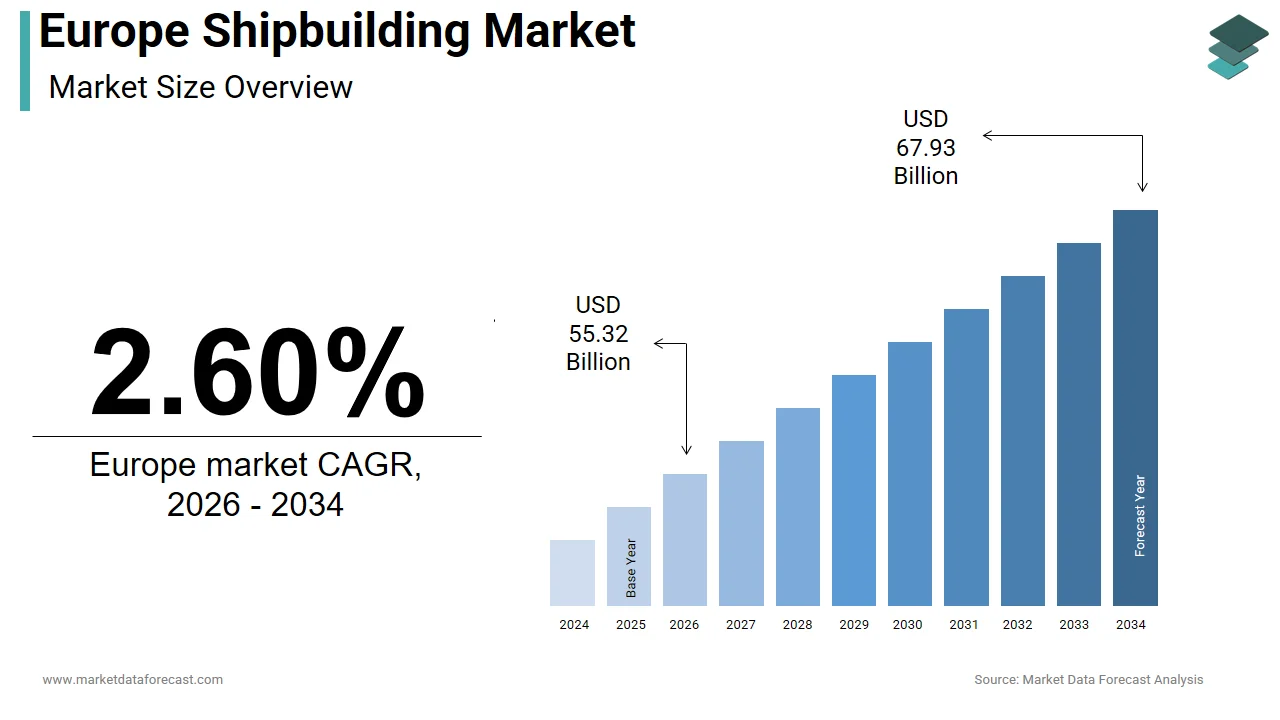
$53.92 BnMarket Estimate, 2026
$55.32 BnMarket Forecast, 2034
$67.93 BnCAGR, 2026–2034
2.60%Europe Shipbuilding Market Report Summary
The Europe shipbuilding market was valued at USD 53.92 billion in 2025, is estimated to reach USD 55.32 billion in 2026, and is projected to reach USD 67.93 billion by 2034, growing at a CAGR of 2.60% from 2026 to 2034. Market growth is driven by increasing demand for advanced passenger vessels, naval ships, and eco-friendly maritime solutions. Europe is known for its specialization in high-value ship segments such as cruise ships, naval vessels, and luxury yachts. The growing focus on sustainable shipping, including the adoption of LNG-powered and hybrid vessels, is further influencing market dynamics. Additionally, rising investments in maritime defense and modernization programs are supporting steady market growth.
Key Market Trends
- Increasing demand for cruise ships and luxury passenger vessels.
- Rising focus on green and energy-efficient shipbuilding technologies.
- Growth in naval defense and maritime security investments.
- Adoption of LNG-powered and hybrid propulsion systems.
- Technological advancements in ship design and automation.
Segmental Insights
- Based on type, the passenger ships segment dominated the Europe shipbuilding market by capturing 45.7% share in 2025, driven by strong demand for cruise liners and luxury vessels.
- Based on end use, the transport segment led the market with 55.7% share in 2025, supported by increasing maritime trade and logistics activities.
Regional Insights
The Europe shipbuilding market is witnessing steady growth across key maritime nations.
- Italy led the market in 2025 with 22.5% share, driven by its strong presence in cruise ship and luxury vessel construction.
- Germany followed with 18.4% share in 2025, supported by advanced engineering capabilities and shipbuilding expertise.
- France holds a significant position due to its robust naval defense industry and specialization in high-end cruise ship construction.
Competitive Landscape
The Europe shipbuilding market is competitive, with the presence of major global shipbuilders and specialized regional players. Companies are focusing on innovation, sustainability, and advanced vessel design to maintain competitiveness. Strategic partnerships, government contracts, and investments in green technologies are shaping the market landscape.
Prominent companies operating in the Europe shipbuilding market include Huntington Ingalls Industries, Inc., Samsung Heavy Industries Co., Ltd. (Samsung Group), Sumitomo Heavy Industries, Ltd., BAE Systems PLC, Naval Group, Meyer Werft, Damen Shipyards Group, China State Shipbuilding Corporation, Fincantieri S.p.A, Korea Shipbuilding & Offshore Engineering Co., Ltd., General Dynamics Corporation, and Mitsubishi Heavy Industries Ltd.
 Download Free Sample Report
Europe Shipbuilding Market Size
The size of the Europe shipbuilding market was worth USD 53.92 billion in 2025. The regional market is anticipated to grow at a CAGR of 2.60% from 2026 to 2034 and be worth USD 67.93 billion by 2034 from USD 55.32 billion in 2026.
Shipbuilding is the complex process of designing, constructing, and outfitting ships and other large floating vessels. This market serves as a critical backbone for continental trade security and technological innovation. The region maintains a distinct focus on high-value-added segments such as luxury cruise liners, offshore wind installation vessels, and sophisticated naval frigates, rather than competing in mass market bulk carrier production. As per the European Commission's 2025 Blue Economy Report, the EU Blue Economy contributes 1.7 percent to the total gross value added of the European Union, supporting approximately 4.9 million jobs. The strategic importance of this sector is underscored by the fact that Europe commands a dominant share in the global cruise ship market, with over 96 percent of the world's ocean-going cruise ship order book scheduled to be built in European yards, according to 2025 data from the Cruise Lines International Association (CLIA). Furthermore, the region hosts some of the most advanced research facilities dedicated to marine engineering and sustainable propulsion technologies. The operational landscape is characterized by a dense network of specialized suppliers and skilled labor forces primarily concentrated in nations such as Germany, Italy, France, and Poland. This ecosystem enables the delivery of complex vessels that adhere to stringent environmental and safety regulations. The current scenario reflects a pivot towards digitalization and decarbonization, where shipyards are increasingly integrating smart technologies and alternative fuel systems into their core offerings to meet the evolving demands of global shipping operators and naval authorities.
MARKET DRIVERS
Strategic Naval Modernization Programs Drive Sustained Demand for Defense Vessels
Geopolitical tensions and the subsequent rearmament initiatives across NATO member states have emerged as a key growth enabler for naval shipbuilding activities in the region and the overall Europe shipbuilding market. Nations are significantly increasing their defense budgets to replace aging fleets and enhance maritime security capabilities in response to regional instability. The International Institute for Strategic Studies indicates a significant year-on-year increase in European defense budgets, with a substantial portion of new funding being directed toward the modernization of naval fleets and maritime security capabilities. Countries such as Germany have committed to expanding their navy through projects like the F126 frigate program, which involves the construction of multiple multi-purpose combat vessels. Similarly, the United Kingdom continues to invest in its Type 26 and Type 31 frigate programs to maintain its global maritime presence. This surge in government spending provides shipyards with long-term contracts that ensure steady revenue streams and facilitate workforce stability. The demand is not limited to surface combatants but extends to submarines and auxiliary support ships. For instance, the French Naval Group has secured orders for new-generation nuclear attack submarines reflecting a broader trend towards advanced underwater capabilities. These programs require intricate integration of radar weapons and communication systems, which leverage the high technical expertise inherent in European shipbuilding clusters. The sustained commitment to naval modernization ensures that defense-related vessel construction remains a robust pillar of the market, offsetting volatility in the commercial sector.
Stringent Environmental Regulations Accelerate Adoption of Green Technologies
The International Maritime Organization and the European Union have implemented rigorous environmental standards, which in turn boost the expansion of the Europe shipbuilding market. These regulations act as a powerful driver for the adoption of innovative propulsion systems and eco-friendly vessel designs. The IMO strategy aims to reach net-zero greenhouse gas emissions from international shipping by or around 2050, which necessitates a complete overhaul of existing fleet architectures. To address the significant environmental footprint of the transportation sector, the European Union has officially integrated maritime activities into its Emissions Trading System (ETS), incentivizing shipbuilders to develop more efficient and cleaner vessel architectures. This regulatory pressure compels ship owners to order new vessels capable of running on liquefied natural gas, methanol, ammonia, or hydrogen fuels. European shipyards are at the forefront of developing these technologies with several notable projects already underway. For example, the Finnish shipyard Meyer Turku has delivered cruise ships equipped with hybrid propulsion systems that significantly reduce carbon footprints. Additionally, the Norwegian maritime authority reports that over 60 percent of new ferry orders in the region specify zero-emission or low-emission capabilities. This shift creates a competitive advantage for European builders who possess the engineering prowess to integrate complex green technologies. The demand for retrofitting existing vessels with scrubbers and energy-saving devices also contributes to market growth. Consequently, the transition towards sustainable maritime transport generates continuous opportunities for shipyards to showcase their technical leadership and secure premium contracts from environmentally conscious operators.
MARKET RESTRAINTS
High Labor Costs and Skilled Workforce Shortages Impede Competitive Pricing
High labor costs and a persistent shortage of skilled workers are crippling the European shipbuilding market. This crisis seriously undermines its ability to compete with Asian rivals. Wages in European countries are substantially higher than in major shipbuilding nations such as China, South Korea, and Japan, leading to increased production expenses. Eurostat emphasizes a significant wage gap between Western and Central European manufacturing hubs, though both regions maintain substantially higher labor costs compared to emerging markets in Asia. This disparity makes it challenging for European yards to compete on price for standard vessel types. Furthermore, the industry struggles with an aging workforce and difficulties in attracting young talent to traditional trades such as welding and pipe fitting. Data from the European Metalworkers Federation indicates that nearly 30 percent of the current shipbuilding workforce is expected to retire within the next decade, creating a critical skills gap. The lack of immediate replacements threatens project timelines and quality standards. Training new employees requires significant time and financial investment, which further strains operational budgets. While automation offers a potential solution, the initial capital outlay is prohibitive for many smaller yards. Consequently, the combination of high wage structures and demographic challenges restricts the ability of European shipbuilders to scale production efficiently and maintain market share in price-sensitive segments.
Supply Chain Vulnerabilities and Raw Material Price Volatility Disrupt Operations
The reliance on global supply chains for critical components and raw materials creates a major vulnerability for the Europe shipbuilding market. Consequently, European shipbuilders face significant disruptions and cost fluctuations. The aftermath of recent geopolitical conflicts and pandemics has highlighted the fragility of just-in-time manufacturing models. Steel prices, which constitute a major portion of vessel construction costs, have experienced considerable volatility, affecting profit margins. The World Steel Association indicates that European manufacturers have faced extreme price swings for raw materials, driven by shifting global demand and high regional energy expenses. This unpredictability complicates budgeting and contract negotiations with ship owners who often seek fixed price agreements. Additionally, the sourcing of specialized equipment such as engines, propulsion systems, and electronic navigation tools is concentrated among a limited number of suppliers primarily located outside Europe. Delays in the delivery of these components can halt entire production lines, leading to costly penalties for late delivery. The European Commission has noted that supply chain bottlenecks remain a key concern for the manufacturing sector, with lead times for certain critical parts extending by several months. Dependence on imports for rare earth elements used in advanced electronics and green technologies further exacerbates this vulnerability. Any disruption in trade routes or imposition of tariffs can severely impact the availability and cost of these materials. Therefore, the inability to secure stable and affordable inputs acts as a major restraint on the operational efficiency and financial performance of European shipyards.
MARKET OPPORTUNITIES
Expansion of Offshore Wind Energy Infrastructure Creates New Vessel Segments
The rapid expansion of offshore wind energy projects in the region offers a lucrative opportunity for shipbuilders to diversify into specialized installation and service vessels, which is predicted to propel the growth of the Europe shipbuilding market. Under the EU Strategy on Offshore Renewable Energy, the European Union has committed to a massive expansion of offshore wind capacity by mid-century, supported by interim acceleration measures designed to ensure energy independence. This massive infrastructure development requires a fleet of highly specialized vessels, including wind turbine installation vessels, cable laying ships, and service operation vessels. WindEurope emphasizes a steady increase in offshore wind installations across European basins, leading to a critical demand for a new generation of specialized installation and service vessels to meet upcoming deployment milestones. European shipyards are well-positioned to capitalize on this demand due to their proximity to key wind farm locations in the North Sea and Baltic Sea. Companies such as Damen Shipyards in the Netherlands and Flensburger Schiffbau Gesellschaft in Germany have already secured orders for next-generation installation vessels equipped with heavy lift cranes and dynamic positioning systems. These vessels represent high-value contracts that leverage local engineering expertise and regulatory knowledge. Furthermore, the maintenance and decommissioning of older wind farms will create a sustained demand for service vessels over the coming decades. The integration of digital monitoring systems and autonomous features in these vessels offers additional avenues for innovation. By focusing on this niche segment, European builders can differentiate themselves from Asian competitors who dominate standard cargo ship production. This strategic pivot aligns with broader sustainability goals and ensures long-term growth prospects for the industry.
Digitalization and Smart Ship Technologies Enhance Operational Efficiency
The integration of digital technologies and smart systems into vessel design and operations provides substantial opportunities for regional shipbuilders, which is likely to promote the expansion of the Europe shipbuilding market. These technologies enable firms to enhance value and create distinct product differentiation. The concept of smart ships involves the use of Internet of Things sensors, artificial intelligence, and big data analytics to optimize performance, reduce fuel consumption, and enhance safety. As per a study by DNV, the adoption of digital solutions in the maritime industry could potentially reduce operational costs by 10 to 15 percent through improved efficiency and predictive maintenance. European technology firms and shipyards are collaborating to develop integrated bridge systems, autonomous navigation tools, and remote monitoring platforms. For instance, the Norwegian company Kongsberg Gruppen has partnered with various shipyards to implement autonomous ferry solutions that are already in commercial operation. These advancements appeal to ship owners seeking to minimize crew costs and improve reliability. The European Union supports this transition through funding initiatives such as Horizon Europe, which promotes research and innovation in digital maritime technologies. The development of digital twins allows builders to simulate vessel performance during the design phase, reducing errors and accelerating time to market. Furthermore, the ability to offer lifelong digital services and software updates creates recurring revenue streams beyond the initial sale. By leading the way in digitalization, European shipbuilders can establish themselves as providers of comprehensive maritime solutions rather than mere manufacturers. This technological edge is crucial for maintaining competitiveness in a market increasingly driven by data and connectivity.
MARKET CHALLENGES
Intense Competition from Asian Shipbuilders Erodes Market Share
Competition from established hubs in Asia remains a major challenge to the Europe shipbuilding market. China, South Korea, and Japan dominate global production volumes, making them key competitors. These countries benefit from economies of scale, state subsidies, and lower production costs, enabling them to offer vessels at significantly lower prices. The UNCTAD Review of Maritime Transport confirms that Asian shipyards account for the vast majority of global shipbuilding completions in terms of gross tonnage, leaving European builders with a specialized share focused on high-value vessels. China alone has surpassed South Korea to become the world's largest shipbuilder, capturing approximately 55% to 65% of the global market order book. The sheer capacity of Asian yards allows them to handle large volumes of standard vessel types such as container ships, bulk carriers, and oil tankers, which European yards cannot produce competitively. This dominance creates a barrier to entry for European companies attempting to expand into broader commercial segments. Additionally, Asian governments often provide financial support and favorable credit terms to their domestic industries, further distorting market conditions. The European Commission has raised concerns about unfair trading practices and subsidies that disadvantage European manufacturers. Despite efforts to focus on high-value segments, the overwhelming volume produced by Asian competitors limits the growth potential for European shipyards. The constant pressure to innovate and reduce costs while maintaining quality places a significant strain on resources. Consequently, the inability to compete on scale and price remains a persistent challenge that restricts the overall expansion of the European shipbuilding industry.
Regulatory Compliance Burdens Increase Operational Complexity and Costs
Navigating the complex and evolving landscape of international and regional regulations imposes a substantial burden on the region’s shipbuilders, which negatively impacts the expansion of the Europe shipbuilding market. Consequently, both design processes and operational costs are significantly affected. Compliance with environmental safety and labor standards requires continuous investment in research, development, and certification procedures. The European Union Green Deal and the Fit for 55 package introduce stringent requirements for carbon intensity and energy efficiency that necessitate frequent design modifications. Research indicates that the introduction of new digital safety requirements, such as those for cybersecurity and autonomous systems, has introduced significant technical challenges to the vessel approval and certification process. Each new regulation often requires extensive testing and documentation, which delays project timelines and increases administrative overhead. Small and medium-sized enterprises within the supply chain may struggle to keep pace with these changing requirements, leading to potential bottlenecks. Furthermore, the divergence between international standards set by the IMO and regional EU directives can create confusion and inefficiencies for builders operating in global markets. The cost of obtaining certifications from multiple classification societies further erodes profit margins. Furthermore, complying with decarbonization mandates like the Energy Efficiency Existing Ship Index (EEXI) and Energy Efficiency Design Index (EEDI) requires shipbuilders to employ advanced hydrodynamic modeling and make precise engineering modifications to vessel designs. While these regulations aim to promote sustainability, they inadvertently raise the barrier to entry and operational costs for European yards. The need to constantly adapt to new legal frameworks diverts resources from innovation and production. Thus, the regulatory environment, while necessary for progress, poses a significant challenge to the agility and profitability of the Europe shipbuilding market.
REPORT COVERAGE
| REPORT METRIC | DETAILS |
| Market Size Available | 2025 to 2034 |
| Base Year | 2025 |
| Forecast Period | 2026 to 2034 |
| Segments Covered | By Type, End Use, and Country. |
| Various Analyses Covered | Global, Regional, and Country-Level Analysis, Segment-Level Analysis, Drivers, Restraints, Opportunities, Challenges; PESTLE Analysis; Porter’s Five Forces Analysis, Competitive Landscape, Analyst Overview of Investment Opportunities |
| Countries Covered | UK, France, Spain, Germany, Italy, Russia, Sweden, Denmark, Switzerland, Netherlands, Turkey, Czech Republic, and the Rest of Europe. |
| Market Leaders Profiled | Huntington Ingalls Industries, Inc., Samsung Heavy Industries Co., Ltd. (Samsung Group), Sumitomo Heavy Industries, Ltd., BAE Systems PLC, Naval Group, Meyer Werft, Damen Shipyards Group, China State Shipbuilding Corporation, Fincantieri S.p.A. (CDP Industria S.p.A.), Korea Shipbuilding & Offshore Engineering Co., Ltd., General Dynamics Corporation, Mitsubishi Heavy Industries Ltd., and Others. |
SEGMENTAL ANALYSIS
By Type Insights
The passenger ships segment led the Europe shipbuilding market and occupied a 45.7% share in 2025. This prominence of the segment is primarily driven by the region's unparalleled expertise in constructing large luxury cruise liners, which command high unit prices and require sophisticated engineering capabilities. Europe is home to the world's most advanced cruise shipyards located in Italy, France, Germany, and Finland. The demand for ultra-large cruise ships exceeding 200000 gross tons continues to rise as operators seek economies of scale and enhanced onboard amenities. For instance, Meyer Werft in Germany and Fincantieri in Italy have secured multi-billion euro orders for next-generation liquefied natural gas-powered cruise ships. These projects involve complex integration of hospitality systems, safety features, and environmental technologies that few other regions can replicate. The average value of a single large cruise vessel exceeds 1 billion US dollars, which significantly boosts the revenue metrics of the passenger segment compared to standard cargo vessels. Moreover, the sustained demand ensures that passenger ships remain the financial cornerstone of the European shipbuilding industry, leveraging specialized labor and supply chains that have been refined over decades of continuous innovation and delivery excellence in the luxury maritime sector. The domination of the passenger ships segment is further reinforced by the rapid adoption of hybrid and sustainable propulsion technologies, which align with stringent environmental regulations and consumer preferences for eco-friendly travel. European shipbuilders are pioneers in integrating battery electric systems, fuel cells, and alternative fuel engines into cruise ship designs. This technological leadership allows European yards to differentiate their products and command premium pricing. Such innovations are critical as the International Maritime Organization tightens emission standards globally. The investment in research and development for these technologies is substantial, with European unions collaborating with technology providers like ABB and Siemens Energy to create integrated power solutions. These advancements not only meet regulatory requirements but also enhance the marketing appeal of cruise lines targeting environmentally conscious travelers. The ability to deliver turnkey solutions that combine luxury accommodation with cutting-edge green technology creates a high barrier to entry for competitors outside Europe. Consequently, the passenger segment continues to lead the market by setting the global standard for sustainable and technologically advanced maritime hospitality vessels.
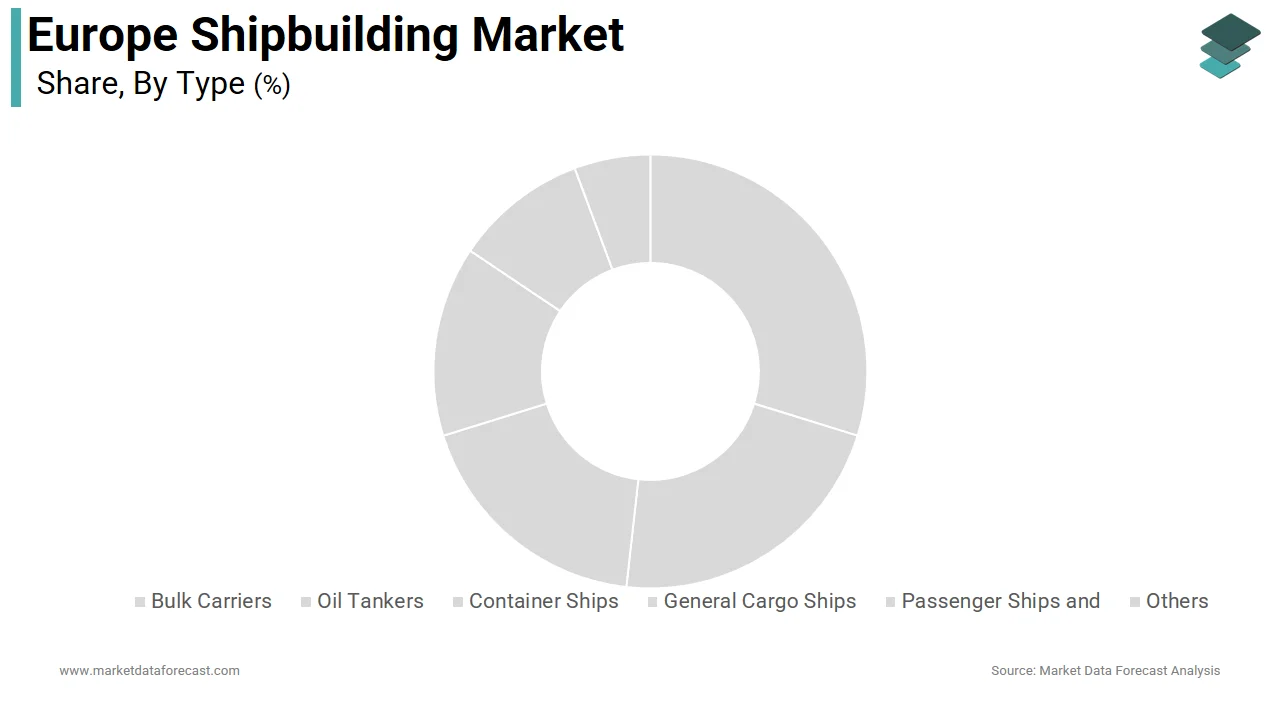
The other segment is anticipated to witness the fastest CAGR of 8.5% from 2026 to 2034 due to the aggressive expansion of offshore wind energy infrastructure across the continent. This segment includes specialized offshore vessels such as wind turbine installation vessels, cable layers, and service operation vessels. European shipyards are uniquely positioned to fulfill this need due to their proximity to major wind farm sites in the North Sea and Baltic Sea. Companies like Damen Shipyards and Flensburger Schiffbau Gesellschaft have reported record order books for these specialized vessels. The complexity of these ships, which feature heavy lift cranes, dynamic positioning systems, and jack-up capabilities, allows for higher profit margins compared to standard commercial vessels. Furthermore, the transition from fossil fuels to renewable energy sources is supported by substantial government subsidies and regulatory mandates, which de-risk investments for ship owners. The technical specifications for these vessels are continuously evolving to accommodate larger turbines requiring constant innovation in hull design and stability systems. This dynamic environment fosters rapid growth in the other segment as shipyards adapt to the specific and changing needs of the renewable energy sector, driving significant volume and value increases in the coming years. The robust growth of the other segment is further propelled by comprehensive government policy support and increased private investment in green energy projects, which prioritize the development of specialized maritime infrastructure. National governments across Europe have launched dedicated funding programs to accelerate offshore wind deployment, which indirectly stimulates shipbuilding activities. The financial backing reduces the capital risk for shipping companies investing in new fleets. For instance, the Netherlands and Denmark have jointly committed to developing energy islands in the North Sea, which will serve as hubs for wind farm maintenance and require a dedicated fleet of service vessels. The policy framework also includes carbon pricing mechanisms that make fossil fuel-based energy less competitive, thereby increasing the economic viability of offshore wind projects. Additionally, the European Investment Bank has facilitated loans for green maritime technologies, encouraging the adoption of zero-emission service vessels. These policy drivers create a stable and predictable demand environment for shipbuilders specializing in offshore support vessels. The alignment of national energy security goals with climate objectives ensures long-term commitment to offshore wind expansion. Consequently, the other segment benefits from a confluence of regulatory incentives, financial support, and strategic energy planning that collectively drive its status as the fastest-growing component of the European shipbuilding market.
By End Use Insights
The transport segment dominated the Europe shipbuilding market and captured a 55.7% share in 2025. This dominance of the segment is attributed to the continuous need to renew and expand commercial fleets to facilitate international trade and regional logistics. Despite competition from Asia, European yards retain a significant role in building specialized transport vessels such as roll-on/roll-off ferries, chemical tankers, and high-value container feeders. The European Short Sea Shipping network relies heavily on modern, efficient vessels to connect ports across the Mediterranean, Baltic, and North Seas. The demand for specialized transport vessels is also influenced by the growth in e-commerce, which requires faster and more reliable logistics solutions. European shipbuilders leverage their expertise in customization to deliver vessels optimized for specific routes and cargo types. This focus on niche transport segments allows them to maintain a strong market presence despite the overall dominance of Asian yards in bulk carrier construction. The steady rhythm of fleet replacement and the need for regulatory compliance ensure that the transport segment remains the largest by operational volume in the region. The dominance of the transport segment is significantly reinforced by stringent environmental regulations that mandate the replacement of older polluting vessels with eco-friendly alternatives. The European Union Emissions Trading System now includes maritime transport, creating a financial incentive for operators to upgrade their fleets with cleaner technologies. This regulatory landscape drives demand for new builds equipped with scrubbers, liquefied natural gas engines, or battery hybrid systems. European shipyards are at the forefront of designing such vessels, offering tailored solutions that meet both international and local standards. For instance, the construction of hydrogen-ready ferries in Norway and Sweden demonstrates the industry's response to decarbonization goals. The cost of non-compliance, including carbon taxes and port fees, invests in new green vessels economically viable for transport operators. Additionally, the EU Green Deal promotes the shift towards sustainable mobility, which includes modernizing inland waterway and short sea shipping fleets. This policy support accelerates the ordering cycle for transport vessels as companies seek to future-proof their operations against rising carbon costs. The combination of regulatory pressure and economic incentives creates a sustained demand for new transport vessels, ensuring that this segment maintains its leading position in the European shipbuilding market through continuous modernization and technological adaptation.
The military segment is likely to experience the fastest CAGR of 7.2% during the forecast period. This rapid expansion is mainly propelled by escalating geopolitical tensions and the subsequent increase in defense budgets across NATO member states. The security environment in Europe has deteriorated, prompting nations to prioritize naval modernization and capability enhancement. Countries such as Germany, Poland, and the United Kingdom have launched ambitious shipbuilding initiatives to replace aging fleets and enhance maritime sovereignty. These programs provide shipyards with stable, long-term contracts that mitigate commercial market volatility. The focus is on advanced multi-mission vessels capable of anti-submarine warfare, air defense, and surface combat. The complexity of these projects requires specialized skills and secure supply chains, which European defense contractors are well-equipped to provide. Furthermore, the emphasis on strategic autonomy within the European Union encourages member states to source defense equipment locally rather than relying on external suppliers. This trend supports domestic shipyards and fosters collaboration between nations on joint naval projects. The sustained commitment to enhancing naval capabilities ensures that the military segment experiences robust growth, outpacing other end-use categories in the coming decade. The rapid growth of the military segment is further accelerated by the integration of advanced technologies and digital systems into modern naval platforms, which require specialized construction capabilities. Modern warships are increasingly defined by their software sensor suites and connectivity rather than just hull form, driving demand for high-tech shipbuilding services. European shipbuilders are collaborating with technology firms to integrate these advanced systems into new vessel designs. For instance, the French Italian FREMM frigate program incorporates state-of-the-art radar and combat management systems that require precise installation and testing during construction. The shift towards unmanned surface and underwater vehicles also creates new opportunities for shipyards to develop specialized mother ships and support vessels. These technological advancements increase the value and complexity of each vessel, making military projects highly lucrative for skilled builders. The need for interoperability among NATO forces further standardizes certain technical requirements, facilitating cross-border collaborations and joint procurement initiatives. This technological push ensures that European navies remain at the forefront of maritime warfare capabilities. Consequently, the military segment grows rapidly as nations invest in next-generation platforms that combine superior firepower with advanced digital intelligence, securing its position as the most dynamic end-use sector in the European shipbuilding industry.
COUNTRY LEVEL ANALYSIS
Italy Shipbuilding Market Analysis
Italy was the top performer in the European shipbuilding market and accounted for a 22.5% share in 2025 because of its leadership in cruise ship and naval vessel construction. The country is home to Fincantieri, one of the world's largest and most diversified shipbuilding groups, which operates multiple yards across the peninsula. Italy's dominance in the cruise sector is evident as it constructs a significant portion of the global luxury liner fleet, including vessels for brands like Carnival Princess and Viking. The Italian navy also contributes significantly to the market with ongoing programs for frigates, submarines, and amphibious assault ships. The government supports the sector through strategic partnerships and export credit agencies that facilitate international sales. Italy's strength lies in its ability to integrate complex hospitality systems with advanced marine engineering, a skill set that is difficult to replicate. The supply chain in regions such as Trieste and Monfalcone is highly specialized, providing critical components and services. Furthermore, Italy is investing in green technologies with new projects focusing on liquefied natural gas and hybrid propulsion for cruise ships. The country's strategic location in the Mediterranean also enhances its role in repair and maintenance services. Despite challenges from global competition, Italy maintains its competitive edge through innovation and high-quality craftsmanship, ensuring its continued leadership in the high-value segments of the European shipbuilding market.
Germany Shipbuilding Market Analysis
Germany was the next prominent country in the European shipbuilding market and occupied a share of 18.4% in 2025. This position of the German market is fuelled by its expertise in specialized commercial vessels and naval defense platforms. The German industry is led by companies such as ThyssenKrupp Marine Systems and Meyer Werft, which are renowned for their technological sophistication and engineering precision. Germany is a global leader in the construction of cruise ships, with Meyer Werft delivering some of the most innovative and environmentally friendly liners in the world. The naval segment is equally important, with the German navy investing heavily in new frigates, submarines, and corvettes to enhance its operational capabilities. The F125 frigate program and the upcoming F126 project exemplify the country's commitment to maintaining a modern and capable fleet. Germany is also at the forefront of developing green shipping technologies, including hydrogen fuel cells and battery electric systems for ferries and inland waterway vessels. The government supports these initiatives through funding programs aimed at decarbonizing the maritime sector. The country's strong industrial base and skilled workforce enable it to compete effectively in high-value niches despite higher labor costs. Germany's focus on innovation and sustainability ensures that it remains a key player in the European shipbuilding market, driving advancements in both commercial and defense sectors.
France Shipbuilding Market Analysis
France maintains a strong presence in the European shipbuilding market, which is supported by its robust naval defense industry and luxury cruise ship construction capabilities. The French naval group Naval Group is a key player in the global defense market, specializing in nuclear submarines, frigates, and aircraft carriers. France is currently executing major naval programs such as the construction of nuclear attack submarines and the next-generation aircraft carrier, which provide substantial workload for its shipyards. In the commercial segment, Chantiers de l'Atlantique in Saint-Nazaire is a leading builder of large cruise ships and special-purpose vessels. The yard has secured orders for some of the world's largest and most complex cruise liners, demonstrating its technical prowess. France is also investing in renewable energy-related shipbuilding, including vessels for offshore wind farm maintenance. The government supports the industry through strategic investments and research initiatives focused on digitalization and decarbonization. The French shipbuilding sector benefits from a highly skilled workforce and a strong ecosystem of suppliers and technology providers. Despite facing competition from Asian yards in standard vessel types, France leverages its expertise in high-value complex projects to maintain its competitive position. The combination of defense commitments and commercial innovation ensures that France remains a vital component of the European shipbuilding industry.
Spain Shipbuilding Market Analysis
Spain holds a significant position in the European shipbuilding market owing to its diverse capabilities in commercial naval and specialized vessel construction. The Spanish industry is centered around companies like Navantia, which is a state-owned enterprise playing a pivotal role in both civil and military shipbuilding. Navantia is a key supplier to the Spanish navy and has exported frigates and amphibious ships to several international customers, including Australia and Norway. Spain is also active in the cruise ship segment, with yards in Cadiz and Ferrol participating in consortia for large liner construction. The country is increasingly focusing on green technologies and digitalization to enhance its competitiveness. Navantia has developed expertise in building offshore wind foundation structures and service vessels, aligning with the growing renewable energy sector in Europe. The Spanish government supports the industry through modernization plans and investment in research and development. The availability of skilled labor and strategic port locations further strengthens Spain's position in the market. Despite challenges related to global competition and economic fluctuations, Spain continues to innovate and diversify its product portfolio. The focus on high-value-added segments and international collaborations ensures that Spain remains a key contributor to the European shipbuilding landscape, maintaining its relevance in both defense and commercial markets.
Netherlands Shipbuilding Market Analysis
The Netherlands is likely to grow significantly in the European shipbuilding market from 2026 to 2034 due to its leadership in dredging vessels, offshore support ships, and inland waterway transport. Dutch shipyards such as Damen Shipyards Group are globally recognized for their modular construction methods and standardized vessel designs, which offer efficiency and cost effectiveness. Damen operates a vast network of yards and has a strong presence in the offshore energy sector, supplying vessels for wind farm installation and maintenance. The country is also a hub for yacht building and specialized cargo vessels. The Dutch government supports the industry through policies promoting green shipping and digital innovation. The Port of Rotterdam serves as a critical testing ground for new technologies and logistical solutions, enhancing the ecosystem for shipbuilders. The Netherlands excels in integrating smart technologies into vessel operations, improving efficiency and safety. The focus on sustainability and innovation allows Dutch shipbuilders to compete effectively in high-value segments despite the small size of the domestic market. The industry's adaptability and commitment to environmental standards ensure its continued growth and relevance in the European shipbuilding market, particularly in the emerging sectors of renewable energy support and autonomous shipping.
COMPETITIVE LANDSCAPE
The competition in the Europe shipbuilding market is characterized by intense rivalry among specialized firms focusing on high-value segments rather than volume production. European yards distinguish themselves through technological superiority, engineering excellence, and adherence to strict environmental standards, which Asian competitors often struggle to match in niche areas. The market features a mix of large conglomerates and specialized boutique shipyards, each leveraging unique capabilities in cruise liners, naval vessels, or offshore support ships. Competitive dynamics are influenced by government policies, defense budgets, and regulatory frameworks that favor local producers for strategic projects. Companies compete on innovation, speed of delivery, and after-sales service quality rather than price alone. The entry of new technologies, such as autonomous systems and green fuels, creates opportunities for differentiation but also raises barriers to entry due to high research costs. Collaboration between shipyards, technology providers, and classification societies is essential to stay ahead. Despite global pressure, the European market remains resilient due to its strong intellectual property base, skilled workforce, and established relationships with premium customers seeking bespoke maritime solutions.
KEY MARKET PLAYERS
The leading companies operating in the Europe shipbuilding market include:
- Huntington Ingalls Industries, Inc.
- Samsung Heavy Industries Co., Ltd. (Samsung Group)
- Sumitomo Heavy Industries, Ltd.
- BAE Systems PLC
- Naval Group
- Meyer Werft
- Damen Shipyards Group
- China State Shipbuilding Corporation
- Fincantieri S.p.A (CDP Industria S.p.A.)
- Korea Shipbuilding & Offshore Engineering Co., Ltd.
- General Dynamics Corporation
- Mitsubishi Heavy Industries Ltd.
TOP PLAYERS IN THE MARKET
- Fincantieri stands as a premier global shipbuilder with extensive operations in Italy and international facilities. The company dominates the luxury cruise segment by delivering complex vessels for major brands worldwide. It actively contributes to naval defense through advanced frigate and submarine construction for various governments. Recent strategic moves include expanding its footprint in the United States through joint ventures and acquiring specialized technology firms to enhance digital capabilities. Fincantieri focuses heavily on sustainability by developing hybrid propulsion systems and alternative fuel solutions for new builds. Its integration of artificial intelligence in design processes improves efficiency and reduces delivery times. The group continues to secure high-value contracts for next-generation polar expedition ships and mega yachts. Fincantieri maintains a competitive edge in both commercial and military sectors by leveraging its diverse portfolio and technological expertise. Furthermore, it drives innovation in green maritime technologies across its global network of shipyards.
- Naval Group is a leading European defense contractor specializing in naval vessels and renewable marine energy solutions. The company plays a critical role in national security by designing and building nuclear submarines, frigates, and surface combatants for the French Navy and international clients. It recently strengthened its position by securing major contracts for future submarine programs and modernizing existing fleets. Naval Group invests significantly in research and development to integrate advanced combat systems and autonomous technologies into its platforms. The firm also expands into offshore wind energy by providing floating foundation technologies and maintenance services. Its commitment to innovation includes developing digital twin models for predictive maintenance and operational efficiency. Naval Group collaborates with European partners to enhance interoperability and standardize naval equipment. The company reinforces its status as a key player in the strategic maritime sector by focusing on high-tech defense solutions and sustainable marine energy. Through this approach, it actively supports European industrial sovereignty and technological advancement.
- Meyer Werft is a renowned German shipyard famous for constructing innovative and environmentally friendly cruise ships. The company sets global standards in passenger vessel design by incorporating cutting-edge technologies such as liquefied natural gas propulsion and battery hybrid systems. It recently delivered several large-scale cruise liners featuring advanced waste management and energy efficiency solutions. Meyer Werft strengthens its market position by investing in hall expansions and digital production tools to enhance manufacturing precision. The shipyard collaborates closely with engine manufacturers and technology providers to develop zero-emission concepts for future fleets. Its focus on customization allows it to meet the specific requirements of premium cruise lines worldwide. Meyer Werft also engages in retrofitting projects to upgrade existing vessels with greener technologies. By prioritizing sustainability and technical excellence, the company maintains its reputation as a leader in the luxury cruise segment. Its continuous innovation in ship design and construction methods ensures long-term competitiveness in the high-value European shipbuilding landscape.
TOP STRATEGIES USED BY THE KEY MARKET PARTICIPANTS
Key players in the Europe shipbuilding market primarily employ strategies focused on technological innovation and sustainable development to maintain competitiveness. Companies invest heavily in research and development to create eco-friendly propulsion systems such as hydrogen fuel cells and battery electric drives. Strategic partnerships and joint ventures are common approaches to share risks and combine expertise in complex naval and commercial projects. Firms also pursue diversification by entering emerging sectors like offshore wind support vessels and autonomous shipping technologies. Digitalization serves as a core strategy with builders integrating artificial intelligence and digital twins to optimize design and production efficiency. Additionally, companies expand their global footprint through acquisitions and international collaborations to access new markets and supply chains. Workforce development initiatives aim to address skilled labor shortages by training employees in advanced manufacturing techniques. These strategies collectively enable European shipbuilders to differentiate themselves from Asian competitors by offering high-value specialized vessels that meet stringent environmental regulations and customer demands for superior quality and innovation.
MARKET SEGMENTATION
This research report on the Europe shipbuilding market has been segmented and sub-segmented into the following categories.
By Type
- Bulk Carriers
- Oil Tankers
- Container Ships
- General Cargo Ships
- Passenger Ships and
- Others
By End Use
- Transport and
- Military
By Country
- United Kingdom
- France
- Spain
- Germany
- Italy
- Russia
- Sweden
- Denmark
- Switzerland
- Netherlands
- Rest of Europe