- Product Description Description
- Table of Contents TOC
- List of Table & Figure LOT
- Get Free Sample PDF Sample PDF
Market Size, 2025
$3.49 BnMarket Estimate, 2026
$3.88 BnMarket Forecast, 2034
$8.96 BnCAGR, 2026–2034
11.04%Europe Smart Grid Security Market Report Summary
The Europe smart grid security market was valued at USD 3.49 billion in 2025, is estimated to reach USD 3.88 billion in 2026, and is projected to reach USD 8.96 billion by 2034, growing at a CAGR of 11.04% from 2026 to 2034. Market growth is driven by the increasing digitization of power infrastructure, rising cyber threats targeting critical energy systems, and the growing integration of renewable energy sources into the grid. Smart grid security solutions help protect energy networks from cyberattacks, ensure data integrity, and maintain uninterrupted power supply. The expansion of smart grid deployments, regulatory mandates for infrastructure protection, and investments in advanced cybersecurity technologies are further accelerating market growth across Europe.
Key Market Trends
- Increasing focus on cybersecurity for critical energy infrastructure.
- Rising adoption of smart grids and digital energy management systems.
- Growing integration of renewable energy sources into power grids.
- Expansion of advanced threat detection and network security solutions.
- Increasing regulatory emphasis on grid resilience and data protection.
Segmental Insights
- Based on component, the solution segment dominated the Europe smart grid security market by capturing 62.8% share in 2025, driven by demand for advanced cybersecurity platforms and tools.
- Based on subsystem, the SCADA and Industrial Control Systems (ICS) segment held the largest share of 38.1% in 2025, supported by their critical role in managing and monitoring grid operations.
- Based on security type, the network security segment led the market with 35.3% share in 2025, driven by the need to protect communication networks and prevent cyber intrusions.
Regional Insights
The Europe smart grid security market is witnessing strong growth across major countries due to increasing investments in energy infrastructure and cybersecurity.
- Germany led the regional market in 2025 with 28.7% share, supported by its advanced energy transition initiatives and strong industrial base.
- The United Kingdom followed with 20.5% share in 2025, driven by smart grid modernization and cybersecurity investments.
- France holds a significant position due to its evolving energy mix and strong involvement of state-owned enterprises in grid modernization.
Competitive Landscape
The Europe smart grid security market is highly competitive, with the presence of global energy technology providers and cybersecurity solution companies. Market participants are focusing on enhancing grid protection capabilities, integrating advanced analytics, and developing scalable security solutions. Strategic collaborations, innovation in cybersecurity technologies, and investments in smart grid infrastructure are shaping competitive dynamics across the region.
Prominent companies operating in the Europe smart grid security market include Schneider Electric, Siemens AG, Itron, Calisen, Hitachi Energy Ltd., Iberdrola, Techem, and Smart Wires.
Europe Smart Grid Security Market Size
The Europe smart grid security market was worth USD 3.49 billion in 2025. The European market is projected to reach USD 8.96 billion by 2034 from USD 3.88 billion in 2026, growing at a CAGR of 11.04% from 2026 to 2034.

Smart grid security is the collection of technologies, policies, and protocols designed to protect the electricity distribution network from both cyber and physical attacks. This domain secures the bidirectional flow of electricity and data between utilities, distributed energy resources, and end consumers, ensuring the resilience of critical power infrastructure against increasingly sophisticated attacks. The region faces a unique paradox where the rapid digitization of the grid outpaces the implementation of uniform security standards, creating vulnerabilities in an otherwise advanced energy ecosystem. As per Eurostat, renewable energy sources accounted for nearly half of the gross electricity consumption in the European Union in 2024, necessitating a highly interconnected and software-defined grid that is inherently more exposed to cyber risks. Furthermore, the European Union Agency for Cybersecurity reported that the energy sector experienced an increase in significant cyber incidents in 2024 compared to the previous year, underscoring the urgency of robust defense mechanisms. The International Energy Agency noted that a majority of European electricity customers now have integrated smart meters, expanding the attack surface for potential cyber threats. This market serves as the digital immune system for the continent's energy transition, safeguarding the stability of power supply while enabling the integration of decentralized generation and electric mobility in compliance with stringent regulatory frameworks like the NIS2 Directive.
MARKET DRIVERS
Implementation of Stringent Regulatory Frameworks and Compliance Mandates
The implementation of stringent regulatory frameworks and compliance mandates accelerates the growth of the Europe Smart Grid Security Market. The European Union has enacted the Network and Information Systems (NIS2) Directive, which significantly expands cybersecurity obligations for entities in the energy sector, classifying them as essential services that must adhere to rigorous risk management and incident reporting standards. This legislation compels utility companies and grid operators to invest heavily in advanced security solutions to avoid substantial fines and operational sanctions. According to the European Commission, non-compliance with NIS2 can result in administrative fines of up to 10 million euros or 2 percent of global turnover, creating a powerful financial incentive for immediate adoption of protective measures. The directive mandates the implementation of supply chain security, encryption, and multi-factor authentication across all smart grid components, driving demand for specialized hardware and software. A study by the European Union Agency for Cybersecurity indicated that a majority of European energy operators accelerated their security procurement cycles to align with the transposition deadlines of new regulations. Furthermore, the Critical Entities Resilience Directive requires physical and digital protection of critical infrastructure, forcing a holistic approach to grid security. Regulatory pressure has become the single largest driver of cybersecurity spending in the energy sector, overshadowing voluntary risk mitigation efforts and ensuring sustained market growth as organizations strive to meet legally binding requirements.
Proliferation of Distributed Energy Resources and IoT Connectivity
The proliferation of distributed energy resources and the exponential growth of Internet of Things connectivity boost the expansion of the Europe smart grid security market. The shift from centralized power generation to a decentralized model involving solar panels, wind turbines, and electric vehicle charging stations has fragmented the grid architecture, creating millions of new entry points for potential cyberattacks. Each connected device, from smart inverters to home energy management systems, represents a vulnerability that malicious actors can exploit to disrupt power supply or manipulate grid stability. According to the International Energy Agency, the number of connected energy devices in Europe is projected to grow substantially, vastly increasing the complexity of network management and threat detection. The intermittent nature of renewable energy sources requires real-time data exchange and automated control systems, which are highly susceptible to latency attacks and data spoofing if not properly secured. A study emphasized that unsecured IoT devices in the energy sector could lead to grid instability events costing billions of euros in damages and recovery efforts. Utilities are therefore compelled to deploy advanced encryption, identity management, and anomaly detection systems to secure this vast and dynamic network. As per findings from the European Distribution System Operators Association, the integration of electric vehicles alone adds a layer of complexity that necessitates robust authentication protocols to prevent unauthorized grid access, driving continuous investment in scalable security infrastructures capable of protecting a highly distributed and interactive energy ecosystem.
MARKET RESTRAINTS
Legacy Infrastructure Integration and Interoperability Complexities
Legacy infrastructure integration and interoperability complexities constitute a serious barrier restricting the seamless deployment of advanced security solutions in the Europe Smart Grid Security Market. Much of the European power grid relies on aging operational technology systems that were designed decades ago without inherent security features or modern communication protocols, making it extremely difficult to integrate contemporary cybersecurity tools without disrupting critical operations. These legacy systems often lack the computational power to support encryption algorithms or real-time monitoring agents, creating significant gaps in the security posture of the overall network. According to various sources, a significant portion of European utility assets are operating on legacy platforms that lack modern security features, forcing operators to rely on costly and complex custom integrations to protect their networks. The diversity of vendors and proprietary protocols used across different regions further exacerbates the challenge, as security solutions must be tailored to work with a fragmented array of hardware and software environments. A study by the Fraunhofer Institute revealed that numerous smart grid security projects in Europe face delays due to unforeseen compatibility issues with existing substation automation systems. Furthermore, the risk of causing unintended outages during the installation of security patches on critical legacy equipment makes utilities hesitant to upgrade rapidly. As per data from the European Network of Transmission System Operators for Electricity, the lack of standardized communication protocols between old and new systems increases the attack surface, limiting the effectiveness of unified security strategies and slowing down market penetration.
High Implementation Costs and Budgetary Constraints for Utilities
High implementation costs coupled with budgetary constraints are affecting the widespread adoption of comprehensive smart grid security measures and the overall expansion of the Europe smart grid security market. This is particularly challenging for smaller distribution system operators and municipal utilities across Europe. Deploying state-of-the-art security architectures involves substantial upfront investments in hardware upgrades, software licensing, specialized personnel, and ongoing maintenance, which can strain the financial resources of organizations already facing pressure to keep energy prices low. The total cost of ownership for a fully secured smart grid includes not only the initial deployment but also continuous monitoring, threat intelligence subscriptions, and regular auditing, creating a heavy long-term financial burden. According to a study, the average cost of implementing a compliant cybersecurity framework for a mid-sized European utility is substantial, a figure that is often prohibitive for smaller entities with limited capital expenditure budgets. The economic volatility and rising energy costs in the region have further tightened utility budgets, leading many to defer non-mandatory security upgrades despite the known risks. A survey conducted by Enlit Europe found that a significant portion of utility executives cited budget limitations as a primary barrier to adopting advanced threat detection systems. Additionally, the scarcity of skilled cybersecurity professionals drives up labor costs, making it difficult for utilities to build and maintain internal security teams. As per findings from cybersecurity agencies, the financial strain on the energy sector limits the ability of many operators to achieve the level of security maturity required to defend against sophisticated attacks, thereby restraining market growth.
MARKET OPPORTUNITIES
Adoption of Artificial Intelligence for Predictive Threat Detection
The adoption of artificial intelligence for predictive threat detection offers great chances for the growth of the Europe Smart Grid Security Market. This shift allows the sector to move from reactive defense to proactive resilience. Advanced machine learning algorithms can analyze vast streams of grid data in real time to identify subtle anomalies and patterns indicative of emerging cyber threats before they cause significant damage, offering a level of speed and accuracy that human analysts cannot match. This capability is crucial for managing the dynamic and complex nature of modern smart grids, where attacks can evolve rapidly and target specific vulnerabilities in distributed energy resources. According to a report by Accenture, the integration of AI-driven security solutions could notably reduce incident response times for European utilities, significantly minimizing the impact of potential breaches. The ability of AI models to learn from historical attack data and adapt to new threat vectors enables continuous improvement of defense mechanisms without constant manual reprogramming. As per findings from European AI initiatives, a majority of energy sector leaders plan to invest in AI-based cybersecurity tools over the next few years to enhance their grid reliability and operational efficiency. Furthermore, AI can automate routine security tasks such as log analysis and patch management, allowing human experts to focus on strategic threat hunting and incident response. A study by the Massachusetts Institute of Technology highlighted that AI-enabled systems can detect unknown threats with high accuracy, providing a critical advantage against novel exploitation techniques. This technological leap offers vendors a chance to differentiate their offerings and provides utilities with a powerful tool to safeguard critical infrastructure in an increasingly hostile digital landscape.
Expansion of Blockchain Technology for Decentralized Identity Management
The expansion of blockchain technology for decentralized identity management creates significant possibilities to enhance the security and trustworthiness of peer-to-peer energy transactions within the Europe Smart Grid Security Market. As the grid becomes more decentralized with the rise of prosumers who both produce and consume energy, verifying the identity of millions of devices and users without a central authority becomes a critical challenge that blockchain is uniquely positioned to solve. By utilizing immutable ledgers and cryptographic principles, blockchain can ensure the integrity of data exchanges, prevent unauthorized access, and facilitate secure automated settlements for energy trading without the risk of tampering or fraud. According to the European Blockchain Partnership, numerous pilot projects involving blockchain for energy security were launched in 2024, demonstrating the viability of this technology in real-world grid applications. The decentralized nature of blockchain eliminates single points of failure, making the grid more resilient to coordinated cyberattacks that target central databases. As per a report by the World Economic Forum, blockchain-based identity solutions can substantially reduce authentication errors and lower the cost of verifying transactions in distributed energy markets. Furthermore, the technology supports the implementation of smart contracts that automatically enforce security policies and compliance rules, reducing the need for manual intervention and potential human error. A study by the University of Cambridge indicated that blockchain integration could enhance the transparency and auditability of grid operations, fostering greater trust among stakeholders and regulators. This innovation opens new avenues for secure decentralized energy ecosystems, positioning blockchain as a cornerstone of future smart grid security architectures.
MARKET CHALLENGES
Shortage of Specialized Cybersecurity Talent in the Energy Sector
The effective implementation and management of intelligent grid security measures across the region is a profound challenge for the Europe smart grid security market. The core issue is a severe shortage of specialized cybersecurity talent in the energy sector. Protecting critical power infrastructure requires a unique blend of skills encompassing both deep knowledge of operational technology and advanced expertise in information security, a combination that is exceptionally rare in the current labor market. As utilities rush to digitize their grids, they find themselves unable to recruit and retain qualified professionals capable of designing, deploying, and monitoring complex security architectures, leaving many systems vulnerable to exploitation. This skills gap leads to delayed project implementations, misconfigured security tools, and inadequate incident response capabilities, significantly undermining the overall resilience of the smart grid. The rapid evolution of cyber threats further exacerbates the problem, as existing staff often lack the time and resources to stay updated on the latest attack vectors and defense strategies. So, the mismatch between educational outputs and industry needs continues to widen, threatening to stall the progress of smart grid security initiatives as organizations lack the human capital required to drive these critical defenses forward.
Complexity of Supply Chain Vulnerabilities and Third-Party Risks
The complexity of supply chain vulnerabilities and third-party risks is a significant impediment to the Europe Smart Grid Security Market. This is because the interconnected nature of the grid relies heavily on components and software from a diverse global vendor ecosystem. Cybercriminals increasingly target less secure suppliers and service providers to gain indirect access to critical utility networks, exploiting trust relationships to bypass perimeter defenses and inject malicious code into legitimate updates or hardware. The sheer number of vendors involved in smart grid projects, ranging from meter manufacturers to cloud service providers, creates a vast and difficult-to-monitor attack surface where a single weak link can compromise the entire system. The lack of visibility into the software development lifecycles and manufacturing processes of third-party partners makes it challenging for utilities to verify the integrity of their supplies and ensure compliance with security standards. Furthermore, the geopolitical tensions affecting global trade add another layer of uncertainty, as concerns over foreign-made components potentially containing backdoors drive regulatory scrutiny and procurement delays.
SEGMENTAL ANALYSIS
By Component Insights
The Solution segment led the Europe Smart Grid Security Market and captured a share of 62.8% in 2025. This position of the segment is mainly attributed to the critical necessity for utilities to deploy foundational hardware and software architectures that provide immediate protection against cyber threats targeting critical infrastructure. The initial capital expenditure on robust security solutions such as firewalls, encryption gateways, and intrusion detection systems is essential for establishing a secure perimeter around increasingly digitized grid assets. The rising complexity of attack vectors targeting operational technology necessitates specialized solutions capable of deep packet inspection and real-time threat mitigation without introducing latency. Furthermore, the integration of artificial intelligence modules within these solutions allows for autonomous anomaly detection, adapting to evolving threat landscapes without manual intervention. The ability to provide tangible and immediate defense mechanisms makes the solution component indispensable, driving its substantial share as the primary entry point for market adoption across the continent.
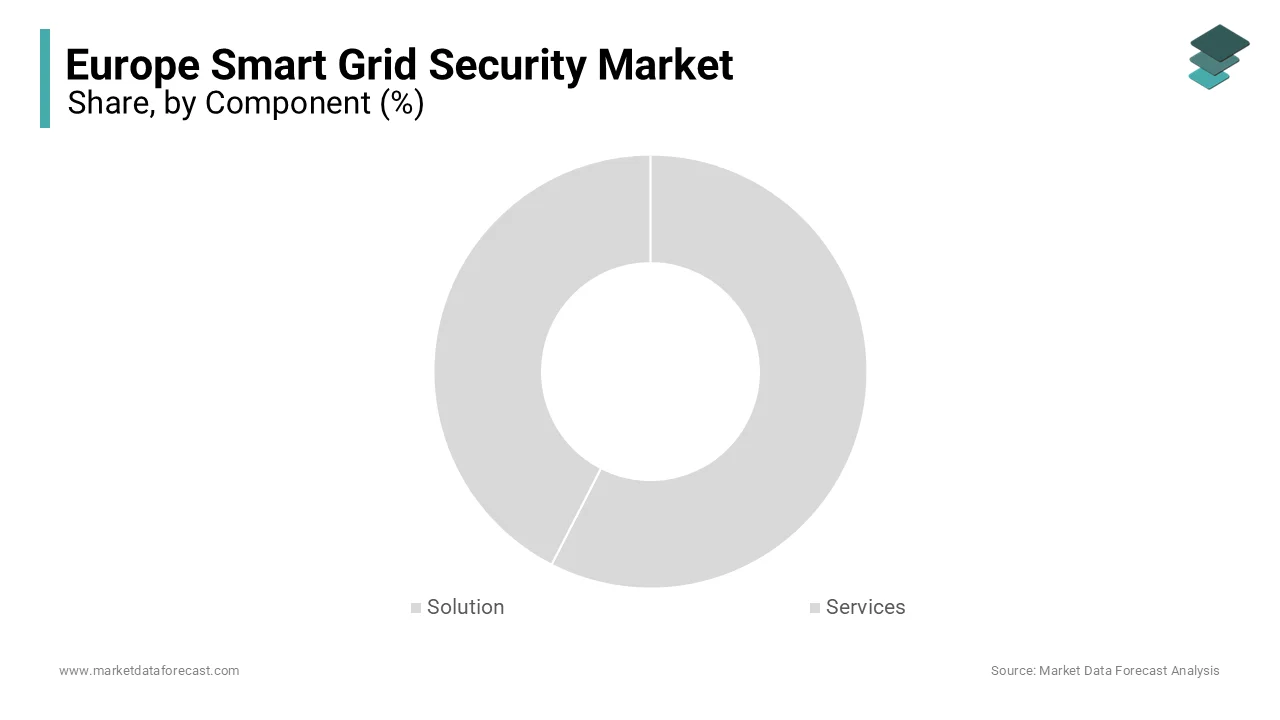
The services segment is predicted to witness the highest CAGR of 24.2% from 2026 to 2034, owing to the escalating complexity of managing and maintaining sophisticated security infrastructures, which necessitates specialized expertise that many utility companies lack internally. As European energy providers strive to secure their distributed networks against advanced persistent threats, they increasingly rely on external providers for consulting, managed detection and response, and continuous compliance auditing. The demand for managed services has surged, with firms seeking 24/7 monitoring capabilities to interpret security alerts and mitigate risks promptly across vast geographical areas. Additionally, the stringent requirements of the Critical Entities Resilience Directive have created a boom in compliance auditing services, ensuring that grid security practices adhere to evolving legal standards.
By Subsystem Insights
In 2025, the Supervisory Control and Data Acquisition (SCADA) and Industrial Control System (ICS) segment held the majority share of 38.1% of the Europe Smart Grid Security Market. This supremacy of the segment is supported by the critical role these systems play in monitoring and controlling the physical processes of power generation, transmission, and distribution, making them the most attractive targets for cyber adversaries seeking to cause widespread disruption. The convergence of IT and OT networks has exposed legacy SCADA systems to internet-based threats, necessitating urgent and heavy investment in specialized security measures to protect grid stability. The potential consequences of a successful attack on these systems, including blackouts and equipment damage, drive utilities to prioritize their protection above all other subsystems. Furthermore, the aging nature of many installed SCADA platforms requires extensive retrofitting with modern security protocols, further fueling market demand. The existential threat posed to national security by vulnerabilities in these core control systems ensures that this segment remains the primary driver of market revenue.
The Advanced Metering Infrastructure (AMI) segment is estimated to register the fastest CAGR of 26.5% over the forecast period due to the massive rollout of smart meters across the European Union, which exponentially expands the attack surface by connecting millions of endpoints directly to the utility network. Each smart meter represents a potential entry point for attackers to launch distributed denial-of-service attacks, manipulate billing data, or infiltrate the broader grid network, necessitating robust security solutions at scale. The bidirectional communication capability of AMI allows for real-time data exchange but also introduces vulnerabilities that require advanced encryption and authentication mechanisms. Furthermore, the integration of AMI with home energy management systems and electric vehicle charging stations adds layers of complexity that demand sophisticated security architectures. The sheer volume of devices and their direct connection to consumer premises make AMI the most dynamic and rapidly expanding area for security innovation in the smart grid ecosystem.
By Security Type Insights
The Network Security segment was the largest in the Europe Smart Grid Security Market and occupied a 35.3% in 2025. This prominence of the segment is credited to the fundamental need to secure the communication channels that connect diverse grid components, from substations to control centers, against interception, manipulation, and unauthorized access. As the smart grid relies heavily on IP-based networks for data transmission, protecting the integrity and confidentiality of these networks is paramount to preventing large-scale disruptions. Utilities are investing heavily in next-generation firewalls, secure gateways, and network segmentation tools to isolate critical operational traffic from corporate networks and the public internet. The rise of wireless communication technologies like 5G and LTE for grid monitoring further amplifies the need for robust network security measures to prevent signal jamming and spoofing. The critical dependence of all smart grid functions on reliable and secure network transport ensures that this segment maintains its dominance as the first line of defense against cyber threats.
The Endpoint Security segment is anticipated to witness the fastest CAGR of 25.8% between 2026 and 2034. This rapid expansion of the segment is propelled by the proliferation of connected devices across the grid, including smart inverters, sensors, controllers, and meters, each representing a unique endpoint that requires individual protection. The decentralized nature of the modern smart grid means that compromising a single vulnerable endpoint can provide attackers with a foothold to move laterally across the network, making endpoint hardening essential. Utilities are increasingly deploying lightweight agents and embedded security modules specifically designed for resource-constrained industrial devices to detect malware and unauthorized configuration changes. The shift towards remote management of grid assets further accelerates the need for robust endpoint security to ensure that only authorized personnel and software can interact with critical devices. The relentless growth in device connectivity ensures that endpoint security will remain the most dynamically expanding segment in the market.
COUNTRY LEVEL ANALYSIS
Germany Smart Grid Security Market Analysis
Germany maintained dominance in the Europe Smart Grid Security Market and accounted for a share of 28.7% in 2025. The country's supremacy is driven by its status as Europe's largest economy, its aggressive Energiewende policy driving renewable integration, and its robust manufacturing base for industrial control systems. The German government's strict interpretation of the IT Security Act and the subsequent NIS2 implementation have forced utilities and industrial players to adopt state-of-the-art security measures to protect critical infrastructure. The presence of major global players in automation and energy technology fosters a strong domestic supply chain for security solutions. The country's focus on Industry 4.0 also drives the convergence of IT and OT security, setting high standards for the rest of the continent. The convergence of regulatory pressure, technological expertise, and financial commitment ensures Germany remains the primary engine for market growth in the region.
United Kingdom Smart Grid Security Market Analysis
The United Kingdom was the next prominent country in the Europe Smart Grid Security Market and accounted for a 20.5% in 2025. Despite post-Brexit economic adjustments, the UK remains a hub for energy innovation and cybersecurity research, driven by its ambitious net-zero targets and the modernization of its aging grid infrastructure. The UK's National Cyber Strategy and the regulations enforced by Ofgem mandate rigorous security standards for electricity distributors, spurring significant investment in protective technologies. The country's strong fintech and cybersecurity startup ecosystem fuels continuous innovation in blockchain and AI-driven security solutions tailored for smart grids. The rollout of smart meters across Great Britain has also created a vast market for endpoint security and secure communication protocols. The combination of regulatory rigor, threat awareness, and a vibrant innovation landscape positions the UK as a critical market for advanced smart grid security.
France Smart Grid Security Market Analysis
France plays a key role in the Europe Smart Grid Security Market due to its centralized nuclear power heritage, transitioning towards a more decentralized renewable mix, and the strong involvement of state-owned enterprises. The French government's "France 2030" investment plan allocates significant resources to enhancing the resilience of critical infrastructure, including the electrical grid, against cyber warfare and sabotage. The country's Agence Nationale de la Sécurité des Systèmes d'Information (ANSSI) enforces strict security certifications for all equipment used in critical sectors, creating a high barrier to entry that favors premium security solutions. The presence of global energy giants like EDF and Engie drives large-scale procurement of enterprise-grade security systems to protect their vast operational networks. The emphasis on national sovereignty in energy and digital domains encourages the development of domestic security capabilities. The strategic alignment of state policy and industrial capacity fosters a robust and growing market environment.
Italy Smart Grid Security Market Analysis
Italy is moving ahead steadfastly in the Europe Smart Grid Security Market owing to its early and extensive adoption of smart metering technology and the need to secure its complex distribution network. The Italian market is witnessing a steady uptake of advanced security technologies as the national operator Enel and other stakeholders work to protect the world's largest smart meter installation from evolving cyber threats. The National Recovery and Resilience Plan includes specific provisions for strengthening critical infrastructure resilience, providing grants and incentives that facilitate the adoption of modern security tools. The country's high penetration of rooftop solar and distributed generation creates a fragmented grid topology that requires sophisticated security management to prevent instability. The tourism and manufacturing sectors' reliance on a stable power supply further incentivizes investments in grid security to prevent economic disruption. The gradual but consistent modernization of the grid and heightened threat awareness are paving the way for broader market penetration.
Spain Smart Grid Security Market Analysis
Spain is anticipated to grow notably in the Europe Smart Grid Security Market over the forecast period due to its leadership in renewable energy integration, particularly wind and solar, and the rapid expansion of its smart grid infrastructure. The Spanish business sector is leveraging advanced security solutions to manage the variability of renewable sources and to protect the grid from cyber threats that could exploit the intermittent nature of green energy. Major Spanish utilities like Iberdrola are investing heavily in digital transformation initiatives that include robust cybersecurity frameworks to secure their international and domestic operations. The country's ambitious climate goals require a highly interconnected and automated grid, which inherently increases the attack surface and the need for comprehensive security. The rise of electric mobility and the deployment of extensive charging networks also create new vectors for attacks, necessitating specialized security measures. The supportive regulatory environment and the imperative to maintain grid stability amidst high renewable penetration are expected to sustain this upward trajectory.
COMPETITIVE LANDSCAPE
The competition in the Europe Smart Grid Security Market is characterized by intense rivalry between established industrial automation giants and specialized cybersecurity firms who vie for dominance in a rapidly evolving sector. Large multinational corporations leverage their extensive distribution networks and broad product suites to offer integrated platforms that combine grid management with inherent security features. These incumbents focus on building trust through strict compliance with European data protection laws and providing robust global support services for critical infrastructure. Conversely, emerging startups differentiate themselves by delivering highly innovative and niche solutions that address specific pain points, such as real-time anomaly detection or secure protocol conversion with superior agility. The market landscape is dynamic with frequent mergers and acquisitions as larger players seek to absorb cutting-edge technologies and talent rapidly. Competitive advantage increasingly depends on the ability to demonstrate tangible return on investment through reduced downtime and improved incident response times. Utilities are becoming more discerning and demand transparent algorithms that offer clear explanations for automated decisions to satisfy regulatory auditors. This environment forces all participants to continuously innovate and adapt to the shifting demands of engineers and end users across diverse European regions while navigating complex regulatory landscapes.
KEY MARKET PLAYERS
The leading companies operating in the Europe smart grid security market include:
- Schneider Electric
- Siemens AG
- Itron
- Calisen
- Hitachi Energy Ltd.
- Iberdrola
- Techem
- Smart Wires
TOP PLAYERS IN THE MARKET
- Siemens AG stands as a preeminent force in the Europe Smart Grid Security Market by leveraging its deep expertise in industrial automation and power transmission to deliver integrated cybersecurity solutions. The German multinational contributes significantly to the global landscape through its Sinaloot and SICAM product lines, which provide robust protection for supervisory control systems and substations. Recently, Siemens has intensified its focus on artificial intelligence-driven threat detection to identify anomalies in grid operations before they cause disruptions. These advanced capabilities allow European utilities to secure their critical infrastructure against sophisticated state-sponsored attacks while maintaining operational continuity. The company actively collaborates with government agencies and energy providers to develop standardized security protocols that enhance resilience across the continent. By continuously updating its firmware to address emerging vulnerabilities and ensuring compliance with strict regional regulations, Siemens reinforces its position as a trusted partner for organizations seeking comprehensive and reliable smart grid defense mechanisms.
- Schneider Electric SE maintains a critical presence in the Europe Smart Grid Security Market through its EcoStruxure platform, which offers end-to-end security for connected energy management systems. The French giant utilizes its extensive portfolio of hardware and software to protect distributed energy resources and advanced metering infrastructure from cyber threats. Recent strategic actions include the integration of zero-trust architecture principles into its grid edge solutions to ensure secure access for remote operators and devices. Schneider Electric focuses heavily on sustainability by developing energy-efficient security appliances that align with European Green Deal objectives. The company partners with leading distribution system operators to implement secure microgrid technologies that enhance local grid resilience. Schneider Electric also invests in digital twins that allow utilities to simulate cyberattacks and test their defense strategies without risking actual operations. This holistic approach, combining innovative technology with practical application, solidifies their role as a key enabler of secure and sustainable energy transitions throughout the region.
- Hitachi Energy Ltd serves as a specialized leader in the Europe Smart Grid Security Market, particularly within the high voltage transmission and distribution sectors where reliability is paramount. The Swiss Swedish multinational contributes to the global market by supplying advanced grid automation systems equipped with embedded security features that protect against unauthorized access and data manipulation. Recent initiatives involve strengthening collaborations with European transmission system operators to deploy secure wide-area monitoring systems that detect and mitigate grid instability caused by cyber incidents. Hitachi Energy prioritizes continuous innovation in encryption technologies and secure communication protocols to meet the specific demands of cross-border energy trading. The company has expanded its local support centers across the continent to ensure rapid response times and adherence to local cybersecurity standards. By focusing on high-performance infrastructure and cost-effective scalability, Hitachi Energy cements its reputation as a vital supplier of next-generation security solutions for utilities seeking to modernize their digital backbone efficiently.
TOP STRATEGIES USED BY THE KEY MARKET PARTICIPANTS
Key players in the Europe Smart Grid Security Market primarily employ strategic acquisitions and partnerships to expand their technological portfolios and integrate complementary capabilities such as artificial intelligence or advanced threat intelligence. Companies frequently collaborate with national grid operators and regulatory bodies to ensure seamless deployment and customization for diverse European energy infrastructures. Another dominant strategy involves heavy investment in research and development to enhance automation algorithms and reduce false positive rates, which remain a critical pain point for utility operators. Major vendors also focus on achieving rigorous regional compliance certifications to build trust with government and energy sector clients who prioritize data sovereignty and regulatory adherence. Enhancing cloud native offerings remains a priority to support the growing demand for scalable and flexible security solutions among small and medium-sized utilities. Furthermore, participants actively engage in educational initiatives and industry consortia to shape security standards and promote best practices for protecting critical energy infrastructure across the continent.
MARKET SEGMENTATION
This research report on the Europe smart grid security market is segmented and sub-segmented into the following categories.
By Component
- Solution
- Encryption
- Antivirus and Antimalware
- Identity and Access Management (IAM)
- Firewall
- Others
- Services
- Managed Services
- Professional Services
- Others
By Subsystem
- Demand Response System
- Supervisory Control and Data Acquisition (SCADA)/ Industrial Control System (ICS)
- Home Energy Management System
- Advanced Metering Infrastructure
- Others
By Deployment Type
- Cloud-based
- On-premise
By Security Type
- Endpoint Security
- Application Security
- Database Security
- Network Security
- Others
By Country
- UK
- France
- Spain
- Germany
- Italy
- Russia
- Sweden
- Denmark
- Switzerland
- Netherlands
- Turkey
- Czech Republic
- Rest of Europe