- Product Description Description
- Table of Contents TOC
- List of Table & Figure LOT
- Get Free Sample PDF Sample PDF
Market Size, 2025
$1.82 BnMarket Estimate, 2026
$1.95 BnMarket Forecast, 2034
$3.45 BnCAGR, 2026–2034
7.4%Executive Summary: Europe Surface Disinfectant Market
- Market Scope: Comprehensive regional assessment covering formulations (wipes, liquids, sprays), types (quaternary ammonium compounds, phenols, chlorhexidine gluconate, alcohol, aldehydes), applications (in-house, instrument), end-user levels (hospitals, laboratories), and detailed country-level performances across Europe.
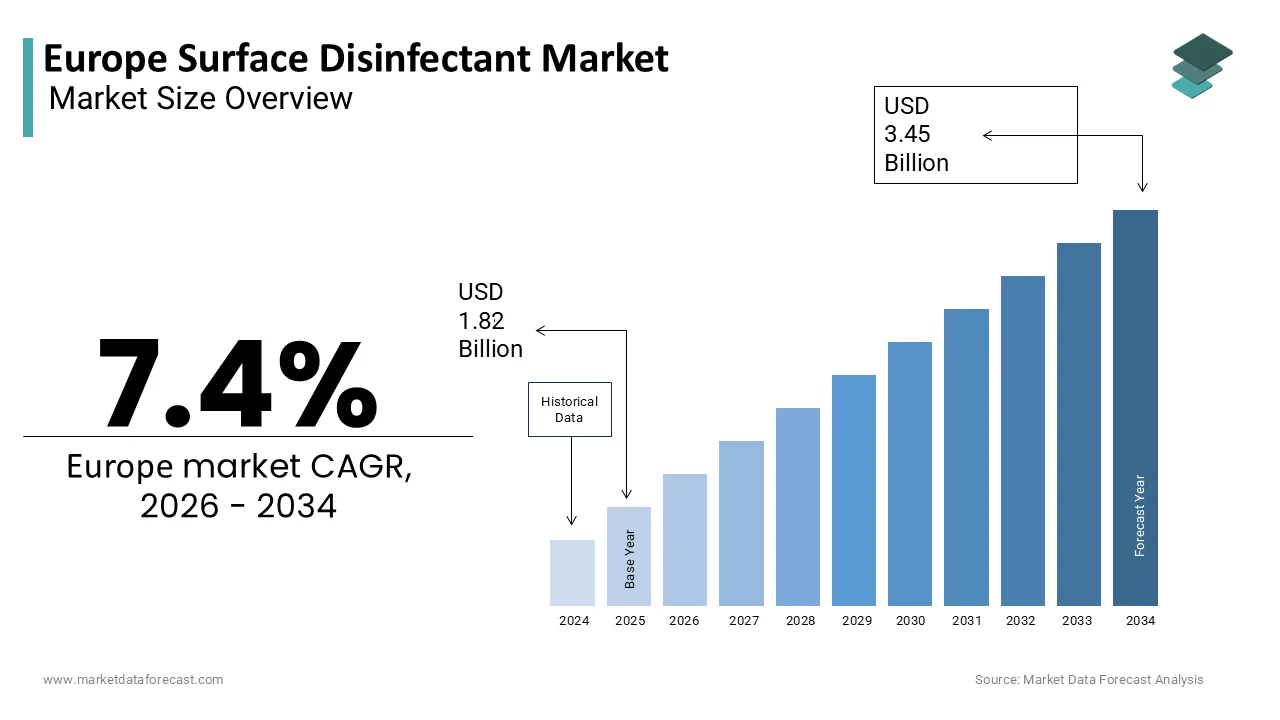
- Market Valuation: Valued at USD 1.82 billion (2025), estimated at USD 1.95 billion (2026), and projected to reach USD 3.45 billion by 2034, registering a solid CAGR of 7.4% (2026–2034).
- Primary Growth Drivers: High incidence of healthcare-associated infections (HAIs), post-pandemic structural shifts toward institutionalized hygiene in public infrastructure, and rising stringency in hospital cleanliness mandates.
Key Market Segment Metrics (2026–2034)
| Category | Leading Segment (2025 Position) | Fastest-Growing / Key Segment Trends |
|---|---|---|
| By Formulation | Wipes (accounted for 41.4% of total regional market share in 2025 due to unmatched convenience, pre-measured dosing, and widespread clinical use) | Sprays (emerging as the fastest-growing segment with an 8.08% CAGR driven by customizable application, broad coverage, and eco-friendly packaging) |
| By Type | Quaternary Ammonium Compounds (Quats) (captured a major 37.5% share in 2025 backed by broad-spectrum antimicrobial efficacy and residual activity) | Alcohol-Based Disinfectants (predicted to grow at the fastest pace with an 8.44% CAGR fueled by rapid action, safety guidelines, and clinical alignment) |
| By End-User | Hospitals (occupied 56.7% of the regional market share in 2025 driven by stringent hygiene mandates, high patient footfall, and clinical protocols) | Laboratories (witnessing the most rapid expansion at a 10.44% CAGR propelled by Europe's expanding biotech and pharmaceutical R&D landscape) |
| By Country | Germany (dominated with 24.4% of the regional market in 2025 backed by advanced healthcare infrastructure, KRINKO guidelines, and major chemical producers) | France, UK, & Spain (exhibiting strong growth momentum supported by modernization initiatives, life science investments, and strict hygiene protocols) |
Major Market Players & Market Structure
Market Structure: A competitive landscape characterized by established multinational giants and chemical specialists competing via regulatory compliance under the Biocidal Products Regulation (BPR), sustainable product portfolios, and digital IoT dispensing integration.
Key Companies: 3M Company, Procter & Gamble, Reckitt Benckiser Group PLC, The Clorox Company, Sealed Air Corporation, Steris Corporation, Cantel Medical Corporation, Johnson & Johnson, and Ecolab.
Europe Surface Disinfectant Market Size
The Europe Surface Disinfectant Market is projected to grow from USD 1.82 billion in 2025 to USD 1.95 billion in 2026 and reach USD 3.45 billion by 2034, registering a CAGR of 7.4% during the forecast period from 2026 to 2034.
Surface disinfectants are a wide range of chemical and biological agents that are designed to eliminate or reduce pathogenic microorganisms on hard, non-porous surfaces in healthcare, residential, industrial and public environments. These products include formulations based on alcohol, hydrogen peroxide, quaternary ammonium compounds and hypochlorite that are deployed to mitigate the transmission of infectious diseases. The market has evolved significantly in response to heightened hygiene awareness and regulatory scrutiny. According to the European Centre for Disease Prevention and Control, healthcare-associated infections affect approximately 8.9 million patients annually across the EU, with surface contamination playing a critical role in transmission. As per the World Health Organisation's Regional Office for Europe, only 55% of healthcare facilities in Eastern Europe meet basic environmental hygiene standards, which indicates the urgent need for effective disinfection protocols. Additionally, as per the European Environment Agency, over 40% of public transportation systems in major cities lack standardised surface cleaning regimens, which is amplifying infection risks in densely populated urban centres.
MARKET DRIVERS
Surface Contamination Concerns in Intensive Care Units
A primary driver of the European Surface Disinfectant Market is the increasing incidence of healthcare-associated infections (HAIs) that continue to impose substantial clinical and economic burdens across the region. According to the European Centre for Disease Prevention and Control, 1 in 20 hospitalised patients in the EU acquires at least one HAI, which is contributing to over 37,000 deaths annually. Pathogens such as Methicillin-resistant Staphylococcus aureus (MRSA) and Clostridioides difficile are frequently transmitted via contaminated surfaces, which requires rigorous disinfection protocols. In Germany, according to the Robert Koch Institute, surface contamination in intensive care units remains a significant concern, which is prompting stricter cleaning mandates. The European Commission’s Health Security Protocol requires all member states to implement standardised surface disinfection guidelines in public hospitals. As per a multicentre study published in The Lancet Infectious Diseases, hospitals using hydrogen peroxide-based disinfectants observed a 42% reduction in HAI rates over 18 months. This evidence-based imperative has institutionalised surface disinfection as a core component of patient safety, which is driving sustained demand across public and private healthcare networks.
Post-Pandemic Integration of Hygiene in Public Infrastructure
The integration of surface disinfection into public health infrastructure following the post-pandemic reevaluation of hygiene standards in communal spaces is further propelling the growth of the surface disinfectant market in Europe. According to the European Environment Agency, metro systems in cities like Paris, Madrid and Warsaw have implemented enhanced surface cleaning protocols since 2021, with disinfectant usage rising significantly in public transit environments. The European Commission’s Directorate-General for Health and Food Safety has issued non-binding recommendations for daily disinfection of high-touch surfaces in schools, airports and government buildings. In Sweden, the Public Health Agency requires regular disinfection of communal surfaces in elderly care facilities, where infection vulnerability is highest. Additionally, as per the International Union of Railways, European rail operators invested heavily in surface disinfection in 2023. institutionalised practices reflect a structural shift in societal hygiene expectations and the transformation of surface disinfectants from emergency-use products into permanent fixtures in urban and institutional maintenance routines.
MARKET RESTRAINTS
Regulatory Restrictions on Biocidal Ingredients
One major restraint in the European Surface Disinfectant Market is the growing regulatory restrictions on certain biocidal active ingredients due to environmental and human health concerns. According to the European Chemicals Agency, several quaternary ammonium compounds were re-evaluated under the Biocidal Products Regulation (BPR) in 2023, with some withdrawn from market authorisation due to aquatic toxicity concerns. In France, the Agency for Food, Environmental and Occupational Health & Safety (ANSES) banned benzalkonium chloride in certain surface disinfectants after studies linked it to antimicrobial resistance. According to the Nordic Council of Ministers, Denmark and Norway have restricted the use of triclosan and triclocarban in consumer-grade disinfectants since 2022. These regulatory actions limit formulary options for manufacturers and increase reformulation costs. Industry associations note that compliance with BPR has delayed product launches, which is stifling innovation and reducing market agility, particularly for small and medium-sized enterprises.
Rising Consumer Scepticism Toward Chemical Disinfectants
The rising consumer scepticism toward chemical disinfectants due to perceived health risks and environmental impact is also impeding the growth of the European surface disinfectant market. According to a 2023 Eurobarometer survey, many EU citizens express concern about the long-term effects of chemical residues on household surfaces, particularly for children and pets. According to the European Environmental Bureau, volatile organic compounds (VOCs) emitted by some disinfectants contribute to indoor air pollution, which is a factor linked to respiratory conditions. In Germany, as per the Federal Environment Agency, many households now prefer eco-labelled or plant-based cleaning products, including disinfectants. This shift is reinforced by green building certifications such as BREEAM and DGNB that incentivise low-impact cleaning protocols in commercial real estate. As per the European Consumer Organisation (BEUC), demand for transparency in ingredient labelling has surged, with many respondents calling for full disclosure of biocidal components. This growing preference for non-chemical alternatives constrains the uptake of conventional disinfectants, particularly in residential educational sectors.
MARKET OPPORTUNITIES
Emergence of Sustainable Next-Generation Disinfectants
The development and commercialisation of next-generation, environmentally sustainable disinfectants, including electrolysed water, cold plasma and bio-based antimicrobials, is a promising opportunity for the European surface disinfectant market. Horizon Europe has funded projects focused on green biocides, including lactic acid derivatives and bacteriophage-based surface treatments. In the Netherlands, chlorine-free electrolysed oxidising solutions achieving high microbial kill rates have been introduced in healthcare settings. According to the European Environment Agency, such innovations align with the EU’s Chemicals Strategy for Sustainability, which seeks to reduce exposure to hazardous chemicals by 2030. For instance, the growing demand for biodegradable disinfectants in healthcare is due to institutional sustainability commitments and green procurement policies in the public sector.
Growth of Smart Disinfection and Monitoring Technologies
The integration of smart dispensing and monitoring technologies into surface disinfection systems, particularly in healthcare and high-traffic public facilities, is another major opportunity for the European surface disinfectant market. As per a 2025 assessment, hospitals in Germany, France and Italy have deployed IoT-enabled disinfectant dispensers that track usage to ensure dosage accuracy and generate compliance reports. In Copenhagen, the municipal transit authority installed smart disinfectant stations in metro stations that log application frequency and alert maintenance teams when refills are needed. The European Commission’s Digital Single Market initiative has funded pilot programs using UV-C robots and AI-powered surface monitoring in airports like Amsterdam Schiphol and Madrid Barajas. The European Committee for Standardisation is developing new technical specifications for smart hygiene systems under CEN/TC 434, which is signalling institutional support. These digital advancements enhance accountability, reduce waste and improve efficacy, positioning intelligent disinfection as a critical component of future-ready public health infrastructure.
MARKET CHALLENGES
Fragmented Regulatory Framework Across EU Member States
The fragmentation of regulatory frameworks across member states, despite harmonisation efforts under the Biocidal Products Regulation (BPR), is one of the major challenges to the surface disinfectant market in Europe. According to the European Chemicals Agency, many EU countries have yet to fully transpose BPR into national law, which is leading to divergent approval timelines and labelling requirements. In Poland, the approval process for a new disinfectant is longer compared to Austria, creating market entry disparities. As per the European Federation of Pharmaceutical Industries and Associations, manufacturers often delay pan-European launches due to regulatory uncertainty. Additionally, mutual recognition of product authorisations remains inconsistent, particularly for non-EU developed products. This fragmentation increases compliance costs, slows innovation diffusion and discourages investment in novel formulations, which is undermining the creation of a truly unified market for surface disinfectants.
AMR Development Due to Misuse of Disinfectants
The growing threat of antimicrobial resistance (AMR) linked to the overuse and misuse of surface disinfectants, particularly those containing quaternary ammonium compounds, is further challenging the growth of the European market. The European Medicines Agency warns that prolonged exposure to sublethal concentrations of disinfectants can induce cross-resistance to antibiotics, which complicates infection control. For instance, Pseudomonas aeruginosa strains in hospitals developed efflux pump mechanisms that conferred resistance to both biocides and carbapenems. The European Centre for Disease Prevention and Control now recommends rotating disinfectant classes to prevent resistance buildup. However, adherence is inconsistent, particularly in under-resourced facilities. This evolving biological threat requires a paradigm shift from indiscriminate disinfection to precision hygiene, which is challenging traditional usage patterns and product development strategies.
REPORT COVERAGE
| REPORT METRIC | DETAILS |
| Market Size Available | 2025 to 2034 |
| Base Year | 2025 |
| Forecast Period | 2026 to 2034 |
| Segments Covered | By Formulation, Application Type, End-User Level, and Region. |
| Various Analyses Covered | Global, Regional, and Country-Level Analysis, Segment-Level Analysis, Drivers, Restraints, Opportunities, Challenges; PESTLE Analysis; Porter’s Five Forces Analysis, Competitive Landscape, Analyst Overview of Investment Opportunities |
| Countries Covered | UK, France, Spain, Germany, Italy, Russia, Sweden, Denmark, Switzerland, Netherlands, Turkey, Czech Republic, Rest of Europe |
| Market Leaders Profiled | 3M Company, Procter & Gamble, Reckitt Benckiser Group PLC, The Clorox Company, Sealed Air Corporation, Steris Corporation, Cantel Medical Corporation, Johnson & Johnson, Ecolab. |
SEGMENTAL ANALYSIS
By Formulation Insights
The wipes segment dominated the market by holding 41.4% of the regional market share in 2025. The dominance of the wipes segment in the European market is driven by their unmatched convenience, pre-measured dosing and reduced risk of spillage or overuse. The widespread adoption in healthcare settings has been a pivotal driver. For instance, a European Centre for Disease Prevention and Control (ECDC) assessment highlighted that many hospitals in Western Europe now use disinfectant wipes for high-touch surface cleaning due to their compliance with infection control protocols. Additionally, the consumer shift toward ready-to-use formats accelerated during and after the pandemic. For instance, retail sales of disinfectant wipes in Europe surged significantly between 2020 and 2021, and while growth stabilised, demand remains elevated, particularly in Germany and the UK. The integration of antimicrobial agents like quaternary ammonium compounds into wipe substrates has further enhanced efficacy, which is reinforcing their preference over liquids and sprays in both clinical and domestic environments.
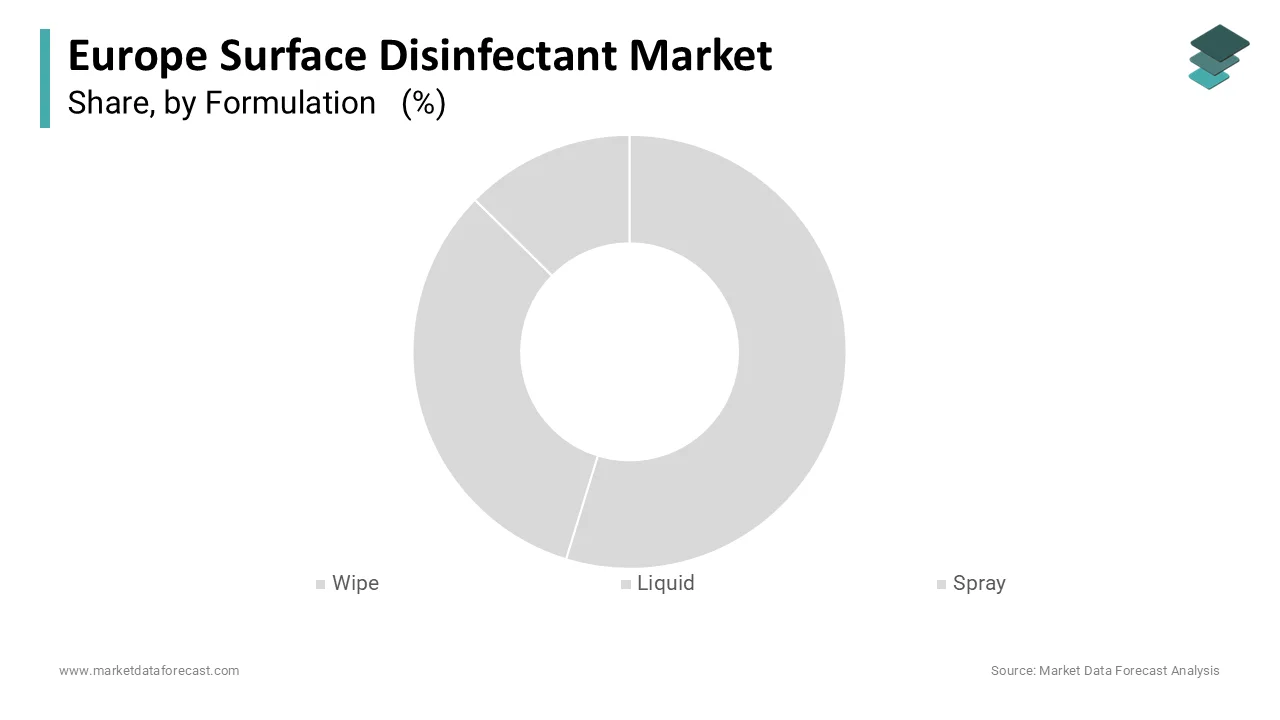
While wipes lead in volume, the spray formulation segment is emerging as the fastest-growing and is projected to expand at a CAGR of 8.08% over the forecast period, owing to the evolving consumer preferences for customizable application and broader surface coverage. Sprays allow users to disinfect irregular or large surfaces, such as countertops, door handles and electronic devices that more efficiently than pre-saturated wipes. As per a 2023 consumer behaviour survey, many households in the EU countries preferred spray disinfectants for home use due to perceived control over dosage and lower residue. Furthermore, innovations in eco-friendly propellants and refillable bottles are aligning sprays with Europe’s stringent environmental regulations. According to the European Environment Agency, a majority of new disinfectant spray launches in the EU were packaged in recyclable or reduced-plastic formats, which is a factor increasingly influencing purchasing decisions. Additionally, the rise of multipurpose disinfectant sprays has expanded their utility beyond healthcare into schools, offices and public transport, which is further boosting the growth of the wipes segment in the European market.
By Type Insights
The quaternary ammonium compounds (quats) segment captured the major share of 37.5% of the European market in 2025. The dominance of the quaternary ammonium compounds segment in the European market is attributed to their broad-spectrum antimicrobial efficacy, low toxicity and material compatibility. Quats are widely used in hospitals, food processing units and public facilities due to their residual activity, and these surfaces remain protected for hours after application. A 2021 study published in the Journal of Hospital Infection demonstrated that quat-based disinfectants achieved a 5-log reduction in MRSA and VRE within 10 minutes on stainless steel surfaces, meeting EN 14476 and EN 13697 standards. Their stability in hard water and compatibility with various surfaces make them ideal for multi-environment use. Moreover, regulatory support plays a role. The European Chemicals Agency (ECHA) has approved several quats under the Biocidal Products Regulation (BPR), which is facilitating market access. According to ECHA, biocidal products containing quats remain among the most widely authorised for surface disinfection in the EU, which is reinforcing their institutional entrenchment and contributing to the leading position of the Quats segment in the European market.
On the other side, the alcohol-based disinfectants segment is growing at the fastest pace and is predicted to record a CAGR of 8.44% over the forecast period in the regional market due to their rapid action, broad acceptance in healthcare and alignment with infection control guidelines. Alcohols, particularly isopropyl and ethanol at concentrations above 70%, are recommended by the World Health Organisation for surface disinfection due to their ability to denature proteins and disrupt lipid membranes of enveloped viruses. During the peak of the pandemic, the WHO reported that many EU healthcare facilities temporarily increased alcohol-based surface disinfection frequency. Even post-pandemic, sustained hygiene awareness has kept demand high. Hospital-acquired infection rates in the EU remain above 5%, which is prompting continued reliance on fast-acting agents like alcohol. Additionally, alcohol blends are increasingly formulated with hydrogen peroxide or quats to overcome limitations like evaporation and lack of residual effect, enhancing their efficacy. The European Society of Clinical Microbiology and Infectious Diseases (ESCMID) endorsed alcohol-combination products in its 2022 guidelines, which further validates their use and accelerates market adoption.
By End-User Insights
The hospitals segment represents the largest end-user segment and occupied 56.7% of the regional market share in 2025 due to the sector’s stringent hygiene mandates and high footfall of vulnerable patients. The European Union’s Cross-border Healthcare Directive emphasises infection prevention, compelling hospitals to maintain rigorous disinfection schedules. As per the estimations of the ECDC, hospital-acquired infections occur annually in the EU, which is leading to thousands of deaths and intensifying the need for effective surface disinfection. As a result, hospitals deploy disinfectants multiple times daily across operating rooms, ICUs and patient wards. According to Germany’s Robert Koch Institute, critical surfaces in German hospitals are disinfected several times per day, far exceeding frequencies in other sectors. Additionally, public healthcare spending in Europe supports procurement. As per Eurostat, healthcare expenditure in the EU averaged 8.1% of GDP in 2022, which is enabling sustained investment in hygiene infrastructure. These institutional imperatives ensure hospitals remain the primary consumer of surface disinfectants across formulations and chemistries.
The laboratories segment is witnessing the most rapid expansion and is projected to grow at a CAGR of 10.44% over the forecast period, owing to the continent’s expanding biotech and pharmaceutical R&D landscape. The European Federation of Pharmaceutical Industries and Associations (EFPIA) reported that R&D investment in the EU pharmaceutical sector reached €50 billion in 2023, which is fuelling demand for sterile environments. Contamination control is non-negotiable in labs handling pathogens, cell cultures, or diagnostic samples. For instance, a significant share of lab contamination incidents were linked to inadequate surface disinfection, which is prompting stricter protocols. Furthermore, the rise of decentralised testing and point-of-care labs has increased the number of facilities requiring certified disinfectants. The EU’s In Vitro Diagnostic Regulation (IVDR) mandates enhanced cleanliness standards, which directly boost disinfectant usage. With thousands of accredited medical laboratories in Europe, the institutional demand is both deepening and broadening.
COUNTRY LEVEL ANALYSIS
Germany Surface Disinfectants Market Analysis
Germany dominated the surface disinfectant market in Europe in 2025 by occupying 24.4% of the regional market share. The dominance of Germany in the European market is attributed to its advanced healthcare infrastructure, high hygiene standards and robust regulatory framework. Germany operates over 1,900 acute care hospitals, each required to comply with the KRINKO (Commission for Hospital Hygiene and Infection Prevention) guidelines, which mandate daily disinfection of high-touch surfaces. As per the Robert Koch Institute, hospital infection rates in Germany dropped in 2023, partly due to consistent disinfectant use. Additionally, Germany is home to major chemical manufacturers like Bayer and BASF, which produce active ingredients and finished disinfectants, ensuring supply chain resilience. The country also leads in green chemistry innovation. As per the German Environment Agency, many new disinfectant products launched in 2023 were classified as low-toxicity or eco-labelled, which aligns with national sustainability goals. This blend of regulatory rigour, healthcare density and industrial capacity solidifies Germany’s market leadership.
France Surface Disinfectants Market Analysis
France held a promising share of the European surface disinfectant market in 2025. The growth of the French market is driven by strong public health policies and rising hospital modernisation. The French Ministry of Health’s “Hygiene and Infection Control Plan 2023–2027” allocates significant funding to reduce healthcare-associated infections, which is directly boosting disinfectant procurement. France operates over 650 public hospitals and more than 300 private clinics, all subject to mandatory hygiene audits by the Haute Autorité de Santé (HAS). HAS reports indicate that disinfectant usage in French hospitals has increased in recent years, reflecting heightened vigilance. Consumer demand is also rising; INSEE data shows that household spending on hygiene products grew in 2022, with surface disinfectants being a major component. Moreover, France’s push for decarbonization has influenced product development, with the French Agency for Ecological Transition noting that many disinfectant brands now use biodegradable formulations, appealing to environmentally conscious buyers. These institutional and societal shifts are expanding both public and private sector demand.
United Kingdom Surface Disinfectants Market Analysis
The United Kingdom is predicted to account for a prominent share of the European surface disinfectant market during the forecast period. Despite Brexit-related regulatory adjustments, the UK maintains high infection control standards, particularly within the National Health Service (NHS). The NHS allocates significant resources to infection prevention and control, a portion of which is dedicated to surface disinfectants. Many NHS trusts are modernising medicines management with automated dispensing cabinets to ensure consistent application and reduce human error. The UK also experienced a surge in laboratory and research activity post-pandemic; in 20,23, the UK government announced £650 million for the life sciences sector under the Life Sci for Growth initiative, increasing demand for sterile environments. Consumbehaviourior has also shifted; surveys indicate heightened public attention to hygiene and surface cleanliness in recent years. While regulatory divergence from the EU poses challenges, the UK’s strong healthcare infrastructure and public awareness continue to drive market growth.
Italy Surface Disinfectants Market Analysis
Italy is estimated to account for a considerable share of the European surface disinfectant market over the forecast period, owing to ageing demographics and rising hospital infection rates. With over 20% of its population aged 65 or older, Italy faces higher vulnerability to infections, necessitating rigorous disinfection in healthcare settings. The ISS reports that hospital-acquired infections remain a significant challenge in Italy, prompting increased use of high-efficacy disinfectants. Regional disparities in healthcare quality have also led to targeted hygiene investments, including dedicated funding for hospital sanitation upgrades in the south. Additionally, Italy’s food and beverage industry, a major user of surface disinfectants, contributes significantly. Industry associations note widespread, frequent surface disinfection practices in food processing facilities, driven by EU food safety regulations. The convergence of healthcare needs and industrial hygiene demands positions Italy as a stable and growing market.
Spain Surface Disinfectants Market Analysis
Spain is projected to grow at a healthy CAGR in the European surface disinfectant market over the forecast period due to tourism and healthcare modernisation. Spain is a top global destination with high international tourist arrivals, necessitating robust hygiene standards in hotels, transportation hubs and public spaces. The Spanish tourism sector has institutionalised the use of approved disinfectants post-pandemic, with hotels adopting stricter cleaning and disinfection protocols. In healthcare, Spain has invested in upgrading public hospitals, alongside increased procurement of infection control supplies. Furthermore, Spain is emerging as a hub for pharmaceutical manufacturing, particularly in Catalonia and Andalusia; the pharmaceutical market generated around €32 billion in revenue in 2023, and companies reached a record €1.4 billion in R&D investment, up 10% year over year, increasing demand for sterile lab environments. These cross-sectoral drivers, tourism, healthcare and life science, are transforming Spain into a dynamic and expanding market for surface disinfectants.
COMPETITIVE LANDSCAPE
The competition in the European surface disinfectant market is intense and highly dynamic, shaped by stringent regulatory standards, rising healthcare-associated infection rates and growing consumer awareness. Established multinational corporations such as Ecolab, Reckitt Benckiser and 3M dominate through brand equity, R&D capabilities and extensive distribution networks. They face increasing pressure from regional players and speciality biotech firms offering eco-friendly or niche-pathogen-targeted solutions. Differentiation is achieved through product innovation, sustainability initiatives and digital integration for compliance tracking. The market is also witnessing consolidation with larger firms acquiring smaller innovators to enhance technological portfolios. Regulatory compliance under the Biocidal Products Regulation (BPR) acts as both a barrier and a benchmark, favouring companies with robust scientific dossiers. Price competition is moderate, as efficacy and certification take precedence over cost. Overall, the competitive landscape is evolving toward integrated, science-backed and sustainable hygiene ecosystems.
KEY MARKET PLAYERS
The key market players that dominate the europe surface disinfectant market are analysed in this report..
- 3M Company
- Procter & Gamble
- Reckitt Benckiser Group PLC
- The Clorox Company
- Sealed Air Corporation
- Steris Corporation
- Cantel Medical Corporation,
- Johnson & Johnson,
- Ecolab.
TOP LEADING PLAYERS IN THE MARKET
- Ecolab is a global leader in water, hygiene and infection prevention solutions with a strong footprint across European healthcare, foodservice and hospitality sectors. In Europe, Ecolab delivers advanced surface disinfection systems through its dual emphasis on science-based formulations and digital monitoring tools like the 360 ° Total Outbreak Prevention program. The company has intensified its focus on sustainable innovation, launching EcoSure Surface, a ready-to-use quat-based disinfectant compliant with EU Ecolabel standards. In 2023, Ecolab expanded its R&D collaboration with the University of Manchester to develop next-generation antimicrobial surfaces. Additionally, it integrated IoT-enabled dispensers in German and French hospitals to ensure dosage accuracy and compliance tracking. These initiatives reinforce Ecolab’s position as a trusted partner in institutional hygiene, enabling real-time monitoring and audit readiness across critical environments.
- Reckitt Benckiser (RB) is a dominant force in consumer health and hygiene, best known for its Lysol and Dettol brands, which are widely used across European households and public facilities. The company has strategically positioned its surface disinfectants as essential components of everyday hygiene, leveraging strong brand recognition and extensive retail distribution. In recent years, RB has invested in product innovation, introducing electrostatic spray devices compatible with Lysol disinfectants to enhance coverage and efficiency. In 2023, it launched a refillable disinfectant spray format across the UK and Scandinavia to align with circular economy goals. RB also partnered with NHS Trusts to supply disinfection kits for community health centres, strengthening its public health engagement. These actions underscore RB’s blend of consumer-centric marketing and institutional outreach, solidifying its relevance in both domestic and professional markets.
- 3M plays a pivotal role in the European surface disinfectant market through its healthcare and industrial solutions divisions, offering antimicrobial wipes, sprays and surface protection films. The company integrates material science with infection control, exemplified by its Clinell Universal Wipes, which are validated against a broad spectrum of pathogens, including norovirus and MRSA. 3M has focused on expanding its presence in clinical settings by aligning its products with EU medical device regulations. In 2025, it introduced a new line of low-alcohol, skin-friendly disinfectants tailored for frequent use in hospitals and labs. The company also enhanced its digital training platforms for healthcare workers on proper disinfection techniques. Through strategic collaborations with hospital networks in Germany and France, 3M continues to drive adoption of evidence-based hygiene protocols, reinforcing its reputation for innovation and reliability in high-risk environments.
TOP STRATEGIES USED BY KEY MARKET PARTICIPANTS
Key players in the European surface disinfectant market are deploying multifaceted strategies to consolidate their positions. Product innovation remains central with companies reformulating disinfectants to meet EU environmental and efficacy standards, such as achieving EN 14476 virucidal claims and securing eco-label certifications. Major firms are investing in sustainable packaging, including refillable containers and reduced-plastic formats, to align with the European Green Deal. Strategic partnerships with healthcare institutions and government bodies are common, enabling large-scale procurement and protocol integration. Companies like Ecolab and 3M are leveraging digital technologies, incorporating smart dispensers and compliance monitoring systems to offer end-to-end hygiene management. Mergers and acquisitions are also prevalent, allowing rapid access to new technologies and distribution networks. Additionally, geographic expansion into Eastern Europe and public awareness campaigns are being used to capture emerging demand. These strategies collectively enhance competitiveness and ensure alignment with evolving regulatory and consumer expectations.
MARKET SEGMENTATION
This research report on the europe surface disinfectant market has been segmented & sub-segmented into the following categories.
By Formulation Insights
- Wipe
- Liquid
- Spray
By Type Insights
- Quaternary Ammonium Compounds
- Phenol
- Chlorhexidine Gluconate
- Alcohol
- Aldehyde
By Application Insights
- In-house
- Instrument
By End-User Insights
- Hospitals
- Laboratories
Country Level Analysis
- UK
- France
- Spain
- Germany
- Italy
- Russia
- Sweden
- Denmark
- Switzerland
- Netherlands
- Turkey
- Czech Republic
- Rest of Europe