- Product Description Description
- Table of Contents TOC
- List of Table & Figure LOT
- Get Free Sample PDF Sample PDF
Market Size, 2025
$4,548 MnMarket Estimate, 2026
$4,743.56 MnMarket Forecast, 2034
$6,643 MnCAGR, 2026–2034
4.30%Europe Toothpaste Market Report Summary
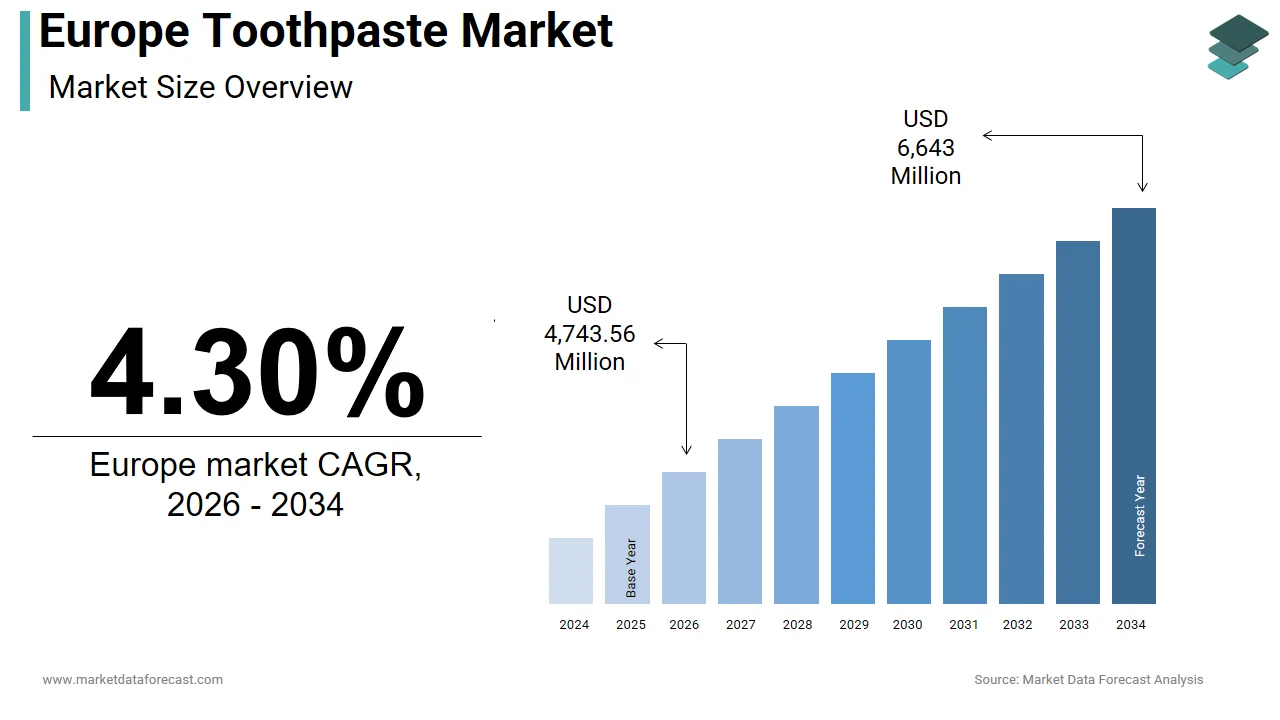
The Europe toothpaste market was valued at USD 4,548 million in 2025, is estimated to reach USD 4,743.56 million in 2026, and is projected to reach USD 6,643 million by 2034, growing at a CAGR of 4.30% from 2026 to 2034. Market growth is driven by increasing awareness of oral hygiene, rising demand for specialized toothpaste formulations, and growing consumer preference for premium and functional oral care products. The expansion of herbal, whitening, and sensitivity toothpaste variants, along with innovations in ingredients and packaging, is further supporting market growth across Europe.
Key Market Trends
- Increasing demand for specialized toothpaste, such as sensitivity and whitening variants.
- Rising consumer preference for premium and aesthetic oral care products.
- The growing popularity of herbal and natural ingredient-based toothpaste.
- Expansion of innovative formulations targeting specific dental concerns.
- Increasing focus on oral health awareness and preventive care.
Segmental Insights
- Based on type, the sensitivity segment dominated the Europe toothpaste market by capturing 31.3% share in 2025, driven by the increasing prevalence of tooth sensitivity and demand for targeted solutions.
- Based on distribution channel, the store-based segment led the market with 71.9% share in 2025, supported by strong retail presence and consumer preference for in-store purchases.
Regional Insights
The Europe toothpaste market is witnessing steady growth across major countries due to increasing oral care awareness and product innovation.
- Germany led the regional market in 2025 with 23.5% share, supported by high consumer awareness and strong retail networks.
- France held the second-largest share in 2025, driven by a sophisticated consumer base with a preference for premium and aesthetic oral care products.
- The United Kingdom is expected to hold a prominent share during the forecast period, supported by increasing demand for advanced oral care solutions and strong brand presence.
Competitive Landscape
The Europe toothpaste market is highly competitive, with the presence of global consumer goods companies and oral care specialists. Market players are focusing on product innovation, expanding premium offerings, and strengthening distribution networks. Branding, marketing strategies, and the introduction of natural and functional products are shaping competitive dynamics across the region.
Prominent companies operating in the Europe toothpaste market include Procter & Gamble, Colgate-Palmolive, Unilever, Henkel, GlaxoSmithKline, Haleon plc, Church & Dwight, Crest, Kao Corporation, and L’Oréal.
 Download Free Sample Report
Europe Toothpaste Market Size
The size of the Europe toothpaste market was worth USD 4,548 million in 2025. The regional market is anticipated to grow at a CAGR of 4.30% from 2026 to 2034 and be worth USD 6,643 million by 2034 from USD 4,743.56 million in 2026.
The toothpaste market represents a sophisticated segment of the broader oral care industry and is defined by the formulation, distribution, and consumption of dentifrices designed to prevent caries, manage periodontal disease, and enhance aesthetic appeal. This sector has transitioned from a basic commodity market to a complex landscape driven by scientific innovation, regulatory strictness, and shifting consumer values regarding ingredient transparency and sustainability. The definition now encompasses a wide array of specialized products, including whitening agents, sensitivity relief formulas, and natural or organic variants free from synthetic additives. In 2024, the European Union maintained rigorous standards under the Cosmetic Regulation EC No 1223/2009, which mandates safety assessments for all fluoride concentrations and antimicrobial agents used in oral care products as per the European Commission. The region is characterized by high oral health literacy, with the World Health Organization noting that a majority of the European population brushes their teeth at least twice daily, creating a stable baseline demand. As per Eurostat, the aging demographic profile of Europe, where individuals aged 65 and older form a significant portion of the population, influences product development towards geriatric oral care solutions. The market is further shaped by the Green Deal initiatives, pushing manufacturers to adopt biodegradable ingredients and plastic-free packaging. This convergence of clinical efficacy, regulatory compliance, and environmental stewardship defines the current operational framework of the European toothpaste ecosystem.
MARKET DRIVERS
Rising Prevalence of Dental Disorders and Aging Demographics
The rapidly aging population structure in Europe is one of the major factors driving the growth of the European toothpaste market. As life expectancy increases, the retention of natural teeth into old age has become common, leading to a higher incidence of root caries, gum recession, and dentin hypersensitivity among the elderly. As per Eurostat, the proportion of Europeans aged 65 and older is projected to rise significantly, creating a massive and growing consumer base for geriatric oral care products. This demographic shift drives the preference for toothpastes containing desensitizing agents like potassium nitrate and arginine, which address the exposed dentin common in older adults. As per the European College of Gerodontology, a majority of individuals over the age of 75 suffer from some form of dentin hypersensitivity, necessitating daily use of therapeutic dentifrices. Furthermore, the aging population often manages multiple chronic conditions and medications that cause xerostomia or dry mouth, which increases the demand for moisturizing and pH-balancing toothpastes. As per pharmaceutical associations, sales of prescription-strength and high-fluoride toothpastes have risen, directly correlating with the needs of this expanding demographic. The necessity for long-term maintenance of oral function in an aging society ensures a consistent and growing market for specialized oral hygiene solutions.
Environmental Consciousness and Sustainability Goals
The growing environmental consciousness among European consumers is pushing the toothpaste market towards sustainable sourcing, biodegradable formulations, and eco-friendly packaging solutions, which is further boosting the toothpaste market expansion in Europe. Individuals are increasingly concerned about the environmental footprint of their personal care routines, leading to a preference for brands that demonstrate a commitment to reducing plastic waste and carbon emissions. As per the European Environment Agency, the average European generates notable plastic waste from personal care packaging, prompting a backlash against traditional non-recyclable toothpaste tubes. This sentiment has accelerated the adoption of toothpaste tablets, powder formats, and tubes made from recycled aluminum or bio-based plastics. As per sustainability reports, a majority of European consumers are willing to pay a premium for products with verifiable eco-credentials, including cruelty-free status and vegan formulations. The influence of the European Green Deal and single-use plastic directives has further amplified this trend, compelling manufacturers to innovate in circular economy models. As per brand performance metrics, companies launching zero-waste oral care lines have experienced strong customer acquisition. Additionally, the rise of refillable systems in urban centers allows consumers to reduce packaging waste while maintaining their preferred oral hygiene routines. This alignment with broader societal goals of sustainability ensures that eco-centric toothpaste products capture increasing market share.
MARKET RESTRAINTS
Stringent Regulatory Compliance and Ingredient Restrictions
The rigorous and ever-evolving regulatory landscape governed by the EU Cosmetic Regulation EC No 1223/2009 imposes significant constraints on the Europe toothpaste market, creating high barriers to entry and slowing down product innovation. Manufacturers must navigate a complex web of safety assessments, labeling requirements, and restricted substance lists that vary slightly across member states, increasing compliance costs and time-to-market. As per the European Commission, any new ingredient or change in concentration requires a comprehensive safety report by a qualified assessor before the product can be launched, a process that can take several months and incur substantial expenses. This regulatory burden is particularly challenging for small and medium-sized enterprises that lack the resources to maintain dedicated regulatory affairs departments. As per industry associations, the cost of compliance for a new toothpaste launch in Europe is higher than in other global regions due to these stringent requirements. Furthermore, the frequent updates to the annexes of the regulation, which list prohibited and restricted substances, force companies to constantly monitor and reformulate products to avoid non-compliance penalties. As per regulatory bodies, numerous notifications of non-compliant cosmetic products were issued in 2024, which indicates the difficulty of adhering to strict standards. The uncertainty surrounding future restrictions on common ingredients like fluoride or certain preservatives adds another layer of risk, causing hesitation in long-term investment and R&D planning.
Restrictions on Whitening Agents and Claims
Specific restrictions on whitening agents and the strict control over marketing claims are further impeding the Europe toothpaste market expansion, which is also limiting the scope of product differentiation and consumer appeal. The European Union strictly regulates the concentration of hydrogen peroxide and other bleaching agents in over-the-counter toothpastes, which caps them at levels that may be perceived as less effective by consumers seeking rapid aesthetic results. As per the Scientific Committee on Consumer Safety, toothpastes containing more than 0.1% hydrogen peroxide are classified as medical devices or restricted to professional use, severely limiting the mass market availability of high-efficacy whitening products. This regulatory cap forces manufacturers to rely on alternative, often less potent, abrasives or optical brighteners, which may not deliver the dramatic results advertised in other regions like North America. As per consumer feedback studies, many European users express dissatisfaction with the whitening performance of locally available toothpastes compared to imported or travel-purchased alternatives. Additionally, the Advertising Standards Authority in various European countries rigorously monitors claims regarding "instant whitening" or "enamel repair," requiring robust clinical evidence that is costly and time-consuming to generate. As per legal monitoring firms, fines for misleading oral care claims have increased, deterring aggressive marketing strategies. These limitations constrain the ability of brands to capitalize on the booming aesthetic dentistry trend, thereby restraining potential revenue growth in the premium whitening segment.
MARKET OPPORTUNITIES
Integration of AI and Customized Formulations
The integration of artificial intelligence and digital diagnostics into the oral care ecosystem is a prominent opportunity for the Europe toothpaste market to offer hyper-personalized products tailored to individual needs. Advances in smartphone apps and connected toothbrushes now allow consumers to analyze their oral health status, identifying specific issues such as enamel erosion, gum inflammation, or plaque accumulation in real-time. As per the European Institute of Innovation and Technology, the adoption of smart oral care devices in Europe has grown, generating vast amounts of data that can be used to formulate customized toothpaste blends. This capability enables brands to offer subscription services where users receive dentifrices specifically compounded with the right balance of fluoride, desensitizers, or whitening agents based on their unique profile. As per pilot programs in Germany and the UK, consumers are willing to pay a premium for personalized oral care solutions that promise targeted efficacy. Furthermore, the use of 3D printing technology for on-demand manufacturing of small-batch toothpastes could revolutionize supply chains, reducing waste and inventory costs. As per e-commerce platforms, personalized health and beauty products have seen strong increases in repeat purchase rates, suggesting loyalty potential. By leveraging digital tools to bridge the gap between diagnosis and treatment, manufacturers can create a new value proposition that transcends traditional mass-market offerings.
Tele-dentistry and Direct-to-Consumer Models
The expansion of tele-dentistry and direct-to-consumer channels offers a significant opportunity for toothpaste brands to bypass traditional retail bottlenecks and engage directly with patients seeking professional advice. The proliferation of virtual dental consultations has created a seamless pathway for dentists to recommend and prescribe specific therapeutic toothpastes, which can then be delivered directly to the patient's home. As per healthcare digitalization reports, tele-dentistry consultations in Europe have increased, driven by convenience and improved access to specialist care. This shift allows brands to partner with dental platforms to integrate product recommendations into virtual treatment plans, ensuring higher adherence to prescribed oral hygiene regimens. As per DTC oral care startups, conversion rates from consultation to product purchase are significantly higher than traditional retail interactions, highlighting the effectiveness of this model. Additionally, the DTC approach enables companies to gather first-party data on consumer habits and preferences, facilitating continuous product improvement and targeted marketing. As per subscription box services, retention rates for oral care subscriptions remain strong, providing a stable recurring revenue stream. By aligning with the digital health revolution, toothpaste manufacturers can unlock new distribution avenues and build stronger relationships with end-users.
MARKET CHALLENGES
Proliferation of Fake Oral Care Items
The proliferation of counterfeit toothpaste products in the European market poses a severe challenge to the regional market growth, which is also threatening consumer safety and undermining the reputation of legitimate brands. Illicit manufacturers often produce fake versions of popular toothpastes using substandard or even toxic ingredients, posing significant health risks to users. As per the European Anti-Fraud Office, seizures of counterfeit personal care products at EU borders have increased, with toothpaste being a frequently targeted category due to its high turnover and brand recognition. These counterfeit goods often infiltrate the supply chain through unauthorized online marketplaces and discount retailers, making detection difficult for both regulators and consumers. As per consumer protection agencies, thousands of complaints regarding ineffective or harmful toothpaste products are filed annually, many of which are linked to fake items. The presence of these products erodes consumer trust in the entire category, leading to hesitation in purchasing premium brands. As per brand protection firms, the global trade in fake oral care costs the industry billions of euros annually, with Europe being a major transit and consumption hub. Combating this issue requires constant vigilance, advanced authentication technologies, and coordinated enforcement actions, diverting resources from innovation and growth.
Complexity of Global Supply Chains
The complexity and fragility of global supply chains pose another major challenge for the Europe toothpaste market, as disruptions can lead to shortages, quality inconsistencies, and increased costs. The industry relies on a network of suppliers for raw materials like fluoride, silica, and flavorings, many of which are sourced from outside Europe, exposing the market to geopolitical risks and logistical bottlenecks. As per the European Shippers' Council, delays in container shipping and port congestion have extended lead times for key ingredients, complicating production planning. The lack of visibility into multi-tier supply chains makes it difficult to ensure ethical sourcing and compliance with labor and environmental standards, increasing the risk of reputational damage. As per supply chain audits, a notable portion of manufacturers struggled to verify the origin of all raw materials, raising concerns about potential contamination or non-compliance. Furthermore, the Just-In-Time inventory models adopted by many retailers leave little buffer for supply shocks, leading to empty shelves and lost sales. As per industry surveys, supply chain resilience has become the top priority for CEOs, yet achieving it requires significant investment in diversification and digital tracking systems. Until these structural vulnerabilities are addressed, the market will remain susceptible to external disruptions.
REPORT COVERAGE
| REPORT METRIC | DETAILS |
| Market Size Available | 2025 to 2034 |
| Base Year | 2025 |
| Forecast Period | 2026 to 2034 |
| Segments Covered | By Type, Distribution Channel, and Country. |
| Various Analyses Covered | Global, Regional, and Country-Level Analysis, Segment-Level Analysis, Drivers, Restraints, Opportunities, Challenges; PESTLE Analysis; Porter’s Five Forces Analysis, Competitive Landscape, Analyst Overview of Investment Opportunities |
| Countries Covered | UK, France, Spain, Germany, Italy, Russia, Sweden, Denmark, Switzerland, Netherlands, Turkey, Czech Republic, and the Rest of Europe. |
| Market Leaders Profiled | Procter & Gamble, Colgate-Palmolive, Unilever, Henkel, GlaxoSmithKline, Haleon plc, Church & Dwight, Crest, Kao Corporation, L’Oréal, and Others. |
SEGMENTAL ANALYSIS
By Type Insights
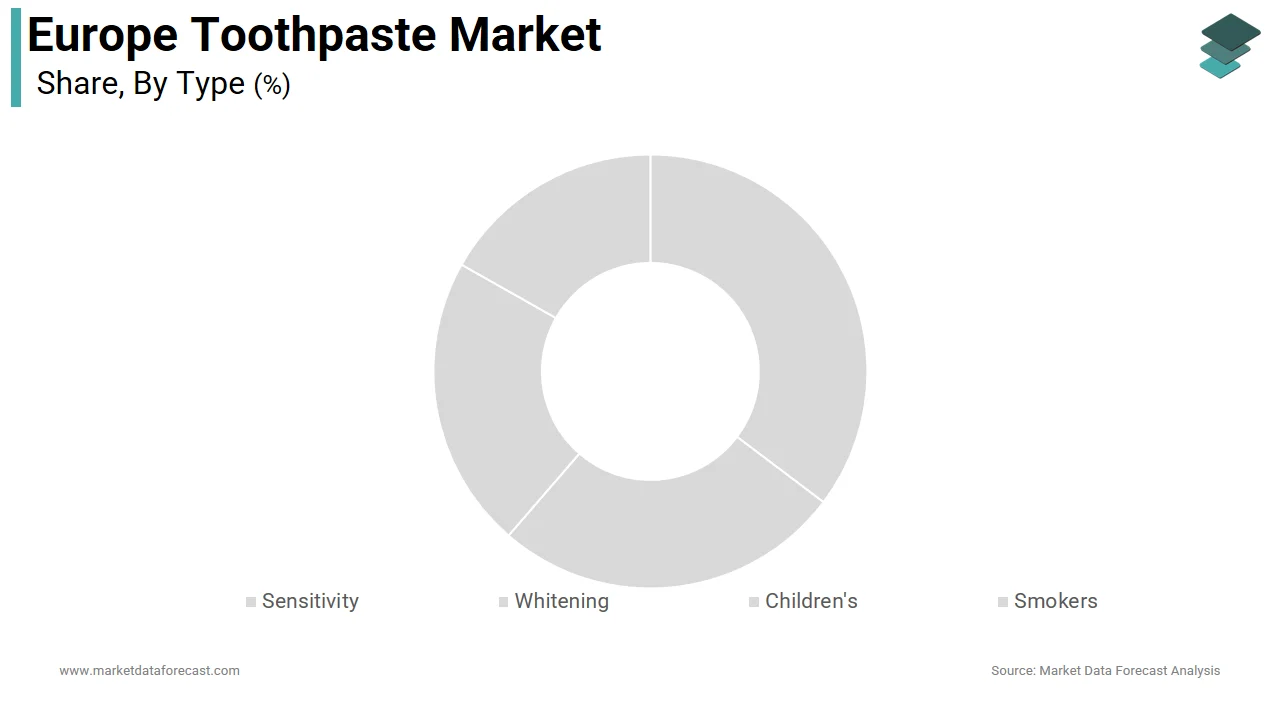
The sensitivity segment dominated the Europe toothpaste market by accounting for 31.3% of the regional market share in 2025. The dominance of the sensitivity segment in the European market can be credited to the high prevalence of dentin hypersensitivity across the European population, a condition exacerbated by aging demographics and aggressive brushing habits. The significant correlation between the aging population and the incidence of gum recession that exposes dentin tubules and causes pain is further contributing to the expansion of the sensitivity segment in the European market. As per the European College of Gerodontology, a majority of individuals aged 65 and older in Europe suffer from some form of tooth sensitivity, which is creating a massive and growing consumer base for desensitizing formulations containing potassium nitrate or stannous fluoride. The rising awareness among consumers and dental professionals regarding the link between enamel erosion and dietary habits, such as high consumption of acidic beverages, is further propelling the expansion of the sensitivity segment in the European market. As per the European Federation of Periodontology, erosive tooth wear affects a notable portion of adults in Western Europe, prompting a shift towards therapeutic toothpastes that offer both sensitivity relief and enamel protection. Furthermore, the recommendation of these products by dentists as a first-line treatment before invasive procedures reinforces their market dominance. As per prescription audits, a majority of dental practitioners in Germany and the UK routinely recommend sensitivity toothpastes for patients reporting discomfort, ensuring consistent demand. The combination of demographic shifts and professional endorsement solidifies the sensitivity segment as the cornerstone of the European oral care landscape.
However, the herbal segment is projected to be the fastest-growing category and is expected to record a CAGR of 9.1% over the forecast period, owing to a profound cultural shift towards natural wellness and a growing skepticism regarding synthetic chemical ingredients in personal care products. The growth of the herbal segment is also likely to be driven by the rising consumer demand for "clean label" products free from sodium lauryl sulfate, parabens, artificial sweeteners, and triclosan, which has led to a surge in popularity for toothpastes formulated with plant-based ingredients like neem, chamomile, and clove oil. As per the European Consumer Organisation, a majority of consumers in France and Germany actively seek out oral care products certified as organic or natural, driving retail shelves to expand their herbal offerings. The perception of herbal ingredients as safer alternatives for long-term use, particularly among parents seeking gentle options for children and individuals with sensitive mucosal tissues, is further boosting the expansion of the herbal segment in the European market. For instance, sales of toothpastes containing essential oils and botanical extracts have grown, outpacing conventional fluoride-only variants. Additionally, the alignment of herbal toothpastes with broader sustainability goals, such as biodegradable ingredients and eco-friendly sourcing, resonates strongly with environmentally conscious Europeans. As per certification bodies like Natrue, certified natural oral care products launched in Europe have increased, reinforcing the momentum of this segment. This convergence of health consciousness, safety concerns, and environmental values positions the herbal segment as the most dynamic growth engine in the market.
By Distribution Channel Insights
The store-based segment led the market by capturing 71.9% of the European market share in 2025. The growth of the store-based segment in the European market can be credited to the established purchasing habits of European consumers who prefer to buy oral care products during their routine weekly grocery shopping trips. The immediate availability and the ability for consumers to physically inspect product packaging, read ingredient lists, and compare prices side-by-side, which is crucial for a category driven by specific health claims and brand trust, is further propelling the dominance of the store-based segment in the European market. As per PLMA, a majority of fast-moving consumer goods, including toothpaste, are sold through physical retail outlets in Europe due to the dense network of discount chains like Aldi and Lidl that offer competitive pricing on both branded and private label items. The strategic placement of oral care products near checkout counters and in high-traffic aisles that stimulate impulse purchases and ensure high visibility for new product launches is also contributing to the expansion of the store-based segment in this regional market. For instance, a majority of toothpaste purchases are unplanned or influenced by in-store promotions and displays, which indicates the effectiveness of physical merchandising. Furthermore, the trust associated with pharmacies, where pharmacists provide professional advice, drives the sale of premium and therapeutic toothpastes. For instance, pharmacies account for a notable portion of total toothpaste revenue despite lower foot traffic, due to higher average transaction values for specialized products. The convenience and tactile experience of store-based shopping ensure its continued supremacy.
However, the non-store-based segment is experiencing the most rapid expansion and is projected to grow at a CAGR of 12.4% over the forecast period, owing to the digital transformation of retail and the changing preferences of younger demographics who value convenience, subscription models, and access to niche brands not available in local stores. The adoption of subscription services offered by online retailers and specialized oral care brands that ensure automatic replenishment of toothpaste and lock in customer loyalty through personalized delivery schedules is further fuelling the expansion of the non-store-based segment in the European market. For instance, subscription sales for household essentials in Europe have grown, with oral care being a top category due to its predictable usage rate. The rise of tele-dentistry and online dental consultations that allow practitioners to recommend and prescribe specific therapeutic toothpastes that can be delivered directly to the patient's home, bypassing traditional retail barriers, is also driving the growth of the non-store-based segment in the European market. As per healthcare digitalization reports, virtual dental visits in Europe have increased, which is creating a seamless pathway from diagnosis to product purchase. Additionally, the extensive range of niche, organic, and imported brands available online attracts consumers seeking specific formulations that mainstream stores do not stock. As per online marketplace reports, sales of natural and specialty toothpastes are higher on e-commerce platforms compared to physical retail. The integration of AI-driven recommendations and seamless logistics makes non-store-based channels the most agile and fast-scaling segment.
COUNTRY-LEVEL ANALYSIS
Germany Toothpaste Market Analysis
Germany dominated the toothpaste market in Europe in 2025 with 23.5% of the regional market share. The supreme position of Germany in the European market is driven by its large population, high health consciousness, and robust regulatory framework. The high density of dental practices and the frequent recommendation of specialized products by dentists, which significantly influences consumer purchasing decisions, is further boosting the German market expansion. As per the German Society of Dentistry, a majority of Germans visit a dentist annually, which leads to high adherence to professional oral hygiene recommendations. The second critical driver is the dominance of discount supermarket chains like Aldi and Lidl, which have successfully captured a large portion of the market with high-quality private label toothpastes that compete effectively with global brands. As per retail analysts, private label oral care products account for over 40% of total sales volume in Germany, driving volume growth while keeping prices competitive. Furthermore, the strong environmental movement in Germany has accelerated the demand for natural and plastic-free toothpaste options, with consumers showing a higher willingness to pay for sustainable packaging compared to the European average. The combination of professional influence, retail efficiency, and eco-consciousness cements Germany's position as the dominant force in the European toothpaste landscape.
France Toothpaste Market Analysis
France had the second-largest share of the European toothpaste market in 2025 due to a sophisticated consumer base that values aesthetic benefits and premium branding in oral care products. The robust marketing efforts of major luxury and cosmetic conglomerates headquartered in France that leverage their expertise in beauty to create highly appealing oral care lines with superior flavors and packaging are further propelling the French market expansion. As per the French Cosmetic Association, the intersection of beauty and oral care has led to growth in premium whitening toothpaste sales. The second significant driver is the widespread availability of toothpaste in pharmacies, which are trusted sources for health and beauty products in France, allowing for the successful distribution of higher-priced, dermo-cosmetic toothpastes. As per the National Order of Pharmacists, pharmacies account for a notable portion of oral care sales in France, a much higher proportion than in other European countries. Additionally, the growing interest in natural ingredients has spurred innovation in the herbal and organic segments, with French consumers increasingly seeking products labeled as "bio." As per organic certification agencies, certified organic toothpaste launches in France have increased. This blend of aesthetic focus, pharmacy distribution, and natural trends ensures France remains a pivotal pillar of the market.
United Kingdom Toothpaste Market Analysis
The United Kingdom is another notable regional segment for the toothpaste market in Europe and is expected to account for a prominent share of the regional market during the forecast period, owing to a highly competitive retail environment and a consumer base that is increasingly price-sensitive yet demanding of innovation. The aggressive promotional activity by major supermarket chains that frequently engage in price wars that drive volume but compress margins, which is forcing brands to innovate constantly to maintain shelf space, and is contributing to the UK market expansion. As per the British Retail Consortium, online sales of oral care products in the UK have grown, reflecting a significant shift in purchasing habits towards digital convenience. The rising awareness of oral health links to systemic conditions, which is fueled by public health campaigns from the NHS and dental associations, has increased demand for functional toothpastes targeting gum disease and enamel protection, which is also driving the UK toothpaste market expansion. As per Public Health England, campaigns highlighting the gum-heart connection have led to rising sales of antibacterial toothpastes. Additionally, the post-Brexit regulatory landscape has encouraged some localization of supply chains, with manufacturers investing in UK-based production to ensure stability. As per industry reports, domestic manufacturing capacity for oral care has increased. This combination of digital adoption, health awareness, and supply chain adaptation keeps the UK at the forefront of the European market.
Italy Toothpaste Market Analysis
Italy is estimated to showcase a healthy CAGR in the European toothpaste market over the forecast period due to a strong tradition of family-oriented oral care and a growing appreciation for natural and herbal ingredients. The cultural emphasis on family meals and social interaction that fuels the focus on fresh breath and dental aesthetics, which is driving consistent consumption of whitening and mint-flavored toothpastes, and is contributing to the Italian toothpaste market expansion. As per the Italian Dental Association, the frequency of brushing among Italians is among the highest in Europe, sustaining high volume demand. The second significant driver is the rich heritage of herbal medicine in Italy, which has translated into a strong preference for toothpastes containing natural extracts like sage, myrrh, and propolis. As per consumer surveys, a notable portion of Italian shoppers prefer herbal toothpastes over conventional chemical-based ones, driving significant growth in the natural segment. Furthermore, the tourism sector contributes to market dynamics, with visitors often purchasing iconic Italian oral care brands as souvenirs, boosting sales in urban centers. As per tourism boards, duty-free and city-center sales of premium Italian toothpaste brands have increased. This synergy of cultural habits, herbal tradition, and tourism ensures Italy's strong standing in the European market.
Spain Toothpaste Market Analysis
Spain is anticipated to account for a notable share of the European toothpaste market during the forecast period, owing to a recovering economy, a young demographic profile, and a strong influence of Mediterranean lifestyle trends on oral care preferences. The growth of the Spanish market is also expected to be supported by the growing awareness of oral health among the younger population, driven by educational programs in schools and social media influence, which has increased the adoption of specialized toothpastes for whitening and sensitivity at an earlier age. As per the Spanish Society of Periodontology, the incidence of gingivitis among young adults has prompted growth in sales of preventive oral care products. The second critical driver is the warm climate and outdoor social culture, which places a premium on fresh breath and confident smiles, fueling demand for long-lasting flavor and whitening technologies. As per retail audits, mint and fruit-flavored toothpastes outsell traditional flavors in Spain. Additionally, the expansion of modern retail formats like hypermarkets in rural areas has improved access to a wider variety of oral care products, driving market penetration in previously underserved regions. As per distribution networks, rural sales of toothpaste have grown. This combination of youth engagement, lifestyle drivers, and retail expansion ensures Spain remains a vital component of the European market.
COMPETITIVE LANDSCAPE
The competition in the Europe toothpaste market is intensely fierce, characterized by a rivalry between global conglomerates and agile local brands vying for dominance through innovation and brand equity. Major players leverage their extensive distribution networks and deep scientific expertise to offer comprehensive product ranges that cater to every oral health need from basic cleaning to advanced therapeutic care. The landscape sees frequent launches of natural and organic variants as companies race to capture the growing segment of environmentally conscious consumers. Competitive pressure is heightened by the rise of private label brands from discount retailers that offer comparable quality at lower prices, forcing established names to justify premium positioning. Sustainability has emerged as a critical battleground where firms compete to prove their environmental credentials through plastic-free packaging and carbon-neutral manufacturing. This dynamic environment forces continuous investment in technology, marketing, and supply chain efficiency as participants strive to capture market share in a sector driven by health awareness and regulatory compliance.
KEY MARKET PLAYERS
The leading companies operating in the Europe toothpaste market include:
- Procter & Gamble
- Colgate-Palmolive
- Unilever
- Henkel
- GlaxoSmithKline
- Haleon plc
- Church & Dwight
- Crest
- Kao Corporation
- L’Oréal
TOP PLAYERS IN THE MARKET
- Colgate-Palmolive Company stands as a dominant force in the Europe toothpaste market with a portfolio that includes iconic brands like Colgate and Elmex. The company contributes significantly to the global oral care sector by driving innovation in cavity protection and gum health technologies. Recently, Colgate has strengthened its position by launching new recyclable tube packaging across its European product lines to meet stringent sustainability goals. They have also expanded their professional dental partnerships to promote prescription-strength toothpastes for sensitivity relief. These strategic moves ensure they remain a leader in both mass market and clinical segments while addressing growing consumer demand for eco-friendly solutions. Their continuous investment in research ensures they set industry standards for efficacy and safety.
- The Procter & Gamble Company maintains a formidable presence in the Europe toothpaste market through its flagship brand Oral-B and other specialized offerings. Their global contribution involves pioneering advancements in enamel repair and whitening technologies that define category expectations worldwide. To fortify their market stance, the company recently introduced AI-driven personalized oral care recommendations linked to their smart toothbrush ecosystem. They have also reformulated key products to include natural ingredients while maintaining clinical efficacy to appeal to health-conscious Europeans. Furthermore, P&G has invested heavily in digital marketing campaigns that educate consumers on the link between oral health and overall wellness. These initiatives demonstrate their commitment to integrating technology and science to maintain relevance and leadership in a competitive landscape.
- Haleon plc operates as a leading pure-play consumer health company managing prestigious oral care brands such as Sensodyne and Parodontax across the European continent. Their global contribution is defined by a strong focus on therapeutic solutions for sensitivity and gum disease, which addresses critical unmet needs. To strengthen their market position, the group recently acquired niche natural oral care brands to expand their portfolio in the growing herbal segment. They have also launched extensive public health campaigns in collaboration with dental associations to raise awareness about periodontal health. Additionally, Haleon has optimized its supply chain to ensure the consistent availability of essential medicines and daily care products. These actions highlight their dedication to combining scientific rigor with accessible healthcare solutions to serve diverse consumer needs effectively.
TOP STRATEGIES USED BY KEY MARKET PARTICIPANTS
Key players in the Europe toothpaste market primarily employ strategies focused on product innovation and sustainability to differentiate their offerings and meet evolving consumer demands. Companies are heavily investing in research and development to create formulations that address specific issues like sensitivity and enamel erosion using natural ingredients. Another major strategy involves the transition to eco-friendly packaging, such as recyclable tubes and biodegradable materials, to comply with European environmental regulations. Brands are also leveraging digital platforms and tele-dentistry to engage directly with consumers and provide personalized oral health advice. Additionally, participants utilize strategic partnerships with dental professionals to endorse therapeutic products and build trust. These approaches collectively aim to enhance brand loyalty, drive premiumization, and ensure long-term growth in a mature market.
MARKET SEGMENTATION
This research report on the Europe toothpaste market has been segmented and sub-segmented into the following categories.
By Type
- Sensitivity
- Whitening
- Children's
- Smokers
- Herbal
By Distribution Channel
- Store-Based
- Non-Store-Based
By Country
- United Kingdom
- France
- Spain
- Germany
- Italy
- Russia
- Sweden
- Denmark
- Switzerland
- Netherlands
- Rest of Europe