Global Fresh Fruits And Vegetables Market Size, Share, Trends & Growth Forecast Report By Product Type (Vegetables and Fruits), End-Users (Inorganic and Organic), Application (Commercial and Household), And Region (North America, Europe, APAC, Latin America, Middle East And Africa), Industry Analysis From 2026 To 2034
Market Size, 2025
$159.18 BnMarket Estimate, 2026
$167.36 BnMarket Forecast, 2034
$249.92 BnCAGR, 2026–2034
5.14%Fresh Fruits and Vegetables Market Summary
The global fresh fruits and vegetables market was estimated at USD 159.18 billion in 2025 and is expected to reach USD 249.92 billion by 2034 from USD 167.36 billion in 2026, growing at a compound annual growth rate (CAGR) of 5.14% during the forecast period. Market growth is driven by rising health consciousness, expansion of global trade in exotic produce, and advancements in cold chain logistics.
Key Market Trends & Insights
- Asia-Pacific led the global fresh fruits and vegetables market in 2025.
- North America holds a major share and is witnessing strong growth in organic and locally grown produce.
- Based on product type, vegetables commanded the largest share in 2025.
- Based on end-users, conventional produce dominated the market in 2025.
- Based on application, household consumption led the market in 2025.
Market Size & Forecast
- 2025 Market Size: USD 159.18 Billion
- 2034 Projected Market Size: USD 249.92 Billion
- CAGR (2026–2034): 5.14%
- Asia-Pacific: Largest market in 2025
- North America: Strong growth region
Global Fresh Fruits and Vegetables Market Size
The global fresh fruits and vegetables market was estimated at USD 159.18 billion in 2025 and is expected to reach USD 249.92 billion by 2034 from USD 167.36 billion in 2026, growing at a compound annual growth rate (CAGR) of 5.14 % during the forecast period.
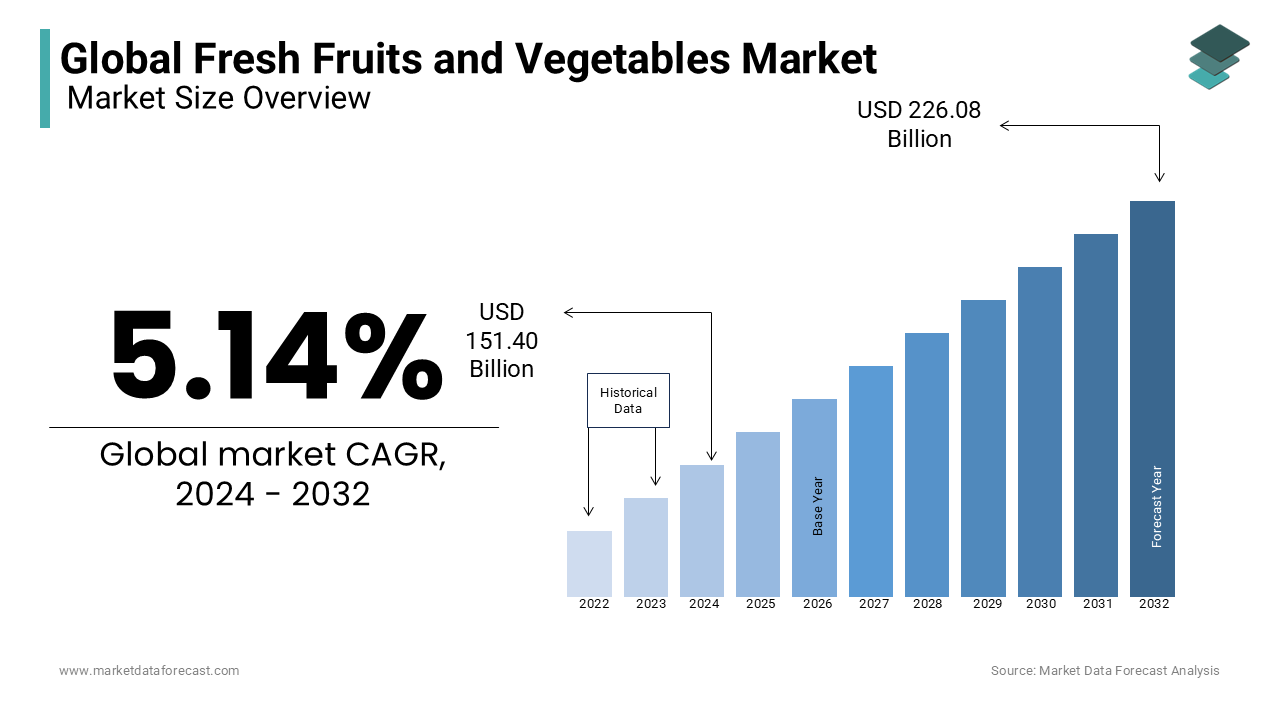
Fresh Fruits and Vegetables refers to the unprocessed plant-based food items intended for immediate consumption or culinary use. These commodities are distinguished by their minimal processing, retaining natural nutritional integrity, including vitamins, fiber, and antioxidants essential for human health. Unlike processed or preserved produce, fresh fruits and vegetables are highly perishable, necessitating efficient cold chain logistics and rapid turnover from farm to consumer. The market spans diverse channels, including traditional wet markets, supermarkets, online platforms, and direct farm sales, reflecting evolving consumer access patterns.
Urbanization and dietary shifts have intensified demand, yet post-harvest losses remain significant—India loses a notable share of its fruit and vegetable output due to inadequate storage and transportation infrastructure. The market's structure is further shaped by climatic variability, trade policies, and consumer awareness of food safety, all influencing supply reliability and quality standards across regions.
MARKET DRIVERS
Rising Consumer Awareness of Health and Nutrition
The escalating public consciousness regarding dietary health and disease prevention is a pivotal force propelling the Fresh Fruits and Vegetables Market. An increasing body of clinical research underscores the role of plant-based diets in mitigating chronic illnesses such as cardiovascular diseases, type 2 diabetes, and certain cancers. As per the World Health Organization (WHO), insufficient fruit and vegetable intake is linked to approximately 1.7 million preventable deaths annually worldwide, primarily due to stroke, coronary heart disease, and digestive cancers. This evidence has catalyzed public health campaigns across nations. In China, the National Health Commission’s 2022 dietary guidelines emphasize increasing vegetable consumption per capita, aligning with a national strategy to reduce non-communicable diseases. This behavioral shift is further amplified by digital health platforms and nutrition apps, which track dietary intake and reinforce consumption habits, thereby embedding fresh produce into daily routines.
Expansion of Modern Retail and E-Grocery Channels
The proliferation of organized retail and digital commerce has fundamentally transformed access to fresh fruits and vegetables, particularly in densely populated urban centers across the Asia-Pacific region. Supermarket penetration in countries like Thailand and Malaysia is substantial, enabling consistent supply of graded, traceable, and hygienically packaged produce. Concurrently, the e-grocery sector has witnessed exponential growth; in India, online fresh produce sales surged notably between 2022 and 2023, driven by platforms such as BigBasket and JioMart that integrate farm-to-fork supply chains. These platforms leverage cold storage hubs and last-mile refrigerated fleets, reducing spoilage rates compared to that in traditional supply chains. In Japan, where aging demographics limit physical shopping, a notable portion of households aged 65 and above now utilize online grocery services. Furthermore, South Korea’s home delivery infrastructure, supported by advanced logistics networks, ensures same-day delivery of fresh produce to majority of urban households. This seamless accessibility not only enhances consumer convenience but also standardizes quality expectations, incentivizing farmers to adopt Good Agricultural Practices (GAP) and participate in formal markets, thus reinforcing the structural evolution of the fresh produce ecosystem.
MARKET RESTRAINTS
High Post-Harvest Losses Due to Inadequate Cold Chain Infrastructure
The staggering volume of post-harvest losses stemming from insufficient cold chain infrastructure, particularly in developing economies, is one of the most persistent impediments to the efficient functioning of the Fresh Fruits and Vegetables Market. Perishable produce is highly sensitive to temperature fluctuations, and without refrigerated storage and transport, spoilage accelerates rapidly. As per the Food and Agriculture Organization (FAO), an estimated 13.2% of fruits and vegetables produced globally are lost between harvest and retail, with losses exceeding 40% in parts of South Asia and Sub-Saharan Africa. In India, despite being the second-largest producer of fruits and vegetables, the country possesses significantly lower number of refrigerated trucks, compared to that in the United States, according to the International Institute of Refrigeration. This deficit results in substantial annual losses. In Indonesia, where tropical humidity accelerates decay, smallholder farmers lose nearly half of their tomato and chili yields before reaching markets. Moreover, only some portion of India’s perishable cargo is transported under controlled temperatures, limiting market access for remote producers. These inefficiencies not only erode farmer incomes but also inflate consumer prices and constrain export potential, undermining the overall competitiveness of national fresh produce sectors.
Climate Change-Induced Agricultural Volatility
The Fresh Fruits and Vegetables Market is increasingly vulnerable to climatic disruptions that destabilize production cycles and compromise yield reliability. Unlike staple crops, many fruits and vegetables require precise temperature ranges, water availability, and photoperiod conditions, making them acutely sensitive to weather anomalies. As per the Intergovernmental Panel on Climate Change (IPCC), global warming has already altered precipitation patterns and increased the frequency of extreme weather events, with Asia experiencing notably rise in drought-affected areas since 2000. In Australia, the 2019–2020 bushfire season and prolonged drought reduced vegetable production in New South Wales. Similarly, in California, a key global supplier of almonds, citrus, and leafy greens, the U.S. saw a decline in vegetable acreage between 2020 and 2023 due to persistent water shortages. In Bangladesh, rising salinity levels in the coastal delta have rendered a large share of hectares unsuitable for traditional vegetable farming. Furthermore, unseasonal frost in northern China’s apple-growing regions in 2022 led to a drop in output. These climatic shocks not only reduce supply but also elevate price volatility, disrupt export schedules, and compel import dependency, thereby weakening the resilience of the fresh produce supply chain.
MARKET OPPORTUNITIES
Integration of Digital Farming Technologies
The adoption of precision agriculture and digital monitoring tools presents a transformative opportunity for enhancing productivity and quality in the Fresh Fruits and Vegetables Market. Technologies such as IoT-enabled sensors, satellite imaging, and AI-driven analytics allow farmers to optimize irrigation, detect pests early, and predict harvest timelines with greater accuracy. Like, smallholder farms in India implemented digital advisory services through mobile platforms like ICRISAT’s mKisan saw an increase in vegetable yields and a reduction in water usage. In Japan, where labor shortages challenge agricultural continuity, an increasing number of commercial greenhouses now use automated climate control systems, boosting tomato yields. Similarly, in the Philippines, the Department of Agriculture’s e-Kadiwa program links large number of farmers directly to consumers via a digital marketplace, reducing middlemen margins and improving income stability. The global smart agriculture business, particularly in horticulture, is projected to grow from 2023 to 2030. Moreover, blockchain traceability systems are being piloted in Thailand’s mango export sector, can enable real-time tracking from orchard to port and can reduce rejection rates at international borders. These innovations not only elevate efficiency but also align with consumer demand for transparency and sustainability.
Urban Agriculture and Vertical Farming Expansion
The emergence of urban and controlled environment agriculture offers a viable solution to supply chain fragmentation and land scarcity, particularly in megacities across the Asia-Pacific region. Vertical farms and rooftop gardens enable year-round production of leafy greens, herbs, and microgreens within city limits, drastically reducing transportation time and carbon emissions. In Japan, Spread Co. operates the world’s largest automated vertical farm, capable of producing 30,000 lettuce heads daily with significantly less water than conventional farming. China has launched several high-tech urban agriculture pilot zones in cities like Beijing and Shanghai, aiming to supply of fresh vegetables locally. Additionally, in India, the Smart Cities Mission has integrated rooftop farming into urban planning, with Pune establishing many community farms across residential complexes. These localized systems not only enhance food security but also reduce spoilage—produce reaches consumers within hours of harvest. So, this shift represents a paradigm change in how fresh produce is cultivated and distributed.
MARKET CHALLENGES
Residue and Food Safety Compliance
Ensuring food safety and minimizing chemical residues in fresh produce remains a critical challenge, particularly in export-oriented markets with stringent regulatory standards. Many smallholder farmers in developing nations lack access to training on safe pesticide application, leading to excessive or improper use. As per the World Health Organization (WHO), over 3 million cases of pesticide poisoning occur annually worldwide, with agricultural workers in South and Southeast Asia disproportionately affected. In Vietnam, an inspection by the Plant Protection Department drew attention on a notable portion of exported dragon fruit batches exceeded maximum residue limits (MRLs) for chlorpyrifos, resulting in rejections by the European Union. Similarly, in India, the Food Safety and Standards Authority of India (FSSAI) reported that 2.8% of 86,401 tested food samples between 2022 and 2026 contained pesticide levels above permissible thresholds, with other pointing out okra and spinach being the most contaminated. These violations not only trigger trade barriers but also erode consumer trust. Japan’s Positive List System has rejected many of shipments of Chinese vegetables since 2020 due to non-compliance, according to the Japanese Ministry of Health, Labour and Welfare. Addressing this requires systemic investment in farmer education, certification programs, and rapid testing infrastructure.
Price Volatility and Market Access Inequity
Price instability and unequal market access pose enduring challenges for small-scale producers in the Fresh Fruits and Vegetables Market. Unlike commoditized staples, fresh produce prices are highly susceptible to seasonal fluctuations, weather disruptions, and speculative trading. As per the Asian Development Bank, wholesale prices for tomatoes in India have swung significantly within a single year due to oversupply during harvest peaks and shortages during monsoon disruptions. Small farmers, who constitute a notable share of horticultural producers in Southeast Asia, often lack bargaining power and are forced to sell at distress prices to intermediaries. In the Philippines, the Department of Agriculture found that farmers receive only limited portion of the final retail price of vegetables, with the remainder absorbed by logistics and middlemen. This inequity is exacerbated by limited access to formal markets and credit. Furthermore, price volatility discourages long-term investment in quality improvement and sustainable practices. Without institutional support, price stabilization mechanisms, and direct market linkages, smallholders remain trapped in cycles of low income and vulnerability, undermining the inclusivity and resilience of the fresh produce sector.
REPORT COVERAGE
| REPORT METRIC | DETAILS |
| Market Size Available | 2025 to 2034 |
| Base Year | 2025 |
| Forecast Period | 2026 to 2034 |
| CAGR | 5.14% |
| Segments Covered | By Product Type, End Users, Application, And Region |
| Various Analyses Covered | Global, Regional and Country Level Analysis; Segment-Level Analysis; DROC; PESTLE Analysis; Porter’s Five Forces Analysis; Competitive Landscape; Analyst Overview of Investment Opportunities |
| Regions Covered | North America, Europe, APAC, Latin America, Middle East & Africa |
| Market Leaders Profiled | Dole Food, Keelings, Mirak Group, Driscoll, Fruitable Fresh Sdn Bhd, Goknur Gida, EMONA Co. Ltd., Fresgarrido, Naturipe Farms, and Belorta. |
SEGMENTAL ANALYSIS
By Product Type Insights
The vegetables segment commanded the market with 55.2% share of the global fresh fruits and vegetables market in 2025. This preeminence is primarily anchored in their role as dietary staples across diverse cultures, particularly in Asia, Africa, and Latin America, where daily meals are structured around vegetable-based preparations. A key driver of this dominance is the sheer volume of consumption. Additionally, vegetables such as tomatoes, onions, and leafy greens are cultivated year-round in tropical and subtropical climates, ensuring consistent supply and affordability. India, the world’s second-largest vegetable producer, harvests over 190 million metric tons annually, as stated by the National Horticulture Board, with domestic consumption absorbing significant portion of output. Unlike fruits, which often serve as supplementary or seasonal items, vegetables are embedded in daily cooking routines, making demand more stable and less discretionary. This institutional support, combined with high caloric efficiency and low production costs, solidifies vegetables as the cornerstone of the fresh produce economy.
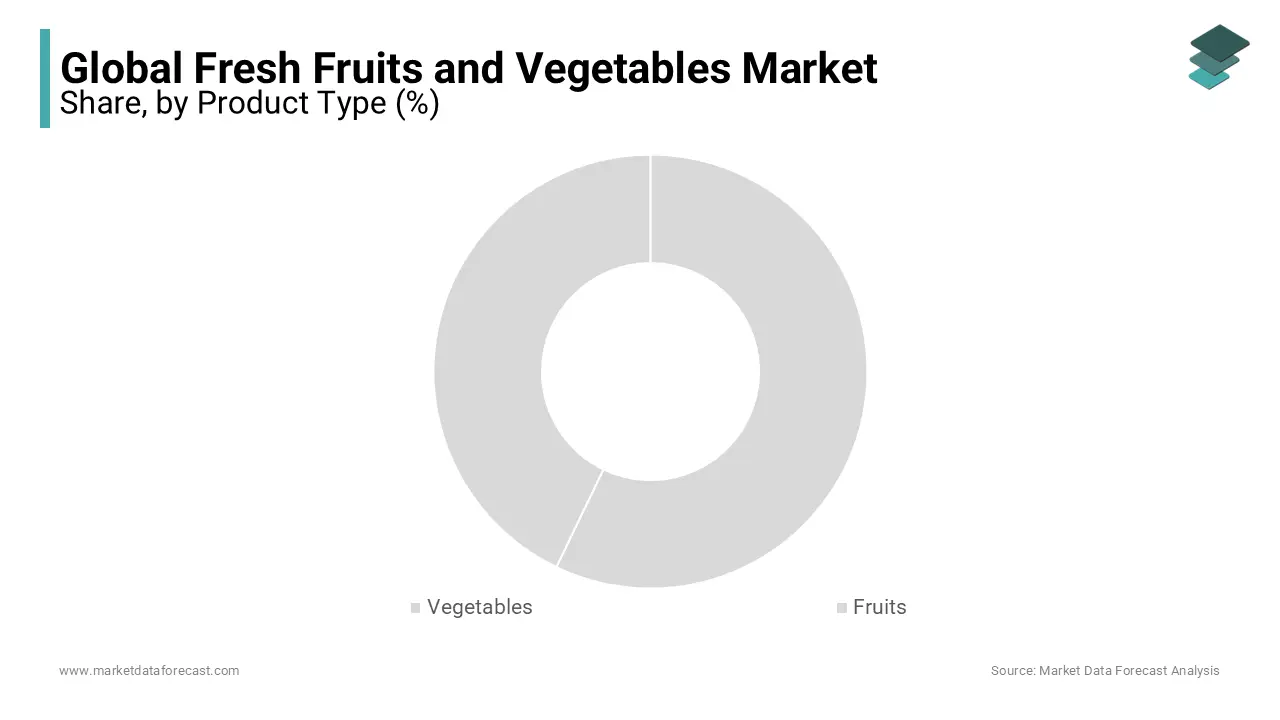
The fresh fruits segment is expanding at a CAGR of 7.3% which is driven by rising consumer demand for functional foods and natural sources of vitamins and antioxidants. One major factor behind this acceleration is the global surge in health-conscious lifestyles, particularly among urban middle-class populations. As per the World Health Organization (WHO), global obesity rates have nearly tripled since 1975, prompting public health authorities to advocate fruit consumption as part of weight management and metabolic health. Another critical driver is the internationalization of exotic and tropical fruits. Countries like Thailand and Vietnam have increased exports of mangosteen, dragon fruit, and rambutan annually over the past years. These fruits are increasingly featured in premium smoothie bars, functional beverages, and gourmet retail in Europe and North America. Moreover, advancements in cold chain logistics have extended the shelf life of delicate fruits such as berries and cherries, enabling long-distance trade. Chile, one of the leading blueberry exporter, shipped over 86,000 metric tons in 2023/24. This convergence of health trends, export diversification, and logistical innovation positions fresh fruits as the fastest-growing segment.
By End-Users Insights
The inorganic or conventional produce segment led the market by account for a substantial share in 2025. This overwhelming dominance is rooted in economic accessibility and scalability; conventional farming methods yield higher outputs at lower costs, making them the default choice for mass consumption. In countries like India and Nigeria, where a large share of household food expenditure goes toward fresh produce, price sensitivity dictates preference for non-organic options. Additionally, the global supply chain for inorganic produce is deeply entrenched, with established distribution networks spanning wet markets, supermarkets, and wholesale hubs. China, the world’s largest vegetable producer, dedicates a very small portion of its horticultural land to organic cultivation, prioritizing yield and food security over premium segmentation. Another critical factor is the limited availability of organic certification infrastructure in developing nations; in Southeast Asia, only a limited share of smallholder farmers have access to accredited organic verification.
The organic fresh fruits and vegetables segment is projected to grow at a CAGR of 10.8%, fueled by intensifying consumer demand for chemical-free, sustainably grown food. A primary catalyst is the growing body of scientific evidence linking pesticide exposure to long-term health risks. As per the European Food Safety Authority (EFSA), a notable share of conventional fruit samples tested in 2022 contained multiple pesticide residues, compared to that in organic samples, reinforcing consumer preference for cleaner alternatives. Another driving force is regulatory and institutional support. The European Union’s Farm to Fork Strategy aims to dedicate 25% of agricultural land to organic farming by 2030, with EUR 40 billion in subsidies allocated for conversion, as stated by the European Commission. Retail expansion also plays a pivotal role. Furthermore, e-grocers like Amazon Fresh and Ocado report that organic items account for a notable share of fresh produce sales, despite higher prices. This synergy of health awareness, policy backing, and retail integration is accelerating the organic segment’s trajectory.
By Application Insights
The household consumption was the prominent application in the global fresh fruits and vegetables market in 2025. This dominance is underpinned by the fundamental role of fresh produce in daily home cooking, where vegetables and fruits are integral to balanced diets across income levels and geographies. In low- and middle-income countries, where institutional catering is limited, households account for over 90% of fresh produce purchases. Cultural eating habits further reinforce this trend; in Mediterranean countries like Greece and Italy, daily meals are built around fresh salads, cooked vegetables, and seasonal fruits. Additionally, the rise of home-based wellness routines, such as juicing, smoothie preparation, and meal prepping. has amplified demand. Unlike commercial applications, which are subject to economic cycles and hospitality sector fluctuations, household demand remains resilient, driven by nutritional necessity rather than discretionary spending. This structural stability ensures that the domestic segment remains the largest and most consistent market for fresh produce.
The commercial application segment is expanding at a CAGR of 8.1% and is driven by the rapid evolution of the global foodservice industry and the premiumization of dining experiences. A key factor is the proliferation of health-focused and plant-based menus in urban restaurants. Another driver is the rise of ready-to-eat (RTE) and fresh-cut produce supplied to commercial kitchens. Additionally, airline catering and corporate cafeterias are increasing fresh fruit offerings. This institutional demand, coupled with operational efficiency needs, positions the commercial segment as the fastest-growing application channel.
REGIONAL ANALYSIS
Asia-Pacific
Asia-Pacific stood as the undisputed leader in the global fresh fruits and vegetables market by commanding a major share of total production and consumption in 2025. The region’s dominance is anchored in its vast agricultural base, dense population, and dietary reliance on plant-based foods. China alone produces a substantial million metric tons of horticultural crops annually, including nearly half (48%) of the world’s cabbage and over 81% of its cucumbers. India follows closely, with horticulture contributing significantly to its agricultural GDP. Urbanization and rising disposable incomes are further fuelling demand. The region also leads in export growth, with Vietnam’s dragon fruit and Thailand’s mangoes gaining traction in Europe and the Middle East. However, post-harvest losses remain a challenge, with a portion of produce wasted due to inadequate cold storage. Despite this, government investments in agricultural modernization and digital marketplaces are enhancing supply chain efficiency, reinforcing Asia-Pacific’s central role in the global fresh produce ecosystem.
North America
North America holds a major share of the global fresh fruits and vegetables market, characterized by high per capita consumption, advanced retail infrastructure, and stringent food safety standards. The United States is the largest single market. Supermarkets and e-grocers dominate distribution. Canada complements this with strong domestic production of apples, potatoes, and greenhouse vegetables, particularly in British Columbia and Ontario. A defining feature of the North American market is the rapid adoption of organic and locally grown produce. The integration of blockchain for traceability and the expansion of urban farming in cities like Chicago and Toronto are further shaping the region’s modernization trajectory.
Europe
Europe is distinguished by its emphasis on sustainability, food safety, and quality certification. The European Union enforces rigorous Maximum Residue Levels (MRLs) for pesticides, ensuring high consumer confidence in produce safety, as monitored by the European Food Safety Authority (EFSA). France, Spain, and Italy are leading producers, with Spain exporting millions of metric tons of fresh vegetables annually, primarily to the UK and Germany. Consumer preference for organic and seasonal produce is strong; in Germany, organic vegetables are a key part of total sales. The region also leads in retail innovation, with supermarkets like Carrefour and Tesco implementing zero-waste initiatives and dynamic pricing to reduce spoilage. Urbanization has spurred demand for convenience formats; the ready-to-eat salad market in the UK is growing . Despite high import dependency, especially for tropical fruits, Europe’s regulatory rigor and consumer awareness position it as a premium market with sustained growth potential.
Latin America
Latin America is emerging as a critical supplier of tropical and exotic produce to international markets. Brazil, the region’s largest producer, cultivates significant million metric tons of fruits and vegetables annually, including a notable share of the world’s açaí and significant volumes of mangoes and papayas. Colombia and Ecuador are leading exporters of bananas and plantains, shipping over 7 million metric tons collectively in 2023. Domestic consumption is also rising; in Mexico, fresh produce accounts for a key share of household food spending. The region benefits from favorable climatic conditions, enabling year-round cultivation and off-season supply to Northern Hemisphere markets. Chile’s berry exports, for instance, generate major revenue annually, with majority shipped during the winter months to North America and Europe. However, infrastructure gaps and post-harvest losses limit full potential. Strategic investments in cold chains and export logistics are gradually enhancing competitiveness.
Middle East and Africa
The Middle East and Africa collectively is marked by growing domestic demand and increasing import reliance. Gulf Cooperation Council (GCC) countries, including Saudi Arabia and the UAE, import over 80% of their fresh produce due to arid climates and limited arable land. Meanwhile, African nations like Egypt and Kenya are significant exporters; Egypt is the world’s significant exporter of oranges. South Africa leads in temperate fruit production. Domestic markets are expanding. However, post-harvest losses exceed in Sub-Saharan Africa due to poor storage. Investments in solar-powered cold storage and regional trade corridors are beginning to address these inefficiencies, signaling future growth potential.
KEY MARKET PLAYERS AND COMPETITIVE LANDSCAPE
Companies playing a major role in the global fresh fruits and vegetables market include Dole Food, Keelings, Mirak Group, Driscoll, Fruitable Fresh Sdn Bhd, Goknur Gida, EMONA Co. Ltd., Fresgarrido, Naturipe Farms, and Belorta.
The competition in the Fresh Fruits and Vegetables Market is characterized by a dynamic interplay between global agribusiness giants, regional producers, and emerging local suppliers. While multinational corporations dominate through extensive supply chains and strong brand recognition, regional players leverage proximity to source fresher produce at lower costs, creating a competitive balance. The market is highly fragmented at the production level, with millions of smallholder farmers supplying through cooperatives or intermediaries, yet consolidation is evident in processing, logistics, and retail distribution. Differentiation increasingly hinges on quality, sustainability credentials, and innovation in packaging and freshness preservation. Companies are under constant pressure to ensure food safety, minimize waste, and meet stringent regulatory standards across export markets. Private-label brands from major retailers are also intensifying competition by offering cost-effective alternatives to established names. Additionally, the rise of direct-to-consumer models, urban farming ventures, and digital marketplaces has disrupted traditional distribution hierarchies. As consumer preferences shift toward organic, traceable, and ethically sourced produce, firms must continuously adapt their operations and messaging to maintain relevance. The competitive landscape is thus defined not just by scale, but by agility, transparency, and responsiveness to environmental and health trends.
TOP PLAYERS IN THE MARKET
Dole Food Company
Dole Food Company stands as a cornerstone in the global fresh produce industry, renowned for its extensive reach and integrated supply chain spanning multiple continents. The company has long been a pioneer in tropical fruit cultivation, particularly in bananas and pineapples, while also maintaining a strong presence in leafy greens and packaged salads. Dole’s influence extends beyond production, as it actively shapes industry standards in sustainability, labor practices, and food safety. Through strategic partnerships with growers and investments in agricultural innovation, the company ensures consistent quality and year-round availability. Its consumer-focused branding emphasizes nutrition and convenience, aligning with evolving dietary preferences. Dole also plays a critical role in promoting food security and environmental stewardship through initiatives aimed at reducing waste and improving farming techniques. Its global logistics network enables efficient distribution across diverse markets, reinforcing its status as a leader in the fresh produce domain.
Fresh Del Monte Produce Inc.
Fresh Del Monte Produce Inc. is a globally recognized name in the fresh fruits and vegetables sector, known for its vertically integrated operations that span cultivation, packaging, and international distribution. The company has established deep-rooted expertise in bananas, pineapples, and melons, while steadily expanding its portfolio to include ready-to-eat vegetables and organic offerings. Its operational model emphasizes control over every stage of the supply chain, ensuring traceability and freshness. Fresh Del Monte has been instrumental in advancing sustainable farming practices, including water conservation and biodiversity protection across its plantations. The company maintains a strong presence in North America, Europe, and the Middle East, serving both retail and foodservice sectors. By fostering direct relationships with growers and investing in cold chain infrastructure, it delivers reliable supply and high product integrity. Its commitment to ethical sourcing and community development further strengthens its reputation as a responsible market leader shaping the future of fresh produce.
Chiquita Brands International
Chiquita Brands International is synonymous with premium-quality bananas and has extended its influence into a broader range of fresh fruits and salads. The company’s legacy in tropical agriculture has enabled it to build a resilient global network that ensures consistent supply and superior ripening control. Chiquita places strong emphasis on brand trust, food safety, and sustainable farming, actively engaging in initiatives that support smallholder farmers and reduce environmental impact. Its signature blue sticker has become a global symbol of quality and reliability in fresh produce. The company has also adapted to changing consumer demands by expanding into value-added segments such as fresh-cut fruit and organic offerings. Through strategic alliances and logistics optimization, Chiquita maintains a strong foothold in supermarkets and retail chains across North America, Europe, and Latin America. Its focus on innovation, from farm practices to consumer packaging, positions it as a dynamic force in shaping modern fresh produce consumption patterns.
TOP STRATEGIES USED BY KEY PLAYERS
One of the primary strategies employed by leading players in the Fresh Fruits and Vegetables Market is vertical integration, enabling companies to control every phase of the supply chain—from cultivation and harvesting to packaging and distribution. This approach ensures consistent product quality, reduces dependency on third parties, and enhances traceability, which is increasingly demanded by retailers and consumers alike. By owning or managing farms, ripening facilities, and transportation networks, firms can respond swiftly to market fluctuations and maintain freshness standards.
Another key strategy is brand differentiation through sustainability and ethical sourcing. Companies are investing heavily in certifications, transparent labeling, and eco-friendly practices to appeal to environmentally conscious consumers. Initiatives such as reducing carbon footprints, eliminating plastic packaging, and supporting fair labor practices are now central to corporate identity, helping firms stand out in a crowded marketplace.
A third major strategy is expansion into value-added and convenience-based product lines. Recognizing the shift toward ready-to-eat and pre-cut produce, key players are launching fresh-cut fruits, salad kits, and snack packs tailored for busy lifestyles. These products not only increase shelf life through advanced packaging but also command higher margins, allowing companies to diversify revenue streams while meeting evolving consumer expectations for health and convenience.
RECENT HAPPENINGS IN THE MARKET
- In March 2023, Dole Food Company launched a new sustainability initiative focused on regenerative agriculture across its Latin American plantations, aiming to improve soil health and reduce water usage while enhancing long-term yield stability.
- In July 2023, Fresh Del Monte expanded its presence in the Middle East by establishing a new distribution hub in Dubai, enabling faster delivery and improved cold chain management for fresh produce across GCC countries.
- In November 2023, Chiquita Brands International partnered with a European retail consortium to introduce blockchain-enabled traceability for its banana shipments, allowing consumers to access real-time information on origin and handling practices.
- In January 2025, Dole announced the rollout of a fully compostable packaging line for its fresh-cut fruit products, reinforcing its commitment to eliminating single-use plastics across its global operations.
- In May 2025, Fresh Del Monte initiated a farmer empowerment program in Guatemala, providing training and resources to over 1,000 smallholder growers to improve crop quality and align with international food safety standards.
MARKET SEGMENTATION
This research report on the global fresh fruits and vegetables market has been segmented and sub-segmented based on product type, end users, application, & region.
By Product Type
- Vegetables
- Fruits
By End Users
- Inorganic
- Organic
By Application
- Commercial
- Household
By Region
- North America
- Europe
- Asia Pacific
- Latin America
- Middle East and Africa
Frequently Asked Questions
1. What are fresh fruits and vegetables?
Fresh fruits and vegetables are unprocessed, natural plant-based foods consumed for nutrition and taste.
2. What factors are driving the fresh fruits and vegetables market?
Increasing health awareness and demand for natural, nutrient-rich food drive market growth.
3. Which regions lead the fresh fruits and vegetables market?
Asia-Pacific and North America are key regions due to high consumption and production capacity.
4. What are the common distribution channels for fresh fruits and vegetables?
They are sold through supermarkets, farmers' markets, online stores, and local vendors.
5. What is the market trend in fresh fruits and vegetables?
Organic produce and locally sourced products are gaining popularity among consumers.
6. How does organic produce impact the market?
Organic produce attracts health-conscious consumers, boosting premium pricing opportunities.
7. What is the growth outlook for the fresh fruits and vegetables market?
The market is expected to grow steadily due to rising health and wellness trends.
8. Who are the major players in the fresh fruits and vegetables market?
Dole Food Company, Fresh Del Monte Produce, and Chiquita Brands are key players.
Related Reports
Access the study in MULTIPLE FORMATS
Purchase options starting from
$ 2500
Didn’t find what you’re looking for?
TALK TO OUR ANALYST TEAM
Need something within your budget?
NO WORRIES! WE GOT YOU COVERED!
Call us on: +1 888 702 9696 (U.S Toll Free)
Write to us: sales@marketdataforecast.com