- Product Description Description
- Table of Contents TOC
- List of Table & Figure LOT
- Get Free Sample PDF Sample PDF
Market Size, 2025
$5.62 BnMarket Estimate, 2026
$5.89 BnMarket Forecast, 2034
$8.57 BnCAGR, 2026–2034
4.8%Executive Summary: IQF Fruits And Vegetables Market
- Market Scope: Global IQF fruits and vegetables market analysis covering product categories, application segments, regional dynamics, and individual quick freezing technology adoption metrics.
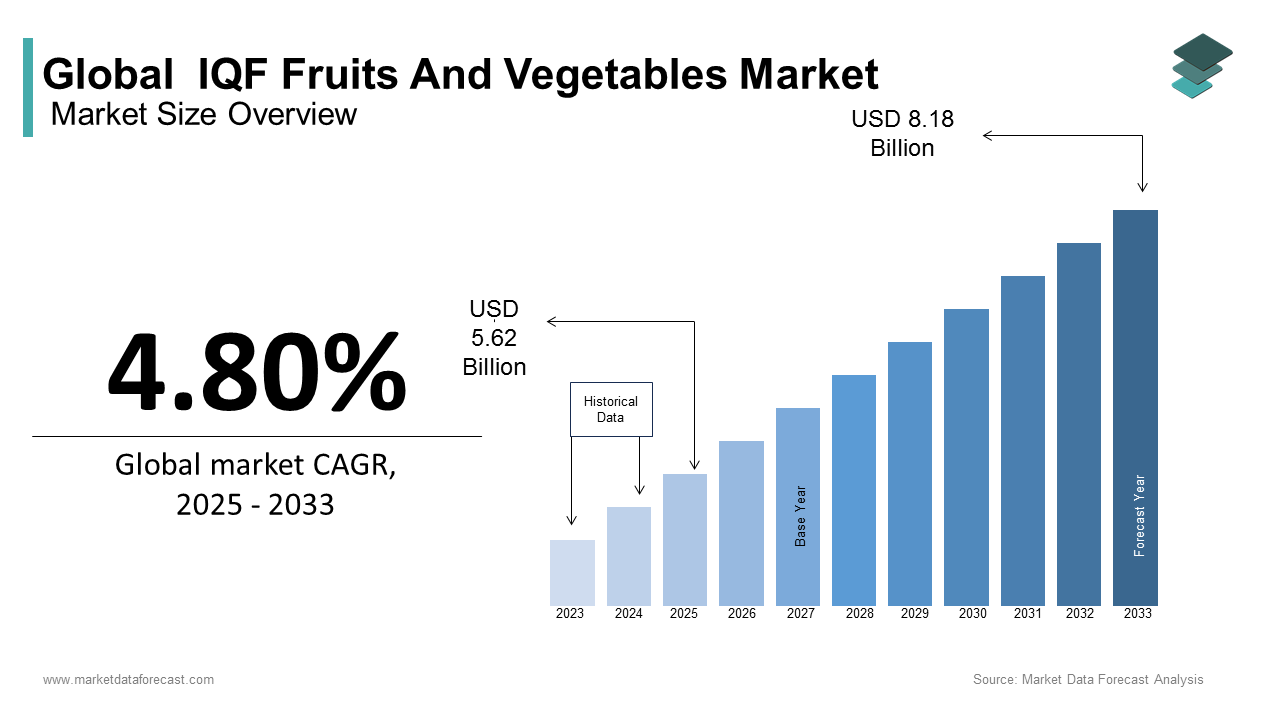
- Market Valuation: Valued at USD 5.62 billion in 2025, estimated at USD 5.89 billion in 2026, and projected to reach USD 8.57 billion by 2034, registering a CAGR of 4.80% from 2026 to 2034.
- Primary Growth Drivers: Rising consumer demand for convenient, ready-to-eat food options, increasing awareness of nutritional benefits preserved via quick freezing, and modern retail infrastructure expansion.
Key Market Segment Metrics (2026–2034)
| Category | Leading Segment (Position) | Fastest-Growing / Key Growth Segment |
|---|---|---|
| By Type & Application | Vegetables (dominated with leading share in 2025) & Bakery (held largest application share at 31.6%) | Berries (fastest-growing type at 6.9% CAGR) & Beverage (fastest-growing application at 9.2% CAGR) |
| By Technology & Innovation | Conventional food preservation methods and standard freezing equipment | Individual quick freezing (IQF) technology, superfood ingredient processing, and clean-label supply chains |
| By Region Segment | North America (led the market with a 35.1% share in 2025) | Asia-Pacific (fastest growth due to rapid urbanization and changing dietary habits) |
Major Market Players & Market Structure
Market Structure: Highly competitive global frozen produce and food processing sector characterized by advanced freezing technologies, nutritional preservation innovations, and expanding retail distribution networks.
Key Companies: Zoetis Inc., Merck & Co., Elanco Animal Health, Boehringer Ingelheim GmbH, Virbac Animal Health, Bayer AG, Eli Lilly & Co, Sanofi (Merial), and Ceva Santé Animal.
Global IQF Fruits And Vegetables Market Size
The size of the global IQF fruits and vegetables market was expected to be worth USD 5.62 billion in 2025 and is anticipated to be worth USD 8.57 billion by 2034, from USD 5.89 billion in 2026, growing at a CAGR of 4.80% during the forecast period.
IQF stands for Individually Quick Frozen. This technology prevents the formation of large ice crystals, which can damage cell structures, ensuring that items remain separate and free-flowing rather than clumping together. The process locks in freshness, flavor, and texture, making these products ideal for various culinary applications ranging from smoothies to ready meals. As per data from the Food and Agriculture Organization of the United Nations, approximately 13.2% of food produced globally is lost between harvest and the retail level, highlighting the critical role of preservation technologies like IQF in reducing waste. Furthermore, the World Health Organization states that insufficient fruit and vegetable consumption is linked to around 3.9 million deaths annually worldwide, driving efforts to make these nutrients more accessible year-round. The increasing shift toward city living, with the United Nations Department of Economic and Social Affairs reporting that 45% of the global population now lives in cities and 36% in towns, also contributes to the demand for convenient, long shelf-life food options. Consumers in developed nations increasingly seek healthy ingredients that require minimal preparation time, aligning with the benefits offered by IQF products. Additionally, the growing awareness of seasonal limitations in agriculture necessitates reliable supply chains that can deliver consistent quality regardless of external weather conditions. These factors collectively establish the foundational importance of IQF technology in modern food systems, bridging the gap between agricultural production and consumer convenience while addressing critical issues of food security and nutrition.
MARKET DRIVERS
Rising Consumer Preference for Convenience and Ready-to-Eat Foods
The escalating consumer preference for convenience and ready-to-eat foods boosts the growth of the IQF fruits and vegetables market. Modern lifestyles, characterized by dual-income households and demanding work schedules, have significantly reduced the time available for meal preparation. As per the Bureau of Labor Statistics, the average American spends about 40 minutes per day on food preparation and cleanup, reflecting a strong shift toward time-saving solutions. IQF products offer the advantage of being pre-washed, peeled, and cut, allowing consumers to incorporate healthy ingredients into their diets without the labor-intensive processes associated with fresh produce. This convenience factor is particularly appealing to younger demographics such as millennials and Gen Z, who prioritize efficiency but also maintain a strong interest in health and wellness. According to studies on modern consumer habits, 70% of consumers prioritize convenience when selecting kitchen tools, as many find it difficult to balance healthy eating goals with the time commitment required for fresh produce preparation. IQF fruits and vegetables provide a viable solution by offering nutritional parity with fresh options while eliminating spoilage concerns. The versatility of these products allows for easy integration into smoothies, stir-fries, and salads, further enhancing their appeal. Additionally, the consistent quality and availability of IQF items regardless of season ensure that consumers can maintain their dietary routines year-round. This alignment with contemporary lifestyle needs sustains robust demand and drives market expansion across various regions.
Increasing Awareness of Nutritional Benefits and Food Waste Reduction
Growing awareness of nutritional benefits and the urgent need for food waste reduction greatly propel the IQF fruits and vegetables market. Consumers are becoming increasingly educated about the importance of incorporating diverse fruits and vegetables into their diets to prevent chronic diseases. As per the Centers for Disease Control and Prevention, only about 1 in 10 adults meet federal vegetable intake recommendations, and just 12% meet fruit recommendations, highlighting a substantial gap that IQF products can help bridge by providing accessible and affordable options. The freezing process used in IQF technology preserves vitamins and minerals effectively, often retaining higher nutrient levels than fresh produce that has been stored for extended periods. According to the University of California, Davis, studies have shown that frozen fruits and vegetables can retain comparable or even higher levels of certain antioxidants compared to their fresh counterparts. Furthermore, the global issue of food waste has gained prominence, with the United Nations Environment Programme estimating that 931 million tons of food waste were generated in 2019. IQF technology plays a crucial role in mitigating this issue by extending the shelf life of perishable produce and allowing manufacturers to utilize surplus harvests that might otherwise go to waste. This sustainability aspect resonates with environmentally conscious consumers who prefer brands that demonstrate responsible sourcing and waste management practices. IQF products address both health and environmental concerns. Thus, they position themselves as a superior choice for modern consumers.
MARKET RESTRAINTS
High Energy Consumption and Operational Costs Associated with Freezing
High energy consumption and operational costs associated with the freezing process are limiting the growth of the IQF fruits and vegetables market. The IQF method requires specialized equipment, such as fluidized bed freezers that operate at extremely low temperatures, to rapidly freeze individual pieces of produce. This process is energy-intensive, requiring substantial electricity usage to maintain optimal freezing conditions. As per the International Energy Agency and the FAO, the global agrifood system as a whole accounts for approximately 30% of total global energy consumption, with post-harvest processing, refrigeration, and freezing accounting for a smaller but rapidly growing portion of that demand. Fluctuating energy prices directly impact the profitability of IQF manufacturers, forcing them to either absorb costs or pass them on to consumers. According to the U.S. Energy Information Administration, industrial electricity prices have shown volatility in recent years, creating uncertainty for budget planning. Small and medium-sized enterprises often struggle to compete with larger players who can leverage economies of scale to mitigate these costs. Additionally, the initial capital investment for IQF machinery is high, posing a barrier to entry for new market participants. Maintenance and repair of complex freezing systems further add to operational expenses. These financial pressures can limit the ability of companies to expand production capacities or invest in innovation. Hence, the high cost structure associated with IQF technology restricts market growth, particularly in regions with expensive energy resources or limited access to advanced infrastructure.
Perception Of Lower Quality Compared To Fresh Produce Among Consumers
The persistent perception of lower quality compared to fresh produce among consumers remains a notable barrier for the IQF fruits and vegetables market. Despite scientific evidence supporting the nutritional value of frozen items, many consumers still associate freezing with inferior taste, texture, and freshness. As documented in food science research, sensory attributes such as crispness and color have historically been perceived as compromised in conventionally frozen products, leading to consumer hesitation that modern rapid-freezing technologies (like IQF) are designed to fix. This bias is deeply ingrained in cultural preferences where fresh is equated with healthy and high quality. The stigma is particularly strong in demographic groups that prioritize organic and locally sourced foods, who may view industrial freezing as a sign of processed or less natural food. Marketing efforts to educate consumers about the benefits of IQF technology face challenges in overcoming these entrenched beliefs. Additionally, the presence of ice crystals or freezer burn in poorly packaged products can reinforce negative perceptions if quality control measures are not strictly maintained. Retailers often place frozen items in less prominent locations within stores, further limiting visibility and impulse purchases. Broader market acceptance and penetration will remain limited until these perceptual barriers are resolved through targeted education and improved product presentation.
MARKET OPPORTUNITIES
Expansion of Plant-Based Diets And Vegan Lifestyle Trends
The expansion of plant-based diets and vegan lifestyle trends unlocks potential for the IQF fruits and vegetables market. As more consumers adopt vegetarian and vegan lifestyles, the demand for diverse and convenient plant-based ingredients has surged. As per the Plant Based Foods Association, US retail sales of plant-based foods experienced a major pandemic-era boom, surpassing $8 billion in annual sales, driven by high consumer interest in health and lifestyle changes. IQF fruits and vegetables serve as essential components in plant-based meals, providing necessary nutrients and versatility for cooking. Manufacturers can capitalize on this trend by developing specialized blends tailored for vegan recipes, such as stir fry mi,xes smoothie packs, and soup bases. According to a report by McKinsey & Company, flexitarians, individuals who primarily eat plant-based but occasionally consume meat, represent a massive segment, accounting for nearly half of all consumers in the United States and the United Kingdom. This demographic seeks convenient options that simplify the transition to plant-based eating without compromising on taste or nutrition. IQF products offer the consistency and availability needed to support these dietary choices year-round. Furthermore, the rise of plant-based protein alternatives often requires complementary vegetable ingredients for balanced meals, creating additional demand. Companies can innovate by introducing exotic and superfood varieties such as kale berries and edamame that appeal to health-conscious vegans. The plant-based community is a lucrative and expanding market segment. To successfully tap into it, IQF manufacturers need to align their product offerings with the community's specific values and needs.
Growth of E-Commerce and Online Grocery Shopping Platforms
The growth of e-commerce and online grocery shopping platforms offers a strong opening for the IQF fruits and vegetables market. The convenience of home delivery and the ability to browse a wide variety of products have shifted consumer purchasing behaviors significantly. As documented in industry e-commerce projections, online grocery sales were forecast to scale up to $150 billion globally by 2025, indicating a massive digital retail pipeline for frozen and shelf-stable goods. IQF products are well-suited for online retail due to their long shelf life and durability during transportation compared to fresh produce. Major retailers and specialized online grocers are expanding their frozen food sections, offering curated bundles and subscription services that include IQF items. Manufacturers can leverage data analytics from these platforms to understand consumer preferences and optimize inventory management. Direct-to-consumer models allow brands to build stronger relationships with customers through personalized marketing and loyalty programs. Additionally, the integration of cold chain logistics improvements ensures that product quality is maintained during last-mile delivery. By embracing digital channels, IQF producers can reach a wider audience, including those in remote areas with limited access to physical stores. This shift toward online retail opens new avenues for growth and brand visibility in the competitive food market.
MARKET CHALLENGES
Vulnerability To Climate Change And Agricultural Supply Chain Disruptions
Vulnerability to climate change and agricultural supply chain disruptions is a significant hurdle for the IQF fruits and vegetables market. The quality and availability of raw materials are directly dependent on agricultural yields, which are increasingly affected by extreme weather events. As per the Intergovernmental Panel on Climate Change, rising temperatures and changing precipitation patterns have led to reduced crop productivity in key growing regions, altering the global geographic suitability for staple crops. Droughts, floods, and unseasonal frosts can devastate harvests, leading to shortages and price volatility for key ingredients such as berries and leafy greens. According to the United States Department of Agriculture, extreme weather events have caused billions of dollars in agricultural losses in recent years, impacting the stability of supply chains. IQF manufacturers rely on consistent supplies of high-quality produce to maintain production schedules and meet customer demands. Disruptions in the supply chain can lead to increased costs and delays, affecting profitability and customer satisfaction. Additionally, the geographic concentration of certain crops makes the market susceptible to localized disasters. For instance, a poor harvest in a major berry-producing region can have global repercussions on availability and pricing. Adapting to these challenges requires significant investment in diversified sourcing strategies and resilient logistics networks. However, these measures often come with higher operational costs. The unpredictability of climate impacts complicates long-term planning and risk management for IQF producers, threatening the stability of the market.
Stringent Regulatory Standards And Compliance Requirements For Food Safety
Stringent regulatory standards and compliance requirements for food safety are a formidable challenge for the IQF fruits and vegetables market. Manufacturers must adhere to rigorous guidelines set by authorities such as the Food and Drug Administration and the European Food Safety Authority to ensure product safety and quality. As per the Food and Drug Administration, the Food Safety Modernization Act mandates preventive controls and hazard analysis for food facilities, increasing the complexity of compliance. Meeting these standards requires significant investment in testing, monitoring, and documentation systems. The complexity of regulations varies across different markets, creating challenges for companies operating internationally. Harmonizing standards across borders is difficult, requiring manufacturers to navigate a patchwork of legal requirements. Additionally, the emergence of new pathogens and contaminants necessitates continuous updates to safety protocols and training programs. The cost of maintaining certification and conducting regular audits adds to the operational burden, particularly for smaller players. Any lapse in safety can lead to loss of consumer trust and market share. The dynamic nature of regulatory landscapes requires constant vigilance and adaptability. These stringent requirements, while essential for public health, create barriers to entry and increase the cost of doing business, limiting the agility and profitability of market participants.
REPORT COVERAGE
| REPORT METRIC | DETAILS |
| Market Size Available | 2025 to 2034 |
| Base Year | 2025 |
| Forecast Period | 2026 to 2034 |
| CAGR | 4.80% |
| Segments Covered | By Types, Distribution Channel, End User, And Region |
| Various Analyses Covered | Global, Regional & Country Level Analysis; Segment-Level Analysis, DROC, PESTLE Analysis, Porter’s Five Forces Analysis, Competitive Landscape, Analyst Overview of Investment Opportunities |
| Regions Covered | North America, Europe, APAC, Latin America, Middle East & Africa |
| Market Leaders Profiled | SunOpta, Fruktana, Capricorn Food Products, Breukers Schamp Foods, Alasko Foods, AXUS International, Rasanco, Nimeks Organics, Ardo, Gelagri Bretagn,e and Others. |
SEGMENTAL ANALYSIS
By Type Insights
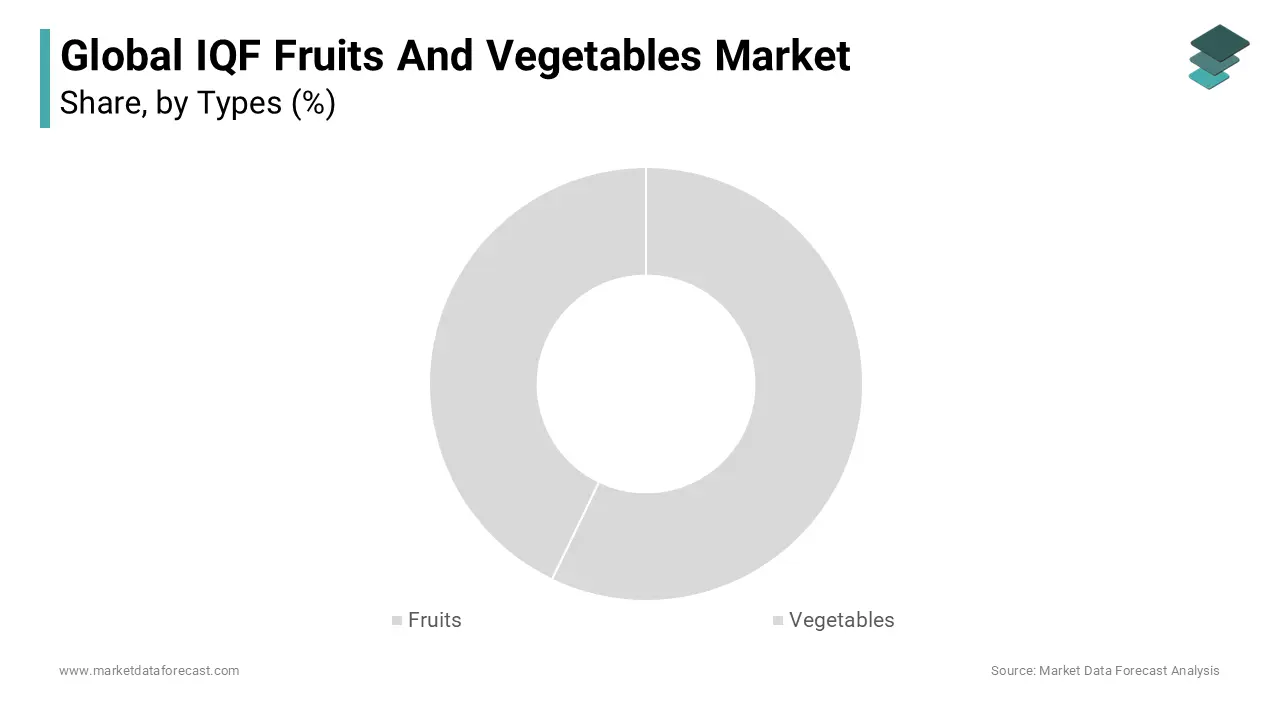
The vegetables segment dominated the IQF Fruits and Vegetables Market and accounted for a 62.6% share in 2025. This dominance of the segment was driven by its extensive utilization in food processing industries and the growing popularity of ready meals. Vegetables such as peas, cor,n carrots and broccoli are fundamental ingredients in frozen dinners, soup,s pizzas, and mixed vegetable packs. As per the American Frozen Food Institute, frozen vegetables account for a significant portion of household freezer stocks because they offer consistent quality andyear-roundd availability. The food manufacturing sector relies heavily on IQF vegetables to ensure standardized taste and texture in mass-produced items. Moreover, the ability of IQF technology to preserve the structural integrity of vegetables during cooking makes them preferable for industrial applications. Furthermore, the versatility of vegetables allows them to be incorporated into a wide range of culinary tradition,s enhancing their global appeal. The demand foplant-baseded ingredients in processed foods further boosts this segment. Manufacturers value the reduced waste and extended shelf life provided by IQF vegetables, which optimizes supply chain efficiency. This widespread industrial adoption, combined with steady consumer demand for convenient vegetable option,s solidifies the dominance of the vegetables segment in the market.
The continued domination of the vegetables segment is significantly supported by the high demand for nutrient-dense and low-calorie dietary options among health-conscious consumers. Vegetables are naturally low in calories and rich in essential vitamins, mineral,s and fib,er making them ideal for weight management and preventive healthcare. As per the World Health Organization, insufficient vegetable intake is a leading risk factor for global disease burden, prompting public health campaigns to increase consumption. IQF vegetables provide a convenient way for individuals to meet daily recommended intake levels without the spoilage risks associated with fresh produce. According to the Centers for Disease Control and Preventio,n only 1 in 10 adults meet federal vegetable recommendatio,ns creating a substantial opportunity for accessible alternatives. The freezing process preserves nutrients effectively, ensuring that IQF vegetables remain a healthy choice. Consumers are increasingly aware of the benefits of diverse vegetable consumption for gut health and immunity. This awareness drives purchases of mixed vegetable blends and single-variety packs for home cooking. The perception of IQF vegetables as a practical solution for busy lifestyles further enhances their appeal. Retailers promote these products as part of healthy eating initiatives, reinforcing their positive image. The alignment with global wellness trends ensures sustained growth and market leadership for the vegetables segment.
The berries segment is estimated to register the fastest CAGR of 6.9% from 2026 to 2034 due to its superfood status and high antioxidant content. Strawberrie,s blueberri,es raspberr,ies and blackberries are renowned for their health benefits, including improved heart health and cognitive function. As per the United States Department of Agriculture Agricultural Research Service, berries contain some of the highest levels of antioxidants among commonly consumed fruits. This nutritional profile appeals strongly tohealth-consciouss consumers and fitness enthusiasts who incorporate berries into smoothies, yogurt bowl,s and breakfast cereals. The global trend toward functional foods has elevated the demand for berries as key ingredients in health-focused diets. According to the Global Wellness Institute, the wellness economy is growing rapidl,y with nutrition being a central pillar. IQF berries offer the advantage oyear-roundnd availability and consistent quality, which is crucial for maintaining daily health routines. Fresh berries are highly perishable and expensive out of season, making IQF variants acost-effectivee alternative. The convenience of using frozen berries without washing or chopping further drives adoption. Social media influence also plays a role with visually appealing berry-based recipes gaining popularity online. This combination of health benefits, convenienc,e and cultural trends fuels the rapid expansion of the berries segment.
The rapid growth of the berries segment is further accelerated by the expansion of the bakery and confectionery industries that extensively use berry fillings and toppings. Bakeries and dessert manufacturers prefer IQF berries for their ability to retain shape and flavor during baking and freezing processes. IQF strawberries and blueberries are popular choices for fillings because they release less water than fresh berries, preventing soggy crusts. This technical advantage makes them ideal for industrial baking applications. Confectionery companies also utilize IQF berries in chocolates and gummies to add natural flavor and visual appeal. The consistency of IQF berries ensures uniform product quality, which is critical forlarge-scalee production. Additionally, the rise of artisanal bakeries and specialty dessert shops has increased the demand for high-quality fruit ingredients. These businesses often source IQF berries to maintain menu consistency throughout the year. The integration of berries into diverse sweet applications broadens their market reach and supports the fastest growth rate in the type segment.
By Distribution Channel Insights
The hypermarkets and supermarkets segment held the majority share of the IQF Fruits and Vegetables Market in 2025. This supremacy of the segment was attributed to its wide product variety and one-stop shopping convenience. These retail formats offer extensive freezer aisles stocked with diverse IQF options ranging from single vegetables to complex fruit blends. As per FMI, the Food Industry Association, supermarkets remain the primary source of grocery shopping for most households, providing easy access to frozen foods. The ability to compare brands' prices and package sizes in person influences purchase decisions significantly. Shoppers appreciate the immediacy of picking up items without waiting for delivery. Supermarkets often feature promotional displays and bundle offers that attractbudget-consciouss buyers. The presence of private label brands alongside national labels provides choices for different income segments. Additionally, the controlled temperature environments in these stores ensure product quality and safety. The trust established bywell-knownn retail chains encourages repeat purchases. The integration of loyalty programs further enhances customer retention by offering personalized discounts on frozen items. This combination of accessibility, variet,y and trust sustains the dominance of hypermarkets and supermarkets in the distribution landscape.
The leading position of this segment is further strengthened by strategic shelf placement and effectivin-storere marketing initiatives. Retailers place IQF fruits and vegetables in high-traffic areas or near complementary items such as dairy and meat to encourage impulse buys. Eye-catching packaging and clear labeling highlighting health benefits or usage ideas attract consumer attention. Seasonal campaigns featuring specific berries or vegetables align with holiday trends and dietary resolutions. Supermarkets use data analytics to optimize inventory and tailor promotions to local preferences. Sampling events and recipe demonstrations in stores educate consumers about the versatility of IQF products. These interactive experiences build confidence in trying new items. The visibility of IQF sections has improved with modern store layouts dedicating more space to frozen foods. Retailers also collaborate with brands to create exclusive bundles or limited edition packs. These efforts create a dynamic shopping environment that drives volume sales. The ability to physically inspect products and take them home immediately reinforces the preference for this channel over online alternatives for many shoppers.
The online stores segment is anticipated to witness the fastest CAGR of 9.3% during the forecast period, owing to the rapid expansion ofe-commercee infrastructure and improved cold chain logistics. In addition, the convenience of home delivery and the ability to access a wider range of niche products appeal to busy consumers. Advances in insulated packaging and refrigerated transport ensure that IQF products arrive in optimal condition. Consumers value the time saved by avoiding trips to physical stores. Subscription services for regular deliveries of favorite items enhance convenience and predictability. The ability to read reviews and compare prices online empowers informed decision-making. Digital platforms also offer detailed product information, such as sourcing and nutritional facts, which appeals tohealth-consciouss shoppers. The integration of mobile apps allows for easy reordering and tracking of deliveries. Retailers invest heavily in user-friendly interfaces and fast delivery options to compete effectively. This technological advancement removes traditional barriers to purchasing frozen goods online. The seamless experience provided by online stores drives their rapid growth as a preferred channel for IQF products.
The fast growth of online stores is also fueled by personalized recommendations and data-driven marketing strategies that enhance consumer engagement. E-commerce platforms utilize algorithms to analyze purchase history and browsing behavior, offering tailored suggestions for IQF fruits and vegetables. Brands leverage this data to promote new products or complementary item,s such as suggesting berries with yogurt. Online retailers send targeted emails and notifications about discounts on frequently bought items. This proactive approach keeps brands top of mind and encourages repeat purchases. Social media integration allows for interactive marketing campaigns featuring recipes anuser-generateded content. Influencer partnerships on digital platforms drive traffic to online stores. The ability to gather real-time feedback helps companies refine their offerings quickly. Loyalty programs linked to online accounts provide rewards that incentivize continued usage. The transparency of online reviews builds trust in product quality. These digital advantages create a compelling shopping experience that traditional retail cannot match. The combination of convenience, personalizatio,n and engagement drives the fastest growth in the online distribution segment.
By End User Insights
The food manufacturers segment led the IQF Fruits and Vegetables Market and captured a 51.2% share in 2025 because of its industrial scale demand for consistent and high-quality ingredients. These companies produce a wide range of products, including frozen meal,s baby food, juice,s and baked goods that require standardized raw materials. IQF fruits and vegetables offer uniform siz,e textu,re and flavor, which is crucial for automated production lines. Manufacturers prefer IQF ingredients because they reduce preparation time and labor costs. The long shelf life of IQF products allows for better inventory management and reduced waste.Large-scalee contracts between manufacturers and suppliers ensure steady demand and stable pricing. The ability to source specific varieties year-round supports continuous production schedules. Innovation in product development often relies on the availability of diverse IQF options. For instance, the launch of new smoothie blends or vegetable mixes requires reliable supplies of specialized fruits and vegetables. This structural dependence on IQF inputs for mass production solidifies the dominance of the food manufacturers segment. The scale of operations in this sector dwarfs other end users, ensuring its leading market position.
The continued domination of the food manufacturers segment is supported by cost efficiency and supply chain stabilit,y favorinlarge-scalele procurement. Bulk purchasing of IQF fruits and vegetables allows manufacturers to negotiate favorable prices and reduce per-unit costs. Establishing long-term relationships with IQF suppliers mitigates the risks of price volatility and supply disruptions. IQF technology enables suppliers to store surplus harvests and release them steadily throughout the year. This stability is vital for manufacturers who must meet strict delivery deadlines. The reduced need for immediate processing of fresh produce lowers operational complexity. Manufacturers can plan production cycles well in advance, knowing that ingredient availability is secure. The consistency of IQF quality reduces rejection rates and improves overall efficiency. Regulatory compliance is easier to manage with standardized inputs from certified suppliers. These operational advantages make IQF products indispensable for food manufacturers. The focus on efficiency and reliability ensures that this segment remains the largest consumer of IQF fruits and vegetables in the market.
The hotels and catering segment is likely to experience the fastest CAGR of 7.7% between 2026 and 2034. This quick surge of the segment is fueled by the recovery of the hospitality sector and increasing demand for convenience. This resurgence drives demand for food services in hotel,s restaurants and event venues. Chefs and caterers value IQF products for their ease of use and consistent quality, which is essential forhigh-volumee service. IQF fruits and vegetables reduce prep time, allowing kitchens to operate more efficiently. The ability to portion control accurately helps manage food costs and reduce waste. Catering companies particularly benefit from the reliability of IQF supplies for large events where consistency is key. The trend toward healthy menu options in hotels also boosts demand for nutritious vegetable and fruit sides. IQF products enable chefs to offer diverse and vibrant dishes year-round regardless of seasonal limitations. The flexibility of IQF ingredients supports menu innovation and customization. As the hospitality industry expands and modernizes its operations, the adoption of IQF products continues to grow at a rapid pace.
The swift expansion of the hotels and catering segment is also driven by the adoption of standardized menus and rigorous quality control in chain establishments. Hotel chains and large catering firms operate across multiple location,s requiring uniformity in food quality and presentation. IQF fruits and vegetables provide the consistency needed to replicate dishes accurately across different sites. IQF technology ensures that each batch of ingredients meets specific quality criteria. This reliability simplifies training for kitchen staff who can rely on predictable cooking times and outcomes. The reduced variability in ingredient quality minimizes the risk of customer complaints. Chain establishments also benefit from the extended shelf life of IQF produc,ts which reduces frequent ordering and storage issues. The ability to maintain high standards while controlling costs is a competitive advantage. As more hospitality groups expand, the demand for standardized, efficient ingredients like IQF fruits and vegetables increases. This operational necessity drives the fastest growth in the hotels and cateringend-userr segment.
REGIONAL ANALYSIS
North America IQF Fruits And Vegetables Market Analysis
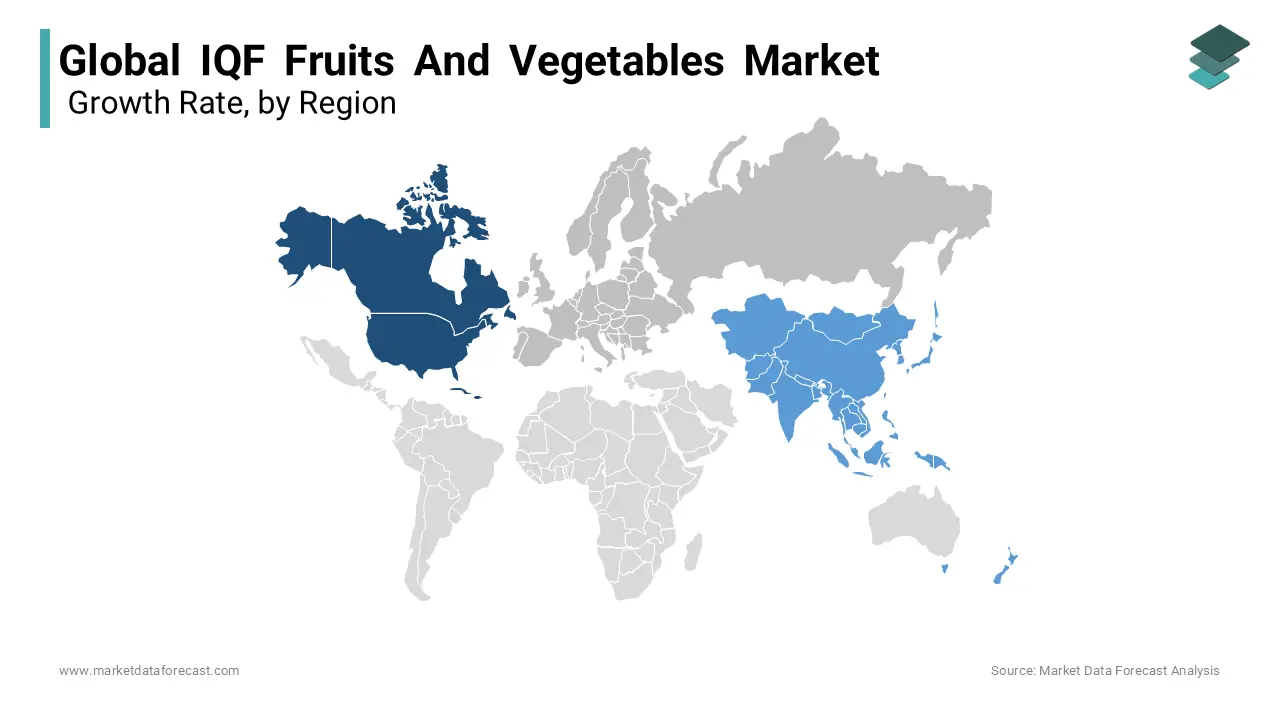
North America was the top performer in the global IQF Fruits and Vegetables Market and accounted for a 35.1% share in 2025. This dominance of the regional market was driven by high consumer awareness and advanced food processing infrastructure. The market status is characterized by strong demand for convenience foods and healthy eating options. As per the United States Department of Agriculture, the United States is a major producer and consumer of frozen fruits and vegetables. The prevalence ofdual-incomee households and busy lifestyles fuels the demand for ready-to-eat and easy-to-prepare meals. According to the American Frozen Food Institute, frozen food sales have remained robus,t reflecting consumer trust in the quality and nutrition of frozen products. The region benefits from well-established cold chain logistics and distribution networks that ensure product availability. Major food manufacturers in North America extensively use IQF ingredients for processed foods. The trend toward plant-based diets also supports market growth. Retailers offer a wide variety of IQF options, including organic and non-GMO varieties. Government initiatives promoting fruit and vegetable consumption further boost demand. The presence of key market players and continuous innovation in product formulations sustains the leading position of North America. The region's mature market dynamics focus on premiumization and health benefit,s driving steady growth.
Europe IQF Fruits And Vegetables Market Analysis
Europe was positioned second in the IQF Fruitandnd Vegetables market and captured 29.7% share in 2025. This position was supported by stringent food safety standards and consumer preference for locally sourced products. The market shows a strong emphasis on sustainability and quality. The demand for organic and environmentally friendly products is high in countries like Germany, France, and the United Kingdom. The region's focus on clean-label products drives innovation in IQF processing methods. Retailers in Europe prioritize sustainable packaging and ethical sourcing. The popularity of ready meals and convenience foods supports steady demand. Government policies promoting healthy diets and reducing carbon footprints influence market dynamics. The presence of established cooperatives and processing facilities ensures a stable supply chain. European consumers are willing to pay premium prices for high-quality and sustainable IQF products. This focus on quality and sustainability defines the market landscape in Europe.
Asia Pacific IQF Fruits And Vegetables Market Analysis
Asia Pacific is the fastest-growing region in the IQF Fruits and Vegetables market due to urbanization and changing dietary habits. The market status is characterized by increasing disposable incomes and exposure to Western food trends. Countries like China, Indi,a and Japan are seeing rising demand for convenience foods due to busy urban lifestyles. The growth of modern retail channels ane-commercece platforms improves access to IQF products. Younger demographics are more open to trying frozen foods for their convenience and nutritional value. Local manufacturers are investing in advanced freezing technologies to meet quality standards. The demand for exotic fruits and vegetables for export and domestic consumption is rising. Government initiatives to reduce post-harvest losses support the adoption of IQF technology. The potential for growth in this region is substantial as infrastructure improves and consumer awareness increases. Asia Pacific represents a key opportunity for market expansion.
Latin America IQF Fruits And Vegetables Market Analysis
Latin America grew steadily in the IQF Fruits and Vegetables Market owing to the region's role as a major exporter of fresh produce, which is increasingly being processed for value addition. The domestic market is growing due to urbanization and the rise of supermarket chains. Consumers are seeking convenient and healthy food options. The export market remains a key driver with demand for IQF berries and tropical fruits from North America and Europe. Local producers are investing in technology to meet international quality standards. The availability of diverse climatic zones allows foryear-roundd production of various crops. Challenges include infrastructure gaps and economic volatility, but the long-term outlook is positive. The focus on export-oriented growth and gradual domestic adoption defines the market trajectory in Latin America.
Middle East And Africa IQF Fruits And Vegetables Market Analysis
The Middle East and Africa region is expected to grow significantly in the IQF Fruits and Vegetables market during the forecast period due to import dependence and tourism. The market status is characterized by limited local production due to climatic constraints, leading to reliance on imports. The hospitality industry in countries like the United Arab Emirates and Saudi Arabia drives demand forhigh-qualityy consistent ingredients. However, the market remains smaller compared to other regions due to lower disposable incomes and limited cold chain infrastructure. Efforts to improve logistics and storage facilities are underway. The demand forhalal-certifiedd and premium products is notable in the Middle East. Local production is emerging in some African countries, but imports dominate. The market growth is steady but constrained by infrastructure and economic factors. The focus on serving the hospitality sector and urban elites defines the current market landscape in this region.
COMPETITION OVERVIEW
The competition in the IQF Fruitsandd Vegetables Market is intense and characterized by the presence of large multinational corporations alongside regional specialists. Global players leverage their scale and extensive distribution networks to dominate shelf space in major retail chains. These entities invest heavily in sustainable sourcing and advanced processing technologies to differentiate their offerings. Regional competitors often focus on niche products or local varieties that appeal to specific cultural tastes. Price competition is significant, particularly for commodity items like peas and cor,n forcing companies to optimize operational efficiency. Innovation in product formats such as ready-to-cook blends and smoothie packs serves as a key differentiator. The market sees frequent mergers and acquisitions as companies seek to consolidate their positions and expand geographic reach. Regulatory compliance regarding food safety and environmental standards adds complexity to the competitive landscape. Private label brands from major retailers also pose a threat by offering lower priced alternatives. Overall the market requires continuous adaptation to changing consumer preferences and technological advancements to sustain profitability and growth in this highly competitive global environment.
KEY MARKET PLAYERS
Major Key Players in the global IQF fruits and vegetables market include
- SunOpta
- Fruktana
- Capricorn Food Products
- Breukers Schamp Foods
- Alasko Foods
- AXUS International
- Rasanco
- Nimeks Organics
- Ardo
- Gelagri Bretagne
- Others.
Top Strategies Used by Key Market Participants
Key players in the IQF Fruits And Vegetables Market primarily employ vertical integration and sustainability initiatives to strengthen their positions. Companies are increasingly controlling the entire supply chain from farming to processing to ensure quality and reduce costs. Investment in organic and non GMO product lines addresses the growing consumer demand for clean label foods. Expansion into emerging markets through local partnerships enables brands to tap into new customer bases. Innovation in packaging technologies focuses on reducing plastic waste and improving convenience for users. Strategic acquisitions of smaller specialized producers allow larger firms to diversify their product portfolios quickly. Digital transformation efforts include using data analytics for demand forecasting and inventory optimization. Collaborations with retailers and food service providers facilitate the development of exclusive product ranges. These multifaceted strategies collectively drive growth and enhance competitiveness in the dynamic global IQF landscape.
Leading Players in the Global IQF Fruits And Vegetables Market
- Dole plc is a global leader in the production and distribution of IQF fruits and vegetables leveraging its extensive supply chain network. The company focuses on sustainable sourcing and advanced freezing technologies to maintain product quality and nutritional value. Recent actions include expanding its portfolio of organic IQF offerings to meet rising consumer demand for clean label products. Dole has invested in state of the art processing facilities in key growing regions to enhance efficiency and reduce environmental impact. The corporation actively promotes its commitment to zero waste and water conservation initiatives strengthening its brand reputation among environmentally conscious consumers. By integrating digital traceability systems Dole ensures transparency from farm to fork. These strategic moves reinforce its position as a trusted supplier of high quality frozen produce globally while addressing modern sustainability challenges and consumer preferences for healthy convenient food options.
- Ardo nv is a prominent European player specializing in the cultivation processing and distribution of IQF vegetables and fruits. The company operates an integrated supply chain that allows for strict quality control from seed to final product. Recent initiatives include the development of innovative vegetable blends tailored for specific culinary applications such as stir fries and smoothies. Ardo has expanded its production capacity in Belgium and Poland to meet increasing global demand. The company emphasizes sustainable agriculture practices including reduced pesticide use and energy efficient freezing methods. Ardo also focuses on strengthening partnerships with retail chains and food service providers across Europe and Asia. By launching new packaging solutions that improve convenience and reduce plastic waste Ardo enhances its market appeal. These efforts demonstrate its commitment to innovation and sustainability ensuring a strong competitive position in the global IQF market through consistent quality and responsible sourcing practices.
- Greenyard nv is a major global supplier of fresh frozen and prepared fruits and vegetables with a strong focus on IQF products. The company leverages its vast network of growers and processing sites to deliver consistent quality year round. Recent actions include optimizing its operational footprint to improve efficiency and reduce costs following strategic restructuring. Greenyard has introduced new IQF fruit ranges targeting the health and wellness sector particularly for smoothie and snack applications. The company invests heavily in research and development to create value added products such as seasoned vegetable mixes. Greenyard also prioritizes sustainability by implementing circular economy principles in its operations. By enhancing its digital capabilities for supply chain management Greenyard improves responsiveness to customer needs. These strategies help the company maintain its leadership position by offering diverse high quality products while adapting to evolving market trends and consumer expectations for convenience and sustainability in the global frozen food sector.
MARKET SEGMENTATION
This research report on the global IQF fruits and vegetables market has been segmented and sub-segmented based on types, distribution channel, end user, and region
By Types
- Fruits
- Berries
- Bananas
- Mango
- Apple
- Papaya
- Pineapple
- Kiwi
- Others
- Vegetables
- Carrots
- Beans
- Peas
- Corn
- Potato
- Broccoli
- Cauliflower
- Others
By Distribution
- Retail Outlets
- Online Stores
- Hypermarkets
By End User
- Hotels/Catering
- Food Manufacturers
By Region
- North America
- Asia and Pacific
- Europe
- Middle East and Africa