- Product Description Description
- Table of Contents TOC
- List of Table & Figure LOT
- Get Free Sample PDF Sample PDF
Market Size, 2025
$2.11 BnMarket Estimate, 2026
$2.36 BnMarket Forecast, 2034
$5.84 BnCAGR, 2026–2034
12%Executive Summary: Global Collagen Peptides Market
- Market Scope: Comprehensive global analysis of the collagen peptides market, tracking source types, application sectors (nutritional products, beverages, cosmetics), and regional dynamics.
- Market Valuation: Valued at USD 2.11 billion in 2025, reaching USD 2.36 billion in 2026, and projected to expand to USD 5.84 billion by 2034, growing at a robust CAGR of 12% from 2026 to 2034.
- Primary Growth Drivers: Accelerating global aging population seeking non-pharmaceutical mobility/joint solutions, and surging consumer awareness regarding skin anti-aging, beauty, and aesthetic wellness.
Key Market Segment Metrics
| Category | Leading Segment (Base Position) | Fastest-Growing / High-Growth Segment |
|---|---|---|
| By Source | Cattle Hide & Bones (dominated with 51.5% of the global market share in 2025, backed by massive scale from the global beef industry and low production costs) | Fish Source (Marine collagen estimated at a 10.4% CAGR, driven by superior bioavailability, smaller molecular weight, and sustainability trends) |
| By Application | Nutritional Products (captured 60.2% of the market in 2025, anchored by high regular supplement consumption for skin and joint functional outcomes) | Beverages (projected at a 10.2% CAGR, propelled by ready-to-drink functional shots, sparkling waters, and on-the-go hydration routines) |
| By Region | North America (held 40.1% of the global market share in 2025, driven by high disposable income, advanced healthcare, and preventive wellness awareness) | Asia-Pacific (fastest-growing regional CAGR at 11.4%, led by K-beauty/J-beauty trends, skincare spending, and functional drink adoption in China, Japan, and South Korea) |
Major Market Players & Industry Landscape
Market Structure: Highly competitive environment marked by intense rivalry between established global gelatin/collagen manufacturers and specialized biotechnology firms focused on advanced bioactive peptides.
Key Companies: Cargill, Danish Crown, Darling Ingredients, Kewpie Corporation, Tessenderlo Group, Lapi Gelatine, GELITA AG, ITAGELATINE S.p.A., GELNEX, and Weishardt Group.
 Download Free Sample Report
Global Collagen Peptides Market Size
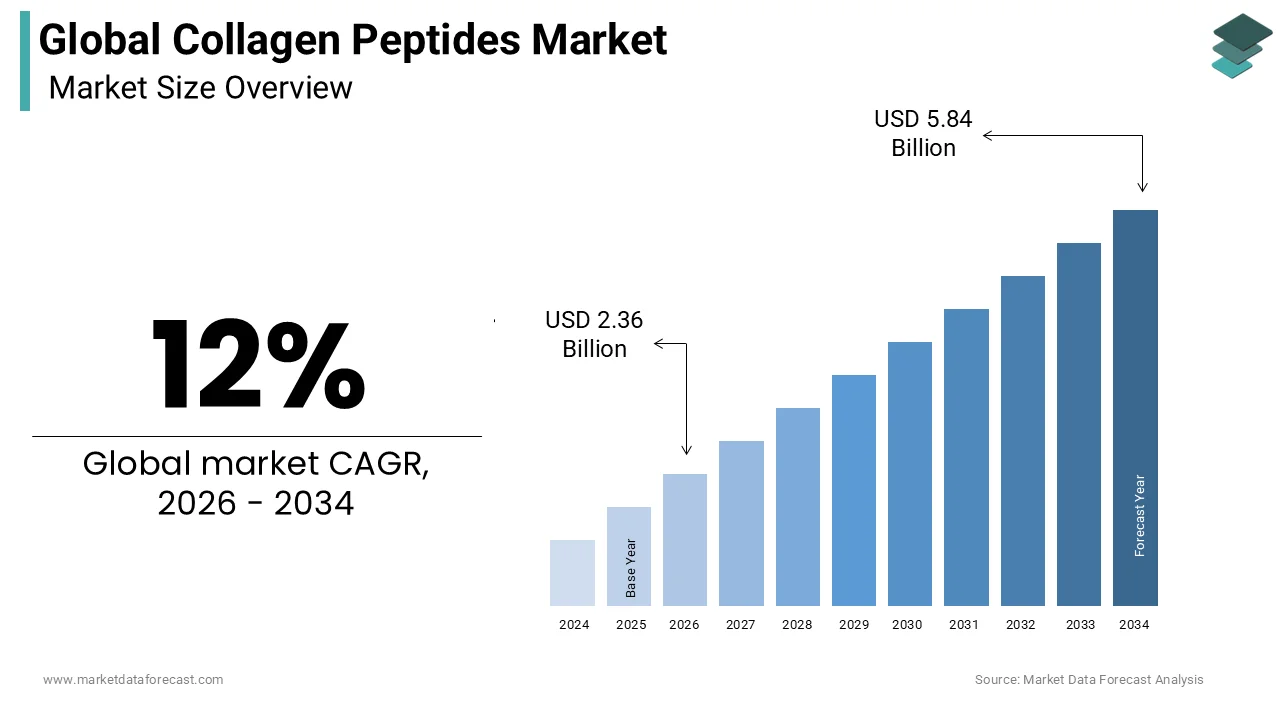
The size of the global collagen peptides market was expected to be worth USD 2.11 billion in 2025 and is anticipated to be worth USD 5.84 billion by 2034 from USD 2.36 billion in 2026, growing at a CAGR of 12% during the forecast period.
Collagen peptides represent a specialized segment within the broader nutraceutical and functional food industry focused on hydrolysed collagen proteins that offer enhanced bioavailability. These low molecular weight peptides are derived from animal sources such as bovine, porcine, and marine tissues through enzymatic hydrolysis processes. According to the National Institutes of Health, collagen constitutes approximately 30% of the total protein content in the human body, underscoring its fundamental role in structural integrity. According to the American Academy of Dermatology, skin loses about 1% of its collagen per year after the age of 20, driving consumer interest in supplemental forms. These physiological facts establish a strong scientific basis for the growing demand for exogenous collagen intake. The market serves diverse applications including dietary supplements, functional beverages, and cosmetic formulations aimed at improving skin elasticity and joint health. Manufacturers focus on sourcing sustainable raw materials and employing advanced extraction technologies to ensure purity and efficacy. Regulatory bodies increasingly scrutinize labeling claims to ensure alignment with clinical evidence supporting health benefits. As aging populations expand globally and wellness trends prioritize preventive health measures, the integration of collagen peptides into daily regimens becomes more prevalent.
MARKET DRIVERS
Accelerating Global Aging Population
Demographic shifts toward an older population are propelling the global collagen peptides market forward with significant momentum. Individuals aged 60 and above experience natural declines in endogenous collagen production, leading to increased susceptibility to osteoarthritis and bone density loss. According to the World Health Organization, the number of people aged 60 years and older is expected to double to 2.1 billion by 2050, creating a vast addressable market for joint health supplements. This demographic trend drives consumers to seek non-pharmaceutical interventions that support mobility and reduce pain associated with degenerative joint diseases. According to the Centers for Disease Control and Prevention, 54 million adults in the United States have been diagnosed with some form of arthritis, highlighting the prevalence of joint issues. Collagen peptides provide essential amino acids like glycine and proline that support cartilage regeneration and bone mineral density. Clinical studies published in reputable medical journals demonstrate that daily supplementation can significantly reduce joint pain and improve physical function in active adults. Healthcare providers increasingly recommend collagen supplements as part of comprehensive management plans for musculoskeletal health. Retailers expand their senior wellness sections to include targeted collagen products formulated for bone strength. The convergence of aging demographics and rising awareness of preventive care establishes collagen peptides as essential components in healthy aging protocols. This sustained demand ensures long-term growth stability for manufacturers focusing on therapeutic benefits beyond aesthetic appeal.
Rising Prevalence of Skin Aging Concerns and Aesthetic Awareness Fuels Consumption
Growing consumer consciousness regarding skin health and anti-aging benefits further fuels the collagen peptides market expansion. Exposure to environmental stressors such as ultraviolet radiation and pollution accelerates skin aging by degrading existing collagen fibers and inhibiting new synthesis. According to the American Society for Dermatologic Surgery, over 80% of visible facial aging is caused by sun exposure, prompting consumers to seek internal solutions for protection and repair. This awareness drives demand for ingestible beauty products that claim to improve skin hydration, elasticity, and wrinkle depth from within. The Journal of Cosmetic Dermatology publishes studies showing that oral collagen supplementation significantly increases skin moisture and reduces roughness after eight weeks of consistent use. Social media platforms amplify these findings through influencer marketing and user-generated content that showcases visible results. Beauty brands integrate collagen peptides into powders, capsules, and ready-to-drink shots to cater to convenience-seeking consumers. The global rise in disposable income allows individuals to invest in premium skincare routines that include nutritional support. Dermatologists increasingly endorse oral collagen as a complementary therapy to topical treatments for holistic skin rejuvenation. This validation enhances consumer trust and encourages trial among skeptics who previously relied solely on external applications. The alignment of scientific evidence with aesthetic desires thus creates a robust environment for market expansion in the beauty and wellness sectors.
MARKET RESTRAINTS
High Production Costs and Raw Material Volatility Restrict Market Accessibility
Economic constraints significantly hinder the growth trajectory of the collagen peptides market due to the expensive and complex extraction processes required for high-quality products. Sourcing raw materials from certified free-range animals or sustainable marine sources involves higher procurement costs compared to conventional industrial byproducts. According to the Food and Agriculture Organization of the United Nations, fluctuations in livestock prices and fishery yields can increase raw material costs by up to 20% annually. This volatility forces manufacturers to absorb margin pressures or pass costs onto consumers, limiting affordability for mass-market segments. Producing hydrolyzed collagen requires specialized enzymatic hydrolysis equipment and strict quality control measures to ensure consistent molecular weight profiles. According to the International Society for the Study of Fatty Acids and Lipids, purification processes to remove allergens and contaminants add substantial operational expenses. Small and medium enterprises struggle to compete with established players who benefit from economies of scale in production. Retailers hesitate to stock premium-priced collagen products due to slower turnover rates in price-sensitive regions. Consumers face difficulty distinguishing between high-quality and inferior products, leading to hesitation in purchasing expensive options. The financial burden extends to research and development as companies work to optimize extraction efficiency without compromising bioactivity. These economic barriers create a challenging environment where only well-capitalized players can sustain innovation and maintain competitive pricing structures without sacrificing quality standards.
Regulatory Ambiguity And Lack Of Standardized Health Claims Create Consumer Confusion
Scientific and regulatory challenges impede the widespread adoption of collagen peptides due to inconsistent guidelines regarding health claims and product classification. Different jurisdictions classify collagen variously as a food ingredient, dietary supplement, or novel food, creating compliance complexities for global manufacturers. The European Food Safety Authority has rejected several health claim applications for collagen due to insufficient evidence linking specific dosages to measurable physiological outcomes. This regulatory stance limits the ability of companies to market products with definitive therapeutic assertions, reducing consumer confidence in efficacy. The Federal Trade Commission in the United States monitors advertising claims closely, penalizing brands that exaggerate benefits without robust clinical backing. The lack of standardized testing protocols for bioavailability and absorption rates leads to variability in product performance across different brands. Consumers struggle to verify the quality and potency of collagen peptides due to the absence of universal certification marks. According to the Journal of Nutrition, variations in molecular weight and amino acid composition significantly impact biological activity, yet labeling requirements often omit these details. This information gap fosters skepticism among educated shoppers who demand transparency and scientific validation. Manufacturers face increased legal risks and reputational damage from misleading marketing practices or unsubstantiated claims. Until harmonized international standards are established, the market will remain fragmented with varying levels of consumer trust and product credibility across different regions.
MARKET OPPORTUNITIES
Expansion Into Plant-Based And Vegan Alternative Segments Creates Growth Avenues
The surge in veganism and plant-based lifestyles presents a substantial opportunity for innovation in the collagen peptides market through alternative sourcing strategies. Traditional collagen is exclusively animal-derived, excluding a growing segment of ethically conscious consumers who avoid animal products entirely. According to The Vegan Society, the number of vegans in the United States has increased by 300% in the last decade, creating urgent demand for cruelty-free alternatives. Biotechnology firms are developing recombinant human collagen produced via fermentation using yeast or bacteria, offering a sustainable and ethical solution. According to The Good Food Institute, investment in fermentation-derived ingredients exceeded 1 billion dollars recently, fueling rapid advancements in production scalability. These bio-identical collagen peptides mimic the structure and function of animal collagen without involving slaughter or animal farming. Manufacturers partner with biotech startups to integrate these novel ingredients into supplements and functional foods targeting ethical consumers. Retailers dedicate shelf space to plant-based wellness products, increasing visibility for vegan collagen alternatives. Marketing campaigns emphasize sustainability and ethical sourcing to appeal to environmentally aware demographics. The convergence of ethical values and health motivations drives continuous experimentation with new biological production methods. This trend enables ingredient suppliers to diversify portfolios and capture premium pricing through specialized offerings. Strategic partnerships with vegan certification bodies further accelerate adoption rates. The plant-based movement thus creates a fertile ground for collagen innovation, offering pathways for market expansion and differentiation in an increasingly conscious consumer landscape.
Integration with Personalized Nutrition and Digital Health Platforms Enhances Engagement
Advancements in personalized nutrition and digital health technologies offer prominent opportunities for collagen peptide marketers to tailor recommendations and improve adherence. Consumers increasingly seek customized supplement regimens based on individual genetic profiles, lifestyle factors, and specific health goals. According to The American Journal of Clinical Nutrition, personalized nutrition interventions lead to 25% better adherence rates compared to generic advice. Digital platforms utilize algorithms to analyze user data and recommend optimal collagen dosages and formulations for specific needs like skin hydration or joint support. Mobile applications track consumption patterns and provide real-time feedback on progress, enhancing user engagement and retention. Wearable devices monitor physiological markers such as skin elasticity and joint mobility, providing objective data on supplement efficacy. Companies collaborate with telehealth providers to integrate collagen recommendations into virtual consultations with nutritionists and dermatologists. Subscription models enabled by digital platforms ensure consistent supply and automatic replenishment, reducing churn rates. Social community features within apps foster peer support and motivation among users pursuing similar health objectives. Data analytics allow manufacturers to refine product formulations based on real-world usage patterns and customer feedback. This integration of technology and nutrition transforms passive consumption into an interactive health journey. Early adopters gain competitive advantages by differentiating themselves through personalized service models. Digital health thus bridges the gap between product availability and effective utilization, creating tangible value propositions that resonate with tech-savvy consumers seeking optimized wellness solutions.
MARKET CHALLENGES
Skepticism Regarding Efficacy and Scientific Validity Hinders Mass Adoption
Persistent skepticism regarding the actual physiological benefits of oral collagen peptides presents a significant challenge for market growth among scientifically literate consumers. Critics argue that ingested collagen is broken down into individual amino acids during digestion, losing its structural integrity before reaching target tissues. According to the Harvard T.H. Chan School of Public Health, the body synthesizes collagen from available amino acids regardless of the source, questioning the unique value of supplemental collagen. This scientific debate creates confusion among consumers who encounter conflicting information from media outlets and healthcare professionals. Many clinical studies supporting collagen benefits are funded by industry stakeholders, raising concerns about bias and objectivity in research findings. The Cochrane Library reviews often highlight methodological limitations in existing trials, such as small sample sizes and short duration periods. Consumers struggle to distinguish between marketing hype and proven clinical outcomes, leading to purchase hesitation. Healthcare providers may hesitate to recommend collagen supplements due to the lack of consensus in major medical guidelines. Social media misinformation amplifies doubts about efficacy, with influencers promoting unverified anecdotes over evidence-based advice. The resulting uncertainty undermines consumer confidence and reduces willingness to pay premium prices for long-term supplementation. Bridging this credibility gap requires independent, large-scale clinical trials that demonstrate clear cause-and-effect relationships. Without robust third-party validation, the market risks stagnation as discerning consumers prioritize proven interventions over trendy supplements with ambiguous mechanisms of action.
Supply Chain Ethical Concerns and Sustainability Issues Damage Brand Reputation
Ethical and environmental concerns surrounding the sourcing of animal-derived collagen present persistent challenges for manufacturers committed to corporate social responsibility. Consumers increasingly demand transparency regarding animal welfare practices and environmental impacts associated with livestock and fisheries industries. According to the World Wildlife Fund, overfishing threatens 34% of global fish stocks, raising alarms about the sustainability of marine collagen sources. Bovine collagen faces scrutiny due to links with deforestation and greenhouse gas emissions from cattle farming. According to the United Nations Environment Programme, industrial agriculture contributes significantly to biodiversity loss and water pollution, impacting brand perception among eco-conscious shoppers. Scandals related to fraudulent labeling or misrepresentation of sourcing origins damage trust and lead to boycotts of implicated brands. Certifications such as Marine Stewardship Council or Grass-Fed Verified add costs but are becoming essential for market access in premium segments. Manufacturers struggle to trace supply chains back to individual farms or fishing vessels, complicating verification efforts. Negative publicity regarding animal cruelty or environmental degradation can rapidly erode brand equity in the digital age. Retailers impose strict sustainability criteria on suppliers, forcing manufacturers to invest in auditing and compliance systems. The tension between cost efficiency and ethical sourcing creates operational dilemmas for companies balancing profitability with responsibility. Addressing these concerns requires proactive engagement with sustainability initiatives and transparent communication about sourcing practices. Failure to do so risks alienating a growing segment of values-driven consumers who prioritize ethical integrity in their purchasing decisions.
REPORT COVERAGE
| REPORT METRIC | DETAILS |
| Market Size Available | 2025 to 2034 |
| Base Year | 2025 |
| Forecast Period | 2026 to 2034 |
| CAGR | 12% |
| Segments Covered | By Source, Application, & Region |
| Various Analyses Covered | Global, Regional and Country Level Analysis; Segment-Level Analysis; DROC; PESTLE Analysis; Porter’s Five Forces Analysis; Competitive Landscape; Analyst Overview of Investment Opportunities |
| Regions Covered | North America, Europe, APAC, Latin America, Middle East & Africa |
| Market Leaders Profiled | Cargill, Danish Crown, Darling Ingredients, Kewpie Corporation, Tessenderlo Group, Lapi Gelatine, GELITA AG, ITAGELATINE S.p.A., GELNEX, Weishardt Group and Others. |
SEGMENTAL ANALYSIS
By Source Insights
The cattle hide and bones segment dominated the market by commanding 51.5% of the global market share in 2025 due to the massive scale of the global beef industry that generates substantial raw material volumes. According to the United States Department of Agriculture, global beef production exceeded 58 million metric tons recently, ensuring a consistent and cost-effective supply of hides and bones for collagen extraction. This abundance allows manufacturers to achieve economies of scale that lower production costs compared to other sources like marine or poultry. According to the Food and Agriculture Organization of the United Nations, cattle farming supports livelihoods for over 1 billion people worldwide, creating established supply chains that facilitate efficient raw material collection. Bovine collagen is widely accepted in various applications, including supplements and cosmetics, due to its high molecular weight and proven efficacy in skin health. Regulatory frameworks in major markets like the United States and Europe have well-defined standards for bovine byproduct processing, reducing compliance risks for manufacturers. The familiarity of consumers with beef-derived products enhances trust and reduces hesitation in purchasing bovine collagen supplements. Manufacturers invest in advanced hydrolysis technologies to optimize yield from cattle hides, further improving profit margins. The versatility of bovine collagen in forming gels and stabilizing emulsions makes it indispensable for food and beverage formulations. These factors combine to maintain cattle hide and bones as the dominant source segment in the global market.
However, the fish source segment exhibits the highest growth and is estimated to register a CAGR of 10.4% over the forecast period in the global market owing to the rising consumer preference for marine-derived ingredients with superior absorption rates. Marine collagen peptides have smaller molecular weights compared to bovine or porcine variants, allowing for faster uptake in the human body. According to the National Institutes of Health, marine collagen shows up to 1.5 times better bioavailability than other sources, making it highly effective for skin rejuvenation and joint support. This scientific advantage drives demand among health-conscious consumers seeking maximum efficacy from their supplements. According to the World Wildlife Fund, sustainable fisheries management is improving, ensuring a reliable supply of fish scales and skins without depleting ocean stocks. Consumers in Asia-Pacific and North America increasingly favor fish collagen due to perceptions of purity and lower risk of transmitting animal diseases. The rise of pescatarian diets also contributes to the growing acceptance of marine-based nutritional products. Manufacturers innovate with odorless and tasteless marine collagen powders to enhance user experience in beverages and foods. Retailers highlight marine collagen as a premium option, commanding higher price points and better margins. The alignment with sustainability trends and health benefits positions fish collagen as the fastest-expanding source category in the market.
By Application Insights
The nutritional products segment constituted the largest application segment in the global collagen peptides market by capturing 60.2% of the global market share in 2025 due to the direct association between supplementation and tangible health outcomes like improved skin and joint function. Consumers actively seek dietary supplements in capsule, powder, and tablet forms to address specific wellness goals such as anti-aging and mobility support. According to the Council for Responsible Nutrition, 75% of adults in the United States take dietary supplements regularly, creating a vast addressable market for collagen products. This widespread adoption drives manufacturers to focus on high-potency formulations that deliver measurable results. The American Journal of Clinical Nutrition publishes studies confirming that daily collagen intake significantly improves skin elasticity and hydration levels, validating consumer investments. Pharmacies and online retailers dedicate extensive shelf space to collagen supplements, enhancing visibility and accessibility. Healthcare professionals increasingly recommend collagen as part of preventive health regimens for aging populations. The convenience of single-serve packets and easy-to-swallow capsules appeals to busy lifestyles. Brand loyalty is strong in this segment as users observe visible improvements over time. Marketing campaigns emphasize clinical evidence and doctor recommendations to build trust. The essential nature of nutritional supplements in daily wellness routines ensures this segment retains its leading position through continuous innovation and consumer education.
However, the beverages segment emerges as the fastest-growing application and is estimated to register a compound annual growth rate of 10.2% as consumers seek convenient ways to integrate collagen into their daily hydration routines, representing the fastest-growing segment. Ready-to-drink shots, fortified waters, and functional coffees featuring collagen peptides offer an effortless consumption method without the need for mixing powders. According to the Beverage Marketing Corporation, functional beverage sales grew by 8% annually, reflecting strong demand for health-enhancing drinks. This trend drives brands to incorporate hydrolyzed collagen into popular formats like sparkling water and protein shakes. According to the International Bottled Water Association, bottled water consumption has surpassed soda, indicating a shift toward healthier hydration options that can be enhanced with collagen. Manufacturers utilize advanced stabilization technologies to ensure collagen remains soluble and tasteless in liquid matrices. Retailers promote collagen-infused drinks as premium lifestyle products appealing to young professionals and fitness enthusiasts. Social media influencers showcase these beverages as part of morning rituals, amplifying awareness and trial. The portability of ready-to-drink formats supports on-the-go consumption patterns in urban environments. Innovation in flavor profiles masks any potential aftertaste, improving sensory appeal. This alignment with convenience and wellness trends propels the beverage segment to the highest growth rates in the market.
REGIONAL ANALYSIS
North America Collagen Peptides Market Analysis
North America dominated the market by holding 40.1% of the global market share in 2025 and is anticipated to experience robust market growth and maintain its leadership position in product innovation over the next few years due to the high disposable income and advanced healthcare infrastructure. Consumers in the United States and Canada exhibit strong awareness of preventive health measures and aesthetic wellness, fueling demand for premium collagen supplements. According to the Centers for Disease Control and Prevention, chronic diseases affect 60% of adults in the United States, prompting individuals to seek natural solutions for joint and skin health. This health consciousness drives robust sales of bovine and marine collagen products across retail and e-commerce channels. The American Academy of Dermatology emphasizes the role of nutrition in skin health, encouraging dermatologists to recommend collagen supplements to patients. Major brands invest heavily in marketing and clinical research to validate product claims and build consumer trust. The presence of key market players and innovative startups fosters a competitive landscape that accelerates product development. Regulatory clarity from the Food and Drug Administration supports transparent labeling and quality standards. High penetration of digital health platforms facilitates personalized collagen recommendations and subscription models. The mature retail ecosystem ensures wide availability of diverse collagen formats from powders to ready-to-drink shots. These factors combine to maintain North America as the largest revenue generator and innovation hub for the global collagen market.
Europe Collagen Peptides Market Analysis
Europe is projected to sustain steady expansion anchored by strict regulatory compliance and rising consumer preference for clean label standards over the next few years. Consumers in countries like Germany, France, and the United Kingdom prioritize organic and ethically produced collagen products derived from free-range animals or sustainable fisheries. The European Food Safety Authority enforces rigorous guidelines for health claims, ensuring that only scientifically validated benefits are marketed to shoppers. This regulatory environment builds high consumer trust in certified collagen brands. According to the World Wildlife Fund, European consumers are among the most concerned about ocean sustainability, driving preference for marine collagen with credible certification. The aging population in Western Europe creates steady demand for joint health supplements supported by national healthcare systems. Local manufacturers leverage traditional expertise in gelatin production to develop high-quality collagen peptides. Retailers emphasize transparency in supply chains, showcasing origin stories and ethical practices. The rise of clean label trends encourages brands to minimize additives and use natural flavors in collagen products. Government initiatives promoting healthy aging further support market growth. These cultural and regulatory factors sustain Europe as a key market for premium and sustainable collagen ingredients.
Asia Pacific Collagen Peptides Market Analysis
The Asia-Pacific region is expected to undergo rapid economic acceleration and surging demand for ingestible beauty products over the next few years and is registering the fastest-growing regional CAGR of 11.4%. Countries like China, Japan, and South Korea lead adoption due to strong cultural emphasis on skincare and anti-aging remedies. The Japanese Ministry of Health, Labour and Welfare promotes functional foods including collagen drinks as part of national health strategies. This government support accelerates market penetration and consumer acceptance. According to the Chinese Society of Dermatology, skincare spending in China has increased by 15% annually, with collagen being a top ingredient choice. Young consumers in urban centers embrace K-beauty and J-beauty trends that feature collagen extensively in both topical and ingestible forms. Local manufacturers innovate with bird nest and marine collagen blends that align with traditional medicinal beliefs. E-commerce platforms like Alibaba and Lazada facilitate easy access to diverse collagen products for millions of shoppers. Rising disposable income allows consumers to trade up to premium imported brands. The large population base provides immense scale for mass-market collagen beverages and snacks. These dynamics position Asia-Pacific as the primary engine for future growth in the global collagen market.
Latin America Collagen Peptides Market Analysis
Latin America is poised for gradual market penetration backed by agricultural resource availability and expanding urban retail networks over the next few years. Latin America presents an emerging opportunity for the Collagen Peptides Market driven by growing health awareness and expanding retail infrastructure. Brazil and Mexico lead regional demand as consumers increasingly adopt wellness lifestyles and seek affordable anti-aging solutions. The Brazilian Ministry of Health implements public health campaigns highlighting the importance of nutrition for healthy aging, boosting interest in collagen supplements. Local manufacturers utilize abundant cattle resources to produce cost-effective bovine collagen for domestic and export markets. According to the Mexican Association of Self-Care Products, supplement sales grew by 10% recently, reflecting rising consumer confidence in nutritional products. Urbanization rates continue to rise, shifting dietary habits toward convenient packaged foods enriched with collagen. Retail chains expand their health and wellness sections to include a wider variety of collagen formats. Social media influencers play a crucial role in educating consumers about the benefits of collagen for skin and hair. Economic challenges limit premium product adoption, but mid-range options gain traction among value-conscious shoppers. Government support for local agriculture helps stabilize raw material supplies. These factors create a promising environment for steady market expansion in the region.
Middle East and Africa Collagen Peptides Market Analysis
The Middle East and Africa region is forecasted to experience progressive market development driven by rising luxury expenditure and wellness tourism over the next few years. The Middle East and Africa region shows nascent but growing potential for the Collagen Peptides Market driven by increasing luxury consumption and health tourism. Gulf countries like the United Arab Emirates and Saudi Arabia lead demand due to high disposable income and interest in premium beauty products. The Saudi Food and Drug Authority updates regulations to facilitate the import and sale of high-quality dietary supplements, improving market access. Consumers in the region prefer Halal-certified collagen products, driving manufacturers to source from compliant suppliers. The African Union promotes agricultural value addition, encouraging local production of collagen from livestock byproducts in countries like South Africa and Kenya. Rising awareness of lifestyle diseases prompts urban populations to seek preventive health solutions, including collagen supplements. Tourism hubs in Dubai and Cairo drive demand for collagen-infused spa treatments and wellness packages. E-commerce platforms enable access to international brands for affluent consumers in major cities. Limited local manufacturing capacity creates opportunities for imports and joint ventures. Cultural emphasis on appearance and hospitality supports the growth of beauty-related collagen applications. These dynamics suggest a gradual but steady evolution of the collagen market in the region.
COMPETITION OVERVIEW
The competition in the Collagen Peptides Market is characterized by intense rivalry among established gelatin manufacturers and specialized biotech firms focusing on bioactive peptides. Large conglomerates leverage their global scale and vertical integration to dominate commodity segments while niche players innovate in premium marine and recombinant collagen spaces. Product differentiation relies heavily on clinical validation, molecular weight profiles, and sensory attributes rather than price alone. Supply chain security becomes a critical competitive factor as raw material volatility impacts reliability and cost structures significantly. Innovation cycles accelerate as companies race to develop novel delivery formats like gummies and ready-to-drink shots that enhance consumer convenience. Regulatory compliance serves as both a barrier to entry and a differentiator for brands with robust documentation and approved health claims. Consumer trust shifts rapidly based on transparency regarding sourcing origins and manufacturing ethics among educated demographics. Strategic alliances between ingredient suppliers and consumer brands foster exclusive partnerships that lock in long-term volume commitments. Intellectual property protection around extraction technologies and specific peptide sequences creates sustainable competitive advantages. The market witnesses increasing consolidation as larger players acquire specialized firms to fill technological gaps. This dynamic environment demands continuous investment in science, sustainability, and consumer education to maintain relevance and profitability.
KEY PLAYERS IN THE GLOBAL COLLAGEN PEPTIDES MARKET
Major Key Players in the Global Collagen Peptides Market include
- Cargill
- Danish Crown
- Darling Ingredients
- Kewpie Corporation
- Tessenderlo Group
- Lapi Gelatine
- GELITA AG
- ITAGELATINE S.p.A
- GELNEX
- Weishardt Group
- Others.
Top Strategies Used By Key Market Participants
Key players in the Collagen Peptides Market employ vertical integration strategies to secure sustainable raw material supplies and ensure consistent quality. Companies actively invest in clinical research partnerships to generate proprietary evidence supporting specific health claims and differentiate their offerings. Strategic collaborations with finished product manufacturers enable co-development of innovative formulations tailored to emerging consumer trends like clean label and plant-based alternatives. Manufacturers focus on expanding production capacities in key regions to reduce logistics costs and improve supply chain resilience against geopolitical disruptions. Digital marketing initiatives leverage influencer partnerships and social media education to build direct consumer engagement and brand loyalty. Companies also prioritize obtaining third-party certifications such as Marine Stewardship Council or Grass Fed to validate sustainability and ethical sourcing claims. Regulatory affairs teams work proactively with authorities to shape favorable labeling standards and novel food approvals in target markets. Expansion into adjacent categories like sports nutrition and medical foods allows firms to diversify revenue streams beyond traditional beauty applications. Cost optimization through process innovation helps maintain competitiveness despite volatile raw material prices. These multifaceted strategies collectively strengthen market positions and drive sustained growth in the evolving collagen landscape.
Leading Players in the Market
- Gelita Group serves as a global leader in collagen peptide innovation with extensive expertise in bovine and porcine sourcing. The company focuses on developing bioactive collagen peptides tailored for specific health applications, including skin beauty and joint mobility. Gelita recently expanded its production capacity in Germany to meet rising global demand for high-purity ingredients. Their research team publishes clinical studies validating the efficacy of their proprietary hydrolysis technology. The company collaborates with major supplement brands to create customized formulations that enhance product differentiation. Gelita emphasizes sustainable sourcing practices and traceability to build trust among ethical consumers. They actively participate in industry conferences to educate stakeholders about collagen science and regulatory compliance. This commitment to scientific validation and quality assurance strengthens their reputation as a premium ingredient supplier. Their portfolio includes specialized peptides for sports nutrition and medical foods. These strategic initiatives position Gelita as a key enabler of innovation in the collagen sector.
- Rousselot distinguishes itself through advanced marine and bovine collagen solutions backed by over a century of gelatin expertise. The company leverages deep knowledge of protein chemistry to develop peptides with superior solubility and bioavailability. Rousselot recently launched a new line of odorless marine collagen designed specifically for clear beverage applications. Their technical centers in Europe and Asia provide local support to manufacturers navigating formulation challenges. The company invests heavily in sustainability certifications for marine sourcing to appeal to eco-conscious markets. Rousselot collaborates with academic institutions to conduct independent clinical trials supporting health claims. They offer comprehensive regulatory guidance to help clients navigate complex global labeling requirements. This combination of technical excellence and regulatory support enhances customer loyalty and retention. Their focus on functional performance ensures consistent quality across diverse food and supplement matrices. These efforts solidify Rousselot’s position as a trusted partner for premium collagen products.
- Nitta Gelatin Inc. plays a pivotal role in the Collagen Peptides Market by supplying high-quality bovine and fish collagen from Japan and North America. The company is renowned for its stringent quality control standards and pharmaceutical-grade manufacturing processes. Nitta recently upgraded its facility in Canada to increase output of low molecular weight peptides for nutritional supplements. They specialize in tasteless and odorless collagen powders that integrate seamlessly into functional foods and beverages. Nitta collaborates with Japanese researchers to explore novel health benefits beyond skin and joints. The company maintains long-term partnerships with major Asian brands seeking reliable domestic sourcing. They emphasize transparency in raw material origin to satisfy strict consumer expectations in Japan. This dedication to purity and consistency builds strong brand equity in premium segments. Their R&D team continuously optimizes hydrolysis parameters to maximize bioactivity. These capabilities make Nitta a preferred supplier for discerning manufacturers worldwide.
DETAILED SEGMENTATION OF THE GLOBAL COLLAGEN PEPTIDES MARKET INCLUDED IN THIS REPORT
This research report on the global collagen peptides market has been segmented and sub-segmented based on source, application, and region.
By Source
- Pigskin
- Cattle Hide
- Poultry
- Fish
- Cattle Bones
- Others
By Application
- Nutritional Products
- Snacks & Cereals
- Beverages
- Dairy Products
- Meat & Poultry Products
By Region
- North America
- Europe
- Asia-Pacific
- Latin America
- Middle East and Africa