- Product Description Description
- Table of Contents TOC
- List of Table & Figure LOT
- Get Free Sample PDF Sample PDF
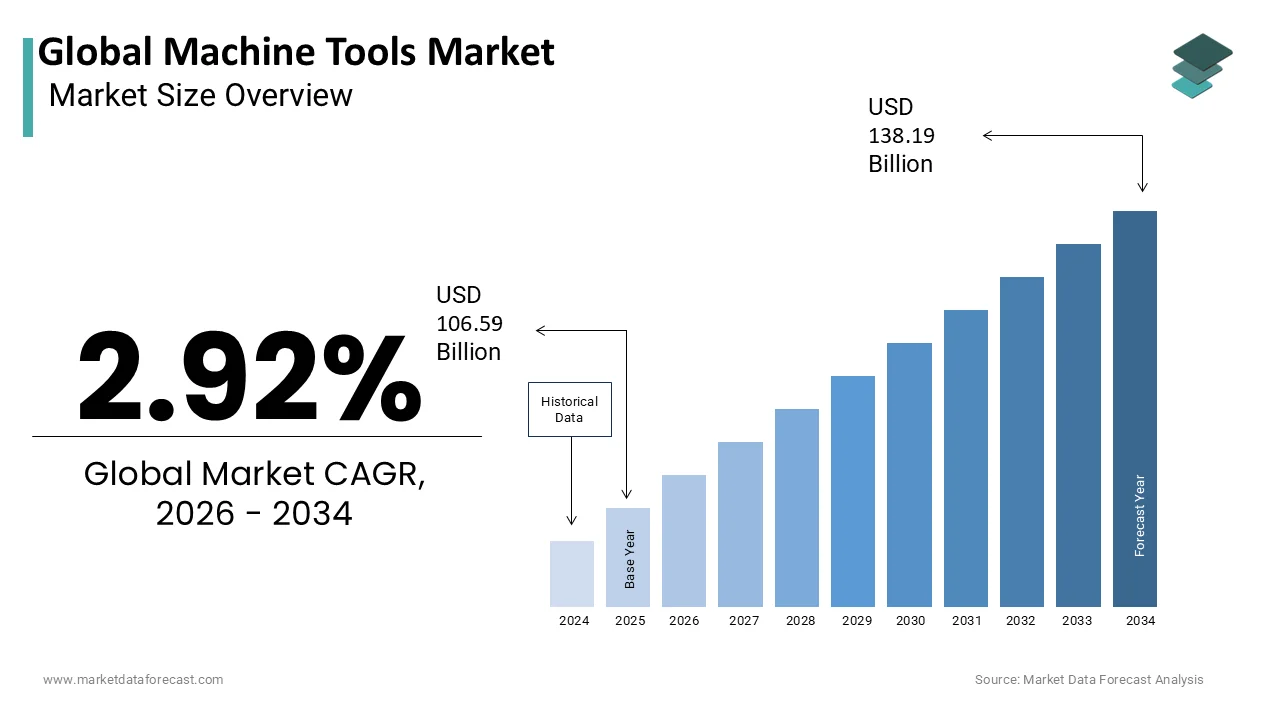
Market Size, 2025
$106.59 BnMarket Estimate, 2026
$109.71 BnMarket Forecast, 2034
$138.19 BnCAGR, 2026–2034
2.92%Executive Summary: Machine Tools Market
- Market Scope: Global machine tools market analysis covering tool types, technology categories, end-use industries, regional leadership frameworks, and precision manufacturing adoption metrics.
- Market Valuation: Valued at USD 106.59 billion in 2025, estimated at USD 109.71 billion in 2026, and projected to reach USD 138.19 billion by 2034, registering a CAGR of 2.92% from 2026 to 2034.
- Primary Growth Drivers: Technological advancements in manufacturing, increasing adoption of AI, IoT, Industry 4.0, automation, and growing demand from the electric vehicle industry.
Key Market Segment Metrics (2026–2034)
| Category | Leading Segment (Position) | Fastest-Growing / Key Growth Segment |
|---|---|---|
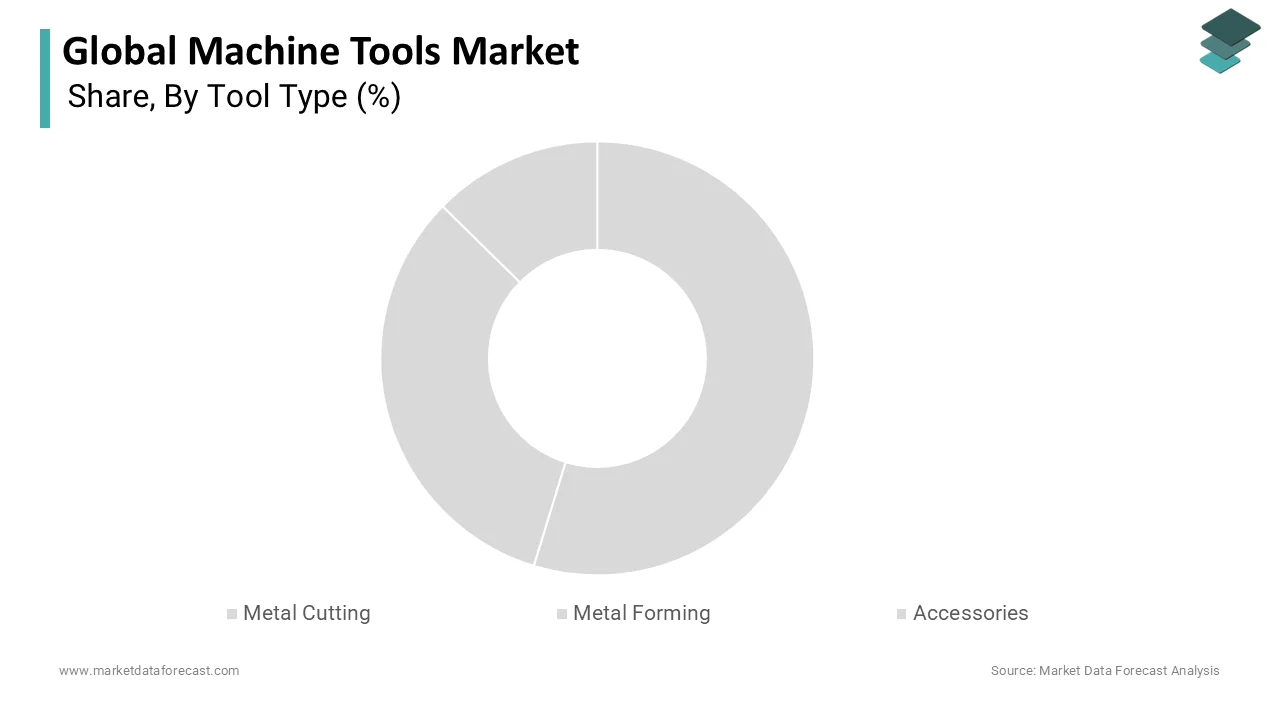
| By Tool Type & Technology | Metal Cutting (77% revenue share in 2025) & CNC technology (85.6% share) | Metal Forming segment (projected to witness the fastest growth) |
| By End-Use Industry | Automotive segment (accounted for the largest market share) | Electrical & Electronics segment (highest growth rate during the forecast period) |
| By Technology & Innovation | Standard conventional machine tools and traditional factory setups | AI-enabled manufacturing, IoT integration, Industry 4.0 automation, and eco-friendly tools |
| By Region / Country | Asia-Pacific (held the largest regional share in 2025) | North America (projected to record the highest CAGR through 2034) |
Major Market Players & Market Structure
Market Structure: Highly competitive global industrial machinery landscape characterized by investments in AI-enabled manufacturing, Industry 4.0 integration, CNC advancements, automation, strategic partnerships, and EV/aerospace expansion.
Key Companies: Allied Machine & Engineering, AMADA Holdings, Dalian Machine Tool Group, DMG MORI, Falcon Machine Tools, 600 Group, Yamazaki Mazak, Trumpf, Komatsu, and JTEKT.
Global Machine Tools Market Size
The Global Machine Tools Market is projected to grow from USD 106.59 billion in 2025 to USD 109.71 billion in 2026 and reach USD 138.19 billion by 2034, registering a CAGR of 2.92% from 2026 to 2034.
A machine tool is a stationary, power-driven mechanism designed to shape or machine rigid materials, most commonly metal, but also plastics and wood. These foundational assets include lathes, milling machines, drilling units, and computer numerical control systems that serve as the backbone of modern manufacturing sectors such as automotive, aerospac,e and defence. According to the U.S. Bureau of Labor Statistics, the manufacturing sector accounted for approximately 13.0 million jobs in the United States in 2025. The substantial workforce dependency directly correlates with the sustained demand for advanced machine tools that enhance productivity and reduce human error. Furthermore, as per the International Organisation of Motor Vehicle Manufacturers (OICA), global vehicle production rose to 96.4 million units in 2025. These facts underscore the indispensable role of machine tools in enabling mass production and maintaining supply chain integrity. Industries are increasingly integrating automation and digital twins into their machining processes to optimise output and minimise waste. The push towards high-precision engineering in aerospace components further necessitates the adoption of sophisticated multi-axis machining centres. This intersection of industrial expansion, technological integration, and precision requirements defines the current trajectory of the global machine tools landscape.
MARKET DRIVERS
Rapid Expansion of the Automotive Industry
The robust growth of the automotive sector contributes to the expansion of the machine tools market. This expansion is driven by the extensive machining requirements for engine blocks, transmission cases, and chassis components. According to the International Organisation of Motor Vehicle Manufacturers, global automobile production has rebounded significantly, with millions of vehicles manufactured annually, each requiring thousands of precisely machined parts. This high-volume production creates a consistent and substantial demand for high-speed and high-precision machine tools that can operate continuously with minimal downtime. According to sources, the structural shift toward electric vehicle production requires manufacturing updates for lightweight materials like aluminium alloys and complicated battery enclosures requiring specific milling and turning solutions. Automotive manufacturers are investing heavily in automated machining lines to meet stringent quality standards and reduce cycle times. The need for tighter tolerances in electric powertrains drives the adoption of advanced computer numerical control systems capable of micron-level accuracy. Supply chain resilience strategies are prompting automakers to reshore production facilities, which further stimulates local demand for domestic machine tool procurement. The continuous evolution of vehicle designs necessitates regular upgrades to manufacturing equipment, ensuring a steady replacement cycle. This dynamic industrial environment ensures that the automotive sector remains a dominant force driving innovation and sales in the machine tools industry.
Growth in Aerospace and Defence Manufacturing
The escalating production demands in the aerospace and defence sectors fundamentally support the growth of the machine tools market. These sectors require ultra-high precision and advanced material processing capabilities. As per studies, global aerospace and defence production rates have shown upward patterns in manufacturing volumes, with commercial and defence platforms containing highly sophisticated, complex structural components. These components often utilise difficult-to-machine materials such as titanium, Inconel, and carbon fibre composites, which necessitate specialised five-axis machining centres and high-performance cutting tools. As per reports, building advanced spacecraft and satellite constellations requires ultra-precise machining tolerances that are significantly narrower than commercial industrial norms, demanding heavy capital deployment in advanced equipment. Defence budgets in major economies are rising, leading to increased production of military vehicles, aircraft and naval vessels, all of which rely on robust machining infrastructure. The strategic importance of supply chain security in defence manufacturing encourages governments to subsidise domestic machine tool production and adoption. Manufacturers are prioritising equipment that offers superior surface finish and dimensional stability to ensure flight safety and performance. The long lifecycle of aerospace programs ensures sustained demand for maintenance, repair, and overhaul services, which also utilise precision machine tools. This high-value segment drives technological advancements that often trickle down to other industrial applications.
MARKET RESTRAINTS
High Initial Capital Investment and Maintenance Costs
The substantial financial burden associated with acquiring and maintaining advanced machine tools is a significant impediment to the machine tools market. This capital barrier effectively limits accessibility for small and medium-sized enterprises. According to sources, high-end multi-axis or specialised computer numerical control (CNC) machining centres are significant capital investments that require substantial funding for installation, personnel training, and software licensing packages. This high entry barrier prevents smaller job shops from upgrading to modern automated systems, forcing them to rely on older, less efficient equipment. According to the Federal Reserve Economic Data, interest rates have risen in recent years, increasing the cost of financing capital expenditures for manufacturing firms, which further discourages large-scale equipment purchases. Small businesses often lack the cash reserves to absorb these upfront costs, leading to delayed modernisation and reduced competitiveness. Additionally, the ongoing maintenance costs for sophisticated machine tools, including spare parts and specialised technician labour, add to the total cost of ownership. Unexpected breakdowns can result in costly production delays, which smaller firms are less equipped to handle financially. The complexity of modern machines requires continuous software updates and calibration, which incur recurring expenses. These financial constraints restrict market penetration among the vast number of small manufacturers who form the backbone of many industrial ecosystems. Consequently, the market growth is skewed towards large corporations with deep pockets, leaving a significant portion of the potential customer base underserved.
Shortage of Skilled Workforce and Technical Expertise
The acute shortage of skilled operators and programmers significantly hinders the effective utilisation of advanced machine tools in the global market. This talent deficit directly creates operational hurdles for manufacturers. According to the Manufacturing Institute, an estimated 60% of skilled-labour positions across the manufacturing sector may go unfilled or take much longer to fill due to an intense skilled talent gap. This talent gap prevents companies from fully leveraging the capabilities of their high-tech equipment, leading to underutilization and inefficiency. As per the Bureau of Labor Statistics, the median age of manufacturing workers is increasing, with many experienced machinists retiring without adequate replacements entering the workforce. This demographic shift results in a loss of institutional knowledge and practical expertise that is difficult to replicate through formal education alone. Modern machine tools require proficiency in complex software interfaces, metrology, and troubleshooting, which takes years to master. The lack of trained personnel leads to higher error rates, increased scrap material, and potential damage to expensive equipment. Companies are forced to invest heavily in internal training programs, which divert resources from other strategic initiatives. The scarcity of skilled labour also drives up wage costs, making it more expensive to staff production lines. Without a competent workforce, the return on investment for advanced machine tools is diminished, slowing down adoption rates. This human resource challenge remains a critical barrier to maximising the potential of modern manufacturing technologies.
MARKET OPPORTUNITIES
Integration of Industry 4.0 and Smart Manufacturing
The widespread adoption of Industry 4.0 technologies offers a substantial opportunity for the machine tools market. This technological shift enables predictive maintenance, real-time monitoring, and enhanced operational efficiency. According to reports, the deployment of Industrial Internet of Things (IIoT) sensors and analytic algorithms allows factories to introduce predictive maintenance protocols that help reduce unplanned equipment downtime. This capability allows manufacturers to schedule maintenance proactively, minimising production interruptions and extending equipment lifespan. As per research, utilising a digital twin inside machine tool software environments allows engineers to perform virtual simulations of machining processes to verify programs and reduce raw material waste. Smart machine tools can communicate with other systems in the factory, creating a seamless flow of information that enhances overall productivity. Manufacturers are developing machines with built-in connectivity features that allow remote diagnostics and software updates, reducing service response times. The ability to collect and analyse large volumes of operational data helps identify inefficiencies and improve process consistency. Customers are increasingly demanding smart features that provide transparency and control over their manufacturing processes. This technological evolution opens new revenue streams for machine tool builders through software subscriptions and data services. The shift towards intelligent manufacturing positions machine tools as central nodes in the digital factory ecosystem.
Expansion into Emerging Markets
The rapid industrialisation of emerging economies represents a key growth area for the machine tools market. This macroeconomic shift effectively creates new demand centres outside traditional strongholds. According to sources, manufacturing value added and production employment in the developing world have shown continuous expansion over long-term timelines as industrialising nations attract cross-border corporate investments. This economic shift drives the need for basic and advanced machine tools to support growing automotive electronics and consumer goods sectors. According to the Ministry of Heavy Industries in India, government initiatives like Make in India have driven substantial development in capital goods, with domestic machine tools production expanding significantly from ₹6,152 crore in 2019-20 to ₹14,286 crore in 2024-25. Local manufacturers in these regions are upgrading their facilities to meet international quality standards, which requires modern precision machinery. The availability of lower labour costs in emerging markets attracts multinational corporations to establish production hubs, further boosting demand for machine tools. Government policies offering tax incentives and subsidies for capital equipment imports encourage foreign machine tool builders to enter these markets. The growing middle class in these countries increases demand for manufactured goods, which in turn fuels production expansion. Establishing a strong presence in these high-growth regions allows companies to diversify their revenue sources and mitigate risks in mature markets. This geographic expansion represents a key strategic avenue for sustained long-term growth.
MARKET CHALLENGES
Volatility in Raw Material Prices
The fluctuating costs of raw materials such as steel, cast iron, and rare earth elements represent a major inhibition to the machine tools market. These price shifts directly impact production margins and pricing stability. As per the World Steel Association, global steel prices have experienced significant volatility in recent years due to supply chain disruptions and changing trade policies affecting the cost structure of machine tool manufacturers. Since machine tools are heavy industrial equipment made primarily from metal, any increase in raw material costs directly affects the final product price. As per the London Metal Exchange, prices for copper and aluminium, which are essential for electrical components and lightweight structures, have also shown unpredictable trends, complicating budget planning for manufacturers. These cost fluctuations make it difficult for companies to offer fixed-price contracts to customers, leading to hesitation in purchasing decisions. Manufacturers must constantly adjust their pricing strategies, which can erode customer trust and competitive positioning. Smaller manufacturers with less bargaining power are particularly vulnerable to these price swings as they cannot absorb the extra costs easily. The uncertainty surrounding raw material availability due to geopolitical tensions further exacerbates the problem. Companies are forced to hold larger inventories to hedge against price spikes, which ties up working capital. Managing this volatility requires sophisticated supply chain strategies and often results in reduced profitability for the sector.
Geopolitical Tensions and Trade Barriers
Escalating geopolitical tensions and the imposition of trade barriers create a challenging environment for the machine tools market. These political developments directly disrupt global supply chains and restrict market access. According to the World Trade Organisation, the number of trade-restrictive measures has escalated significantly, with accumulated import restrictions rising to affect $2.94 trillion worth of global goods. These barriers increase the cost of imported components and finished machines, making them less competitive in target markets. As per the European Commission, retaliatory tariffs on industrial goods have led to a decline in exports for certain machine tool manufacturers, affecting their global revenue streams. Political instability in key regions can lead to sudden changes in regulations or embargoes, which disrupt long-term business plans. Manufacturers often rely on global sourcing for specialised components such as bearings and controllers, and trade restrictions can cause severe shortages. The decoupling of major economic blocs forces companies to duplicate supply chains, which increases operational complexity and costs. Uncertainty about future trade policies discourages long-term investment in new facilities or product development. Companies must navigate a complex web of compliance requirements, which adds administrative burden and legal risks. This fragmented global landscape hinders the free flow of technology and goods, challenging the traditional model of international machine tool trade.
REPORT COVERAGE
| REPORT METRIC | DETAILS |
| Market Size Available | 2025 to 2034 |
| Base Year | 2025 |
| Forecast Period | 2026 to 2034 |
| Segments Covered | By Tool Type, Technology, End-use Industry, and Region. |
| Various Analyses Covered | Global, Regional & Country-Level Analysis; Segment-Level Analysis, DROC, PESTLE Analysis, Porter’s Five Forces Analysis, Competitive Landscape, Analyst Overview of Investment Opportunities |
| Regions Covered | North America, Europe, APAC, Latin America, Middle East & Africa |
| Market Leaders Profiled | Allied Machine & Engineering, AMADA Holdings, Dalian Machine Tool Group, DMG MORI, Falcon Machine Tools, 600 Group, Yamazaki Mazak, Trumpf, Komatsu, JTEKT, and Others. |
SEGMENTAL ANALYSIS
By Tool Type Insights
The metal cutting tools segment led the machine tools market and captured a significant share in 2025. Factors such as its fundamental role in removing material to achieve precise shapes and dimensions in manufacturing processes are attributed to the leading position of this segment. As per sources, metal cutting remains a prominent production standard inside contemporary industrial manufacturing facilities, making up a significant portion of general material removal workflows. This high volume of usage drives consistent demand for lathes, milling machines, and grinding units across various sectors. According to the Association for Manufacturing Technology, a comprehensive historical capital equipment survey predicted a 37% increase in metal cutting machine tool consumption, driven by an industry-wide push for buying intentions. The versatility of metal cutting tools allows them to process a wide range of materials, including steel, aluminium, and titanium, which are essential for modern engineering. Manufacturers continuously innovate to improve cutting speeds and tool life, enhancing productivity and reducing operational costs. The widespread availability of skilled operators for conventional and computer numerical control cutting machines further supports their dominance. Industries prioritise these tools because they offer the highest level of dimensional accuracy required for complex assemblies. The continuous replacement cycle due to wear and technological obsolescence ensures steady market growth. This combination of universal application, technical necessity, and economic viability secures the leading position of metal cutting tools in the global landscape.
The indispensable nature of metal cutting tools in achieving tight tolerances significantly drives their market dominance. This leading position is sustained by meeting the stringent quality requirements of modern industries. According to studies, achieving precise micro-machining parameters is standard when generating specialised parts for commercial propulsion systems and life-saving implantable equipment where dimensional integrity determines system failure limits. This requirement for extreme accuracy necessitates advanced metal cutting equipment capable of consistent performance. As per research, processing high-value engineering metals into final technical shapes routinely requires dedicated component reduction methods to achieve strict design blueprints. Manufacturers invest heavily in high-end turning and milling centres to ensure product reliability and safety. The ability to create complex geometries such as internal threads and intricate contours is unique to metal cutting technologies. Industries such as defence and energy rely on these tools for producing critical infrastructure components that must withstand harsh conditions. The trend towards miniaturisation in electronics also demands precise metal cutting for housing and connector production. This technical imperative ensures that metal cutting remains the cornerstone of precision manufacturing. The continuous advancement in cutter materials and cooling systems further enhances their capability to handle difficult-to-machine alloys. This alignment with industrial quality standards sustains robust demand for metal cutting solutions.
The accessories segment is anticipated to witness the highest CAGR of 5.8% from 2026 to 2034 due to the increasing complexity of machining operations and the need for enhanced functionality. According to reports, incorporating smart multi-axis additions, standardised fixtures, and live sensor monitors into a shop floor plan supports companies seeking to optimise mechanical asset productivity. These accessories enable existing machines to perform more complex tasks without requiring complete replacement. According to sources, incorporating digital measurement tools and flexible clamping options is an expanding engineering approach to minimise preparation delays and improve structural alignment. Manufacturers are focusing on modular accessories that can be easily integrated into different machine configurations, offering flexibility. The rise of five-axis machining has spurred demand for specialised rotary heads and tilting tables that expand the working envelope of standard machines. Safety accessories such as enclosure systems and chip conveyors are also seeing increased adoption due to stricter workplace regulations. The aftermarket for accessories is robust as users seek to upgrade older machines with new capabilities. This trend towards enhancing rather than replacing equipment drives the rapid growth of the accessories segment. The innovation in smart sensors and IoT-enabled accessories further accelerates this growth by providing real-time data for process optimisation.
The desire to maximise the capabilities of existing machine tools accelerates the growth of the accessories segment. This expansion allows manufacturers to perform complex operations without capital-intensive upgrades. According to studies, integrating high-capability rotational axes alongside standard linear machining platforms can significantly extend geometric potential and support the creation of highly elaborate configurations. This cost-effective enhancement appeals to small and medium-sized enterprises with limited budgets. As per reports, proper configuration of production fixtures and automated loading structures allows factories to reduce total cycle dead time and elevate standard operational productivity metrics. Users are increasingly adopting quick change pallet systems that allow for seamless transition between different jobs, minimising idle time. The ability to retrofit older machines with modern accessories extends their lifespan and delays the need for new purchases. Specialised accessories such as high-pressure coolant systems improve surface finish and tool life, making them attractive investments. The modularity of modern accessories allows for customisation based on specific application needs. This flexibility ensures that manufacturers can adapt to changing product requirements quickly. The focus on optimising current assets rather than acquiring new ones drives sustained demand for high-performance accessories.
By Technology Insights
The computerised numerical control technology segment dominated the machine tools market and accounted for a substantial share in 2025. This dominance was driven by its superior precision automation capabilities and ability to handle complex manufacturing tasks. According to the National Bureau of Economic Research, the historical diffusion of computerised numerical control (CNC) machine tools since the 1970s structurally replaced semi-skilled workers while significantly expanding capital investment, labour productivity, and value-added across exposed manufacturing sectors. This dominance is driven by the need for consistent quality and high throughput in competitive manufacturing environments. According to sources, automated machine tool order volumes show continuous structural reliance as global commercial manufacturers integrate advanced industrial computing platforms to hit corporate output milestones. The ability of CNC systems to store and execute complex programs allows for rapid switching between different product designs without manual reconfiguration. This flexibility is crucial for just-in-time manufacturing and custom production runs. CNC technology reduces human error and labour costs, making it economically viable for long-term operations. The integration of CNC with computer-aided design and manufacturing software streamlines the workflow from concept to finished product. Industries such as aerospace and medical devices rely exclusively on CNC for their stringent tolerance requirements. The continuous advancement in controller software and connectivity features further solidifies the leadership of CNC technology. This technological superiority ensures that CNC remains the preferred choice for modern industrial applications.
Computerised Numerical Control machines secure their leading market position through unmatched precision and repeatability. This structural superiority ensures that operators can reliably satisfy the rigorous manufacturing criteria of advanced technology sectors. According to studies, computerised execution software allows specialised hardware setups to reliably maintain micro-level mechanical limits over long-term production schedules. This level of accuracy is essential for producing components for jet engines, medical implants and semiconductor equipment. As per research, utilising programmable automated tooling cycles limits structural size variance in batch production runs compared to non-automated machinery setups. Manufacturers prioritise CNC technology to minimise scrap and rework costs associated with inconsistent output. The automated nature of CNC ensures that every part produced is identical, which is critical for assembly line efficiency. The ability to machine complex three-dimensional surfaces with high fidelity expands the design possibilities for engineers. Industries are willing to pay a premium for CNC equipment due to the value it adds through quality assurance. The reduction in dependency on operator skill levels also contributes to consistent output. This reliability and precision make CNC the backbone of advanced manufacturing sectors globally.
The conventional machine tools segment is steadily evolving with a modest CAGR of 2.5%, owing to specific applications in repair, maintenance, and small-batch production. According to reports, manual machining platforms remain useful for regional contract facilities and trade academies focusing heavily on low startup costs and adaptable tool layouts. This segment persists due to the need for manual control in unique or one-off fabrication tasks. As per sources, introductory metalworking programs employ basic manual equipment to build core student competencies in cutting speed variables prior to presenting automated setups. The simplicity of conventional machines makes them easier to maintain and repair, which appeals to smaller workshops with limited technical support. Artisans and prototype developers prefer conventional tools for their tactile feedback and immediate adjustability. The lower energy consumption of conventional machines compared to large CNC centres is also a factor in some green manufacturing initiatives. While not growing rapidly, the segment maintains stability due to its irreplaceable role in certain niches. The affordability of conventional tools ensures access for startups and hobbyists. This enduring utility in specific contexts prevents obsolescence and supports steady albeit slow growth.
The lower capital investment required for conventional machine tools ensures their continued relevance. This economic advantage preserves their utility in small-batch and prototype manufacturing environments. According to studies, emerging precision engineering entities frequently face strict capital limits, positioning standard manual tooling setups as an accessible introductory production option. This affordability allows smaller entities to participate in the manufacturing ecosystem without heavy debt burdens. As per research, utilising manual machinery yields favourable short-term return cycles for limited production volumes where calculating layout logic and tool paths would exceed setup time limits. Operators can set up and machine parts quickly without the need for complex code generation. This agility is valuable for custom fabrication and repair services where each job is unique. The lower maintenance costs of mechanical systems compared to electronic controllers also contribute to cost savings. Small businesses appreciate the transparency of conventional mechanisms, which are easier to troubleshoot locally. This economic accessibility ensures a steady demand for conventional tools in the fragmented lower end of the market. The ability to produce single parts economically keeps conventional technology alive.
By End-use Industry Insights
In 2025, the automotive segment held the majority share in the machine tools market because of its massive scale of production and extensive use of machined components in vehicles. According to the International Organisation of Motor Vehicle Manufacturers, global vehicle production rose to 96.4 million units in 2025, representing a resilient global automotive sector that manufactures millions of vehicles annually. This immense volume drives consistent and substantial demand for high-speed and high-precision machine tools. According to sources, transitioning to electric vehicle powertrains necessitates modified structural designs for battery compartments and drivetrain systems, encouraging companies to purchase new manufacturing machinery. Automotive manufacturers prioritise efficiency and consistency, leading to heavy investment in automated machining lines and transfer systems. The need for lightweight materials such as aluminium and composites requires specialised cutting tools and machines. Supply chain resilience efforts are prompting automakers to diversify suppliers, which increases demand for machine tools in new locations. The competitive nature of the auto industry drives continuous improvement in manufacturing technology to reduce costs. This relentless pursuit of efficiency ensures that the automotive sector remains the largest consumer of machine tools globally. The cyclical nature of auto sales influences short-term fluctuations, but long-term trends remain positive.
The requirement for mass production in the automotive sector significantly stimulates the demand for machine tools. This high-volume output necessitates exceptional throughput and reliability. According to studies, automotive manufacturing constitutes a critical portion of industrial output, leaning heavily on streamlined, optimised production systems to preserve profit margins. This economic importance drives investment in advanced machine tools that can operate continuously with minimal downtime. As per reports, modern high-volume assembly infrastructure is timed to output completed units within extremely tight intervals, necessitating tightly synchronised component fabrication. Manufacturers utilise multi-spindle lathes and high-speed milling centres to meet these demanding cycle times. The standardisation of parts across models allows for dedicated machining cells that maximise efficiency. The scale of automotive production ensures that even small improvements in machining speed translate to significant cost savings. Automakers partner closely with machine tool builders to develop customised solutions for specific components. This collaboration drives innovation in high-speed machining and automation. The sheer volume of parts produced guarantees a steady market for both new equipment and replacements. This industrial scale defines the automotive segment as the primary driver of machine tool consumption.
The aerospace and defence segment is on the rise and is expected to be the fastest-growing segment in the market, witnessing a CAGR of 6.5% between 2026 and 2034. This rapid expansion is propelled by increasing air travel demand and geopolitical tensions. As per reports, commercial aeroplane delivery targets show rising trajectories as aerospace firms accelerate factory operations to fulfil substantial unfilled client contract backlogs. This expansion requires significant investment in advanced machining capabilities for structural components and engine parts. According to the Stockholm International Peace Research Institute, global military expenditure increased to $2,887 billion in 2025, marking the 11th year of consecutive rises as governments spent heavily on ships, aircraft, missiles, and other weapons. These applications demand ultra-high precision and the ability to machine difficult materials like titanium and Inconel. The strategic importance of domestic supply chains in defence encourages governments to subsidise local manufacturing capacity. Aerospace manufacturers are adopting five-axis machining centres to produce complex aerodynamic shapes efficiently. The long lifecycle of aerospace programs ensures sustained demand for maintenance and repair machining. The high value-added nature of aerospace components justifies investment in premium machine tools. This combination of commercial growth and defence priorities fuels rapid expansion in this segment. The focus on lightweight materials further drives innovation in machining technologies.
The resurgence and growth of global air travel significantly accelerate the demand for machine tools in the aerospace sector by driving aircraft production rates. According to international aviation statistics, commercial airline passenger volume has demonstrated strong post-pandemic rebounds alongside expectations for expanding long-term travel traffic in developing markets. This demand pressures manufacturers like Boeing and Airbus to increase output, requiring expanded machining capacity. As per research, engineering demand for high-efficiency civil airframes drives the incorporation of next-generation alloys and composites that require specialised tooling methods. Manufacturers are investing in high-speed milling and turning centres to process composite and metallic structures efficiently. The competition among airlines for modern fleets ensures a steady order book for aircraft makers. This production ramp-up directly translates to increased procurement of machine tools. The focus on reducing weight for fuel efficiency leads to complex component designs that require multi-axis machining. The global nature of air travel ensures diverse geographic demand for aerospace manufacturing. This sustained growth trajectory supports long-term investment in machining infrastructure.
COUNTRY LEVEL ANALYSIS
North America Machine Tools Market Analysis
North America is moving ahead steadfastly in the machine tools market. This growth is fuelled by advanced technological adoption and a strong focus on automation. According to the Association for Manufacturing Technology, US manufacturing technology orders have set record-breaking volumes, demonstrating robust demand driven strongly by contract machine shops, reshoring initiatives, and expanding investments from aerospace and defence sectors. This region is a leader in integrating Industry 4.0 technologies into machining processes, enhancing productivity and precision. As per the Bureau of Labour Statistics, the manufacturing sector faces major structural labour dynamics, with hundreds of thousands of unfilled jobs alongside rising employer requirements for specialised roles like computer numerically controlled (CNC) tool operators, tool programmers, and advanced automation professionals. The presence of major aerospace and automotive manufacturers drives demand for high-end multi-axis machines. Government incentives for domestic production are encouraging companies to upgrade their machining capabilities. The region is also a hub for innovation in additive manufacturing hybrid machines. Strong intellectual property protection fosters development of proprietary machining technologies. The mature market focuses on replacement and upgrades rather than new capacity expansion. This emphasis on efficiency and technology sustains North America's prominent position.
Europe Machine Tools Market Analysis
Europe was the second-largest machine tools market in 2025. The region is known for precision engineering and sustainability. According to the German Machine Tool Builders' Association (VDW), China has officially overtaken Germany as the world's leading exporter of machine tools, following a broader pattern where China lhas ong established its position as the largest global producer of machine tools. The region focuses on high value-added machines for the automotive and aerospace sectors. As per the European Commission, the Green Deal initiative is driving demand for energy-efficient machine tools and sustainable manufacturing processes. European manufacturers are leaders in developing eco-friendly machining solutions. The presence of skilled labour and strong vocational training supports high-quality production. The market is characterised by long-term relationships between builders and users. Regulatory standards for safety and environmental impact are stringent, influencing design. The region is also pioneering digital twin technologies for virtual commissioning. This focus on quality and sustainability defines the European market landscape.
Asia Pacific Machine Tools Market Analysis
The Asia Pacific region exhibited the fastest growth and led the machine tools market in 2025. This leading position was attributed to rapid industrialisation and expanding manufacturing bases. As per sources, manufacturing technology consumption in the Far East shows dominant positions in global factory output, heavily supported by intensive localised hardware integration to meet electronics and manufacturing demands. Countries like India, Vietnam, and South Korea are also expanding their manufacturing capacities, attracting foreign investment. As per studies, industrial value-added components in emerging Asian economies follow long-term upward trajectories due to expanding consumer technology, transport machinery, and local assembly facilities. The demand for both basic and advanced machine tools is high due to diverse industrial needs. Government policies promoting local manufacturing are boosting domestic machine tool industries. The region is increasingly adopting automation to address labour cost increases. The sheer scale of production ensures massive volume demand. This dynamic growth makes Asia Pacific the central engine of the global machine tools market.
Latin America Machine Tools Market Analysis
Latin America shows moderate growth in the machine tools market, supported by automotive and aerospace industries in key countries. According to South American industrial reviews, major regional vehicle assembly programs remain structural drivers for localised machine tool acquisition and large-scale industrial factory modernisation. Mexico is also a significant player benefiting from nearshoring trends and proximity to the US market. As per reviews, upgrading logistics networks and modernising regional private facilities are encouraging a gradual shift toward high-performance computerised shop floors. The market is price-sensitive, favouring cost-effective solutions. Political and economic volatility can impact investment cycles. However, the long-term potential remains positive due to resource abundance and a growing middle class. Local manufacturers are upgrading equipment to meet export standards. This evolving landscape presents opportunities for value-oriented machine tool providers.
Middle East and Africa Machine Tools Market Analysis
The Middle East and Africa region is expected to showcase a promising CAGR in the machine tools market from 2026 to 2034 due to diversification efforts and infrastructure projects. According to research, national strategic diversification frameworks target expanding domestic processing and heavy metalworking capabilities to shift away from hydrocarbon dependencies. South Africa remains the most industrialised nation in Africa, with an established base for mining and automotive machinery. As per studies, continent-wide macro-industrial roadmaps outline dedicated initiatives to expand local processing facilities and establish resilient regional trade networks. The demand is currently focused on basic and robust machine tools for construction and mining. The market is fragmented but growing as economies diversify away from oil dependence. International partnerships are facilitating technology transfer. This nascent stage offers long-term growth potential as industrial bases expand.
COMPETITIVE LANDSCAPE
The competition in the Machine Tools Market is characterized by intense rivalry among established global giants and specialized regional manufacturers who strive for technological superiority and operational efficiency. Major corporations leverage their extensive distribution networks and brand recognition to dominate high-end segments while continuously investing in automation and digital integration. These leading firms engage in strategic acquisitions of niche technology companies to enhance their product portfolios and expand into new application areas. Smaller specialized companies compete by focusing on specific machining processes or industries where they can offer superior customization and expertise. The regulatory environment requires strict adherence to safety and environmental standards, which favors larger entities with greater resources for compliance. Price competition is moderate in the premium segment but intense in the standard machine category, particularly in emerging markets. Market participants also differentiate themselves through comprehensive training programs and after-sales support services that enhance customer loyalty. The landscape is further shaped by the rapid adoption of Industry 4.0 technologies, which necessitates continuous innovation in software and hardware. This dynamic environment drives continuous improvement and strategic positioning as companies seek to capture growth opportunities in an increasingly automated and digitized manufacturing sector globally.
KEY MARKET PLAYERS
Some of the companies that are playing a dominating role in the Global Machine Tools Market include:
- Allied Machine & Engineering
- AMADA Holdings
- Dalian Machine Tool Group
- DMG MORI
- Falcon Machine Tools
- 600 Group
- Yamazaki Mazak
- TRUMPF
- Komatsu
- JTEKT
TOP LEADING PLAYERS IN THE MARKET
- DMG Mori AG stands as a global leader in the Machine Tools Market by providing comprehensive solutions for turning, milling,g and grinding applications. The company actively drives innovation through its digital transformation initiatives, es including the development of the CELOS NX control systems,tem which enhance machine connectivity and user experience. DMG Mori recently expanded its production capabilities in Europe and Asia to meet the growing demand for high-precision five-axis machining centers. Their strategic focus on sustainability involves creating energy-efficient machines that reduce carbon footprints for manufacturing clients. The firm collaborates closely with aerospace and automotive manufacturers to develop customized automation solutions. This commitment to technological advancement and customer-centric design solidifies its reputation as a premier provider of advanced manufacturing equipment worldwide.
- Mazak Corporation significantly influences the Machine Tools Market through its extensive portfolio of versatile computer numerical control lathes and machining centers. The company strengthens its position by investing heavily in smart manufacturing technologies such as the Mazak iSmart Factory concept, which integrates artificial intelligence for predictive maintenance. Mazak recently launched a new series of multi-tasking machines designed to handle complex parts in single setups, improving productivity for job shops. Their global network of technology centers provideshands-onn training and support, ensuring optimal machine utilization for customers. The firm prioritizes rapid delivery times and robust after-sales service to build long-term client relationships. This dedication to operational excellence and innovation enhances its standing as a trusted partner in industrial manufacturing sectors across diverse regions.
- Haas Automation Inc. plays a pivotal role in the Machine Tools Market by offering high-quality and affordable computer numerical control machines primarily to the North American market. The company reinforces its presence through vertical integration strategies that allow for tight quality control and cost efficiency in manufacturing processes. Haas recently introduced updated models with enhanced spindle speeds and larger work envelopes to cater to evolving industry requirements. Their direct sales model eliminates intermediaries, enabling competitive pricing and personalized customer service. The firm actively supports vocational education programs by donating machines to technical schools,s fostering the next generation of skilled machinists. This focus on accessible education and domestic manufacturing ensures their continued leadership in providing reliable and value-driven machine tools.
TOP STRATEGIES USED BY KEY MARKET PARTICIPANTS
Key players in the Machine Tools Market primarily employ strategic product innovation to differentiate their offerings through advanced computer numerical control systems and automation integration. Companies actively invest in research and development to create energy-efficient machines that align with global sustainability goals and regulatory standards. Strategic partnerships with software developers are crucial for embedding artificial intelligence and Internet of Things capabilities into machine tools for predictive maintenance. Manufacturers focus on expanding their global service networks to provide rapid technical support and minimize downtime for industrial clients. Customization of solutions for specific industries such as aerospace and automotive helps address unique machining challenges effectively. Digital transformation initiatives, including virtual commissioning and digital twins,s are adopted to streamline the design and production process. These multifaceted approaches enable market leaders to maintain competitive advantages and respond effectively to evolving industrial demands and technological advancements in the dynamic global manufacturing environment.
GLOBAL MACHINE TOOLS MARKET NEWS
-
In 2023, CHIRON GROUP SE introduced a MICRO5 in a very short amount of time. This is a high-precisionmachine withhinewith high-speed cutting. Micro5 just requires o.5kW/h and showcases a high level of autonomy. This tool leveraged the product portfolio of the company due to its distinct features. With the launch of this product, the company has become one of the best sellers of energy-efficient machines in the world.
-
In 2022, CHIRON GROUP SE announced the acquisition of the HSTEC, a Croatian engineering company. With this acquisition, CHIRON GROUP SE is expected to benefit from the engineering expertise provided by HSTEC, which expands the company’s capacities in development, production, and assembly.
MARKET SEGMENTATION
This research report on the global machine tools market has been segmented and sub-segmented based on tool type, technology type, end-use industry, and region.
By Tool Type
- Metal Cutting
- Metal Forming
- Accessories
By Technology Type
- Conventional
- CNC (Computerized Numerical Control)
By End-Use Industry
- Automotive
- Aerospace and Defense
- Electrical and Electronics
- Consumer Goods
- Precision Engineering
- Others
By Region
- North America
- Europe
- Asia Pacific
- Latin America
- Middle East & Africa