- Product Description Description
- Table of Contents TOC
- List of Table & Figure LOT
- Get Free Sample PDF Sample PDF
Market Size, 2025
$42.22 BnMarket Estimate, 2026
$45.18 BnMarket Forecast, 2034
$77.63 BnCAGR, 2026–2034
7%Global Glucose, Dextrose and Maltodextrin Market Size, Growth, Trends & Forecast (2026–2034)
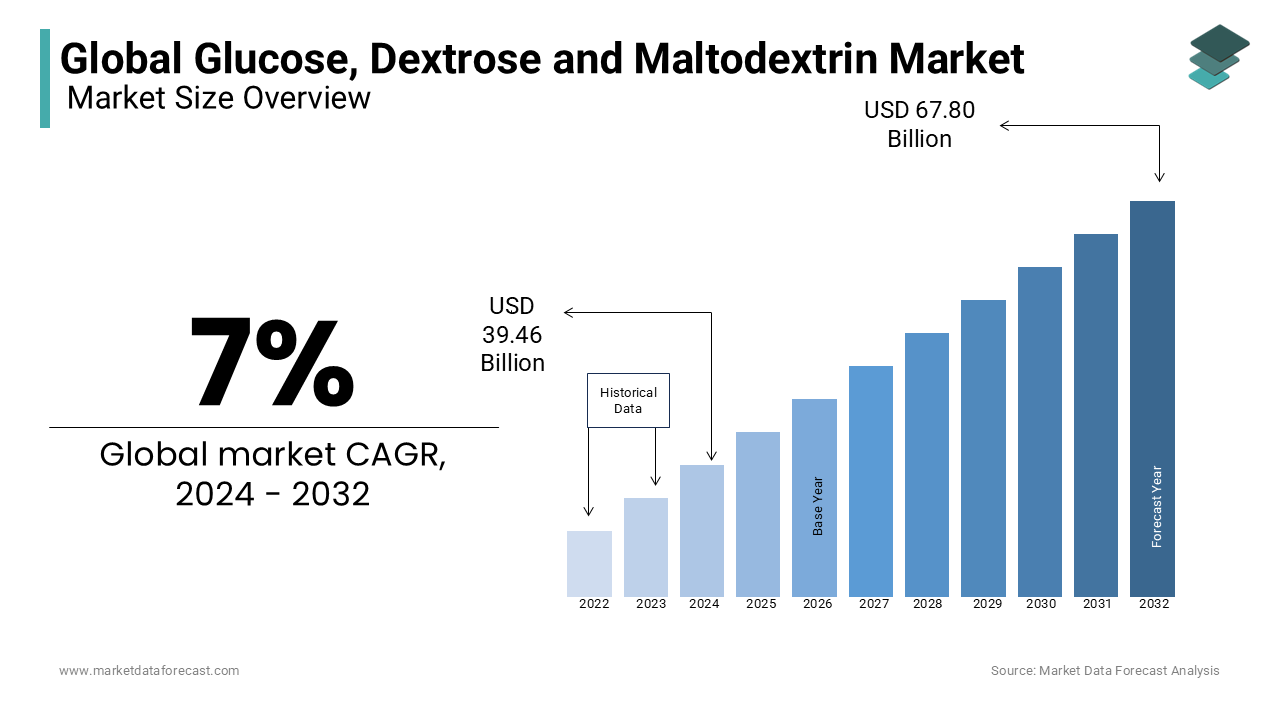
The global glucose, dextrose and maltodextrin market size was expected to be worth USD 42.22 billion in 2025, is anticipated to be worth USD 45.18 billion in 2026, and is projected to scale up to USD 77.63 billion by 2034, registering a compound annual growth rate (CAGR) of 7.0% during the forecast period from 2026 to 2034. Driven by increasing demand across the beverage, confectionery, bakery, pharmaceutical, and personal care sectors, alongside rising consumption of packaged and fast foods, the market continues to expand steadily worldwide.
Key Executive Metrics (At-a-Glance)
- 2025 Base Valuation: USD 42.22 Billion
- 2026 Current Valuation: USD 45.18 Billion
- 2034 Forecast Valuation: USD 77.63 Billion
- Compound Annual Growth Rate (CAGR): 7.0% (2026–2034)
- Dominant Product Segment: Glucose and Maltodextrin segments (leading share due to extensive applications as sweeteners, thickeners, binders, and texture-improving agents)
- Dominant Application Segment: Food and Beverages segment (solely leading the market growth rate, fueled by consumer preference for processed convenience foods)
- Fastest-Growing Application Segment: Pharmaceuticals segment (registering the fastest growth rate driven by the need for high-quality drug manufacturing and syrup formulations)
- Regional Leader: North America (occupying the largest revenue share, supported by high packaged food demand, disposable income, and leading industry players)
Core Market Drivers
- F&B and Personal Care Demand: Expanding adoption as multi-functional binders, sweeteners, thickeners, emulsifiers, and skin-conditioning agents across food, cosmetics, and personal care products.
- Pharmaceutical & Nutritional Growth: Increasing utilization in cough syrups, antacid suspensions, medical supplements, and low-calorie dietary products.
Primary Market Restraints & Challenges
- Health Concerns & Side Effects: Risks of weight gain, high cholesterol, and diabetes associated with excessive consumption of high-glucose and sugar derivatives.
- Strict Regulatory Monitoring: Government regulations and rigorous industry compliance oversight limiting uncontrolled product usage and formulation practices.
Global Glucose, Dextrose and Maltodextrin Market Segmentation Breakdown
| Segment Category | Leading Sub-Segment (2025 Base) | Fastest-Growing Sub-Segment (2026–2034) |
|---|---|---|
| By Product | Glucose & Maltodextrin (dominant in food/beverage applications for sweetening, moisture retention, and texture enhancement) | Dextrose & Specialty Maltodextrin (driven by nutritional supplements and low-calorie product formulations) |
| By Application | Food and Beverages (solely leading market growth due to rising consumption of prepared and processed foods) | Pharmaceuticals (fastest-growing rate driven by high-quality drug manufacturing, syrups, and suspensions) |
| By Form | Syrup & Solids (widely utilized based on specific industrial processing requirements in confectionery and baking) | Solids & Customized Powder Blends (scaling rapidly with health supplements and dry-mix formulations) |
| By Region | North America & Western Europe (holding dominant revenue shares driven by high packaging demand and fast-food consumption) | Asia-Pacific / APEJ (fastest growth driven by large populations, rising disposable incomes, and urban manufacturing booms in China and India) |
Major Industry Players Profiled
Key market competitors shaping the global glucose, dextrose and maltodextrin landscape include Archer Daniels Midland Company (ADM), Ingredion Incorporated, Tate & Lyle PLC, Cargill Incorporated, Roquette Freres, Agrana Investment Corp, Grain Processing Corporation, Penford Corporation, Emsland-Starke Gmbh, and Avebe U.A.
Global Glucose, Dextrose and Maltodextrin Market Size
The size of the global glucose, dextrose and maltodextrin market was expected to be worth USD 42.22 billion in 2025 and is anticipated to be worth USD 77.63 billion by 2034 from USD 45.18 billion In 2026, growing at a CAGR of 7% during the forecast period.
Glucose is extensively used as a sweetener in several food products and as dextrose, it is widely used in snacks, cookies, mixes, and toppings. Maltodextrin is a tasteless sugar that can be easily digested and quickly absorbed. Glucose is an essential component of our body's ability to perform a variety of metabolism. Our body gets the energy it needs from protein and fat, but that alone cannot provide the body with the energy it needs. It is a mistake to assume that the necessary glucose can only be obtained from the foods and vegetables you eat. Even people without proper knowledge will have a hard time buying and consuming products that are optimal for supplying glucose. Therefore, to alleviate this difference, glucose, dextrose, and maltodextrin play a crucial role. As the demand for glucose, dextrose, and maltodextrin increases, the worldwide market will establish a strong foothold during the outlook period and record a profitable CAGR.
MARKET DRIVERS
Increased demand in the beverage industry, call for fast food and increased research and development activities are believed to drive growth in the global markets for glucose, dextrose, and maltodextrin.
They are widely adopted because they act as binders, sweeteners, thickeners, and emulsifiers in many food and beverage companies. Glucose, dextrose, and maltodextrin also provide several health benefits, making them preferred by health-conscious consumers. Glucose has a high water-holding capacity and prevents sugar crystallization. An increase in the confectionery industry, an increase in living standards and an increase in bakery are expected to improve global markets for glucose, dextrose and maltodextrin. As people's lifestyles change, people search for products. Consumers are now looking for products like soaps and hair conditioners, shampoos for hair, eye makeup, skin care, etc., which can have great benefits for users' skin. Furious rivalry between buyer merchandise makers can give these items to help target clients and at last to keep up their client base. This demand in the personal care products industry will help strengthen the glucose, dextrose and maltodextrin markets. Even pharmaceutical companies now offer supplements and medications that contain glucose, dextrose, and maltodextrin to treat a variety of health problems stemming from illness, accident, or trauma.
Consumption of healthy foods and increased demand for packaged foods are two main trends driving growth in the global markets for glucose, dextrose and maltodextrin. Continuing demand for low-calorie foods, an increase in the production of antacid suspensions and cough syrups in the pharmaceutical industry, and increasing demand in the personal care industry for the manufacture of skin conditioning agents are promoting the global market. The increasing demand for glucose, dextrose, and maltodextrin as binders, sweeteners, emulsifiers, and thickeners in prepared foods and beverages are key factors in boosting growth in the target market in the coming decade. In addition, the growing demand for dextrose and maltodextrin as nutritional supplements and sweeteners for low-calorie products such as creams, sweets and gums, and baked goods, is supposed to accelerate the development of global markets for glucose, dextrose and maltodextrin. Also, the increasing need for liquid glucose in medicines for the production of cough syrup and antacids, population growth, high consumption capacity and changes in personal lifestyle are just some of the factors that will drive growth in the potential market in the coming years. R&D activity in various industries, such as food and beverages, pharmaceuticals, etc., is increasing, and the approach to tracking unexplored markets is expected to provide new opportunities for manufacturers in target markets.
MARKET RESTRAINTS
Side effects such as weight gain, high cholesterol, and diabetes can occur due to excessive consumption of foods that contain glucose, dextrose, and maltodextrin.
This is a factor that can hinder the growth of the worldwide market. To prevent any type of harm or death to users, government regulations and strict monitoring of the glucose, dextrose and maltodextrin industries can inhibit the growth of the market.
REPORT COVERAGE
| REPORT METRIC | DETAILS |
| Market Size Available | 2025 to 2034 |
| Base Year | 2025 |
| Forecast Period | 2026 to 2034 |
| CAGR | 7% |
| Segments Covered | By Product, Application, Form and Region |
| Various Analyses Covered | Global, Regional & Country Level Analysis; Segment-Level Analysis, DROC, PESTLE Analysis, Porter’s Five Forces Analysis, Competitive Landscape, Analyst Overview of Investment Opportunities |
| Regions Covered | North America, Europe, APAC, Latin America, Middle East & Africa |
| Market Leaders Profiled | Archer Daniels Midland Company, Ingredion Incorporated, Agrana Investment Corp, Tate & Lyle PLC, Cargill Incorporated, Penford Corporation, Roquette Freres, Emsland-Starke Gmbh, Grain Processing Corporation, Avebe U.A and Others. |
SEGMENTAL ANALYSIS
Global Glucose, Dextrose, and Maltodextrin Market Analysis By Product
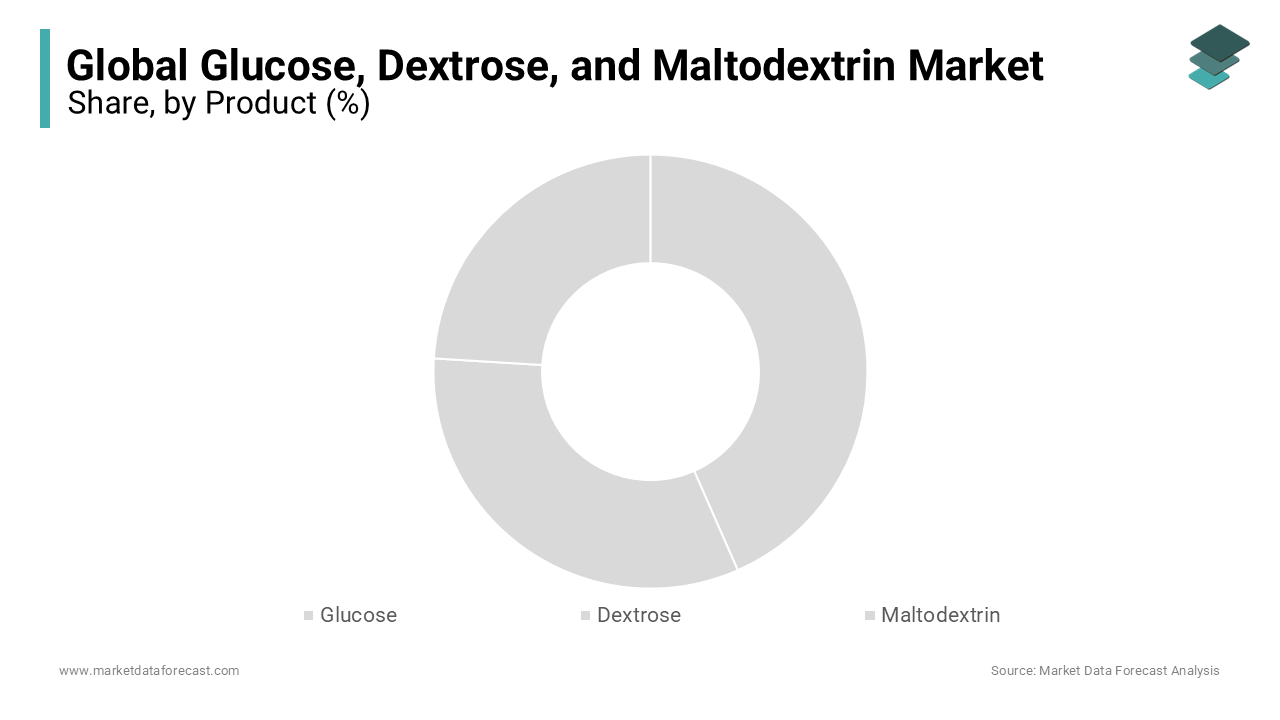
The glucose segment is expected to lead the dominant share of the market. It is one of the very common ingredients used in the food and beverages industry. It acts as a sweetener, moisture-retaining agent, and thickener. In fact, the glucose does not crystallize, and it can be mostly used to make candies, beer, fondant, and baked products. Replacing whole sugar with nutritional products that eventually enhance the quality of the products substantially elevates the growth rate of the market.
The Maltodextrin segment is augmented to lead the dominant share of the market. This ingredient is effective usage in improving the texture and quality of processed food products. This is a complete replacement for sugar or fat and improves the texture of processed products like beer. The increasing number of people showing interest in health-conscious drinks is more likely to enhance the growth rate of this segment.
Global Glucose, Dextrose, and Maltodextrin Market By Application
The food and beverages segment is solely leading the growth rate of the glucose, dextrose, and maltodextrin market. The rising demand to fulfill the consumer’s preferences towards a variety of products that are quite healthy and safe is substantially enhancing the growth rate of the market. People are more likely to eat processed food products in their busy lifestyles, where the preference to choose prominent ingredients is making manufacturers use only high-quality ingredients. This factor shall fuel the growth rate of the market.
The pharmaceutical segment is likely to have the fastest growth rate during the forecast period. The growing importance of manufacturing high-quality drugs that reduce the issues related to side effects is enhancing the growth rate of the market.
REGIONAL ANALYSIS
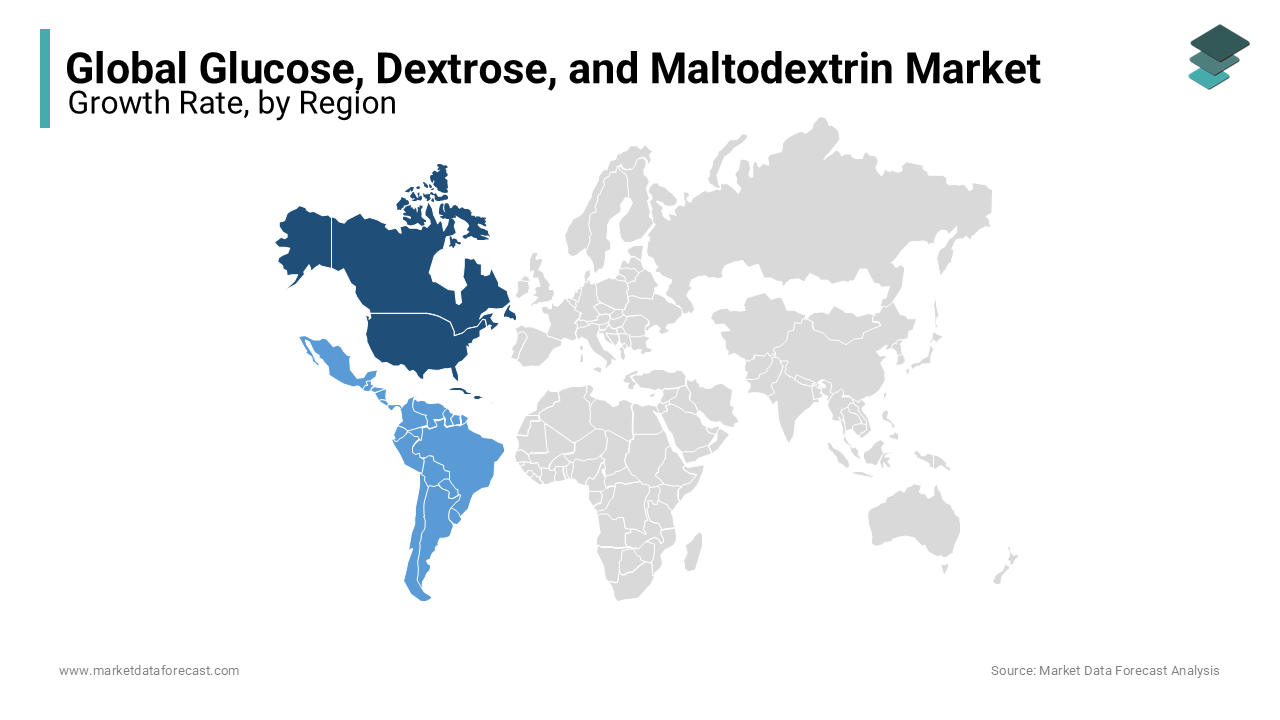
Depending on the geography, the global marketis divided into North America, Latin America, Western Europe, Eastern Europe, Asia Pacific, Japan and the Middle East and Africa. The North American market for glucose, dextrose and maltodextrin is supposed to occupy the largest share of revenue in the target market and are determined to maintain dominance over the next decade. Increased demand for packaging and fast food, disposable income and the presence of leading players are likely to drive growth in the regional market. These industries require glucose, dextrose and maltodextrin as the main raw materials for the production of the product. A similar trend was in Western Europe similar to North America. In APEJ, with the exception of Japanese countries like China, India has the largest population in the world. The demand for various products such as cosmetics, paper, medicines and supplements is increasing. The manufacture of these products requires a large amount of glucose, dextrose, and maltodextrin, and this will drive the market in APEJ. In Eastern Europe, the market is developing at a decent stage and is likely to reflect robust growth over the assessment period. In MEA and Latin America, the market is in a small range.
KEY PLAYERS IN THE GLOBAL GLUCOSE, DEXTROSE AND MALTODEXTRIN MARKET
Major Key Players in the Global Glucose, Dextrose and Maltodextrin Market are Archer Daniels Midland Company, Ingredion Incorporated, Agrana Investment Corp, Tate & Lyle PLC, Cargill Incorporated, Penford Corporation, Roquette Freres, Emsland-Starke Gmbh, Grain Processing Corporation, Avebe U.A and Others.
RECENT HAPPENINGS IN THE MARKET
- In March 2018, Tate and Lyle extended its Shanghai Food Applications Laboratory to satisfy developing purchaser need for solid food and refreshment items.
- In October 2017, Ingredion propelled another line of Mortgage Glucose Syrup (VERSASWEET) in the United States and Canada.
- ADM acquired a production plant from Tate & Lyle PLC (United Kingdom) in Morocco. This acquisition enables the company to reach clients by region and worldwide.
DETAILED SEGMENTATION OF GLOBAL GLUCOSE, DEXTROSE AND MALTODEXTRIN MARKET INCLUDED IN THIS REPORT
This research report on the global glucose, dextrose and maltodextrin market has been segmented and sub-segmented based on product, application, form, & region.
By Product
- Glucose
- Dextrose
- Maltodextrin
By Application
- Food and Beverages
- Pharmaceuticals
- Personal Care/Cosmetics
- Paper and Pulp Industry
- Others
By Form
- Syrup
- Solids
By Region
- North America
- Europe
- Asia-Pacific
- Latin America
- Middle East And Africa