- Product Description Description
- Table of Contents TOC
- List of Table & Figure LOT
- Get Free Sample PDF Sample PDF
Market Size, 2025
$4.27 BnMarket Estimate, 2026
$4.5 BnMarket Forecast, 2034
$6.88 BnCAGR, 2026–2034
5.45%Global Glucose Syrup Market Report Summary
The global glucose syrup market was valued at USD 4.27 billion in 2025, is estimated to reach USD 4.50 billion in 2026, and is projected to reach USD 6.88 billion by 2034, growing at a CAGR of 5.45% during the forecast period from 2026 to 2034. The growth of the global glucose syrup market is driven by increasing demand from the food and beverage industry, rising consumption of processed and convenience foods, and the expanding use of glucose syrup as a sweetener, thickener, and stabilizer. Growing applications in confectionery, bakery, beverages, pharmaceuticals, and personal care products are further supporting market expansion. Additionally, advancements in starch processing technologies and increasing demand for cost-effective sweetening solutions are contributing to the market's steady growth.
Key Market Trends
-
Rising demand for processed and convenience foods is increasing the consumption of glucose syrup across food manufacturing industries.
-
Growing use of glucose syrup as a sweetening, thickening, and moisture-retaining ingredient in bakery and confectionery products.
-
Increasing application of glucose syrup in pharmaceutical formulations due to its stabilizing and preservative properties.
-
Advancements in starch processing technologies are improving production efficiency and product quality.
-
Growing demand for clean-label and specialty glucose syrups is encouraging product innovation among manufacturers.
Segmental Insights
-
Based on grade, the food-grade segment dominated the global glucose syrup market and accounted for 80.6% of the market share in 2025. The segment's leadership is attributed to the widespread use of food-grade glucose syrup in confectionery, bakery, beverages, dairy products, and processed foods due to its excellent sweetening and texturizing properties.
-
Based on application, the sweetening agent segment held the largest share of 74.6% of the global glucose syrup market in 2025. The segment's dominance is driven by increasing demand for glucose syrup as a cost-effective sweetener that enhances taste, texture, shelf life, and product stability across various food and beverage applications.
Regional Insights
-
The global glucose syrup market is witnessing steady growth due to expanding food processing industries, increasing consumer demand for packaged foods, and growing industrial applications.
-
North America dominated the global glucose syrup market by accounting for 34.3% of the market share in 2025. The region's leadership is supported by a well-established food and beverage industry, high consumption of processed foods, and continuous investments in food ingredient innovation.
-
Europe remains a significant market owing to strong demand from bakery, confectionery, and beverage manufacturers, along with increasing focus on product quality and food innovation.
-
Asia-Pacific is expected to witness substantial growth, driven by rapid urbanization, expanding food processing industries, and rising consumption of convenience foods.
-
Latin America is emerging as a promising market due to increasing investments in the food and beverage sector and growing demand for affordable sweetening ingredients.
Competitive Landscape
The global glucose syrup market is highly competitive, with manufacturers focusing on product innovation, production capacity expansion, and sustainable starch processing technologies to strengthen their market position. Companies are investing in research and development, strategic partnerships, and diversified product portfolios to meet the growing demand from the food, beverage, pharmaceutical, and industrial sectors. Key players operating in the global glucose syrup market include Cargill, Inc., Agrana Group, Avebe U.A., Bakers Kitchen, BENEO, DGF Service, Ingredion Incorporated, Karo Syrup, Dr. Oetker, Grain Processing Corporation, L'Epicerie, Queen of Fine Foods, Roquette Frères, and Tate & Lyle PLC.
Global Glucose Syrup Market Size
The global glucose syrup market size was valued at USD 4.27 billion in 2025, and is predicted to reach about USD 6.88 billion by 2034 from USD 4.50 billion in 2026, growing at a CAGR of over 5.45% during the forecast period.
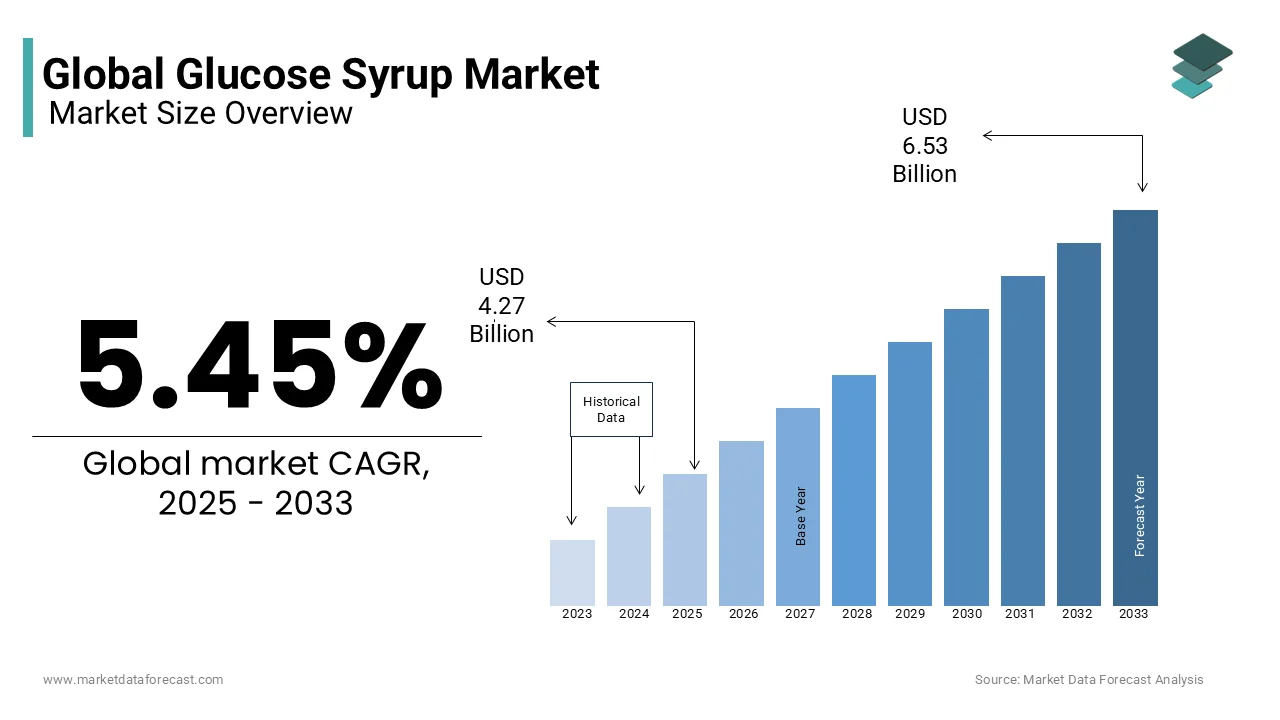
Glucose syrup is a viscous sweetener obtained through the partial hydrolysis of starch derived primarily from corn, wheat, or cassava. This liquid carbohydrate is an indispensable component in modern food processing because it prevents crystallization, enhances texture, and extends the overall shelf life of consumable goods. According to the Food and Agriculture Organization, the global production of cassava roots reached approximately 302 million tonnes in recent agricultural cycles, providing a massive foundational raw material for starch extraction across tropical regions. According to the Food and Agriculture Organization, over 770 million tonnes of wheat are produced globally each year, ensuring an uninterrupted supply of the primary botanical sources required for enzymatic conversion into liquid sweeteners. Beyond culinary applications, this ingredient plays a critical role in the pharmaceutical sector, where it acts as a natural humectant and soothing excipient in cough syrups and chewable tablets. According to Eurostat, the European food and beverage manufacturing sector generates an annual turnover exceeding 1.2 trillion euros, demonstrating the colossal scale of industrial processing that relies heavily on functional liquid carbohydrates. Consequently, the continuous advancement in enzymatic hydrolysis technologies directly dictates the purity, yield, and functional capabilities of this essential ingredient, shaping its consumption patterns across diverse international manufacturing sectors.
MARKET DRIVERS
Commercial Bakery Sector Expansion Propels Liquid Sweetener Demand
The relentless expansion of commercial bakery operations is a key factor driving the growth of the global glucose syrup market. Modern consumers increasingly seek convenient, processed baked goods, which require ingredients that maintain moisture, prevent staling, and deliver a consistent flavor profile. This syrup perfectly fulfills these technological requirements by interfering with sugar crystallization, thereby ensuring a smooth texture in products like caramels, fondants, and commercial breads. According to the International Grains Council, global wheat production for the current marketing year is projected at an impressive 801 million tonnes, securing a massive raw material foundation for manufacturers worldwide. Industrial bakeries specifically rely on this ingredient because it ferments more rapidly than sucrose, allowing for shorter proofing times and improved crust browning through the Maillard reaction. According to Eurostat, the European food and drink industry operates on a massive scale, generating a turnover of 1.2 trillion euros, which reflects the enormous volume of processed foods requiring functional sweeteners. Manufacturers often blend this syrup with standard sucrose to optimize costs and enhance the mouthfeel of their products. The sheer volume of packaged sweets and baked goods produced daily across international markets necessitates a steady and reliable supply of this highly functional, hydrolyzed starch derivative to maintain product quality and operational efficiency.
Rising Fitness Consciousness Accelerates Adoption in Functional Beverages
The surging global demand for sports nutrition and energy beverages is further boosting the expansion of the global glucose syrup market. Athletes and fitness enthusiasts require rapidly digestible carbohydrates to replenish glycogen stores during and after intense physical exertion. This ingredient provides an optimal glycemic response and can be easily concentrated into liquid formulations without causing excessive sweetness or crystallization in the bottle. According to the World Health Organization, approximately 2.5 billion adults worldwide are living with overweight conditions, yet the specific niche of sports nutrition continues to expand as fitness consciousness rises globally. Beverage manufacturers favor this ingredient because it integrates seamlessly into isotonic and hypertonic drinks, providing the necessary caloric density and electrolyte transport mechanisms required for effective hydration. According to the United States Department of Agriculture, the abundant availability of raw materials is guaranteed with global corn production reaching 1,219 million tons for the current marketing year, ensuring that beverage formulators have access to cost-effective and scalable sweetening solutions. The functional benefits of this syrup extend beyond mere sweetness, as it improves the viscosity and overall mouthfeel of high-energy liquid supplements. Consequently, the continuous innovation in the sports nutrition sector directly translates into increased procurement of this essential liquid ingredient by major beverage conglomerates.
MARKET RESTRAINTS
Growing Prevalence of Metabolic Disorders Poses Market Growth Restraints
The escalating prevalence of metabolic disorders and diabetes is significantly hindering the unrestricted growth of the global glucose syrup market. Health authorities worldwide are actively campaigning for a reduction in the consumption of added sugars due to their direct correlation with insulin resistance and cardiovascular complications. According to the International Diabetes Federation, an estimated 537 million adults are currently living with diabetes globally, a staggering figure that underscores the urgent need for dietary modifications. As consumers become increasingly health-conscious, they actively scrutinize nutritional labels and avoid products containing high glycemic index ingredients, including standard glucose syrups. This behavioral shift forces manufacturers to reformulate their products or face declining sales in traditional confectionery and sugary beverage categories. The medical community consistently advises limiting simple carbohydrate intake, which directly impacts the volume of this specific syrup purchased by major food and beverage corporations. According to the International Sugar Organization, global sugar consumption is expected to reach 181 million tonnes in the current season, but the composition of those sweeteners is slowly shifting toward non-caloric alternatives. The profound awareness of chronic disease prevention acts as a substantial bottleneck preventing the market from achieving its maximum potential volume, as formulators seek to reduce the overall sugar load in their commercial offerings.
Regulatory Surcharges and Fiscal Policies Limit Commercial Profitability
Stringent governmental regulations and the widespread implementation of sugar taxation policies create a challenging fiscal environment that severely restrains the commercial viability of traditional sweetening ingredients. Governments are increasingly intervening in public health by levying heavy excise taxes on products containing added sugars to discourage overconsumption and fund healthcare initiatives. According to the World Health Organization, more than 110 countries have implemented taxes on sugar-sweetened beverages, directly increasing the retail price of these products. When beverages and sweets become more expensive due to these fiscal measures, consumer demand typically contracts, forcing manufacturers to either absorb the financial loss or reduce their reliance on caloric sweeteners like this hydrolyzed starch derivative. According to Eurostat, the European food and drink industry operates with a massive turnover of 1.2 trillion euros, meaning that even a slight reduction in sugar usage due to tax avoidance strategies can result in millions of euros in lost revenue for syrup producers. Additionally, regulatory bodies are mandating clearer front-of-pack warning labels on products high in added sugars, which further deters health-conscious shoppers. This complex web of fiscal policies and mandatory labeling requirements forces food processors to seek cheaper or non-taxable sweetening alternatives, thereby capping the overall volume of this specific ingredient that can be sold profitably in heavily regulated regions.
MARKET OPPORTUNITIES
Premium Clean Label Preferences Open Specialized Organic Opportunities
The development of specialized organic and non-genetically modified variants presents a highly lucrative opportunity for the glucose syrup market. As clean label trends dominate the food industry, there is a surging demand for ingredients that are perceived as natural, minimally processed, and free from synthetic agricultural chemicals. Producing this syrup from certified organic maize or wheat allows suppliers to command significantly higher price points and secure exclusive contracts with premium bakery and confectionery brands. According to the World Health Organization, around 2.5 billion adults worldwide are living with overweight conditions, which paradoxically drives a massive subset of consumers to seek out perceived healthier organic alternatives, even within the sweetener category. By investing in dedicated supply chains for organic starch, manufacturers can differentiate their portfolios and cater to the exacting standards of modern food formulators who require transparent sourcing. According to the United States Department of Agriculture, global corn production reached an immense 1,219 million tons in the current marketing year, providing an abundant raw material base from which specialized organic fractions can be carefully isolated and processed. This strategic pivot toward premium organic variants not only mitigates the risks associated with bulk commodity price fluctuations but also opens new revenue streams in the rapidly expanding natural foods sector across international markets.
Highly Purified Specialty Fractions Diversify Into Healthcare Applications
Innovation in pharmaceutical and personal care applications offers a substantial avenue for diversification, which is allowing producers to tap into highly specialized and less price-sensitive industrial sectors and is another promising opportunity for the global market. Beyond its traditional role in food and beverage formulation, this highly viscous liquid serves as an excellent humectant, binding agent, and soothing excipient in topical creams, lozenges, and cough syrups. The cosmetic industry is increasingly formulating products that require natural moisturizing properties, and this syrup provides an effective botanical alternative to synthetic, petroleum-derived humectants. According to the International Diabetes Federation, approximately 537 million adults are living with diabetes globally, creating a massive parallel demand for specialized pharmaceutical preparations where this syrup acts as a palatable base for medicinal compounds. Personal care brands are actively seeking multifunctional natural ingredients to enhance product stability and skin feel, making this hydrolyzed starch an ideal candidate for next-generation skincare formulations. According to Eurostat, the European food and drink industry generates a turnover of 1.2 trillion euros, illustrating the immense scale of regional manufacturing and the potential for cross-sector technological spillover into cosmetics and pharmaceuticals. By developing highly purified and specific molecular weight fractions of this syrup, manufacturers can unlock premium pricing structures and establish long-term partnerships with global healthcare and beauty conglomerates.
MARKET CHALLENGES
Unpredictable Weather Dynamics and Agricultural Volatility Challenge Supply Chains
Volatility in agricultural commodity prices and unpredictable crop yields pose a persistent challenge for the glucose syrup market expansion. Since this syrup is predominantly derived from maize, wheat, or cassava, its production costs are inextricably linked to the fluctuating fortunes of global agriculture. Adverse weather conditions, such as prolonged droughts or unexpected frosts, can severely diminish harvest volumes, leading to sudden spikes in raw material costs. According to the United States Department of Agriculture, global corn production for the current marketing year is projected at 1,219 million tons, but even minor deviations from this forecast due to climate anomalies can create significant procurement headaches for processors. When the price of staple starches surges, manufacturers are forced to either absorb the increased expenses or pass them on to their clients, both of which can erode market share and damage customer relationships. According to the International Sugar Organization, global sugar consumption will reach 181 million tonnes in the current season, meaning that syrup producers are constantly competing for agricultural land and resources against the highly subsidized and massive global sucrose industry. This intense competition for raw biomass, coupled with the inherent unpredictability of global harvests, requires manufacturers to maintain complex hedging strategies and massive inventory buffers to ensure uninterrupted production schedules.
Non-Caloric Substitutes and Advanced Sweeteners Encroach Upon Market Share
Intense competition from alternative high-intensity sweeteners and novel sugar substitutes is further challenging the global market expansion. The rapid advancement in food science has led to the commercialization of highly sophisticated zero-calorie sweeteners, such as stevia, monk fruit extract, and various advanced sucralose blends that mimic the taste profile of sugar without the associated caloric burden. Food and beverage manufacturers are aggressively reformulating their products to incorporate these alternatives in order to meet consumer demands for reduced sugar content and comply with stringent governmental health guidelines. According to the World Health Organization, more than 110 countries have implemented taxes on sugar-sweetened beverages, creating a powerful financial incentive for corporations to abandon caloric sweeteners entirely. This paradigm shift means that every new product launch featuring a high-intensity sweetener represents a direct loss of potential volume for traditional glucose syrup producers. According to the World Health Organization, approximately 2.5 billion adults worldwide are living with overweight conditions globally, further accelerating the food industry pivot toward non-caloric formulations. Consequently, manufacturers of this hydrolyzed starch must invest heavily in research and development to create unique functional blends or find new applications just to maintain their relevance in an increasingly health-focused and technologically advanced global sweetener landscape.
REPORT COVERAGE
| REPORT METRIC | DETAILS |
| Market Size Available | 2025 to 2034 |
| Base Year | 2025 |
| Forecast Period | 2026 to 2034 |
| CAGR | 5.45% |
| Segments Covered | By Grade, Application and Region |
| Various Analyses Covered | Global, Regional and Country Level Analysis; Segment-Level Analysis; DROC; PESTLE Analysis; Porter’s Five Forces Analysis; Competitive Landscape; Analyst Overview of Investment Opportunities |
| Regions Covered | North America, Europe, APAC, Latin America, Middle East & Africa |
| Market Leaders Profiled | Cargill,Inc, Agrana Group, Avebe U.A, Bakers Kitchen, Beneo, DGF Service, Ingredion, Karo Syrup, Dr. Oetker, Grain Processing Corporation, L'Epicerie, Queen of Fine Foods, Roquette Freres, Tate and LYLE. |
SEGMETNAL ANALYSIS
By Grade Insights
The food grade segment led the market by commanding for 80.6% of the global market share in 2025. The dominance of food grade segment in the global market is majorly due to its indispensable role in large-scale commercial baking and confectionery manufacturing. The primary catalyst for this dominance is the massive global production volume of cereal-based baked goods, which require this syrup to maintain moisture and prevent staling. According to the Food and Agriculture Organization, global cereal production reached an astonishing 2,829 million tonnes in the recent agricultural year, providing an endless supply of raw starch for syrup conversion. Industrial bakeries specifically utilize this ingredient because it accelerates yeast fermentation and enhances crust browning through the Maillard reaction. According to the International Grains Council, global wheat production alone is projected at 795 million tonnes for the current marketing season, ensuring that manufacturers have abundant access to the primary botanical source required for enzymatic hydrolysis. The sheer volume of packaged breads, pastries, and biscuits consumed daily across international borders necessitates a continuous and reliable procurement of this functional liquid carbohydrate to guarantee product consistency and extend commercial shelf life without relying on synthetic preservatives.
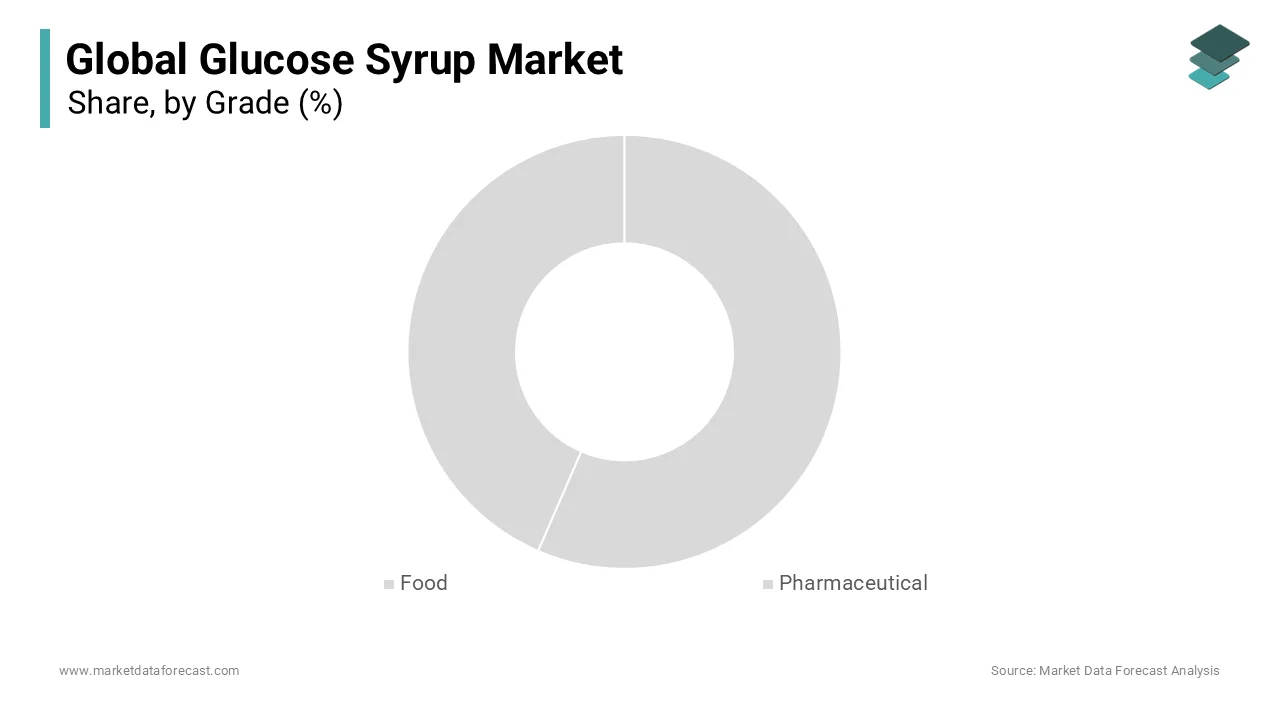
On the other side, the pharmaceutical grade segment is estimated to record a CAGR of 8.4% during the forecast period owing to the surging global demand for liquid oral dosage forms, such as cough syrups and pediatric suspensions. This highly purified variant of the syrup serves as an excellent soothing agent and natural humectant, which effectively masks the bitter taste of active medicinal compounds while providing a smooth, viscous texture. According to the World Health Organization, respiratory infections and related ailments account for millions of clinical visits worldwide every year, creating a massive parallel requirement for palatable cough remedies. Furthermore, according to global industry indicators, the global pharmaceutical sector recently exceeded 1.5 trillion dollars, indicating the immense financial scale of the healthcare sector investing in advanced liquid formulations. Pediatric patients in particular require highly palatable medications to ensure compliance, and this specific grade of syrup provides the necessary sweetness and bulk without introducing harmful impurities. As global healthcare systems increasingly prioritize patient comfort and medication adherence, the procurement of ultra-pure pharmaceutical grade sweeteners will continue to accelerate at an unprecedented pace.
By Application Insights
The sweetening agent segment led the market by holding 74.6% of the global market share in 2025. The growth of the sweetening agent segment in the global market is driven by its pervasive and indispensable use in dairy processing and frozen dessert formulations. In the production of ice cream and yogurt, this syrup is crucial because it depresses the freezing point, preventing the formation of large ice crystals and ensuring a remarkably smooth, creamy texture. According to the International Dairy Federation, global milk production recently reached an impressive 900 million tonnes, illustrating the massive scale of the dairy sector that relies heavily on functional liquid sweeteners. Manufacturers prefer this ingredient over standard sucrose because it provides superior freezing point depression, which is essential for maintaining the structural integrity of frozen goods during transportation and long-term storage. According to the Food and Agriculture Organization, global consumption of dairy products continues to rise steadily as populations seek nutrient-dense foods. The ability of this syrup to enhance the mouthfeel and extend the shelf life of premium dairy desserts without overpowering the natural milk flavor ensures that it remains the preferred sweetening agent for dairy conglomerates operating on a massive international scale.
On the other side, the wine segment is experiencing the fastest expansion and predicted to register a CAGR of 7.2% during the forecast period owing to the sophisticated use of this syrup to enhance fermentation kinetics and ensure alcohol stability in premium winemaking. Vintners increasingly utilize highly refined grape-derived or specialized glucose syrups to adjust the sugar content of the must before fermentation, a process that directly influences the final alcohol by volume and the overall body of the wine. According to the International Organisation of Vine and Wine, global wine production recently reached approximately 260 million hectoliters, indicating a massive industry constantly seeking ways to optimize fermentation consistency and product quality. This liquid sweetener allows winemakers to achieve precise alcohol levels without introducing unwanted flavors or compromising the delicate aromatic profile of the grapes. According to the International Organisation of Vine and Wine, climate change is causing significant fluctuations in the natural sugar accumulation of grapes, making external sugar adjustments increasingly necessary. By utilizing this highly soluble carbohydrate, vintners can guarantee batch consistency and produce stable wines that meet the exacting standards of international sommeliers and discerning consumers alike.
REGIONAL ANALYSIS
North America Glucose Syrup Market Analysis
North America dominated the market by holding 34.3% of the global market share in 2025 and is expected to showcase exceptionally robust market development and sustained economic performance over the next few years, driven by advanced processing capabilities and massive domestic agricultural output. According to the United States Department of Agriculture, domestic corn production recently reached an astonishing 380 million tonnes, providing an endless and incredibly cost-effective raw material base for syrup manufacturers. The region is characterized by a mature food and beverage industry that continuously demands high volumes of this ingredient for commercial baking, confectionery, and beverage production. Furthermore, the North American market is highly innovative, with manufacturers constantly developing specialized high-conversion syrups tailored for specific industrial applications. The Food and Drug Administration maintains strict but clear guidelines on food grade additives, ensuring that consumer confidence remains exceptionally high. This robust regulatory environment, combined with abundant agricultural resources, ensures that North America remains a powerhouse in both the production and consumption of this essential liquid sweetener.
Europe Glucose Syrup Market Analysis
European countries are anticipated to experience steady infrastructural modernization and a strong push toward sustainable processing methods in the upcoming years, characterized by stringent quality standards and robust manufacturing infrastructure. According to Eurostat, the regional food and drink industry generates an immense annual turnover of 1.2 trillion euros, demonstrating the colossal scale of processing operations that rely heavily on functional liquid carbohydrates. European manufacturers are particularly focused on producing high-purity and non-genetically modified variants of this syrup to cater to the highly health-conscious consumer base. The European Food Safety Authority enforces rigorous testing protocols, which ensures that only the highest quality ingredients reach the market. Additionally, the region is a pioneer in sustainable manufacturing, with many facilities utilizing renewable energy and advanced water recycling technologies during the enzymatic hydrolysis process. This commitment to environmental sustainability and product purity allows European producers to command premium pricing and maintain a highly competitive edge in both domestic and international export markets.
Asia Pacific Glucose Syrup Market Analysis
The Asia Pacific region is poised to achieve unparalleled commercial expansion and lead global volume growth over the next few years, fueled by a massive population base and rapid industrialization across developing economies. According to the Food and Agriculture Organization, regional production of staple starch crops such as rice, wheat, and cassava exceeds 700 million tonnes annually, providing an abundant and diverse raw material foundation for local manufacturers. The region is characterized by a rapidly expanding middle class with increasing disposable incomes, which directly drives the consumption of processed foods, baked goods, and commercial beverages. Furthermore, according to regional trade and investment associations, regional food processing investments have surged significantly in recent years. This massive influx of capital into modern food manufacturing infrastructure ensures that the demand for high-quality liquid sweeteners will continue to grow at an accelerated pace across the Asia Pacific region.
Latin America Glucose Syrup Market Analysis
Latin American nations are projected to strengthen their manufacturing footprint and experience progressive agricultural integration throughout the next few years, supported by abundant agricultural resources and an expanding food processing sector. According to the Food and Agriculture Organization, regional sugarcane and corn production recently surpassed 600 million tonnes, providing a massive agricultural base that can be leveraged for starch extraction and syrup production. The Latin American market is heavily driven by the domestic production of carbonated soft drinks and traditional sweets, which require large volumes of this highly functional liquid carbohydrate. Furthermore, according to the Inter-American Development Bank, recent investments in regional food processing infrastructure have significantly improved the efficiency and scale of local manufacturing operations. As multinational food and beverage corporations continue to expand their footprint in Latin America, the demand for consistent and high-quality sweetening ingredients is rising steadily, positioning the region as a highly promising market.
COMPETITIVE LANDSCAPE
The Glucose Syrup Market features intense competition among established multinational ingredient suppliers who leverage scale technology and global reach to maintain leadership. Competition is not solely price driven but centers on product performance purity and application specific functionality. Leading companies differentiate themselves through advanced enzymatic hydrolysis techniques proprietary purification systems and robust technical support services. Regional players often compete on proximity and responsiveness catering to local taste preferences and regulatory environments. Innovation is a key battleground with firms racing to develop syrups that meet clean label requirements support sugar reduction initiatives or serve novel applications in pharmaceuticals and cosmetics. Regulatory compliance sustainability credentials and supply chain resilience have become equally important as traditional metrics like viscosity and sweetness profile. As health consciousness rises and alternative sweeteners gain traction incumbents must continuously adapt formulations and invest in R and D to retain relevance and customer loyalty in a dynamic global landscape.
KEY MARKET PLAYERS
Key players in glucose syrup market are
- Cargill,Inc
- Agrana Group
- Avebe U.A
- Bakers Kitchen
- Beneo
- DGF Service
- Ingredion
- Karo Syrup
- Dr. Oetker
- Grain Processing Corporation
- L'Epicerie
- Queen of Fine Foods
- Roquette Freres
- Tate and LYLE.
Top Players in the Market
- Cargill Incorporated is a globally integrated producer of food agricultural and industrial products with a significant footprint in the glucose syrup segment. The company leverages its vast network of grain sourcing and wet milling facilities to produce a wide spectrum of starch based sweeteners tailored for food beverage and pharmaceutical applications. Cargill has recently intensified its focus on sustainable manufacturing by investing in enzymatic conversion technologies that reduce water consumption and energy use during production. Additionally the company has expanded its portfolio of non genetically modified and organic certified syrups to meet rising demand from clean label food manufacturers. These strategic initiatives underscore Cargill’s commitment to innovation and environmental stewardship while reinforcing its position as a reliable supplier across multiple high value sectors.
- Tate and Lyle PLC is a leading provider of specialty ingredients with deep expertise in carbohydrate science and liquid sweetener formulation. The company supplies highly refined glucose syrups to premium food and beverage clients seeking functional solutions that align with health and wellness trends. Tate and Lyle has recently accelerated its transition toward plant based and low glycemic ingredients by enhancing its purification processes and developing next generation syrups with controlled dextrose equivalents. The firm also launched new product lines specifically designed for sports nutrition and clear beverage applications where clarity stability and mouthfeel are critical. By prioritizing application specific functionality and nutritional transparency Tate and Lyle continues to differentiate itself in a competitive global landscape through science led ingredient innovation.
- Ingredion Incorporated is a prominent global ingredient solutions provider specializing in starches sweeteners and biomaterials derived from corn tapioca and wheat. The company plays a pivotal role in the glucose syrup market by offering customized hydrolyzed starch products that cater to diverse regional processing needs. Ingredion has recently strengthened its capabilities through strategic investments in fermentation and filtration infrastructure enabling the production of ultra pure syrups for pharmaceutical and personal care applications. The company also expanded its technical service teams to support co development projects with food manufacturers reformulating products to meet sugar reduction targets. These actions reflect Ingredion’s proactive approach to aligning its portfolio with evolving regulatory consumer and technological demands across multiple end use industries.
Major Strategies Used by Key Market Participants
Key players in the Glucose Syrup Market employ several strategic approaches to reinforce their competitive standing. Product diversification remains central as companies develop specialized syrups with tailored dextrose equivalents for distinct applications such as confectionery beverages and pharmaceuticals. Vertical integration is another common tactic with major firms controlling everything from raw material procurement to final product distribution to ensure quality and cost efficiency. Investment in sustainable production methods including water recycling and renewable energy adoption helps meet environmental regulations and consumer expectations. Geographic expansion particularly into high growth regions like Asia Pacific allows access to new markets and diversified supply chains. Lastly strategic partnerships and technical collaborations with food formulators enable co creation of innovative solutions that address emerging trends like sugar reduction and clean label demands.
MARKET SEGMENTATION
This research report on the global glucose syrup market has been segmented and sub-segmented based on grade, application, & region.
By Grade
- Food
- Pharmaceutical
By Application
- Sweetening Agent
- Wine
By Region
- North America
- Europe
- The Asia Pacific
- Latin America
- The Middle East and Africa