Global Healthcare Operational Analytics Market Size, Share, Trends & Growth Forecast Report By Type, Component, Deployment, End-user, and Region (North America, Europe, Asia-Pacific, Latin America, Middle East and Africa), Industry Analysis From 2026 to 2034.
Market Size, 2025
$13.86 BnMarket Estimate, 2026
$15.74 BnMarket Forecast, 2034
$43.67 BnCAGR, 2026–2034
13.6%Global Healthcare Operational Analytics Market Size
The Europe healthcare operational analytics market was valued at USD 13.86 billion in 2025, is estimated to reach USD 15.74 billion in 2026, and is projected to reach USD 43.67 billion by 2034, growing at a CAGR of 13.6% from 2026 to 2034.
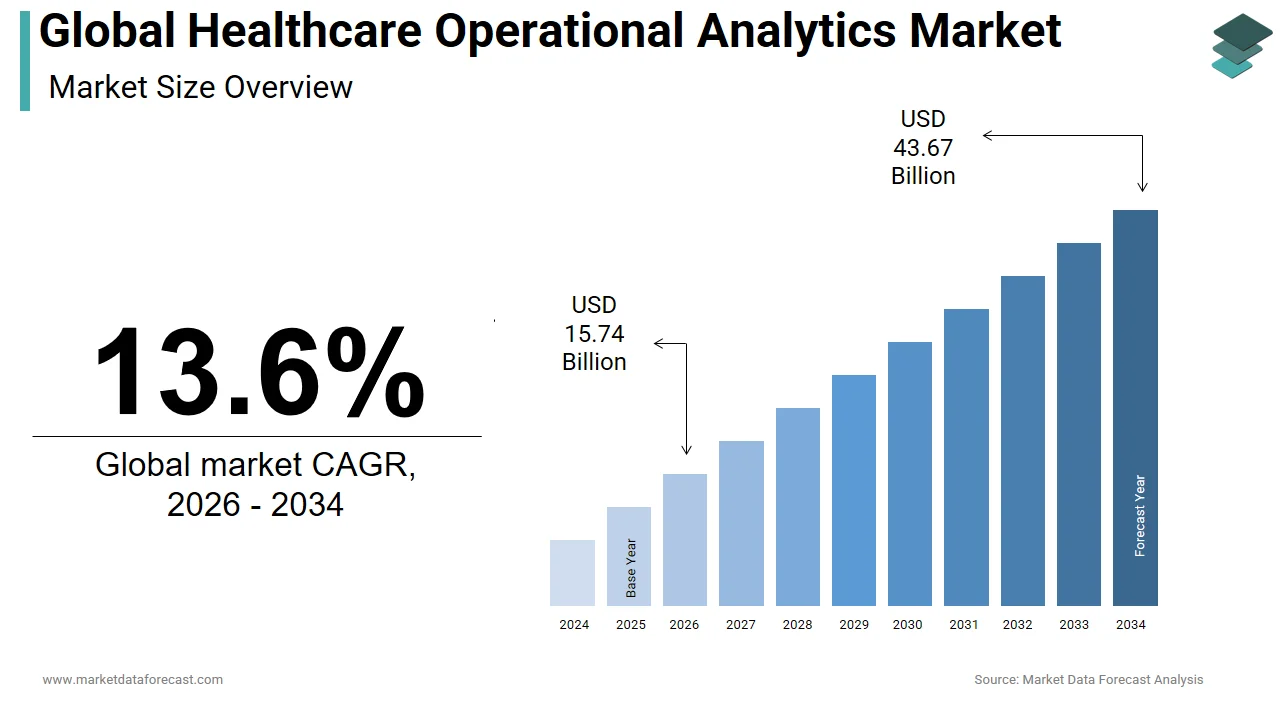
The healthcare operational analytics are designed to analyze vast amounts of operational data related to hospital workflows, patient management, staffing, supply chain logistics, and financial operations. The objective is to streamline processes, reduce costs, and improve patient outcomes through evidence-based insights. According to the World Health Organization (WHO), inefficiencies in healthcare systems contribute significantly to rising costs and suboptimal care delivery. In response, hospitals, clinics, and insurance providers are increasingly adopting operational analytics to manage resources more effectively. In addition, the growing digitization of health records, coupled with regulatory mandates pushing for transparency and value-based care models, has accelerated the adoption of analytics solutions. Governments and private healthcare providers alike recognize the importance of leveraging real-time data to manage capacity, forecast demand, and optimize clinical workflows.
MARKET DRIVERS
Rising Demand for Cost Optimization in Healthcare Delivery
One of the primary drivers of the Healthcare Operational Analytics Market is the increasing need for cost optimization in healthcare institutions. Hospitals and clinics face mounting pressure to reduce operational expenses while maintaining high standards of patient care. According to the Organisation for Economic Co-operation and Development (OECD), healthcare spending in developed nations exceeds 10% of GDP on average, with a significant portion attributed to avoidable inefficiencies. Operational analytics enables healthcare providers to identify wasteful practices, streamline administrative workflows, and optimize resource allocation. For instance, predictive analytics can forecast patient admission trends, allowing hospitals to adjust staffing levels accordingly and avoid overstaffing or understaffing situations. As per Deloitte, hospitals that implemented analytics-based workforce planning reported up to a 20% reduction in labor costs without compromising service quality. Additionally, analytics supports better inventory and supply chain management, reducing excess stockpiling and minimizing shortages of critical medical supplies.
Regulatory Mandates Promoting Data-Driven Decision Making
Another key driver fueling the Healthcare Operational Analytics Market is the growing number of regulatory mandates that encourage or require the use of data analytics in healthcare operations. Governments and international health bodies are increasingly emphasizing transparency, accountability, and efficiency in healthcare delivery. According to the Centers for Medicare & Medicaid Services (CMS), value-based reimbursement programs now cover over 50% of U.S. healthcare payments, tying provider compensation to performance metrics that rely heavily on data analytics. Regulations such as the Health Insurance Portability and Accountability Act (HIPAA) and the European Union’s General Data Protection Regulation (GDPR) have also mandated secure and structured handling of patient data, further reinforcing the need for robust analytics infrastructure. Moreover, initiatives like Meaningful Use in the U.S. and the National Digital Health Mission in India have incentivized healthcare institutions to adopt electronic health records (EHRs) integrated with analytics tools.
MARKET RESTRAINTS
Data Privacy and Security Concerns
A major restraint affecting the Healthcare Operational Analytics Market is the heightened concern around data privacy and security by concerning the handling of sensitive patient information. Operational analytics platforms often integrate with electronic health records (EHRs), billing systems, and third-party applications, increasing the risk of unauthorized access and data leaks. Furthermore, stringent regulations such as HIPAA in the U.S. and GDPR in Europe impose complex requirements on data handling and storage, complicating the implementation of analytics systems.
High Implementation Costs and Technical Complexity
Another critical challenge restraining the Healthcare Operational Analytics Market is the high initial implementation costs and the technical complexity involved in deploying and integrating analytics solutions within existing healthcare infrastructures. Many healthcare providers, especially small and mid-sized hospitals, lack the budget and IT expertise required to support large-scale analytics deployments. As per the American Hospital Association, nearly 60% of rural hospitals operate on tight margins, limiting their ability to invest in sophisticated analytics tools. Additionally, the successful utilization of analytics requires trained personnel who can interpret data and apply insights effectively.
MARKET OPPORTUNITIES
Integration with Artificial Intelligence and Machine Learning
An emerging opportunity for the Healthcare Operational Analytics Market lies in the integration with artificial intelligence (AI) and machine learning (ML) technologies to enhance decision-making accuracy and automate complex processes. AI-powered analytics can detect patterns in vast datasets by enabling predictive modeling for patient admissions, bed occupancy rates, and supply chain demands. According to McKinsey, AI-driven analytics can reduce hospital operational costs by up to 15% through optimized scheduling and resource utilization. Machine learning algorithms are being used to improve claims processing, fraud detection, and revenue cycle management by offering financial benefits to payers and providers alike. These advancements are prompting healthcare institutions to invest in intelligent analytics platforms capable of delivering deeper insights and automating routine administrative tasks. Furthermore, AI-enhanced analytics tools are improving clinical workflow efficiencies by predicting equipment maintenance needs, optimizing staff deployment, and enhancing patient engagement strategies.
Expansion into Emerging Markets with Digital Health Initiatives
The Healthcare Operational Analytics Market presents a significant opportunity in emerging economies, where governments are launching national digital health initiatives aimed at modernizing healthcare delivery. Countries such as India, Brazil, Indonesia, and South Africa are investing in electronic health records, telemedicine platforms, and centralized hospital management systems creating a conducive environment for analytics adoption. These initiatives aim to improve healthcare accessibility, reduce administrative inefficiencies, and strengthen public health monitoring through data-driven governance. For example, India’s National Digital Health Mission (NDHM) includes provisions for real-time data analysis to track treatment outcomes and hospital performance metrics. Similarly, Brazil’s Ministry of Health has introduced analytics dashboards to monitor ICU availability and resource allocation during health emergencies.
MARKET CHALLENGES
Interoperability Issues Across Healthcare Systems
A significant challenge facing the Healthcare Operational Analytics Market is the lack of interoperability among disparate healthcare systems and software platforms. Healthcare institutions typically operate multiple data sources including EHRs, laboratory information systems, radiology systems, and financial management tools that do not always communicate seamlessly. As per HIMSS, approximately 70% of healthcare executives cite interoperability challenges as a major obstacle to implementing analytics-driven decision-making. This fragmentation leads to incomplete patient records, inconsistent reporting, and delayed operational insights, ultimately undermining the potential benefits of analytics investments. Efforts to address this issue include the adoption of FHIR (Fast Healthcare Interoperability Resources) standards and the push for vendor-neutral health data exchanges. However, achieving full interoperability remains a complex task requiring collaboration among technology providers, regulators, and healthcare institutions.
Resistance to Change Within Traditional Healthcare Institutions
Despite the proven benefits of analytics, many traditional healthcare institutions remain resistant to change, posing a significant challenge to the Healthcare Operational Analytics Market. Established hospitals and clinics often rely on conventional administrative practices and may be reluctant to adopt new technologies due to cultural inertia, leadership hesitancy, or fear of disruption. According to a survey by PwC, nearly 40% of healthcare executives cited organizational resistance as a key barrier to digital transformation initiatives. This reluctance stems from concerns about workflow disruptions, employee pushback, and the learning curve associated with new analytics tools. Many frontline healthcare workers perceive analytics as an additional burden rather than a productivity enhancer, leading to low user adoption rates. Moreover, some hospital administrators prioritize clinical outcomes over operational efficiency, viewing analytics as a secondary concern.
REPORT COVERAGE
| REPORT METRIC | DETAILS |
| Market Size Available | 2025 to 2034 |
| Base Year | 2025 |
| Forecast Period | 2026 to 2034 |
| Segments Covered | By Type, Component, Deployment, End-user, and Region. |
| Various Analyses Covered | Global, Regional and Country-Level Analysis, Segment-Level Analysis, Drivers, Restraints, Opportunities, Challenges; PESTLE Analysis; Porter’s Five Forces Analysis, Competitive Landscape, Analyst Overview of Investment Opportunities |
| Regions Covered | North America, Europe, APAC, Latin America, Middle East & Africa |
| Market Leaders Profiled | IBM Corporation, Wipro Limited, Health Catalyst, Allscripts, Cerner Corporation, Inovalon, MEDEANALYTICS, INC., McKesson Corporation, Oracle, Optum, Inc., IQVIA, SAS Institute Inc., Verscend Technologies Pvt. Ltd, Vitreous Health, CitiusTech Inc., and GENERAL ELECTRIC, and Others. |
SEGMENTAL ANALYSIS
By Type Insights
The Supply Chain Analytics segment dominated the Healthcare Operational Analytics Market by capturing 38.3% of share in 2024. One of the key drivers behind this dominance is the rising need for inventory optimization and cost reduction in medical supplies management. Supply chain analytics enables real-time tracking of inventory levels, demand forecasting, and supplier performance evaluation, reducing waste and ensuring timely availability of critical items. Additionally, regulatory changes and value-based care models are compelling providers to adopt analytics tools that ensure compliance with procurement standards while minimizing operational overhead.
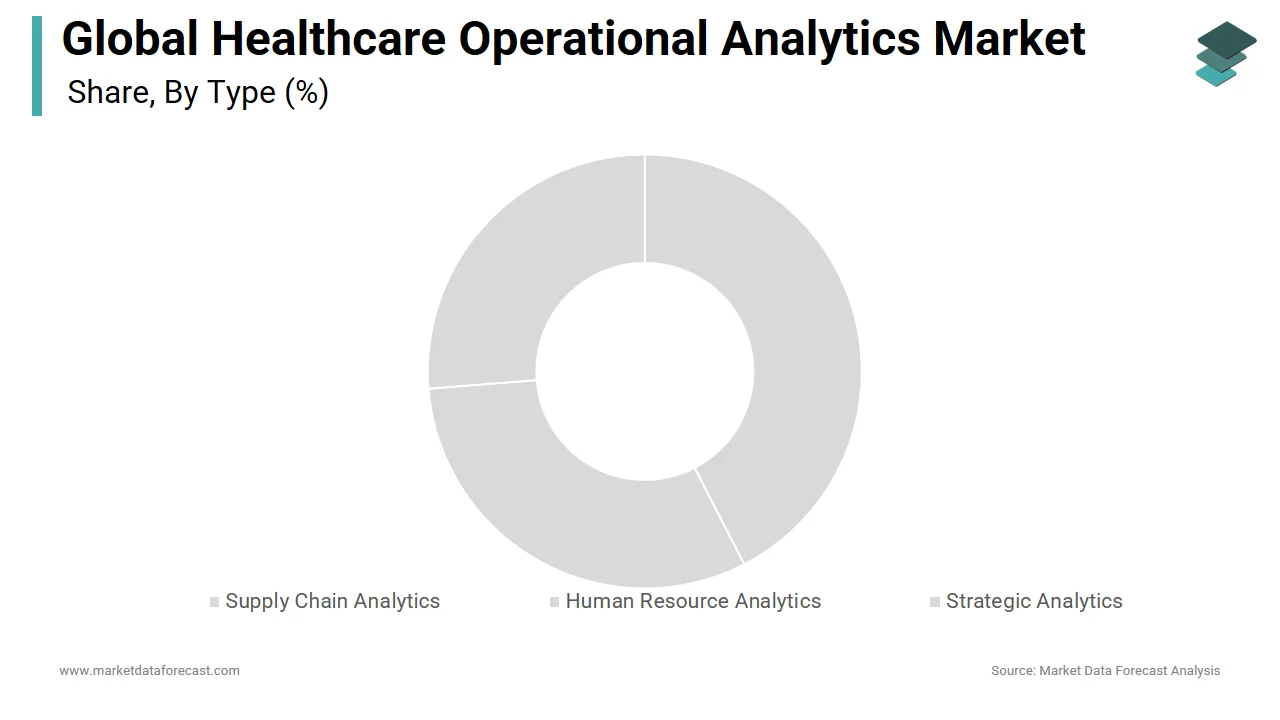
The strategic analytics segment is likely to grow with an expected CAGR of 17.4% from 2025 to 2033. Strategic analytics plays a crucial role in helping hospitals and health systems evaluate financial sustainability, assess merger and acquisition opportunities, and identify population health trends. According to McKinsey, more than 70% of healthcare executives now use strategic analytics to guide investment decisions, service line profitability assessments, and patient demographic targeting. Moreover, the rise of digital transformation initiatives and AI-enabled business intelligence platforms has enhanced the ability of healthcare providers to analyze vast datasets for competitive advantage. Governments and private insurers are also leveraging strategic analytics to model healthcare policy impacts and optimize reimbursement structures.
By Component Insights
The software component segment was the largest and held 58.3% of the Healthcare Operational Analytics Market share in 2024 with the increasing adoption of cloud-based and enterprise-level analytics platforms designed to streamline administrative workflows, enhance clinical decision-making, and support financial management. Additionally, vendors such as Epic Systems, Cerner (now part of Oracle), and IBM Watson Health have introduced modular analytics solutions tailored to specific hospital departments including finance, logistics, and human resources—enhancing scalability and customization.
The services segment is expected to grow with a CAGR of 18.2% during the forecast period. Many healthcare institutions lack in-house expertise to deploy and maintain advanced analytics tools effectively. According to Gartner, over 65% of healthcare providers outsourced analytics-related services in 2023 to ensure optimal system performance and compliance with evolving regulations. These services include consulting for data governance, cloud migration assistance, and ongoing technical support to maximize return on investment. Furthermore, the proliferation of AI and machine learning-based analytics requires continuous updates, algorithm tuning, and user education, all of which fall under the purview of professional services.
By End-User Insights
The hospitals and clinics segment was the largest by occupying a dominant share of the Healthcare Operational Analytics Market in 2024. According to the World Health Organization (WHO), inefficient hospital operations contribute to significant delays in patient care and unnecessary expenditures. In response, hospitals are increasingly adopting analytics tools to monitor real-time workflows, reduce wait times, and improve resource utilization. Additionally, the shift toward value-based care models has intensified the need for performance measurement and cost control.
The pharmaceutical and biotechnology companies segment is likely to grow with an estimated CAGR of 19.1% in the next coming years. Biopharma firms are leveraging analytics to predict manufacturing bottlenecks, track adverse events, and personalize marketing strategies based on treatment outcomes. Moreover, the rise of personalized medicine and gene therapy has necessitated deeper insights into patient populations and biomarker trends, further fueling demand for operational analytics. As regulatory agencies push for greater transparency in drug safety and pricing, pharmaceutical firms are turning to analytics to meet compliance requirements while enhancing commercial performance.
REGIONAL ANALYSIS
North America Healthcare Operational Analytics Market Analysis
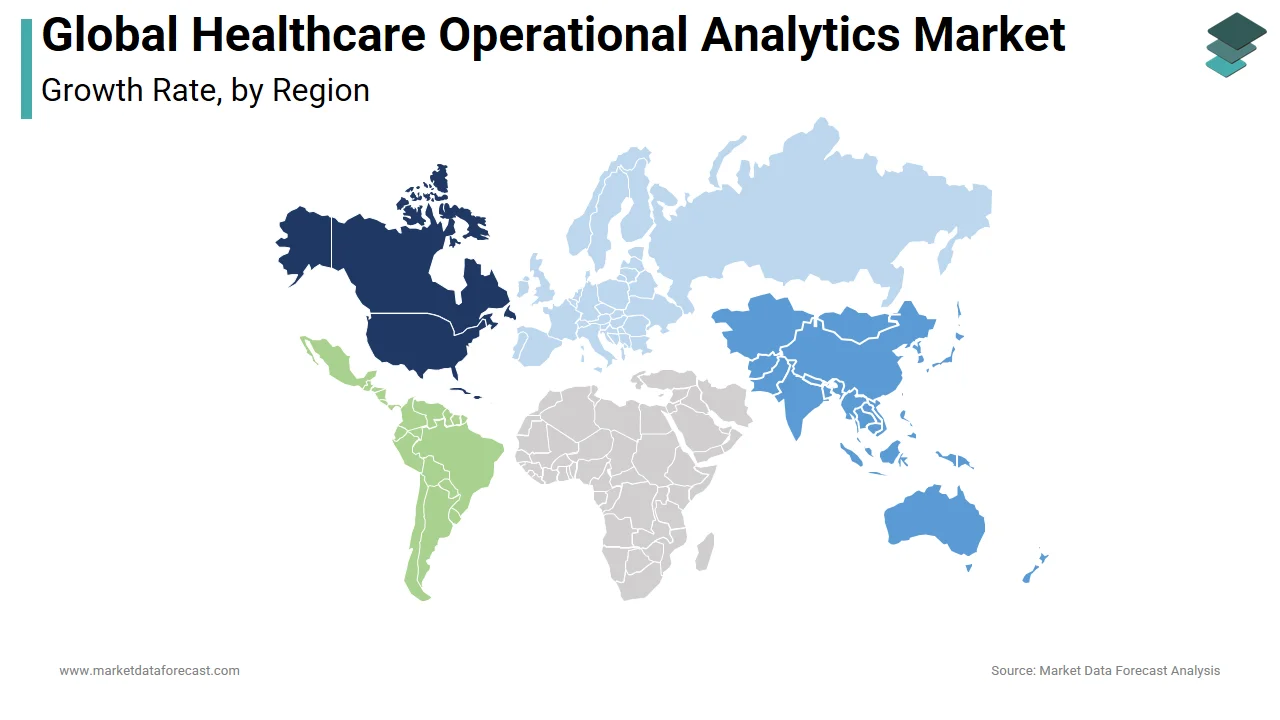
North America was the top performer in the Healthcare Operational Analytics Market by capturing 40.3% of share in 2024. The United States is the dominant force within the region, driven by regulatory mandates such as the Meaningful Use program and the push for value-based care models. According to the Centers for Medicare & Medicaid Services (CMS), over 90% of U.S. hospitals utilize EHR-integrated analytics tools to improve operational efficiency and meet reimbursement criteria.
Canada's healthcare operational analytics market is positioned next with provincial health authorities investing in centralized analytics dashboards to manage hospital capacity and pandemic response efforts.
Europe Healthcare Operational Analytics Market Analysis
Europe holds a substantial 23% share of the Healthcare Operational Analytics Market, driven by robust government backing, digital health reforms, and a focus on sustainable healthcare delivery. Countries like the UK, Germany, France, and Sweden have emerged as innovation leaders in health informatics and data-driven policymaking. The European Commission’s Digital Transformation of Health and Care initiative has played a pivotal role in promoting cross-border data sharing and analytics adoption. According to Eurostat, over 70% of EU hospitals now use integrated information systems to manage patient records and operational metrics, enabling better decision-making and resource allocation. In addition, the UK’s National Health Service (NHS) has launched several analytics-driven programs aimed at reducing waiting lists and optimizing hospital staffing.
Asia-Pacific Healthcare Operational Analytics Market Analysis
The Asia-Pacific region Healthcare Operational Analytics Market is emerging with highest CAGR during the forecast period.China, in particular, has been proactive in deploying big data analytics for hospital management and disease surveillance. According to the Chinese Center for Disease Control and Prevention, national health data platforms now cover over 1.3 billion citizens by enabling real-time monitoring of outbreaks and resource allocation. India’s Ayushman Bharat Digital Mission aims to create a unified health ecosystem supported by analytics for insurance claims processing, fraud detection, and provider performance evaluation. As per NITI Aayog, over 200 billion Indians have already enrolled in the digital health registry, facilitating better access to data-driven healthcare services.
Latin America Healthcare Operational Analytics Market Analysis
Latin America Healthcare Operational Analytics Market growth is esteemed to grow eventually in the next coming years. Brazil, in particular, has seen a surge in analytics adoption in both public and private healthcare sectors. Mexico has also made progress in integrating analytics into its Seguro Popular health insurance program, improving claims processing and fraud detection mechanisms.
Middle East and Africa Healthcare Operational Analytics Market Analysis
The Middle East and Africa healthcare operational analytics market growth is driven by strategic investments from Gulf Cooperation Council (GCC) countries aiming to build world-class healthcare infrastructures. Saudi Arabia, the UAE, and South Africa are leading adopters, leveraging analytics to improve hospital efficiency and public health monitoring. In the UAE, the Smart Dubai initiative includes a comprehensive digital health strategy that integrates analytics for hospital performance tracking and telemedicine coordination. According to the Dubai Health Authority, over 80% of healthcare facilities in the emirate now use analytics for operational planning and patient engagement.
COMPETITIVE LANDSCAPE
The competition in the Healthcare Operational Analytics Market is intensifying as global technology firms, healthcare IT specialists, and emerging startups vie for dominance in an industry undergoing rapid digital transformation. Established players such as IBM, Oracle, and Epic Systems maintain strong positions due to their extensive product ecosystems, long-standing client relationships, and significant R&D investments. However, newer entrants are leveraging artificial intelligence, cloud computing, and interoperability standards to offer agile, scalable solutions that challenge traditional vendors.
The market landscape is highly fragmented, with differentiation increasingly based on domain expertise, ease of integration, and the ability to deliver actionable insights in real time. As healthcare institutions prioritize cost containment and operational efficiency, demand for analytics platforms continues to grow across hospitals, clinics, and pharmaceutical companies. In response, vendors are not only focusing on technological innovation but also expanding their consulting and managed services offerings to support implementation and change management. Additionally, regulatory pressures and the push toward value-based care are compelling market participants to develop more transparent and compliant analytics tools, which is further shaping the competitive dynamics of the sector.
KEY MARKET PLAYERS
Some of the companies that are playing a dominating role in the global healthcare operational analytics market include
- IBM Corporation
- Wipro Limited
- Health Catalyst
- Allscripts
- Cerner Corporation
- Inovalon
- MEDEANALYTICS, INC.
- McKesson Corporation
- Oracle
- Optum, Inc.
- IQVIA
- SAS Institute Inc.
- Verscend Technologies Pvt. Ltd
- Vitreous Health
- CitiusTech Inc.
- GENERAL ELECTRIC
TOP LEADING PLAYERS IN THE MARKET
- IBM is a global leader in healthcare analytics, offering advanced AI-driven solutions through its Watson Health division. The company provides hospitals and health systems with tools to analyze vast amounts of clinical, financial, and operational data for improved decision-making. IBM’s contributions include developing predictive analytics models that enhance patient flow management, reduce hospital readmissions, and optimize resource allocation across healthcare settings.
- Oracle has significantly expanded its presence in the healthcare analytics space through the acquisition of Cerner, a leading provider of electronic health records and hospital information systems. The company offers comprehensive operational analytics platforms that support supply chain optimization, revenue cycle management, and workforce planning. Oracle’s integrated cloud-based solutions enable real-time insights into hospital operations by enhancing efficiency and patient care delivery globally.
- Epic Systems is a dominant player in healthcare IT, known for its widely adopted electronic health record (EHR) platform. The company integrates robust operational analytics tools within its suite, enabling hospitals to track performance metrics, manage bed occupancy, and streamline billing processes. Epic’s user-centric design and deep integration capabilities have made it a preferred choice among major hospital networks seeking data-driven operational improvements.
TOP STRATEGIES USED BY KEY MARKET PARTICIPANTS
Expansion through Strategic Acquisitions and Mergers Leading players are acquiring complementary companies to enhance their product portfolios and expand their market reach. This approach allows them to integrate specialized analytics capabilities and strengthen their foothold in key healthcare segments.
Development of AI and Machine Learning-Integrated Solutions Companies are investing heavily in artificial intelligence to deliver more accurate predictions, automate administrative tasks, and provide deeper insights into hospital and clinic operations, improving overall efficiency and decision-making.
Partnerships with Healthcare Providers and Government Agencies to ensure widespread adoption, vendors are forming strategic alliances with hospitals, insurance providers, and public health authorities to co-develop tailored analytics tools aligned with regulatory frameworks and operational needs.
GLOBAL HEALTHCARE OPERATIONAL ANALYTICS MARKET NEWS
- In January 2024, IBM Watson Health launched a new AI-powered operational dashboard specifically designed for emergency departments by aiming to improve patient triage and hospital resource utilization in real time.
- In March 2024, Oracle Health, following its integration of Cerner, announced a partnership with a leading European hospital network to deploy predictive analytics for ICU capacity planning by enhancing pandemic preparedness and response strategies.
- In June 2024, Epic Systems introduced an updated version of its operational analytics module, featuring enhanced interoperability with third-party hospital management systems to streamline workflows and reporting consistency.
- In September 2024, Change Healthcare (now part of UnitedHealth Group) unveiled a blockchain-integrated analytics solution aimed at reducing fraud and inefficiencies in healthcare claims processing through secure and transparent data tracking.
- In November 2024, Allscripts partnered with a major AI firm to develop a machine learning-based analytics tool that optimizes nurse staffing schedules based on historical patient admission trends and seasonal variations.
MARKET SEGMENTATION
This research report on the global healthcare operational analytics market has been segmented and sub-segmented based on type, component, deployment, end-user, and region.
By Type
- Supply Chain Analytics
- Human Resource Analytics
- Strategic Analytics
By Component
- Software
- Hardware
- Services
By Deployment
- On-Premises
- Web and Cloud-based
By End-user
- Hospitals and Clinics
- Pharmaceutical and Biotechnology Companies
- Others
By Region
- North America
- Europe
- Asia-Pacific
- Latin America
- Middle East and Africa
Frequently Asked Questions
1. What is the global healthcare operational analytics market?
The global healthcare operational analytics market covers platforms that analyze hospital operations, resource movements, costs, workflows, and utilization to support efficiency and planning.
2. What is the size of the global healthcare operational analytics market?
The global healthcare operational analytics market is projected to grow from USD 15.74 billion in 2026 to USD 43.67 billion by 2034 at a CAGR of 13.6%, driven by data-driven decision needs.
3. Which factors drive the global healthcare operational analytics market?
Workforce gaps, rising operational expenses, and digitized hospital data are leading factors pushing adoption in the global healthcare operational analytics market.
4. Which sectors use the global healthcare operational analytics market?
Hospitals, payer groups, diagnostic organizations, government health systems, and pharmacy networks rely on the global healthcare operational analytics market for process insights.
5. How does automation impact the global healthcare operational analytics market?
Automation boosts data availability and enables real-time dashboards, directly increasing adoption across the global healthcare operational analytics market.
6. What role does workflow tracking play in the global healthcare operational analytics market?
The global healthcare operational analytics market supports patient flow tracking, reducing delays, improving scheduling accuracy, and minimizing idle facility time.
7. What challenges affect the global healthcare operational analytics market?
Implementation expense, data integration difficulties, and limited analytics literacy slow adoption in the global healthcare operational analytics market.
8. Which region leads the global healthcare operational analytics market?
North America remains dominant due to advanced hospital IT infrastructure and payment validation analytics within the global healthcare operational analytics market.
9. How does cost reduction influence the global healthcare operational analytics market?
Hospitals use the global healthcare operational analytics market to reduce waste, control procurement spending, and streamline departmental budget allocation.
10. How does predictive analytics support the global healthcare operational analytics market?
Usage trends help forecast bed demand, staffing requirements, and case load, strengthening the global healthcare operational analytics market.
Related Reports
Access the study in MULTIPLE FORMATS
Purchase options starting from
$ 2500
Didn’t find what you’re looking for?
TALK TO OUR ANALYST TEAM
Need something within your budget?
NO WORRIES! WE GOT YOU COVERED!
Call us on: +1 888 702 9696 (U.S Toll Free)
Write to us: sales@marketdataforecast.com