- Product Description Description
- Table of Contents TOC
- List of Table & Figure LOT
- Get Free Sample PDF Sample PDF
Market Size, 2025
$78.98 BnMarket Estimate, 2026
$81.36 BnMarket Forecast, 2034
$103.14 BnCAGR, 2026–2034
3.01%Global Hot Dog and Sausages Market Size, Growth, Trends & Forecast (2025–2034)
The global hot dog and sausages market size was valued at USD 78.98 billion in 2025, is anticipated to reach USD 81.36 billion in 2026, and is projected to scale up to USD 103.14 billion by 2034, registering a compound annual growth rate (CAGR) of 3.01% during the forecast period from 2026 to 2034. Driven by shifting consumer lifestyles favoring convenience foods, the rapid expansion of quick-service restaurants, and vibrant street food cultures globally, the market continues to maintain steady growth.
Key Executive Metrics (At-a-Glance)
- 2025 Base Valuation: USD 78.98 Billion
- 2026 Current Valuation: USD 81.36 Billion
- 2034 Forecast Valuation: USD 103.14 Billion
- Compound Annual Growth Rate (CAGR): 3.01% (2026–2034)
- Dominant Meat Type Segment: Pork (holding the highest market share anchored by cultural significance and culinary versatility)
- Fastest-Growing Meat Type Segment: Chicken (projected to record a CAGR of 7.5% driven by rising health consciousness and lean protein demand)
- Dominant Product Segment: Refrigerated Hot Dogs (holding dominant share due to superior taste, freshness, and quality perception)
- Fastest-Growing Product Segment: Frozen Hot Dogs and Sausages (estimated to showcase a CAGR of 6.4% due to extended shelf life and reduced food waste)
- Dominant Region: North America (accounting for the leading market share supported by deeply rooted consumer traditions and an expansive food service sector)
Core Market Drivers
- Demand for Convenience Foods: Rapid global urbanization and demanding work schedules increasing consumer preference for quick, minimal-preparation meal solutions.
- QSR & Street Food Expansion: Proliferation of quick-service restaurants and street food cultures relying heavily on affordable, portable, and popular protein options.
Primary Market Restraints & Challenges
- Health Concerns & Perceptions: Growing health consciousness, medical research linking processed meats to adverse health outcomes, and high sodium/preservative scrutiny.
- Regulatory & Cost Pressures: Stringent global regulatory standards, complex labeling requirements, and volatility in raw material and feed prices.
Global Hot Dog and Sausages Market Segmentation Breakdown
| Segment Category | Leading Sub-Segment (2025 Base) | Fastest-Growing Sub-Segment (2026–2034) |
|---|---|---|
| By Meat Type | Pork (dominant segment holding highest market share globally) | Chicken (fastest-growing at a 7.5% CAGR driven by lean protein trends) |
| By Product | Refrigerated Hot Dogs (dominant share anchored by freshness and superior texture) | Frozen Hot Dogs and Sausages (fastest-growing at a 6.4% CAGR due to extended shelf life and value) |
| By Region | North America (leading market share backed by strong food service and cultural affinity) | Asia-Pacific & Latin America (fastest-growing regional markets driven by urbanization and rising middle-class spending) |
Major Industry Players Profiled
Key enterprises shaping the global market include Dr Pepper Snapple Group, Monster Beverage Corp., Kraft Foods, Dohler Group, Cott Corporation, The Coca-Cola Company, PepsiCo Inc., Parle Agro, and Britvic PLC.
 Download Free Sample Report
Global Hot Dog and Sausages Market Size
The global hot dog and sausages market size was valued at USD 78.98 billion in 2025, and the global market size is expected to grow from USD 81.36 billion in 2026 to USD 103.14 billion in 2034, with a CAGR of 3.01% between 2026 and 2034.
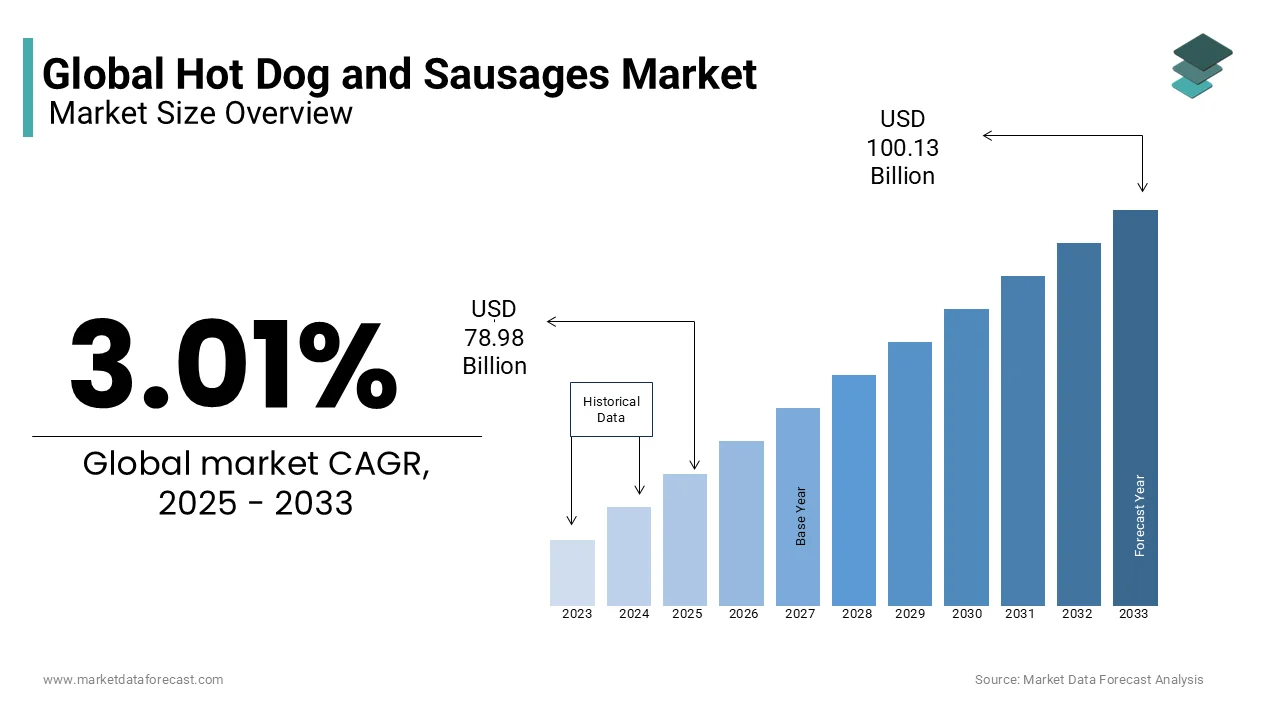
Hot dog and sausages are a diverse array of processed meat products that serve as staple components in global culinary traditions, ranging from quick-service restaurants to household meal preparations. These products are characterized by their convenience, versatility, and ability to integrate with various flavor profiles and dietary preferences. The market dynamics are heavily influenced by shifting consumer lifestyles that prioritize ready-to-eat and easy-to-prepare food options. As per the United States Department of Agriculture, the average annual consumption of pork and beef sausages in the United States remains robust, reflecting deep-rooted cultural acceptance of these protein sources. In Europe, the tradition of sausage making is deeply embedded in regional cuisines, with countries like Germany and Poland exhibiting high per capita consumption rates. According to Eurostat, the annual production of meat preparations and sausage-related products in the European Union maintains a massive scale, indicating substantial industrial capacity and demand. The evolution of this market is also shaped by regulatory frameworks concerning food safety, labeling, and ingredient transparency, which vary significantly across regions. Consumer awareness regarding nutritional content has prompted manufacturers to reformulate products to reduce sodium and preservative levels. The rise of urbanization and dual-income households further accelerates the demand for convenient protein solutions. Additionally, the integration of these products into casual dining and street food cultures globally ensures consistent visibility and accessibility. This intersection of tradition, convenience, and evolving health consciousness defines the current landscape of the hot dog and sausages sector.
MARKET DRIVERS
Rising Demand for Convenience Foods among Urban Populations
The escalating demand for convenience foods among rapidly urbanizing populations is primarily fuelling the expansion of the global hot dog and sausages market, as modern lifestyles increasingly favor quick and easy meal solutions. Urban dwellers often face time constraints due to demanding work schedules and long commutes, which reduces the time available for traditional cooking methods. Hot dogs and sausages offer a practical alternative, as they require minimal preparation time and can be cooked using various methods, including grilling, boiling, or microwaving. According to the United Nations Department of Economic and Social Affairs, approximately 57% of the global population lived in urban areas in 2024, a figure projected to rise in coming years. This demographic shift creates a sustained base of consumers who prioritize efficiency in meal planning. The versatility of these products allows them to be incorporated into breakfast, lunches, and dinners, enhancing their appeal across different day parts. As per the International Food Information Council, a substantial portion of consumers cite convenience as a primary driver in their food buying behaviors and meal replacements, reflecting the rising preference for snackification. The availability of pre-cooked and vacuum-sealed variants further simplifies storage and usage, making these products ideal for busy households. Retailers support this trend by placing these items in prominent positions within supermarkets and offering bundled deals with buns and condiments. The alignment of product attributes with the needs of urban consumers ensures steady growth in sales volumes, particularly in metropolitan regions where fast-paced living is the norm.
Expansion of Quick Service Restaurants and Street Food Culture
The expansion of quick-service restaurants and the vibrant street food culture globally are further boosting the hot dog and sausages market expansion, as these establishments rely heavily on affordable and popular protein options. Hot dogs and various sausage types are cornerstone items in many fast-food menus due to their low cost, high margin potential, and broad consumer appeal. Street food vendors, particularly in Asia, Latin America, and Europe, utilize sausages as key ingredients in local delicacies, thereby integrating them into daily dietary habits. As per Statista, the global quick-service restaurant market continues to represent a massive, multibillion-dollar sector, reflecting the massive scale of this industry. The portability and ease of consumption associated with hot dogs make them ideal for on-the-go eating, which aligns perfectly with the operational model of street food stalls and fast-food outlets. Major international chains continuously innovate their sausage offerings by introducing regional flavors and premium ingredients to attract diverse customer bases. According to the National Restaurant Association in the United States, sales of handheld food items remained strong, driven by their affordability and familiarity. The social aspect of street food festivals and outdoor events also boosts visibility and trial among consumers who might not otherwise purchase these products for home consumption. This widespread presence in the food service sector ensures consistent demand and provides manufacturers with large-volume contracts that stabilize revenue streams and support market expansion.
MARKET RESTRAINTS
Growing Health Consciousness and Negative Perception of Processed Meats
Growing health consciousness and the negative perception associated with processed meats are primarily hindering the hot dog and sausages market growth, as consumers increasingly link these products to adverse health outcomes. Extensive medical research has highlighted correlations between high consumption of processed meats and increased risks of cardiovascular diseases, certain cancers, and obesity. As per the World Health Organization, processed meats are classified as Group 1 carcinogens, meaning there is sufficient evidence that they can cause cancer in humans. This classification has led to heightened public awareness and caution among health-oriented consumers, who actively seek to reduce or eliminate such items from their diets. The high sodium content and presence of nitrates and nitrites used as preservatives further deter health-conscious buyers, who scrutinize ingredient labels closely. According to the Centers for Disease Control and Prevention, nearly half of adults in the United States have hypertension or high blood pressure, conditions that are exacerbated by high sodium intake. This health narrative is amplified by media coverage and public health campaigns that advocate for fresh and whole food alternatives. Consequently, many individuals are shifting towards plant-based proteins, lean meats, and organic options that are perceived as healthier. The stigma attached to processed meats forces manufacturers to invest heavily in reformulation efforts, which can increase production costs and alter taste profiles, potentially alienating traditional customers. This persistent health concern limits market growth, particularly among educated and affluent demographics who prioritize wellness and longevity in their lifestyle choices.
Stringent Regulatory Standards and Labeling Requirements
Stringent regulatory standards and rigorous labeling requirements impose substantial operational burdens on manufacturers in the hot dog and sausages market, which is limiting flexibility and increasing compliance costs. Governments worldwide are implementing stricter guidelines regarding ingredient transparency, additive usage, and nutritional disclosures to protect consumer interests and ensure food safety. In the European Union, regulations such as the Clean Label Initiative push for the reduction of artificial additives and preservatives, which are commonly used in sausage production to extend shelf life and enhance flavor. As per the European Food Safety Authority, manufacturers must adhere to strict limits on nitrite levels and provide clear allergen information on packaging. Compliance with these varying regional regulations requires significant investment in research and development to reformulate products without compromising quality or safety. In the United States, the Food and Drug Administration mandates detailed nutritional labeling, including sodium and saturated fat content, which can negatively influence consumer perception if values are high. According to the Food Marketing Institute, a significant majority of shoppers routinely check nutrition labels before purchasing packaged foods, indicating the direct impact of labeling on sales. Non-compliance can result in hefty fines, product recalls, and reputational damage, which discourages innovation and market entry for smaller players. The complexity of navigating diverse regulatory landscapes across different countries hinders global expansion strategies and increases the time to market for new products. These regulatory pressures constrain the ability of manufacturers to maintain traditional formulations and force continuous adaptation, which can strain resources and limit profitability.
MARKET OPPORTUNITIES
Development of Plant-Based and Alternative Protein Sausages
The development of plant-based and alternative protein sausages is a major opportunity for the hot dog and sausages market, as it allows manufacturers to tap into the growing segment of flexitarian and vegetarian consumers. Innovations in food technology have enabled the creation of plant-based products that closely mimic the texture, flavor, and appearance of traditional meat sausages, appealing to those seeking to reduce meat consumption without sacrificing sensory experience. As per the Good Food Institute, retail sales of plant-based meat and seafood alternatives highlight a dynamic segment, responding directly to shifting consumer wellness and sustainability patterns. This trend is driven by environmental concerns, ethical considerations, and health motivations, which are increasingly influencing purchasing decisions. Major food companies are investing heavily in research to improve the quality of plant-based ingredients, such as pea protein, soy, and wheat gluten, to enhance product performance. According to Mintel, a notable share of global consumers express regular interest in trying plant-based alternatives to traditional meats, indicating a substantial addressable market. By diversifying their product portfolios to include these alternatives, manufacturers can attract new customer segments and mitigate risks associated with declining meat consumption. Retailers are also dedicating more shelf space to plant-based options, reflecting rising demand. The ability to market these products as sustainable and healthy aligns with contemporary consumer values and offers a competitive edge. Collaborations with technology startups and ingredient suppliers further accelerate innovation, enabling faster time to market for high-quality alternatives. This strategic pivot towards plant-based solutions opens new revenue streams and positions companies favorably for future market dynamics.
Introduction of Premium and Artisanal Product Lines
The introduction of premium and artisanal product lines offers a significant opportunity for the hot dog and sausages market by catering to discerning consumers who value quality, authenticity, and unique flavor profiles. There is a growing segment of shoppers who are willing to pay a premium for sausages made with high-quality meats, natural ingredients, and traditional crafting methods. As per NielsenIQ, premium meat and specialty food products have shown notable increases in sales value over standard varieties, reflecting this shift in consumer preference. Artisanal sausages often feature exotic spices, heritage breed meats, and the absence of artificial additives, which appeals to foodies and culinary enthusiasts. This trend is supported by the rise of specialty food stores, farmers' markets, and gourmet sections in supermarkets, where such products are prominently displayed. According to the Specialty Food Association, sales of specialty meats and sausages grew steadily, driven by consumers seeking novel and elevated dining experiences at home. Manufacturers can leverage this opportunity by highlighting sourcing transparency, ethical farming practices, and craftsmanship in their branding. Limited-edition flavors and regional specialties create excitement and encourage trial among adventurous eaters. The premiumization strategy also helps differentiate brands in a crowded market and improves profit margins by commanding higher prices. Partnerships with celebrity chefs and culinary influencers can further enhance brand prestige and reach targeted audiences effectively. By focusing on quality and uniqueness, companies can build loyal customer bases that are less price-sensitive and more resistant to commodity fluctuations.
MARKET CHALLENGES
Volatility in Raw Material Prices and Supply Chain Disruptions
Volatility in raw material prices and supply chain disruptions are primarily challenging the hot dog and sausages market expansion, as they directly impact production costs and profit margins. The primary ingredients for these products, including pork, beef, and poultry, are subject to fluctuating prices due to factors such as feed costs, weather conditions, disease outbreaks, and geopolitical tensions. As per the Food and Agriculture Organization of the United Nations, global meat prices experienced significant volatility, with occasional spikes affecting input costs for processors. These fluctuations make it difficult for manufacturers to maintain stable pricing strategies and can erode profitability if costs cannot be fully passed on to consumers. Supply chain disruptions caused by labor shortages, transportation bottlenecks, and logistical inefficiencies further exacerbate the situation, leading to delays and increased operational expenses. According to the Bureau of Labor Statistics, producer price indices for processed meats have shown irregular trends, reflecting the instability in input costs. Manufacturers must navigate these uncertainties by implementing hedging strategies, diversifying supplier bases, and optimizing inventory management. However, these measures require substantial financial resources and expertise, which may be beyond the reach of smaller players. The inability to predict costs accurately hampers long-term planning and investment in innovation. Additionally, frequent price changes can confuse consumers and damage brand loyalty if perceived as unfair. Managing these supply-side risks remains a critical challenge that requires agile responses and robust risk management frameworks to ensure business continuity and competitiveness.
Intense Competition from Private Label and Generic Brands
Intense competition from private label and generic brands presents a promising challenge for established players in the hot dog and sausages market, as retailers increasingly prioritize their own brands to capture higher margins and offer lower prices to consumers. Private label products have improved significantly in quality and packaging, making them viable alternatives to national brands while being priced more competitively. As per the Private Label Manufacturers Association, the private label share in the grocery and meat category reaches a substantial percentage, indicating strong consumer acceptance and retailer support. Retailers leverage their control over shelf space and promotional activities to favor their own brands, which squeezes the visibility and sales potential of branded products. This dynamic forces national brands to engage in price wars, which can dilute brand equity and reduce profitability. According to Meat Industry Data, private label sausages grew faster than branded counterparts in several key markets, driven by inflationary pressures that made consumers more price-sensitive. Established manufacturers must invest heavily in marketing, innovation, and differentiation to justify premium pricing and retain customer loyalty. However, distinguishing processed meat products in terms of tangible benefits can be difficult, leading to commoditization. The threat of private labels is particularly acute in economic downturns, when consumers trade down to save money. This competitive pressure necessitates continuous efficiency improvements and strategic partnerships with retailers to maintain shelf presence. Failure to adapt to this shifting landscape can result in loss of market share and diminished brand relevance in an increasingly cost-conscious environment.
REPORT COVERAGE
| REPORT METRIC | DETAILS |
| Market Size Available | 2025 to 2034 |
| Base Year | 2025 |
| Forecast Period | 2026 to 2034 |
| CAGR | 3.01% |
| Segments Covered | By Meat Type, By Product, and Region |
| Various Analyses Covered | Global, Regional, & Country Level Analysis; Segment-Level Analysis; DROC, PESTLE Analysis; Porter’s Five Forces Analysis; Competitive Landscape; Analyst Overview of Investment Opportunities |
| Regions Covered | North America, Europe, Asia Pacific, Latin America, Middle East and Africa |
| Market Leaders Profiled | Dr Pepper Snapple Group, Monster Beverage Corp., Kraft Foods, Dohler Group, Cott Corporation, the Coca-Cola Company, PepsiCo Inc., Parle Agro, and Britvic PLC |
SEGMENTAL ANALYSIS
By Meat Type Insights
The pork segment led the market by holding the highest share of the global market in 2025, primarily due to its deep-rooted cultural significance and unparalleled culinary versatility across major consumption regions. In Europe, particularly in Germany, Poland, and Spain, pork is the traditional base for countless sausage varieties, ranging from bratwurst to chorizo, which are integral to national identities and daily diets. According to the United States Department of Agriculture, pork remains the most consumed meat globally for processed products because of its favorable fat content, which provides moisture and flavor essential for high-quality sausages. The ability of pork to blend seamlessly with various spices, herbs, and curing agents allows manufacturers to create a vast array of flavor profiles that cater to diverse consumer preferences. As per Eurostat, pork accounts for a commanding share of all meat used in sausage production in the European Union and this reflects its dominance in industrial processing. This widespread acceptance reduces marketing barriers and ensures consistent demand, regardless of economic fluctuations. Furthermore, pork is often more cost-effective than beef, making it an attractive option for mass-market products and private label brands. The established supply chains for pork are robust and efficient, ensuring steady availability of raw materials for processors. Consumer familiarity with pork-based products means less education is required for new product launches, allowing companies to focus on innovation in packaging and convenience rather than basic acceptance. This combination of tradition, taste, and economic efficiency solidifies pork as the cornerstone of the global sausage industry.

On the other end, the chicken segment is anticipated to record a CAGR of 7.5% during the forecast period in the global market owing to the rising health consciousness and the increasing demand for lean protein sources among consumers. As individuals become more aware of the health implications associated with red meat consumption, many are shifting towards poultry-based alternatives that offer lower calorie and fat content. According to the International Food Information Council, a substantial proportion of consumers actively seek out chicken products as an alternative to beef and pork, driven by general health motivations. This demographic trend is particularly strong among millennials and Gen Z, who prioritize wellness and fitness in their lifestyle choices. Chicken sausages are perceived as lighter and easier to digest, making them suitable for frequent consumption without the guilt associated with heavier meats. As per the United States Department of Agriculture, chicken consumption per capita has steadily increased over the last decade, surpassing beef in many developed nations. Manufacturers are capitalizing on this shift by introducing chicken-based hot dogs and sausages that mimic the texture and flavor of traditional products while highlighting their nutritional benefits. The inclusion of chicken breast meat and skinless formulations further enhances the health appeal, attracting fitness enthusiasts and weight-conscious buyers. Marketing campaigns emphasizing high-protein and low-fat attributes resonate well with this target audience, driving trial and repeat purchases. The versatility of chicken also allows for the incorporation of vegetables and herbs, creating hybrid products that appeal to health-oriented families. This alignment with contemporary health trends ensures sustained growth for the chicken segment.
By Product Insights
The refrigerated hot dogs segment held the dominant share of the global market in 2025 because they offer superior taste and texture compared to frozen alternatives, aligning with consumer preferences for freshness and quality. The refrigeration process preserves the natural juices and tenderness of the meat, resulting in a more authentic eating experience that mimics freshly prepared products. According to Consumer tracking data, refrigerated meat products consistently outperform frozen counterparts in terms of consumer satisfaction scores, as buyers associate chilled items with higher quality and fewer preservatives. The convenience of ready-to-cook refrigerated hot dogs appeals to busy households who want quick meal solutions without compromising on sensory attributes. These products are prominently displayed in the deli and meat sections of supermarkets, where impulse purchases are common, driven by attractive packaging and prominent branding. As per the North American Meat Institute, refrigerated hot dogs accounted for a majority share of total hot dog sales volume, demonstrating their dominance in the category. The shorter shelf life of refrigerated products necessitates efficient supply chain management, which established brands have mastered, ensuring consistent availability and freshness. Consumers are willing to pay a slight premium for refrigerated options, perceiving them as safer and more nutritious than long-shelf-life frozen variants. The ability to incorporate premium ingredients, such as Angus beef or organic pork, is easier in refrigerated formats, allowing for product differentiation. This perception of quality, combined with immediate usability, sustains the leadership of refrigerated hot dogs in the market.
However, the frozen hot dogs and sausages segment is estimated to showcase a CAGR of 6.4% during the forecast period owing to the critical advantage of extended shelf life, which significantly reduces food waste and enhances household inventory management. In an era where consumers are increasingly mindful of budgeting and sustainability, the ability to store protein products for months without spoilage is highly valued. According to the Natural Resources Defense Council, household food waste costs the average family hundreds of dollars annually, prompting a shift towards longer-lasting food options. Frozen sausages allow buyers to purchase in bulk during sales and store them for future use, maximizing value and minimizing trips to the grocery store. This convenience is particularly appealing to large families and individuals who practice meal prepping to save time and money during the week. As per the American Frozen Food Institute, sales of frozen meat products grew significantly, as consumers recognized the economic benefits of freezing. Advances in flash-freezing technology have improved the quality of frozen sausages, preserving texture and flavor better than before, mitigating historical stigma associated with frozen foods. The resilience of frozen products against supply chain disruptions also provides peace of mind for shoppers concerned about availability. Retailers support this growth by expanding frozen aisles and offering diverse brand choices. The combination of economic prudence, environmental awareness, and technological improvement fuels the rapid expansion of the frozen segment.
REGIONAL ANALYSIS
North America Hot Dog and Sausages Market Analysis
North America had the leading share of the global hot dog and sausages market in 2025 and is expected to maintain its commanding position and exhibit highly stable market demand over the next few years, supported by deeply rooted consumer traditions and an expansive food service sector. The United States and Canada are the primary contributors to this regional strength, with hot dogs being a staple of summer barbecues, sporting events, and family gatherings. As per the National Hot Dog and Sausage Council, consumer demand across American households commands billions of servings annually, reflecting the immense scale of demand in the region. The market is driven by the presence of major multinational corporations that invest heavily in branding, innovation, and distribution networks, ensuring widespread availability. Consumer preference for convenience foods supports the sales of both refrigerated and frozen variants across supermarkets and club stores. According to Statista, the processed meat sector in North America generated substantial revenue, supported by strong disposable incomes and busy lifestyles. The region is also a hub for product innovation, with manufacturers introducing premium, organic, and plant-based alternatives to cater to evolving dietary preferences. Regulatory standards set by the United States Department of Agriculture ensure high safety and quality benchmarks, which build consumer trust. The robust food service sector, including fast-food chains and stadium vendors, further amplifies consumption volumes. Marketing campaigns tied to national holidays, such as Independence Day, drive seasonal spikes in sales. The combination of cultural affinity, economic stability, and industrial capability ensures North America remains the largest market for hot dogs and sausages globally.
Europe Hot Dog and Sausages Market Analysis
Europe is anticipated to demonstrate highly resilient performance and a strong commitment to artisanal and regional specialty standards over the next few years, preserving its extensive tradition of processing excellence. Countries such as Germany, Poland, France, and the United Kingdom have longstanding traditions of sausage making, which influence consumer expectations and purchasing behaviors. As per Eurostat, the European Union produces millions of tons of meat preparations annually, with sausages constituting a major portion of this output. Consumers in Europe prioritize natural ingredients, traditional recipes, and protected geographical indications, which drive demand for artisanal and premium products. The market is characterized by a strong presence of local butchers and specialty shops alongside modern retail chains. According to the European Commission, strict regulations on additives and labeling ensure transparency and safety, influencing product formulation strategies. Health consciousness is rising in the region, leading to increased demand for leaner and organic sausage options. The popularity of street food and outdoor festivals also contributes to consumption, particularly during summer months. Economic variability across different European countries affects pricing sensitivity, with Western Europe showing higher spending on premium brands while Eastern Europe focuses on value. The integration of EU-wide trade facilities facilitates cross-border commerce, allowing popular regional brands to expand their reach. Sustainability concerns are prompting manufacturers to adopt eco-friendly packaging and ethical sourcing practices. This blend of tradition, regulation, and evolving consumer values shapes the dynamic European market landscape.
Asia Pacific Hot Dog and Sausages Market Analysis
The Asia Pacific region is projected to register rapid market expansion and escalating per capita consumption over the next few years, fueled by fast-paced urbanization and a growing acceptance of westernized dietary habits. While traditional meat consumption patterns vary widely across countries, the influence of global fast-food chains and changing lifestyles is increasing the acceptance of processed meat products. According to NielsenIQ, sales of packaged sausages in countries like China, India, and Japan grew strongly as middle-class populations expanded. Urban consumers in metropolitan areas are adopting convenient food solutions for busy schedules, driving demand for ready-to-cook sausages and hot dogs. The entry of international brands and local manufacturers adapting global recipes to local tastes, such as spicy or herbal variants, fuels market penetration. As per the Food and Agriculture Organization, meat consumption per capita in Asia is rising steadily, providing a larger base for processed meat products. The growth of e-commerce and online grocery shopping facilitates access to these products in tier-two and tier-three cities. Government initiatives to improve cold chain infrastructure are reducing spoilage and enhancing product availability. Younger demographics are more open to trying new food formats, making them key targets for marketing efforts. The region offers vast untapped potential, as penetration rates remain lower compared to Western markets. Strategic partnerships with local distributors and adaptation to regional flavor preferences are critical for success in this diverse and dynamic market.
Latin America Hot Dog and Sausages Market Analysis
Latin America is poised to secure a highly dynamic growth trajectory and robust volume gains over the next few years, as traditional dining habits merge with expanding modern grocery networks. Brazil, Argentina, and Mexico are key markets where sausages are integral to traditional dishes, such as churrasco and tacos, driving consistent demand. As per Euromonitor International, the processed meat sector in Latin America experienced steady growth, supported by economic recovery and increased consumer confidence. The affordability of sausages makes them accessible to a broad range of income groups, ensuring high-volume sales. Local manufacturers dominate the market by offering products tailored to regional tastes, including spicy and seasoned varieties. The proliferation of supermarkets and hypermarkets in urban centers improves the distribution and visibility of branded products. According to the Inter-American Development Bank, rising disposable incomes in the region are enabling consumers to upgrade from loose meats to packaged, branded sausages. Street food vendors play a crucial role in consumption, particularly in major cities where hot dogs are popular snacks. Cultural events and festivals further boost sales during peak seasons. Challenges such as inflation and currency fluctuation impact pricing strategies, requiring manufacturers to balance cost and quality. The young demographic profile of the region supports long-term growth, as new generations adopt convenient food habits. Investment in local production facilities helps mitigate import costs and ensures supply stability. This combination of cultural relevance, economic factors, and demographic trends positions Latin America as a promising growth market.
Middle East and Africa Hot Dog and Sausages Market Analysis
The Middle East and Africa region is expected to showcase gradual industrial development and steady market potential over the next few years, backed by tourism growth and improving urban logistics infrastructure. In Gulf Cooperation Council countries, high disposable incomes and a thriving hospitality sector drive demand for premium processed meat products. As per Frost and Sullivan, the food processing industry in the Middle East is expanding to meet the needs of a growing population and increasing tourist arrivals. Halal certification is a critical requirement in this region, influencing product formulation and sourcing strategies for manufacturers. Local production is increasing to reduce reliance on imports and ensure compliance with religious dietary laws. In Africa, market growth is concentrated in urban areas of South Africa, Nigeria, and Kenya, where modern retail is gaining traction. According to the African Development Bank, infrastructure improvements are enhancing cold chain capabilities, facilitating the distribution of perishable goods. Changing lifestyles and the entry of international fast-food chains are introducing sausages to new consumer segments. Price sensitivity remains a challenge in many African markets, requiring affordable product offerings. The youth population is increasingly exposed to global food trends through media and travel, driving curiosity and trial. Government efforts to boost local agriculture and processing industries support market development.
COMPETITIVE LANDSCAPE
The competition in the global hot dog and sausages market is intense and characterized by the presence of large multinational corporations alongside numerous regional and local producers who vie for consumer attention through price quality and innovation. Major players leverage their economies of scale to offer competitive pricing while investing heavily in branding and marketing to differentiate their products in a crowded marketplace. The rise of private label brands from major retailers adds further pressure as these offerings provide comparable quality at lower prices attracting budget conscious shoppers. Innovation plays a crucial role as companies strive to develop healthier options such as low sodium organic and plant based alternatives to meet evolving dietary preferences. Regulatory compliance regarding food safety and labeling also shapes competitive dynamics requiring significant investment in quality control and transparency. Supply chain efficiency becomes a key differentiator as manufacturers seek to minimize costs and ensure consistent product availability. Mergers and acquisitions are common strategies used to consolidate market power and expand geographic reach. The battle for shelf space in retail outlets remains fierce with promotional activities and seasonal campaigns driving short term sales spikes. Ultimately success depends on the ability to balance cost effectiveness with product quality and brand loyalty in an increasingly discerning consumer environment.
Key Market Players
Some of the notable companies in the global hot dog and sausages market are
- Hormel Foods Corp.
- Nestlé S.A.
- San Miguel Purefoods Company, Inc.
- Bar-S Foods (A Sigma Company)
- Elpozo Alimentacion S.A.
- Animex Foods Sp
- Bob Evans Farms, LLC
- Johnsonville, LLC
- Atria Plc
Top Players in the Market
- Tyson Foods stands as a global leader in the protein industry with a significant footprint in the hot dog and sausages sector through its extensive portfolio of branded and private label products. The company leverages its vertically integrated supply chain to ensure consistent quality and cost efficiency across its manufacturing operations. Recently Tyson has focused on innovation by launching premium lines featuring antibiotic free ingredients and natural casings to appeal to health conscious consumers. The corporation actively invests in automation technologies to enhance production speed and safety standards within its processing facilities. Tyson also strengthens its market position through strategic partnerships with major retail chains and food service providers ensuring widespread distribution. Their commitment to sustainability initiatives including water conservation and waste reduction resonates with environmentally aware stakeholders. By diversifying into plant based alternatives and expanding its ready to eat offerings Tyson continues to adapt to evolving consumer preferences while maintaining its dominance in the processed meat landscape.
- JBS USA operates as a major powerhouse in the global meat processing industry delivering a wide range of hot dog and sausage products under various well recognized brands. The company utilizes its massive scale and global sourcing capabilities to offer competitive pricing and reliable supply to customers worldwide. JBS has recently strengthened its position by acquiring smaller regional processors to expand its geographic reach and product diversity. The firm focuses heavily on operational excellence implementing advanced tracking systems to improve traceability and food safety compliance. JBS also invests in research and development to create cleaner label products with reduced sodium and preservatives addressing growing health concerns. Their strategy includes enhancing brand visibility through targeted marketing campaigns and sponsorships of sporting events. By prioritizing customer centric innovation and efficient logistics JBS maintains a strong competitive edge and continues to drive growth in the highly dynamic processed meat sector.
- Hormel Foods is a prominent player in the hot dog and sausages market known for its iconic brands such as Applegate and Skippy which cater to diverse consumer segments. The company distinguishes itself through a strong emphasis on quality transparency and sustainable sourcing practices that build long term consumer trust. Hormel has recently expanded its portfolio by investing in organic and natural product lines that align with current wellness trends. The corporation actively engages in community outreach and educational programs to promote responsible eating habits. Hormel strengthens its market presence by optimizing its distribution network and leveraging data analytics to understand shifting consumer behaviors. Their focus on employee development and workplace safety ensures high operational standards and productivity. By balancing tradition with innovation Hormel continues to deliver products that meet the changing needs of modern households while maintaining its reputation for excellence and reliability in the competitive food industry.
Top Strategies Used by Key Market Participants
Key players in the hot dog and sausages market employ several strategic approaches to maintain competitiveness and drive growth in a mature industry. Product innovation remains central as manufacturers introduce cleaner label options with reduced sodium nitrates and artificial additives to address health concerns. Expansion into premium and artisanal segments allows companies to capture higher margins by appealing to discerning consumers seeking quality and authenticity. Strategic acquisitions of niche brands help large corporations diversify their portfolios and access new demographic groups quickly. Investment in sustainable packaging and ethical sourcing practices enhances brand reputation and meets regulatory requirements. Digital marketing and direct to consumer channels are increasingly utilized to build stronger customer relationships and gather valuable data insights. Manufacturers also focus on supply chain optimization through automation and vertical integration to reduce costs and improve efficiency. Partnerships with food service providers and retailers ensure prominent shelf placement and consistent volume sales. These multifaceted strategies enable companies to navigate challenges and capitalize on emerging opportunities in the global market.
Hot Dog and Sausages Market News
- In March 2023, Tyson Foods, a protein giant, launched a new organic sausage line. This launch is anticipated to attract health conscious buyers and strengthen the Hot Dog And Sausages presence
- In June 2023, JBS USA, a global processor, acquired a specialty meat brand. This acquisition is anticipated to expand product diversity and strengthen the Hot Dog And Sausages presence
- In September 2023, Hormel Foods, a leading manufacturer, introduced plant based sausage options. This introduction is anticipated to capture vegan demographics and strengthen the Hot Dog And Sausages presence
- In January 2024, Tyson Foods, a market leader, upgraded its processing facilities. This upgrade is anticipated to enhance efficiency and strengthen the Hot Dog And Sausages presence
- In May 2024, JBS USA, a key participant, implemented sustainable packaging solutions. This implementation is anticipated to reduce waste and strengthen the Hot Dog And Sausages presence
MARKET SEGMENTATION
This research report on the global hot dog and sausages market has been segmented and sub-segmented based on meat type, product, and region.
By Meat Type
- Pork
- Beef
- Chicken
- Others
By Product
- Frozen Hot Dogs and Sausages
- Refrigerated Breakfast Sausages
- Refrigerated Dinner Sausages
- Refrigerated Hot Dogs
- Cocktail Sausages
By Region
- North America
- Europe
- Asia Pacific
- Latin America
- Middle East, and Africa