- Product Description Description
- Table of Contents TOC
- List of Table & Figure LOT
- Get Free Sample PDF Sample PDF
Market Size, 2025
$231 MnMarket Estimate, 2026
$247.8 MnMarket Forecast, 2034
$436 MnCAGR, 2026–2034
7.3%Global Hyperbaric Oxygen Therapy Devices Market Report Summary
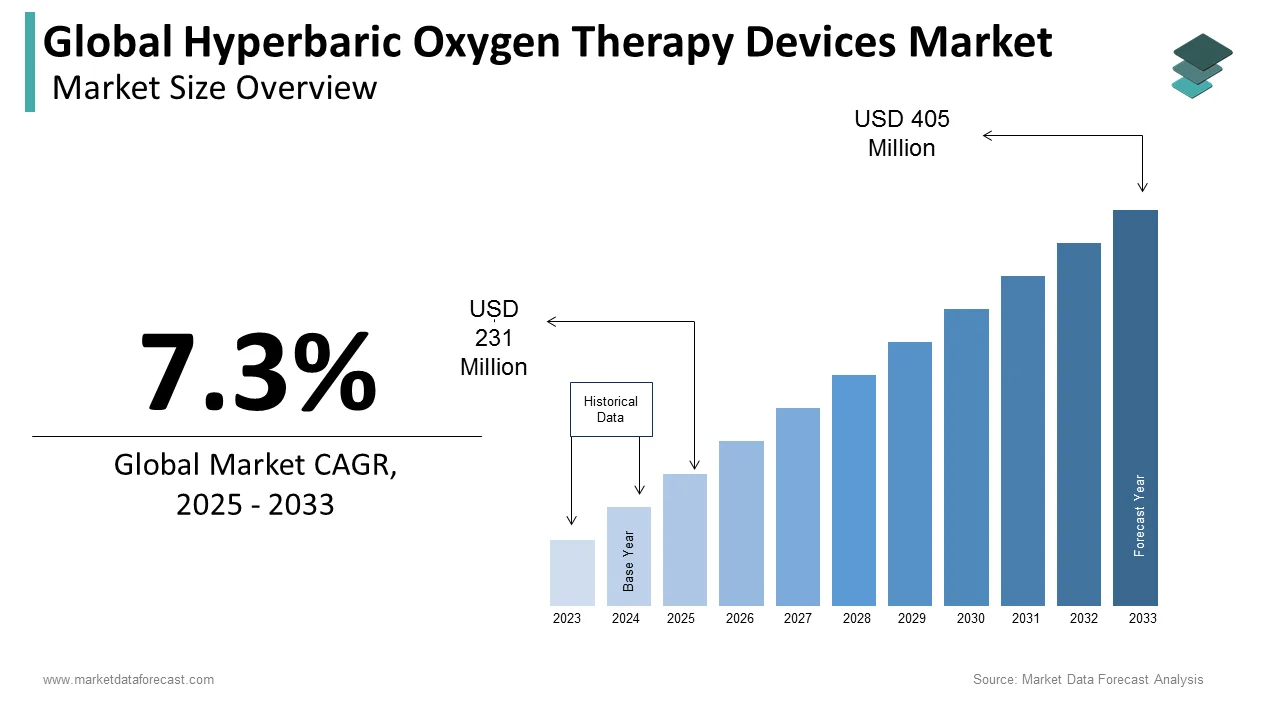
The global hyperbaric oxygen therapy (HBOT) devices market was valued at USD 231 million in 2025 and is projected to grow from USD 247.86 million in 2026 to USD 436 million by 2034, registering a CAGR of 7.3% from 2026 to 2034. Market growth is driven by the increasing prevalence of chronic wounds, diabetic foot ulcers, radiation injuries, and other conditions requiring advanced oxygen therapy. Hyperbaric oxygen therapy enhances tissue oxygenation, promotes wound healing, and supports recovery from complex medical conditions. Rising awareness of HBOT's clinical benefits, expanding healthcare infrastructure, and technological advancements in hyperbaric chamber design are further supporting global market expansion.
Key Market Trends
- Increasing adoption of hyperbaric oxygen therapy for chronic wound management.
- Rising prevalence of diabetes-related ulcers and radiation-induced tissue injuries.
- Growing investments in advanced monoplace and multiplace hyperbaric chamber technologies.
- Expansion of hospital-based hyperbaric treatment centers and specialty wound care clinics.
- Continuous advancements in patient safety, chamber automation, and treatment monitoring systems.
Segmental Insights
- Based on product, the monoplace chamber segment dominated the global hyperbaric oxygen therapy devices market in 2025 by accounting for 37.5% market share, driven by its ease of operation, lower installation costs, and widespread adoption in hospitals and specialized treatment centers.
- Based on application, the chronic wounds segment held the dominant share of the market in 2025, supported by the increasing incidence of diabetic foot ulcers, pressure ulcers, non-healing wounds, and the proven effectiveness of hyperbaric oxygen therapy in accelerating tissue repair.
Regional Insights
The global hyperbaric oxygen therapy devices market is witnessing steady growth across major regions, supported by increasing healthcare investments, expanding clinical applications, and greater awareness of advanced wound care therapies.
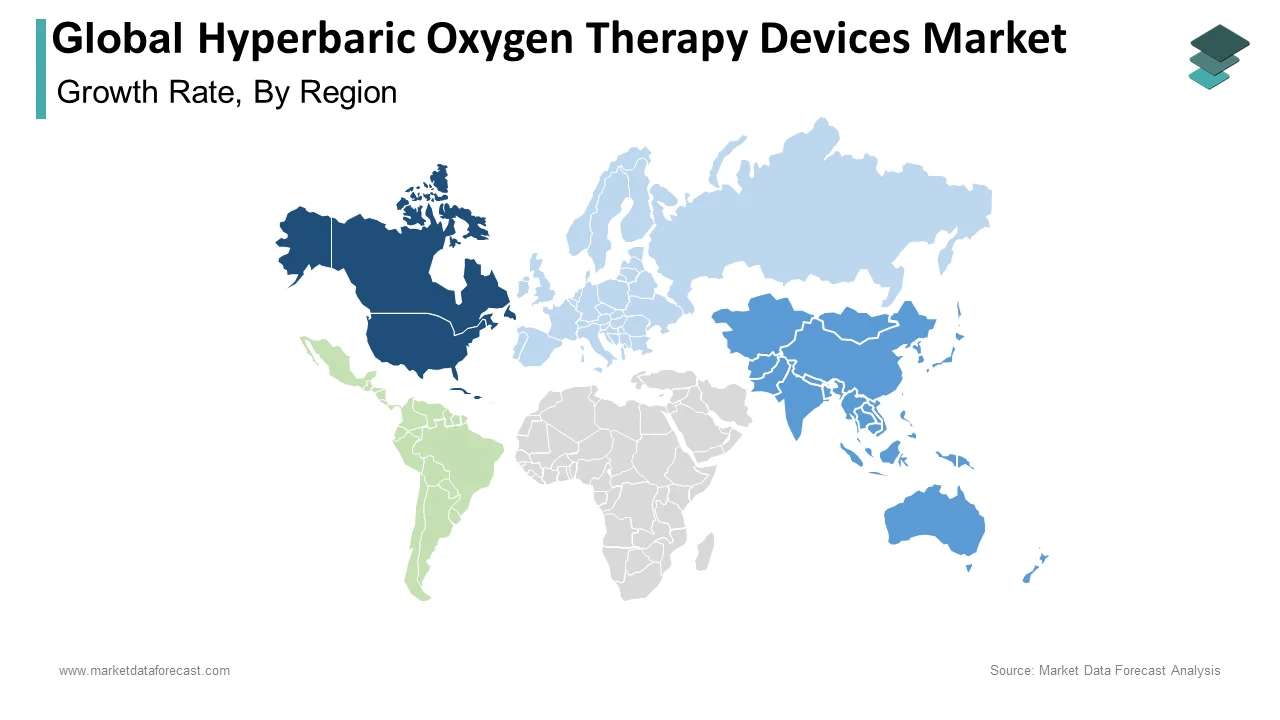
- North America dominated the global market in 2025 by accounting for 40.3% share, driven by advanced healthcare infrastructure, high adoption of hyperbaric oxygen therapy, favorable reimbursement policies, and a growing burden of chronic wound conditions.
- Europe held the second-largest position with 30.3% share in 2025, supported by universal healthcare systems that prioritize access to critical care interventions, including hyperbaric oxygen therapy for approved medical indications.
- Asia-Pacific is projected to register the fastest growth during the forecast period, expanding at a CAGR of 9.5% from 2026 to 2034, driven by rising healthcare investments, increasing prevalence of chronic diseases, expanding hospital infrastructure, and growing awareness of advanced wound care technologies.
Competitive Landscape
The global hyperbaric oxygen therapy devices market is characterized by the presence of specialized medical device manufacturers focusing on technological innovation, patient safety, and expanded therapeutic applications. Market participants are investing in advanced chamber designs, automated control systems, and improved treatment efficiency to strengthen their market position. Strategic collaborations, product innovation, and geographic expansion continue to shape the competitive landscape.
Prominent companies operating in the global hyperbaric oxygen therapy devices market include HAUX-LIFE-SUPPORT, HEARMEC, IHC Hytech B.V. (Royal IHC), Hyperbaric SAC, Sechrist Industries, Inc., Perry Baromedical Corporation, Gulf Coast Hyperbarics, Inc., Fink Engineering Pty Ltd, ETC Hyperbaric Chambers (Environmental Tectonics Corporation), OxyHeal International, and SOS Group Global Ltd.
Global Hyperbaric Oxygen Therapy Devices Market Size
The global hyperbaric oxygen therapy devices market was worth US$ 231 million in 2025 and is anticipated to reach US$ 436 million by 2034, up from US$ 247.86 million in 2026, with a CAGR of 7.3% during the forecast period 2026 to 2034.
Hyperbaric oxygen therapy is the administration of 100% oxygen at pressures greater than sea-level atmospheric pressure within a sealed chamber environment. This therapeutic modality significantly increases the amount of oxygen dissolved in blood plasma by enabling delivery to tissues with compromised circulation or impaired oxygen utilization. The clinical application of this technology spans multiple medical disciplines including wound care, infectious disease management, and radiation injury treatment. According to the Undersea and Hyperbaric Medical Society, there are currently 14 approved indications for hyperbaric oxygen therapy ranging from diabetic foot ulcers to carbon monoxide poisoning. Clinical data published in major medical journals demonstrate that hyperbaric oxygen therapy enhances angiogenesis and promotes collagen synthesis in chronic wounds, leading to healing rates exceeding 70% in selected patient populations. The technology requires precise control of pressure levels typically ranging from 2.0 to 3.0 atmospheres absolute to ensure therapeutic efficacy while minimizing risks, such as barotrauma or oxygen toxicity. Modern hyperbaric chambers incorporate advanced monitoring systems that track vital signs and gas concentrations in real time. The integration of hyperbaric therapy into multidisciplinary care pathways has expanded its acceptance among mainstream healthcare providers seeking adjunctive treatments for complex conditions.
MARKET DRIVERS
Rising Prevalence of Diabetic Foot Ulcers Drives Demand for Hyperbaric Therapy
The escalating global burden of diabetes mellitus is driving increased adoption of hyperbaric oxygen therapy devices in wound care settings, accelerating the growth of the hyperbaric oxygen therapy devices market. These chronic wounds carry a high risk of infection and amputation, with lower extremity amputations occurring in up to 20% of severe cases within five years of ulcer onset. Conventional wound care methods often fail to achieve complete healing in ischemic tissues, creating an urgent need for adjunctive therapies that enhance oxygen delivery. Clinical trials published in reputable medical journals indicate that hyperbaric oxygen therapy reduces the risk of major amputation by 50% in patients with Wagner grade 3 or higher diabetic foot ulcers. The World Health Organization reports that the number of adults with diabetes has risen from 108 million in 1980 to 422 million in recent years, reflecting a massive expansion of the potential patient pool. Aging populations in developed nations further exacerbate this trend as older individuals exhibit slower wound healing capabilities and higher susceptibility to vascular complications. Healthcare systems increasingly recognize the cost-effectiveness of hyperbaric therapy when considering the substantial expenses associated with long-term wound management and surgical interventions. Regulatory approvals from health authorities in multiple countries have expanded reimbursement coverage for hyperbaric therapy in diabetic wound care, removing financial barriers for patients.
Increasing Incidence of Radiation Tissue Injuries Fuels Market Growth
The growing number of cancer survivors experiencing late effects of radiation therapy constitutes another factor boosting growth of the hyperbaric oxygen therapy devices market. Conditions, such as radiation cystitis, proctitis, and osteoradionecrosis, cause chronic pain, bleeding, and tissue necrosis that severely impact quality of life. Standard medical interventions often provide only symptomatic relief without addressing the underlying hypoxic pathology of irradiated tissues. Clinical evidence demonstrates that hyperbaric oxygen therapy stimulates neovascularization and restores tissue viability in radiation-damaged areas. The National Cancer Institute reports that over 18 million cancer survivors live in the United States alone, with numbers projected to reach 26 million by 2040. This expanding survivor population creates a sustained demand for treatments managing long-term radiation sequelae. European oncology centers increasingly integrate hyperbaric therapy into survivorship care plans, recognizing its role in mitigating chronic complications. The development of standardized treatment protocols involving 40 to 60 sessions ensures consistent clinical outcomes across different institutions. Patient advocacy groups actively promote awareness of hyperbaric therapy benefits, driving referrals from oncologists and urologists. Insurance coverage expansions in several countries now include radiation tissue injury as an approved indication, facilitating broader access to treatment.
MARKET RESTRAINTS
High Capital Investment and Operational Costs Restrict Market Penetration
The substantial financial requirements associated with establishing and maintaining facilities are hindering the growth of the hyperbaric oxygen therapy devices market. A single multiplace hyperbaric chamber typically costs between 500000 euros and 1000000 euros depending on capacity and technological features, according to some data. These expenses encompass specialized construction requirements including reinforced flooring, fire suppression systems, and dedicated ventilation infrastructure to ensure safety compliance. Operational costs remain elevated due to the need for continuous monitoring by certified hyperbaric technicians and physicians during each treatment session. Many healthcare facilities operate under constrained budgets that limit investment in niche therapeutic modalities without guaranteed high patient volumes. Reimbursement policies vary significantly across regions, with some insurance providers classifying hyperbaric therapy as experimental for certain indications. Smaller community hospitals frequently lack the patient volume necessary to justify the capital expenditure, forcing reliance on regional referral centers. This centralization creates accessibility disparities, particularly in rural areas where transport times may exceed practical limits for daily treatment schedules. Healthcare administrators face difficult prioritization decisions when allocating limited resources among competing technological needs.
Limited Awareness Among Healthcare Providers Hinders Referral Patterns
The insufficient knowledge regarding appropriate indications and clinical benefits among general practitioners and specialists is severely declining the growth of the hyperbaric oxygen therapy devices market. This knowledge gap results in underutilization of available services despite proven efficacy for specific conditions. Medical school curricula rarely include comprehensive training on hyperbaric medicine, leaving new graduates unfamiliar with its therapeutic applications. The American Academy of Family Physicians acknowledges that hyperbaric therapy remains outside the standard repertoire of many family practitioners who manage chronic wound patients. Specialist physicians such as endocrinologists and oncologists may not consider hyperbaric referral until conventional treatments have failed completely, delaying optimal intervention timing. Continuing medical education programs focusing on hyperbaric medicine are limited in availability and attendance, perpetuating the cycle of low awareness. Regional medical societies report that referral rates for hyperbaric evaluation remain disproportionately low relative to the prevalence of eligible conditions. The complexity of coordinating care between hyperbaric centers and referring physicians creates logistical barriers that discourage routine utilization. Electronic health record systems often lack integrated decision support tools prompting hyperbaric consultation for relevant diagnoses. Professional isolation among hyperbaric specialists limits opportunities for interdisciplinary collaboration and knowledge sharing.
MARKET OPPORTUNITIES
Expansion Into Neurological Rehabilitation Creates New Growth Avenues
The emerging application of hyperbaric oxygen therapy in neurological rehabilitation is certainly to create new opportunities for the growth of the hyperbaric oxygen therapy devices market. Recent clinical studies suggest that hyperbaric oxygen may enhance neuroplasticity and cognitive function in patients suffering from traumatic brain injury and stroke. According to research published in peer-reviewed neuroscience journals, hyperbaric oxygen therapy improves cerebral blood flow and reduces inflammation in injured brain tissue, leading to measurable improvements in memory and attention scores. Veterans Affairs hospitals have pioneered protocols using hyperbaric therapy for post-traumatic stress disorder and mild traumatic brain injury, demonstrating promising outcomes in symptom reduction. Hyperbaric oxygen therapy administered within specific time windows post-stroke shows potential for limiting infarct size and preserving neurological function. Private rehabilitation centers increasingly incorporate hyperbaric chambers into multimodal therapy programs for neurological recovery. Regulatory bodies in several countries are reviewing evidence for expanded approval of neurological indications, which could unlock new reimbursement pathways. Technological advancements allowing for lower pressure protocols improve safety profiles for fragile neurological patients.
Integration With Regenerative Medicine Enhances Therapeutic Synergies
The emergence of hyperbaric oxygen therapy with regenerative medicine techniques for improving clinical outcomes in tissue repair and reconstruction is also to drive the growth of the hyperbaric oxygen therapy devices market. Hyperbaric oxygen preconditioning has been shown to enhance the survival and engraftment of stem cells used in various reconstructive procedures. Plastic surgeons increasingly utilize hyperbaric therapy prior to free flap transfers to optimize tissue viability and reduce complication rates. Sports medicine clinics employ hyperbaric oxygen to accelerate recovery from musculoskeletal injuries, leveraging its anti-inflammatory and angiogenic properties. Professional athletic teams maintain onsite hyperbaric chambers to facilitate rapid return to play following soft tissue trauma. The cosmetic surgery sector explores hyperbaric protocols to enhance healing after facial rejuvenation procedures, appealing to patients seeking minimal downtime. Pharmaceutical companies investigate combination therapies pairing hyperbaric oxygen with biologics for enhanced wound healing efficacy. Clinical trials evaluating hyperbaric-assisted cartilage repair show promising results for osteoarthritis management. These synergistic applications expand the utility of hyperbaric devices beyond standalone therapy, creating new revenue streams for manufacturers.
MARKET CHALLENGES
Risk of Barotrauma and Oxygen Toxicity Poses Safety Concerns
Managing the inherent physiological risks associated with hyperbaric oxygen exposure represents one of the most challenging aspects of clinical practice, directly impacting patient safety and liability. The risk of barotrauma and oxygen toxicity poses safety concerns is one of the major challenges for the growth of hyperbaric oxygen therapy devices. Middle ear barotrauma occurs in approximately 10% to 20% of hyperbaric treatment sessions according to safety data from hyperbaric medical societies. This condition results from an inability to equalize pressure in the middle ear during compression phases, causing pain and potential tympanic membrane rupture. Pulmonary oxygen toxicity manifests as seizures or respiratory distress when patients breathe 100% oxygen at elevated pressures for prolonged durations. The Undersea and Hyperbaric Medical Society recommends strict adherence to exposure limits to minimize these risks, yet individual variability in tolerance complicates protocol standardization. Fire hazards within hyperbaric environments require rigorous safety protocols including elimination of synthetic materials and static electricity control. Accidental decompression incidents, though rare, carry catastrophic consequences including arterial gas embolism. Training requirements for hyperbaric staff remain extensive and costly, with certification needing renewal every two years. Malpractice insurance premiums for hyperbaric facilities exceed those for standard outpatient clinics due to perceived higher risk profiles. Regulatory inspections occur frequently to ensure compliance with safety standards, imposing administrative burdens on operators. These multifaceted safety challenges necessitate vigilant monitoring and emergency preparedness, limiting broader adoption of hyperbaric therapy in settings lacking specialized expertise.
Lack of Robust Clinical Evidence for Off-Label Uses Limits Reimbursement
The absence of large-scale randomized controlled trials validating hyperbaric oxygen therapy for numerous off-label indications restricts insurance coverage, which also limits the growth of the hyperbaric oxygen therapy devices market. While 14 indications hold formal approval, hundreds of other conditions lack sufficient evidence to secure reimbursement from major payers. According to the study, over 60% of hyperbaric treatments administered globally fall outside approved indications, creating financial uncertainty for providers. Conditions such as autism spectrum disorder, Lyme disease, and chronic fatigue syndrome attract patient interest but lack consensus among medical authorities regarding efficacy. The Centers for Medicare and Medicaid Services maintain strict coverage criteria, denying claims for unproven applications despite anecdotal success stories. Private insurers often follow federal guidelines, leaving patients responsible for out-of-pocket costs averaging 200 to 400 dollars per session. This financial burden limits access to affluent demographics, skewing patient demographics and limiting generalizability of outcome data. Academic researchers face funding challenges when studying niche indications due to limited commercial interest from pharmaceutical sponsors. Publication bias favors positive results, obscuring the true effectiveness of hyperbaric therapy for controversial indications. Professional societies struggle to develop unified guidelines amidst conflicting study outcomes. Legal disputes arise when patients pursue uncompensated care expecting results not guaranteed by evidence.
REPORT COVERAGE
| REPORT METRIC | DETAILS |
| Market Size Available | 2025 to 2034 |
| Base Year | 2025 |
| Forecast Period | 2026 to 2034 |
| Segments Covered | By Product, Application, End-user, and Region. |
| Various Analyses Covered | Global, Regional and Country-Level Analysis, Segment-Level Analysis, Drivers, Restraints, Opportunities, Challenges; PESTLE Analysis; Porter’s Five Forces Analysis, Competitive Landscape, Analyst Overview of Investment Opportunities |
| Regions Covered | North America, Europe, Asia Pacific, Latin America, Middle East & Africa |
| Market Leaders Profiled | HAUX-LIFE-SUPPORT, HEARMEC, IHC Hytech B.V. (Royal IHC), Hyperbaric SAC, Sechrist Industries, Inc., Gulf Coast Hyperbarics, Inc., Fink Engineering, ETC Hyperbaric Chambers (Environmental Tectonics Corporation), OxyHeal International and SOS Group Global Ltd. |
SEGMENTAL ANALYSIS
By Product Insights
The monoplace chamber segment was the largest by holding 37.5% of the hyperbaric oxygen therapy devices market share in 2025 due to its cost efficiency and ease of installation in diverse clinical settings. These single-patient units require significantly less floor space compared to multiplace alternatives, making them ideal for outpatient clinics and private practices with limited real estate. The operational simplicity allows a single technician to manage the entire treatment process, reducing labor costs by up to 40% per session. The absence of the need for complex gas mixing systems simplifies maintenance protocols and lowers the risk of mechanical failure. Patient privacy is enhanced in monoplace units, which appeals to individuals seeking discreet treatment for conditions such as cosmetic recovery or mild traumatic brain injury. Insurance reimbursement structures often favor monoplace treatments due to lower procedural codes, encouraging providers to invest in this technology. The modular design of modern monoplace chambers enables rapid deployment in temporary medical facilities during health crises. These economic and logistical advantages sustain the dominant position of the monoplace segment in the global market landscape.

The multiplace chamber segment is projected to expand at a CAGR of 7.8% throughout the forecast period owing to the increasing demand for high-volume treatment capabilities in major academic medical centers and specialized hyperbaric hospitals. Unlike monoplace units, multiplace chambers can accommodate multiple patients simultaneously along with attending medical staff, enabling the management of critically ill individuals requiring continuous monitoring. The ability to treat emergency cases such as carbon monoxide poisoning or decompression sickness alongside scheduled wound care patients enhances operational flexibility. European hyperbaric networks prioritize multiplace installations to serve as regional referral hubs, driving procurement in countries with centralized healthcare systems. The integration of advanced life support equipment inside multiplace chambers allows for complex interventions such as intravenous medication administration during pressurization. Government funding for trauma centers often mandates multiplace capabilities to handle mass casualty incidents involving gas embolism or smoke inhalation. Technological advancements in large chamber safety systems, including redundant pressure controls and fire suppression, have improved reliability perceptions.
By Application Insights
The chronic wounds application segment held a dominant share of the hyperbaric oxygen therapy market in 2025 owing to the high prevalence of non-healing ulcers associated with diabetes and vascular insufficiency. Standard wound care fails to heal up to 30% of these ulcers, creating a substantial demand for adjunctive therapies like hyperbaric oxygen. Clinical guidelines from the American Diabetes Association recommend hyperbaric therapy for Wagner grade 3 or higher ulcers, establishing a clear pathway for patient referrals. Survival rates for limbs treated with hyperbaric oxygen improve significantly, with amputation risks reduced by nearly 50% in controlled studies. The aging global population exacerbates the burden of chronic wounds, as elderly patients exhibit slower cellular regeneration and compromised immune responses. Healthcare payers increasingly recognize the cost savings associated with preventing amputations, leading to expanded coverage policies for hyperbaric wound care. Specialized wound care centers integrate hyperbaric chambers into multidisciplinary treatment plans by ensuring consistent patient access. The chronic nature of these conditions requires extended treatment courses, generating recurring revenue streams for device operators.
The decompression sickness application segment is likely to exhibit the fastest CAGR of 8.2% from 2026 to 2034 owing to the booming recreational diving industry and increased commercial underwater operations globally. The incidence of decompression sickness remains a constant risk, necessitating immediate access to hyperbaric recompression therapy. Coastal tourism hubs in Asia Pacific and the Caribbean are investing heavily in hyperbaric infrastructure to protect tourist safety and maintain industry reputation. Commercial offshore wind farm construction requires specialized diving teams who rely on onsite hyperbaric chambers for emergency response. Regulatory mandates in several countries require diving operators to have access to hyperbaric facilities within specific timeframes, driving institutional procurement. The development of portable and mobile hyperbaric units facilitates rapid deployment to remote diving sites, enhancing accessibility. Insurance providers for diving operations increasingly mandate hyperbaric coverage, creating financial incentives for facility establishment.
REGIONAL ANALYSIS
North America Hyperbaric Oxygen Therapy Devices Market Analysis
North America was the largest contributor in the hyperbaric oxygen therapy devices market by holding 40.3% of the share in 2025. The United States hyperbaric oxygen therapy devices market is likely to grow with the extensive healthcare infrastructure, favorable reimbursement policies, and high awareness of hyperbaric indications. Private insurance penetration further expands access to hyperbaric therapy for commercially insured patients. The presence of major device manufacturers in the region ensures continuous innovation and rapid product availability. Academic medical centers serve as training hubs for hyperbaric specialists, with robust certification programs operated by national boards. High prevalence of diabetes and obesity in the population creates a large base of patients requiring chronic wound care. Legal frameworks supporting malpractice protection for hyperbaric providers encourage practice establishment.
Europe Hyperbaric Oxygen Therapy Devices Market Analysis
Europe hyperbaric oxygen therapy market was next, capturing 30.3% of the share in 2025, prioritizing access to critical care interventions including hyperbaric therapy for approved indications. National health services in these countries provide standardized reimbursement for hyperbaric therapy, ensuring financial sustainability for participating institutions. The European Union facilitates cross-border collaboration through research consortia focused on optimizing hyperbaric protocols and outcomes. Training certification programs aligned with international standards ensure consistent quality of care across member states. The region exhibits high adoption rates for multiplace chambers in public hospitals by enabling efficient treatment of emergency cases. Public health initiatives addressing diabetes and cancer survivorship create steady demand for hyperbaric interventions. Regulatory harmonization through European medical device regulations streamlines approval processes for new hyperbaric technologies.
Asia Pacific Hyperbaric Oxygen Therapy Devices Market Analysis
The Asia Pacific hyperbaric oxygen therapy devices market is growing at an anticipated CAGR of 9.5% from 2026 to 2034. China, Japan, and South Korea drive this growth through increasing healthcare investments and rising prevalence of chronic diseases. The hyperbaric facility counts in Asia Pacific have doubled over the past five years, reflecting rapid capacity expansion. Japan leads in technological innovation, with domestic manufacturers developing compact hyperbaric systems tailored for local healthcare settings. China implements national policies promoting critical care infrastructure development, resulting in hundreds of new hyperbaric-capable hospitals. South Korea demonstrates high utilization rates for cosmetic and sports medicine applications, driving demand for premium monoplace chambers. The region benefits from growing medical tourism, attracting international patients seeking advanced hyperbaric therapy at competitive costs. Government initiatives in India and Southeast Asian nations focus on training hyperbaric specialists to address workforce shortages. Local manufacturing capabilities reduce equipment costs, improving affordability for public hospitals. Cultural acceptance of alternative and adjunctive therapies influences patient willingness to undergo hyperbaric treatment.
Latin America Hyperbaric Oxygen Therapy Devices Market Analysis
Latin America hyperbaric oxygen therapy market growth is driven by improving healthcare infrastructure in major economies. Public healthcare systems in these countries face budget constraints that limit widespread hyperbaric availability, concentrating services in tertiary referral centers. Private insurance penetration in urban areas enables access to advanced hyperbaric therapy for affluent patient segments. Medical associations actively promote hyperbaric training programs to build local expertise and reduce dependence on international specialists. The region benefits from technology transfers through partnerships with North American and European device manufacturers. Economic volatility impacts procurement cycles, causing fluctuations in equipment purchase volumes. Nevertheless, long-term trends indicate increasing recognition of hyperbaric value in managing severe wounds and radiation injuries. Regional conferences facilitate knowledge sharing among Latin American hyperbaric physicians, fostering best practice adoption.
Middle East and Africa Hyperbaric Oxygen Therapy Devices Market Analysis
The Middle East and Africa hyperbaric oxygen therapy market growth is propelled by the uneven distribution of resources and capabilities. Gulf Cooperation Council countries, including Saudi Arabia and the United Arab Emirates, lead in hyperbaric adoption by leveraging substantial healthcare budgets to establish world-class facilities. These nations import advanced hyperbaric systems primarily from European and North American manufacturers. High prevalence of diabetes and cardiovascular diseases creates demand for advanced wound care interventions. Public-private partnerships facilitate technology transfer and specialist training programs in these wealthy nations. Conversely, sub-Saharan Africa faces significant barriers to hyperbaric implementation due to limited infrastructure and funding constraints. Only a handful of tertiary centers in South Africa and Kenya possess hyperbaric capabilities, serving small patient populations. International aid organizations occasionally donate hyperbaric equipment, but the lack of trained personnel limits utilization. Regional medical societies advocate for increased investment in critical care training to build sustainable hyperbaric programs. Telemedicine collaborations with European centers provide remote guidance for complex cases.
COMPETITIVE LANDSCAPE
The competitive landscape of the hyperbaric oxygen therapy devices market features established manufacturers competing through technological innovation and clinical evidence generation. Market participants differentiate themselves by offering specialized features such as enhanced patient comfort, advanced safety controls, and integrated monitoring systems. The barrier to entry remains moderate due to stringent regulatory requirements for pressure vessel certification and medical device approval. Companies engage in aggressive marketing campaigns targeting wound care specialists and hyperbaric physicians to establish brand loyalty and preference among key decision-makers. Pricing strategies vary significantly between premium branded systems and cost-effective alternatives from emerging manufacturers in Asia. Collaboration with healthcare providers for post-market surveillance helps companies refine product designs and address real-world usage challenges. Intellectual property protection plays a vital role as firms secure patents for novel chamber designs and control mechanisms. Service and support quality becomes a differentiator as hospitals prioritize reliable maintenance and rapid technical assistance for life equipment. Competitive intensity increases as more players enter the portable and home-based hyperbaric segment, driving continuous improvement in device accessibility and ease of use.
KEY MARKET PARTICIPANTS
A few of the companies playing a promising role in the global hyperbaric oxygen therapy devices market profiled in this report are
- HAUX-LIFE-SUPPORT
- HEARMEC
- IHC Hytech B.V. (Royal IHC)
- Hyperbaric SAC
- Sechrist Industries, Inc.
- Perry Baromedical Corporation
- Gulf Coast Hyperbarics, Inc.
- Fink Engineering Pty Ltd
- ETC Hyperbaric Chambers (Environmental Tectonics Corporation)
- OxyHeal International
- SOS Group Global Ltd.
TOP PLAYERS IN THE MARKET
- Sechrist Industries maintains a prominent position in the global hyperbaric oxygen therapy market through its extensive portfolio of monoplace and multiplace chambers. The company focuses on manufacturing durable and reliable equipment that meets stringent safety standards for clinical use worldwide. Sechrist recently introduced advanced control systems that enhance patient comfort and streamline operator workflows during treatment sessions. Their strategic partnerships with healthcare distributors ensure broad availability of replacement parts and technical support services. The company actively participates in international medical conferences to showcase innovations in chamber design and safety features. Sechrist emphasizes continuous improvement in material science to extend the lifespan of pressure vessels while reducing maintenance requirements. Their commitment to regulatory compliance facilitates smooth market entry in diverse geographical regions, including North America and Europe. Training programs for biomedical technicians help hospitals maintain optimal equipment performance and safety protocols.
- Perry Baromedical Corporation contributes significantly to the hyperbaric oxygen therapy market by offering customizable chamber solutions tailored to specific clinical needs. The company specializes in both hard shell and soft shell designs, providing flexibility for various healthcare settings from large hospitals to private clinics. Perry recently launched next-generation monitoring interfaces that integrate seamlessly with electronic health records for improved data management. Their focus on user-friendly designs simplifies operation for medical staff by reducing the learning curve associated with complex hyperbaric equipment. The company engages in collaborative research with academic institutions to validate clinical outcomes and refine treatment protocols. Perry strengthens its market presence through robust after-sales support networks that ensure rapid response to service requests. Investment in sustainable manufacturing practices aligns with global environmental standards while maintaining product quality. The company also develops specialized accessories such as intravenous poles and communication systems to enhance patient care inside chambers. These initiatives demonstrate Perry's dedication to innovation and customer satisfaction in the competitive hyperbaric therapy landscape.
- Fink Engineering Pty Ltd stands as a key player in the hyperbaric oxygen therapy devices market with its expertise in high-pressure engineering and safety systems. The Australian-based company manufactures robust multi-place chambers widely used in diving medicine and critical care applications globally. Fink recently expanded its product line to include modular hyperbaric facilities that can be rapidly deployed in remote locations or disaster zones. Their engineering prowess ensures compliance with rigorous international standards for pressure vessel construction and operational safety. The company collaborates with naval and offshore industries to develop specialized chambers for commercial diving operations. Fink invests heavily in research and development to improve gas mixing efficiency and reduce energy consumption in large-scale systems. Their global service network provides comprehensive maintenance and certification services to ensure long-term equipment reliability. The company also offers customized training programs for hyperbaric technicians and medical personnel.
TOP STRATEGIES USED BY KEY MARKET PARTICIPANTS
Key players in the hyperbaric oxygen therapy devices market primarily focus on product innovation and technological enhancement to differentiate their offerings. Companies invest in developing smart chambers with integrated monitoring systems that improve patient safety and operational efficiency. Strategic partnerships with healthcare providers enable firms to conduct clinical trials and gather real-world evidence supporting therapeutic efficacy. Expansion into emerging markets represents another crucial strategy as companies seek to capitalize on growing healthcare infrastructure in Asia Pacific and Latin America. Manufacturers prioritize regulatory approvals in multiple jurisdictions to ensure broad market access and compliance with international safety standards. Training and education initiatives form an integral part of corporate strategies to address workforce shortages and build local expertise in hyperbaric medicine. Mergers and acquisitions allow larger corporations to integrate complementary technologies and expand their product portfolios comprehensively.
MARKET SEGMENTATION
This research report on the global hyperbaric oxygen therapy devices market has been segmented and sub-segmented based on product, application, and region.
By Product
- Monoplace HBOT Devices
- Multiplace HBOT Devices
- Topical HBOT Devices
By Application
- Wound Healing
- Type
- Chronic Wounds
- Acute Wounds
- Type
- Decompression Sickness
- Others
By End-User
- Hospitals
- Home Care
- Others
By Region
- North America
- Europe
- Asia Pacific
- Latin America
- The Middle East and Africa