- Product Description Description
- Table of Contents TOC
- List of Table & Figure LOT
- Get Free Sample PDF Sample PDF
Market Size, 2025
$2.08 BnMarket Estimate, 2026
$2.59 BnMarket Forecast, 2034
$14.78 BnCAGR, 2026–2034
24.34%Executive Summary: Latin America Cannabidiol Market
- Market Scope: Comprehensive regional analysis of the Latin America cannabidiol (CBD) market covering source types, distribution channels, end-use segments, and country leadership frameworks.
- Market Valuation: Valued at USD 2.08 billion (2025), estimated at USD 2.59 billion (2026), and projected to reach USD 14.78 billion by 2034, registering a robust CAGR of 24.34% (2026–2034).
- Primary Growth Drivers: Growing awareness of CBD health benefits (chronic pain, anxiety relief, sleep improvement), medical cannabis legalization across various Latin American countries, rising e-commerce trade, and consumer preference for natural and organic ingredients.
Key Market Segment Metrics (2026–2034)
| Category | Leading Segment (Base Position) | Fastest-Growing Segment |
|---|---|---|
| By Source / Type | Hemp and Marijuana-Derived Cannabidiol Product Lines | Natural Organic Hemp-Sourced CBD Formulations |
| By Distribution Channel | B2C Retail Stores and Hospital Pharmacies | Online Retail and E-Commerce Platforms |
| By End Use | Medical Applications (Chronic Pain, Mental Disorders, Cancer) and Personal Use | Pharmaceuticals, Wellness, Food & Beverages, and Personal Care & Cosmetics |
| By Region / Country | Brazil (expected to lead the Latin American market during the forecast period) | Mexico (estimated to grow the fastest, supported by legal frameworks and a massive consumer base) |
Major Market Players & Market Structure
Market Structure: Emerging regional market characterized by growing corporate investments, evolving legal frameworks, and expanded product portfolios spanning medical and wellness segments.
Key Companies: Pharmahemp d.o.o, ENDOCA, NuLeaf Naturals LLC, Folium Biosciences, Elixinol, Cannoid LLC, Medical Marijuana Inc., and Isodiol International Inc.
 Download Free Sample Report
Latin America Cannabidiol Market Size
The size of the Latin America cannabidiol market was valued at USD 2.08 billion in 2025. This market is expected to grow at a CAGR of 24.34% from 2026 to 2034 and be worth USD 14.78 billion by 2034, from USD 2.59 billion in 2026.
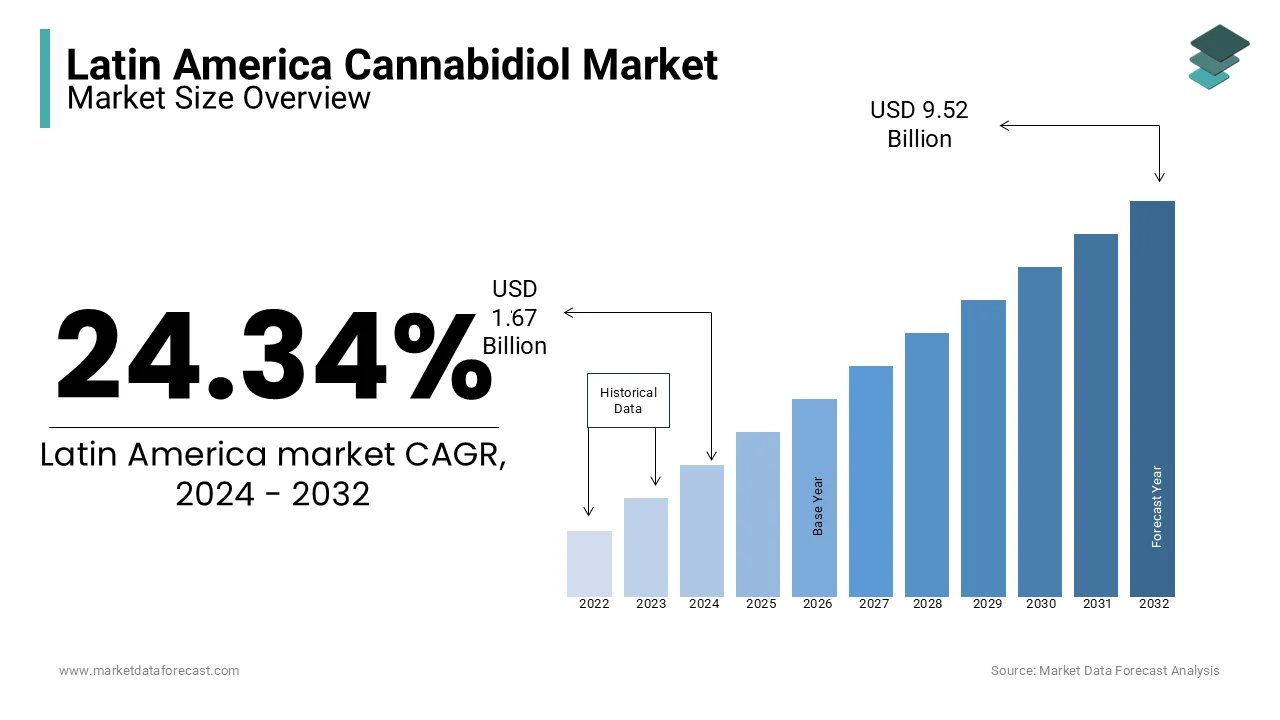
Cannabidiol is derived from the cannabis plant containing high levels of cannabidiol and negligible tetrahydrocannabinol, and is used for medical wellness and cosmetic applications. Cannabidiol products include oils, capsules, topicals, and edibles, distributed through pharmacies, online platforms, and specialized clinics. Regulatory frameworks vary significantly among nations, influencing cultivation licensing and product approval processes. Stakeholders prioritize quality assurance and standardization to ensure safety and efficacy for consumers.
MARKET DRIVERS
Increasing Prevalence of Chronic Diseases
The growing prevalence of chronic diseases is creating urgent demand for effective management strategies, which is fuelling the growth of the Latin America cannabidiol market. The clinical trials have demonstrated that cannabidiol reduces seizure frequency by 40 % in patients with drug-resistant epilepsy, thereby encouraging neurologists to prescribe it as an adjunct therapy, as per the study. This medical validation drives insurance coverage expansions and formalizes prescription practices in countries like Brazil and Colombia. Patients seek relief from side effects associated with conventional pharmaceuticals, leading them to explore plant-based alternatives. Aging populations further amplify the need for pain management solutions that do not cause addiction or cognitive impairment. Healthcare providers increasingly recognize the anti-inflammatory properties of cannabidiol for treating autoimmune disorders.
Regulatory Liberalization and Legalization
Regulatory liberalization and legalization are removing legal barriers to cultivation, production, and sale, which encourages investment and formalizes supply chains, additionally propelling the growth of the Latin American cannabidiol market. Several member states have enacted laws permitting medical cannabis use, which creates a favorable legal environment for industry expansion. These policy shifts attract foreign direct investment from multinational pharmaceutical companies seeking low-cost manufacturing hubs with ideal climatic conditions. Governments establish regulatory agencies to oversee quality control and product registration, ensuring consumer safety. Legal clarity reduces operational risks for entrepreneurs and investors, fostering innovation in product development. Cross-border trade agreements facilitate the movement of raw materials and finished goods within the region. This supportive legislative framework transforms cannabidiol from an illicit substance into a legitimate commercial commodity. It enables scalable business models and professionalizes the industry.
MARKET RESTRAINTS
Social Stigma and Cultural Perception
The social stigma and cultural perception associate cannabis products with illicit drug use and recreational abuse, which is limiting the growth of the Latin American cannabidiol market. According to the survey, over 60 % of respondents in several countries view cannabis negatively due to historical links with crime and addiction, thereby creating resistance to its acceptance as a legitimate medicine. Healthcare providers often hesitate to recommend cannabidiol due to fear of professional judgment or lack of training in endocannabinoid system pharmacology, which limits patient access to evidence-based treatments. This misconception persists even in nations where medical use is legal, causing patients to self-medicate with unregulated products of unknown quality. Family members may oppose treatment plans involving cannabis derivatives, leading to poor adherence. Media portrayals often emphasize negative aspects rather than therapeutic potential, reinforcing public skepticism. Educational campaigns struggle to overcome deep-seated cultural biases rooted in decades of prohibitionist policies.
Inconsistent Regulatory Frameworks
The inconsistent regulatory frameworks are creating a fragmented legal landscape, where rules vary drastically between neighboring countries, which is also limiting the growth of the Latin America Cannabidiol Market. The differing requirements for tetrahydrocannabinol limits, labeling standards, and testing protocols force companies to maintain separate production lines for each area, thereby increasing operational costs and reducing economies of scale. Exporters face delays at customs due to unclear documentation requirements or sudden policy changes in destination countries. Lack of harmonization prevents the establishment of regional quality standards, which undermines consumer confidence in product safety. Small businesses struggle to navigate complex bureaucratic processes requiring legal expertise they cannot afford. Uncertainty regarding future legislation makes long-term planning difficult for investors.
MARKET OPPORTUNITIES
Expansion of Export Countries
Expansion of export areas by leveraging the region's ideal agricultural conditions and lower production costs to supply high-quality raw materials and finished products to global demand centers, which is solely to create new opportunities for the growth of the Latin American cannabidiol market. Latin America possesses some of the most suitable climates for outdoor cannabis cultivation, allowing for year-round harvests and significantly lower energy costs compared to indoor facilities in North America or Europe. This competitive advantage attracts international partnerships and joint ventures with major pharmaceutical firms. Governments support export-oriented strategies to generate foreign exchange and create jobs. Investment in processing infrastructure enables value addition before shipment, enhancing profit margins. Certification programs align local standards with international requirements, facilitating market access. This global orientation diversifies revenue streams beyond domestic limitations.
Development of Novel Product Formulations
Development of novel product formulations is addressing diverse consumer preferences and specific therapeutic needs through innovative delivery methods, which is another factor in expanding the growth of the Latin American cannabidiol market. According to the International Journal of Pharmaceutics, nano-encapsulated cannabidiol demonstrates 5 times higher bioavailability than traditional oil tinctures, which allows for lower dosing and faster onset of action, appealing to patients seeking efficient relief. Pharmaceutical companies invest in research to create targeted releases for conditions like insomnia or acute pain. Edible formats such as gummies and chocolates attract younger demographics avoiding the taste of oils. Regulatory approvals for new formulations expand the addressable patient population. This product diversification enhances user experience and adherence.
MARKET CHALLENGES
Quality Control and Standardization Issues
Quality control and standardization issues are resulting in inconsistent product potency and contamination risks that undermine patient safety and trust in branded offerings. These issues pose a major barrier to the growth of the Latin American cannabidiol market. Lack of mandatory third-party testing in many jurisdictions allows substandard products to enter the market freely, leading to therapeutic failure or adverse health events for vulnerable patients. This variability makes it difficult for physicians to prescribe accurate doses and monitor treatment outcomes effectively. Consumers struggle to distinguish between reputable brands and counterfeit goods sold online. Negative experiences damage the overall reputation of the industry, slowing adoption rates. Manufacturers face difficulties in sourcing consistent raw materials from small-scale farmers lacking technical expertise. Regulatory bodies struggle to enforce standards due to limited resources and oversight capabilities. This quality gap creates a barrier to mainstream medical acceptance. It necessitates urgent investment in laboratory infrastructure and strict enforcement mechanisms.
Limited Clinical Research and Data
Limited clinical research and data challenge scientific evidence regarding long-term safety, efficacy, and optimal dosing for various medical conditions specific to regional populations. This factor also impedes the growth of the Latin American cannabidiol market. Healthcare providers often rely on extrapolated data from foreign studies that may not account for genetic, metabolic or environmental differences, affecting drug response in Latin American patients. This evidence deficit leads to conservative prescribing practices and hesitation among insurance companies to cover treatments. Patients may experiment with unsafe dosages due to lack of professional guidance. Academic institutions lack funding for large-scale trials, delaying scientific advancement. Regulatory approvals are slower without robust local data supporting safety claims. This knowledge gap prevents the optimization of therapeutic protocols.
SEGMENTAL ANALYSIS
By Type Insights
The hemp segment accounted for 26.8% of the Latin America Cannabidiol Market share in 2025 due to its legal status in many countries and lower regulatory barriers compared to marijuana derived products, which facilitates easier cultivation and commercialization. As per the study, over 70 % of cannabidiol products currently available in Latin American pharmacies are derived from hemp extracts because they contain negligible levels of tetrahydrocannabinol, thereby avoiding strict narcotic controls and simplifying import-export procedures. The ability to produce high volumes of biomass at lower costs, which translates to affordable end products for consumers. Regulatory frameworks in countries like Chile and Argentina specifically distinguish hemp from psychoactive cannabis by allowing for streamlined licensing processes. International demand for hemp-based isolates further boosts local production capacities. The versatility of hemp allows for extraction of cannabidiol for use in wellness cosmetics and food supplements, which have broader consumer acceptance than medical formulations.
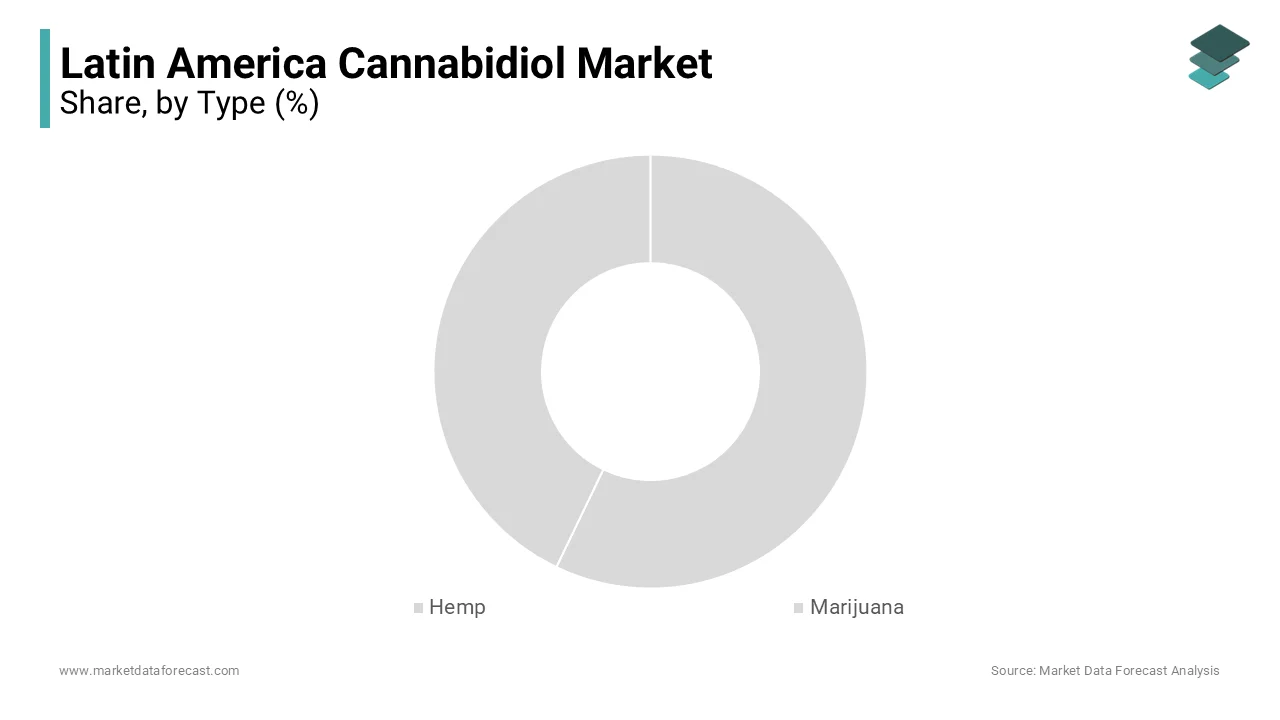
The marijuana segment is anticipated to register the fastest CAGR of 9.9% from 2026 to 2034 with the increasing medical legalization and the recognition of the entourage effect, where full spectrum extracts offer superior therapeutic benefits for severe conditions. Several member nations have expanded medical cannabis programs to include high tetrahydrocannabinol strains for patients with refractory epilepsy and cancer pain, which has increased the demand for marijuana derived cannabidiol oils. The rapid expansion of the segment is fueled by government-issued licenses for domestic cultivation and processing, which reduce reliance on expensive imports. Patients with chronic conditions seek these potent formulations when standard treatments fail. Regulatory agencies are establishing strict quality control standards for marijuana products, ensuring safety and consistency. Research institutions are conducting trials to validate efficacy for specific indications, attracting investment. The higher price point of marijuana derived products contributes to revenue growth despite lower volume compared to hemp.
By Distribution Channel Insights
The B2C online segment held a dominant share of the Latin America Cannabidiol Market in 2025 due to the convenience, privacy, and wider product selection offered by digital platforms, which appeal to consumers seeking discreet access to wellness and medical products. Cannabidiol users prefer buying from online stores because they can access detailed product information, customer reviews, and educational resources that are often unavailable in physical retail settings. Digital marketing allows brands to target specific demographics effectively through social media and search engines. Home delivery services enhance convenience for patients with mobility issues or chronic pain. Competitive pricing and promotional discounts drive traffic to major e-commerce platforms. Secure payment gateways build trust among first-time buyers. The anonymity of online shopping reduces hesitation associated with cannabis products.
The hospital pharmacies segment is expected to grow at the fastest CAGR of 12.3% from 2026 to 2034 with the formal integration of medical cannabis into public healthcare systems and the requirement for physician prescriptions for high-potency therapeutic products. Several countries, including Brazil and Colombia, have mandated that public hospitals stock approved cannabidiol medications for treating rare diseases and severe epilepsy, which has led to a 45 % increase in institutional procurement volumes. Patients receiving cannabidiol through hospital pharmacies report higher adherence rates because the products are covered by insurance or government subsidies, reducing financial barriers to consistent treatment. This acceleration stems from the need for clinical oversight and dosage monitoring, which hospitals provide through specialized clinics. Physicians trust hospital-sourced products due to rigorous quality assurance and regulatory compliance. Partnerships between pharmaceutical companies and public health institutions ensure steady supply chains. Training programs for hospital staff improve prescribing confidence and patient education. The credibility of hospital channels enhances patient trust in the safety and efficacy of treatments. This trend aligns with efforts to professionalize the medical cannabis sector.
By End User Insights
The medical segment was the largest, holding 22.1% of the Latin America Cannabidiol Market in 2025, with strong clinical evidence supporting its efficacy for treating chronic pain, epilepsy, and multiple sclerosis, which drives prescription-based demand and insurance coverage. As per the study, clinical trials have demonstrated that cannabidiol reduces seizure frequency by 40% in patients with drug-resistant epilepsy, leading to formal approval and reimbursement in countries like Brazil and Argentina. Government health programs include cannabidiol in essential medicine lists, ensuring accessibility for low-income patients. Neurologists and pain specialists increasingly recommend it as part of multimodal therapy. Patient advocacy groups lobby for broader access, improving awareness and diagnosis rates. Pharmaceutical companies invest in standardized formulations meeting medical-grade requirements. The seriousness of medical conditions ensures consistent and high-volume usage compared to occasional wellness applications.
The wellness segment is likely to grow at the fastest CAGR of 8.6% from 2026 to 2034, with rising health consciousness and the incorporation of cannabidiol into daily self-care routines through foods, beverages, and cosmetics. The marketing campaigns normalize cannabidiol as a lifestyle ingredient rather than just a medicine. Retailers expand shelf space for CBD snacks, drinks, and topical creams in mainstream stores. Social media influencers promote wellness benefits, enhancing brand visibility. Lower regulatory hurdles for wellness products allow faster market entry compared to medical drugs. Consumers appreciate the mild effects and ease of use. This trend diversifies the customer base beyond patients to general health enthusiasts.
COUNTRY-LEVEL ANALYSIS
Brazil Cannabidiol Market Analysis
Brazil was the top performer in the Latin America Cannabidiol Market by holding 22.1% of the share in 2025, with its large population, extensive agricultural capacity, and progressive regulatory framework that permits the sale of imported and domestically produced medical cannabis products. As per the study, Brazil possesses ideal climatic conditions for hemp cultivation, which attracts significant foreign investment in processing facilities aiming to serve both domestic and export markets. The national health surveillance agency has established clear guidelines for product registration, ensuring quality and safety. Public debates continue regarding domestic cultivation, but current import models sustain market growth. Large pharmaceutical distributors integrate cannabidiol into their portfolios, expanding reach. Patient associations actively engage with regulators to improve access.

Mexico Cannabidiol Market Analysis
Mexico cannabidiol market was positioned second, with a 15.4% share in 2025, following recent legislative reforms that decriminalized personal use and paved the way for a regulated medical and adult-use industry. As per the study, the removal of criminal penalties for possession has reduced stigma and encouraged open discussion about therapeutic benefits, leading to increased consumer interest in cannabidiol products. International companies are forming joint ventures with local firms to prepare for market opening. The large proximity to the United States facilitates technology transfer and best practice adoption. Domestic demand for pain management and anxiety relief drives early market activity. Regulatory delays persist, but momentum is building.
Argentina Cannabidiol Market Analysis
Argentina cannabidiol market growth is driven by federal laws that authorize domestic cultivation for medical and scientific purposes and establish a national registry for patients. As per the study, local laboratories have begun producing standardized cannabidiol oils, reducing dependency on imports and lowering costs for patients. The government supports research initiatives to validate efficacy for various conditions. Provincial governments implement complementary programs expanding access. Economic challenges affect purchasing power, but public provision mitigates this. A strong scientific community advocates for evidence-based practices.
Chile Cannabidiol Market Analysis
Chile cannabidiol market is expected to grow with the early legalization of medical cannabis and a robust export-oriented industry that supplies high-quality products to international countries. The country has issued numerous licenses for cannabis cultivation focusing on good agricultural practices, which ensures premium quality extracts for global pharmaceutical partners. Chile is one of the few countries in the region with established export channels for medical cannabis, contributing significantly to foreign exchange earnings and industry professionalism. Domestic access is facilitated through pharmacies with medical prescriptions. Regulatory stability attracts long-term investment. Research centers collaborate with universities to study new applications.
COMPETITIVE LANDSCAPE
The competitive landscape of the Latin America Cannabidiol Market features a mix of multinational corporations, local agricultural firms, and specialized biotechnology companies vying for influence through production efficiency and regulatory compliance. Global players leverage their financial resources and technical expertise to establish large-scale cultivation and processing facilities that meet international export standards. These corporations emphasize quality assurance and brand recognition to secure partnerships with pharmaceutical distributors and healthcare providers. Local competitors focus on navigating complex domestic regulations and building relationships with government agencies to obtain necessary licenses. Key participants increasingly invest in research and development to create proprietary formulations and novel delivery methods. Collaboration with academic institutions serves as a primary strategy to validate clinical efficacy and support regulatory approvals. Price competition intensifies for bulk raw materials, while differentiation in consumer products relies on branding and marketing.
KEY MARKET PLAYERS
The leading companies operating in the Latin America cannabidiol market include:
- Pharmahemp o.o.
- ENDOCA
- NuLeaf Naturals LLC
- Folium Biosciences
- Elixinol
- Cannoid LLC
- Emblem
- Khiron Holdings
- Canopy Growth Corporation
- Medical Marijuana
- Isodiol International
TOP PLAYERS IN THE MARKET
- Khiron Holdings Corp strengthens its position in the Latin America Cannabidiol Market through strategic partnerships with local cultivators and distributors to ensure a reliable supply of high-quality medical cannabis products. The company recently expanded its operational footprint in Colombia and Brazil by securing additional cultivation licenses and establishing processing facilities that adhere to international Good Manufacturing Practice standards. Their focus on exporting premium extracts to global markets enhances revenue diversity while supporting domestic availability. Educational initiatives for healthcare providers improve prescribing confidence and patient access. This integrated approach addresses supply chain complexities and regulatory hurdles effectively.
- Canopy Growth Corporation contributes significantly to the Latin America Cannabidiol Market by leveraging its global expertise and capital to establish large-scale production facilities in key countries like Colombia and Peru. The organization has formed joint ventures with local entities to navigate regulatory landscapes and accelerate product commercialization for both medical and wellness segments. Recent initiatives include launching branded cannabidiol oils and topicals in major pharmacy chains, which increases brand visibility and consumer trust. Their investment in advanced extraction technologies ensures consistent potency and purity, meeting stringent international standards. Strategic alliances with pharmaceutical distributors facilitate broader market reach. Canopy focuses on cost leadership through efficient agricultural practices. This comprehensive strategy combines global scale with local adaptation to differentiate offerings.
- Emblem Corp reinforces its presence in the Latin American Cannabidiol Market through its subsidiary operations in Colombia, where it produces and exports medical-grade cannabis products to regulated international countries. The company recently upgraded its processing infrastructure to increase oil capacity and dried flower production, ensuring consistent supply for export contracts. Their strategic focus on compliance and quality assurance builds strong relationships with global pharmaceutical partners seeking reliable sourcing options. Emblem actively participates in industry associations to advocate for favorable regulatory frameworks and standardization. Investment in sustainable farming practices appeals to environmentally conscious stakeholders. Technical training for local staff enhances operational efficiency and product quality.
MARKET SEGMENTATION
This Latin America cannabidiol market research report is segmented and sub-segmented into the following categories.
By Type
- Hemp
- Marijuana
By Distribution Channel
- B2B
- B2C
- Hospital Pharmacies
- Online
- Retail Stores
By End Users
- Medical
- Chronic Pain
- Mental Disorders
- Cancer
- Others
- Personal Use
- Pharmaceuticals
- Wellness
- Food & Beverages
- Personal Care & Cosmetics
- Nutraceuticals
- Others
By Country
- Brazil
- Mexico
- Argentina
- Chile
- Rest of Latin America