- Product Description Description
- Table of Contents TOC
- List of Table & Figure LOT
- Get Free Sample PDF Sample PDF
Market Size, 2025
$1.07 BnMarket Estimate, 2026
$1.46 BnMarket Forecast, 2034
$18.07 BnCAGR, 2026–2034
36.9%Executive Summary: North America Cannabidiol (CBD) Market
- Market Scope: Comprehensive market analysis of the North American cannabidiol industry covering product types (Hemp and Marijuana), diverse distribution channels, extensive end-user segments (medical, personal use, pharmaceuticals, wellness, food & beverages, personal care & cosmetics, nutraceuticals), and country-level dynamics across the United States, Canada, and Mexico.
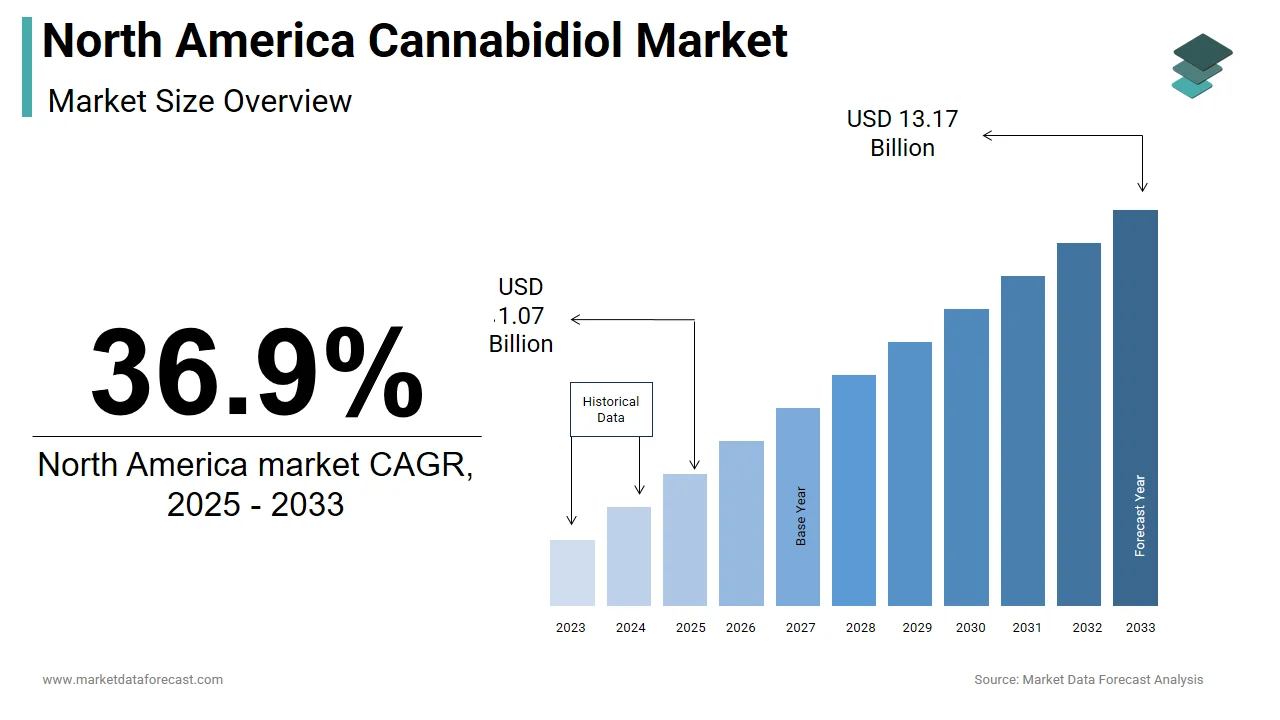
- Market Valuation: Valued at USD 1.07 billion in 2025, estimated at USD 1.46 billion in 2026, and projected to reach USD 18.07 billion by 2034, registering an extraordinary CAGR of 36.9% (2026–2034).
- Primary Growth Drivers: Rising demand for CBD in healthcare, fitness, and pain management; increasing manufacturing advancements and product innovations (skincare, edibles, nutraceuticals); growing consumer health awareness; and progressive legalization frameworks across the region.
Key Market Segment Metrics (2026–2034)
| Category | Leading Segment / Position | Growth Dynamics |
|---|---|---|
| By Type | Hemp & Marijuana (Hemp-derived CBD commands widespread commercial traction due to looser regulatory frameworks and non-psychoactive wellness adoption) | Driven by legal expansions and diverse formulation types |
| By Distribution Channel | B2C, B2B, Hospital Pharmacies, Online, and Retail Stores (Online and retail stores serve as primary consumer touchpoints) | Rapid digital marketplace expansion |
| By End Users | Medical (Chronic Pain, Mental Disorders, Cancer) & Personal Use / Wellness (Food & Beverages, Personal Care & Cosmetics, Nutraceuticals) | Accelerating demand for natural sports nutrition and anti-aging skincare |
| By Country | United States (holds the maximum regional market share backed by state-level medical laws, high adoption for arthritis pain, and robust consumer surveys) | Canada follows closely with strict regulatory compliance managed via Health Canada licenses. |
Major Market Players & Market Structure
Market Structure: Highly dynamic and rapidly scaling marketplace featuring specialized cannabinoid producers, wellness brands, and pharmaceutical innovators navigating complex multi-jurisdictional regulatory frameworks.
Key Companies: Pharmahemp d.o.o., ENDOCA, NuLeaf Naturals LLC, Folium Biosciences, Elixinol, Cannoid LLC, Medical Marijuana Inc., and Isodiol International Inc.
 Download Free Sample Report
North America Cannabidiol Market Size
The size of the North America cannabidiol market was worth USD 1.07 billion in 2025. The North America market is anticipated to grow at a CAGR of 36.9% from 2026 to 2034 and be worth USD 18.07 billion by 2034, up from USD 1.46 billion in 2026.
Cannabidiol is a non-psychoactive cannabinoid compound derived from industrial hemp and cannabis plants for therapeutic, wellness, and personal care applications. As per a recent study, the overall valuation trajectory is underpinned by a massive consumer base, where over 60% of adults across the United States have tried or regularly incorporated cannabinoid formulations into their daily routines. According to the study, over 50 million adults across North America experience chronic joint discomfort or severe daily stress, establishing an expansive demographic foundation actively seeking alternative plant-based remedies. Furthermore, data published by the U.S. Department of Agriculture indicates that industrial hemp cultivation permits have expanded across dozens of state jurisdictions over recent agricultural cycles, providing a stable domestic biomass supply for commercial extraction processors.
MARKET DRIVERS
Surging Consumer Demand for Natural Therapeutics
The rising preference for alternative plant-based remedies to manage chronic pain and psychological stress is propelling the growth of the North America cannabidiol market. The escalating consumer inclination toward holistic wellness solutions creates an intense demand for non-synthetic compounds capable of alleviating inflammatory symptoms and anxiety without pharmaceutical side effects. American adults actively pursue natural or herbal remedies as a primary preventive healthcare measure. This health-conscious consumer behavior relates directly to the North America cannabidiol market by expanding the retail buyer pool for oils, tinctures, and topical lotions infused with cannabinoid extracts. Consequently, this cultural pivot toward organic self-care fuels continuous product innovation and retail expansion for brands operating within the wellness sector.
Evolution of E-Commerce and Omnichannel Retail Networks
The digital platform proliferation is accelerating direct-to-consumer product accessibility and brand visibility that is also amplifying the growth of the North America cannabidiol market. The rapid expansion of specialized online storefronts and digital delivery networks provides manufacturers with unprecedented reach into geographically diverse consumer demographics. According to the U.S. Census Bureau, total electronic commerce retail sales surpass 1 trillion dollars annually, demonstrating deeply entrenched digital purchasing habits among modern consumers. This technological retail shift connects directly to the North American cannabidiol market by bypassing traditional brick-and-mortar distribution restrictions and enabling brands to ship direct-to-consumer across compliant state lines. As a result, robust digital infrastructure empowers emerging cannabinoid enterprises to scale operations efficiently and capture high-margin direct sales.
MARKET RESTRAINTS
Regulatory Ambiguity and Fragmented State Compliance Frameworks
The complex, overlapping federal and municipal statutes for interstate commerce are restraining the growth of the North American cannabidiol market. The absence of a unified federal regulatory standard governing cannabinoid product safety, labeling, and distribution introduces immense compliance hurdles for commercial manufacturers and retail operators. According to the National Conference of State Legislatures, over 30 states maintain distinct regulatory definitions regarding the allowable delta-9 tetrahydrocannabinol thresholds and permitted retail formats for hemp-derived goods. This legislative fragmentation relates directly to the North American cannabidiol market by restricting seamless interstate shipping and forcing companies to navigate costly state-by-state licensing procedures. Additionally, data from the U.S. Food and Drug Administration shows that warning letters regarding unverified therapeutic claims have been issued to hundreds of commercial distributors over recent fiscal years. Consequently, regulatory uncertainty suppresses institutional investment and complicates nationwide supply chain scaling for mainstream consumer goods corporations.
Paucity of Standardized Clinical Quality Assurance Protocols
The prevalence of variable product potency and inconsistent manufacturing standards undermining consumer trust is another factor declining the growth of the North American cannabidiol market. The rapid proliferation of unverified market entrants manufacturing low-grade cannabinoid extracts creates widespread quality discrepancies that threaten consumer confidence and brand credibility. This manufacturing inconsistency connects directly to the North American cannabidiol market by eroding buyer trust and causing aware consumers to abandon trial purchases of wellness tinctures. Furthermore, statistics compiled by the National Institutes of Health indicate that standardized dosing guidelines remain absent for over-the-counter cannabinoid applications, complicating clinical recommendations. Therefore, the lack of rigorous, uniform quality control protocols restricts widespread medical endorsement and slows long-term market maturation.
MARKET OPPORTUNITIES
Mainstream Retail Integration and Big-Box Distribution
Major national pharmacy and supermarket chains incorporating cannabinoid formulations into standard inventory array, which is substantially to leverage new opportunities for the growth of the North American cannabidiol market. The progressive acceptance of non-intoxicating wellness goods by mainstream brick-and-mortar retail giants opens transformative avenues for product visibility and consumer acquisition. This mainstream retail shift benefits the North American cannabidiol market by placing topical balms and ingestible wellness items directly onto high-traffic shelves alongside traditional over-the-counter health products. As per the research, placement in certified pharmacy outlets increases first-time consumer purchase confidence by 45%.
Emergence of Specialized Veterinary Wellness Formulations
Expanding pet owner demographic demand for specialized cannabinoid therapies targeting companion animal ailments. The cultural elevation of domestic pets into family member status sparks a lucrative new product frontier centered on cannabinoid-infused wellness solutions for aging or anxious animals. According to the American Pet Products Association, total annual pet care expenditures across North America exceed 140 billion dollars, reflecting exceptional consumer willingness to invest in specialized animal healthcare. This lifestyle trend relates directly to the North America cannabidiol market by generating a high-margin sub-sector of chews, oils, and topical balms formulated specifically to alleviate canine joint stiffness and separation anxiety. Therefore, the booming pet wellness economy provides manufacturers with a reliable diversification avenue independent of human demographic fluctuations.
MARKET CHALLENGES
Persistent Social Stigma and Misinformation Barriers
The widespread consumer misconceptions linking non-psychoactive hemp extracts to illicit cannabis narcotics is a major challenge for the growth of the North American cannabidiol market. Deep-seated cultural prejudices and confusion regarding the chemical distinctions between intoxicating cannabis variants and therapeutic hemp extracts continue to deter conservative consumer segments. This psychological barrier relates directly to the North American cannabidiol market by permanently capping penetration rates within older demographic cohorts and socially conservative communities. Furthermore, data published by the National Center on Addiction and Substance Abuse reveals that public education deficits regarding legal hemp versus illegal marijuana cost the botanical industry billions in unrealized sales potential annually.
Banking and Financial Services Exclusion Risks
The federal financial regulations denying standard merchant processing accounts to verified cannabinoid enterprises are also a major barrier to the growth of the North American cannabidiol market. The classification of cannabis-related ventures under legacy federal banking laws creates severe liquidity bottlenecks and operational vulnerabilities for legitimate industrial hemp enterprises. According to the study, more than 40% of small-scale agricultural processing startups report recurring difficulties in maintaining stable commercial checking accounts and merchant processing lines. This financial constraint connects directly to the North American cannabidiol market by forcing operators to rely on expensive cash-handling procedures or high-fee alternative payment gateways that compress operating margins. Additionally, data from the Credit Research Foundation shows that commercial lending interest rates for legal hemp enterprises are higher than standard manufacturing sectors due to perceived regulatory risk.
REPORT COVERAGE
| REPORT METRIC | DETAILS |
| Market Size Available | 2025 to 2034 |
| Base Year | 2025 |
| Forecast Period | 2026 to 2034 |
| Segments Covered | By Type, Distribution Channel, End Users, and Region. |
| Various Analyses Covered | Global, Regional and Country-Level Analysis, Segment-Level Analysis, Drivers, Restraints, Opportunities, Challenges; PESTLE Analysis; Porter’s Five Forces Analysis, Competitive Landscape, Analyst Overview of Investment Opportunities |
| Countries Covered | United States, Canada, Mexico, and the Rest of North America. |
| Market Leaders Profiled | Pharmahemp d.o.O, ENDOCA, Curaleaf Holdings, NuLeaf Naturals LLC, Folium Biosciences, Elixinol, Cannoid LLC, Tilray Brands, Medical Marijuana Inc., Charlotte's Web Holdings, and Isodiol International Inc. |
SEGMENTAL ANALYSIS
By Type Insights
The hemp segment was the largest, holding 23.1% of the North American cannabidiol market share in 2025, with its naturally high concentration of non-psychoactive compounds satisfying federal agricultural allowances and broad consumer safety standards. Supplying manufacturers with compliant, low-tetrahydrocannabinol biomass necessary for producing mainstream wellness tinctures and topicals is boosting the growth of the segment. Furthermore, data published by the U.S. Department of Agriculture indicates that domestic industrial hemp production spans hundreds of thousands of acres, ensuring a stable raw material pipeline for commercial processors.
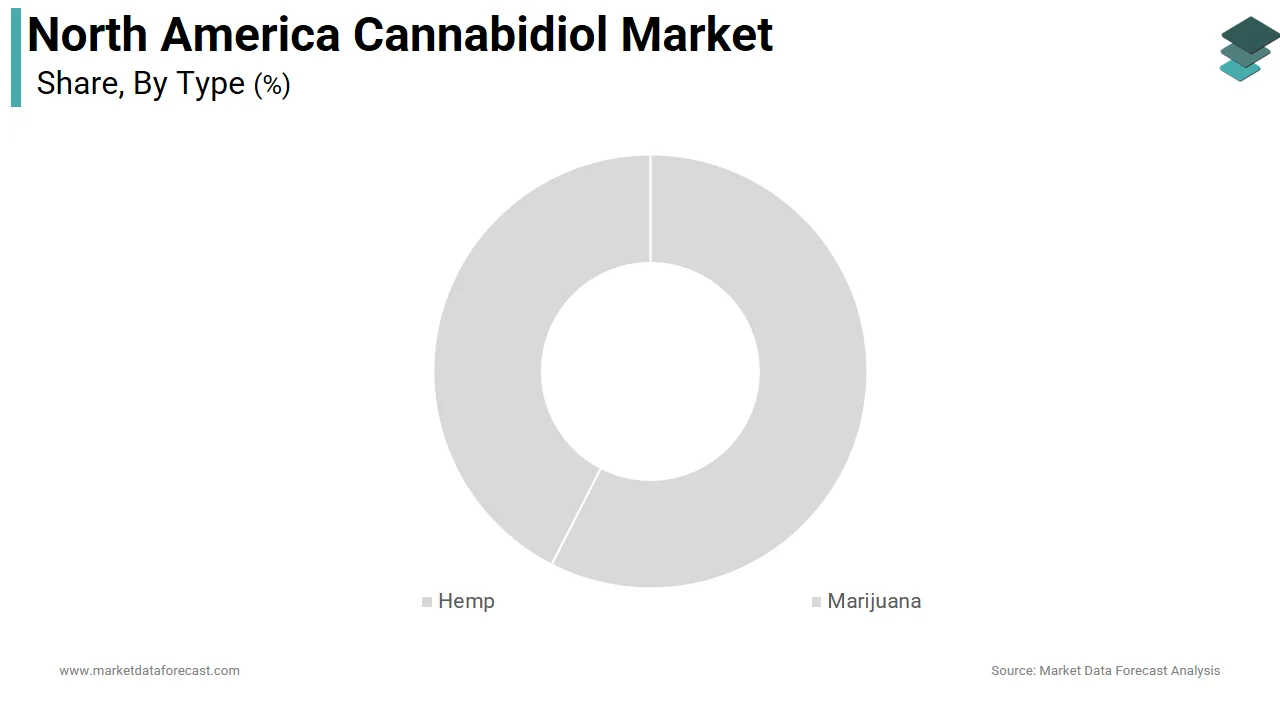
The marijuana segment is likely to foster the fastest CAGR of 8.2% from 2026 to 2034 with the expanding state-level medical legalization and rising consumer preference for full-spectrum therapeutic formulations. Marijuana-derived cannabinoid products register an accelerated compound annual growth rate due to high consumer demand for potent medicinal extracts containing balanced ratios of active cannabinoids. This rapid expansion is driven by catering to patients seeking advanced relief for chronic pain, neurological conditions, and severe inflammatory disorders.
By End Users Insights
The wellness segment was the largest, holding 42.1% of the North America cannabidiol market share in 2025, as millions of consumers integrate non-psychoactive botanical extracts into daily self-care routines for stress management and general health maintenance. The wellness applications capture the lion's share of consumer expenditure because infused oils, dietary gummies, and topical cosmetics offer accessible, non-prescription entry points for everyday users. This is shifting commercial product development toward lifestyle-oriented goods rather than strictly pharmaceutical formulations. Additionally, North American consumers actively prioritize holistic functional foods and natural supplements in their grocery budgets.
The pharmaceuticals segment growth is likely to witness the fastest CAGR of 11.8% during the forecast period, with the intensive clinical trials and rigorous federal drug approvals for specialized neurological therapies. The pharmaceutical sector expands at a leading compound annual growth rate as researchers validate purified cannabinoid efficacy for treating rare pediatric epilepsy syndromes and severe treatment-resistant disorders. Furthermore, data from the National Institutes of Health show that clinical research funding dedicated to cannabinoid pharmacology has doubled over recent fiscal cycles, resulting in dozens of active phase-three human trials.
By Distribution Channel Insights
The business-to-business segment accounted for 36.1% of the North America cannabidiol market share in 2025, with the robust bulk commodity trading and raw material supply agreements. According to the study, the business-to-business sector dominates because ingredient suppliers secure high-volume wholesale contracts with consumer product manufacturers crafting infused cosmetics, beverages, and nutraceuticals. This dominant positioning relates directly to the North America cannabidiol market by establishing an efficient supply chain infrastructure that feeds refined distillate and isolate into downstream retail products. Additionally, data published by the National Association of Manufacturers shows that industrial B2B supply transactions in the botanical processing sector have scaled to meet surging consumer product demand.
The online retail segment is anticipated to grow at the fastest CAGR of 12.3% during the forecast period, with the direct-to-consumer digital storefront platforms and subscription e-commerce models. The online channels achieve peak growth velocities because digital platforms allow brands to bypass geographic retail restrictions and deliver specialty wellness goods directly to consumer doorsteps. This accelerated digital expansion connects directly to providing discrete purchasing options and extensive educational content that builds consumer confidence.
REGIONAL ANALYSIS
U.S. Cannabidiol Market Analysis
The United States was the largest contributor, holding 74.8% of the North America cannabidiol market share in 2025, with progressive agricultural legislation and deeply entrenched consumer wellness trends. According to the U.S. Department of Agriculture, federal recognition of industrial hemp under agricultural legislation unlocked billions of dollars in domestic farming and commercial processing investments. This established a massive domestic testing ground, where major retail chains and specialized brands scale operations nationwide. Additionally, data from the U.S. Food and Drug Administration notes that surging consumer demand for clinically validated botanical extracts continues to shape national safety and labeling standards.

Canada Cannabidiol Market Analysis
Canada cannabidiol market was positioned second by holding a 9.1% share in 2025, with the federally legalized medical and recreational frameworks governed strictly by federal health agencies. National regulatory oversight ensures that commercial cannabis cultivators adhere to pharmaceutical-grade manufacturing standards, fostering exceptional product safety and consumer trust. Furthermore, statistics published by Statistics Canada indicate that legal cannabis and derivative product sales contribute billions of dollars annually to the national gross domestic product.
COMPETITIVE LANDSCAPE
Competition within the regional North America cannabidiol market remains intensely fierce, characterized by continuous product innovation and aggressive pricing pressures among established multi-state operators and agile independent brands. Industry incumbents constantly vie for dominance by racing to commercialize high-purity isolate oils and full-spectrum extracts that satisfy tightening consumer safety and quality reporting standards. While legacy botanical enterprises leverage their deep-rooted agricultural supply chains and vast financial reserves to scale regional operations, nimble startup competitors frequently introduce creative functional product formats that challenge traditional market hierarchies. Regulatory uncertainty remains a persistent competitive hurdle, forcing enterprises to balance expensive laboratory testing expenditures and administrative compliance costs against the tight budgetary limits of budget-conscious shoppers. Strategic retail consolidation, cross-border asset acquisitions, and intensive collaborative ventures with mainstream consumer goods distributors further define the competitive battlefield as firms strive to secure exclusive access to next-generation wellness channels.
KEY MARKET PLAYERS
The leading companies operating in the North American cannabidiol market include:
- Pharmahemp d.o. O.
- ENDOCA
- Curaleaf Holdings
- NuLeaf Naturals LLC
- Folium Biosciences
- Elixinol
- Cannoid LLC
- Tilray Brands
- Medical Marijuana Inc.
- Charlotte's Web Holdings
- Isodiol International Inc.
TOP PLAYERS IN THE MARKET
- Curaleaf Holdings acts as a preeminent botanical enterprise contributing extensively to the North American cannabidiol market through the nationwide distribution of high-purity wellness tinctures, topicals, and hemp-derived consumer products. The corporation maintains deep involvement across the commercial sector by managing an extensive retail dispensary footprint and operating sophisticated indoor cultivation facilities that guarantee consistent extract quality. To strengthen its competitive standing, the organization channels substantial financial resources into compliance infrastructure, scientific research, and cross-border product portfolio expansion.
- Charlotte's Web Holdings shapes the regional health sector by specializing in the large-scale production of hemp-derived botanical extracts, dietary supplements, and specialized wellness capsules. The enterprise contributes significantly to consumer adoption by delivering rigorously tested cannabinoid formulations that support everyday stress relief and physical recovery without synthetic additives. Recent corporate actions involve expanding strategic retail partnerships with national grocery chains and refining online direct-to-consumer delivery networks to ensure seamless product availability across diverse state jurisdictions.
- Tilray Brands delivers exceptional value to the North American health and wellness sector by engineering diverse lifestyle beverage, functional food, and topical cannabinoid product lines. The company contributes profoundly to sustainable market growth by leveraging advanced manufacturing facilities and robust quality assurance protocols that satisfy strict regulatory expectations. Strengthening its market presence, Tilray Brands continuously advances its brand portfolio through targeted commercial acquisitions and product diversification initiatives designed to capture emerging lifestyle demographics. Strategic maneuvers emphasize aggressive distribution scaling and localized manufacturing alignments aimed at streamlining supply pipelines for modern consumers navigating natural wellness trends.
TOP STRATEGIES USED BY KEY MARKET PARTICIPANTS
Key participants operating within the North American cannabidiol market deploy aggressive multi-channel distribution strategies to maintain competitive dominance amid rapidly evolving regulatory frameworks. Leading botanical extract developers prioritize heavy capital investments in research and development to engineer specialized minor cannabinoid formulations and advanced delivery mechanisms that maximize bioavailability. Furthermore, major industry players aggressively forge strategic retail partnerships with national pharmacy chains and grocery conglomerates to secure high-visibility shelf space across metropolitan consumer zones. Companies also utilize active brand diversification by introducing specialized pet wellness items and functional beverage lines to capture emerging demographic preferences.
MARKET SEGMENTATION
This research report on the North America cannabidiol market is segmented and sub-segmented into the following categories.
By Type
- Hemp
- Marijuana
By Distribution Channel
-
B2B
-
B2C
- Hospital Pharmacies
- Online
- Retail Stores
By End Users
-
Medical
- Chronic Pain
- Mental Disorders
- Cancer
- Others
- Personal Use
- Pharmaceuticals
- Wellness
- Food & Beverages
- Personal Care & Cosmetics
- Nutraceuticals
- Others
By Country
- United States
- Canada
- Mexico
- Rest of North America