- Product Description Description
- Table of Contents TOC
- List of Table & Figure LOT
- Get Free Sample PDF Sample PDF
Market Size, 2025
$8.38 BnMarket Estimate, 2026
$10.24 BnMarket Forecast, 2034
$51.03 BnCAGR, 2026–2034
22.23%Executive Summary: North America Medical Cannabis Market
- Market Scope: Comprehensive market analysis of the North American medical cannabis industry covering product types (flowers/buds, oils, concentrates, edibles, topicals, etc.), chemical derivatives (CBD, THC, balanced profiles, CBG, CBN), plant species, sources, therapeutic applications (pain management, epilepsy, cancer, mental health disorders), administration routes, end users, distribution channels, and country-level landscapes across the United States and Canada.
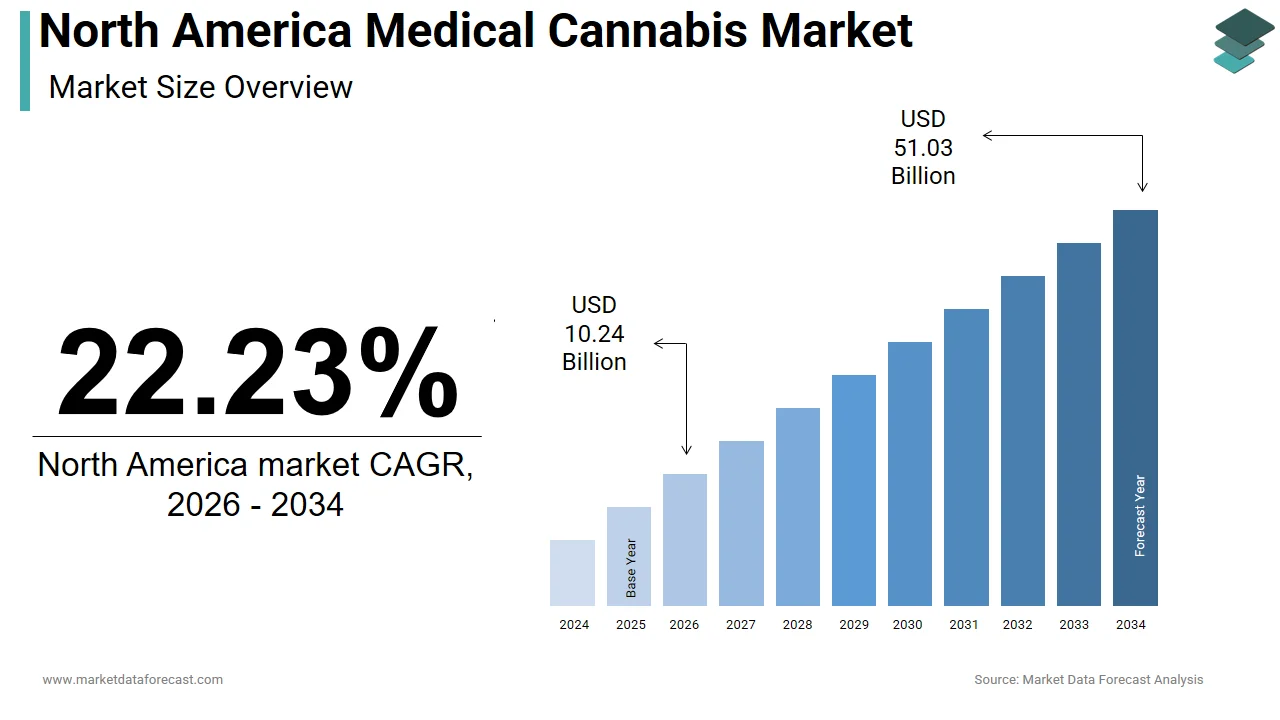
- Market Valuation: Valued at USD 8.38 billion in 2025, estimated at USD 10.24 billion in 2026, and projected to reach USD 51.03 billion by 2034, registering a robust CAGR of 22.23% (2026–2034).
- Primary Growth Drivers: Evolving public perception and clinical acceptance shifting medical cannabis from a stigmatized substance to a legitimate therapeutic tool; progressive state and federal legalization creating transparent, regulated market frameworks; and expanding patient enrollment for chronic pain, epilepsy, and anxiety management.
Key Market Segment Metrics (2026–2034)
| Category | Leading Segment / Position | Growth Dynamics |
|---|---|---|
| By Derivative | Cannabidiol (CBD) & Tetrahydrocannabinol (THC) (CBD leads non-psychoactive wellness and neurological therapeutic formulations) | High demand for balanced CBD/THC ratios in clinical applications |
| By Application | Pain Management & Neurological Disorders (dominant due to high prescription and patient reliance for chronic, neuropathic, and inflammatory pain) | Rapid expansion in mental health applications (anxiety, PTSD, depression) |
| By Route of Administration | Oral Solutions, Capsules, Inhalation/Vaporizers, and Topicals | Growing preference for precise dosing formats like dissolvables and oils |
| By Country | United States (holds the largest market position driven by state-level medical authorizations and a massive patient base) | Canada exhibits strong and steady growth backed by a federal regulatory framework and insurance coverage. |
Major Market Players & Market Structure
Market Structure: Highly regulated and competitive landscape featuring licensed cultivators, pharmaceutical innovators, and specialized medical distribution networks expanding product portfolios and clinical research.
Key Companies: BOL Pharma, Tilray, Medreleaf Corporation, Aurora Cannabis, Inc., Canopy Growth Corporation, Insys Therapeutics, Inc., Aphria, Inc., MGC Pharmaceuticals Limited, and GW Pharmaceuticals, plc.
North America Medical Cannabis Market Size
The North America medical cannabis market was valued at USD 8.38 billion in 2025. The market is estimated at USD 10.24 billion in 2026 and is projected to reach USD 51.03 billion by 2034, growing at a CAGR of 22.23% from 2026 to 2034.
The North American medical cannabis market operates within a complex regulatory framework, where federal restrictions often conflict with state or provincial legalization efforts. According to the Centers for Disease Control and Prevention, approximately 51 million adults in the United States live with chronic pain, creating a substantial patient base seeking alternative treatments. According to Health Canada, over 500,000 individuals hold valid medical cannabis authorizations, demonstrating significant institutional acceptance in the northern region. These statistics underscore the critical role of medical cannabis in addressing unmet healthcare needs across the continent. Physicians increasingly recognize cannabinoids as viable adjunctive therapies, reducing reliance on opioids and other high-risk medications. The market encompasses diverse product formats, including oils, edibles, and dried flower, catering to varied patient preferences and medical requirements. Regulatory bodies continue to refine quality standards, ensuring product safety and consistency for vulnerable populations. Scientific validation through clinical trials strengthens the credibility of medical cannabis applications in mainstream healthcare settings. Patient advocacy groups drive policy reforms, expanding access to affordable and regulated therapeutic options. The integration of medical cannabis into comprehensive care plans reflects a paradigm shift toward holistic pain management strategies.
MARKET DRIVERS
Rising Prevalence of Chronic Pain Conditions Fuels Demand
The rising incidence of chronic pain disorders across North America significantly propels the expansion of the North American medical cannabis market. According to the National Institutes of Health, chronic pain affects approximately 20% of US adults, which is limiting their daily activities and quality of life. Traditional opioid prescriptions have faced scrutiny due to addiction risks, prompting healthcare providers to seek safer alternatives for long-term pain management. Medical cannabis offers analgesic properties without the severe dependency issues associated with conventional narcotics. Clinical studies published in the Journal of Pain demonstrate that cannabinoids effectively reduce neuropathic pain intensity in patients with diabetic neuropathy and spinal cord injuries. The aging population contributes to higher prevalence rates of arthritis and degenerative joint diseases, requiring sustained symptom relief. Patients report improved sleep patterns and reduced inflammation after incorporating medical cannabis into their treatment regimens. Insurance coverage expansions in certain jurisdictions enhance affordability, encouraging broader patient participation. Telemedicine platforms facilitate easier access to medical cannabis prescriptions for rural residents facing transportation barriers. The destigmatization of cannabis use in medical contexts encourages open dialogue between patients and physicians regarding treatment options. Regulatory approvals for specific pain indications validate clinical efficacy, driving physician confidence in prescribing practices.
Legislative Reforms Expand Patient Access and Legal Frameworks
Progressive legislative changes across various North American jurisdictions remove legal barriers, which is facilitating broader patient access to medical cannabis therapies and contributing to the North American medical cannabis market growth. According to the National Conference of State Legislatures, 38 states in the US have enacted comprehensive medical cannabis laws covering a wide range of qualifying conditions. These legal frameworks establish clear guidelines for cultivation, distribution, and consumption, protecting patients from criminal prosecution. Canada implemented federal legislation allowing nationwide access to medical cannabis through licensed producers, ensuring consistent supply chains. Provincial health authorities integrate medical cannabis into public health strategies, recognizing its potential to reduce healthcare costs associated with chronic disease management. Streamlined registration processes reduce administrative burdens for patients seeking authorization from healthcare providers. Legal clarity attracts investment in research and development, accelerating innovation in product formulations and delivery methods. Cross-border collaborations enable knowledge sharing on best practices for regulatory oversight and patient safety monitoring. Judicial rulings in Mexico mandate government action to develop medical access programs, aligning regional policies with human rights standards. Public support for medical legalization continues to grow, influencing political decisions and policy priorities. Standardized testing requirements ensure product quality, building trust among healthcare professionals and patients alike.
MARKET RESTRAINTS
Federal Regulatory Conflicts Create Operational Uncertainties
Discrepancies between federal prohibitions and state-level legalization impede the North American medical cannabis market expansion. The Controlled Substances Act classifies marijuana as a Schedule I drug, restricting banking services and interstate commerce for licensed operators. Financial institutions hesitate to provide loans or processing services due to fear of federal enforcement actions, complicating business operations. The Drug Enforcement Administration maintains strict controls, limiting research opportunities and clinical trial approvals for new medical applications. Tax regulations such as Section 280E in the US prevent businesses from deducting standard operational expenses, increasing financial burdens on compliant companies. This fiscal pressure forces higher retail prices, making medical cannabis less accessible to low-income patients needing consistent therapy. Lack of federal recognition hinders insurance reimbursement possibilities, leaving patients to bear full out-of-pocket costs for treatments. International trade restrictions prevent export of medical products to global markets, limiting revenue growth potential for domestic producers. Legal ambiguities discourage large pharmaceutical companies from entering the space, slowing mainstream integration of cannabinoid therapies. Compliance costs remain high as operators navigate conflicting jurisdictional requirements across different states and provinces. Intellectual property protection remains challenging due to uncertain legal status, affecting innovation incentives for developers.
Social Stigma and Physician Hesitancy Limit Prescription Rates
Persistent social stigma surrounding cannabis use influences physician willingness to prescribe medical cannabis, despite growing clinical evidence supporting its efficacy. According to the American Medical Association, many healthcare providers lack adequate training in cannabinoid pharmacology, leading to uncertainty in dosing and strain selection. Medical schools rarely include cannabis therapeutics in core curricula, resulting in knowledge gaps among practicing physicians treating chronic conditions. Patients face judgment from family members or employers, discouraging open discussion about their medical cannabis usage even when legally permitted. Workplace drug testing policies often fail to distinguish between recreational use and prescribed medical treatment, creating employment risks for patients. Negative historical associations with illicit drug use persist in older demographics, reducing acceptance of medical cannabis as legitimate medicine. Media portrayal sometimes emphasizes psychoactive effects rather than therapeutic benefits, skewing public perception away from medical utility. Peer-reviewed literature remains limited compared to traditional pharmaceuticals, making evidence-based prescribing difficult for cautious clinicians. Liability concerns deter some practitioners from recommending cannabis due to fear of malpractice claims if adverse events occur. Cultural biases in certain communities further restrict acceptance, particularly among conservative populations resistant to alternative therapies. Educational initiatives are needed to bridge the gap between emerging science and established medical practices.
MARKET OPPORTUNITIES
Integration with Digital Health Platforms Enhances Patient Monitoring
Emerging digital health technologies offer significant opportunities to optimize medical cannabis therapy through personalized data tracking and remote monitoring solutions. According to the Healthcare Information and Management Systems Society, digital tools can improve medication adherence by 15% through automated reminders and dosage logging features. Mobile applications allow patients to record symptom changes, side effects, and consumption patterns, providing valuable data for physician review during telehealth consultations. Artificial intelligence algorithms analyze this data to recommend optimal strains and dosages based on individual physiological responses and tolerance levels. Wearable devices monitor vital signs such as heart rate and sleep quality, correlating these metrics with cannabis intake to identify effective treatment windows. Electronic health records integration ensures that cannabis usage is visible to all healthcare providers, preventing dangerous drug interactions with other prescribed medications. Virtual reality therapies combined with cannabis administration show promise for enhancing pain distraction techniques in home care settings. Online communities provide peer support, reducing isolation and sharing practical tips for managing chronic conditions with medical cannabis. Remote prescribing capabilities expand access for mobility-impaired patients in rural areas lacking nearby dispensaries. Data analytics help insurers evaluate cost-effectiveness, potentially leading to broader coverage policies for verified therapeutic outcomes. These technological advancements transform medical cannabis from a static product into a dynamic component of comprehensive digital care ecosystems.
Expansion into Veterinary Medicine Opens New Revenue Streams
Growing acceptance of medical cannabis for animal health creates lucrative opportunities for manufacturers to diversify beyond human therapeutic markets. The American Veterinary Medical Association acknowledges increasing interest in cannabinoid treatments for pets suffering from anxiety, arthritis, and seizures. Pet owners spend billions annually on veterinary care and are willing to invest in premium natural remedies for companion animals, improving quality of life. Clinical trials indicate that CBD reduces seizure frequency in dogs with epilepsy, offering hope for cases resistant to conventional anticonvulsants. Formulations specifically designed for animals address taste preferences and dosage requirements, ensuring safe and effective administration for cats and dogs. Regulatory pathways for veterinary cannabis products are evolving, with several states establishing specific licensing categories for pet-focused manufacturers. Retail partnerships with veterinary clinics enable direct education and sales to pet owners seeking professional guidance on cannabinoid therapies. Brand loyalty in the pet sector tends to be high, as owners seek trusted solutions for beloved companions, driving repeat purchases. Research into equine applications expands market reach to livestock and performance animals requiring pain management for joint issues. The emotional connection between owners and pets drives willingness to pay premium prices for high-quality, tested products. This segment offers resilience against human market fluctuations, as pet healthcare spending remains relatively stable during economic downturns.
MARKET CHALLENGES
Inconsistent Product Quality and Labeling Accuracy Issues
Variability in product potency and purity poses significant challenges to patient safety and therapeutic consistency in the medical cannabis market. The Food and Drug Administration has issued warnings regarding mislabeled cannabis products containing inaccurate cannabinoid concentrations or undisclosed contaminants. According to independent laboratory testing, nearly 30% of products deviate from labeled potency claims, causing unpredictable therapeutic effects for patients. Contamination with pesticides, heavy metals, or microbial pathogens remains a risk in regions with lax testing enforcement protocols. Lack of standardized manufacturing practices across different producers leads to inconsistent bioavailability and efficacy between batches. Patients struggle to titrate doses accurately when product strength varies unexpectedly, undermining trust in medical recommendations. Recall incidents damage brand reputation and erode consumer confidence in the safety of regulated supply chains. Small-scale producers may lack resources for rigorous quality control measures compared to larger industrial operators. Harmonizing testing standards across state and provincial borders remains difficult due to differing regulatory priorities and capabilities. Counterfeit products entering illegal markets confuse patients who may inadvertently purchase unsafe substitutes, believing them to be medical grade. Establishing universal certification marks could help patients identify verified products, but requires industry-wide cooperation and regulatory alignment.
Limited Clinical Evidence for Specific Medical Indications
Insufficient robust clinical data for many claimed medical applications hinders widespread acceptance by mainstream healthcare systems and insurance providers. The National Academies of Sciences, Engineering, and Medicine states that conclusive evidence supports cannabis efficacy for only a few conditions, such as chronic pain and chemotherapy-induced nausea. Many patients use medical cannabis for off-label indications like anxiety or insomnia, where large-scale randomized controlled trials are scarce. Pharmaceutical companies hesitate to invest in expensive clinical trials due to regulatory hurdles and intellectual property uncertainties surrounding plant-based compounds. Physicians rely on anecdotal evidence or small observational studies when prescribing for conditions lacking FDA approval, creating liability concerns. Insurance companies deny coverage for treatments not backed by rigorous clinical proof, placing financial burden on patients seeking relief. The placebo effect complicates study designs, making it difficult to isolate true therapeutic benefits of cannabinoids in pain management trials. Variability in cannabis strains and extraction methods makes standardizing study protocols challenging for researchers aiming for reproducible results. Publication bias may skew available literature favoring positive outcomes, while negative results remain unpublished, distorting perceived efficacy. Bridging the evidence gap requires coordinated funding from government agencies and private sectors to support high-quality longitudinal studies. Until such data emerges, medical cannabis will likely remain a complementary rather than first-line treatment for many conditions.
REPORT COVERAGE
| REPORT METRIC | DETAILS |
| Market Size Available | 2025 to 2034 |
| Base Year | 2025 |
| Forecast Period | 2026 to 2034 |
| Segments Covered | By Product Type, Derivative, Species, Source, Application, Route of Administration, End User, Distribution Channel, and Country. |
| Various Analyses Covered | Global, Regional, and Country-Level Analysis, Segment-Level Analysis, Drivers, Restraints, Opportunities, Challenges; PESTLE Analysis; Porter’s Five Forces Analysis, Competitive Landscape, Analyst Overview of Investment Opportunities |
| Countries Covered |
|
| Market Leaders Profiled | BOL Pharma, Tilray, Medreleaf Corporation, Aurora Cannabis, Inc., Canopy Growth Corporation, Insys Therapeutics, Inc., Tilray Brands Inc, Aphria, Inc., MGC Pharmaceuticals Limited, and GW Pharmaceuticals, plc. |
SEGMENTAL ANALYSIS
By Product Type Insights
The flowers and buds segment had the dominant share of the North American medical cannabis market in 2025 and is expected to maintain its leadership position over the forecast period due to patient preference for whole-plant consumption, which offers immediate symptom relief and customizable dosing. According to the National Institute on Drug Abuse, inhalation remains the most common method of administration among medical cannabis users, with over 60% of patients preferring dried flower for its rapid onset of effects. This immediacy is crucial for patients managing acute pain or nausea, where delayed action from edibles proves ineffective. Physicians often recommend flower products because they allow patients to titrate doses in real-time based on therapeutic response and tolerance levels. The entourage effect provided by full-spectrum cannabinoids and terpenes in raw flower enhances therapeutic efficacy compared to isolated compounds. Regulatory frameworks in many jurisdictions prioritize flower sales due to lower processing requirements and established quality control standards. Cultivation advancements have produced high-potency strains specifically bred for medical conditions such as epilepsy and multiple sclerosis. Dispensaries offer extensive strain varieties, allowing patients to select profiles matching their specific symptom management needs. The tactile and visual inspection of flower products builds consumer trust in quality and freshness. Cost-effectiveness compared to processed derivatives makes flower accessible to patients paying out-of-pocket without insurance coverage. Traditional consumption methods like vaporization reduce respiratory risks associated with smoking while preserving therapeutic benefits.
However, the edibles segment is predicted to showcase a promising CAGR of 20.5% over the forecast period owing to the rising demand for discreet and precisely dosed consumption methods. According to the Centers for Disease Control and Prevention, 45% of new medical cannabis patients choose edibles to avoid social stigma associated with smoking or vaping in public spaces. Gummies, chocolates, and capsules provide exact milligram dosing, eliminating guesswork and reducing risk of overconsumption incidents. This precision is vital for pediatric and elderly patients requiring consistent therapeutic levels for conditions like anxiety or insomnia. The extended duration of effects from oral ingestion provides sustained relief lasting 6 to 8 hours, reducing frequency of dosing. Regulatory mandates require clear labeling of potency and serving sizes, building consumer confidence in product safety and consistency. Culinary innovations incorporate cannabis into familiar food items, making treatment feel less medicinal and more integrated into daily routines. Manufacturing advancements using nanoemulsion technology improve bioavailability, allowing lower doses to achieve desired therapeutic outcomes. Pharmacies increasingly stock medically formulated edibles, bridging the gap between recreational perception and clinical application. Insurance coverage expansions for prescribed edibles enhance affordability for low-income patients managing chronic pain. The variety of flavors and formats appeals to diverse palates, encouraging trial among first-time users hesitant about traditional cannabis tastes.
By Derivative Insights
The cannabidiol segment led the market by holding the largest share of the global market in 2025 due to its non-intoxicating nature and broad therapeutic applications accepted by mainstream medical practitioners. The World Health Organization states that CBD exhibits no effects indicative of abuse or dependence potential, facilitating wider regulatory acceptance across North American jurisdictions. Over 65% of medical cannabis prescriptions in Canada specify CBD-dominant formulations for treating anxiety, epilepsy, and inflammatory conditions. The approval of Epidiolex by the Food and Drug Administration for treating rare seizure disorders validated CBD as a legitimate pharmaceutical ingredient, encouraging physician adoption. Patients prefer CBD products because they can maintain daily functionality, including driving and operating machinery, without impairment concerns. Retail availability extends beyond licensed dispensaries to pharmacies and online platforms, increasing accessibility for rural patients. Scientific research published in The Lancet Neurology demonstrates a significant reduction in seizure frequency among pediatric epilepsy patients using purified CBD extracts. The absence of psychoactive effects removes legal barriers for employers, allowing patients to use CBD medications during work hours. Insurance reimbursement possibilities increase as CBD transitions from an alternative remedy to a recognized therapeutic agent covered under certain health plans. Manufacturing scalability benefits from established hemp cultivation infrastructure, providing abundant raw material sources at competitive prices. Consumer education campaigns differentiate CBD from THC, reducing stigma and encouraging trial among hesitant patient populations.
However, the cannabigerol segment is expected to record a prominent CAGR of 25.4% over the forecast period, as preliminary research reveals unique therapeutic properties distinct from CBD and THC. The Journal of Clinical Investigation publishes findings indicating that CBG demonstrates superior antibacterial activity against methicillin-resistant Staphylococcus aureus compared to conventional antibiotics. Patients suffering from inflammatory bowel disease report significant symptom improvement using CBG-rich formulations due to its ability to reduce intestinal inflammation. Glaucoma patients benefit from CBG's capacity to lower intraocular pressure, offering alternative treatment for those unresponsive to traditional medications. The rarity of CBG in mature cannabis plants, requiring early harvest or specialized breeding, increases production costs but creates premium pricing opportunities. Biotechnology firms develop yeast fermentation methods enabling scalable CBG production independent of cannabis cultivation constraints, reducing supply bottlenecks. Neuroprotective properties demonstrated in animal studies suggest potential for treating Huntington's disease and other neurodegenerative conditions, attracting pharmaceutical investment. The novelty factor drives early adopter interest among patients who have not achieved satisfactory results with CBD or THC therapies. Dispensaries educate customers about CBG benefits, differentiating it from more common cannabinoids through targeted marketing campaigns. Limited supply combined with growing demand creates favorable margin structures for producers investing in CBG-focused genetics. Regulatory agencies monitor CBG developments closely, potentially fast-tracking approvals for specific medical indications based on promising preclinical data.
COUNTRY LEVEL ANALYSIS
U.S. Medical Cannabis Market Analysis
The U.S. dominated the market by holding the highest share of the North American medical cannabis market in 2025 and is likely to experience steady and mature market expansion driven by progressive state-level legalization frameworks and substantial patient populations over the next few years. According to the National Conference of State Legislatures, 38 states plus the District of Columbia have enacted comprehensive medical cannabis laws covering millions of registered patients. Federal research restrictions limit large-scale clinical trials, yet state-funded programs generate robust real-world evidence supporting therapeutic efficacy. The Veterans Health Administration faces pressure to prescribe medical cannabis as veteran patients report significant benefits for post-traumatic stress disorder and chronic pain. Large-scale cultivation operations in states like California, Oklahoma, and Florida achieve economies of scale, reducing wholesale prices and increasing affordability. Interstate commerce remains prohibited, forcing each state to develop independent supply chains, creating fragmented but competitive regional markets. Banking limitations persist despite state legality, complicating financial transactions for operators and patients relying on cash-based systems. The diversity of qualifying conditions varies significantly by state, with some jurisdictions limiting approvals to severe epilepsy while others include broad chronic pain categories. Public opinion polls indicate 70% of Americans support medical cannabis legalization, creating political momentum for additional state adoptions. Corporate consolidation accelerates as multi-state operators acquire local dispensaries, leveraging branding and operational efficiencies. Investment capital flows into technology platforms streamlining patient registration, prescription management, and delivery logistics, enhancing user experience.
Canada Medical Cannabis Market Analysis
Canada is poised for accelerated growth and widespread modernization driven by federal oversight and standardized production quality, ensuring consistent patient access nationwide over the next few years. According to Health Canada, over 500,000 individuals hold valid medical cannabis authorizations, accessing products through licensed producers and designated retail outlets. The single-payer healthcare system facilitates physician education and prescription integration, although out-of-pocket costs remain a barrier for some patients lacking private insurance. Strict Good Production Practices mandate rigorous testing for potency, contaminants, and consistency, building an international reputation for Canadian cannabis quality standards. Export opportunities emerge as Canada supplies medical cannabis to countries with emerging programs, leveraging established regulatory frameworks and production expertise. Indigenous communities participate in the cannabis economy through partnerships with licensed producers, creating economic development opportunities in rural regions. Research institutions collaborate with industry partners investigating novel applications for cannabinoids in treating rare diseases and improving palliative care outcomes. The transition from purely medical to dual medical-recreational markets creates operational complexities for producers balancing distinct regulatory requirements. Price competition intensifies as licensed producer count exceeds 100 entities, driving innovation in product differentiation and service offerings. Patient advocacy groups successfully lobby for expanded insurance coverage, reducing financial burden for chronic condition sufferers requiring long-term therapy. International recognition of the Canadian regulatory model attracts foreign investment and technical assistance requests from nations developing their own medical cannabis frameworks.
COMPETITIVE LANDSCAPE
The competition within the North America medical cannabis market is characterized by a dynamic landscape of established pharmaceutical giants, emerging biotech firms, and specialized cultivators vying for dominance. Key participants compete primarily on product innovation, clinical validation, and brand trust rather than price alone due to varying regulatory frameworks. Major players invest heavily in research and development to secure patents for unique cannabinoid formulations and delivery mechanisms. Strategic mergers and acquisitions are common as companies seek to consolidate supply chains and expand geographic reach efficiently. Partnerships with healthcare providers and insurance companies help integrate medical cannabis into mainstream treatment protocols, enhancing credibility. The market sees continuous efforts to standardize quality control measures, ensuring patient safety and consistent therapeutic outcomes. Intellectual property protection plays a crucial role as companies differentiate their offerings through proprietary extraction technologies. Geographic expansion into underserved regions provides additional growth avenues for leading firms seeking new patient bases. The competitive dynamics are further influenced by the need for robust educational initiatives to inform physicians and patients about evidence-based benefits. Maintaining rigorous compliance with evolving federal and state regulations is a critical differentiator in this highly scrutinized sector. Companies that successfully navigate these complex legal landscapes while delivering superior clinical results gain significant competitive advantages.
KEY MARKET PLAYERS
The leading companies operating in the North America medical cannabis market include:
- BOL Pharma
- Tilray
- MedReleaf Corporation
- Aurora Cannabis, Inc.
- Canopy Growth Corporation
- Insys Therapeutics, Inc.
- Tilray Brands Inc.
- Aphria, Inc.
- MGC Pharmaceuticals Limited
- GW Pharmaceuticals plc
TOP PLAYERS IN THE MARKET
- Canopy Growth Corporation maintains a prominent position through its extensive portfolio of medical cannabis products and strategic international partnerships. The company focuses on advancing clinical research to validate therapeutic efficacy for various chronic conditions. Recent initiatives include expanding production capacity at its Niagara facility to meet growing patient demand. Canopy actively collaborates with healthcare providers to educate physicians about cannabinoid therapies. The firm invests heavily in brand development, ensuring consistent quality across its medical product lines. Its commitment to regulatory compliance strengthens trust among medical practitioners and patients alike. Canopy also explores novel delivery methods such as sublingual strips and fast-acting formulations. These innovations address specific patient needs for rapid symptom relief without smoking. The company continues to refine its extraction processes to produce high-purity isolates. Such efforts enhance the therapeutic potential of its medical offerings significantly.
- Aurora Cannabis Inc leverages advanced cultivation technologies to deliver premium medical cannabis solutions to patients across North America. The company emphasizes precision agriculture using data-driven insights to optimize cannabinoid profiles. Aurora recently streamlined its operations to focus on core medical markets, improving operational efficiency. It partners with research institutions to study the impact of cannabinoids on mental health disorders. The firm offers a diverse range of medical products, including oils, capsules, and dried flower. Aurora ensures strict adherence to good production practices, maintaining high safety standards. Its global export capabilities allow it to supply medical cannabis to international markets. The company also invests in patient support programs providing education and dosing guidance. These initiatives help new users navigate their treatment journeys effectively. Aurora remains committed to innovation in product formulation and delivery systems.
- Tilray Brands Inc operates as a leading integrated cannabis company with a strong focus on medical wellness and scientific research. The company has established multiple centers of excellence dedicated to studying cannabinoid therapeutics. Tilray recently expanded its manufacturing footprint to increase access to affordable medical products. It collaborates with major pharmaceutical companies to develop standardized cannabinoid medications. The firm offers a comprehensive suite of medical options, including personalized treatment plans. Tilray prioritizes sustainability in its cultivation practices, reducing environmental impact. Its educational platforms provide evidence-based information to healthcare professionals and patients. The company actively participates in policy discussions advocating for improved patient access. Tilray also explores synergies between cannabis and other wellness products. This holistic approach strengthens its position as a trusted medical provider.
TOP STRATEGIES USED BY KEY MARKET PARTICIPANTS
Key participants in the North America medical cannabis market employ several strategic approaches to maintain their competitive edge and drive sustainable growth. Innovation in product formulation remains a primary focus as companies develop targeted therapies for specific medical conditions such as epilepsy and chronic pain. Strategic partnerships with academic institutions and research organizations accelerate clinical trials validating therapeutic efficacy and safety profiles. Mergers and acquisitions allow firms to acquire complementary technologies and expand their distribution networks rapidly across different jurisdictions. Investment in vertical integration helps control costs and ensure consistent quality from cultivation to final product delivery. Companies prioritize regulatory compliance and advocacy efforts to shape favorable legislation and expand market access. Diversification into related wellness sectors such as nutraceuticals and personal care creates additional revenue streams. Focus on patient education and physician engagement builds trust and encourages prescription adoption in mainstream healthcare settings. Digital health integration enables remote monitoring and personalized dosing recommendations, enhancing patient outcomes and loyalty. These strategies collectively enable market leaders to adapt to changing regulatory environments and meet evolving patient needs effectively.
MARKET SEGMENTATION
This research report on the North America medical cannabis market has been segmented and sub-segmented based on product type, derivative, species, source, application, route of administration, end user, distribution channel, and region.
By Product Type
- Flowers/Buds
- Oils & Tinctures
- Concentrates (e.g., waxes, resins)
- Edibles
- Topicals (e.g., creams, ointments)
- Capsules & Tablets
- Vape Pens
- Patches
- Dissolvables/Powders
- Others (e.g., creams, moisturizers, serums)
By Derivative
- Cannabidiol (CBD)
- Tetrahydrocannabinol (THC)
- Balanced THC & CBD
- Cannabigerol (CBG)
- Cannabinol (CBN)
- Others
By Species
- Sativa
- Indica
- Hybrid
By Source
- Natural
- Synthetic
By Application
- Pain Management
- Cancer
- Epilepsy
- Arthritis
- Migraine
- Mental Health Disorders (e.g., anxiety, depression, PTSD)
- Neurological Disorders (e.g., Parkinson’s, Alzheimer’s, Multiple Sclerosis)
- AIDS
- Diabetes
- Glaucoma
- Amyotrophic Lateral Sclerosis (ALS)
- Autism
- Sleep Disorders
- Appetite Loss
- Others
By Route of Administration
- Oral Solutions & Capsules
- Smoking
- Vaporizers
- Topicals
- Intravenous
- Others
By End User
- Pharmaceutical Industry
- Research & Development Centers
- Hospitals
- Rehabilitation Centers
- Homecare Settings
- Others
By Distribution Channel
- Dispensaries
- Pharmacies (Hospital & Retail)
- Online Retailers
- Business-to-Business (B2B)
- Business-to-Consumer (B2C)
By Country
- The U.S.
- Canada
- Rest of North America