- Product Description Description
- Table of Contents TOC
- List of Table & Figure LOT
- Get Free Sample PDF Sample PDF
Market Size, 2025
$1.97 BnMarket Estimate, 2026
$2.44 BnMarket Forecast, 2034
$13.59 BnCAGR, 2026–2034
23.94%Executive Summary: Latin America Medical Cannabis Market
- Market Scope: Comprehensive Latin American medical cannabis market analysis covering expanding legalization of cultivation, chronic disease prevalence, pain management applications, cannabis-based therapies, and clinical research activities.
- Market Valuation: Valued at USD 1.97 billion (2025), estimated at USD 2.44 billion (2026), and projected to reach USD 13.59 billion by 2034, registering a robust CAGR of 23.94% (2026–2034).
- Primary Growth Drivers: Legalization expansion, rising acceptance of cannabis-based therapies, chronic disease incidence, and clinical research growth. Key challenges include stringent regulatory frameworks, government approval delays, production restrictions, and expertise shortages.
Key Market Segment Metrics (2026–2034)
| Category | Leading Segment (Position) | Fastest-Growing Segment |
|---|---|---|
| By Product, Derivative, Application & Country | Oils & Tinctures alongside Pain Management application and Mexico (leading regional market) | Specialized cannabinoid derivatives (CBD and balanced THC & CBD formulations) alongside pharmaceutical and retail channels |
| By Regional Leadership | Mexico (leads Latin American market due to expanding cannabis production and favorable regulatory environments for chronic diseases) | Brazil (experiencing strong growth driven by medicinal legalization and rising demand for treatments) |
Major Market Players & Market Structure
Market Structure: Highly dynamic Latin American agricultural and pharmaceutical cannabis landscape featuring international and domestic producers driving product innovation, strategic partnerships, and clinical research investments.
Key Companies: BOL Pharma, Tilray, MedReleaf Corporation, Aurora Cannabis Inc., Canopy Growth Corporation, Insys Therapeutics Inc., Aphria Inc., MGC Pharmaceuticals Limited, and GW Pharmaceuticals plc.
Latin America Medical Cannabis Market Size
The Latin America medical cannabis market reached USD 1.97 billion in 2025, is expected to grow to USD 2.44 billion in 2026, and is anticipated to reach USD 13.59 billion by 2034, at a CAGR of 23.94% from 2026 to 2034.
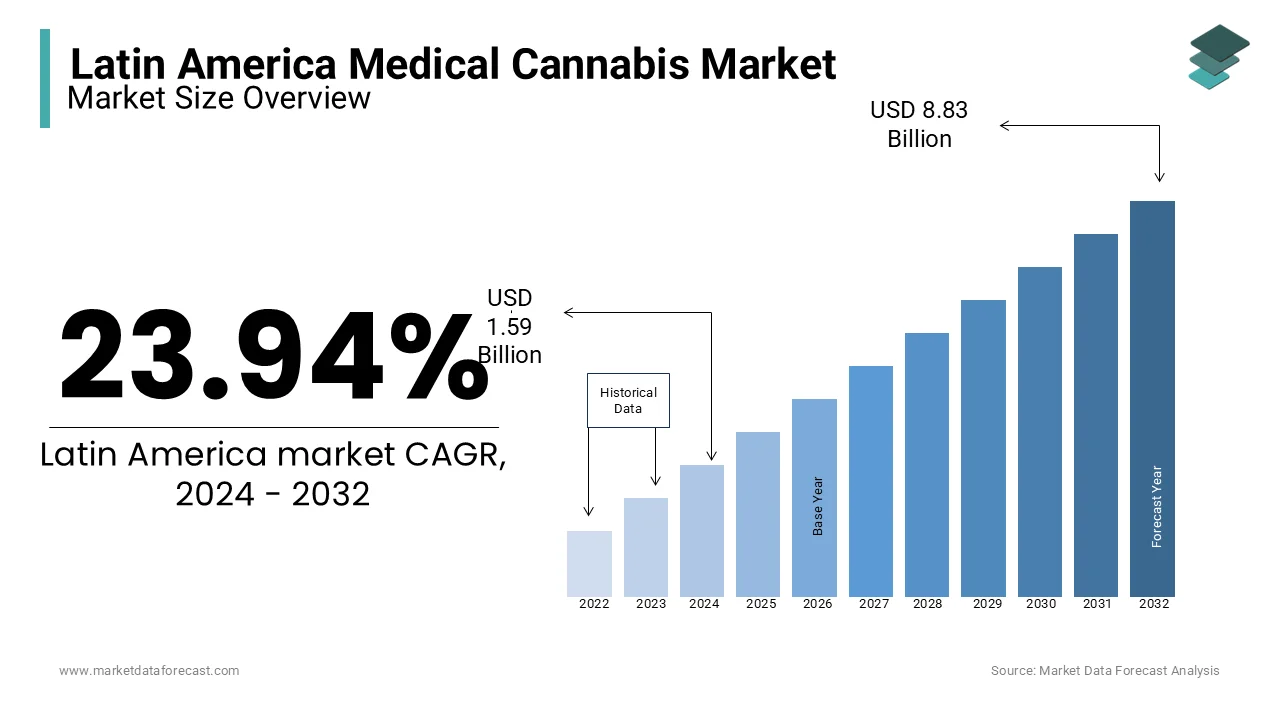
Latin America is characterized by a unique convergence of favorable climatic conditions that support year-round outdoor cultivation and evolving regulatory frameworks that are gradually shifting from prohibition to controlled medical access. According to the Pan American Health Organization, the region faces a significant burden of chronic non-communicable diseases, with over 150 million people suffering from conditions that could potentially benefit from cannabinoid therapies. The geographic advantage of countries like Colombia and Uruguay allows for lower production costs compared to North American or European counterparts due to abundant sunlight and lower labor expenses. As per the United Nations Office on Drugs and Crime, several Latin American nations have decriminalized or legalized medical use, creating a fragmented but growing legal landscape. The World Health Organization has recognized the therapeutic potential of cannabidiol, which is leading to increased acceptance among healthcare professionals in the region. Despite these advancements, the market remains in its nascent stages with varying levels of infrastructure maturity across different nations. The integration of traditional herbal medicine practices with modern pharmaceutical standards presents a distinct cultural context for adoption. Government initiatives aimed at reducing illicit crop cultivation by providing legal alternatives for farmers further stimulate the formalization of the industry. This complex interplay of agricultural potential, regulatory evolution, and public health needs defines the current trajectory of the medical cannabis sector in Latin America.
MARKET DRIVERS
Favorable Climatic Conditions and Cost-Competitive Cultivation Advantages
The exceptional agro-climatic conditions prevalent in many Latin American countries is a key factor driving the Latin American medical cannabis market growth by enabling cost-effective and high-quality cultivation. Countries such as Colombia, Mexico, and Uruguay possess equatorial or subtropical climates that provide consistent sunlight, temperature, and humidity levels ideal for cannabis growth throughout the year. According to the Food and Agriculture Organization of the United Nations, these natural advantages allow for multiple harvest cycles annually, significantly reducing the energy costs associated with indoor lighting and climate control required in colder regions. This operational efficiency translates into production costs that are up to 50% lower than those in North America or Europe, making Latin America an attractive hub for global export-oriented producers. As per data from the Colombian Ministry of Agriculture, the country has emerged as a leading exporter of dried flowers and extracts due to its ability to produce large volumes at competitive prices. The availability of arable land and experienced agricultural labor further enhances scalability. International pharmaceutical companies are increasingly establishing partnerships with local growers to secure supply chains for global markets. The economic incentive to leverage these natural resources drives investment in large-scale licensed facilities. This strategic positioning not only supports domestic medical needs but also establishes the region as a critical node in the global medical cannabis supply chain, thereby fuelling market growth.
Progressive Regulatory Reforms and Government Support Initiatives
The implementation of progressive regulatory frameworks and active government support initiatives are significantly propelling the Latin American medical cannabis market by providing legal clarity and fostering investor confidence. Several nations have enacted legislation that distinguishes between recreational and medical use, creating structured pathways for licensing cultivation, processing, and distribution. According to the Uruguayan Institute for the Regulation and Control of Cannabis, the establishment of a state-controlled regulatory body has facilitated the orderly development of the medical sector while ensuring product safety and quality. In Colombia, Decree 613 of 2017 created a comprehensive regulatory framework that has attracted billions of dollars in foreign direct investment into the sector. As per the Mexican Senate, the recent legalization of medical cannabis has opened doors for research and commercial production aiming to reduce reliance on imports. Governments are viewing the industry as a tool for rural development and job creation, particularly in areas previously affected by illicit crop cultivation. Public health ministries are increasingly integrating cannabinoid-based treatments into national formularies for specific indications such as refractory epilepsy. These policy shifts reduce legal risks for operators and encourage the participation of reputable pharmaceutical entities. The alignment of national strategies with international best practices enhances the credibility of Latin American products in global markets. This supportive legislative environment acts as a robust engine for market expansion and institutionalization.
MARKET RESTRAINTS
Complex and Fragmented Regulatory Landscapes Across Countries
The lack of regulatory harmonization and the presence of complex, fragmented legal frameworks across Latin American countries are significant restraints to the medical cannabis market in Latin America by creating operational uncertainties and barriers to cross-border trade. Each nation has developed its own distinct set of rules regarding licensing, THC limits, import-export permissions, and patient registration, which complicates compliance for multinational operators. According to the Organization of American States, the disparity in legal definitions and enforcement mechanisms hinders the creation of a unified regional market and increases administrative burdens for companies operating in multiple jurisdictions. In some countries, bureaucratic delays in issuing licenses can take years, stalling project timelines and increasing capital costs. As per reports from the Inter-American Drug Abuse Control Commission, inconsistent interpretation of laws by local authorities leads to unpredictable business environments. For instance, while Uruguay has a fully regulated market, neighboring countries may still impose strict restrictions on possession or transport. This fragmentation prevents economies of scale and limits the ability of producers to optimize supply chains across borders. Investors often hesitate to commit substantial resources due to the risk of sudden regulatory changes or political shifts. The absence of mutual recognition agreements for medical cannabis products further restricts market access. Until greater regulatory alignment is achieved, the inefficiencies and legal complexities will continue to impede the seamless growth and integration of the medical cannabis industry in the region.
Social Stigma and Limited Physician Awareness and Training
Deep-rooted social stigma surrounding cannabis use, combined with limited physician awareness and training, poses a substantial restraint to the Latin American medical cannabis market by restricting patient access and prescription rates. Despite legal reforms, cultural perceptions often associate cannabis with illicit drug abuse rather than legitimate medical therapy, leading to hesitation among patients and healthcare providers. According to surveys conducted by local medical associations in Brazil and Argentina, a significant majority of physicians report feeling inadequately trained to prescribe cannabinoid-based treatments or manage patient expectations regarding efficacy and side effects. The lack of standardized clinical guidelines and evidence-based protocols in medical curricula contributes to this knowledge gap. As per the Pan American Health Organization, many healthcare systems do not include cannabinoid therapy in their continuing education programs, leaving doctors reliant on anecdotal information or limited international studies. Patients often face judgment from family members or community peers, discouraging them from seeking legal treatment options. This social barrier is exacerbated by misinformation spread through media channels that fail to distinguish between psychoactive recreational use and non-psychoactive medical applications. Without robust educational campaigns and professional training initiatives, the full therapeutic potential of medical cannabis remains underutilized. The resulting low prescription rates limit market demand and slow the adoption of innovative treatments, thereby constraining overall market development.
MARKET OPPORTUNITIES
Expansion into High-Value Export Markets for Active Pharmaceutical Ingredients
The strategic positioning of Latin America as a low-cost producer offers a lucrative opportunity for the Latin American medical cannabis market. Global demand for standardized cannabinoids such as cannabidiol (CBD) and tetrahydrocannabinol (THC) is rising rapidly in Europe, Asia, and North America, where production costs are significantly higher. According to the International Trade Center, Latin American countries have the potential to capture a substantial share of the global supply chain by leveraging their competitive agricultural advantages. Companies are investing in Good Manufacturing Practice (GMP) certified facilities to meet stringent international quality standards required for export. As per data from ProColombia, the country aims to become a top global exporter of medical cannabis by focusing on high-purity extracts and pharmaceutical-grade flowers. Partnerships with multinational pharmaceutical firms facilitate technology transfer and access to established distribution networks in target markets. The development of niche products, such as rare cannabinoid isolates and specialized formulations, adds value and differentiation. Regulatory approvals for export in key markets like Germany and Australia create new revenue streams beyond domestic sales. By focusing on quality, consistency, and compliance, Latin American producers can establish themselves as reliable suppliers in the global pharmaceutical industry. This export-oriented strategy diversifies revenue sources and reduces dependency on local market dynamics, driving sustainable long-term growth.
Integration of Digital Health Platforms and Telemedicine Services
The integration of digital health platforms and telemedicine services presents a significant opportunity to enhance patient access and streamline the prescription process for medical cannabis in Latin America. Given the geographical disparities in healthcare access, especially in rural areas, digital solutions can bridge the gap between specialists and patients seeking cannabinoid therapies. According to the Inter-American Development Bank, telemedicine adoption in the region has accelerated, providing a viable channel for remote consultations and electronic prescribing. Specialized platforms are emerging that connect patients with certified physicians who can evaluate eligibility and issue digital prescriptions for medical cannabis. As per industry observations, these platforms often include educational resources, dosage tracking tools, and direct delivery services, creating a seamless user experience. The convenience of remote access reduces the burden on physical clinics and encourages earlier intervention for chronic conditions. Data analytics from these platforms can provide valuable insights into patient outcomes and treatment efficacy, supporting further clinical research. Regulatory bodies in countries like Chile and Peru are beginning to recognize digital prescriptions, facilitating wider adoption. By leveraging technology, companies can scale their operations efficiently and reach underserved populations. This digital transformation enhances patient engagement and adherence, driving increased demand for medical cannabis products and fostering a more inclusive healthcare ecosystem.
MARKET CHALLENGES
Banking Restrictions and Financial Service Accessibility Issues
The persistent banking restrictions and limited accessibility to financial services are a major challenge to the Latin American medical cannabis market by complicating transactions and hindering business operations. Due to the conflicting legal status of cannabis at international levels and in key financial hubs, many global and local banks remain reluctant to provide services to cannabis-related businesses. According to the Financial Action Task Force, concerns about money laundering and regulatory compliance lead to de-risking practices where banks close accounts or deny loans to legitimate medical cannabis operators. This forces companies to operate largely in cash, increasing security risks and administrative burdens. As per reports from local industry associations in Colombia and Mexico, businesses struggle to secure working capital, insurance, and payment processing solutions essential for scaling operations. The lack of transparent financial trails complicates tax compliance and auditing processes. Investors face difficulties in repatriating profits or injecting capital due to these financial bottlenecks. The uncertainty surrounding anti-money laundering regulations creates a chilling effect on institutional investment. Without clear guidelines and safe harbor provisions for financial institutions, the sector remains financially isolated. This constraint limits the ability of companies to invest in research, development, and expansion, thereby stifling innovation and growth in the medical cannabis industry.
Quality Control Standardization and Supply Chain Integrity Concerns
Ensuring consistent quality control standardization and maintaining supply chain integrity present significant challenges to the Latin American medical cannabis market due to varying technical capabilities and regulatory enforcement. The production of medical-grade cannabis requires strict adherence to Good Agricultural and Collection Practices (GACP) and Good Manufacturing Practices (GMP) to ensure product safety, potency, and purity. According to the World Health Organization, inconsistencies in testing methodologies and laboratory accreditation across the region lead to variability in product quality and reliability. Many local laboratories lack the advanced equipment needed to detect contaminants such as pesticides, heavy metals, and microbial pathogens accurately. As per industry audits, supply chain vulnerabilities, including theft, diversion, and counterfeit products, remain prevalent issues, particularly in regions with weak law enforcement. The lack of standardized tracking systems makes it difficult to trace products from seed to sale, compromising patient safety. Variations in extraction techniques and formulation processes further contribute to inconsistent therapeutic outcomes. Building trust among healthcare providers and patients requires rigorous quality assurance measures that are costly to implement. The absence of harmonized regional standards complicates export efforts and domestic regulation. Addressing these quality and integrity issues is critical for the legitimacy and sustainability of the medical cannabis market in Latin America.
REPORT COVERAGE
| REPORT METRIC | DETAILS |
| Market Size Available | 2025 to 2034 |
| Base Year | 2025 |
| Forecast Period | 2026 to 2034 |
| Segments Covered | By Product Type, Derivative, Species, Source, Application, Route of Administration, End User, Distribution Channel, and Region. |
| Various Analyses Covered | Global, Regional, and Country-Level Analysis, Segment-Level Analysis, Drivers, Restraints, Opportunities, Challenges; PESTLE Analysis; Porter’s Five Forces Analysis, Competitive Landscape, Analyst Overview of Investment Opportunities |
| Regions Covered |
|
| Market Leaders Profiled | BOL Pharma, Tilray, Medreleaf Corporation, Avicanna Inc, Aurora Cannabis, Inc., Canopy Growth Corporation, Canna Farms Corp, Insys Therapeutics, Inc., Khiron Med Corp, Aphria, Inc., MGC Pharmaceuticals Limited, GW Pharmaceuticals, plc. |
SEGMENTAL ANALYSIS
By Product Type Insights
The oils and tinctures segment dominated the market by capturing 44.7% of the Latin American market share in 2025. The leading position of the oils and tinctures segment in the European market can be credited to their ease of administration, precise dosing capabilities, rapid onset of action, and the preference among patients and healthcare providers for non-inhalable forms of medication that allow for accurate titration of cannabinoids such as CBD and THC. According to the Pan American Health Organization, liquid formulations are particularly favored for pediatric and geriatric populations who may have difficulty swallowing pills or using inhalation devices. The versatility of oils allows them to be administered sublingually for faster absorption or mixed with food and beverages, enhancing patient compliance. As per data from the Colombian Ministry of Health, the majority of approved medical cannabis products in the national registry are oil-based extracts, reflecting regulatory support for standardized pharmaceutical-grade preparations. The stability of these products during storage and transport further supports their widespread distribution across diverse geographic regions. Manufacturers prioritize oils because they can be produced with consistent potency, meeting strict quality control standards required for medical use. The established manufacturing infrastructure for extraction and formulation in countries like Uruguay and Colombia ensures a reliable supply chain. This combination of clinical utility, regulatory acceptance, and manufacturing feasibility sustains the leading position of oils and tinctures in the regional market.
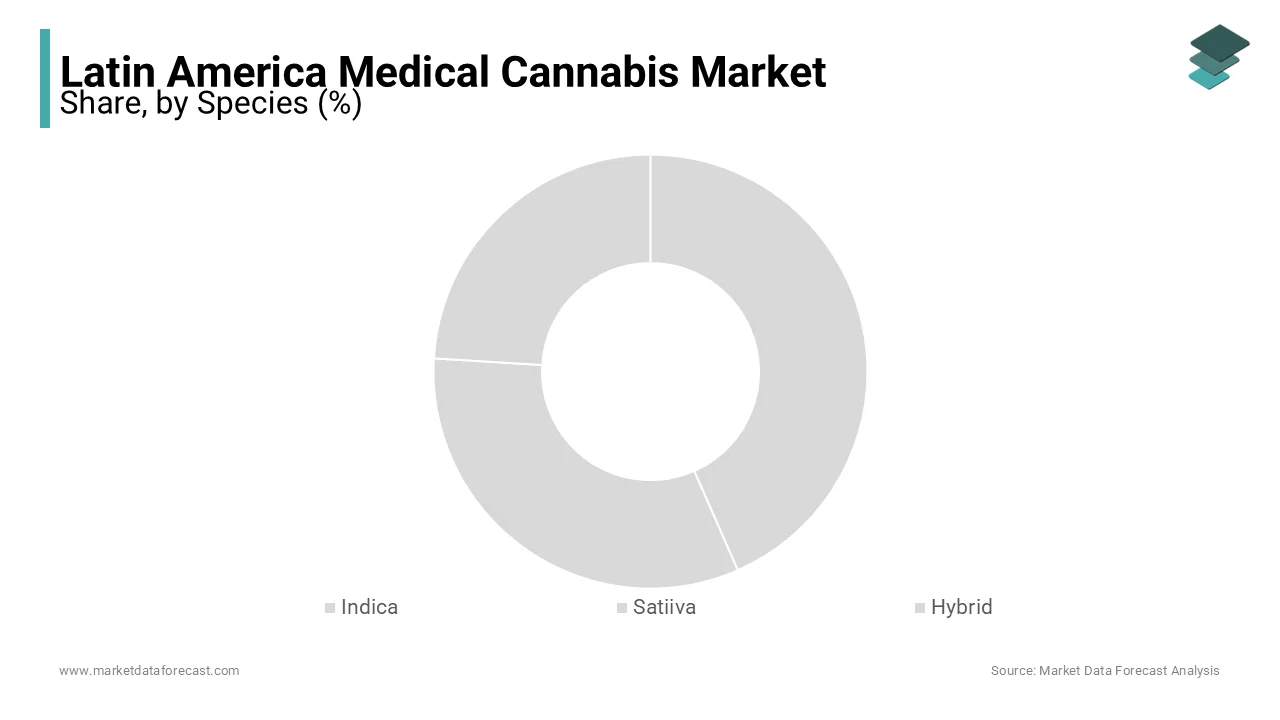
On the other hand, the topicals segment is projected to register the highest CAGR of 19.4% over the forecast period in the global market owing to the rising demand for localized pain relief and skin condition treatments without systemic psychoactive effects. The rapid growth is fueled by the rising prevalence of musculoskeletal disorders and inflammatory skin conditions such as psoriasis and eczema among the aging population in Latin America. According to the World Health Organization, chronic pain affects over 20% of adults in the region, creating a substantial market for non-opioid analgesic alternatives. Topical cannabis products allow patients to target specific areas of discomfort while minimizing the risk of side effects associated with oral or inhaled consumption. As per clinical studies cited by the Brazilian Society of Dermatology, cannabidiol-infused topicals have demonstrated significant anti-inflammatory and antioxidant properties, making them effective for various dermatological applications. The cosmetic industry in countries like Mexico and Argentina is increasingly integrating cannabinoids into skincare lines, blurring the lines between medical and wellness products. Regulatory frameworks in several nations permit the sale of low-THC topical products without strict prescription requirements, facilitating easier consumer access. The growing awareness of the endocannabinoid system’s role in skin health drives innovation in formulation. This convergence of therapeutic efficacy, cosmetic appeal, and regulatory flexibility positions topicals as the fastest-growing segment in the market.
By Derivative Insights
The cannabidiol segment led the market with 58.4% of the regional market share in 2025. The dominance of CBD is driven by its favorable safety profile and legal status in many jurisdictions where THC remains restricted or heavily regulated. According to the World Health Organization, CBD has been recognized for its potential in treating epilepsy, anxiety, and inflammation without inducing intoxication, which reduces social stigma and increases patient acceptance. In countries like Brazil and Argentina, regulatory agencies have approved CBD-based products for specific medical indications, facilitating prescription by general practitioners and specialists. As per data from the National Agency for Public Health Surveillance in Argentina, the number of CBD product registrations has increased significantly, reflecting growing clinical confidence. The availability of hemp-derived CBD with negligible THC content allows for broader commercialization and retail distribution compared to high-THC products. Pharmaceutical companies are investing heavily in purifying CBD isolates and full-spectrum extracts to meet quality standards. Patient preference for treatments that do not impair cognitive function or daily activities further reinforces demand. The extensive scientific literature supporting CBD efficacy in various conditions provides a strong foundation for market leadership. This combination of regulatory ease, clinical validation, and consumer preference sustains the supremacy of CBD in the regional derivative market.
On the other hand, the balanced THC and CBD formulations segment is anticipated to record a promising CAGR of 20.5% over the forecast period owing to the clinical evidence suggesting that the synergistic interaction between THC and CBD enhances therapeutic outcomes for pain management, multiple sclerosis, and cancer-related symptoms compared to single-molecule therapies. According to research published in the *Journal of Pain Research*, balanced ratios (such as 1:1) provide better pain relief and muscle spasm reduction while mitigating the psychoactive side effects of THC through the modulating action of CBD. In Uruguay and Colombia, medical programs are increasingly prescribing balanced formulations for patients who do not respond adequately to CBD alone. As per the Uruguayan Institute for the Regulation and Control of Cannabis, the demand for balanced products has risen as patients seek more comprehensive symptom management. Regulatory adjustments in several countries now allow for higher THC limits in medical prescriptions, enabling the development of these combination therapies. Physicians are becoming more educated on dosing strategies that optimize the benefits of both cannabinoids. The ability to tailor ratios to individual patient needs offers personalized treatment options. This clinical advantage and evolving regulatory landscape position balanced THC and CBD as the most dynamic growth vector in the derivative segment.
COUNTRY-LEVEL ANALYSIS
Colombia Medical Cannabis Market Analysis
Colombia accounted for the largest share of 28.4% of the Latin American market share in 2025 and is expected to maintain robust growth and remain a dominant export hub over the next few years as international partnerships expand. The market status in Colombia is characterized by a robust export-oriented model supported by Decree 613 of 2017, which established clear licensing procedures for cultivation and processing. According to the Colombian Ministry of Justice and Law, the country has issued over 100 licenses for medical cannabis production, attracting significant foreign investment from global pharmaceutical companies. The equatorial climate allows for up to four harvests per year, significantly lowering production costs compared to indoor facilities in North America. As per ProColombia, the nation aims to capture 10% of the global medical cannabis market by leveraging its high quality standards and competitive pricing. The government views the industry as a strategic pillar for rural development and the replacement of illicit coca crops. Local manufacturers are investing in GMP-certified facilities to meet international export requirements. The presence of a skilled workforce and established logistics infrastructure further supports growth. This combination of regulatory clarity, agricultural advantage, and strategic vision maintains Colombia’s position as the regional leader in medical cannabis production and export.
Uruguay Medical Cannabis Market Analysis
Uruguay is poised for steady regulatory refinement and sustained domestic health integration in the coming years. Uruguay represents a mature and highly regulated market for medical cannabis in Latin America, characterized by its historic role as the first country to fully legalize cannabis for recreational and medical use. The market status in Uruguay is defined by state-controlled distribution and strict quality oversight managed by the Institute for the Regulation and Control of Cannabis. According to the Uruguayan Ministry of Public Health, medical cannabis is available through pharmacies and registered clubs, ensuring safe access for patients with conditions such as chronic pain and epilepsy. The country’s small population limits domestic market size, but its regulatory expertise serves as a model for the region. As per data from the National Drug Board, Uruguay has developed advanced tracking systems to monitor seed-to-sale integrity, preventing diversion. The government promotes research and development collaborations with academic institutions to validate therapeutic efficacy. Local producers focus on high-value extracts and pharmaceutical-grade flowers for both domestic use and limited export opportunities within Mercosur. The strong political consensus on cannabis policy provides stability for operators. This regulatory maturity and commitment to public health principles position Uruguay as a key influencer and stable market in the Latin American landscape.
Mexico Medical Cannabis Market Analysis
Mexico is anticipated to experience accelerated commercial expansion and legal framework maturation over the next few years. Mexico holds a significant and rapidly growing position in the Latin American medical cannabis market, driven by recent legislative changes and a large patient population. The market status in Mexico is transitioning from a restrictive environment to a more open framework following Supreme Court rulings that declared prohibitions on personal use unconstitutional. According to the Mexican Senate, new legislation aims to establish a regulated market for medical and industrial cannabis, creating opportunities for licensed producers. The prevalence of chronic pain and neurological disorders among its 126 million citizens creates substantial domestic demand. As per the Federal Commission for the Protection against Sanitary Risk (COFEPRIS), authorities have begun issuing import permits for CBD products, paving the way for local manufacturing. The proximity to the United States facilitates technology transfer and investment from North American companies. Agricultural regions in the north are well-suited for large-scale cultivation. Public health initiatives are increasingly recognizing cannabinoid therapies as viable options for underserved communities. The potential for a massive domestic market combined with export capabilities makes Mexico a high-growth opportunity. Regulatory finalization and implementation remain critical next steps for full market realization.
Brazil Medical Cannabis Market Analysis
Brazil is projected to witness substantial market scaling driven by rising public acceptance and streamlined medical approvals over the next few years. Brazil represents a large and complex market for medical cannabis in Latin America, characterized by a strong regulatory stance from the National Health Surveillance Agency (ANVISA). The market status in Brazil is defined by the authorization of CBD-based products for medical use, requiring prescription and registration. According to ANVISA, hundreds of CBD products have been approved for sale in pharmacies catering to patients with epilepsy, chronic pain, and other conditions. The large population of over 210 million people offers a vast potential customer base. As per the Brazilian Medical Association, physician education programs are expanding to improve prescribing practices and patient monitoring. Local laboratories are developing proprietary formulations to meet specific clinical needs. The regulatory environment remains cautious regarding THC, limiting the scope of full-spectrum products. However, the approval process for CBD is becoming more streamlined, encouraging market entry. Private health insurers are beginning to cover some cannabinoid treatments, improving affordability. The strong pharmaceutical industry infrastructure supports high-quality production. This balance of regulatory control and growing acceptance positions Brazil as a major volume driver in the regional market.
Argentina Medical Cannabis Market Analysis
Argentina is likely to see expanding provincial programs and wider public health integration over the next few years. Argentina holds a progressive position in the Latin America medical cannabis market, driven by comprehensive laws that support both domestic production and patient access. The market status in Argentina is characterized by Law 27350, which establishes a legal framework for the medical and scientific use of cannabis and its derivatives. According to the National Agency for Public Health Surveillance (REPROCANN), the national registry allows patients to cultivate their own cannabis or access products from licensed producers. The government has established public production facilities to ensure affordable supply for the public health system. As per the Ministry of Health, thousands of patients are registered in the program, receiving treatment for conditions such as epilepsy and cancer. Local biotechnology companies are investing in extraction and formulation technologies to produce high-quality oils and capsules. The regulatory environment encourages research and development, fostering innovation. Provincial governments are implementing complementary programs to expand access. The strong patient advocacy movement has been instrumental in shaping policy. This supportive legal framework and active civil society engagement make Argentina a dynamic and patient-centric market in the region.
COMPETITIVE LANDSCAPE
The competition in the Latin America medical cannabis market is characterized by a mix of local agricultural enterprises and international pharmaceutical companies vying for dominance through quality differentiation and regulatory compliance. The market is fragmented, with numerous small licensed producers competing alongside well-capitalized multinational corporations that bring advanced technology and global distribution networks. Key competitive factors include production efficiency, product purity, and the ability to secure export licenses for lucrative foreign markets. Companies differentiate themselves by investing in research and development to create proprietary blends and patented extraction methods. Price competition is intense due to the low cost of outdoor cultivation in countries like Colombia and Uruguay. Regulatory barriers serve as both a challenge and a moat for established players who have already secured necessary permits. Strategic alliances with local distributors and healthcare institutions are crucial for gaining market share. The race to achieve international certifications drives continuous improvement in operational standards. This dynamic environment fosters innovation while requiring participants to maintain high levels of agility and compliance to succeed in the rapidly evolving regional landscape.
KEY MARKET PLAYERS
The leading companies operating in the Latin America medical cannabis market include:
- BOL Pharma
- Tilray
- MedReleaf Corporation
- Avicanna Inc.
- Aurora Cannabis Inc.
- Canopy Growth Corporation
- Canna Farms Corp.
- Insys Therapeutics, Inc.
- Khiron Life Sciences Corp.
- Aphria Inc.
- MGC Pharmaceuticals Limited
- GW Pharmaceuticals plc
TOP PLAYERS IN THE MARKET
- Khiron Med Corp is a prominent participant in the Latin American medical cannabis market with a strong operational footprint in Colombia and Brazil. The company focuses on producing high-quality pharmaceutical-grade cannabis oils and extracts for both domestic consumption and international export. Recent actions include expanding its cultivation facilities in Colombia to increase production capacity and achieve Good Manufacturing Practice certification. Khiron has also strengthened its distribution network in Brazil by partnering with local pharmacies to enhance patient access to prescribed treatments. The company actively engages in clinical research to validate the efficacy of its products for chronic pain and epilepsy. These strategic initiatives have solidified its reputation as a reliable supplier and innovator in the regional medical cannabis landscape while ensuring compliance with stringent regulatory standards.
- Canna Farms Corp plays a significant role in the Latin American medical cannabis market through its extensive licensed cultivation and processing operations in Colombia. The company leverages the favorable climatic conditions of the region to produce cost-effective bulk biomass and refined extracts for global pharmaceutical partners. Recent developments include securing additional export licenses and upgrading its extraction technology to improve product purity and yield. Canna Farms has established strategic alliances with international distributors to facilitate entry into European and Asian markets. The company prioritizes sustainable agricultural practices and community engagement to support long-term operational stability. By focusing on scalable production and rigorous quality control, Canna Farms strengthens its position as a key exporter and contributor to the growth of the medical cannabis industry in Latin America.
- Avicanna Inc is a key player in the Latin American medical cannabis market, specializing in the development and commercialization of cannabinoid based pharmaceutical products. The company has a strong presence in Colombia, where it operates licensed facilities for research, development, and manufacturing. Recent actions include launching proprietary branded medical cannabis products in Colombian pharmacies and expanding its portfolio to include topical and oral formulations. Avicanna collaborates with healthcare professionals to educate physicians on the therapeutic benefits of cannabinoids. The company also pursues regulatory approvals in other Latin American countries to broaden its market reach. By integrating scientific research with commercial strategy, Avicanna enhances its competitive advantage and contributes to the professionalization and standardization of the medical cannabis sector in the region.
TOP STRATEGIES USED BY THE KEY MARKET PARTICIPANTS
Key players in the Latin America medical cannabis market primarily employ strategies focused on vertical integration to control the entire supply chain from cultivation to distribution. Companies invest heavily in obtaining Good Manufacturing Practice certifications to meet international export standards and build trust with regulatory bodies. Strategic partnerships with local pharmacies and healthcare providers facilitate market access and physician education regarding prescription practices. Export orientation is a major strategy where firms leverage low production costs in Latin America to supply high-value markets in Europe and North America. Research and development initiatives aim to create proprietary formulations and intellectual property that differentiate products in a competitive landscape. Regulatory lobbying and engagement with government agencies help shape favorable policies and streamline licensing processes. These multifaceted approaches enable companies to navigate complex legal environments and establish sustainable competitive advantages in the emerging regional market.
MARKET SEGMENTATION
This Latin America medical cannabis market research report is segmented and sub-segmented into the following categories.
By Product Type
- Flowers/Buds
- Oils & Tinctures
- Concentrates (e.g., waxes, resins)
- Edibles
- Topicals (e.g., creams, ointments)
- Capsules & Tablets
- Vape Pens
- Patches
- Dissolvables/Powders
- Others (e.g., creams, moisturizers, serums)
By Derivative
- Cannabidiol (CBD)
- Tetrahydrocannabinol (THC)
- Balanced THC & CBD
- Cannabigerol (CBG)
- Cannabinol (CBN)
- Others
By Species
- Sativa
- Indica
- Hybrid
By Source
- Natural
- Synthetic
By Application
- Pain Management
- Cancer
- Epilepsy
- Arthritis
- Migraine
- Mental Health Disorders (e.g., anxiety, depression, PTSD)
- Neurological Disorders (e.g., Parkinson’s, Alzheimer’s, Multiple Sclerosis)
- AIDS
- Diabetes
- Glaucoma
- Amyotrophic Lateral Sclerosis (ALS)
- Autism
- Sleep Disorders
- Appetite Loss
- Others
By Route of Administration
- Oral Solutions & Capsules
- Smoking
- Vaporizers
- Topicals
- Intravenous
- Others
By End User
- Pharmaceutical Industry
- Research & Development Centers
- Hospitals
- Rehabilitation Centers
- Homecare Settings
- Others
By Distribution Channel
- Dispensaries
- Pharmacies (Hospital & Retail)
- Online Retailers
- Business-to-Business (B2B)
- Business-to-Consumer (B2C)
By Country
- Brazil
- Mexico
- Argentina
- Chile
- Rest of Latin America