- Product Description Description
- Table of Contents TOC
- List of Table & Figure LOT
- Get Free Sample PDF Sample PDF
Market Size, 2025
$7.96 BnMarket Estimate, 2026
$8.44 BnMarket Forecast, 2034
$13.46 BnCAGR, 2026–2034
6.01%Executive Summary: Laxative Market
- Market Scope: Comprehensive global laxative market analysis covering drug types, route of administration, indication segments, distribution channels, regional leadership frameworks, and gastrointestinal disorder adoption metrics.
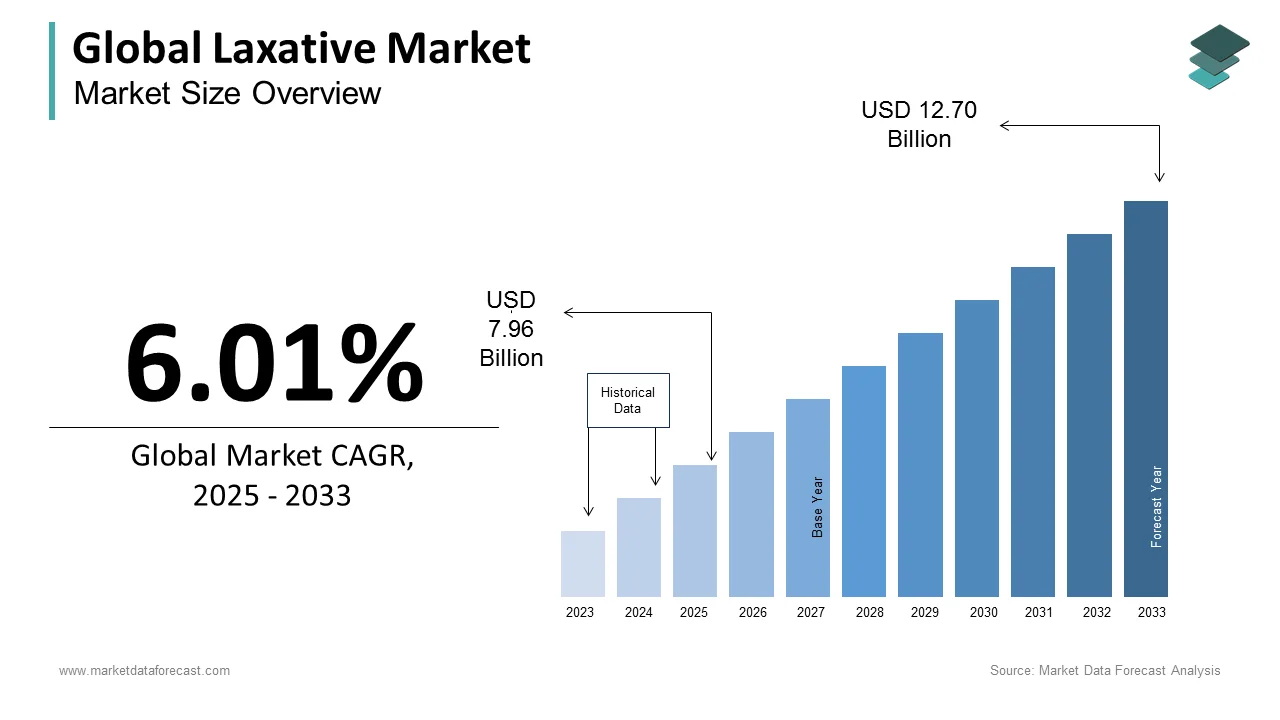
- Market Valuation: Valued at USD 7.96 billion (2025), estimated at USD 8.44 billion (2026), and projected to reach USD 13.46 billion by 2034, registering a robust CAGR of 6.01% (2026–2034).
- Primary Growth Drivers: Increasing prevalence of constipation, gastrointestinal disorders, sedentary lifestyles, unhealthy dietary patterns, and easy availability of over-the-counter laxatives. Key epidemiological highlights include ~12% of the global population suffering from constipation, chronic constipation affecting ~63 million people in North America, and 22% of adults in India suffering from constipation (including 13% reporting severe cases).
Key Market Segment Metrics (2026–2034)
| Category | Leading Segment (2025 Position) | Fastest-Growing Segment |
|---|---|---|
| By Drug Type & Route | Bulk-Forming Laxatives (expected to lead the global market); Oral Drugs (most lucrative route) | Advanced Osmotic & Natural/Herbal Laxative Formulations |
| By Indication & End User | Chronic Constipation (accounted for the largest indication share in 2025); Adults (top-performing end-user segment) | Irritable Bowel Syndrome (IBS) Associated Constipation Relief |
| By Distribution Channel | Pharmacies & Drug Stores (predicted to lead distribution due to widespread OTC availability) | Online Pharmacies & Direct-to-Consumer Retail Channels |
| By Region / Country | North America (led the global market in 2025), followed by Europe as the second-largest regional market | Asia-Pacific (expected to expand faster during the forecast period, driven by high prevalence in nations like India) |
Major Market Players & Market Structure
Market Structure: Highly competitive global pharmaceutical and consumer health landscape featuring major multinational drug manufacturers and over-the-counter wellness brands competing intensely on product efficacy, gentle formulations, natural ingredients, brand loyalty, pharmacy distribution networks, and regulatory compliance.
Key Companies: Bayer AG, AstraZeneca, GlaxoSmithKline, Beutlich Pharmaceuticals, Takeda Pharmaceutical, Boehringer Ingelheim, Procter & Gamble, Dr. Reddy's Laboratories, Sun Pharmaceutical Industries, Dabur, Wockhardt, Fresenius Kabi, Sanofi, Purdue Pharma, and Sucampo Pharmaceuticals.
Global Laxative Market Size
The size of the global laxative market was worth USD 7.96 billion in 2025. The global market is anticipated to grow at a CAGR of 6.01% from 2026 to 2034 and be worth USD 13.46 billion by 2034 from USD 8.44 billion in 2026.
Laxatives are a type of medicine used to treat constipation and diarrhea. Some laxatives work immediately, while others require a time of 2-3 days. Usage differs from person to person. Some may need only short-term care, while some require long-term use of laxatives. However, taking these medications too often can induce flatulence, abdominal cramps, feeling ill, bloating, and dehydration. Not only medicines, but also some foods act as laxatives. Laxatives are used for adults, children, and dogs. Depending on the condition, different kinds of laxatives are available. Bulk-forming laxatives, which serve as supplements, raise the bulk of stools by removing fluids, allowing them to flow more easily. Stool softeners increase the liquid content of feces, making them easier to pass. Lubricant laxatives lubricate the intestines, making stools smoother and easier to move. Osmotic-type laxatives loosen the stool by storing water and increasing bowel frequency. Saline laxatives are used to clear the colon during invasive surgery. Stimulant laxatives relax the digestive tract walls, causing bowel movements to be more frequent.
MARKET DRIVERS
The growing number of constipation cases worldwide primarily accelerates the global laxative market.
The rising prevalence of constipation and other gastrointestinal disorders in various regions is the key factor for developing the laxatives market. A gut Health Survey conducted by Abbott found that 22% of the adult Indian population suffers from constipation, with 13% complaining of severe constipation. Constipation is expected in the Indian population, affecting 6% of the population. Globally, around 12% of people suffer from constipation, of which in North America, chronic constipation affects approximately 63 million people. If this disease is not treated timel mannery, it causes other associated diseases like hypothyroidism, certain types of cancer, kidney failure, and irritable bowel syndrome. Hence, laxative usage increases in the market.
Sedentary lifestyles are also contributing to the growing demand for laxatives.
A sedentary lifestyle is more likely to lead to an unhealthy lifestyle. This results in a shift in eating habits, poor sleep, an imbalanced diet, and a lack of exercise. In addition, over the years, several people have been inclined towards junk food. Consequently, it causes gastric imbalance, which leads to a variety of bowel diseases and, finally, a rise in the use of laxatives.
The easy availability of laxative medicines is further responsible for the growth of the laxatives market.
Laxative medicines are available as over-the-counter (OTC) drugs from any pharmacy or supermarket. Therefore, anyone can buy it without a prescription, enhancing the sale of laxatives. Besides, some individuals feel embarrassed to tell doctors about their condition, so they choose OTC products. As per Statista, in 2020, the revenue of OTC laxatives was around 1.54 billion USD, while in 2019, it was 1.4 billion USD.
MARKET RESTRAINTS
The side effects of laxatives and alternative products hamper the global laxative market growth. However, alternative products to laxatives are available in the market that can restrain the laxative market. These products, including chia seeds, berries, legumes, flaxseeds, castor oil, and apples, are natural laxatives used as an alternative to laxative medicines. Besides, side effects associated with using laxatives hinder the market growth. Often, usage of these medicines causes electrolyte disturbances and changes in acid-base balance in the gut; thus, some people choose a healthy diet for fear of this side effect.
REPORT COVERAGE
| REPORT METRIC | DETAILS |
| Market Size Available | 2025 to 2034 |
| Base Year | 2025 |
| Forecast Period | 2026 to 2034 |
| Segments Covered | By Type, Route of Administration, Indication, Distribution Channel, and Region. |
| Various Analyses Covered | Global, Regional and Country-Level Analysis, Segment-Level Analysis, Drivers, Restraints, Opportunities, Challenges; PESTLE Analysis; Porter’s Five Forces Analysis, Competitive Landscape, Analyst Overview of Investment Opportunities |
| Regions Covered | North America, Europe, APAC, Latin America, Middle East & Africa |
| Market Leaders Profiled | Bayer AG, AstraZeneca, GlaxoSmithKline, Beutlich Pharmaceuticals, Takeda Pharmaceutical, Boehringer Ingelheim Pharmaceuticals Inc., Procter & Gamble Company, Dr. Reddy's Laboratories Ltd., Sun Pharmaceutical Industries Ltd, and Others. |
SEGMENTAL ANALYSIS
By Drug Type Insights
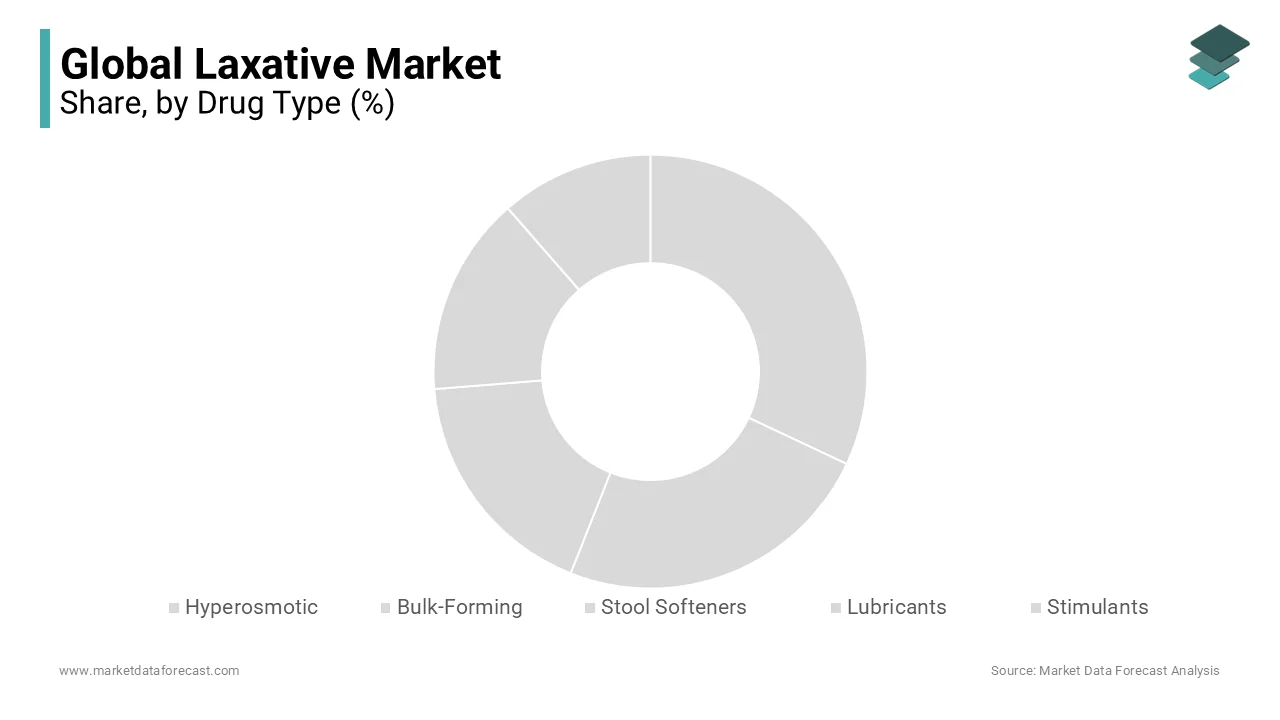
The bulk-farming segment is expected to lead the global laxative market and grow at a healthy CAGR during the forecast period. This is because the bulking agents absorb water and spread in the intestines, resulting in a thicker, easier-to-transfer stool.
By Route of Administration Insights
The oral drug segment is forecasted to be the most lucrative segment during the forecast period. Oral laxatives are drugs taken by mouth to relieve constipation by promoting bowel movements. Infants are usually offered rectal laxatives if they are constipated.
By Indication Insights
In 2025, the chronic constipation segment accounted for the largest share of the global laxative market. During the forecast period, the segment of chronic constipation is expected to perform well. Disorders such as diverticulosis cause constipation as a side effect. People become constipated due to the unusual foods they eat, contaminated foods, and other items. The Irritable bowel syndrome segment is forecasted to perform well during the forecast period. However, certain medications, such as calcium channel blockers and antacids, are contraindicated.
By Distribution Channel Insights
The pharmacy segment is predicted to be the leader based on the distribution channel during the forecast period. Laxatives are over-the-counter medicines. Since certain medicines are unavailable in specialty drug stores, consumers want healthcare goods delivered to their homes worldwide. Due to the growing demand for the segment, the pharmacy industry is expected to expand faster.
By End-User Insights
The adult segment is anticipated to be the top-performing segment during the forecast period, owing to the rise in the number of patients suffering from bowel disorders due to poor food habits.
REGIONAL ANALYSIS
North America Laxative Market Analysis
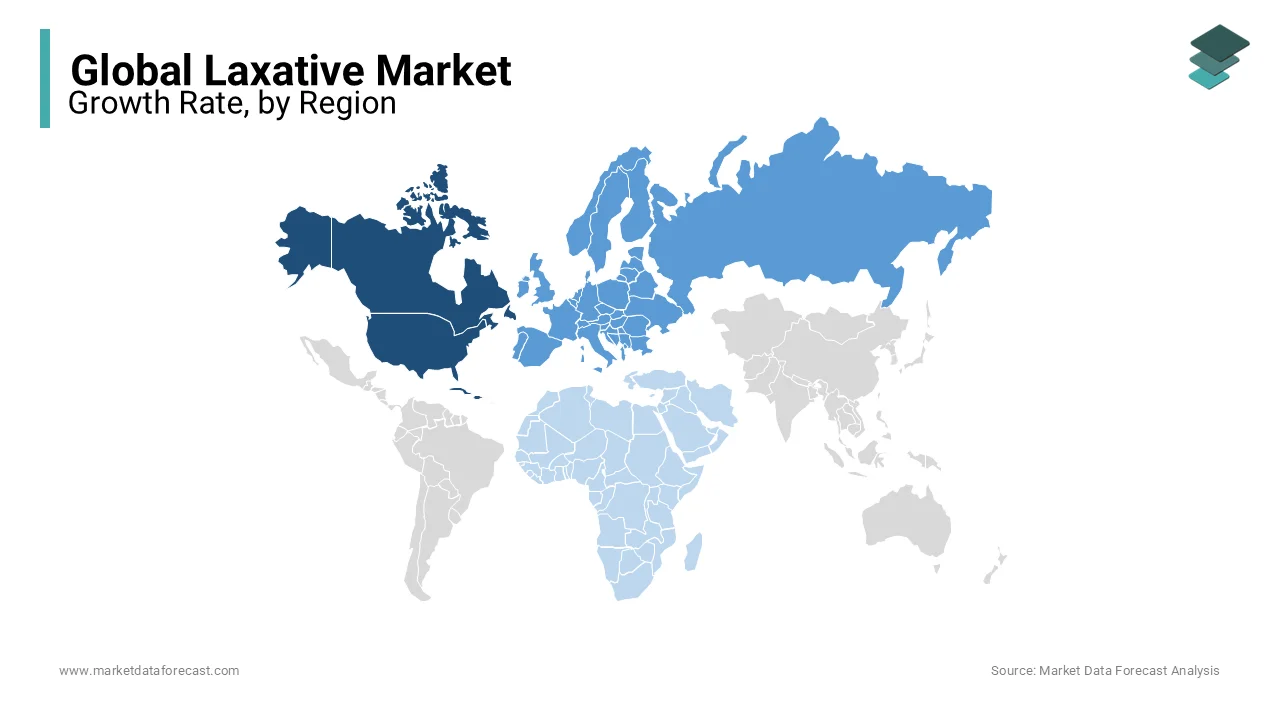
The North American market led the global market in 2025, and it is predicted to expand at an aggressive CAGR during the forecast period. The prevalence of gastrointestinal disorders and obesity propels market growth in this region. Due to the growing number of obese people, the United States is expected to lead the North American market. On the other hand, the Canadian market is predicted to showcase a healthy growth rate.
Europe Laxative Market Analysis
The European market was the second-largest regional market for laxatives globally. During the projected period, the European market is predicted to register a healthy CAGR during the forecast period. The rising number of people suffering from chronic constipation drives this region's market development.
Asia-Pacific Laxative Market Analysis
During the forecast period, the laxative market in the Asia-Pacific region is expected to expand faster. The main contributors to the laxative demand in the APAC area are India, Australia, and New Zealand. Regarding sales, India is one of the fastest-growing regions in the laxative industry, and this trend is expected to continue in the coming years.
Middle East and Africa Laxative Market Analysis
Middle East Africa, on the other hand, is a developing market for laxatives. The demand is expected to rise due to increasing laxative use, a growing geriatric population, and laxatives' availability as over-the-counter drugs without a prescription.
KEY MARKET PLAYERS
Some of the companies that are playing a dominating role in the global laxative market include
- Bayer AG
- AstraZeneca
- GlaxoSmithKline (GSK)
- Beutlich Pharmaceuticals
- Takeda Pharmaceutical Company Limited
- Boehringer Ingelheim Pharmaceuticals Inc.
- Procter & Gamble Company
- Dr. Reddy's Laboratories Ltd.
- Sun Pharmaceutical Industries Ltd.
- Dabur
- WOCKHARDT
- Fresenius Kabi AG
- Sanofi S.A.
- Purdue Pharma
- Sucampo Pharmaceuticals Inc.
MARKET SEGMENTATION
This research report on the global laxative market has been segmented and sub-segmented based on the type, route of administration, indication, distribution channel, and region.
By Drug Type
- Hyperosmotic
- Bulk-Forming
- Stool Softeners
- Lubricants
- Stimulants
- Others
By Route of Administration
- Oral
- Rectal
By Indication
- Chronic Constipation
- Irritable Bowel Syndrome
- Others
By Distribution Channel
- Hospitals and Clinics
- Pharmacies
- Others
By End User
- Children
- Adults
- Senior Citizens
By Region
- North America
- Europe
- Asia-Pacific
- Latin America
- Middle East and Africa